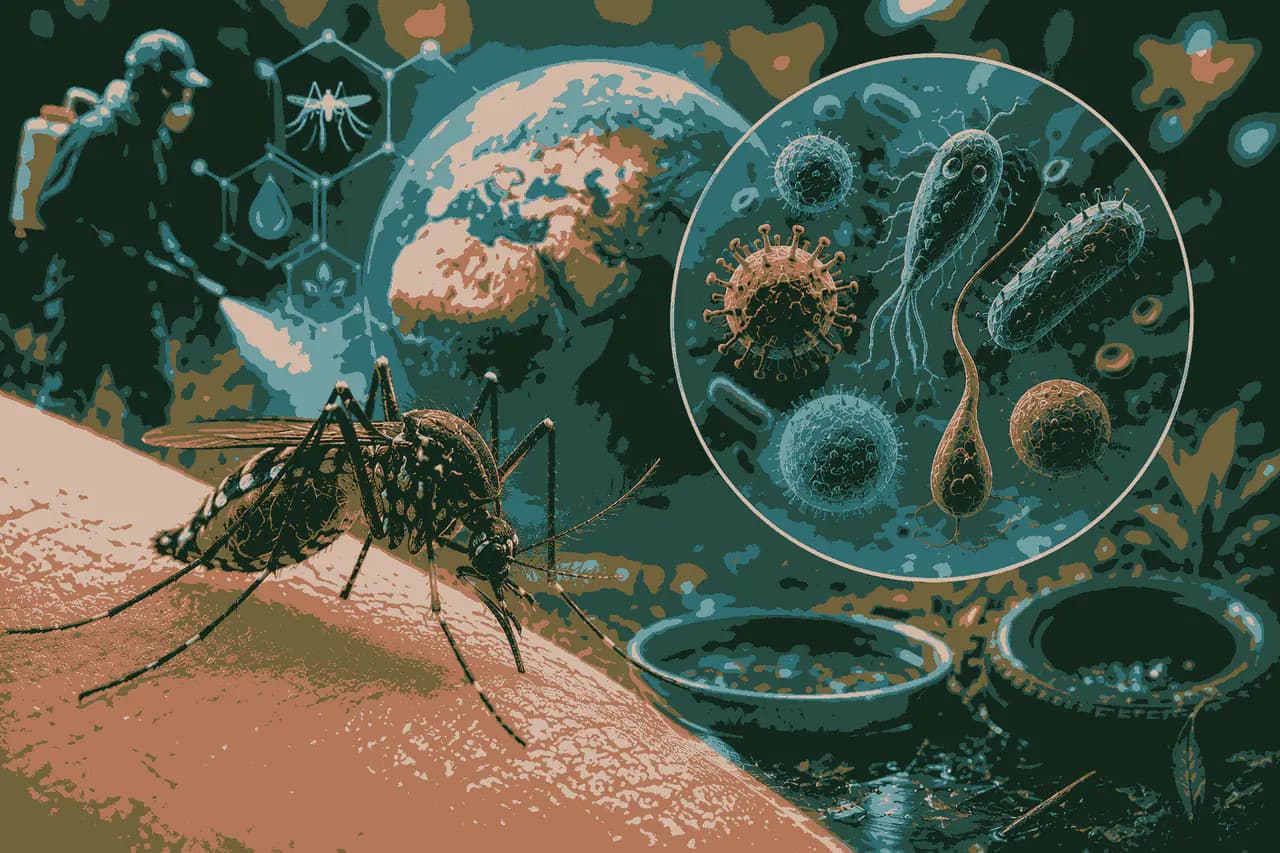
Vector Borne Disease MCQs Class 12 Biology is an important revision topic for aspirants who want to understand how diseases spread through living carriers such as mosquitoes, flies, ticks, mites, and other organisms. Vector Borne Disease MCQs Class 12 Biology helps aspirants connect human health and disease concepts with real-life examples like malaria, dengue, chikungunya, filariasis, kala-azar, Japanese encephalitis, plague, and yellow fever. In Class 12 Biology, this topic is especially useful because many disease-based concepts are tested through causative agents, vectors, symptoms, prevention methods, and transmission cycles. Vector Borne Disease MCQs Class 12 Biology allows aspirants to revise the difference between a pathogen and a vector, which is one of the most important foundations of infectious disease biology. Vector Borne Disease MCQs Class 12 Biology becomes easier when aspirants remember that a vector does not usually cause the disease by itself; instead, it carries the pathogen from one host to another. For example, malaria is caused by Plasmodium, but it is transmitted by the female Anopheles mosquito. Vector Borne Disease MCQs Class 12 Biology also includes dengue, which is caused by dengue virus and spread by Aedes mosquitoes. Filariasis is caused by Wuchereria bancrofti and transmitted by Culex mosquitoes, while kala-azar is caused by Leishmania donovani and transmitted by sandflies. Vector Borne Disease MCQs Class 12 Biology helps aspirants organise these examples into a clear pattern: disease, pathogen, vector, symptoms, and prevention. Aspirants should study Vector Borne Disease MCQs Class 12 Biology with special attention to mosquito-borne diseases because mosquitoes are among the most important vectors in human disease transmission. Vector Borne Disease MCQs Class 12 Biology explains that Anopheles, Aedes, and Culex mosquitoes differ in breeding habits, biting time, and the diseases they spread. Anopheles is linked with malaria, Aedes with dengue, chikungunya, and yellow fever, and Culex with filariasis and some forms of encephalitis. Vector Borne Disease MCQs Class 12 Biology becomes more memorable when aspirants prepare short comparison charts for these mosquito genera and revise them regularly before exams. Vector Borne Disease MCQs Class 12 Biology also teaches the importance of life-cycle stages in disease transmission. In malaria, the sporozoite enters the human body through the bite of an infected female Anopheles mosquito, while merozoites multiply inside red blood cells and cause fever when the cells rupture. Vector Borne Disease MCQs Class 12 Biology helps aspirants understand why fever in malaria is periodic and why symptoms such as chills, sweating, headache, weakness, and anaemia are commonly discussed. In filariasis, the larval stages of the parasite are important, and microfilariae show periodic movement in peripheral blood. Vector Borne Disease MCQs Class 12 Biology therefore supports both factual learning and conceptual understanding. Prevention is a major part of Vector Borne Disease MCQs Class 12 Biology because vector control is often the most effective way to reduce infection. Aspirants should remember practical measures such as removing stagnant water, using mosquito nets, wearing protective clothing, applying repellents, spraying insecticides, covering water containers, maintaining sanitation, and improving waste management. Vector Borne Disease MCQs Class 12 Biology also highlights the value of early diagnosis, proper treatment, community awareness, and public health campaigns. These measures are important because vector-borne diseases can spread quickly when environmental conditions support vector breeding. Vector Borne Disease MCQs Class 12 Biology is also helpful for aspirants preparing for board exams and competitive exams because it encourages quick recall of important associations. Aspirants can revise malaria with Plasmodium and Anopheles, dengue with virus and Aedes, filariasis with Wuchereria and Culex, kala-azar with Leishmania and sandfly, and plague with Yersinia pestis and rat flea. Vector Borne Disease MCQs Class 12 Biology becomes stronger when aspirants do not simply memorise names but understand why each vector is important in transmission. This approach helps avoid confusion between disease-causing organisms and disease-carrying organisms. A focused preparation strategy for Vector Borne Disease MCQs Class 12 Biology should include diagrams, flowcharts, tables, and repeated revision of disease cycles. Aspirants should make separate notes for vector type, pathogen type, body part affected, major symptoms, and preventive methods. Vector Borne Disease MCQs Class 12 Biology can also be connected with immunity, vaccination, hygiene, and environmental management. While some vector-borne diseases have vaccines or specific treatments, many require prevention through vector control and personal protection. Vector Borne Disease MCQs Class 12 Biology therefore builds exam readiness as well as awareness about public health and community responsibility.
Vector Borne Disease MCQs Class 12 Biology:
- The sensation of stomach pain is due to which type of receptors?
A. Interoceptors B. Exteroceptors C. Proprioceptors D. Teloceptors Answer: A. Interoceptors Explanation: Interoceptors are responsible for sensations from internal organs, including stomach pain.
- Which is a correct pair of a pathogen and its vector?
A. Plasmodium and Anopheles B. Plasmodium and Culex C. Virus and Anopheles D. Protozoan and Aedes Answer: A. Plasmodium and Anopheles Explanation: Plasmodium is the pathogen that causes malaria, and female Anopheles mosquito is its vector.
- Which genus of insects prefer to breed in clean water and have larvae lying parallel to the water surface?
A. Anopheles B. Culex C. Aedes D. Phlebotomus Answer: A. Anopheles Explanation: Anopheles mosquitoes prefer to breed in clean water, and their larvae lie parallel to the water surface.
- Which life cycle stage of Wuchereria bancrofti is infective to humans?
A. Microfilaria B. 1st stage larva C. 2nd stage larva D. 3rd stage larva Answer: D. 3rd stage larva Explanation: The 3rd stage larva of Wuchereria bancrofti is the infective stage to humans.
- Which one of the following life cycle stages of malarial parasite is responsible for relapse of malarial symptoms?
A. Merozoite B. Sporozoite C. Hypnozoite D. Gametocyte Answer: C. Hypnozoite Explanation: Hypnozoites are dormant liver stages of some malaria parasites. They can reactivate after weeks or months and cause relapse of malarial symptoms.
- Mention the incubation period of Plasmodium vivax.
A. 10–14 days B. 20–25 days C. 30 days D. 45 days Answer: A. 10–14 days Explanation: The incubation period of Plasmodium vivax is usually 10–14 days, though in some cases it may be longer.
- Tetanus disease is caused by
A. Virus B. Bacteria C. Fungi D. Mycoplasma Answer: B. Bacteria Explanation: Tetanus is caused by the bacterium Clostridium tetani. Its spores are commonly found in soil, dust, and manure.
- Which of the following pair is characterized by swollen lips, thick pigmented skin of hands and legs, and irritability?
A. Iodine - Goitre B. Protein - Kwashiorkor C. Thiamine - Beri-beri D. Nicotinamide - Pellagra Answer: D. Nicotinamide - Pellagra Explanation: Pellagra is caused by deficiency of nicotinamide, nicotinic acid, niacin, or vitamin B3. Its symptoms include dermatitis, diarrhoea, and dementia.
- Infection of Enterobius is caused to man by
A. Inoculation B. Contamination C. Piercing D. Flying Answer: B. Contamination Explanation: Enterobius infection, commonly called pinworm infection, spreads through contaminated surfaces carrying pinworm eggs.
- Microfilaria is found in the peripheral blood of man during
A. Day time B. Night time C. Morning D. Evening Answer: B. Night time Explanation: Microfilariae are found in the peripheral blood circulation mainly during night time.
- The infective stage of Entamoeba histolytica is
A. Cyst B. Egg C. Spore D. Trophozoite Answer: A. Cyst Explanation: The infective stage of Entamoeba histolytica is the cyst. Infection occurs through contaminated food or water.
- Which of the following is a communicable disease?
A. Diabetes B. Hypertension C. Kwashiorkor D. Diphtheria Answer: D. Diphtheria Explanation: Diphtheria is a communicable disease caused by bacteria and can spread from one person to another.
- A disease caused by one of the smallest viruses is
A. Trachoma B. Poliomyelitis C. Mumps D. Measles Answer: B. Poliomyelitis Explanation: Poliomyelitis, commonly called polio, is caused by poliovirus, which is one of the smallest known viruses.
- Disease caused by fungus is:
A. Bronchitis B. Ringworm C. Smallpox D. Tuberculosis Answer: B. Ringworm Explanation: Ringworm is a fungal infection of the skin caused by fungi such as Trichophyton, Microsporum, and Epidermophyton.
- In saliva of mosquito following is present during its bite:
A. Xyote B. Gametocyte C. Ookinite D. Anticoagulant Answer: D. Anticoagulant Explanation: Mosquito saliva contains anticoagulants, which prevent blood clotting during feeding.
- Which of the following is a viral disease?
A. Typhoid B. Polio C. TB D. Leprosy Answer: B. Polio Explanation: Polio is a viral disease caused by poliovirus. It affects the nervous system and may cause paralysis.
- Infection by which bacterium is responsible for peptic ulcer in human being?
A. Staphylococcus aureus B. Bacillus cereus C. Xanthomonas citri D. Helicobacter pylori Answer: D. Helicobacter pylori Explanation: Peptic ulcers are commonly caused by the bacterium Helicobacter pylori.
- Fear of dirt, disease, and contaminants is known as:
A. Pathophobia B. Mysophobia C. Algophobia D. None of these Answer: B. Mysophobia Explanation: Mysophobia is the fear of dirt, disease, and contaminants. Pathophobia is fear of disease, and algophobia is fear of pain.
- Which one of the following pairs of diseases is viral as well as transmitted by mosquitoes?
A. Elephantiasis and dengue B. Yellow fever and sleeping sickness C. Encephalitis and sleeping sickness D. Yellow fever and dengue Answer: D. Yellow fever and dengue Explanation: Yellow fever and dengue are viral diseases transmitted by mosquitoes.
- Typhoid fever is caused by a species of:
A. Streptococcus B. Staphylococcus C. Salmonella D. Mycobacterium Answer: C. Salmonella Explanation: Typhoid fever is caused by Salmonella typhi, a gram-negative bacterium.
- Tuberculosis is caused by:
A. Vibrio cholerae B. Mycobacterium C. Salmonella typhi D. None of these Answer: B. Mycobacterium Explanation: Tuberculosis is caused by Mycobacterium tuberculosis. It usually affects the lungs but may also affect other parts of the body.
- The malnutrition disease in man is:
A. Cri du chat syndrome B. Klinefelter syndrome C. Potbelly syndrome D. Edward syndrome Answer: C. Potbelly syndrome Explanation: Potbelly syndrome is associated with malnutrition, while Cri du chat syndrome, Klinefelter syndrome, and Edward syndrome are genetic disorders.
- Chlorosis, etiolation, and albinism are caused by a deficiency of:
A. Iron, light, and certain genes B. Zinc, iron, and magnesium C. Magnesium, iron, zinc, light, and certain genes D. Magnesium, zinc, and light Answer: C. Magnesium, iron, zinc, light, and certain genes Explanation: Chlorosis, etiolation, and albinism are caused by deficiency of magnesium, iron, zinc, light, and certain genes.
- Which of the following is not a viral disease?
A. Rabies B. Chicken-pox C. Leprosy D. Polio Answer: C. Leprosy Explanation: Leprosy is not a viral disease. It is caused by the bacterium Mycobacterium leprae.
- Genus Aedes of mosquito is a vector of:
A. Filaria B. Plague C. Dengue fever D. Elephantiasis Answer: C. Dengue fever Explanation: Dengue fever is transmitted by infected Aedes mosquitoes.
- Hepatitis B is transmitted through:
A. Blood transfusion B. Intimate physical contact C. Sexually D. All of the above Answer: D. All of the above Explanation: Hepatitis B can be transmitted through blood transfusion, intimate physical contact, and sexual contact.
- Fever in malaria is due to:
A. Entry of sporozoites into blood capillaries B. Entry of merozoites into liver cells C. Release of merozoites from red blood cells D. Entry of cryptomerozoites into red blood cells Answer: C. Release of merozoites from red blood cells Explanation: Fever in malaria occurs when red blood cells rupture and release merozoites along with toxic substances.
- Identify the disease correctly matched with its preventive measure.
A. Amoebiasis - Use only sterilized food and water B. Diphtheria - DPT vaccine C. Cholera - Use oral rehydration therapy D. Syphilis - Treponema pallidum Answer: C. Cholera - Use oral rehydration therapy Explanation: Cholera is matched with oral rehydration therapy, which is used to manage dehydration caused by cholera.
- Which pair is wrongly matched in terms of the disease and its causative agent?
A. Typhoid - Widal test B. Plague - Viral disease C. Malignant malaria - Plasmodium falciparum D. Common cold - Rhinovirus Answer: B. Plague - Viral disease Explanation: Plague is wrongly matched as a viral disease. It is caused by the bacterium Yersinia pestis.
- What is the cause of Severe Acute Respiratory Syndrome, SARS, a fatal disease?
A. Paramyxovirus
B. A variant of common cold virus, corona
C. A variant of Pneumococcal pneumonia
D. A variant of Diplococcus pneumonia
Answer: B. A variant of common cold virus, corona
Explanation: Severe Acute Respiratory Syndrome, SARS, is caused by a coronavirus.
Conclusion on Vector Borne Disease MCQs Class 12 Biology
In conclusion, Vector Borne Disease MCQs Class 12 Biology is a highly useful topic for aspirants who want to master infectious disease transmission in a structured and exam-friendly way. It improves understanding of vectors, pathogens, hosts, symptoms, life cycles, prevention, and disease control. Vector Borne Disease MCQs Class 12 Biology also reminds aspirants that biology is not only about textbook facts but also about protecting human life through awareness, hygiene, sanitation, and timely action. With consistent revision, Vector Borne Disease MCQs Class 12 Biology can help aspirants answer disease-related questions with better accuracy, confidence, and speed.
Related reading
Ultimate Communicable Disease MCQs Class 12 Biology - Master Exam Success Fast
Explore Communicable Disease MCQs Class 12 Biology with key concepts on pathogens, vectors, immunity, symptoms, and prevention for aspirants preparing for exams

Essential Vaccines and Drug Abuse MCQs Class 12 Biology - Powerful Exam Practice Questions
Revise Vaccines and Drug Abuse MCQs Class 12 Biology with key facts on immunity, vaccines, addiction, drug source, and health risks for aspirants prep for exams