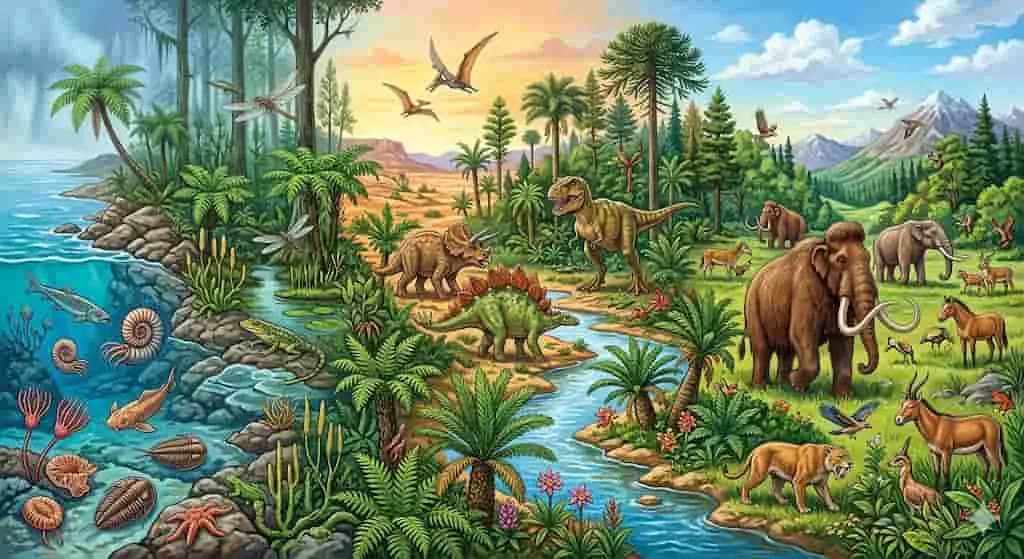
Understanding geological eras is one of the most important parts of evolution and Earth history in biology, which is why Paleozoic Mesozoic Cenozoic Era MCQs with Answers are frequently asked in NEET and Class 12 examinations. Aspirants preparing for competitive exams often study these eras to understand the gradual development of life forms on Earth through millions of years of evolutionary change.
The topic Paleozoic Mesozoic Cenozoic Era MCQs with Answers helps aspirants learn the chronological order of major geological eras and the dominant life forms associated with each era. These eras collectively explain how life evolved from primitive aquatic organisms to complex mammals and modern humans.
The Paleozoic Era is often discussed first in Paleozoic Mesozoic Cenozoic Era MCQs with Answers because it marks the beginning of abundant life on Earth. This era is commonly known as the era of ancient life and includes important geological periods such as Cambrian, Ordovician, Silurian, Devonian, Carboniferous, and Permian.
Aspirants studying Paleozoic Mesozoic Cenozoic Era MCQs with Answers should remember that the Cambrian Period is famous for the “Cambrian Explosion,” during which there was rapid diversification of marine organisms. Most major groups of invertebrates appeared during this time.
The Devonian Period is another major focus in Paleozoic Mesozoic Cenozoic Era MCQs with Answers because it is called the “Age of Fishes.” Fish diversified greatly during this period, and the first amphibians also began evolving from fish ancestors.
The Carboniferous Period discussed in Paleozoic Mesozoic Cenozoic Era MCQs with Answers is known as the “Age of Amphibians.” Dense swamp forests dominated the Earth, leading to the formation of large coal deposits seen today.
Another important concept in Paleozoic Mesozoic Cenozoic Era MCQs with Answers is the Permian Period, which marked the end of the Paleozoic Era. This period ended with one of the largest mass extinctions in Earth’s history.
The Mesozoic Era receives special attention in Paleozoic Mesozoic Cenozoic Era MCQs with Answers because it is known as the “Age of Reptiles.” Dinosaurs dominated the Earth during this era, which includes the Triassic, Jurassic, and Cretaceous periods.
Aspirants frequently encounter Paleozoic Mesozoic Cenozoic Era MCQs with Answers related to the Triassic Period because this period saw the origin of dinosaurs and the first mammals. Gymnosperms also became dominant plants during this time.
The Jurassic Period explained in Paleozoic Mesozoic Cenozoic Era MCQs with Answers is famous for the dominance of giant dinosaurs and the appearance of the first birds such as Archaeopteryx.
The Cretaceous Period is especially important in Paleozoic Mesozoic Cenozoic Era MCQs with Answers because flowering plants became widespread and dinosaurs eventually became extinct by the end of this period.
Aspirants preparing from Paleozoic Mesozoic Cenozoic Era MCQs with Answers should understand that the extinction of dinosaurs paved the way for mammals to diversify rapidly in the next era.
The Cenozoic Era is commonly described in Paleozoic Mesozoic Cenozoic Era MCQs with Answers as the “Age of Mammals.” Mammals and birds became dominant life forms during this era after the extinction of giant reptiles.
Another key point covered in Paleozoic Mesozoic Cenozoic Era MCQs with Answers is that the Cenozoic Era includes the evolution of primates and eventually modern humans. Human evolution is one of the most significant biological developments associated with this era.
The importance of Paleozoic Mesozoic Cenozoic Era MCQs with Answers lies in helping aspirants understand evolutionary trends across geological time. Each era represents major biological transitions and environmental changes.
While learning Paleozoic Mesozoic Cenozoic Era MCQs with Answers, aspirants also study the dominant organisms of each era. Fishes dominated the Devonian, amphibians dominated the Carboniferous, reptiles dominated the Mesozoic, and mammals dominated the Cenozoic.
One reason Paleozoic Mesozoic Cenozoic Era MCQs with Answers is highly scoring in NEET preparation is because many questions directly ask about ages of organisms, dominant life forms, and chronological sequences.
The study of fossils is closely connected with Paleozoic Mesozoic Cenozoic Era MCQs with Answers because fossils provide evidence about organisms that lived during different geological periods.
Another major concept associated with Paleozoic Mesozoic Cenozoic Era MCQs with Answers is adaptive radiation. After major extinctions, surviving organisms diversified into many new forms to occupy vacant ecological niches.
Aspirants often revise Paleozoic Mesozoic Cenozoic Era MCQs with Answers to memorize important events such as the origin of fishes, amphibians, reptiles, birds, mammals, and flowering plants.
The topic Paleozoic Mesozoic Cenozoic Era MCQs with Answers also strengthens understanding of evolutionary chronology, which is frequently tested in assertion-reason and matching questions.
In biology, Paleozoic Mesozoic Cenozoic Era MCQs with Answers helps connect evolution, paleontology, fossil records, adaptation, extinction, and speciation into a single structured timeline of Earth’s history.
Aspirants preparing for board exams often find Paleozoic Mesozoic Cenozoic Era MCQs with Answers useful because geological eras provide easy memory-based scoring opportunities when properly revised.
The evolutionary importance of Paleozoic Mesozoic Cenozoic Era MCQs with Answers is that it explains how environmental changes over millions of years shaped biodiversity on Earth.
Another benefit of studying Paleozoic Mesozoic Cenozoic Era MCQs with Answers is improved understanding of geological time scales, fossil evidence, and evolutionary progression.
For NEET aspirants, Paleozoic Mesozoic Cenozoic Era MCQs with Answers is an essential topic because questions frequently appear regarding dominant organisms, geological periods, and extinction events.
Paleozoic Mesozoic Cenozoic Era MCQs with Answers:
1. Which era is referred to as the age of birds and mammals?
A. Fishes and reptiles
B. Amphibians and reptiles
C. Birds and mammals
D. Amphibians and fishes
Answer: C. Birds and mammals
Explanation: The Cenozoic Era is known as the age of birds and mammals because mammals diversified rapidly during this era.
2. During which era was life absent?
A. Archeozoic
B. Paleozoic
C. Proterozoic
D. Azoic
Answer: D. Azoic
Explanation: The Azoic Era literally means “without life” and represents the earliest stage of Earth before living organisms appeared.
3. Which period is considered the age of fishes?
A. Age of amphibians
B. Age of reptiles
C. Age of fishes
D. Age of mammals
Answer: C. Age of fishes
Explanation: The Devonian Period is commonly called the “Age of Fishes” because fishes diversified greatly during this time.
4. What is the correct chronological sequence of periods in the Mesozoic era?
A. Carboniferous → Permian → Triassic → Jurassic → Cretaceous
B. Cretaceous → Permian → Jurassic → Carboniferous → Triassic
C. Cretaceous → Carboniferous → Permian → Triassic → Jurassic
D. Carboniferous → Jurassic → Permian → Triassic → Cretaceous
Answer: A. Carboniferous → Permian → Triassic → Jurassic → Cretaceous
Explanation: This represents the correct geological order leading into and through the Mesozoic Era.
5. What is the most important requirement for evolution?
A. Continuity of germplasm
B. Variation
C. Adaptation of acquired traits
D. Natural selection
Answer: B. Variation
Explanation: Variations provide the raw material upon which natural selection acts during evolution.
6. During which period did the first seed plant appear?
A. Silurian
B. Devonian
C. Carboniferous
D. Cretaceous
Answer: B. Devonian
Explanation: The first seed plants evolved during the Devonian Period.
7. In which era were reptiles, especially dinosaurs, dominant and ruled the world?
A. Coenozoic era
B. Mesozoic era
C. Paleozoic era
D. Archaeozoic era
Answer: B. Mesozoic era
Explanation: The Mesozoic Era is called the “Golden Age of Reptiles.”
8. Diversification in plant life primarily occurred due to which factor?
A. Due to abrupt mutations
B. Suddenly on Earth
C. By seed dispersal
D. Due to long periods of evolutionary changes
Answer: D. Due to long periods of evolutionary changes
Explanation: Plant diversification occurred gradually over millions of years through evolution and natural selection.
9. The factor that leads to Founder effect in a population is:
A. Genetic drift
B. Natural selection
C. Genetic recombination
D. Mutation
Answer: A. Genetic drift
Explanation: Founder effect is a form of genetic drift occurring in small isolated populations.
10. In a species, the weight of newborn ranges from 2 to 5 kg. 97% of the newborn with an average weight between 3 to 3.3 kg survive whereas 99% of the infants born with weights from 2 to 2.5 kg or 4.5 to 5 kg die. Which type of selection process is taking place?
A. Stabilizing Selection
B. Disruptive Selection
C. Cyclical Selection
D. Directional Selection
Answer: A. Stabilizing Selection
Explanation: Stabilizing selection favors average individuals and eliminates extreme variations.
11. Variation in gene frequencies within a population can occur by chance rather than by natural selection. This is referred to as:
A. Genetic load
B. Genetic flow
C. Genetic drift
D. Random mating
Answer: C. Genetic drift
Explanation: Genetic drift involves random changes in allele frequencies, especially in small populations.
12. According to Darwin, organic evolution is primarily due to which factor?
A. Reduced feeding efficiency in one species due to the presence of interfering species
B. Intraspecific competition
C. Interspecific competition
D. Competition within closely related species
Answer: C. Interspecific competition
Explanation: Darwin emphasized competition between different species as a driving force of evolution.
13. The Jurassic period of the Mesozoic era was characterized by which features?
A. Gymnosperms are dominant plants and first birds appear
B. Radiation of reptiles and origin of mammal-like reptiles
C. Dinosaurs become extinct and angiosperms appear
D. Flowering plants and first dinosaurs appear
Answer: A. Gymnosperms are dominant plants and first birds appear
Explanation: The Jurassic Period saw dominance of gymnosperms and origin of primitive birds like Archaeopteryx.
14. What is the correct order of the following eras?
A. Palaeozoic → Archaeozoic → Coenozoic
B. Archaeozoic → Palaeozoic → Proterozoic
C. Palaeozoic → Mesozoic → Coenozoic
D. Mesozoic → Archaeozoic → Proterozoic
Answer: C. Palaeozoic → Mesozoic → Coenozoic
Explanation: These eras occur in chronological order in Earth’s geological history.
15. Which of the following animals developed the ability of using ribs and intercostal muscles in ventilation for the first time in vertebrate evolution?
A. Mammals
B. Aves
C. Reptiles
D. Fishes
Answer: C. Reptiles
Explanation: Reptiles were the first vertebrates to use ribs and intercostal muscles for breathing.
16. During which geological period of evolution did the greatest diversification of life occur on Earth?
A. Permian
B. Jurassic
C. Cambrian
D. Ordovician
Answer: C. Cambrian
Explanation: The Cambrian Explosion marked rapid diversification of animal life.
17. Mammals evolved from Therapsids reptiles in Triassic period. The type of skull in these reptiles is:
A. Anapsid skull
B. Parapsid skull
C. Synapsid skull
D. Diapsid skull
Answer: C. Synapsid skull
Explanation: Synapsid skulls possess a single temporal opening and are characteristic of mammal-like reptiles.
18. Genetic drift in Mendelian population takes place in:
A. Small population
B. Large population
C. Oceanic population
D. Never occurs
Answer: A. Small population
Explanation: Genetic drift has stronger effects in small populations due to random sampling.
19. Which among the following was the biggest land dinosaur?
A. Stegosaurus
B. Tyrannosaurus rex
C. Brachiosaurus
D. Triceratops
Answer: B. Tyrannosaurus rex
Explanation: Tyrannosaurus rex was among the largest and most powerful terrestrial predators.
20. Which of the following represents a systematic arrangement of the Palaeozoic era in ascending order in a geological time scale?
A. Cambrian → Ordovician → Silurian → Devonian → Carboniferous → Permian
B. Permian → Carboniferous → Devonian → Silurian → Ordovician → Cambrian
C. Silurian → Ordovician → Cambrian → Carboniferous → Permian → Devonian
D. Devonian → Permian → Carboniferous → Ordovician → Silurian → Cambrian
Answer: A. Cambrian → Ordovician → Silurian → Devonian → Carboniferous → Permian
Explanation: This is the correct ascending sequence of Paleozoic periods.
21. Match the following:
List-I
(A) Golden age of reptiles
(B) Age of amphibians
(C) Golden age of fishes
(D) Age of mammals
List-II
(I) Carboniferous period
(II) Cenozoic era
(III) Mesozoic era
(IV) Devonian period
(V) Silurian period
Options:
A. III I V II
B. III I IV II
C. II IV I III
D. V II III IV
Answer: B. III I IV II
Explanation:
- Mesozoic era → Golden age of reptiles
- Carboniferous period → Age of amphibians
- Devonian period → Golden age of fishes
- Cenozoic era → Age of mammals
22. _____ is a group of plants representing one or more ecospecies of common evolutionary origin.
A. Ecospecies
B. Ecotype
C. Comparium
D. Cenospecies
Answer: D. Cenospecies
Explanation: Cenospecies refers to a group of related plant species sharing a common evolutionary origin.
23. Sacred groves are specially useful in:
A. Year-round flow of water in rivers
B. Conserving rare and threatened species
C. Generating environmental awareness
D. Preventing soil erosion
Answer: B. Conserving rare and threatened species
Explanation: Sacred groves protect biodiversity and conserve endangered species naturally.
24. Cuscuta is an example of:
A. Predation
B. Endoparasitism
C. Ectoparasitism
D. Brood parasitism
Answer: C. Ectoparasitism
Explanation: Cuscuta is an external stem parasite that derives nutrients from host plants.
25. Collagen is:
A. Fibrous protein
B. Globular protein
C. Lipid
D. Carbohydrate
Answer: A. Fibrous protein
Explanation: Collagen is a structural fibrous protein found abundantly in connective tissues.
26. The organs which have dissimilar structure and origin but perform the same function are called:
A. Homologous organs
B. Analogous organs
C. Vestigial organs
D. Atavistic organs
Answer: B. Analogous organs
Explanation: Analogous organs perform similar functions but evolved independently.
27. According to fossils discovered up to present time, the origin and evolution of man started from which country?
A. France
B. Java
C. Africa
D. China
Answer: C. Africa
Explanation: Fossil evidence strongly supports Africa as the birthplace of modern humans.
28. Identify the fossil of man who showed the following characteristics:
(A) Brain capacity of 1400 cc
(B) Used hides to protect their body
(C) Buried their dead bodies
A. Homo habilis
B. Australopithecus
C. Homo erectus
D. Neanderthal man
Answer: D. Neanderthal man
Explanation: Neanderthals had large brain capacity, used animal hides, and practiced burial rituals.
29. ______ was the direct ancestor of the living modern man.
A. Cro-magnon
B. Pre-Neanderthal
C. Neanderthal
D. None of these
Answer: A. Cro-magnon
Explanation: Cro-Magnon humans are regarded as direct ancestors of modern Homo sapiens.
30. Modern man evolved:
A. 10000 years ago
B. 25000 years ago
C. 5000 years ago
D. 50000 years ago
Answer: A. 10000 years ago
Explanation: Modern humans spread widely across the Earth approximately 10,000 years ago during the Holocene epoch.
Conclusion on Paleozoic Mesozoic Cenozoic Era MCQs with Answers
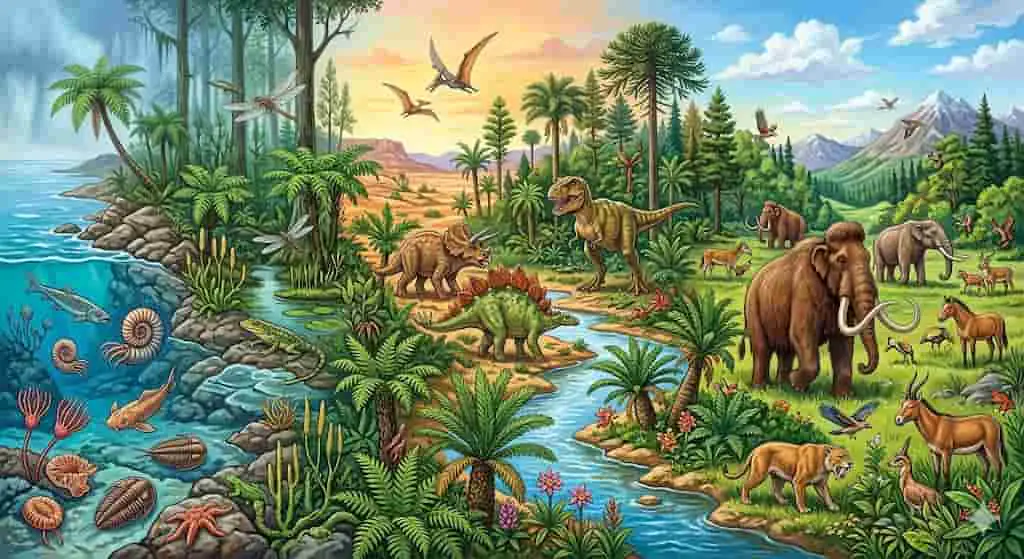
In conclusion, Paleozoic Mesozoic Cenozoic Era MCQs with Answers provides aspirants with a complete overview of Earth’s evolutionary history, helping them understand how life gradually evolved from primitive organisms to the highly complex biodiversity seen today.
Related reading
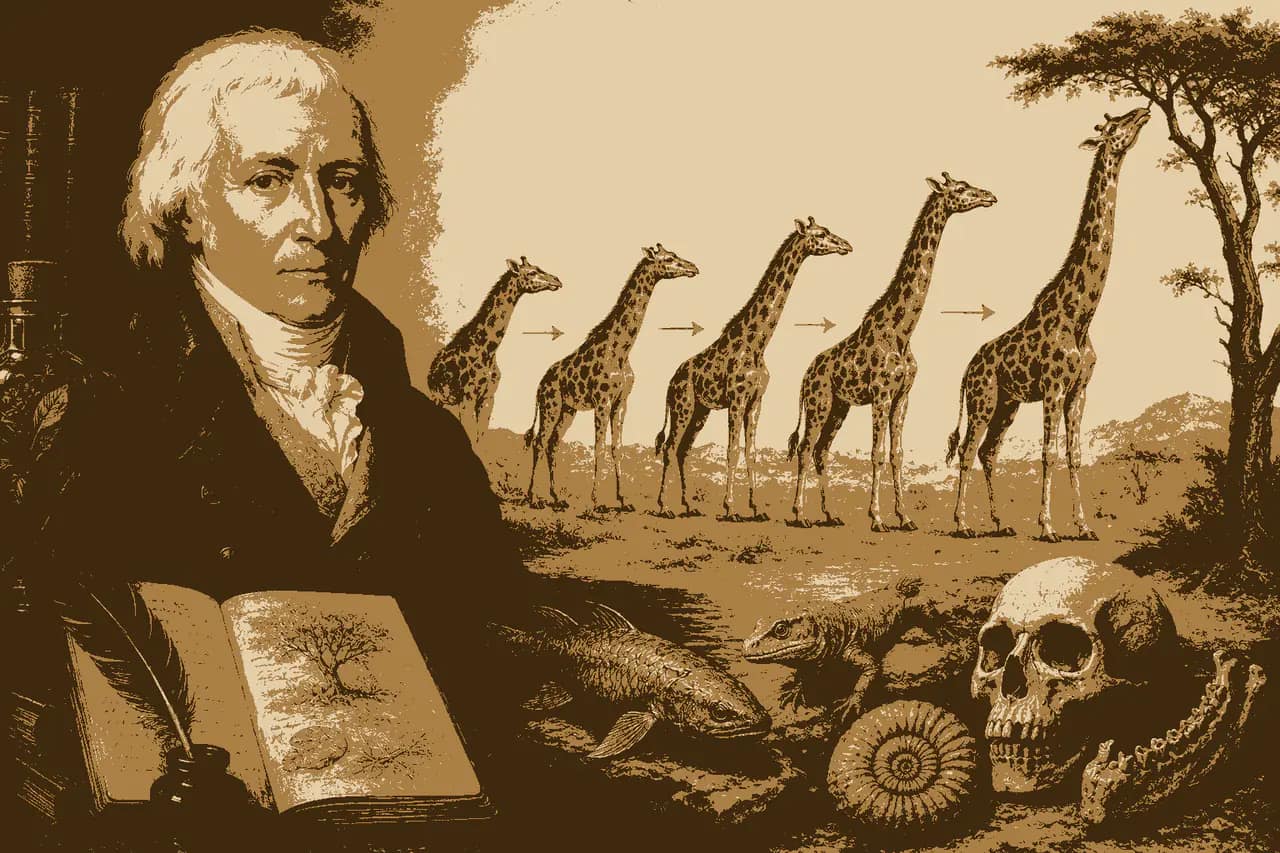
Ultimate Jean Baptiste Lamarck Evolution Theory MCQs with Answers for Smart NEET Prepraration
Master Jean Baptiste Lamarck Evolution Theory MCQs with Answers for NEET , Class 12 Biology. Learn Lamarckism, acquired characters, evolution concepts examples.
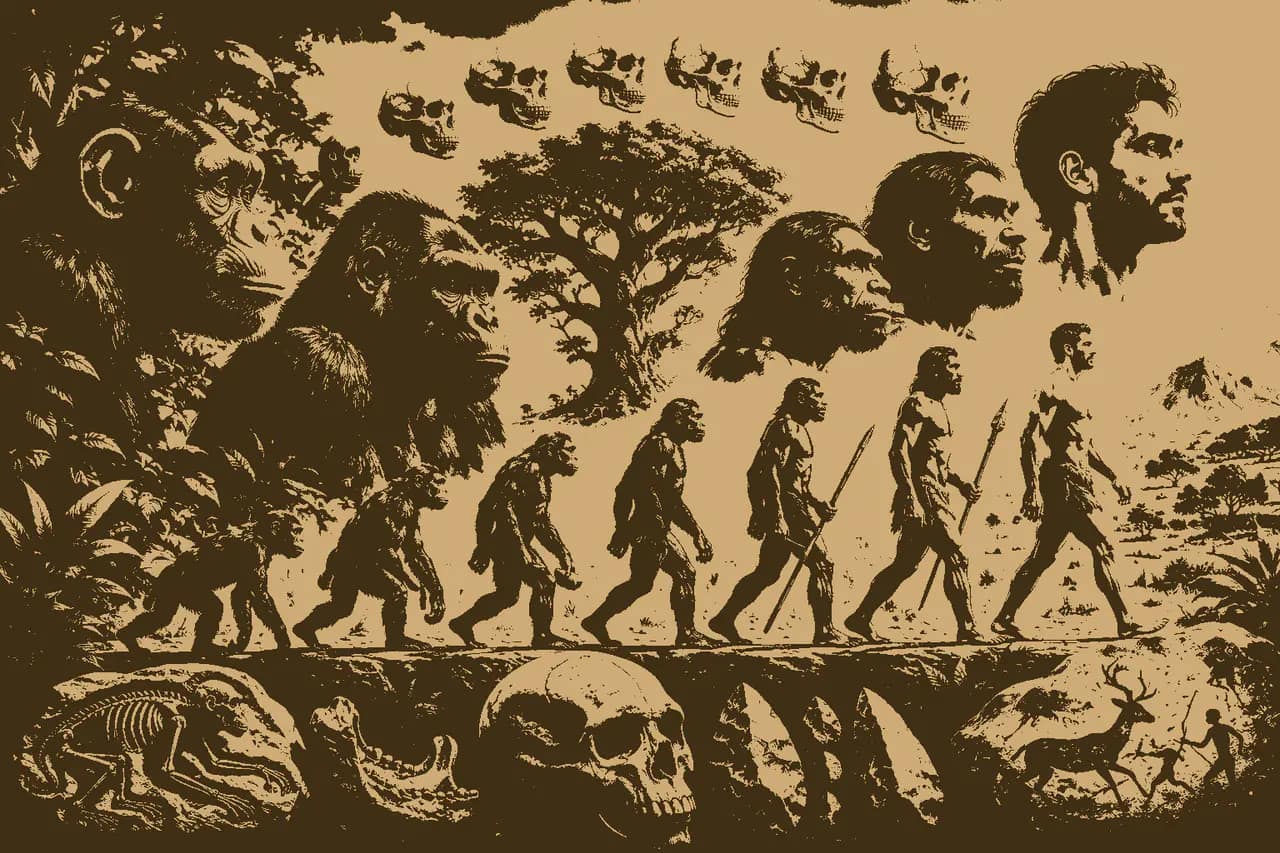
Powerful Common Ancestor of Apes and Humans MCQs with Answers for Competitive Exams
Learn Common Ancestor of Apes and Humans MCQs with Answers for NEET and Class 12 Biology. Explore fossils, evolution, primates, and human ancestry concepts exam