
Industrial melanism is one of the most fascinating examples of evolution by natural selection, making Industrial Melanism MCQs with Answers for Class 12 Biology an important topic for aspirants preparing for NEET and Class 12 examinations. The concept demonstrates how environmental changes can influence the survival and reproduction of organisms, leading to noticeable changes in populations over time.
When studying evolution, aspirants frequently encounter Industrial Melanism MCQs with Answers for Class 12 Biology because the topic provides direct evidence supporting Darwin’s theory of natural selection. It shows how favorable traits become more common in a population when they offer a survival advantage under specific environmental conditions.
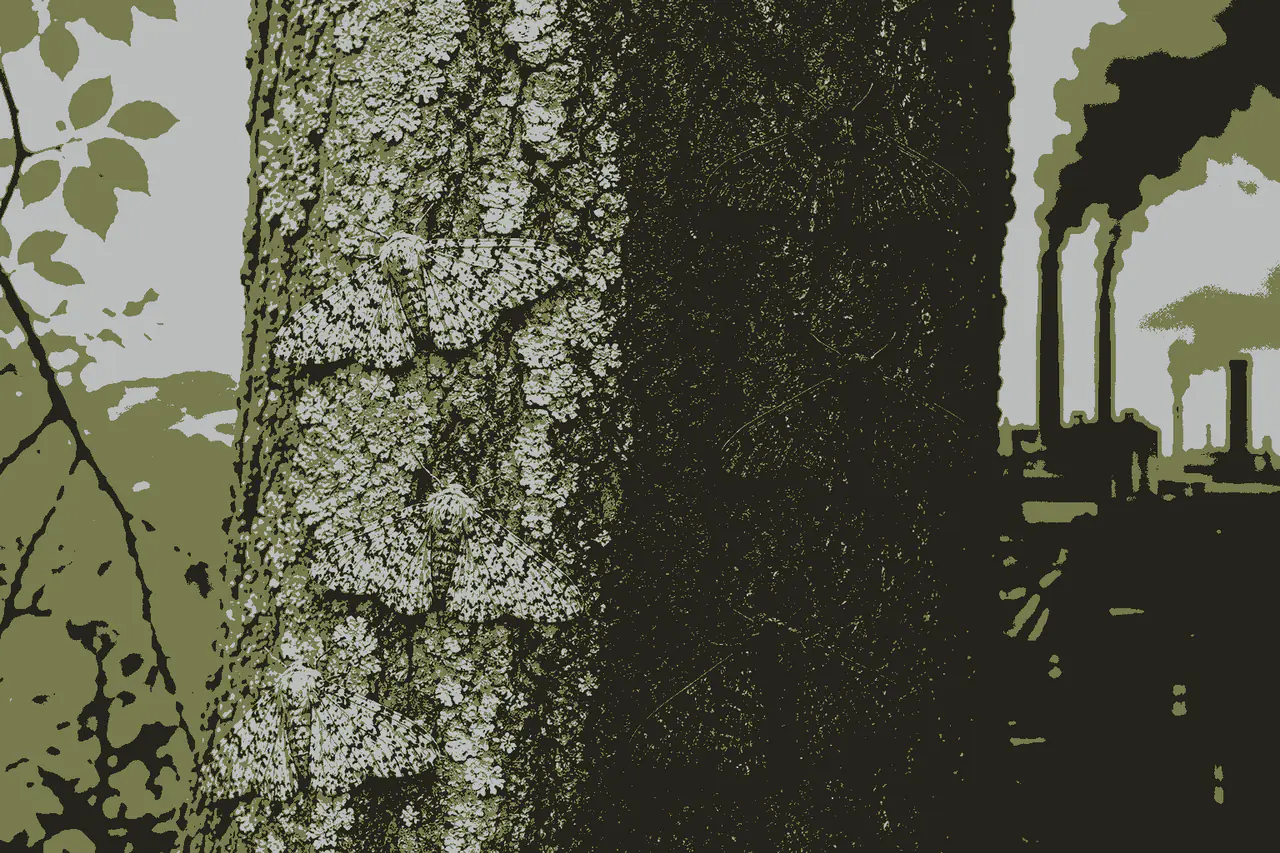
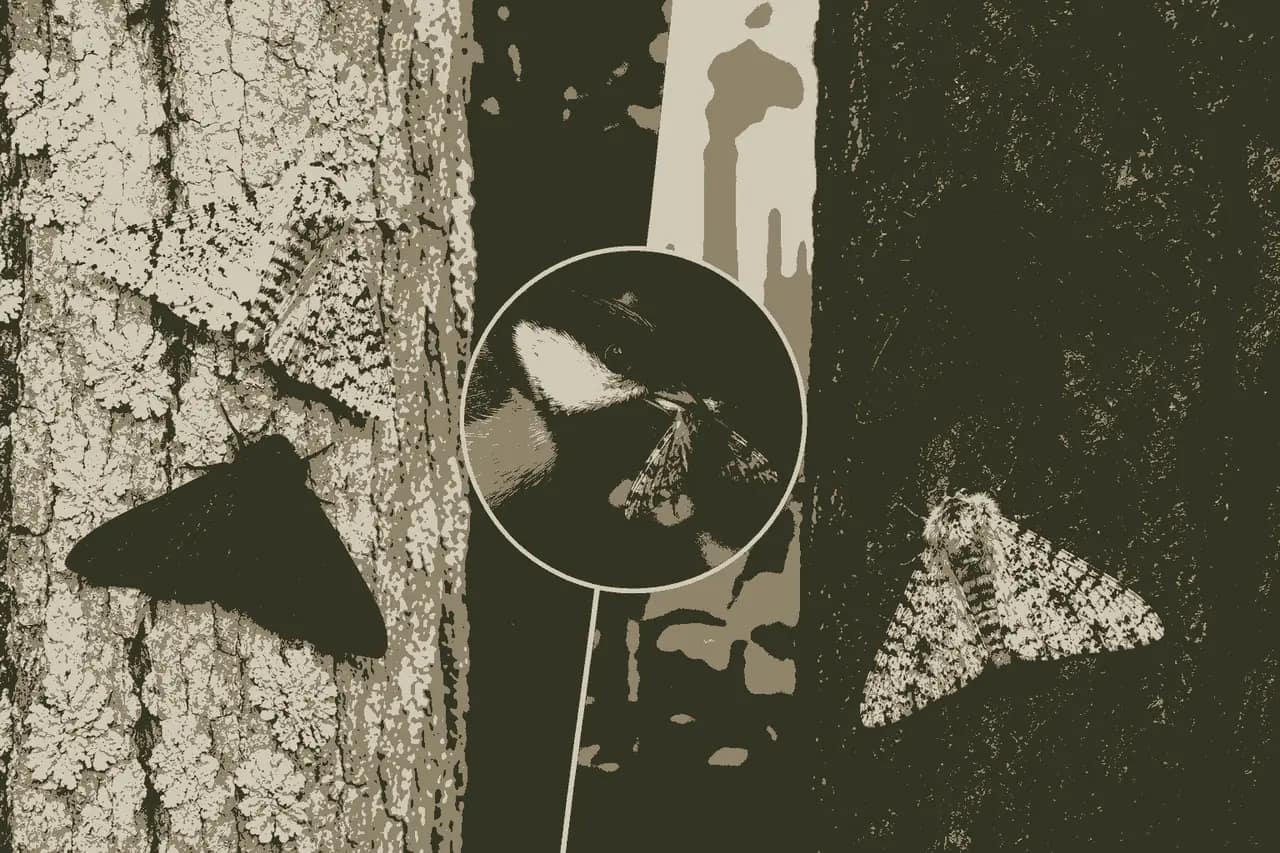
The classic example discussed in Industrial Melanism MCQs with Answers for Class 12 Biology involves the peppered moth, Biston betularia, found in England. Before the Industrial Revolution, most peppered moths were light-colored. Their pale appearance blended well with the lichen-covered tree trunks on which they rested, helping them avoid predators such as birds.
Aspirants learning Industrial Melanism MCQs with Answers for Class 12 Biology should understand that environmental conditions changed dramatically during the Industrial Revolution. Factories released large amounts of soot and smoke into the atmosphere, causing tree trunks to become dark and killing many of the lichens that previously covered them.
As explained in Industrial Melanism MCQs with Answers for Class 12 Biology, this environmental change altered the survival chances of the moths. The light-colored moths became easily visible against the darkened tree trunks and were more likely to be eaten by birds. In contrast, dark-colored moths were better camouflaged and survived in greater numbers.
The evolutionary significance highlighted in Industrial Melanism MCQs with Answers for Class 12 Biology is that the frequency of dark-colored moths gradually increased in polluted industrial areas. This increase did not occur because moths intentionally changed color; rather, individuals already possessing darker coloration had a selective advantage.
One reason Industrial Melanism MCQs with Answers for Class 12 Biology remains important is that it clearly demonstrates differential survival. Organisms with advantageous traits survive longer and reproduce more successfully than those lacking such traits, resulting in evolutionary change over generations.
Aspirants preparing from Industrial Melanism MCQs with Answers for Class 12 Biology should also note that industrial melanism is not limited to moths. Similar patterns have been observed in other organisms where darker pigmentation provides an adaptive advantage in polluted environments.
The concept discussed in Industrial Melanism MCQs with Answers for Class 12 Biology provides strong evidence against the idea that evolution occurs purely by chance. While genetic variations may arise randomly, natural selection acts non-randomly by favoring traits that improve survival and reproductive success.
Another key lesson from Industrial Melanism MCQs with Answers for Class 12 Biology is the importance of variation within populations. Without genetic variation, natural selection would have no traits upon which to act. The existence of both light and dark moths allowed environmental pressures to influence population structure.
Many aspirants find Industrial Melanism MCQs with Answers for Class 12 Biology helpful for understanding adaptation. Adaptations are inherited characteristics that increase an organism’s fitness in a particular environment. In polluted regions, darker coloration became an adaptive trait because it improved camouflage.
The ecological relevance of Industrial Melanism MCQs with Answers for Class 12 Biology extends beyond evolutionary theory. It also highlights the impact of human activities on natural ecosystems. Industrial pollution changed habitats significantly enough to alter the genetic composition of wild populations.
An important detail often emphasized in Industrial Melanism MCQs with Answers for Class 12 Biology is that when pollution levels later decreased and environmental conditions improved, light-colored moths again became more common in certain regions. This reversal further supports the role of natural selection.
For aspirants, Industrial Melanism MCQs with Answers for Class 12 Biology serves as an excellent example of microevolution. Microevolution refers to changes in allele frequencies within a population over relatively short periods of time.
The relationship between camouflage and survival is another central theme in Industrial Melanism MCQs with Answers for Class 12 Biology. Organisms that blend effectively with their surroundings are less likely to be detected by predators, increasing their chances of survival and reproduction.
Understanding Industrial Melanism MCQs with Answers for Class 12 Biology also helps aspirants appreciate how environmental pressures can shape biodiversity. Different environments favor different traits, leading to variation in populations across regions and time periods.
Another reason Industrial Melanism MCQs with Answers for Class 12 Biology is frequently included in examinations is its simplicity and clarity. The peppered moth example provides a straightforward demonstration of how natural selection operates in real-world situations.
The evolutionary principles illustrated through Industrial Melanism MCQs with Answers for Class 12 Biology are applicable to many other biological phenomena, including antibiotic resistance in bacteria and pesticide resistance in insects. In each case, individuals possessing advantageous traits become more common over generations.
Aspirants should remember while studying Industrial Melanism MCQs with Answers for Class 12 Biology that natural selection does not create new traits. Instead, it selects among existing variations, increasing the frequency of beneficial characteristics in a population.
The historical importance of Industrial Melanism MCQs with Answers for Class 12 Biology lies in its role as one of the earliest and strongest pieces of evidence supporting Darwinian evolution. It transformed natural selection from a theoretical concept into an observable biological process.
Because evolution is a major component of Class 12 Biology, Industrial Melanism MCQs with Answers for Class 12 Biology often appears in objective questions, assertion-reason questions, and conceptual discussions. A thorough understanding of this topic can significantly improve examination performance.
For NEET and board exam preparation, Industrial Melanism MCQs with Answers for Class 12 Biology helps aspirants connect concepts such as variation, adaptation, natural selection, fitness, and evolution into a single coherent framework.
Industrial Melanism MCQs with Answers for Class 12 Biology:
1. Which of the following is not Darwin's conclusion?
A. Survival of the fittest
B. Struggle for existence
C. Inheritance of acquired characters
D. Origin of species by natural selection
Answer: C. Inheritance of acquired characters
Explanation: Inheritance of acquired characters was proposed by Jean Baptiste Lamarck, not Darwin. Darwin's theory focused on natural selection, struggle for existence, and survival of the fittest.
2. Who gave the theories of struggle for existence and survival of the fittest?
A. Wallace
B. Darwin
C. Lamarck
D. None of these
Answer: B. Darwin
Explanation: Charles Darwin proposed the concepts of struggle for existence and survival of the fittest as key components of natural selection.
3. In which era-period did the first mammal occur?
A. Permian–Palaeozoic
B. Triassic–Mesozoic
C. Tertiary–Cenozoic
D. None of the above
Answer: B. Triassic–Mesozoic
Explanation: The first mammals evolved during the late Triassic Period of the Mesozoic Era, around 200 million years ago.
4. Mammals have originated from which of the following?
A. Pisces
B. Amphibia
C. Reptilia
D. Aves
Answer: C. Reptilia
Explanation: Mammals evolved from reptile-like ancestors known as Therapsids during the Triassic Period.
5. Which is not applicable to the biological species concept?
A. Hybridization
B. Natural population
C. Reproductive isolation
D. Gene pool
Answer: A. Hybridization
Explanation: Biological species are groups that interbreed naturally and produce fertile offspring. Hybridization involves crossing different species and is not central to the biological species concept.
6. Phenomenon of industrial melanism demonstrates:
A. Reproductive isolation
B. Genetic isolation
C. Natural selection
D. Geographical isolation
Answer: C. Natural selection
Explanation: Industrial melanism in peppered moths is a classic example of natural selection where darker moths gained a survival advantage in polluted environments.
7. Modern synthetic theory of evolution does not involve:
A. Gene mutation
B. Gene recombination
C. Natural selection
D. Increase in size
Answer: D. Increase in size
Explanation: The modern synthetic theory includes mutation, recombination, natural selection, genetic drift, and isolation, but not increase in size as a mechanism.
8. Dinosaurs became extinct in:
A. Permian age
B. Triassic period
C. Jurassic period
D. Cretaceous period
Answer: D. Cretaceous period
Explanation: Dinosaurs became extinct at the end of the Cretaceous Period approximately 66 million years ago.
9. Dominant era of amphibians is:
A. Precambrian
B. Cambrian
C. Permian
D. Carboniferous
Answer: D. Carboniferous
Explanation: The Carboniferous Period is known as the "Age of Amphibians" because amphibians were highly abundant and diverse.
10. Triassic and Jurassic Periods belong to which Era?
A. Cenozoic
B. Palaeozoic
C. Mesozoic
D. Proterozoic
Answer: C. Mesozoic
Explanation: The Triassic, Jurassic, and Cretaceous periods together form the Mesozoic Era.
11. The golden age of reptiles is:
A. Cenozoic era
B. Palaeozoic era
C. Mesozoic era
D. Silurian period
Answer: C. Mesozoic era
Explanation: Reptiles, especially dinosaurs, dominated the Earth during the Mesozoic Era.
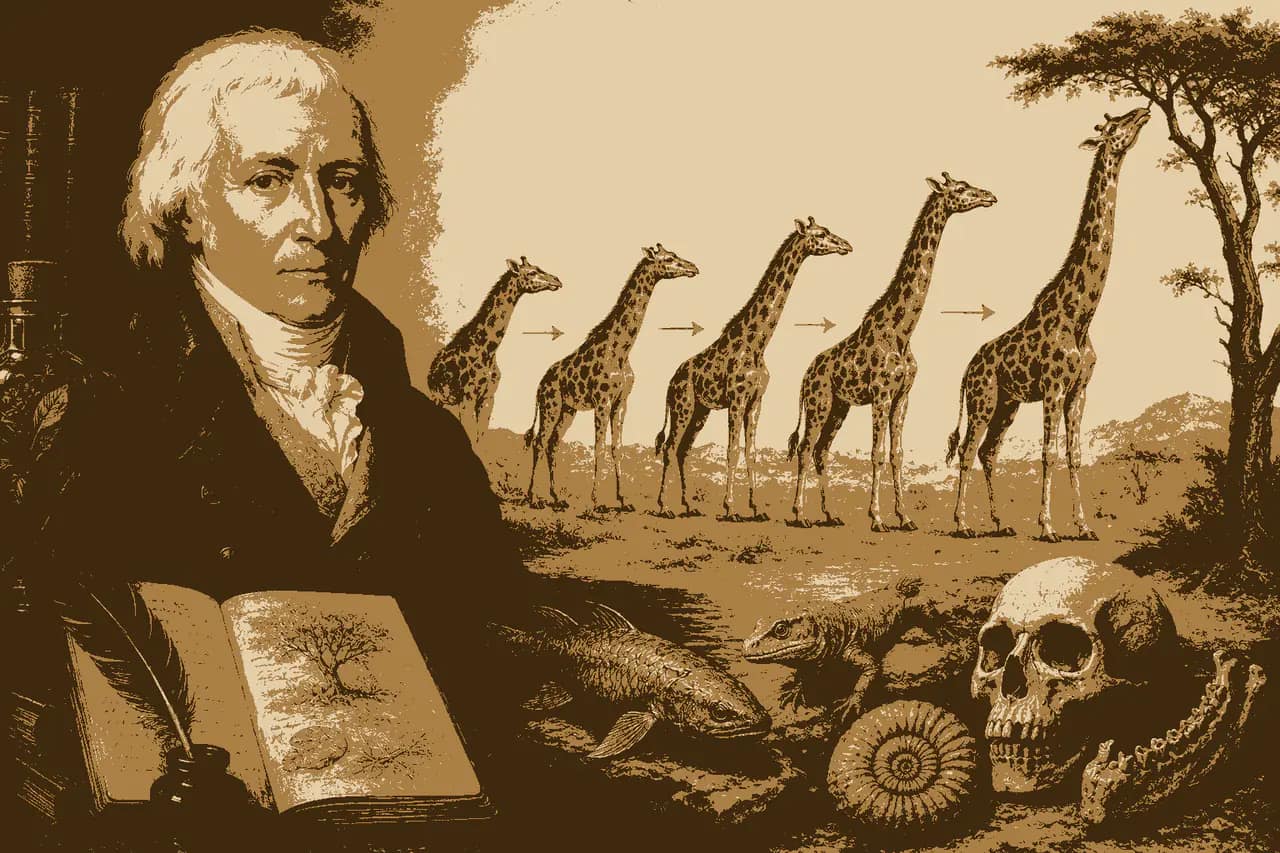
12. According to Lamarckism, long-necked giraffes evolved because:
A. Humans preferred only long-necked ones
B. Stretching of necks over many generations by short-necked ones
C. Nature selected only long-necked ones
D. Short necks suddenly changed into long necks
Answer: B. Stretching of necks over many generations by short-necked ones
Explanation: Lamarck proposed that continuous use and stretching of the neck caused giraffes to develop longer necks, which were inherited by offspring.
13. What is the method of classification called cladistics based on?
A. Natural system
B. Mutation theory
C. Artificial system
D. Evolutionary history
Answer: D. Evolutionary history
Explanation: Cladistics classifies organisms based on common ancestry and evolutionary relationships.
14. During which geological period did gymnosperms form the dominant vegetation on Earth?
A. Carboniferous
B. Permian
C. Triassic
D. Jurassic
Answer: C. Triassic
Explanation: Gymnosperms dominated terrestrial vegetation during much of the Mesozoic Era, especially the Triassic Period.
15. What does the abiogenetic theory of origin state?
A. Spontaneous generation
B. Organic evolution due to chemical reaction
C. Origin of life due to pre-existing organisms
D. Origin of life from blue-green algae
Answer: A. Spontaneous generation
Explanation: Abiogenesis originally referred to the belief that life could arise spontaneously from non-living matter.
16. Which theory explains the phenomenon "ontogeny repeats phylogeny"?
A. Natural selection
B. Inheritance theory
C. Mutation theory
D. Recapitulation theory
Answer: D. Recapitulation theory
Explanation: Recapitulation theory, proposed by Ernst Haeckel, states that the developmental stages (ontogeny) of an organism repeat the evolutionary history (phylogeny) of its ancestors.
17. Mammals are believed to have evolved from reptiles in which geological period?
A. Triassic
B. Jurassic
C. Permian
D. Cretaceous
Answer: A. Triassic
Explanation: Mammals evolved from reptilian ancestors known as Therapsids during the Triassic Period of the Mesozoic Era.
18. Which one of the following periods is largely associated with extinction of dinosaurs and increase in flowering plants and reptiles?
A. Jurassic
B. Triassic
C. Cretaceous
D. Permian
Answer: C. Cretaceous
Explanation: The Cretaceous Period witnessed the dominance of flowering plants and ended with the mass extinction of dinosaurs.
19. Which of the following is not a correct pair?
A. Mesozoic Era – Age of Mammals
B. Origin of Species – Charles Darwin
C. Study of Fossils – Palaeontology
D. Mutation Theory – Hugo de Vries
Answer: A. Mesozoic Era – Age of Mammals
Explanation: The Mesozoic Era is known as the Age of Reptiles. The Cenozoic Era is known as the Age of Mammals.
20. Dinosaurs were most abundant in:
A. Devonian
B. Jurassic
C. Permian
D. Pleistocene
Answer: B. Jurassic
Explanation: Dinosaurs reached their peak diversity and dominance during the Jurassic Period.
21. The dominant animal during Mesozoic Era is:
A. Latimeria
B. Ceratodus
C. Plesiosaurus
D. Climatius
Answer: C. Plesiosaurus
Explanation: Plesiosaurs were among the dominant marine reptiles of the Mesozoic Era.
22. According to the Neo-Darwinian theory, which of the following is responsible for the origin of new species?
A. Mutations
B. Useful variations
C. Mutations together with natural selection
D. Hybridization
Answer: C. Mutations together with natural selection
Explanation: Neo-Darwinism combines Mendelian genetics with Darwinian natural selection. Mutations create variation, while natural selection acts on those variations.
23. Survival of the fittest is the basic principle of competition. Its importance in organic evolution was explained by:
A. Lamarck
B. De Vries
C. Darwin
D. Mendel
Answer: C. Darwin
Explanation: Darwin emphasized survival of the fittest as the central mechanism driving natural selection and evolution.
24. Darwin's theory of Natural Selection was based upon:
A. Malthus' idea of population
B. Mutations
C. Struggle for existence
D. Inheritance of acquired characters
Answer: A. Malthus' idea of population
Explanation: Darwin was greatly influenced by Thomas Malthus' observations on population growth and competition for resources.
25. The earliest fossil form in the phylogeny of horse is:
A. Merychippus
B. Mesohippus
C. Eohippus
D. Equus
Answer: C. Eohippus
Explanation: Eohippus (Hyracotherium) is considered the earliest known ancestor in horse evolution.
26. Two or more species occupying the same or overlapping areas are:
A. Sympatric
B. Sibling
C. Sub-species
D. Allopatric
Answer: A. Sympatric
Explanation: Sympatric species occupy the same geographic area and may interact with one another.
27. The fossil record of placoderms is found in this era:
A. Palaeozoic
B. Mesozoic
C. Cenozoic
D. Archaeozoic
Answer: A. Palaeozoic
Explanation: Placoderms were armored fishes that flourished during the Paleozoic Era, especially the Devonian Period.
28. The presence of gill slits in the embryos of all vertebrates supports the theory of:
A. Metamorphosis
B. Biogenesis
C. Organic evolution
D. Recapitulation
Answer: D. Recapitulation
Explanation: Embryonic gill slits suggest a common evolutionary ancestry among vertebrates and support Haeckel's recapitulation concept.
29. The first organisms that appeared on Earth were:
A. Photoautotrophs
B. Chemoautotrophs
C. Chemoheterotrophs
D. Coacervates
Answer: B. Chemoautotrophs
Explanation: According to many traditional biology texts, primitive chemoautotrophs are considered among the earliest living organisms capable of obtaining energy from inorganic chemicals.
30. What is the defining characteristic of chemoheterotrophs in terms of obtaining energy?
A. They obtain energy by photosynthesis
B. They use CO₂ to make their own organic compounds
C. They obtain energy by chemosynthesis
D. They directly consume organic molecules for both carbon and energy
Answer: D. They directly consume organic molecules for both carbon and energy
Explanation: Chemoheterotrophs depend on preformed organic compounds as both their energy source and carbon source. Animals, fungi, and many bacteria are examples of chemoheterotrophs.
Conclusion on Industrial Melanism MCQs with Answers for Class 12 Biology
In conclusion, Industrial Melanism MCQs with Answers for Class 12 Biology remains one of the most valuable topics in evolutionary biology because it provides a clear, real-life example of natural selection in action, helping aspirants develop a deeper understanding of how populations evolve in response to environmental change.
Related reading
Essential Peppered Moth Industrial Melanism MCQs Class 12 Biology for Fast Exam Success
Explore Peppered Moth Industrial Melanism MCQs Class 12 Biology with detailed concepts on natural selection, adaptation, camouflage, evolution, NEET preparation
Ultimate Jean Baptiste Lamarck Evolution Theory MCQs with Answers for Smart NEET Prepraration
Master Jean Baptiste Lamarck Evolution Theory MCQs with Answers for NEET , Class 12 Biology. Learn Lamarckism, acquired characters, evolution concepts examples.