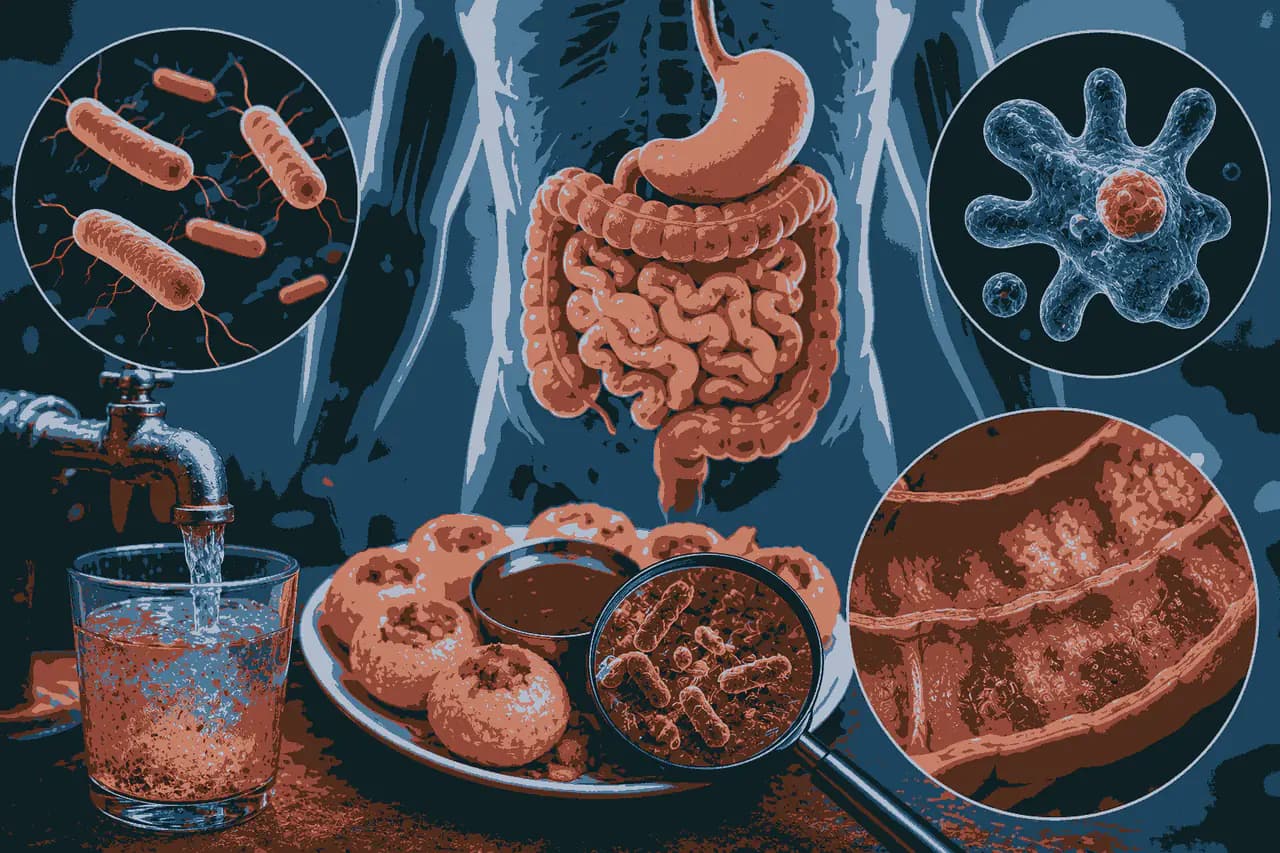
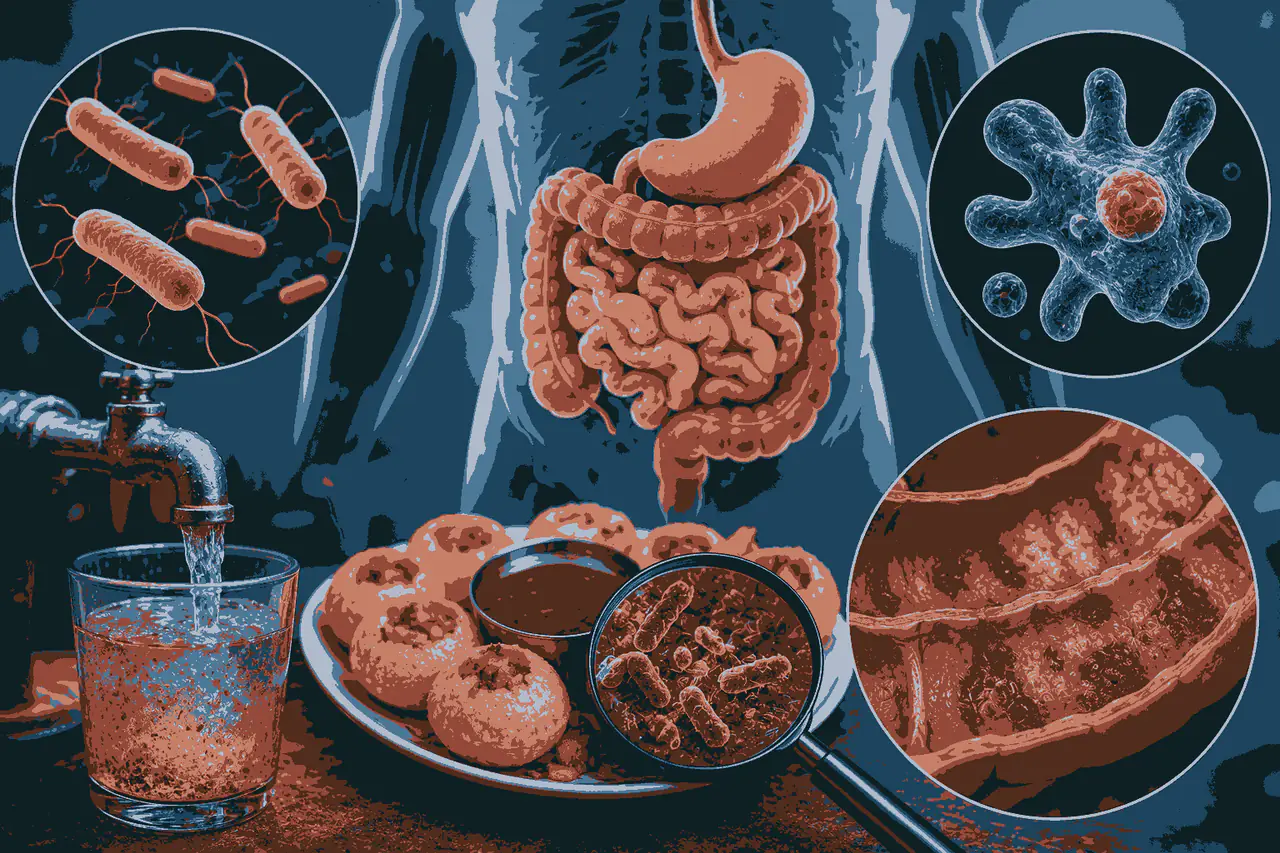
Typhoid and Dysentery MCQs for NEET Class 12 Biology is an important revision topic for aspirants who want to understand human health, infectious diseases, water-borne infections, bacterial diseases, protozoan diseases, symptoms, diagnosis, prevention, and treatment in a clear and exam-oriented way. Typhoid and Dysentery MCQs for NEET Class 12 Biology helps aspirants revise two common diseases that are frequently discussed in Class 12 Biology under the chapter Human Health and Disease. Typhoid and Dysentery MCQs for NEET Class 12 Biology is especially useful for NEET preparation because these diseases are connected with pathogens, contaminated food and water, hygiene, immunity, diagnostic methods, and public health measures. Aspirants should understand that typhoid is a bacterial disease caused by Salmonella typhi, while amoebic dysentery is commonly caused by Entamoeba histolytica. Typhoid and Dysentery MCQs for NEET Class 12 Biology becomes easier when aspirants first understand typhoid fever. Typhoid spreads mainly through contaminated food and water, especially in areas where sanitation and drinking water quality are poor. Typhoid and Dysentery MCQs for NEET Class 12 Biology helps aspirants remember symptoms of typhoid such as sustained high fever, weakness, headache, stomach pain, loss of appetite, constipation or diarrhoea, and intestinal discomfort. The Widal test is commonly associated with the diagnosis of typhoid, and this is an important fact for aspirants preparing biology-based examinations. Typhoid and Dysentery MCQs for NEET Class 12 Biology also teaches that prevention depends on safe drinking water, proper sanitation, handwashing, hygienic food preparation, vaccination, and early treatment. Dysentery is another important disease in Typhoid and Dysentery MCQs for NEET Class 12 Biology because it involves infection of the intestine and may cause diarrhoea with mucus, blood, abdominal pain, cramps, weakness, dehydration, and fever. Typhoid and Dysentery MCQs for NEET Class 12 Biology helps aspirants understand that amoebic dysentery is caused by Entamoeba histolytica, a protozoan parasite. The infective stage of Entamoeba histolytica is the cyst, which enters the body through contaminated food or water. Typhoid and Dysentery MCQs for NEET Class 12 Biology becomes more meaningful when aspirants connect dysentery with poor hygiene, open defecation, unsafe water, contaminated hands, and unhygienic food handling. This connection helps aspirants understand why disease prevention is closely linked with public health practices. Aspirants preparing Typhoid and Dysentery MCQs for NEET Class 12 Biology should focus on the difference between bacterial and protozoan infections. Typhoid is caused by bacteria, whereas amoebic dysentery is caused by a protozoan parasite. Typhoid and Dysentery MCQs for NEET Class 12 Biology also helps aspirants compare the two diseases through causative agent, mode of transmission, site of infection, symptoms, diagnosis, and prevention. In typhoid, Salmonella typhi enters the intestine and may spread through the bloodstream, while in amoebic dysentery, Entamoeba histolytica primarily affects the large intestine and may sometimes invade other organs. Typhoid and Dysentery MCQs for NEET Class 12 Biology is therefore useful for building conceptual clarity rather than depending only on memorisation. Typhoid and Dysentery MCQs for NEET Class 12 Biology also strengthens understanding of food and water hygiene. Both diseases are strongly associated with contaminated water and unsafe food. Aspirants should revise how boiling water, filtering water, washing fruits and vegetables, covering food, avoiding roadside contaminated food, and maintaining clean surroundings can reduce infection risk. Typhoid and Dysentery MCQs for NEET Class 12 Biology also reminds aspirants that early diagnosis and timely treatment prevent complications. Typhoid can become serious if untreated because it may lead to intestinal bleeding or perforation, while dysentery can cause dehydration and weakness if fluid loss is not controlled. A simple revision strategy for Typhoid and Dysentery MCQs for NEET Class 12 Biology is to prepare a comparison chart with columns such as disease name, pathogen, transmission, symptoms, diagnosis, prevention, and treatment. Typhoid and Dysentery MCQs for NEET Class 12 Biology becomes easier when aspirants revise in small sections instead of trying to remember all facts at once. They should also connect typhoid with Salmonella typhi and Widal test, while connecting amoebic dysentery with Entamoeba histolytica and cyst transmission. Typhoid and Dysentery MCQs for NEET Class 12 Biology improves retention because the same key ideas appear repeatedly in NEET-style biology preparation. Typhoid and Dysentery MCQs for NEET Class 12 Biology also helps aspirants understand the importance of immunity and responsible treatment. Antibiotics may be used for bacterial typhoid under medical guidance, while dysentery treatment depends on the causative organism and severity. Aspirants should avoid assuming that every intestinal infection is the same, because diagnosis matters before treatment. Typhoid and Dysentery MCQs for NEET Class 12 Biology therefore builds both exam knowledge and health awareness.
Typhoid and Dysentery MCQs for NEET Class 12 Biology:
- The disease occurs due to deposition of iron particles in tissues is
A. Silicosis B. Siderosis C. Emphysema D. Pneumonia Answer: B. Siderosis Explanation: Siderosis is the deposition of excess iron in body tissues. It usually refers to an environmental lung disease, also known as pulmonary siderosis or Welder’s disease, which is a form of pneumoconiosis.
- Haemophilus influenzae causes this disease in human beings
A. Pneumonia B. Common cold C. Ringworm D. Typhoid Answer: A. Pneumonia Explanation: Haemophilus influenzae can cause pneumonia in human beings. It may also cause other serious infections such as bloodstream infections.
- Assertion (A): Monkey acts as a reservoir host for the parasite that causes African sleeping sickness. Reason (R): Reservoir host lodges the infective stages of the parasite, when the primary host is not available.
A. Both A and R are correct and R is the correct explanation for A B. Both A and R are correct but R is not the correct explanation to A C. A is true but R is false D. A is false but R is true Answer: D. A is false but R is true Explanation: African trypanosomiasis, also known as sleeping sickness, is caused by Trypanosoma brucei and transmitted by the tsetse fly, Glossina. A reservoir host can lodge the infective stage of a parasite when the primary host is unavailable.
- Who discovered Plasmodium in RBC of human beings?
A. Ronald Ross B. Mendel C. Laveran D. Stephens Answer: C. Laveran Explanation: Charles Louis Alphonse Laveran discovered Plasmodium, the causative agent of malaria, in human red blood cells in 1880.
- Which of the following symptoms indicate red sickness?
A. Nausea and loss of hair B. Ulcerated skin, nausea and loss of hair C. Red and ulcerated skin D. Nausea and anaemia Answer: B. Ulcerated skin, nausea and loss of hair Explanation: Symptoms of red sickness include ulcerated skin, nausea, and loss of hair.
- Which of the following diseases is now considered completely eradicated from India?
A. Smallpox B. Poliomyelitis C. Plague D. Kala-azar Answer: A. Smallpox Explanation: Smallpox has been eradicated from India and the world through mass vaccination campaigns.
- Ringworm, a common infectious disease in man causing dry scaly lesions on the skin and scalp, is caused by
A. Bacteria B. Roundworms C. Filarial worms D. Fungi Answer: D. Fungi Explanation: Ringworm is caused by fungi. It commonly affects the skin, scalp, and nails.
- Which of the following is an auto-immune disease?
A. AIDS B. Haemophilia C. Allergy D. Rheumatoid arthritis Answer: D. Rheumatoid arthritis Explanation: Rheumatoid arthritis is an autoimmune disease in which the immune system attacks the body’s own joints.
- Dum-dum fever is caused by
A. Leishmania tropica B. Leishmania donovani C. Trypanosoma evansi D. None of the above Answer: B. Leishmania donovani Explanation: Dum-dum fever, also known as kala-azar or black fever, is caused by Leishmania donovani.
- Which organ is enlarged in malarial patient?
A. Spleen B. Kidney C. Gall bladder D. Liver Answer: A. Spleen Explanation: The spleen often becomes enlarged in malaria patients.
- Which one of the following is not correctly matched?
A. Dengue - Aedes mosquito B. Malaria - Female Anopheles C. Amoebiasis - Houseflies D. Ringworm - Droplets Answer: D. Ringworm - Droplets Explanation: Ringworm is caused by fungi and is not spread through droplets.
- Which of the following disease is the result of thiamine deficiency?
A. Marasmus B. Beri-beri C. Rickets D. Kwashiorkor Answer: B. Beri-beri Explanation: Beri-beri is caused by deficiency of thiamine, also known as vitamin B1.
- Deficiency of vitamin B2 causes
A. Cheilosis B. Thalassemia C. Beri-beri D. Pernicious anaemia Answer: A. Cheilosis Explanation: Deficiency of vitamin B2, also called riboflavin, causes cheilosis.
- Match the following Lists: List-I, Drugs, and List-II, Diseases.
List-I: Drugs A. Methotrexate B. Diethyl carbamazine C. Aureomycin D. Isonicotinic acid List-II: Diseases I. Filariasis II. Tuberculosis III. Cancer IV. Cholera Options: A. A-II, B-IV, C-I, D-III B. A-III, B-V, C-II, D-I C. A-I, B-II, C-III, D-V D. A-III, B-I, C-IV, D-II Answer: D. A-III, B-I, C-IV, D-II Explanation: Methotrexate is used in cancer treatment, diethyl carbamazine is used for filariasis, Aureomycin is used for cholera, and isonicotinic acid is used for tuberculosis.
- Which one of the following is not an autoimmune disease?
A. Graves disease B. Pernicious anaemia C. Rheumatoid arthritis D. Insomnia Answer: D. Insomnia Explanation: Insomnia is not an autoimmune disease. Graves disease, pernicious anaemia, and rheumatoid arthritis are autoimmune diseases.
- Identify the organisms that cause ringworm.
A. Haemophilus, Streptococcus B. Haemophilus, Ascaris C. Streptococcus, Ascaris D. Microsporum, Trichophyton Answer: D. Microsporum, Trichophyton Explanation: Ringworm is caused by dermatophyte fungi such as Microsporum, Trichophyton, and Epidermophyton.
- Match the following: Set I and Set II.
Set I: A. African sleeping sickness B. Oriental sores C. Elephantiasis D. Malaria Set II: I. Leishmania tropica II. Wuchereria bancrofti III. Trypanosoma gambiense IV. Plasmodium vivax Options: A. III, II, IV, I B. I, III, II, IV C. II, IV, III, I D. III, I, II, IV Answer: D. III, I, II, IV Explanation: African sleeping sickness is caused by Trypanosoma gambiense, oriental sores by Leishmania tropica, elephantiasis by Wuchereria bancrofti, and malaria by Plasmodium vivax.
- Statement I: Haemophilus influenzae causes typhoid. Statement II: Typhoid can be confirmed by Widal test.
A. Both statement I and statement II are true B. Both statement I and statement II are false C. Statement I is true but statement II is false D. Statement I is false but statement II is true Answer: D. Statement I is false but statement II is true Explanation: Typhoid is caused by Salmonella typhi, not Haemophilus influenzae. Typhoid can be confirmed by the Widal test.
- Study the following table and pick up the correct combination.
Type of Parasite - Lives in host - Example I. Cytozoic parasites - Live among cells of tissues of host - Plasmodium II. Histozoic parasites - Live within the host’s cells - Wuchereria III. Coelozoic parasites - Live in cavities of host - Ascaris IV. Hyperparasites - Lives in the body of another parasite - Nosema A. I, II B. II, III C. III, IV D. II, IV Answer: C. III, IV Explanation: Coelozoic parasites live in body cavities of the host, such as Ascaris. Hyperparasites live in the body of another parasite. Cytozoic parasites live within host cells, while histozoic parasites live between cells in host tissues.
- Dysentery disease spread by:
A. Amoeba B. Entamoeba histolytica C. Plasmodium D. Entamoeba coli Answer: B. Entamoeba histolytica Explanation: Amoebic dysentery is caused by Entamoeba histolytica and spreads through contaminated food and water.
- Cerebral malaria is spread by following:
A. Plasmodium vivax B. Plasmodium ovale C. Plasmodium falciparum D. Plasmodium malariae Answer: C. Plasmodium falciparum Explanation: Cerebral malaria is the most severe form of malaria and is commonly caused by Plasmodium falciparum.
- The chemical used in National Malaria Eradication Programme is:
A. 2, 4-D B. BHC C. DDT D. Pyrethroid Answer: C. DDT Explanation: DDT was used in malaria control programmes to control Anopheles mosquitoes, which transmit malaria parasites.
- Which of the following diseases is caused by the bacterium Salmonella?
A. Typhoid B. Syphilis C. Botulism D. Tuberculosis Answer: A. Typhoid Explanation: Typhoid is caused by Salmonella typhi.
- What causes the yellow color of eyes and skin in jaundice?
A. Biliverdin B. Bilirubin C. Yellow pigment D. Cholesterol Answer: B. Bilirubin Explanation: The yellow colour of eyes and skin in jaundice is caused by the accumulation of bilirubin.
- Which of the following diseases is considered a re-emerging infectious disease?
A. AIDS, Mad cow disease, TB B. Mad cow disease, Cholera, SARS C. SARS, Dengue, TB D. Cholera, Dengue, TB Answer: D. Cholera, Dengue, TB Explanation: Cholera, dengue, and tuberculosis are considered re-emerging infectious diseases because they may reappear or increase after a period of decline.
- If a malarial patient experiences fever at an interval of 48 hours, what type of malaria is the patient suffering from?
A. Only benign tertian malaria B. Quartan malaria or mild tertian malaria C. Malignant tertian malaria or benign tertian malaria D. Mild tertian malaria or benign tertian malaria Answer: D. Mild tertian malaria or benign tertian malaria Explanation: Fever at an interval of 48 hours is seen in tertian malaria, including mild tertian malaria or benign tertian malaria.
- Which of the following human parasites require a mosquito to complete their life cycle?
A. Ascaris lumbricoides and Wuchereria bancrofti B. Leishmania donovani and Plasmodium ovale C. Ascaris lumbricoides and Leishmania donovani D. Wuchereria bancrofti and Plasmodium ovale Answer: D. Wuchereria bancrofti and Plasmodium ovale Explanation: Wuchereria bancrofti and Plasmodium ovale both require mosquitoes to complete their life cycles.
- In malaria, when does a person suffering from the disease experience recurring chill and fever?
A. The microgametocytes and megagametocytes are being destroyed by the WBCs B. The sporozoites released from RBCs are being rapidly killed and broken down inside the spleen C. The trophozoites reach maximum growth and give out certain toxins D. The parasite after its rapid multiplication inside RBCs ruptures them, releasing the stage to enter fresh RBCs Answer: D. The parasite after its rapid multiplication inside RBCs ruptures them, releasing the stage to enter fresh RBCs Explanation: In malaria, recurring chills and fever occur when parasites multiply inside red blood cells and rupture them, releasing merozoites and toxic substances.
- Which of the following is a pair of viral diseases?
A. Typhoid, Tuberculosis B. Ringworm, AIDS C. Common cold, AIDS D. Dysentery, Common cold Answer: C. Common cold, AIDS Explanation: Common cold and AIDS are viral diseases.
- Which virus requires another hepatitis virus for its multiplication?
A. Hepatitis-A virus
B. Hepatitis-B virus
C. Hepatitis-C virus
D. Hepatitis-D virus
Answer: D. Hepatitis-D virus
Explanation: Hepatitis-D virus requires Hepatitis-B virus for its replication.
 In conclusion, Typhoid and Dysentery MCQs for NEET Class 12 Biology is a valuable topic for aspirants who want to master infectious diseases in Class 12 Biology and NEET preparation. It improves understanding of pathogens, contaminated food and water, intestinal infections, symptoms, prevention, diagnosis, and treatment. Typhoid and Dysentery MCQs for NEET Class 12 Biology also teaches that hygiene, sanitation, safe drinking water, vaccination, and early medical care are essential for disease control. With consistent revision, Typhoid and Dysentery MCQs for NEET Class 12 Biology can help aspirants answer disease-related biology questions with better speed, accuracy, and confidence.
Related reading

Essential Vaccines and Drug Abuse MCQs Class 12 Biology - Powerful Exam Practice Questions
Revise Vaccines and Drug Abuse MCQs Class 12 Biology with key facts on immunity, vaccines, addiction, drug source, and health risks for aspirants prep for exams
High - Risk Oncogenes and Cancer MCQs for Class 12 Biology - Avoid Costly Mistakes
Explore Oncogenes and Cancer MCQs for Class 12 Biology with insights on tumours, metastasis, causes, diagnosis, treatment for aspirants preparing biology exams.