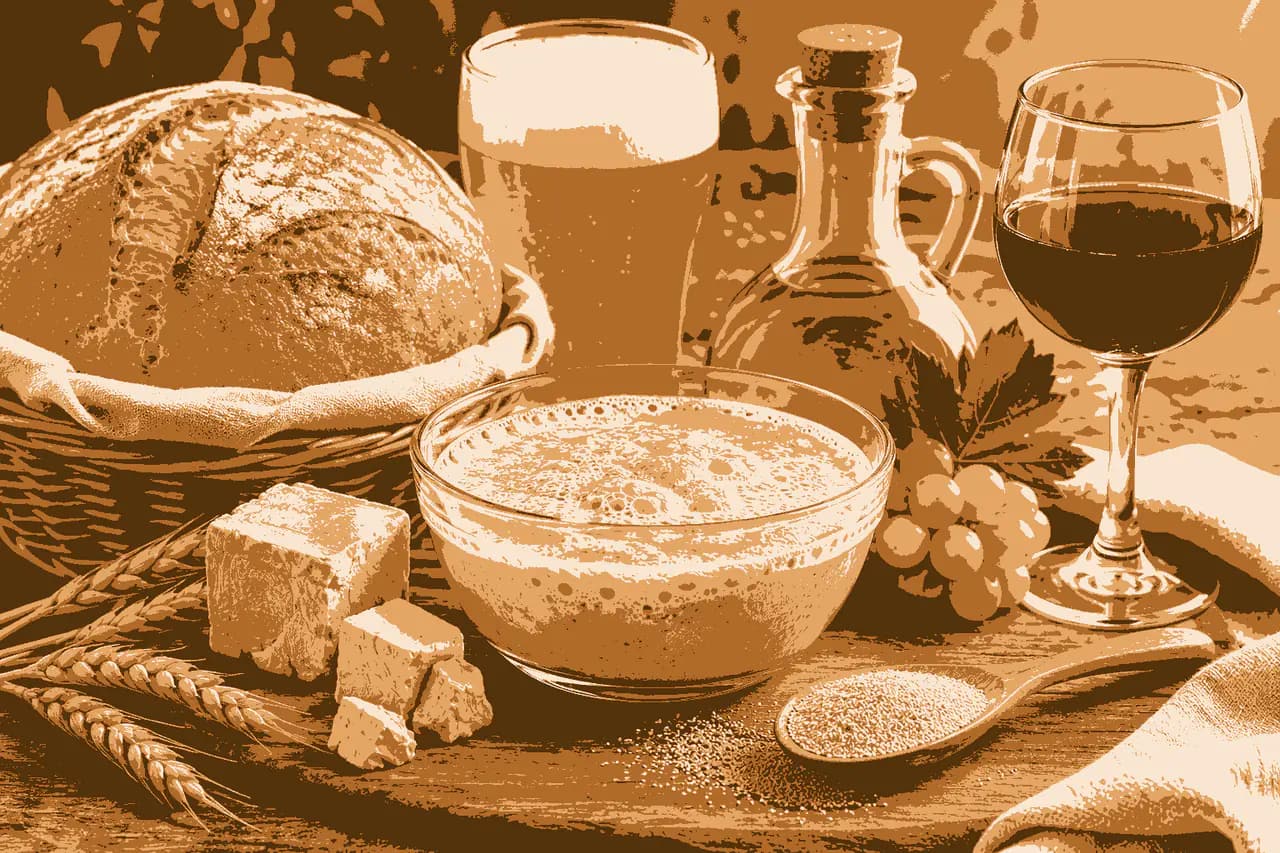
Saccharomyces Cerevisiae MCQs with Answers is an important biology topic for aspirants who want to understand fermentation, yeast, alcohol production, bread making, industrial microbiology, and useful microbes in a clear and exam-focused way. Saccharomyces Cerevisiae MCQs with Answers helps aspirants revise one of the most important microorganisms used in household, commercial, and industrial processes. Saccharomyces cerevisiae is commonly known as baker’s yeast or brewer’s yeast, and it plays a major role in converting sugars into alcohol and carbon dioxide through fermentation. Saccharomyces Cerevisiae MCQs with Answers is useful for Class 12 Biology, NEET, nursing entrance exams, agriculture-related exams, and other competitive tests where microbes in human welfare are frequently asked. Saccharomyces Cerevisiae MCQs with Answers becomes easier when aspirants first understand the nature of yeast. Yeast is a unicellular fungus that can grow rapidly under suitable conditions and can perform anaerobic respiration when oxygen is limited. Saccharomyces Cerevisiae MCQs with Answers teaches that yeast breaks down glucose and other sugars to produce ethanol and carbon dioxide. This process is called alcoholic fermentation. Saccharomyces Cerevisiae MCQs with Answers helps aspirants remember that the enzyme complex zymase, produced by yeast, is involved in the conversion of sugar into alcohol. Saccharomyces Cerevisiae MCQs with Answers is especially important in bread making. During bread preparation, yeast ferments sugars present in the dough and releases carbon dioxide gas. Saccharomyces Cerevisiae MCQs with Answers explains that carbon dioxide gets trapped within the dough, causing it to rise and become soft and porous. This is why Saccharomyces cerevisiae is widely used in bakery industries. Saccharomyces Cerevisiae MCQs with Answers helps aspirants connect the biological process of fermentation with the everyday example of bread production. Saccharomyces Cerevisiae MCQs with Answers also covers the production of alcoholic beverages. In the brewing industry, yeast is used to ferment sugars obtained from grains, fruits, or other plant materials. Saccharomyces Cerevisiae MCQs with Answers helps aspirants understand that beer, wine, and other fermented beverages depend on yeast activity. In beer production, yeast converts fermentable sugars into ethanol and carbon dioxide, giving the beverage its alcoholic content and characteristic properties. Saccharomyces Cerevisiae MCQs with Answers also helps aspirants remember that brewer’s yeast is associated with alcoholic fermentation. Saccharomyces Cerevisiae MCQs with Answers is also linked with commercial ethanol production. Ethanol is considered a useful biofuel and may be blended with petrol as an alternative energy source. Saccharomyces Cerevisiae MCQs with Answers explains that yeast can ferment molasses, sugarcane juice, or other carbohydrate-rich materials to produce ethanol on a large scale. This makes yeast important not only in food industries but also in renewable energy production. Saccharomyces Cerevisiae MCQs with Answers helps aspirants connect microbiology with biotechnology, industry, and environmental applications. Aspirants preparing Saccharomyces Cerevisiae MCQs with Answers should also revise related microorganisms used in fermentation. Lactobacillus is involved in curd formation, Acetobacter aceti converts alcohol into vinegar, Aspergillus niger produces citric acid, and Propionibacterium shermanii helps in Swiss cheese formation. Saccharomyces Cerevisiae MCQs with Answers becomes easier when aspirants prepare comparison tables for microbes and their products. By comparing yeast with other useful microbes, aspirants can avoid confusion during exams and improve recall. Saccharomyces Cerevisiae MCQs with Answers should be studied with keywords such as fermentation, ethanol, carbon dioxide, zymase, bread making, brewing, anaerobic respiration, biotechnology, biofuel, and industrial microbiology. Saccharomyces Cerevisiae MCQs with Answers becomes more useful when aspirants understand the process rather than memorising isolated facts. The basic sequence is simple: sugar is fermented by yeast, ethanol and carbon dioxide are produced, and these products are used in food, beverage, and industrial applications. Saccharomyces Cerevisiae MCQs with Answers also reminds aspirants that microbes are not always harmful; many microorganisms are highly beneficial for humans. For effective revision, Saccharomyces Cerevisiae MCQs with Answers should be studied using short notes, flowcharts, and product-based charts. Aspirants can make a simple table showing organism, substrate, product, and application. Saccharomyces Cerevisiae MCQs with Answers becomes stronger when aspirants connect Saccharomyces cerevisiae with bread, beer, wine, ethanol, and zymase. Aspirants should also revise the difference between alcoholic fermentation and lactic acid fermentation because both are commonly tested in biology exams.
Saccharomyces Cerevisiae MCQs with Answers:
- What are organisms called that can tolerate and thrive in a wide range of temperatures?
A. Eurythermal B. Stenohaline C. Stenothermal D. Euryhaline Answer: A. Eurythermal Explanation: Eurythermal organisms can tolerate and thrive in a wide range of temperatures.
- At what height in the Himalaya region are taiga forests located?
A. At the height of 1000 to 1500 meters B. At the height of 2000 to 3000 meters C. At the height of 500 to 1000 meters D. At the height of 1000 meters to 1200 meters Answer: A. At the height of 1000 to 1500 meters Explanation: In the Himalaya region, taiga forests are located at the height of 1000 to 1500 meters.
- What is the correct range of latitudes for the Temperate region?
A. 40°–60° B. 0°–20° C. 20°–40° D. 60°–80° Answer: A. 40°–60° Explanation: The temperate region generally lies between 40° and 60° latitudes.
- Which forest is known as the “lungs of the planet Earth”?
A. Evergreen forests B. Tundra forest C. Amazon rainforest D. Rainforests of North-East India Answer: C. Amazon rainforest Explanation: The Amazon rainforest is often called the lungs of the planet Earth because it plays an important role in oxygen production and carbon dioxide absorption.
- What is true for individuals of the same species?
A. Live in the same niche B. Live in the same habitat C. Interbreeding D. Live in different habitat Answer: C. Interbreeding Explanation: Individuals of the same species can interbreed and produce fertile offspring.
- What is the alcoholic content of modern beer typically around?
A. 3–6% B. 9–12% C. 40% D. 60% Answer: A. 3–6% Explanation: The alcoholic content of modern beer is usually around 3% to 6%.
- Which microbe is the principal agent of alcoholic fermentation and bread making?
A. Schizosaccharomyces octosporus B. Saccharomyces cerevisiae C. Saccharomyces ellipsoideus D. None of the above Answer: B. Saccharomyces cerevisiae Explanation: Saccharomyces cerevisiae is the principal microbe used in alcoholic fermentation and bread making.
- Which microbe is commonly used for the commercial production of ethanol?
A. Clostridium botulinum B. Streptococcus C. Trichoderma polysporum D. Saccharomyces cerevisiae Answer: D. Saccharomyces cerevisiae Explanation: Saccharomyces cerevisiae is commonly used for the commercial production of ethanol.
- What creates the large holes in Swiss cheese?
A. Bacterium producing a large amount of CO₂ B. Machine C. Fungus that releases a lot of gases during metabolic activities D. Bacterium that produces methane gas Answer: A. Bacterium producing a large amount of CO₂ Explanation: The large holes in Swiss cheese are formed by carbon dioxide gas produced by bacteria during cheese making.
- What is the source of the intoxicating beverage called sake?
A. Sorghum vulgare B. Arachis hypogaea C. Oryza sativa D. Mangifera indica Answer: C. Oryza sativa Explanation: Sake is an alcoholic beverage prepared from rice, Oryza sativa.
- What do brewer’s yeast lack?
A. Diastase and amylase B. Amylase only C. Diastase only D. Maltose Answer: A. Diastase and amylase Explanation: Brewer’s yeast, Saccharomyces cerevisiae, lacks diastase and amylase enzymes.
- Which enzyme is used in the beverage industry to flavor soft drinks and in the baking industry to sweeten biscuits and cakes?
A. Glycoamylase B. Amylase C. Proteases D. Glucoamylase Answer: D. Glucoamylase Explanation: Glucoamylase is used in the beverage industry to flavor soft drinks and in the baking industry to sweeten biscuits and cakes.
- Which bacteria is helpful in the preparation and flavoring of tea leaves?
A. Bacillus subtilis B. Bacillus megaterium C. Bacillus aceti D. Bacillus radicicola Answer: B. Bacillus megaterium Explanation: Bacillus megaterium is helpful in the preparation and flavoring of tea leaves.
- Why are surgical instruments boiled in water before use?
A. For killing the pathogens present on them B. So that doctors can use them easily C. Provides pleasure to the patient D. All the saprophytes die on the operative surface Answer: A. For killing the pathogens present on them Explanation: Surgical instruments are boiled before use to sterilize them and kill pathogens present on their surface.
- Which fermenting microbe is used for the retting of jute?
A. Helicobacter pylori B. Mesophilic bacteria C. Streptococcus lactin D. Butyric acid bacteria Answer: D. Butyric acid bacteria Explanation: Butyric acid bacteria are involved in the retting of jute.
- What is the sphere of living matter together with water, air, and soil on the surface of the Earth called?
A. Atmosphere B. Hydrosphere C. Lithosphere D. Biosphere Answer: D. Biosphere Explanation: The biosphere includes living organisms along with the parts of air, water, and soil that support life.
- Circannular rhythms are controlled by biological clocks. What role does temperature play in setting the biological clocks?
A. Both A and R are correct and R is the correct explanation of A B. Both A and R are correct but R is not the correct explanation of A C. A is correct but R is not correct D. A is not correct but R is correct Answer: C. A is correct but R is not correct Explanation: Biological rhythms are controlled by internal biological clocks, but temperature does not act as the main direct setting factor in the given statement.
- What is the boundary or transition between two or more communities that is sharply defined called?
A. Epilimnion B. Biome C. Anticline D. Ecotone Answer: D. Ecotone Explanation: An ecotone is a transition area between two biological communities where they meet and interact.
- How are the thylakoids in chloroplast arranged?
A. Interconnected discs B. Interconnected sacs C. Stacked discs D. None of the above Answer: C. Stacked discs Explanation: Thylakoids in chloroplasts are arranged as stacked discs called grana.
- What does Taiga refer to?
A. Temperate deciduous forest of the northern hemisphere B. Temperate semi-deciduous forest of the northern hemisphere C. Temperate tall grasslands of the northern hemisphere D. Temperate coniferous forest of the northern hemisphere Answer: D. Temperate coniferous forest of the northern hemisphere Explanation: Taiga, also called boreal forest, refers to the temperate coniferous forest of the Northern Hemisphere.
-
- Select the correct sequence regarding the levels of ecological organization.
- Is bioenergy always eco-friendly, cheap, non-polluting, or both eco-friendly and cheap?
A. Eco-friendly B. Cheap C. Non-polluting D. Both A and B Answer: D. Both A and B Explanation: Bioenergy is considered eco-friendly and can be comparatively cheap because it is derived from renewable organic materials such as plant and agricultural waste.
- Which element has the highest percentage weight in both the Earth’s crust and the human body?
A. Hydrogen B. Carbon C. Oxygen D. Calcium Answer: C. Oxygen Explanation: Oxygen has the highest percentage by weight in both the Earth’s crust and the human body.
- Which pair is incorrect?
A. Cenchrus – Savanna B. Abies – Coniferous forest C. Quercus – Broadleaf forest D. Tectona – Temperate forest Answer: D. Tectona – Temperate forest Explanation: Tectona, commonly known as teak, is found in tropical deciduous forests, not temperate forests.
- Petroleum can be replaced by:
A. Propanol B. Ethanol C. Lactic acid D. Acetic acid Answer: B. Ethanol Explanation: Ethanol is a renewable fuel that can be blended with petrol and used as an alternative fuel.
- Fermentation of sugar to yield alcohol is carried out by:
A. Zymase B. Micro-organisms C. Decomposition of sugar D. Raised temperature Answer: A. Zymase Explanation: Fermentation of sugar to alcohol is carried out by zymase, an enzyme complex produced by yeast.
- Vinegar is prepared from alcohol with the help of:
A. Azotobacter B. Lactobacillus C. Rhizobium D. Acetobacter Answer: D. Acetobacter Explanation: Vinegar is prepared from alcohol by acetic acid bacteria, mainly Acetobacter.
- Beer and buttermilk are products of fermentation by
A. Rhizopus stolonifer B. Caedobacter taeniospiralis C. Bacillus subtilis D. Saccharomyces cerevisiae Answer: D. Saccharomyces cerevisiae Explanation: Beer is produced by fermentation using Saccharomyces cerevisiae. Buttermilk is produced mainly through lactic acid bacterial fermentation.
- Pasteurization is a process that means heating of drinks at
A. 120°C for 60 minutes B. 80°C for 30 minutes C. 60°–70°C for 30 minutes D. 70°C for 60 minutes Answer: C. 60°–70°C for 30 minutes Explanation: Pasteurization involves heating drinks at about 60°–70°C for 30 minutes to kill harmful microorganisms and increase shelf life.
- Which one of the following is used in the production of alcohol?
A. Leuconostoc citrovorum
B. Saccharomyces cerevisiae
C. Torulopsis utilis
D. Clostridium botulinum
Answer: B. Saccharomyces cerevisiae
Explanation: Saccharomyces cerevisiae is commonly used in alcohol production through fermentation.
Conclusion on Saccharomyces Cerevisiae MCQs with Answers
In conclusion, Saccharomyces Cerevisiae MCQs with Answers is a valuable topic for aspirants who want to master microbes in human welfare and industrial microbiology. Saccharomyces Cerevisiae MCQs with Answers improves understanding of yeast, fermentation, alcohol production, bread making, ethanol production, biofuel, and useful microbial products. With consistent revision, aspirants can remember the role of Saccharomyces cerevisiae clearly and perform better in biology-based examinations.
Related reading
Ultimate Vam Mycorrhiza MCQs with Answers Class 12 Biology - Powerful Practice for Exam Success
Revise Vam Mycorrhiza MCQs with Answers Class 12 Biology covering VAM, endomycorrhiza, phosphate absorption, biofertilizers, plant roots, and exam preparations.
Power-Packed Lactobacillus and Curd Formation MCQs with Answers to Boost Your Biology Score
Revise Lactobacillus and Curd Formation MCQs with Answers covering LAB, fermentation, curd making, probiotics, vitamin B12, and biology examination preparation.