The concept of industrial melanism is one of the most fascinating examples of evolution by natural selection, making Peppered Moth Industrial Melanism MCQs Class 12 Biology an important topic for aspirants preparing for board examinations and competitive entrance tests such as NEET. Understanding industrial melanism not only helps aspirants grasp the principles of Darwinian evolution but also provides a real-life example of how environmental changes can influence the survival and reproduction of organisms. As a result, Peppered Moth Industrial Melanism MCQs Class 12 Biology is frequently included in biology syllabi and examination questions.
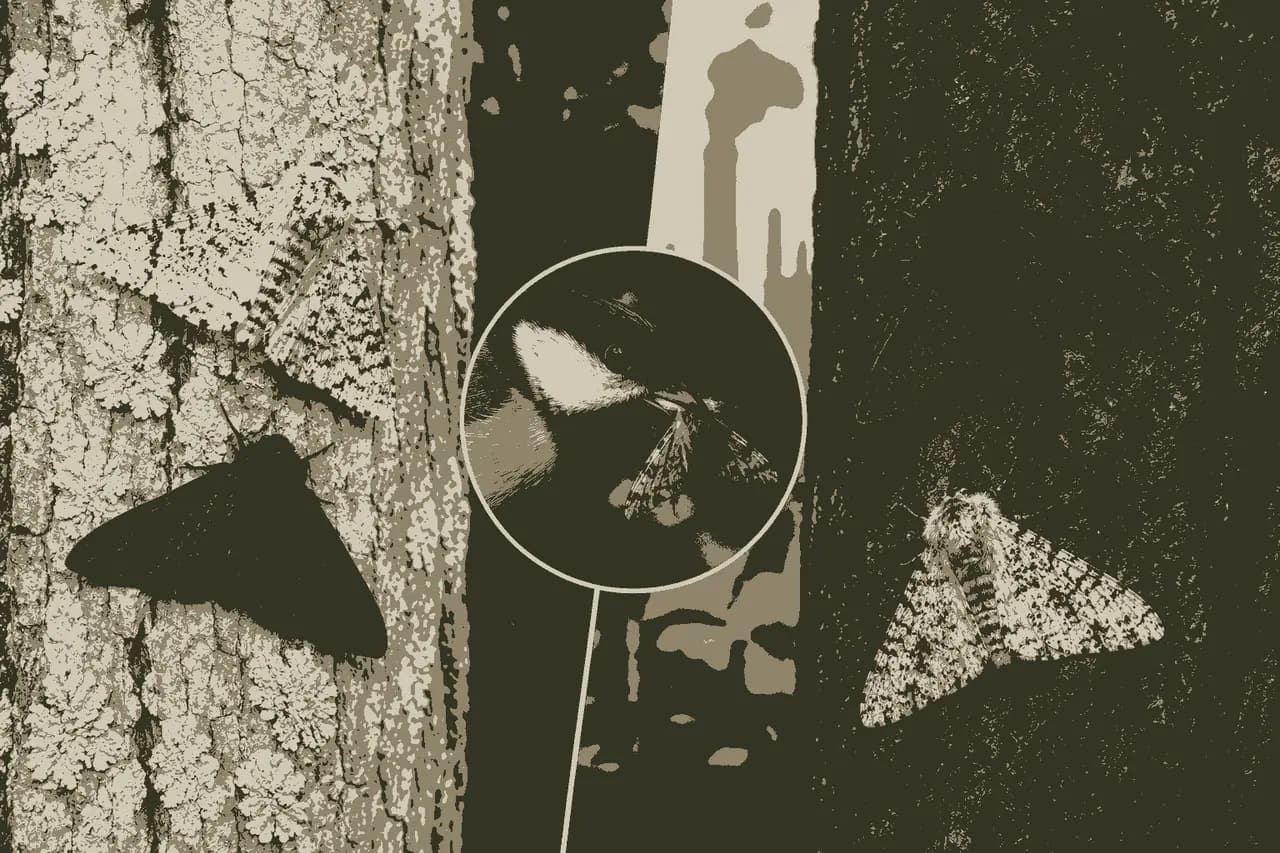
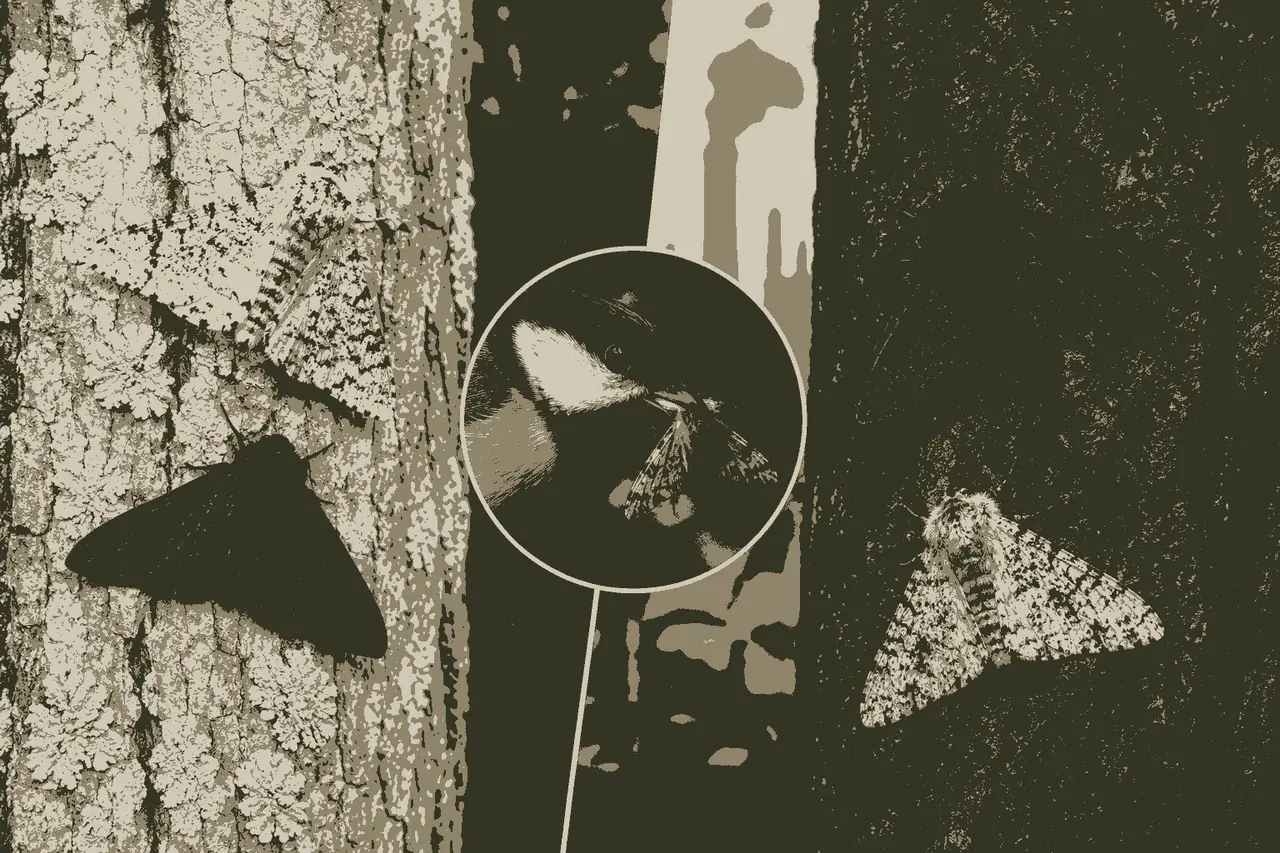
The story behind Peppered Moth Industrial Melanism MCQs Class 12 Biology revolves around the peppered moth (Biston betularia), a species found in England. Before the Industrial Revolution, most peppered moths were light-colored with black speckles. These moths rested on tree trunks covered with light-colored lichens, making them difficult for predators such as birds to spot. Consequently, the lighter variety had a survival advantage. This historical background is a key aspect often discussed in Peppered Moth Industrial Melanism MCQs Class 12 Biology.
As industrialization increased, factories released large amounts of soot and smoke into the environment. The pollution darkened tree trunks and destroyed the lichens that previously covered them. Under these changed environmental conditions, the darker variety of peppered moths became less visible against the blackened tree bark. Aspirants studying Peppered Moth Industrial Melanism MCQs Class 12 Biology learn that this change in environmental conditions altered the survival rates of the two moth varieties.
The darker moths possessed a genetic variation that allowed them to produce more melanin pigment, giving them a dark appearance. In the polluted environment, these dark-colored moths were better camouflaged and therefore less likely to be eaten by birds. The lighter moths became more visible and experienced higher predation rates. This phenomenon is central to Peppered Moth Industrial Melanism MCQs Class 12 Biology because it clearly demonstrates natural selection in action.
One of the reasons Peppered Moth Industrial Melanism MCQs Class 12 Biology is so important is that it provides direct evidence supporting Darwin’s theory of evolution. Darwin proposed that organisms possessing favorable variations are more likely to survive and reproduce. In the case of the peppered moth, the dark-colored variation became advantageous only after environmental conditions changed. Aspirants revising Peppered Moth Industrial Melanism MCQs Class 12 Biology should understand that natural selection does not create new traits but selects among existing variations.
The phenomenon of industrial melanism is also an example of adaptation. Through Peppered Moth Industrial Melanism MCQs Class 12 Biology, aspirants learn that adaptation refers to features that increase an organism’s chances of survival in a particular environment. The dark coloration of melanic moths was advantageous in polluted areas because it provided camouflage. Thus, Peppered Moth Industrial Melanism MCQs Class 12 Biology helps explain how populations can change over generations in response to environmental pressures.
Another important point covered in Peppered Moth Industrial Melanism MCQs Class 12 Biology is the role of genetic variation. Variations naturally occur within populations, and these differences become important when environmental conditions change. Without variation, natural selection cannot operate effectively. Therefore, Peppered Moth Industrial Melanism MCQs Class 12 Biology highlights the importance of genetic diversity in evolutionary processes.
Aspirants studying Peppered Moth Industrial Melanism MCQs Class 12 Biology should also understand the concept of differential survival. The dark moths survived at higher rates than the light moths in polluted environments. As a result, they reproduced more successfully and passed on their genes to future generations. Over time, the frequency of dark-colored moths increased significantly. This change in gene frequency is an important evolutionary concept often emphasized in Peppered Moth Industrial Melanism MCQs Class 12 Biology.
Interestingly, when pollution levels later decreased due to environmental regulations, the situation began to reverse. Tree trunks became lighter once again as lichens returned. In these cleaner environments, light-colored moths regained their camouflage advantage, and their populations increased. This reversal is often mentioned in Peppered Moth Industrial Melanism MCQs Class 12 Biology because it demonstrates that natural selection is an ongoing process influenced by changing environmental conditions.
The peppered moth example is frequently used to explain concepts such as camouflage, adaptation, variation, and survival of the fittest. Aspirants preparing through Peppered Moth Industrial Melanism MCQs Class 12 Biology often encounter questions that test their understanding of these interconnected ideas. Because the example is simple yet powerful, it remains one of the most widely taught illustrations of natural selection in biology education.
Another reason why Peppered Moth Industrial Melanism MCQs Class 12 Biology is valuable for aspirants is that it connects ecology and evolution. Environmental changes caused by human activities directly influenced the evolutionary success of different moth varieties. This demonstrates how ecological factors can drive evolutionary change over relatively short periods of time.
From an examination perspective, Peppered Moth Industrial Melanism MCQs Class 12 Biology is considered a high-yield topic because it appears regularly in board exams, NEET, and other biology entrance tests. Aspirants who thoroughly understand the sequence of events, the role of natural selection, and the concept of adaptation are better equipped to answer both objective and descriptive questions related to evolution.
Peppered Moth Industrial Melanism MCQs Class 12 Biology:
1. As per geological time scale, hominids evolved during
A. Miocene
B. Pliocene
C. Pleistocene
D. Oligocene
Answer: B. Pliocene
Explanation:
As per the geological time scale, hominids evolved during the Pliocene epoch. Hominids include modern humans and their direct ancestors. These organisms are distinguished
2. Darwin's finches provide excellent evidence in favour of organic evolution. These are related to which of the following evidences?
A. Embryology
B. Palaeontology (or fossils)
C. Anatomy
D. Biogeography (or geographic distribution)
Answer: D. Biogeography (or geographic distribution)
Explanation:
Darwin's finches of the Galápagos Islands are a classic example of biogeography. Darwin observed that finches on different islands had different beak shapes adapted to different food sources. These birds evolved from a common ancestral population that migrated from the South American mainland. Their diversification demonstrates adaptive radiation and provides strong evidence for evolution through natural selection.
3. Choose the wrong pair
A. Divergent evolution – Forelimbs of whales, bats, cheetah, and human
B. Convergent evolution – Flippers of penguins and dolphins
C. Homologous structures – Vertebrate hearts
D. Analogous structures – Tendrils of Bougainvillea and Cucurbita
Answer: D. Analogous structures – Tendrils of Bougainvillea and Cucurbita
Explanation:
The tendril of Cucurbita and thorn of Bougainvillea are actually homologous structures because both arise from similar plant organs but perform different functions. Homologous structures indicate divergent evolution. Analogous structures perform similar functions but have different origins.
4. Half-life period of C¹⁴ is
A. 500 years
B. 5,000 years
C. 50 years
D. 5 × 10¹⁴ years
Answer: B. 5,000 years
Explanation:
Carbon-14 has an actual half-life of approximately 5730 years. Radiocarbon dating uses this property to determine the age of fossils and archaeological remains up to about 50,000 years old.
5. Prehistoric forms of life are found in fossils. The probability of finding fossils of more complex organisms
A. Increases from lower to upper strata
B. Decreases from lower to upper strata
C. Remains constant in each stratum
D. Uncertain
Answer: A. Increases from lower to upper strata
Explanation:
Simple organisms evolved earlier and are generally found in deeper rock layers. More complex organisms evolved later and therefore their fossils are commonly found in upper geological strata.
6. Industrial melanism as observed in peppered moth proves that
A. The true black melanic form arises by a recurring random mutation
B. The melanic form has no selective advantage
C. The lighter form has no selective advantage
D. Melanism is a pollution-generated feature
Answer: A. The true black melanic form arises by a recurring random mutation
Explanation:
Industrial melanism demonstrates natural selection. Dark-colored moths survived better in polluted industrial areas because they were less visible to predators against soot-covered tree trunks.
7. What is industrial melanism an adaptation for in moths?
A. Blending in with tree trunks
B. Attracting predators
C. Flying faster
D. Camouflaging with flowers
Answer: A. Blending in with tree trunks
Explanation:
Melanic moths blend with dark tree bark, reducing predation and increasing survival.
8. Which of the following is an example of analogous organs?
A. Wings of bird and insect
B. Forelimbs of horse and man
C. Teeth of elephant and man
D. None of the above
Answer: A. Wings of bird and insect
Explanation:
Bird wings and insect wings perform the same function (flight) but have different structural origins, making them analogous organs.
9. Which set includes only analogous organs?
A. Wings of butterfly, housefly and bat
B. Hindlegs of horse, grasshopper and bat
C. Wings of butterfly and wings of bat and birds
D. Mandibles of cockroach, mosquito and honey bee
Answer: C. Wings of butterfly and wings of bat and birds
Explanation:
These structures perform the same function but have evolved independently from different origins.
10. What is the phenomenon when independent species acquire similar characteristics while evolving together in the same ecospace?
A. Divergent evolution
B. Homoplasy
C. Convergent evolution
D. Parallel evolution
Answer: D. Parallel evolution
Explanation:
Parallel evolution occurs when related but independent species develop similar characteristics while occupying similar environments.
11. What is the evolutionary pattern characterized by a rapid increase in the number and kinds of closely related species called?
A. Convergent evolution
B. Divergent evolution
C. Adaptive radiation
D. Both (b) and (c)
Answer: C. Adaptive radiation
Explanation:
Adaptive radiation involves the evolution of multiple species from a common ancestor, each adapted to different ecological niches.
12. Where have most fossils been found?
A. Black soil
B. Lava flows
C. Granite
D. Sedimentary rocks
Answer: D. Sedimentary rocks
Explanation:
Sedimentary rocks form in layers and are ideal for preserving fossils over long geological periods.
13. Which of the following is not a fossil?
A. Brachiopod
B. Coprolite
C. Eurypterids
D. Balanoglossus
Answer: D. Balanoglossus
Explanation:
Balanoglossus is a living marine organism and is not considered a fossil.
14. What are some of the important evidences of organic evolution?
A. Occurrence of homologous and vestigial organs
B. Occurrence of analogous and vestigial organs
C. Occurrence of homologous and analogous organs
D. Occurrence of analogous organs only
Answer: A. Occurrence of homologous and vestigial organs
Explanation:
Homologous organs indicate common ancestry, while vestigial organs are remnants of structures that were functional in ancestors. Both provide strong evidence for evolution.
15. Which of the following provides most evident proof of evolution?
A. Fossils
B. Morphology
C. Embryo
D. Vestigial organs
Answer: A. Fossils
Explanation:
Fossils provide direct evidence of organisms that lived in the past and reveal evolutionary changes over time.
16. Which of the following is the oldest living fossil?
A. Architeuthis
B. Neopilina
C. Nautilus
D. Limulus
Answer: B. Neopilina
Explanation:
Neopilina is considered a living fossil because it closely resembles ancient molluscan fossils that lived hundreds of millions of years ago.
17. Homologous organs are:
A. Wings of butterfly, flying fish and bird
B. Paddle of whale, front legs of horse and arms of humans
C. Legs of duck, hind limbs of pig, hind limbs of kangaroo
D. Tails of bird, monkey and scorpion
Answer: B. Paddle of whale, front legs of horse and arms of humans
Explanation:
These organs have the same basic structural plan and common evolutionary origin but perform different functions such as swimming, running, and grasping.
18. Assertion: Animals adopt different strategies to survive in a hostile environment.
Reason: Praying Mantis is green in color which merges with plant foliage.
A. Both Assertion and Reason are true and Reason is the correct explanation of Assertion
B. Both Assertion and Reason are true but Reason is not the correct explanation of Assertion
C. Assertion is true but Reason is false
D. Both Assertion and Reason are false
Answer: B. Both Assertion and Reason are true but Reason is not the correct explanation of Assertion
Explanation:
Animals indeed use different survival strategies. The green color of the praying mantis is an example of camouflage, but it represents only one survival strategy and does not fully explain the broad assertion.
19. Which of the following is a pair of analogous organs?
A. Contractile vacuole in Amoeba and uriniferous tubules in frog
B. Paddle of whale and front legs of horse
C. Mouth parts in insects
D. Forelimbs in lizard and wings in birds
Answer: A. Contractile vacuole in Amoeba and uriniferous tubules in frog
Explanation:
Both structures perform excretory and osmoregulatory functions but have completely different origins and structures.
20. A living fossil is
A. Coelacanth
B. Limulus
C. Sphenodon
D. All of these
Answer: D. All of these
Explanation:
Coelacanth, Limulus (horseshoe crab), and Sphenodon (tuatara) have remained relatively unchanged for millions of years and are known as living fossils.
21. Which one of the following phenomena supports Darwin's concept of natural selection in organic evolution?
A. Development of transgenic animals
B. Production of Dolly the sheep by cloning
C. Prevalence of pesticide resistant insects
D. Development of organs from stem cells for organ transplantation
Answer: C. Prevalence of pesticide resistant insects
Explanation:
Pesticide-resistant insects survive and reproduce while susceptible insects die. This is a clear example of natural selection.
22. Who proposed the first theory of evolution called 'Lamarckism'?
A. French botanist who later became zoologist
B. English naturalist (gave theory of evolution)
C. French scientist (inheritance of acquired characters)
D. French scientist (law of inheritance)
Answer: C. French scientist (inheritance of acquired characters)
Explanation:
Jean Baptiste Lamarck proposed that organisms evolve through inheritance of acquired characteristics.
23. Which of the following cannot explain Lamarckism?
A. Claws of carnivorous mammals
B. Dull progeny of Nobel Laureate
C. Flightless birds
D. Snakes' legs disappearing
Answer: B. Dull progeny of Nobel Laureate
Explanation:
Lamarckism suggests inheritance of acquired traits. Intellectual achievements of a Nobel Laureate are not inherited by offspring.
24. Who used the phrase "Survival of the Fittest"?
A. Hugo de Vries
B. Charles Darwin
C. Herbert Spencer
D. Jean Baptiste Lamarck
Answer: C. Herbert Spencer
Explanation:
Herbert Spencer coined the phrase "Survival of the Fittest," which Darwin later adopted in discussing natural selection.
25. According to Darwinism, what is the correct sequence of events in the origin of new species?
- Natural selection
- Variations and their inheritance
- Survival of the fittest
- Struggle for existence
A. 3, 4, 1, 2
B. 2, 3, 1, 4
C. 1, 2, 3, 4
D. 4, 2, 3, 1
Answer: D. 4, 2, 3, 1
Explanation:
The sequence is: struggle for existence → variations and inheritance → survival of the fittest → natural selection → formation of new species.
26. Vestigial organs in adult individuals are examples of which basis of evidence of evolution?
A. Morphological
B. Paleontological
C. Embryological
D. Anatomical
Answer: D. Anatomical
Explanation:
Vestigial organs are structural remnants and therefore provide anatomical evidence for evolution.
27. Peripatus is a connecting link of
A. Reptiles and Mammals
B. Flatworms and Annelida
C. Mollusca and Arthropoda
D. Annelida and Arthropoda
Answer: D. Annelida and Arthropoda
Explanation:
Peripatus possesses annelidan features like segmental arrangement and arthropodan features like tracheae and appendages.
28. Lungs of rabbit and gills of rohu are examples of
A. Analogous organs
B. Homologous organs
C. Both (a) and (b)
D. None of these
Answer: B. Homologous organs
Explanation:
Although they perform different respiratory functions, both originate from similar embryonic structures and are considered homologous organs.
29. Which one is/are a living fossil as well as a connecting link between Pisces and Amphibians?
A. Tuatara
B. Lung fish
C. Latimeria
D. Both (a) and (b)
Answer: B. Lung fish
Explanation:
Lung fish (Protopterus, Lepidosiren, Neoceratodus) possess both gills and lungs and represent an evolutionary link between fishes and amphibians. They are also considered living fossils because they have retained many primitive characteristics over millions of years.
Conclusion on Peppered Moth Industrial Melanism MCQs Class 12 Biology
In conclusion, Peppered Moth Industrial Melanism MCQs Class 12 Biology represents one of the clearest examples of evolution through natural selection. It illustrates how environmental changes influence survival, reproduction, and gene frequencies within populations. By studying Peppered Moth Industrial Melanism MCQs Class 12 Biology, aspirants gain a deeper understanding of adaptation, variation, camouflage, and evolutionary mechanisms. Consistent revision of Peppered Moth Industrial Melanism MCQs Class 12 Biology can significantly strengthen biology fundamentals and improve performance in competitive examinations.
Related reading

Amazing Industrial Melanism MCQs with Answers for Class 12 Biology for Competitive Exams
Master Industrial Melanism MCQs with Answers for Class 12 Biology. Learn peppered moth evolution, natural selection , adaptation , and key NEET concepts easily.
Explosive Stabilizing Directional Disruptive Selection Biology MCQs for NEET Success
Learn Stabilizing Directional Disruptive Selection Biology MCQs with clear explanations, examples, graphs, and evolution concept for NEET and Class 12 aspirants