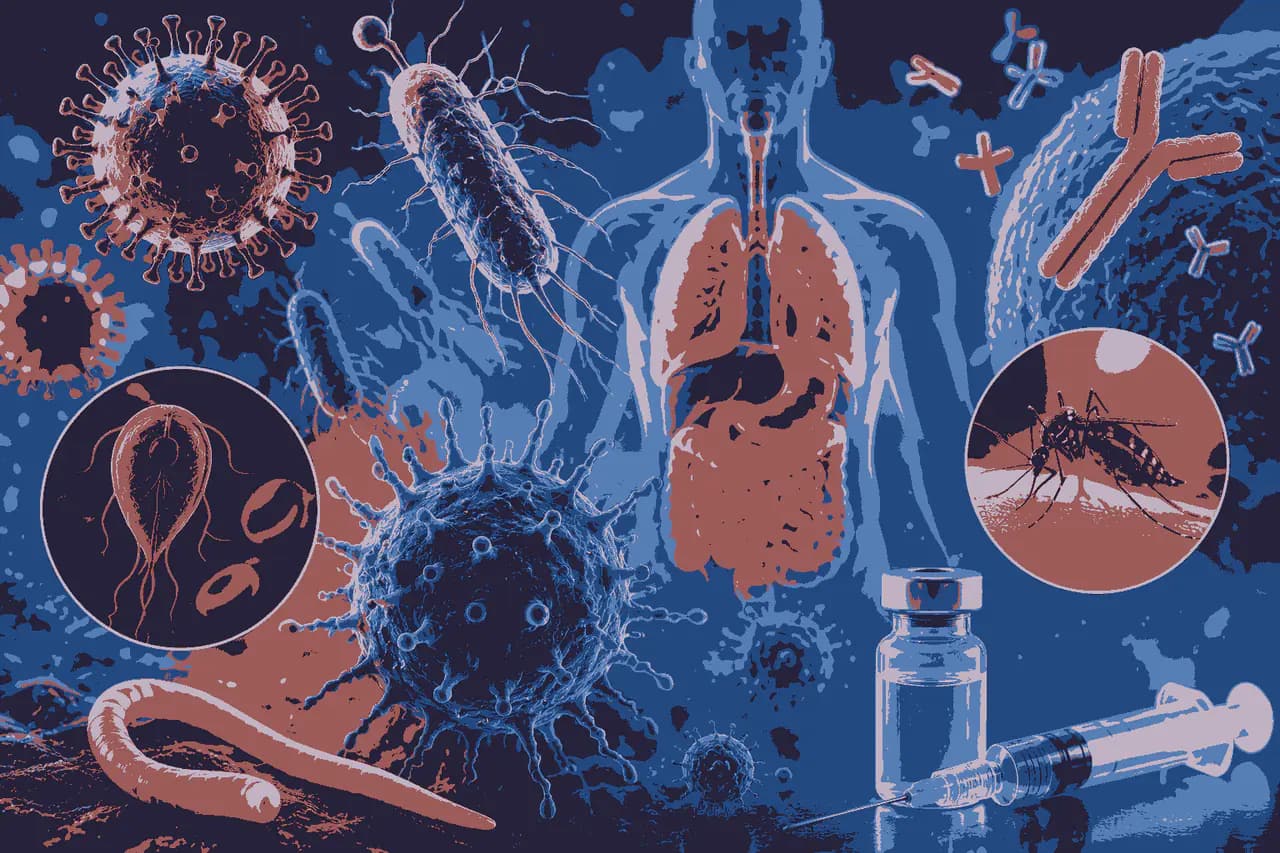
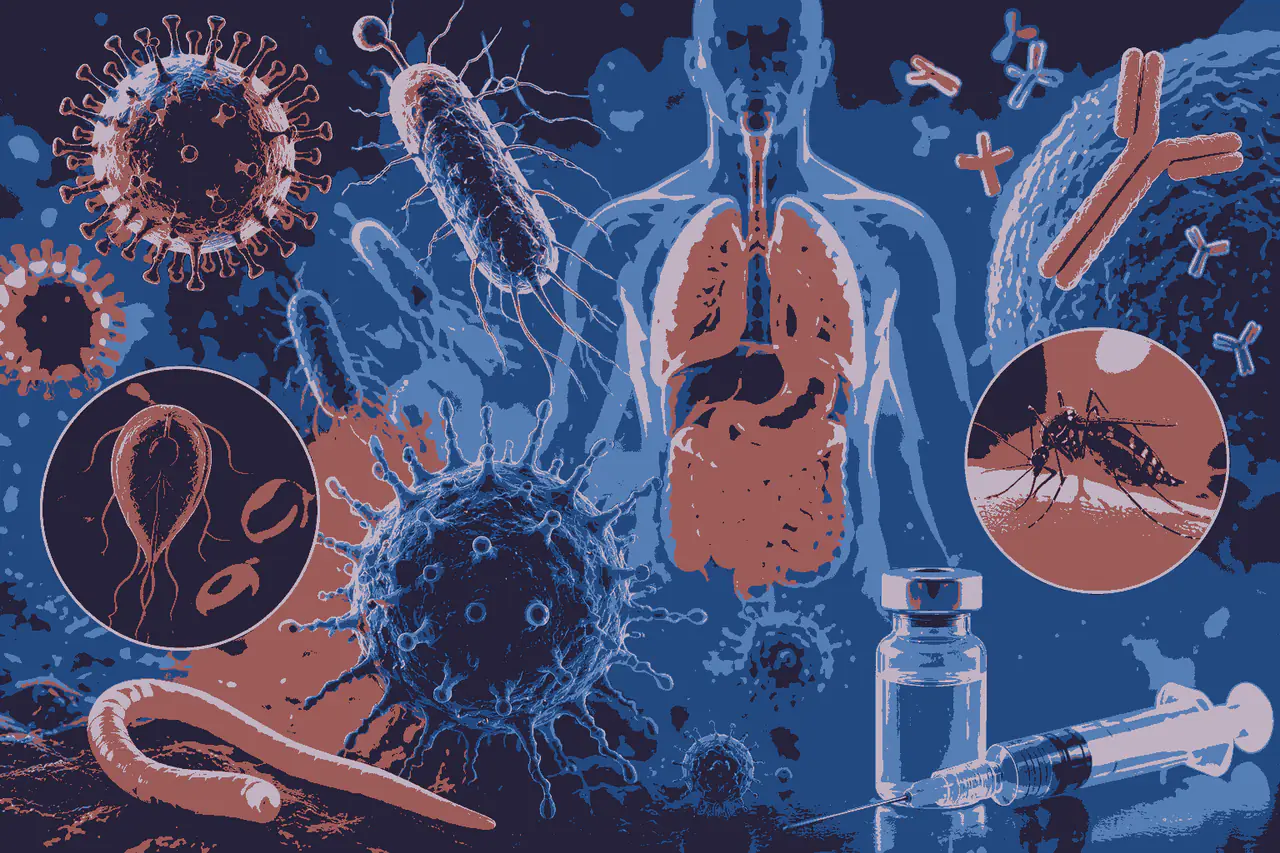
Pathogens Parasites and Immunity MCQs With Answers Class 12 Biology is an important revision topic for aspirants who want to understand human health and disease in a clear, structured, and exam-focused way. Pathogens Parasites and Immunity MCQs With Answers Class 12 Biology helps aspirants revise how disease-causing organisms enter the body, multiply, affect normal functions, and trigger immune responses. In Class 12 Biology, this topic is especially valuable because it connects infectious diseases, parasites, immunity, antibodies, vaccines, inflammation, and disease prevention. Pathogens Parasites and Immunity MCQs With Answers Class 12 Biology allows aspirants to build a strong foundation for board exams, NEET, and other biology-based competitive examinations. Pathogens Parasites and Immunity MCQs With Answers Class 12 Biology becomes easier when aspirants first understand pathogens. Pathogens are organisms or agents that cause disease, including bacteria, viruses, protozoans, fungi, helminths, and some other infectious particles. Pathogens Parasites and Immunity MCQs With Answers Class 12 Biology helps aspirants remember examples such as Salmonella typhi for typhoid, Vibrio cholerae for cholera, Mycobacterium tuberculosis for tuberculosis, Plasmodium for malaria, Entamoeba histolytica for amoebiasis, and Rhinovirus for common cold. By studying these examples carefully, aspirants can connect each disease with its causative agent, mode of transmission, symptoms, diagnosis, and prevention. Parasites are another key part of Pathogens Parasites and Immunity MCQs With Answers Class 12 Biology because many important human diseases are caused by organisms that live in or on a host. Pathogens Parasites and Immunity MCQs With Answers Class 12 Biology includes parasites such as Plasmodium, Wuchereria bancrofti, Entamoeba histolytica, Ascaris lumbricoides, Taenia solium, and Leishmania donovani. Aspirants should understand that parasites depend on the host for survival, nutrition, and reproduction. Pathogens Parasites and Immunity MCQs With Answers Class 12 Biology also explains terms such as host, vector, reservoir host, infective stage, intermediate host, definitive host, and life cycle. These Pathogens Parasites and Immunity MCQs With Answers Class 12 Biology concepts are important because many exam questions test the relationship between parasite, host, vector, and disease. Immunity is the protective ability of the body to defend itself against pathogens and parasites. Pathogens Parasites and Immunity MCQs With Answers Class 12 Biology helps aspirants study both innate and acquired immunity. Innate immunity is present from birth and includes physical barriers, physiological barriers, cellular barriers, and cytokine barriers. Skin, mucous membranes, saliva, tears, stomach acid, neutrophils, macrophages, and natural killer cells are important components of innate defense. Pathogens Parasites and Immunity MCQs With Answers Class 12 Biology also helps aspirants understand acquired immunity, which is specific, has memory, and develops after exposure to antigens or vaccines. Pathogens Parasites and Immunity MCQs With Answers Class 12 Biology is also useful for learning antibodies and immune cells. Antibodies are proteins produced by B-lymphocytes in response to antigens. IgG, IgA, IgM, IgE, and IgD have different roles in immunity. Pathogens Parasites and Immunity MCQs With Answers Class 12 Biology helps aspirants remember that IgA is important in secretions like saliva, IgM is usually the first antibody produced, and IgE is associated with allergic reactions. T-lymphocytes are important in cell-mediated immunity, while B-lymphocytes are involved in antibody-mediated immunity. Understanding these ideas helps aspirants answer immunity-based questions more confidently. Another important area in Pathogens Parasites and Immunity MCQs With Answers Class 12 Biology is vaccination. Vaccines train the immune system to recognize a pathogen before actual infection occurs. Pathogens Parasites and Immunity MCQs With Answers Class 12 Biology helps aspirants understand memory cells, primary immune response, secondary immune response, and herd protection. Vaccination has helped control diseases such as polio, diphtheria, tetanus, measles, hepatitis B, and tuberculosis. Aspirants should also remember that antibiotics are mainly useful against bacterial diseases and not viral infections, which is a common area of confusion. Pathogens Parasites and Immunity MCQs With Answers Class 12 Biology should be revised using comparison charts, flow diagrams, disease tables, and repeated reading. Aspirants can prepare columns for disease, pathogen, parasite type, vector, infective stage, symptoms, diagnosis, and prevention. Pathogens Parasites and Immunity MCQs With Answers Class 12 Biology becomes more effective when aspirants connect malaria with Plasmodium and Anopheles, filariasis with Wuchereria and Culex, kala-azar with Leishmania and sandfly, and amoebiasis with Entamoeba histolytica and contaminated food or water. This method reduces confusion and improves recall during exams.
Pathogens Parasites and Immunity MCQs With Answers Class 12 Biology:
- Which disease of man is similar with cattle's bovine spongiform encephalopathy?
A. Encephalitis B. Jakob-Creutzfeldt disease C. Spongiocitis of cerebrum D. Spondylitis Answer: B. Jakob-Creutzfeldt disease Explanation: Bovine spongiform encephalopathy is commonly called mad cow disease. In humans, a similar prion disease is Creutzfeldt-Jakob disease, which is characterized by progressive neurological degeneration.
- Cirrhosis of liver is caused by the chronic intake of:
A. Tobacco, chewing B. Cocaine C. Opium D. Alcohol Answer: D. Alcohol Explanation: Cirrhosis of the liver may result from chronic alcoholism and other liver-damaging conditions. It involves scarring and damage to liver tissue.
- Common cold differs from pneumonia in that:
A. Pneumonia is caused by a virus while the common cold is caused by the bacterium Haemophilus influenzae B. Pneumonia pathogen infects alveoli whereas the common cold affects nose and respiratory passage but not the lungs C. Pneumonia is a communicable disease whereas the common cold is a nutritional deficiency disease D. Pneumonia can be prevented by a live attenuated bacterial vaccine whereas the common cold has no effective vaccine Answer: B. Pneumonia pathogen infects alveoli whereas the common cold affects nose and respiratory passage but not the lungs Explanation: Common cold is usually caused by rhinoviruses and affects the nose and respiratory passage. Pneumonia affects the lungs, especially the alveoli and bronchioles.
- A patient brought to a hospital with myocardial infarction is normally immediately given:
A. Cyclosporin-A B. Statins C. Penicillin D. Streptokinase Answer: D. Streptokinase Explanation: Streptokinase is a thrombolytic drug used to dissolve blood clots in some cases of myocardial infarction.
- Which of the following organisms is responsible for ringworm disease in humans and belongs to the same kingdom as Rhizopus, a mould?
A. Ascaris B. Taenia C. Wuchereria D. Rhizopus Answer: D. Rhizopus Explanation: Ringworm is actually caused by fungi such as Microsporum, Trichophyton, and Epidermophyton. These fungi belong to the same kingdom as Rhizopus.
- Which of the following options provides the correct matching of a disease with its causative organism and mode of infection?
A. Malaria - Plasmodium vivax - Bite of male Anopheles mosquito B. Typhoid - Salmonella typhi - With inspired air C. Pneumonia - Streptococcus pneumoniae - Droplet infection D. Elephantiasis - Wuchereria bancrofti - With infected water and food Answer: C. Pneumonia - Streptococcus pneumoniae - Droplet infection Explanation: Pneumonia may be caused by Streptococcus pneumoniae and spreads through droplet infection.
- Which drug used for patients is obtained from a species of the organism Trichoderma?
A. AIDS - Pseudomonas B. Heart - Penicillium C. Organ-transplant - Trichoderma D. Swine flu - Monascus Answer: C. Organ-transplant - Trichoderma Explanation: Cyclosporin-A, used in organ transplant patients, is produced by Trichoderma polysporum.
- Which of the following is not a parasitic adaptation?
A. Loss of unnecessary sense organs B. Development of adhesive organs C. Loss of digestive organs D. Loss of reproductive capacity Answer: D. Loss of reproductive capacity Explanation: Loss of reproductive capacity is not a parasitic adaptation. Parasites usually have high reproductive capacity.
- Interferons are synthesized in response to which type of organism?
A. Mycoplasma B. Bacteria C. Viruses D. Fungi Answer: C. Viruses Explanation: Interferons are synthesized by host cells in response to viral infections.
- Match the following parasite with its infective stage and the disease caused: A. Plasmodium vivax B. Taenia solium C. Entamoeba histolytica D. Wuchereria bancrofti
Options: A. A-III, 2; B-IV, 4; C-II, 3; D-I, 1 B. A-III, 2; B-IV, 4; C-I, 3; D-II, 1 C. A-IV, 1; B-II, 4; C-I, 2; D-III, 3 D. A-III, 2; B-IV, 4; C-I, 3; D-IV, 3 Answer: A. A-III, 2; B-IV, 4; C-II, 3; D-I, 1 Explanation: The correct matching is Plasmodium vivax, Taenia solium, Entamoeba histolytica, and Wuchereria bancrofti with their respective infective stages and diseases as given in the correct option.
- What is the process by which a new structure is formed in the tissue of the host during parasitic infection?
A. Hyperplasia B. Neoplasia C. Hypertrophy D. Gigantism Answer: A. Hyperplasia Explanation: Hyperplasia is an increase in the number of cells, leading to the formation of new tissue structure during certain infections.
- What is neoplasia according to the provided passage?
A. Abnormal proliferation of cells with coordinated growth with normal tissue B. Abnormal proliferation of cells with uncoordinated growth with normal tissue C. Normal proliferation of cells with coordinated growth with normal tissue D. Normal proliferation of cells with uncoordinated growth with normal tissue Answer: B. Abnormal proliferation of cells with uncoordinated growth with normal tissue Explanation: Neoplasia is abnormal cell proliferation in which growth is excessive and uncoordinated with surrounding normal tissue.
- Match the diseases listed under Column I with the meanings given under Column II. Choose the correct combination.
A. A = Jaundice, B = Stenosis, C = Rhinitis, D = Paralysis B. A = Jaundice, B = Stenosis, C = Rhinitis, D = Paralysis C. A = Jaundice, B = Stenosis, C = Rhinitis, D = Paralysis D. A = Jaundice, B = Stenosis, C = Rhinitis, D = Paralysis Answer: A. A = Jaundice, B = Stenosis, C = Rhinitis, D = Paralysis Explanation: Jaundice means increase in bile pigments in the blood, stenosis refers to heart valve defect or narrowing, rhinitis is allergic inflammation of the nose, and paralysis is loss of motor function.
- Which abnormalities in the host are associated with Wuchereria, Plasmodium, and Fasciola respectively?
A. Lymphangitis, Febrile paroxysm, Hyperplasia B. Lymphangitis, Febrile paroxysm, Parasitic castration C. Hyperplasia, Peritonitis, Lymphangitis D. Febrile paroxysm, Peritonitis, Hyperplasia Answer: A. Lymphangitis, Febrile paroxysm, Hyperplasia Explanation: Wuchereria is associated with lymphangitis, Plasmodium with febrile paroxysm, and Fasciola with hyperplasia.
- Which of the following is a matching pair of vector and disease?
A. Culex - Filariasis B. Housefly - Leprosy C. Aedes aegypti - Chickenpox D. Sandfly - Cholera Answer: A. Culex - Filariasis Explanation: Culex mosquito acts as a vector for filariasis.
- Which of the following is not correctly matched?
A. Diphtheria - Corynebacterium B. Elephantiasis - Wuchereria C. Plague - Paramyxo D. Lockjaw - Clostridium Answer: C. Plague - Paramyxo Explanation: Plague is caused by the bacterium Yersinia pestis, not Paramyxo. Diphtheria is caused by Corynebacterium diphtheriae, elephantiasis by Wuchereria bancrofti, and lockjaw by Clostridium tetani.
- What is the purpose of the Pulse-Polio programme organized in India?
A. Spread polio B. Cure polio C. Eradicate polio D. Reduce polio Answer: C. Eradicate polio Explanation: The Pulse Polio programme was launched in India to eradicate polio through mass immunization.
- Match the following diseases with their respective reasons/symptoms.
A. A = Siderosis, B = Pneumonia, C = Emphysema, D = Silicosis B. A = Siderosis, B = Pneumonia, C = Emphysema, D = Silicosis C. A = Siderosis, B = Pneumonia, C = Emphysema, D = Silicosis D. A = Siderosis, B = Pneumonia, C = Emphysema, D = Silicosis Answer: A. A = Siderosis, B = Pneumonia, C = Emphysema, D = Silicosis Explanation: Siderosis is caused by deposition of iron particles in tissues, pneumonia involves fluid or mucus accumulation in alveoli, emphysema damages alveoli, and silicosis occurs due to inhalation of silica dust.
- What is the cause of Siderosis?
A. Repeated inhalation of iron or rust dust B. Inhaling large amount of crystalline silica dust C. Inhaling fire dust D. Inhaling smoke from burning wood Answer: A. Repeated inhalation of iron or rust dust Explanation: Siderosis is caused by repeated inhalation of iron or rust dust.
- In pneumonia, what fills the air sac?
A. Smoke B. Dust C. Fluid or pus D. Carbon dioxide Answer: C. Fluid or pus Explanation: In pneumonia, the air sacs of the lungs may become filled with fluid or pus.
- What happens in emphysema?
A. The lungs collapse B. The air sacs are filled with dust C. The inner walls of lung alveoli are damaged D. The lungs become inflamed Answer: C. The inner walls of lung alveoli are damaged Explanation: In emphysema, the inner walls of the alveoli are damaged, reducing the surface area for gas exchange.
- What causes Silicosis, a long-term lung disease?
A. Inhaling smoke from burning wood B. Inhaling fire dust C. Inhaling large amount of crystalline silica dust D. Inhaling pollen Answer: C. Inhaling large amount of crystalline silica dust Explanation: Silicosis is a long-term lung disease caused by inhaling crystalline silica dust, common among workers in mining and related industries.
- Which of the following are cellular barriers of immunity?
A. Saliva B. Neutrophils C. Cytokines D. Macrophages Answer: B and D. Neutrophils and Macrophages Explanation: Cellular barriers of immunity include neutrophils, monocytes, natural killer cells, and macrophages, which help destroy microbes.
- Which antibody is a pentamer?
A. IgA B. IgD C. IgE D. IgM Answer: D. IgM Explanation: IgM is a pentameric antibody and is usually the first antibody produced during an immune response.
- Histamine is secreted by which type of cell?
A. Goblet cell B. Nerve cell C. Kupffer cell D. Mast cell Answer: D. Mast cell Explanation: Histamine is secreted mainly by mast cells and plays an important role in allergic and inflammatory reactions.
- Who developed the technique of production of monoclonal antibodies?
A. Milstein and Kohler B. Watson and Crick C. Fredrick and Miescher D. Bentham and Hooker Answer: A. Milstein and Kohler Explanation: Milstein and Kohler developed the technique for producing monoclonal antibodies in 1975.
- Which pairing of immunoglobulin and function is incorrect?
A. IgD: viral pathogen B. IgG: phagocytosis C. IgE: allergic reaction D. IgM: complement fixation Answer: A. IgD: viral pathogen Explanation: IgD is mainly found on the surface of B-cells and is involved in B-cell activation. It is not specifically associated with viral pathogens.
- Which of the following is NOT a unique feature of acquired immunity?
A. Discrimination between self and non-self B. Non-specificity C. Memory D. Diversity Answer: B. Non-specificity Explanation: Acquired immunity is specific, has memory, diversity, and can distinguish between self and non-self. Non-specificity is a feature of innate immunity.
- In the cell-mediated immune response, T-lymphocytes divide and secrete what?
A. Antigens B. Plasmogens C. Collagens D. Cytokines Answer: D. Cytokines Explanation: T-lymphocytes divide and secrete cytokines, which help regulate cell-mediated immune responses.
- What is the predominant antibody in saliva?
A. IgG
B. IgA
C. IgM
D. IgD
Answer: B. IgA
Explanation: IgA is the predominant antibody in saliva and protects mucous membranes from pathogens.
Conclusion on Pathogens Parasites and Immunity MCQs With Answers Class 12 Biology
In conclusion, Pathogens Parasites and Immunity MCQs With Answers Class 12 Biology is a highly useful topic for aspirants who want to master infectious disease biology and immune system concepts. It improves understanding of pathogens, parasites, vectors, hosts, antibodies, vaccines, immune barriers, and disease prevention. Pathogens Parasites and Immunity MCQs With Answers Class 12 Biology also helps aspirants connect textbook knowledge with real-life health awareness. With consistent revision, Pathogens Parasites and Immunity MCQs With Answers Class 12 Biology can improve accuracy, speed, and confidence in biology examinations.
Related reading

Essential Vaccines and Drug Abuse MCQs Class 12 Biology - Powerful Exam Practice Questions
Revise Vaccines and Drug Abuse MCQs Class 12 Biology with key facts on immunity, vaccines, addiction, drug source, and health risks for aspirants prep for exams
High - Risk Oncogenes and Cancer MCQs for Class 12 Biology - Avoid Costly Mistakes
Explore Oncogenes and Cancer MCQs for Class 12 Biology with insights on tumours, metastasis, causes, diagnosis, treatment for aspirants preparing biology exams.