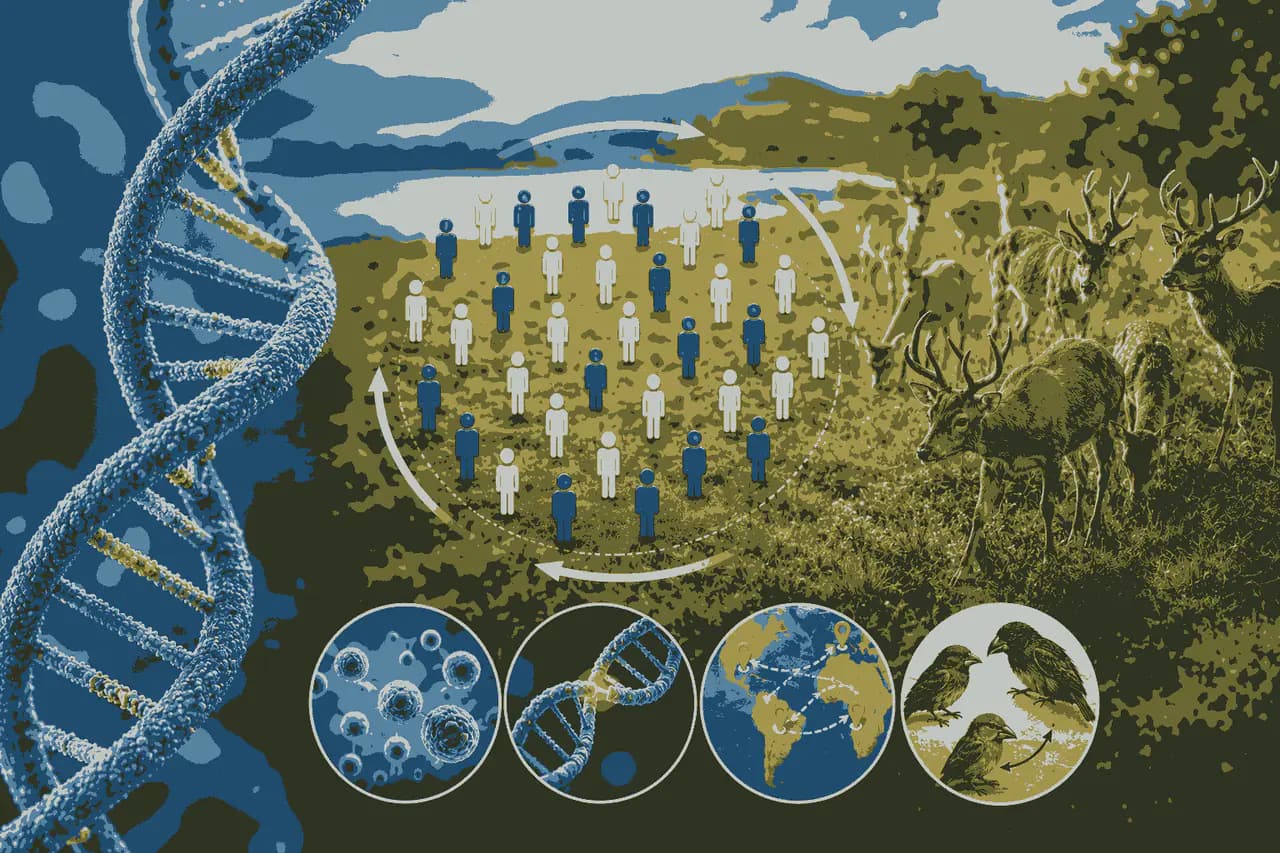
The Hardy-Weinberg Principle is one of the most important concepts in evolutionary biology and population genetics. For aspirants preparing for NEET, Class 12 Biology examinations, and other competitive entrance tests, understanding this principle is essential because it forms the foundation for studying genetic variation, evolution, and allele frequencies within populations. As a result, Hardy Weinberg Principle NEET MCQs Class 12 is a frequently searched topic among biology aspirants who want to strengthen their conceptual understanding and improve examination performance.
The concept behind Hardy Weinberg Principle NEET MCQs Class 12 was independently proposed by Godfrey Harold Hardy and Wilhelm Weinberg in 1908. They demonstrated mathematically that allele frequencies in a large population remain constant from generation to generation if certain conditions are met. This state is known as genetic equilibrium. Therefore, mastering Hardy Weinberg Principle NEET MCQs Class 12 helps aspirants understand how populations behave when evolutionary forces are absent.
A major reason why Hardy Weinberg Principle NEET MCQs Class 12 is important is that it provides a baseline against which evolutionary change can be measured. If the genetic composition of a population remains unchanged, the population is said to be in Hardy-Weinberg equilibrium. Whenever deviations occur, scientists can infer that evolutionary forces are acting upon the population. This practical significance makes Hardy Weinberg Principle NEET MCQs Class 12 a high-priority topic in competitive biology examinations.
The mathematical expression associated with Hardy Weinberg Principle NEET MCQs Class 12 is one of the most recognizable formulas in genetics. The principle states that the sum of genotype frequencies equals one and can be represented mathematically using allele frequencies. Understanding the relationship between dominant and recessive alleles is a key learning objective when studying Hardy Weinberg Principle NEET MCQs Class 12.
For aspirants, one of the most important aspects of Hardy Weinberg Principle NEET MCQs Class 12 is the set of assumptions required for equilibrium. These assumptions include a very large population size, random mating, absence of mutations, no gene migration, and no natural selection. When these conditions are satisfied, allele frequencies remain stable across generations. Consequently, questions based on these assumptions are commonly encountered in Hardy Weinberg Principle NEET MCQs Class 12 resources.
Another reason aspirants focus on Hardy Weinberg Principle NEET MCQs Class 12 is its connection to evolution. Evolution can be defined as a change in allele frequencies within a population over time. Whenever the equilibrium described by the principle is disturbed, evolutionary change occurs. This makes Hardy Weinberg Principle NEET MCQs Class 12 an excellent topic for understanding the relationship between genetics and evolution.
Genetic drift is one of the factors frequently discussed in Hardy Weinberg Principle NEET MCQs Class 12. Genetic drift refers to random fluctuations in allele frequencies, especially in small populations. Such random changes can significantly alter the genetic structure of a population and may even lead to the disappearance of certain alleles. Therefore, understanding genetic drift is essential when studying Hardy Weinberg Principle NEET MCQs Class 12.
Mutation is another important factor highlighted in Hardy Weinberg Principle NEET MCQs Class 12. Mutations introduce new genetic variations into populations by altering DNA sequences. Although most mutations are rare, their cumulative effects can significantly influence allele frequencies over long periods. This is why mutation is recognized as a major evolutionary force in Hardy Weinberg Principle NEET MCQs Class 12.
Gene flow is also a critical concept associated with Hardy Weinberg Principle NEET MCQs Class 12. Gene flow occurs when individuals migrate between populations and introduce new alleles. This movement of genes tends to reduce genetic differences between populations and alters equilibrium conditions. As a result, gene flow frequently appears in discussions related to Hardy Weinberg Principle NEET MCQs Class 12.
Natural selection plays an equally important role in Hardy Weinberg Principle NEET MCQs Class 12. It favors advantageous traits that increase an organism's chances of survival and reproduction. Over time, beneficial alleles become more common, while disadvantageous alleles decline in frequency. Such changes clearly demonstrate departures from Hardy-Weinberg equilibrium and are therefore emphasized in Hardy Weinberg Principle NEET MCQs Class 12.
Non-random mating is another factor often examined in Hardy Weinberg Principle NEET MCQs Class 12. When individuals preferentially choose mates with particular characteristics, genotype frequencies may shift away from expected equilibrium values. Understanding this phenomenon helps aspirants answer conceptual questions based on population genetics.
One of the reasons Hardy Weinberg Principle NEET MCQs Class 12 remains popular among aspirants is its application in solving numerical genetics problems. Many examination questions involve calculating allele frequencies, genotype frequencies, or predicting genetic distributions in populations. Practicing these calculations through Hardy Weinberg Principle NEET MCQs Class 12 enables aspirants to develop confidence in genetics-based problem solving.
The significance of Hardy Weinberg Principle NEET MCQs Class 12 extends beyond examination preparation. It provides valuable insights into how populations maintain genetic stability and how evolutionary forces influence biodiversity. Scientists frequently use this principle to study human genetics, conservation biology, disease inheritance, and evolutionary processes.
Hardy Weinberg Principle NEET MCQs Class 12:
1. The process by which organisms with different evolutionary history evolve similar phenotypic adaptation in response to a common environmental challenge is called:
A. Adaptive radiation
B. Natural selection
C. Convergent evolution
D. Non-random evolution
Answer: C. Convergent evolution
Explanation: Convergent evolution occurs when unrelated or distantly related organisms independently develop similar adaptations due to similar environmental pressures. Examples include the wings of birds and bats, which perform similar functions but evolved independently.
2. The eye of octopus and eye of cat show different patterns of structure, yet they perform similar function. This is an example of:
A. Analogous organs that have evolved due to divergent evolution
B. Homologous organs that have evolved due to convergent evolution
C. Homologous organs that have evolved due to divergent evolution
D. Analogous organs that have evolved due to convergent evolution
Answer: D. Analogous organs that have evolved due to convergent evolution
Explanation: The eyes of octopus and cats perform the same function of vision but evolved independently and have different structural origins. Therefore, they are analogous organs resulting from convergent evolution.
3. Which one of the following does not have annual migration?
A. Arctic tern
B. Siberian crane
C. Salamander
D. Salmon
Answer: C. Salamander
Explanation: Arctic terns, Siberian cranes, and salmon undertake long-distance annual migrations. Salamanders generally remain within local habitats and do not perform regular annual migrations.
4. Praying mantis is a good example of:
A. Mullerian mimicry
B. Warning colouration
C. Social insects
D. Camouflage
Answer: D. Camouflage
Explanation: The praying mantis blends with surrounding vegetation, making it difficult for predators and prey to detect. This protective adaptation is known as camouflage.
5. Which one of the following pairs is mismatched?
A. Savanna – Acacia trees
B. Coniferous forest – Evergreen trees
C. Tundra – Permafrost
D. Prairie – Epiphytes
Answer: D. Prairie – Epiphytes
Explanation: Prairies are grassland ecosystems and do not support epiphytes. Epiphytes are typically found in tropical rainforests where moisture levels are high.
6. More than 70% of the world's fresh water is contained in:
A. Antarctica
B. Polar ice
C. Glaciers and Mountains
D. Greenland
Answer: B. Polar ice
Explanation: Most of Earth's freshwater is locked in glaciers and polar ice caps, especially in Antarctica and Greenland.
7. Darwin in his 'Natural Selection Theory' did not believe in any role of which one of the following in organic evolution?
A. Parasites and predators as natural enemies
B. Survival of the fittest
C. Struggle for existence
D. Discontinuous variations
Answer: D. Discontinuous variations
Explanation: Darwin emphasized gradual, continuous variations. Large sudden changes (mutations) were later emphasized by Hugo de Vries in his mutation theory.
8. Significance of mimicry is:
A. Attack (offence)
B. Protection (defense)
C. Both (a) and (b)
D. Isolation
Answer: C. Both (a) and (b)
Explanation: Mimicry can help organisms avoid predators or assist predators in capturing prey by resembling harmless or dangerous organisms.
9. As an example of adaptive radiation, Darwin observed a variety of Finches in:
A. South Africa
B. Madagascar
C. Galapagos Islands
D. East Indies
Answer: C. Galapagos Islands
Explanation: Darwin’s finches evolved into multiple species adapted to different food sources and ecological niches on the Galapagos Islands.
10. Which one of the following animals shows discontinuous distribution?
A. Green mussels
B. Bats
C. Lung fishes
D. Pacific salmons
Answer: C. Lung fishes
Explanation: Lungfishes are found in South America, Africa, and Australia with large geographic gaps between populations, showing discontinuous distribution.
11. Reproductive isolation in sympatric speciation develops without a:
A. Geographic barrier
B. Barrier to gene flow
C. Change in chromosome number
D. Barrier to mating
Answer: A. Geographic barrier
Explanation: Sympatric speciation occurs within the same geographical area, so no physical separation exists between populations.
12. Assertion (A): Oversized antlers in the Irish deer lead to its extinction.
Reason (R): Darwinism explains the origin of new species due to accumulation of adaptive variations.
A. Both A and R are true and R explains A
B. Both A and R are true but R does not explain A
C. A is true but R is false
D. A is false but R is true
Answer: B. Both A and R are true but R does not explain A
Explanation: Oversized antlers contributed to extinction, while Darwinism explains speciation through adaptive variations. The reason does not directly explain the assertion.
13. Resemblance between widely different groups due to a common adaptation is known as:
A. Adaptive convergence
B. Adaptive divergence
C. Progressive evolution
D. Retrogressive evolution
Answer: A. Adaptive convergence
Explanation: Similar environmental pressures may produce similar adaptations in unrelated groups through convergent evolution.
14. Darwin's finches are a good example of:
A. Industrial melanism
B. Connecting link
C. Adaptive radiation
D. Convergent evolution
Answer: C. Adaptive radiation
Explanation: Darwin’s finches evolved from a common ancestor into multiple species occupying different ecological niches.
15. Evolution of different species in a given area starting from a point and spreading to other geographical areas is known as:
A. Migration
B. Divergent evolution
C. Adaptive radiation
D. Natural selection
Answer: C. Adaptive radiation
Explanation: Adaptive radiation produces multiple species from a common ancestor as they adapt to diverse environments.
16. The finch species of Galapagos Islands are grouped according to their food sources. Which of the following is not a finch food?
A. Seeds
B. Carrion
C. Insects
D. Tree buds
Answer: B. Carrion
Explanation: Darwin's finches feed on seeds, insects, cactus parts, fruits, and buds. Carrion (dead animal remains) is not a typical food source for Galapagos finches.
17. The peculiar primitive animals found in Madagascar but absent in Africa are:
A. Elephants
B. Penguins
C. Lemurs
D. Echidnas
Answer: C. Lemurs
Explanation: Lemurs are primitive primates found naturally only in Madagascar. Their isolation has allowed them to evolve into many unique species.
18. One of the important consequences of geographical isolation is:
A. Random creation of new species
B. No change in the isolated fauna
C. Preventing speciation
D. Speciation through reproductive isolation
Answer: D. Speciation through reproductive isolation
Explanation: Geographical isolation prevents gene flow between populations. Over time, reproductive isolation develops, leading to the formation of new species.
19. The finches of Galapagos Islands provide evidence in favor of:
A. Biogeographical Evolution
B. Special Creation
C. Evolution due to Mutation
D. Retrogressive Evolution
Answer: A. Biogeographical Evolution
Explanation: Darwin's finches demonstrate how geographic isolation and environmental differences can drive evolutionary changes, providing strong biogeographical evidence for evolution.
20. In a population of 800 rabbits showing Hardy-Weinberg equilibrium, the frequency of recessive individuals was 0.16. What is the frequency of heterozygous individuals?
A. 0.36
B. 0.40
C. 0.48
D. 0.84
Answer: C. 0.48
Explanation:
Given q² = 0.16
q = 0.4
p = 1 – 0.4 = 0.6
Heterozygous frequency = 2pq
= 2 × 0.6 × 0.4
= 0.48
21. In a population, Hardy-Weinberg equilibrium is disturbed by following factors EXCEPT:
A. Genetic drift
B. Gene flow
C. Mutations
D. Non-random mating
Answer: B. Gene flow
Explanation: Hardy-Weinberg equilibrium assumes no gene flow. Genetic drift, mutation, and non-random mating directly disturb equilibrium, while gene flow introduces alleles and changes allele frequencies.
22. Match the phenomenon listed under Column I with those listed under Column II.
A. A = t, B = s, C = p, D = q
B. A = s, B = r, C = t, D = p
C. A = s, B = t, C = q, D = r
D. A = t, B = r, C = p, D = s
Answer: B. A = s, B = r, C = t, D = p
Explanation:
- Warburg effect → Inhibitory effect of oxygen on photosynthesis
- Pasteur effect → Reduced substrate consumption during aerobic respiration
- Emerson effect → Enhanced photosynthesis under two wavelengths
- Wright effect → Change in gene frequency due to chance
23. In which of the following populations does genetic drift operate?
A. Island
B. Smaller
C. Larger
D. Continental
Answer: B. Smaller
Explanation: Genetic drift has the greatest effect in small populations where random events can significantly alter allele frequencies.
24. The chance of elimination of genes from a small population is an example of:
A. Selection pressure
B. Speciation
C. Adaptation
D. Genetic drift
Answer: D. Genetic drift
Explanation: Genetic drift causes random loss of alleles, especially in small populations, reducing genetic variation.
25. Genetic drift is the elimination of:
A. Individuals
B. Chromosomes
C. Species
D. Gene of some original characteristic of a species due to epidemics
Answer: D. Gene of some original characteristic of a species due to epidemics
Explanation: Genetic drift can eliminate certain alleles from a population through random events such as natural disasters, epidemics, or migration.
26. Which of the following assumptions does not belong to the Hardy-Weinberg principle?
A. The population size is very large
B. Random mating is occurring
C. Natural selection takes place
D. No mutation occurs
Answer: C. Natural selection takes place
Explanation: Hardy-Weinberg equilibrium assumes that natural selection does not occur. If natural selection acts, allele frequencies change.
27. Change of frequency of alleles in a population resulting in evolution is proposed in:
A. Darwin's theory
B. Lamarck's theory
C. Hardy-Weinberg principle
D. de Vries theory
Answer: C. Hardy-Weinberg principle
Explanation: Hardy-Weinberg equilibrium provides a framework for understanding how changes in allele frequencies lead to evolution.
28. Which of the following defines Hardy-Weinberg's law?
A. p² + 2pq + q² = 1
B. p² + 3pq + q² = 1
C. p² + 2pq + q² = 0
D. q² + p² + 2pq = 0
Answer: A. p² + 2pq + q² = 1
Explanation: This equation represents genotype frequencies in a population under Hardy-Weinberg equilibrium.
29. A change in the relative abundance of an allele within a population over successive generations is called:
A. Microevolution
B. Macroevolution
C. Co-evolution
D. Phylogenetic evolution
Answer: A. Microevolution
Explanation: Microevolution refers to small-scale evolutionary changes within a species, often measured by shifts in allele frequencies.
30. Which mechanism of evolution affects the genetic makeup in a population?
A. Natural selection
B. Adaptation
C. Genetic drift
D. Gene mutation
Answer: C. Genetic drift
Explanation: Genetic drift changes allele frequencies through chance events and can significantly alter the genetic composition of small populations over time.
Conclusion on Hardy Weinberg Principle NEET MCQs Class 12
For aspirants aiming for high scores in biology, regular revision of Hardy Weinberg Principle NEET MCQs Class 12 is highly beneficial. The topic integrates concepts from genetics, evolution, and population biology into a single framework, making it one of the most conceptually rewarding chapters in the syllabus. By thoroughly understanding Hardy Weinberg Principle NEET MCQs Class 12, aspirants gain a strong foundation for tackling advanced evolutionary biology topics and competitive examination questions with confidence.
Related reading

Amazing Industrial Melanism MCQs with Answers for Class 12 Biology for Competitive Exams
Master Industrial Melanism MCQs with Answers for Class 12 Biology. Learn peppered moth evolution, natural selection , adaptation , and key NEET concepts easily.
Expert Adaptive Radiation and Evolution MCQs Class 12 with Answers for NEET
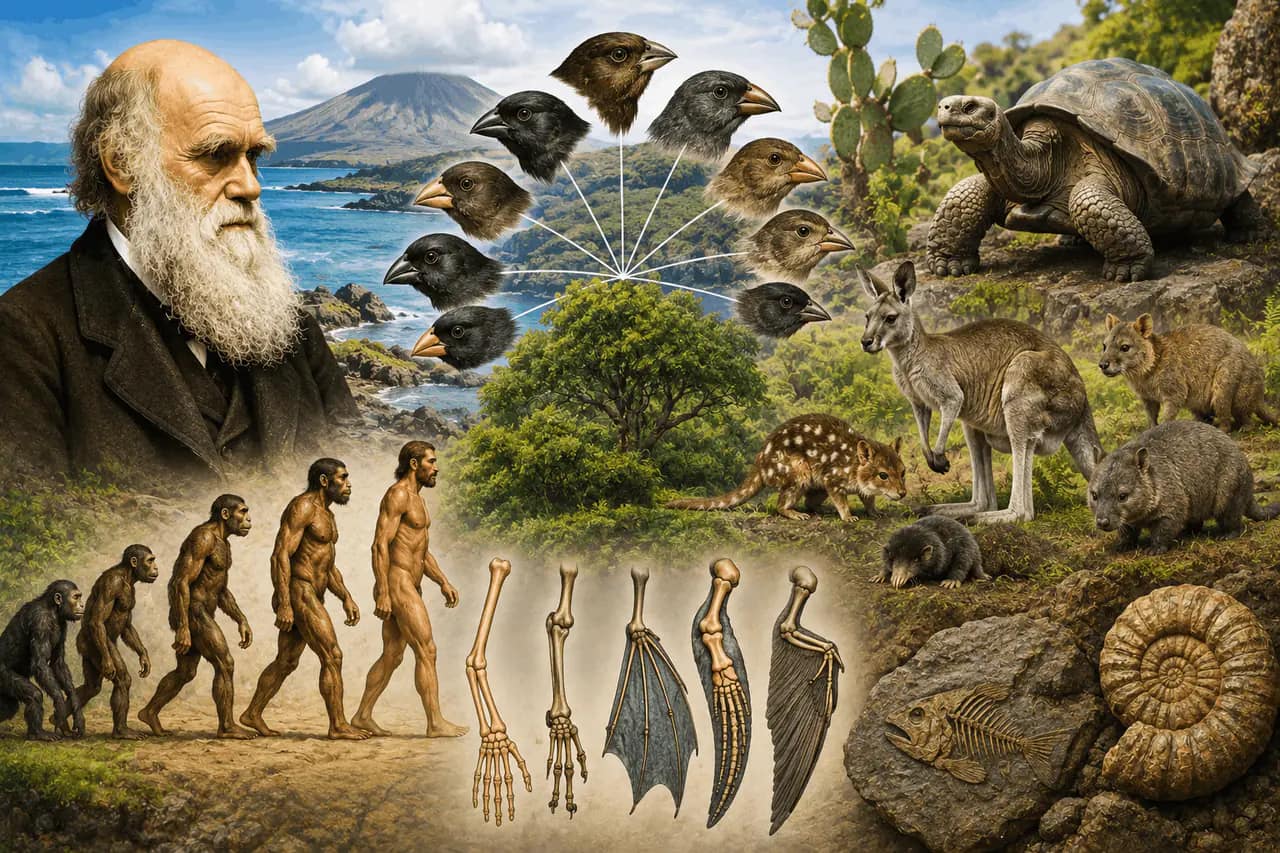
Master Adaptive Radiation and Evolution MCQs Class 12 with clear explanations of Darwin’s finches, natural selection, speciation, and biodiversity for aspirants