The study of evolution is one of the most important areas of biology, and among all the examples used to explain evolutionary processes, Darwin’s finches hold a special place. For aspirants preparing for NEET, Class 12 Biology examinations, and various competitive entrance tests, understanding the concepts behind Galapagos Finches Evolution MCQs PDF is essential. The topic provides clear evidence for natural selection, adaptive radiation, speciation, and biogeographical distribution. Because of its significance, Galapagos Finches Evolution MCQs PDF remains a highly searched resource among aspirants who wish to strengthen their understanding of evolutionary biology.
The Galapagos Islands are a group of isolated volcanic islands located in the Pacific Ocean. During his famous voyage aboard the HMS Beagle, Charles Darwin carefully studied the plants and animals inhabiting these islands. His observations of finches eventually became one of the strongest foundations for the theory of evolution by natural selection. As a result, Galapagos Finches Evolution MCQs PDF frequently appears in biology preparation materials because it highlights real-world evidence supporting evolutionary change.
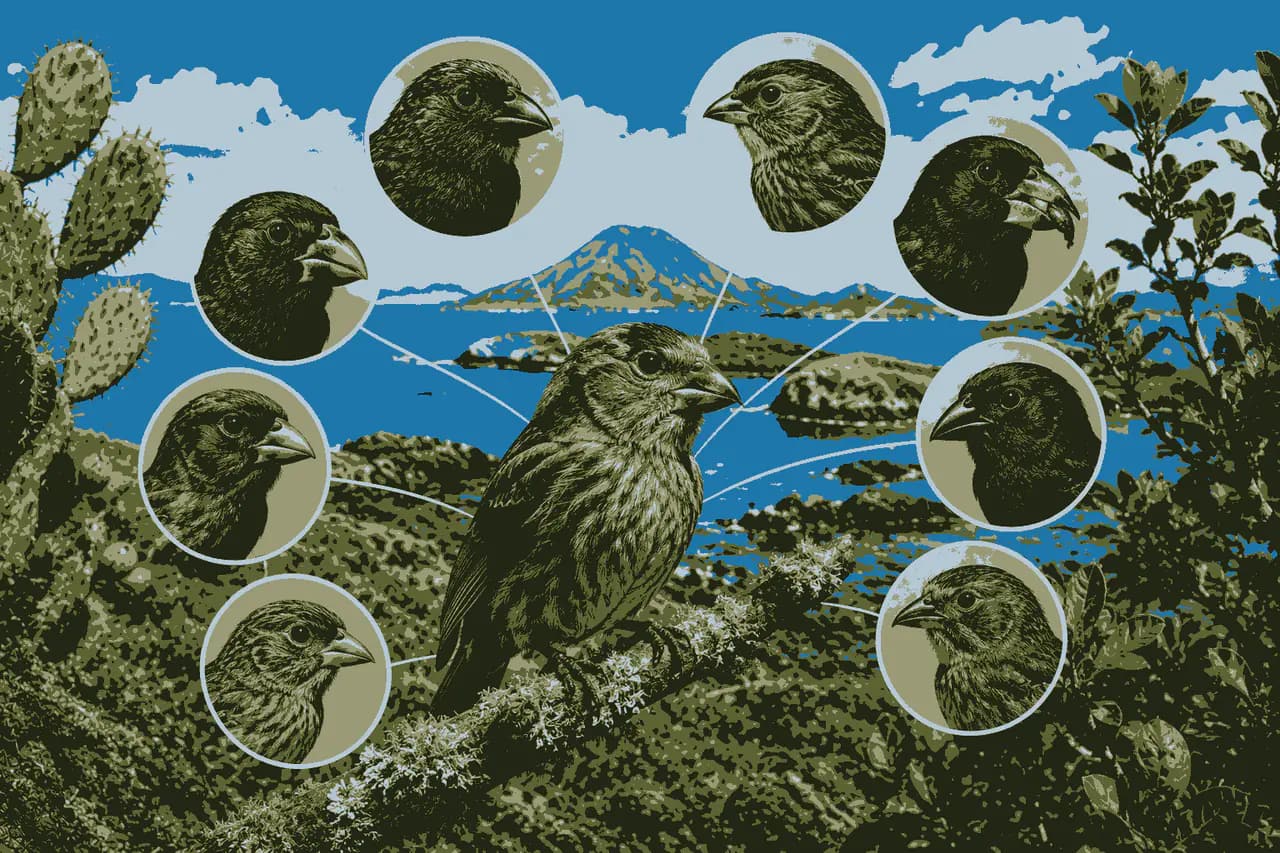
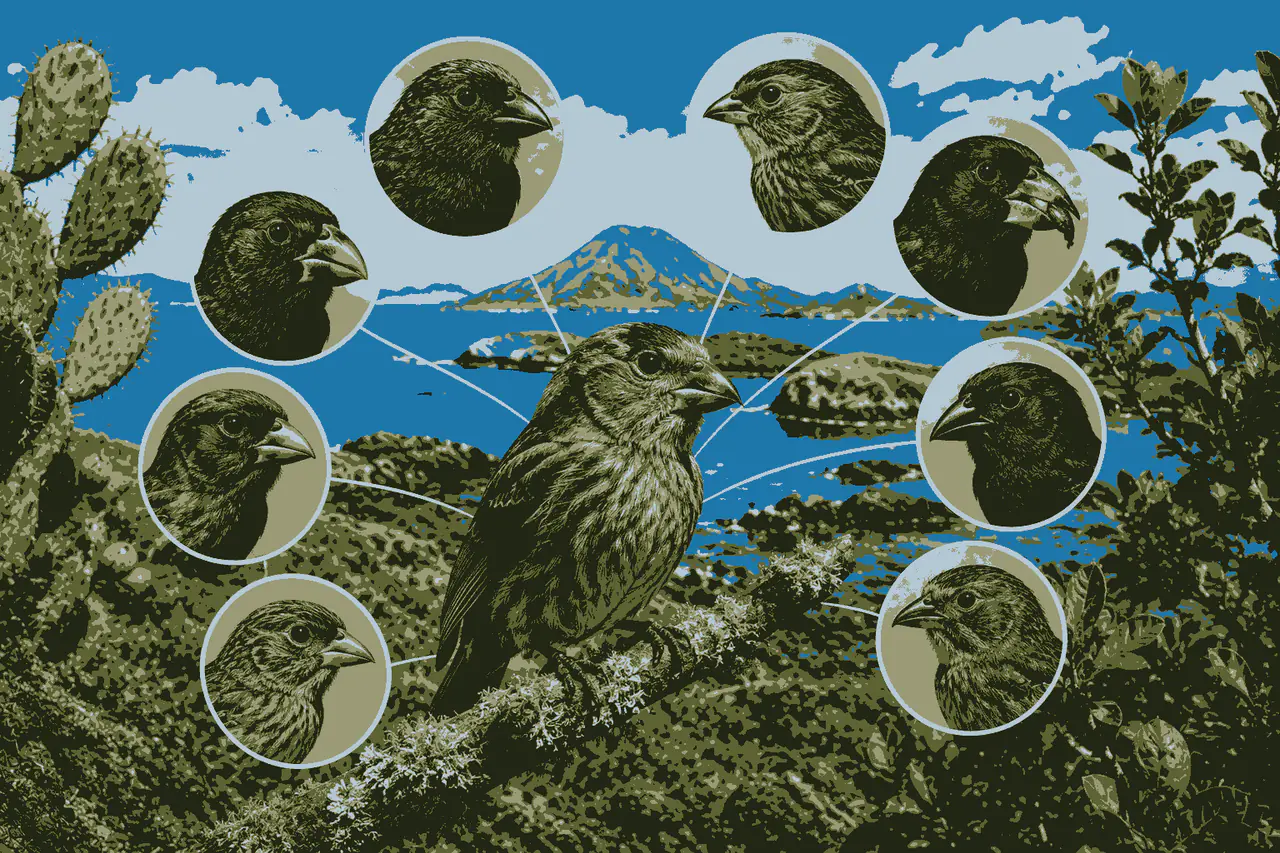
When studying Galapagos Finches Evolution MCQs PDF, aspirants learn that the finches found on different islands were closely related but exhibited noticeable differences in beak size, shape, and feeding habits. These differences were not random. Instead, they reflected adaptations to different environmental conditions and food sources available on each island. This observation became a powerful example of adaptive radiation, a concept commonly discussed in Galapagos Finches Evolution MCQs PDF.
Adaptive radiation refers to the evolution of multiple species from a common ancestral species, with each species adapting to a unique ecological niche. The finches likely originated from a single ancestral population that reached the islands from mainland South America. Over many generations, the isolated populations evolved distinct characteristics suited to their specific habitats. This process is one of the central themes repeatedly explored in Galapagos Finches Evolution MCQs PDF.
The importance of Galapagos Finches Evolution MCQs PDF lies in its demonstration of natural selection. Finches possessing beak shapes that allowed them to efficiently obtain food had a greater chance of survival and reproduction. These favorable traits were passed on to future generations. Over time, the populations diverged significantly, leading to the formation of multiple species adapted to different ecological conditions.
Another reason aspirants frequently practice Galapagos Finches Evolution MCQs PDF is that it helps explain the concept of geographical isolation. The various islands of the Galapagos archipelago acted as natural barriers, preventing regular interbreeding among finch populations. This isolation allowed evolutionary changes to accumulate independently in each population. Consequently, new species emerged through the process of speciation, an important topic highlighted in Galapagos Finches Evolution MCQs PDF.
The study of Galapagos Finches Evolution MCQs PDF also introduces aspirants to biogeographical evidence for evolution. Biogeography examines the geographical distribution of organisms and how that distribution reflects evolutionary history. Darwin recognized that the Galapagos finches resembled mainland South American birds but differed sufficiently to be considered separate species. This pattern strongly suggested descent from a common ancestor followed by evolutionary divergence.
Many concepts related to Galapagos Finches Evolution MCQs PDF overlap with adaptive evolution. Different finch species evolved specialized beaks capable of cracking seeds, feeding on insects, extracting nectar, or consuming cactus parts. These adaptations enabled them to exploit different food resources while minimizing competition with one another. Such ecological specialization is a hallmark of adaptive radiation and remains a major focus of Galapagos Finches Evolution MCQs PDF.
Understanding Galapagos Finches Evolution MCQs PDF also helps aspirants appreciate how environmental factors influence evolutionary change. Droughts, changes in food availability, and habitat conditions can alter selection pressures acting on populations. Research conducted on Galapagos finches has demonstrated measurable evolutionary changes occurring within relatively short periods, providing modern support for Darwin’s original ideas.
Aspirants often encounter discussions in Galapagos Finches Evolution MCQs PDF regarding divergent evolution. Divergent evolution occurs when organisms sharing a common ancestor gradually become increasingly different as they adapt to distinct environments. The finches of the Galapagos Islands are among the most famous examples of this process. Their diverse beak structures evolved from a common ancestral form, illustrating how divergence can generate biological diversity.
The value of Galapagos Finches Evolution MCQs PDF extends beyond examination preparation. It offers insight into the mechanisms that generate biodiversity and explains how species respond to environmental challenges. These lessons are fundamental to modern evolutionary biology and ecological science.
Regular practice using Galapagos Finches Evolution MCQs PDF helps aspirants master important concepts such as natural selection, adaptive radiation, geographical isolation, divergent evolution, and speciation. These topics frequently appear in board examinations and medical entrance tests, making thorough understanding essential for success.
Furthermore, Galapagos Finches Evolution MCQs PDF reinforces the importance of scientific observation in the development of biological theories. Darwin’s careful study of finches demonstrated how evidence collected from nature can lead to revolutionary scientific ideas. His work transformed our understanding of life and remains relevant today.
Galapagos Finches Evolution MCQs PDF:
1. According to de Vries theory, how is evolution described?
A. Discontinuous
B. Jerky
C. Continuous and smooth
D. Both (a) and (b)
Answer: D. Both (a) and (b)
Explanation:
Hugo de Vries proposed the Mutation Theory of Evolution. According to him, evolution occurs through sudden heritable changes called mutations rather than gradual changes. Therefore, evolution is considered both discontinuous and jerky.
2. Which of the following phenomena cannot be explained by Lamarckism?
A. Webbed toes in aquatic birds
B. Weak muscles in the son of a wrestler
C. Long narrow and limbless body of snakes
D. Heterophylly
Answer: B. Weak muscles in the son of a wrestler
Explanation:
Lamarck believed acquired characters could be inherited. However, weak muscles in the son of a wrestler cannot be explained by inheritance of acquired characteristics because muscle development acquired during life is not genetically transmitted.
3. Which of these is NOT an example of Adaptive Radiation?
A. Long-necked Giraffe
B. Darwin's finches
C. Australian marsupials
D. Placental mammals
Answer: A. Long-necked Giraffe
Explanation:
Adaptive radiation refers to diversification from a common ancestor into multiple species adapted to different niches. Darwin's finches and Australian marsupials are classic examples. The long-necked giraffe represents adaptation, not adaptive radiation.
4. Which of the following are homologous organs?
A. Wings of birds & Locust
B. Wings of birds (Sparrow) & Pectoral fins of fish
C. Wings of bat & Butterfly
D. Legs of frog & Cockroach
Answer: B. Wings of birds (Sparrow) & Pectoral fins of fish
Explanation:
Homologous organs share a common origin but may perform different functions. Bird wings and fish pectoral fins evolved from the same ancestral vertebrate forelimb structure.
5. Which of the following statements is not true?
A. Flippers of penguins and dolphins are a pair of homologous organs
B. Analogous structures are a result of convergent evolution
C. Sweet potato and potato is an example of analogy
D. Homology indicates common ancestry
Answer: A. Flippers of penguins and dolphins are a pair of homologous organs
Explanation:
Penguin flippers and dolphin flippers perform similar functions but evolved independently. They are considered analogous structures and illustrate convergent evolution.
6. Convergent evolution is illustrated by which of the following?
A. Dog fish and whale
B. Rat and Dog
C. Star fish and cuttlefish
D. Bacterium and Protozoan
Answer: A. Dog fish and whale
Explanation:
Dogfish (fish) and whales (mammals) belong to different groups but evolved similar streamlined bodies for efficient swimming. This is a classic example of convergent evolution.
7. Select the correct group/set of Australian Marsupials exhibiting adaptive radiation.
A. Lemur, Anteater, Wolf
B. Tasmanian wolf, Bobear, Marsupial mole
C. Numbat, Spotted cuscus, Flying phalanger
D. Mole, Flying squirrel, Tasmanian tiger cat
Answer: C. Numbat, Spotted cuscus, Flying phalanger
Explanation:
Australian marsupials diversified into many ecological niches from a common ancestor, producing forms such as Numbat, Spotted Cuscus, and Flying Phalanger.
8. Analogous organs have
A. Different origin but similar functions
B. Common origin and similar functions
C. Different origin and different functions
D. Common origin but different functions
Answer: A. Different origin but similar functions
Explanation:
Analogous organs perform similar functions but arise from different evolutionary origins. Examples include bird wings and insect wings.
9. Darwin's finches refer to
A. Fossils of birds collected by Darwin at Galapagos Islands
B. A type of birds present on Galapagos Islands
C. Migratory birds collected by Darwin at Galapagos Islands
D. Fossils of reptiles collected by Darwin at Galapagos Islands
Answer: B. A type of birds present on Galapagos Islands
Explanation:
Darwin's finches are a group of birds found on the Galapagos Islands. Their varied beak shapes provided important evidence for adaptive radiation and natural selection.
10. The classical example of adaptive radiation in the development of new species is
A. Darwin's finches
B. Marsupials of Australia
C. Giant tortoise
D. All of the above
Answer: D. All of the above
Explanation:
Darwin's finches, Australian marsupials, and giant tortoises demonstrate adaptive radiation, where species diversify to occupy different ecological niches.
11. Which of the following is the burrowing marsupial?
A. Thylacinus
B. Notoryctus
C. Myrmecobius
D. Phascolarctos
Answer: B. Notoryctus
Explanation:
Notoryctus, commonly known as the marsupial mole, is a burrowing marsupial native to Australia. It is highly adapted for digging and spends most of its life underground.
12. What is the term used to describe the adaptive similarities in different animals found in the same habitat?
A. Adaptive radiation
B. Convergent evolution
C. Parallel evolution
D. Retrogressive evolution
Answer: B. Convergent evolution
Explanation:
Convergent evolution occurs when unrelated organisms independently develop similar adaptations due to similar environmental pressures and ecological niches.
13. What is the evolutionary process that gives rise to new species adapting to new habitats and ways of life called?
A. Adaptive radiation
B. Adaptation
C. Convergent evolution
D. Microevolution
Answer: A. Adaptive radiation
Explanation:
Adaptive radiation is the rapid diversification of a single ancestral species into many species adapted to different habitats and ecological roles.
14. What do Darwin's finches provide evidence for in favor of organic evolution?
A. Embryology
B. Paleontology (or fossils)
C. Anatomy
D. Biogeography (or geographic distribution)
Answer: D. Biogeography (or geographic distribution)
Explanation:
Darwin's finches demonstrate how geographic isolation and environmental differences can lead to the evolution of new species, making them a classic example of biogeographical evidence.
15. Adaptive radiation is an example of which type of selection?
A. Directional selection
B. Diversifying selection
C. Stabilizing selection
D. Sympatric speciation
Answer: B. Diversifying selection
Explanation:
Diversifying selection favors different traits in different environments, leading to the formation of multiple species from a common ancestor, as seen in adaptive radiation.
16. What does Darwin's theory of natural selection fail to explain?
A. Role of variations
B. Survival of the fittest
C. Arrival of the fittest
D. Struggle for existence
Answer: C. Arrival of the fittest
Explanation:
Darwin explained how natural selection acts on existing variations but could not explain how those variations originate. Genetics later explained the arrival of variations through mutation and recombination.
17. What is the reason for the differences in size, color, and food habits between the finches of the Galapagos Islands and mainland finches?
A. Geographical isolation
B. Reproductive isolation
C. Ethological isolation
D. Seasonal isolation
Answer: A. Geographical isolation
Explanation:
Geographical isolation prevented gene flow between populations, allowing them to evolve independently and adapt to different ecological conditions.
18. What is parallelism in evolution?
A. Adaptive convergence
B. Adaptive divergence
C. Adaptive convergence of far-off species
D. Adaptive convergence of closely related species
Answer: D. Adaptive convergence of closely related species
Explanation:
Parallel evolution occurs when closely related species independently develop similar traits while adapting to similar environments.
19. Which set contains only homologous organs?
A. Whale's flipper, horse's forelimb, human hand
B. Wings of butterfly, crow, and insect
C. Horse's forelimb, insect wing, human hand
D. Vermiform appendix, body hair, and patella
Answer: A. Whale's flipper, horse's forelimb, human hand
Explanation:
These structures share a common ancestral origin and basic skeletal pattern but perform different functions, making them homologous organs.
20. The mode of speciation mediated by geographical isolation is referred to as
A. Adaptive radiation
B. Allopatric speciation
C. Parapatric speciation
D. Sympatric speciation
Answer: B. Allopatric speciation
Explanation:
Allopatric speciation occurs when populations become geographically separated, preventing interbreeding and eventually leading to the formation of new species.
21. Natural selection where more individuals acquire a specific character value other than the mean character value leads to
A. Random change
B. Stabilising change
C. Directional change
D. Disruptive change
Answer: C. Directional change
Explanation:
Directional selection occurs when natural selection favors individuals at one extreme of a phenotypic range. As a result, the population mean shifts toward that favored extreme. A classic example is industrial melanism in peppered moths, where darker moths became more common in polluted environments.
22. Flippers of Penguins and Dolphins are examples of
A. Convergent evolution
B. Industrial melanism
C. Natural selection
D. Adaptive radiation
Answer: A. Convergent evolution
Explanation:
Penguins are birds, whereas dolphins are mammals. Despite their different ancestry, both evolved flippers adapted for swimming. This similarity developed independently due to similar environmental pressures, making it an example of convergent evolution.
23. Match List-I with List-II
A. (a) (i) (iv) (iii) (ii)
B. (iv) (iii) (ii) (i)
C. (iii) (ii) (i) (iv)
D. (ii) (i) (iv) (iii)
Answer: B. (iv) (iii) (ii) (i)
Explanation:
The correct matching is:
- Adaptive Radiation → Darwin's Finches
- Convergent Evolution → Wings of butterfly and bird
- Divergent Evolution → Bones of forelimbs in man and whale
- Evolution by anthropogenic action → Resistant varieties due to pesticides and herbicides
24. The wings of a bird and the wings of an insect are:
A. Homologous structures and represent convergent evolution
B. Homologous structures and represent divergent evolution
C. Analogous structures and represent convergent evolution
D. Phylogenetic structures and represent divergent evolution
Answer: C. Analogous structures and represent convergent evolution
Explanation:
Bird wings and insect wings perform the same function of flight but originate from different evolutionary structures. Therefore, they are analogous organs produced through convergent evolution.
25. Forelimbs of cat and lizard used in walking, forelimbs of whale used in swimming, and forelimbs of bats used in flying are an example of
A. Analogous organs
B. Adaptive radiation
C. Homologous organs
D. Convergent evolution
Answer: C. Homologous organs
Explanation:
These forelimbs share the same fundamental skeletal pattern inherited from a common ancestor but are modified for different functions. Therefore, they are homologous organs and demonstrate divergent evolution.
26. Which one of the following are analogous structures?
A. Wings of bat and wings of pigeon
B. Gills of prawn and lungs of man
C. Thorns of Bougainvillea and tendrils of Cucurbita
D. Flippers of dolphin and legs of horse
Answer: B. Gills of prawn and lungs of man
Explanation:
Analogous structures perform similar functions but have different origins. Gills of prawn and lungs of humans both function in respiration but evolved from entirely different structures.
27. In Australia, marsupials and placental mammals have evolved to share many similar characteristics. This type of evolution may be referred to as
A. Convergent Evolution
B. Adaptive Radiation
C. Divergent Evolution
D. Cyclical Evolution
Answer: A. Convergent Evolution
Explanation:
Marsupials and placental mammals evolved independently yet developed similar body forms and ecological roles. This similarity due to adaptation to comparable environments is known as convergent evolution.
28. A population of a species invades a new area. Which of the following conditions will lead to Adaptive Radiation?
A. Area with many habitats occupied by a large number of species
B. Area with a large number of habitats having very low food supply
C. Area with a single type of vacant habitat
D. Area with many types of vacant habitats
Answer: D. Area with many types of vacant habitats
Explanation:
Adaptive radiation occurs when organisms encounter multiple unoccupied ecological niches. The population diversifies rapidly to exploit these different habitats and resources.
29. The similarity of bone structure in the forelimbs of many vertebrates is an example of
A. Homology
B. Analogy
C. Adaptive radiation
D. Convergent evolution
Answer: A. Homology
Explanation:
The forelimbs of vertebrates such as humans, whales, bats, and horses have the same basic skeletal plan inherited from a common ancestor. Such similarity due to common ancestry is called homology.
30. Among the following sets of examples for divergent evolution, select the incorrect option:
A. Forelimbs of man, bat, and cheetah
B. Heart of bat, man, and cheetah
C. Eye of octopus, bat, and man
D. Brain of bat, man, and cheetah
Answer: C. Eye of octopus, bat, and man
Explanation:
The eye of an octopus and the eye of vertebrates perform similar functions but evolved independently. They are analogous organs and represent convergent evolution, not divergent evolution. The other examples involve homologous structures that share a common evolutionary origin and therefore demonstrate divergent evolution.
Conclusion on Galapagos Finches Evolution MCQs PDF
For aspirants aiming to excel in biology, Galapagos Finches Evolution MCQs PDF serves as an excellent resource for revision and conceptual learning. By exploring the evolutionary history of these remarkable birds, aspirants gain a deeper appreciation for the power of natural selection and the processes responsible for the diversity of life on Earth. Ultimately, Galapagos Finches Evolution MCQs PDF remains one of the most valuable topics for understanding evolution, adaptation, and species formation in modern biology.
Related reading
Ultimate Jean Baptiste Lamarck Evolution Theory MCQs with Answers for Smart NEET Prepraration
Master Jean Baptiste Lamarck Evolution Theory MCQs with Answers for NEET , Class 12 Biology. Learn Lamarckism, acquired characters, evolution concepts examples.
Amazing Chronological Order of Human Evolution MCQs for Smart NEET Preparation
Practice Chronological Order of Human Evolution MCQs with answers for NEET, and Class 12 Biology. Learn human ancestors , fossils , and evolution sequence fast.