Evolution explains the remarkable diversity of life on Earth and how organisms adapt to changing environments over time. Among the most important concepts in evolutionary biology are convergent evolution and divergent evolution. These topics frequently appear in competitive examinations, making Convergent and Divergent Evolution MCQs Biology an essential study area for aspirants preparing for board exams, NEET, and other biology-related entrance tests.
Understanding Convergent and Divergent Evolution MCQs Biology begins with recognizing the difference between these two evolutionary processes. Divergent evolution occurs when organisms sharing a common ancestor gradually develop different characteristics as they adapt to different environmental conditions. In contrast, convergent evolution occurs when unrelated organisms independently develop similar features because they face similar environmental challenges.
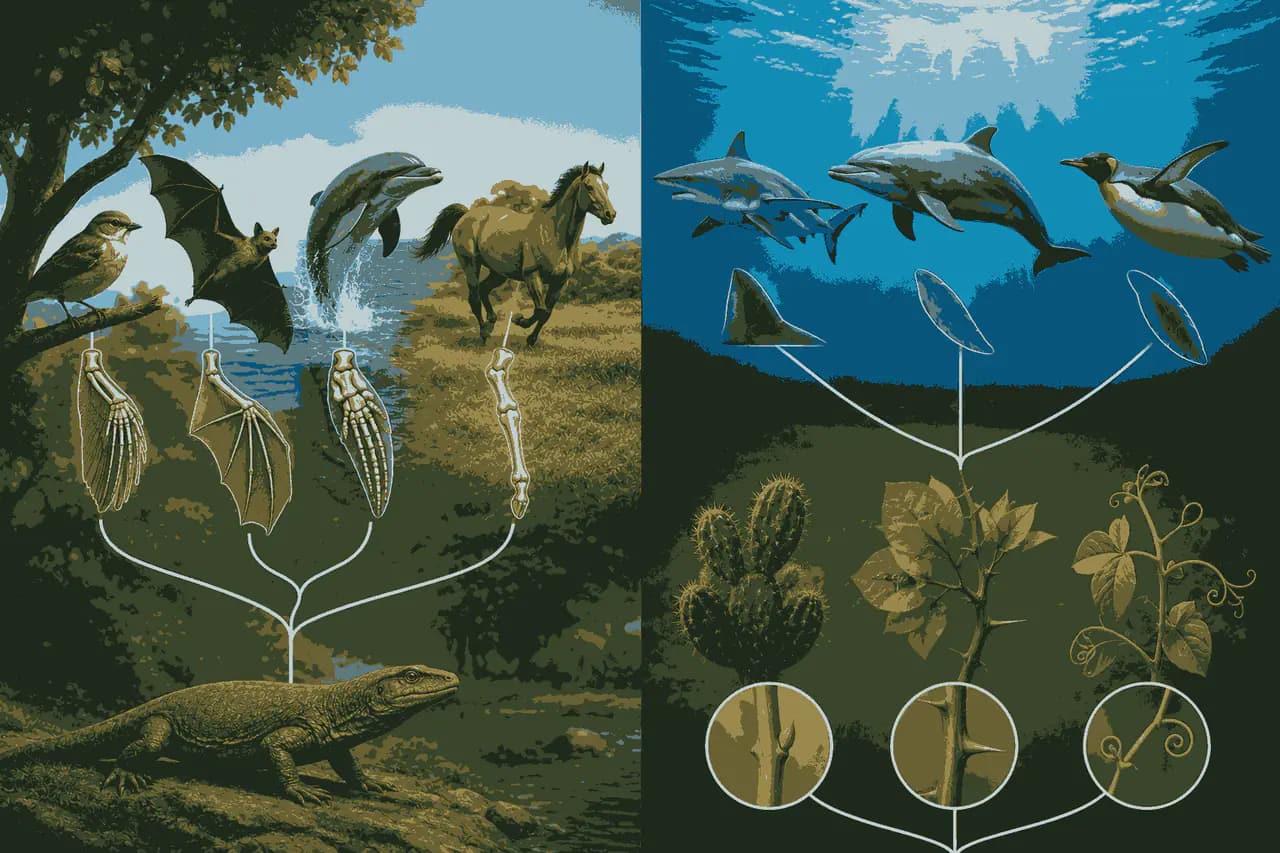
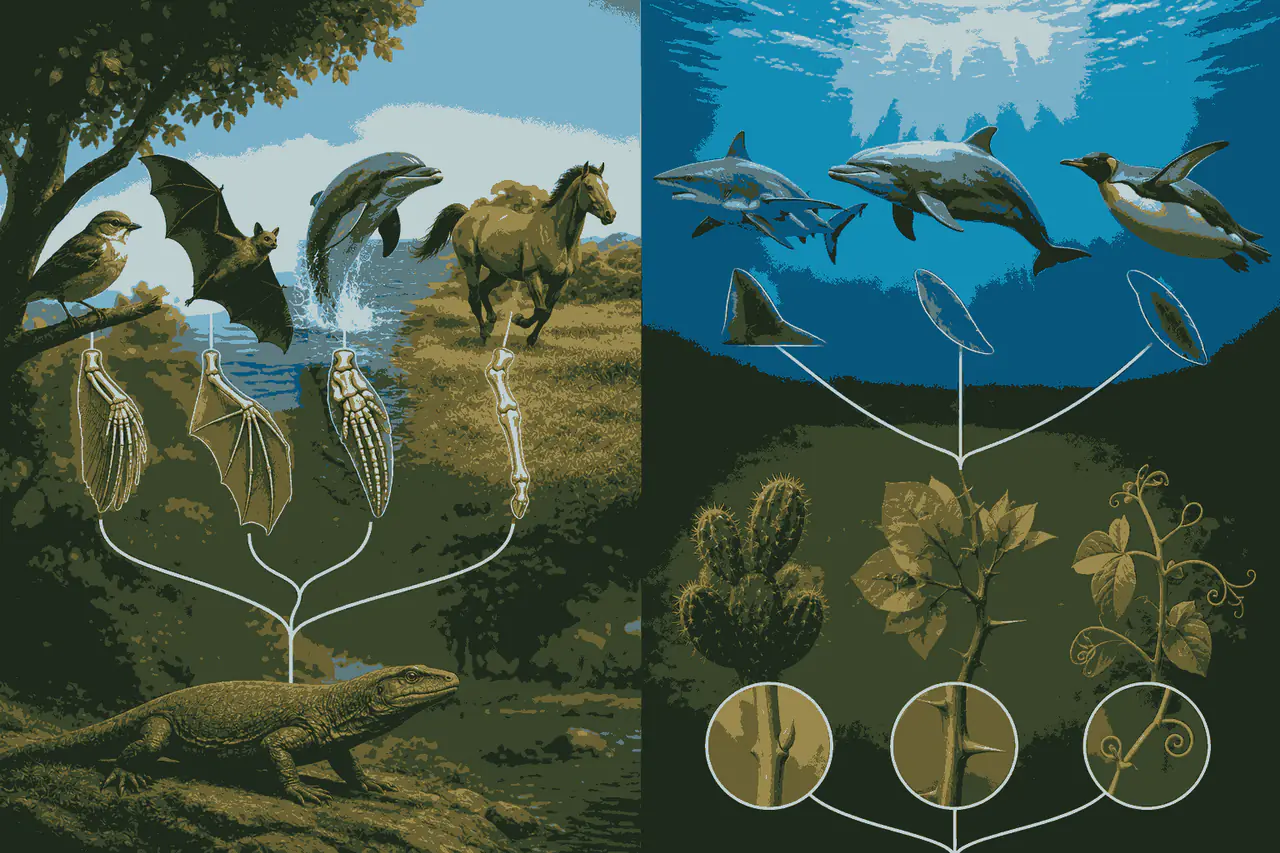
Many aspirants use Convergent and Divergent Evolution MCQs Biology to strengthen their understanding of homologous and analogous organs. Homologous organs are structures that share a common origin but perform different functions. These organs provide evidence for divergent evolution. Examples include the forelimbs of humans, whales, bats, and horses. Although these structures serve different purposes, they share a similar skeletal pattern, making them classic examples discussed in Convergent and Divergent Evolution MCQs Biology.
The study of Convergent and Divergent Evolution MCQs Biology also highlights analogous organs. Analogous organs perform similar functions but have different origins and structural plans. For instance, the wings of birds and insects enable flight but evolved independently. This similarity arises because both organisms adapted to the same functional requirement rather than sharing a recent common ancestor.
One reason aspirants frequently practice Convergent and Divergent Evolution MCQs Biology is that these concepts provide strong evidence for evolution. Homologous organs demonstrate common ancestry and evolutionary divergence, while analogous organs illustrate how natural selection can produce similar adaptations in unrelated groups.
A classic example commonly featured in Convergent and Divergent Evolution MCQs Biology is the streamlined body shape of sharks, dolphins, and whales. Although sharks are fish and dolphins and whales are mammals, they independently evolved similar body forms suited for efficient swimming in aquatic environments. This represents convergent evolution.
Similarly, Convergent and Divergent Evolution MCQs Biology often discuss the pentadactyl limb pattern found in vertebrates. The forelimbs of whales, bats, humans, and cheetahs evolved from a common ancestral structure but became modified for swimming, flying, grasping, and running. This diversification is a clear example of divergent evolution.
Aspirants preparing with Convergent and Divergent Evolution MCQs Biology also learn about adaptive radiation. Adaptive radiation is a special type of divergent evolution in which a single ancestral species rapidly diversifies into multiple species occupying different ecological niches. Darwin's finches are among the most famous examples used in Convergent and Divergent Evolution MCQs Biology.
The significance of natural selection is repeatedly emphasized throughout Convergent and Divergent Evolution MCQs Biology. Natural selection favors traits that enhance survival and reproductive success. Over generations, these favorable characteristics become more common within populations, resulting in evolutionary change.
Another important aspect covered by Convergent and Divergent Evolution MCQs Biology is the role of environmental pressures. Similar environments often produce similar adaptations even among unrelated organisms. This phenomenon explains why convergent evolution is observed across many different groups of organisms.
When studying Convergent and Divergent Evolution MCQs Biology, aspirants frequently encounter examples from both animals and plants. In plants, the thorn of Bougainvillea and the tendril of Cucurbita arise from the same basic structure but perform different functions. This demonstrates divergent evolution and is commonly included in examination questions.
The concepts presented in Convergent and Divergent Evolution MCQs Biology also help explain the evolutionary relationships among species. By comparing anatomical structures, fossil evidence, embryological development, and molecular data, scientists can reconstruct evolutionary histories and identify common ancestors.
A major benefit of practicing Convergent and Divergent Evolution MCQs Biology is the ability to distinguish between homologous and analogous structures accurately. This distinction is frequently tested in Class 12 Biology and competitive examinations because it forms a fundamental part of evolutionary theory.
The fossil record provides additional support for ideas explored through Convergent and Divergent Evolution MCQs Biology. Transitional fossils such as Archaeopteryx reveal evolutionary connections between major groups and help explain how organisms have changed over geological time.
Many aspirants find that Convergent and Divergent Evolution MCQs Biology improve their ability to interpret evolutionary diagrams, classify biological structures, and understand the mechanisms driving biodiversity. These skills are particularly valuable in objective examinations where conceptual clarity is essential.
Regular revision using Convergent and Divergent Evolution MCQs Biology also helps aspirants remember key examples, definitions, and evolutionary principles. Because evolution integrates concepts from genetics, ecology, anatomy, and paleontology, mastering this topic strengthens overall biological understanding.
The practical value of Convergent and Divergent Evolution MCQs Biology extends beyond examinations. These concepts reveal how life adapts to environmental challenges and demonstrate the remarkable flexibility of evolutionary processes. They also help explain why unrelated organisms may appear similar and why related organisms can become dramatically different over time.
Convergent and Divergent Evolution MCQs Biology:
1. Which of the following biological rules states that warm-blooded animals in colder climates have shorter extremities than those in warmer climates to reduce heat loss and conserve body heat?
A. Dalla's law
B. Allen's rule
C. Cope's law
D. Bergmann's law
Answer: B. Allen's rule
Explanation:
Allen's rule states that warm-blooded animals living in colder climates tend to have shorter ears, tails, and limbs. Shorter extremities reduce surface area, thereby minimizing heat loss and helping conserve body heat. Animals in warmer climates often have longer extremities to facilitate heat dissipation.
2. Which of the following provides paleontological evidence for evolution by showing features intermediate between birds and dinosaurs, such as feathers, a toothed beak, and a long tail?
A. Darwin finches
B. Duck-billed platypus
C. Archaeopteryx
D. Biston betularia
Answer: C. Archaeopteryx
Explanation:
Archaeopteryx is considered a transitional fossil because it possesses characteristics of both reptiles and birds. It had feathers and wings like birds, but also teeth, claws, and a long bony tail like reptiles. This fossil provides strong evidence that birds evolved from reptilian ancestors.
3. Statement 1: Due to continental drift pouched mammals of Australia survived.
Statement 2: South America joined North America due to continental drift.
A. Statement I and II are correct
B. Statement I and II are incorrect
C. Statement I is correct and II is incorrect
D. Statement I is incorrect and II is correct
Answer: C. Statement I is correct and II is incorrect
Explanation:
Australia remained geographically isolated for millions of years, allowing marsupials such as kangaroos and koalas to evolve and survive without competition from placental mammals. The second statement is considered incorrect in this context because the survival of Australian marsupials was mainly due to Australia's isolation rather than any joining of South and North America.
4. What is the term for the change in the number of discrete, countable, and distinct parts or features in an organism's body, such as the number of vertebrae in a snake or petals in a flower?
A. Continuous variation
B. Discontinuous variation
C. Meristic variation
D. Substantive variation
Answer: C. Meristic variation
Explanation:
Meristic variation refers to differences in countable body structures such as scales, vertebrae, petals, or segments. Since these features can be counted as whole numbers, they are classified under meristic traits.
5. Match the following organisms with their corresponding groups:
- A. Cynognathus
- B. Archaeopteryx
- C. Seymouria
- D. Eusthenopteron
A. IV, I, II, V
B. III, II, I, V
C. V, II, I, IV
D. III, I, II, V
Answer: D. III, I, II, V
Correct Matching:
- Cynognathus → Reptiles and Mammals
- Archaeopteryx → Reptiles and Birds
- Seymouria → Amphibians and Reptiles
- Eusthenopteron → Fishes and Amphibians
Explanation:
These organisms are important connecting links in evolution because they possess characteristics of two major groups, demonstrating transitional stages in evolutionary history.
6. What does the term "neoteny" refer to in biology?
A. Development of gonads
B. Pre-adult animal
C. Metamorphosis
D. Retention of larval or embryonic traits in the adult body
Answer: D. Retention of larval or embryonic traits in the adult body
Explanation:
Neoteny is the retention of juvenile characteristics in sexually mature adults. The axolotl is a classic example, retaining gills and aquatic features throughout its life while still reproducing.
7. Which animal is used to explain industrial melanism?
A. Lizard
B. Frog
C. Monkey
D. Peppered moth
Answer: D. Peppered moth
Explanation:
The peppered moth (Biston betularia) became a classic example of natural selection during the Industrial Revolution. Dark-colored moths survived better on soot-covered trees, leading to an increase in their population.
8. Regarding homologous and analogous organs, which statement is correct?
Statement I: Homologous organs exhibit convergent evolution.
Statement II: Analogous organs exhibit divergent evolution.
A. Both statements are correct
B. Statement I is correct and Statement II is false
C. Statement I is false and Statement II is correct
D. Both statements are false
Answer: D. Both statements are false
Explanation:
Homologous organs are produced by divergent evolution, while analogous organs arise through convergent evolution. Therefore, both statements are incorrect.
9. Which statement is correct regarding homologous and analogous organs?
A. Homologous organs are a result of divergent evolution, while analogous organs are created in convergent evolution.
B. Homologous organs have similar structures and functions.
C. Homologous organs are a result of convergent evolution.
D. Analogous organs are created in divergent evolution.
Answer: A
Explanation:
Homologous organs share common ancestry and structural similarity but may differ in function. Analogous organs have different origins but perform similar functions due to adaptation to similar environments.
10. Which one of the following is not a living fossil?
A. King crab
B. Sphenodon
C. Archaeopteryx
D. Peripatus
Answer: C. Archaeopteryx
Explanation:
Archaeopteryx is an extinct transitional fossil and not a living fossil. King crab, Sphenodon (Tuatara), and Peripatus are often cited as living fossils because they have remained relatively unchanged for millions of years.
11. Choose the wrong statement
A. Louis Pasteur demonstrated that life comes only from pre-existing life
B. S.L. Miller observed that electric discharge in a flask containing CH₄, H₂, NH₃ and water vapour at 800°C formed amino acids
C. Flippers of penguins and dolphins are examples of homology
D. Homology indicates common ancestry
Answer: C. Flippers of penguins and dolphins are examples of homology
Explanation:
Flippers of penguins and dolphins perform similar functions but have evolved independently in different groups. Therefore, they are analogous organs and represent convergent evolution, not homology.
12. The original features of Darwin's finches in Galapagos Islands were adapted for
A. Flesh eating
B. Insect eating
C. Fish eating
D. Seed eating
Answer: D. Seed eating
Explanation:
The ancestral finches that reached the Galapagos Islands were primarily seed eaters. Over time, adaptive radiation resulted in different beak shapes adapted for different food sources.
13. Darwin in his Natural Selection Theory did not believe in any role of
A. Struggle for existence
B. Discontinuous variation
C. Parasites and predators as natural enemies
D. Survival of the fittest
Answer: B. Discontinuous variation
Explanation:
Darwin emphasized small, continuous variations that accumulated gradually over time. Large sudden changes (discontinuous variations) were later emphasized by Hugo de Vries in his mutation theory.
14. Convergent evolution is illustrated by
A. Starfish and cuttlefish
B. Dogfish and whale
C. Rat and dog
D. Bacterium and protozoan
Answer: B. Dogfish and whale
Explanation:
Dogfish (a fish) and whale (a mammal) evolved similar streamlined bodies independently because both adapted to aquatic environments. This is a classic example of convergent evolution.
15. The diversity in the type of beaks of finches adapted to different feeding habits on the Galapagos Islands provides evidence for
A. Origin of species by natural selection
B. Intraspecific variations
C. Intraspecific competition
D. Interspecific competition
Answer: A. Origin of species by natural selection
Explanation:
Darwin's finches demonstrate how natural selection acting on variations can lead to the formation of new species adapted to different ecological niches.
16. Analogous structures are a result of
A. Stabilizing selection
B. Divergent evolution
C. Convergent evolution
D. Shared ancestry
Answer: C. Convergent evolution
Explanation:
Analogous organs have different origins but perform similar functions because unrelated organisms adapt to similar environmental conditions.
17. In the case of peppered moth (Biston betularia), the black-coloured form became dominant during the Industrial Revolution. This is an example of
A. Inheritance of acquired characters
B. Natural selection whereby darker forms were selected
C. Appearance of darker individuals due to poor sunlight
D. Protective mimicry
Answer: B. Natural selection whereby darker forms were selected
Explanation:
Industrial pollution darkened tree trunks, making dark moths less visible to predators. As a result, natural selection favored dark-colored moths.
18. In Bougainvillea and Cucurbita, the axillary bud is modified into thorn and tendril respectively. This is an example of
A. Divergent evolution
B. Convergent evolution
C. Co-evolution
D. Microevolution
Answer: A. Divergent evolution
Explanation:
Both structures originate from the same basic organ (axillary bud) but perform different functions, illustrating divergent evolution.
19. Which evidence of evolution is related to Darwin's finches?
A. Evidence from biogeographical distribution
B. Evidence from comparative anatomy
C. Evidence from embryology
D. Evidence from palaeontology
Answer: A. Evidence from biogeographical distribution
Explanation:
Darwin's finches are a classic example of biogeographical evidence because their distribution and diversification occurred on isolated islands.
20. Which option gives one correct example each of convergent evolution and divergent evolution?
A. Bones of forelimbs of vertebrates; Wings of butterfly and birds
B. Thorns of Bougainvillea and tendrils of Cucurbita; Eyes of octopus and mammals
C. Eyes of octopus and mammals; Bones of forelimbs of vertebrates
D. Thorns of Bougainvillea and tendrils of Cucurbita; Wings of butterflies and birds
Answer: C. Eyes of octopus and mammals; Bones of forelimbs of vertebrates
Explanation:
Eyes of octopus and mammals evolved independently but perform similar functions (convergent evolution). Vertebrate forelimbs have a common origin but different functions (divergent evolution).
21. Dinosaurs dominated the world in which of the following geological era?
A. Devonian
B. Cenozoic
C. Jurassic
D. Mesozoic
Answer: D. Mesozoic
Explanation:
The Mesozoic Era is known as the "Age of Reptiles." It includes the Triassic, Jurassic, and Cretaceous periods. Dinosaurs originated during the Triassic, flourished during the Jurassic, and became extinct at the end of the Cretaceous period.
22. Which of the following is the closest relative of man?
A. Chimpanzee
B. Gorilla
C. Orangutan
D. Gibbon
Answer: A. Chimpanzee
Explanation:
Chimpanzees share approximately 98–99% of their DNA with humans, making them our closest living relatives. Genetic, anatomical, and behavioral similarities strongly support this evolutionary relationship.
23. Similarities in organisms with different genotypes indicate
A. Microevolution
B. Macroevolution
C. Convergent evolution
D. Divergent evolution
Answer: C. Convergent evolution
Explanation:
Convergent evolution occurs when unrelated organisms independently evolve similar traits due to similar environmental pressures, despite having different genetic backgrounds and evolutionary histories.
24. The theory that environment can bring about changes in individuals was proposed by
A. Mendel
B. Darwin
C. Lamarck
D. Lyell
Answer: C. Lamarck
Explanation:
Jean Baptiste Lamarck proposed that organisms acquire characteristics during their lifetime in response to environmental conditions and pass these acquired traits to their offspring. This is known as Lamarckism.
25. Which is not true of Archaeopteryx?
A. Jaws are modified into beak
B. Tail is bony and long
C. Forelimbs are modified into wings
D. Connecting link between birds and mammals
Answer: D. Connecting link between birds and mammals
Explanation:
Archaeopteryx is a connecting link between reptiles and birds, not birds and mammals. It possesses both reptilian features (teeth, long tail, claws) and avian features (feathers and wings).
26. Development of pentadactylous nature in vertebrates is an example of
A. Adaptation
B. Convergent evolution
C. Convergent evolution and adaptive radiation
D. Divergent evolution and adaptive radiation
Answer: D. Divergent evolution and adaptive radiation
Explanation:
The pentadactyl limb evolved from a common ancestral structure and diversified into different forms in amphibians, reptiles, birds, and mammals. This demonstrates both divergent evolution and adaptive radiation.
27. Thorns of Bougainvillea and tendrils of Cucurbita are examples of
A. Convergent evolution
B. Divergent evolution
C. Adaptive radiation
D. Co-evolution
Answer: B. Divergent evolution
Explanation:
Both structures arise from axillary buds but perform different functions. Bougainvillea thorns provide protection, whereas Cucurbita tendrils aid climbing. This is a classic example of divergent evolution.
28. Which statement is correct regarding the theory of evolution by Charles Darwin?
A. Mutations are random and directional
B. Darwinian variations are small and directional
C. Fitness is the end result of the ability to adapt and gets selected by nature
D. All mammals except whales and camels have seven cervical vertebrae
Answer: C. Fitness is the end result of the ability to adapt and gets selected by nature
Explanation:
According to Darwin, organisms best adapted to their environment survive and reproduce more successfully. This reproductive success, known as fitness, is favored by natural selection.
29. Among the human ancestors, which species had a brain size of more than 1000 cc?
A. Homo habilis
B. Homo neanderthalensis
C. Homo erectus
D. Ramapithecus
Answer: B. Homo neanderthalensis
Explanation:
Homo neanderthalensis possessed a cranial capacity of approximately 1300–1600 cc, often larger than modern humans. Homo habilis had about 650–800 cc, Homo erectus around 900–1100 cc, and Ramapithecus much less.
30. What is common to whale, seal, and shark?
A. Homeothermic nature
B. Seasonal migration
C. Thick subcutaneous fat
D. Convergent evolution
Answer: D. Convergent evolution
Explanation:
Whales (mammals), seals (mammals), and sharks (fish) belong to different evolutionary lineages, yet they possess streamlined bodies and similar adaptations for swimming. These similarities evolved independently due to similar aquatic environments, making them an example of convergent evolution.
Conclusion on Convergent and Divergent Evolution MCQs Biology
Ultimately, Convergent and Divergent Evolution MCQs Biology provide aspirants with a comprehensive framework for understanding evolutionary change. By studying homologous organs, analogous organs, adaptive radiation, natural selection, and environmental adaptation, aspirants gain deeper insights into the mechanisms responsible for the incredible diversity of life on Earth.
Related reading
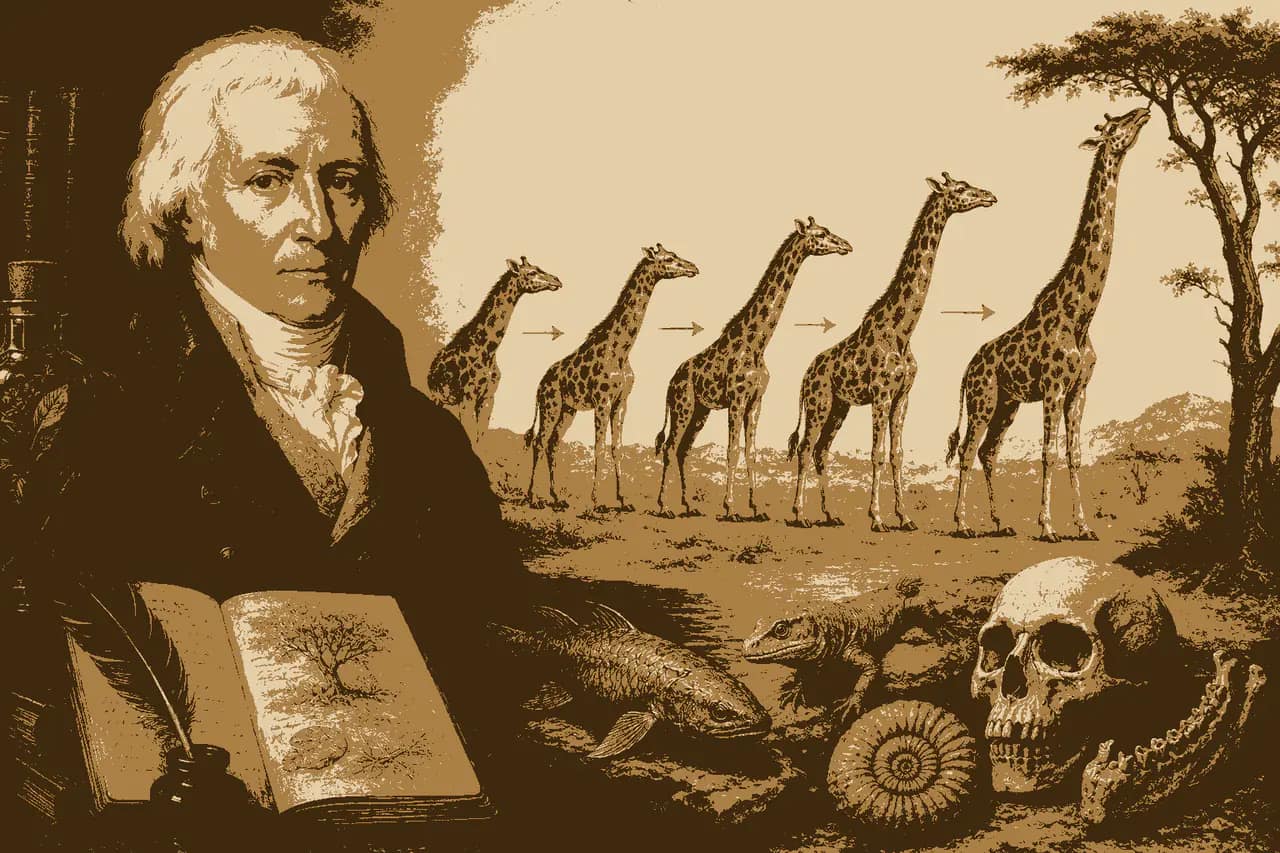
Ultimate Jean Baptiste Lamarck Evolution Theory MCQs with Answers for Smart NEET Prepraration
Master Jean Baptiste Lamarck Evolution Theory MCQs with Answers for NEET , Class 12 Biology. Learn Lamarckism, acquired characters, evolution concepts examples.
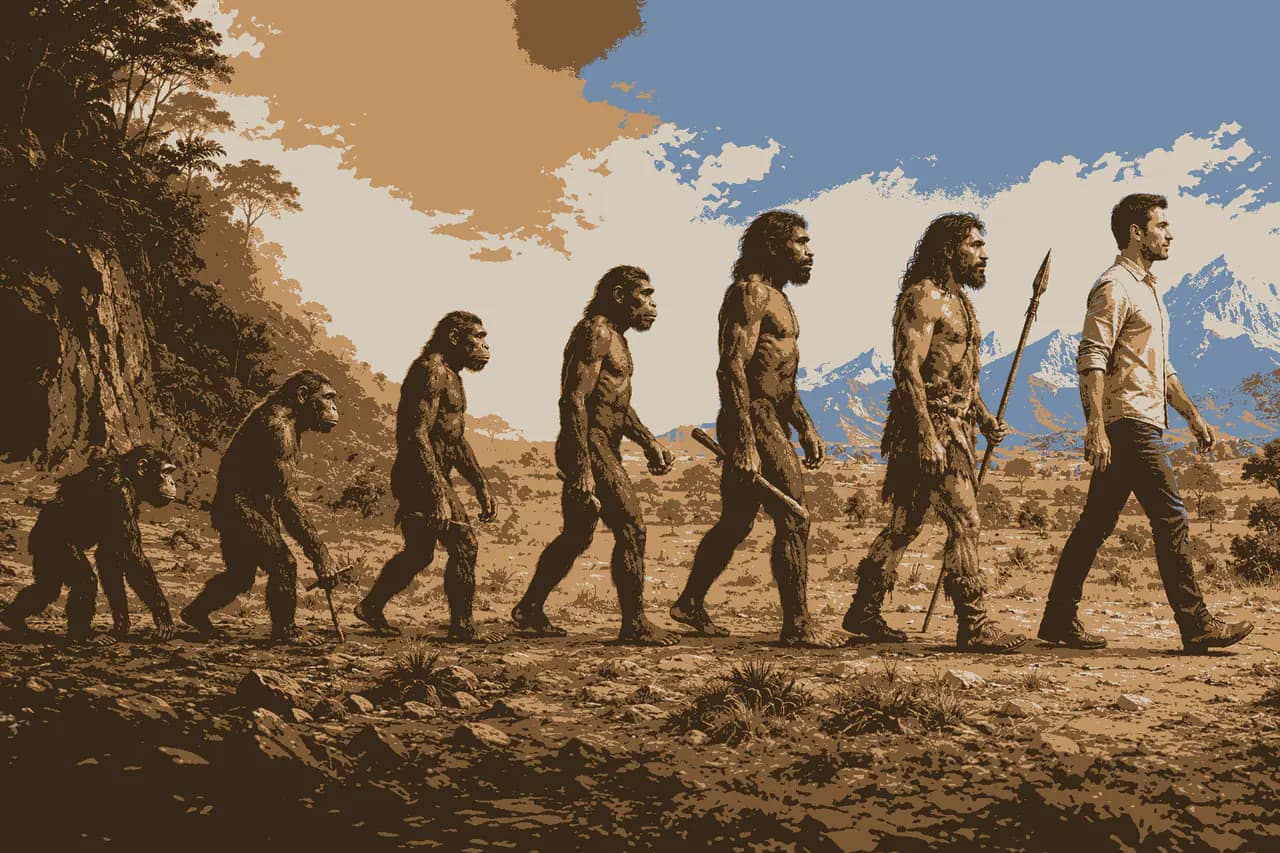
Amazing Chronological Order of Human Evolution MCQs for Smart NEET Preparation
Practice Chronological Order of Human Evolution MCQs with answers for NEET, and Class 12 Biology. Learn human ancestors , fossils , and evolution sequence fast.