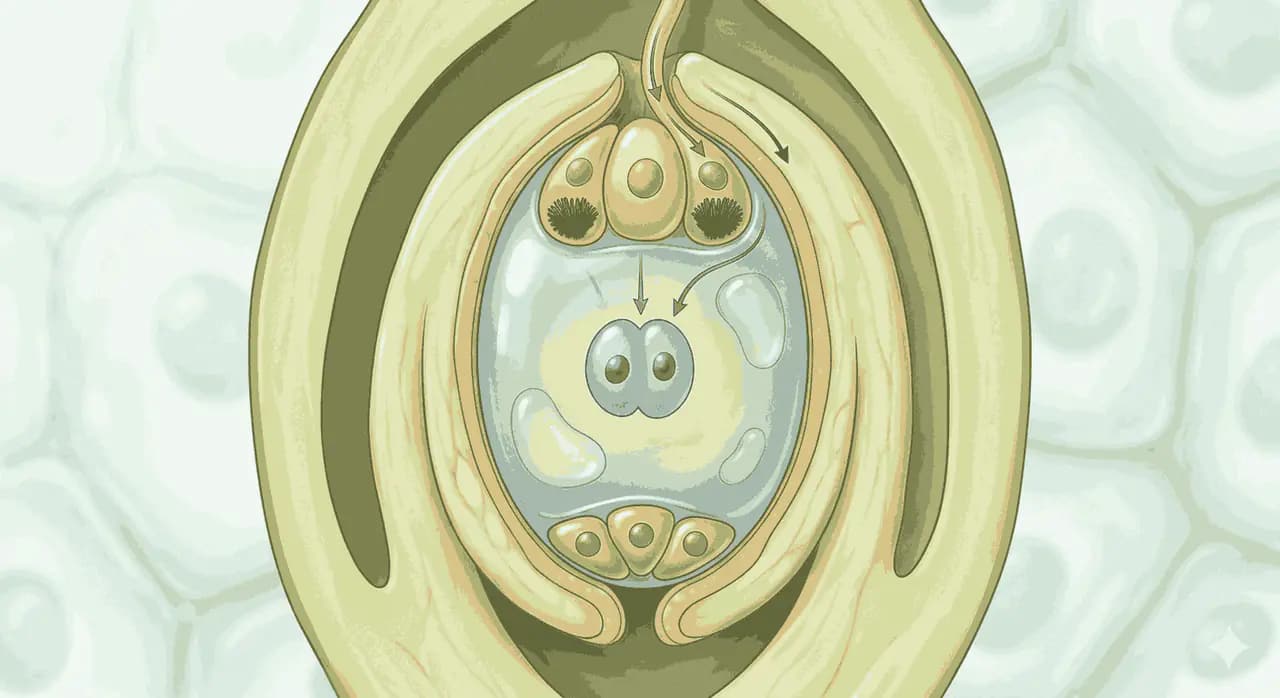
Understanding the concept of the embryo sac is extremely important for aspirants preparing for board exams as well as competitive exams. The topic Embryo Sac Structure And Function MCQ Class 12 Biology With Answers plays a crucial role in strengthening the fundamentals of plant reproduction. When aspirants carefully study Embryo Sac Structure And Function MCQ Class 12 Biology With Answers, they gain a deeper insight into how fertilization occurs in flowering plants.
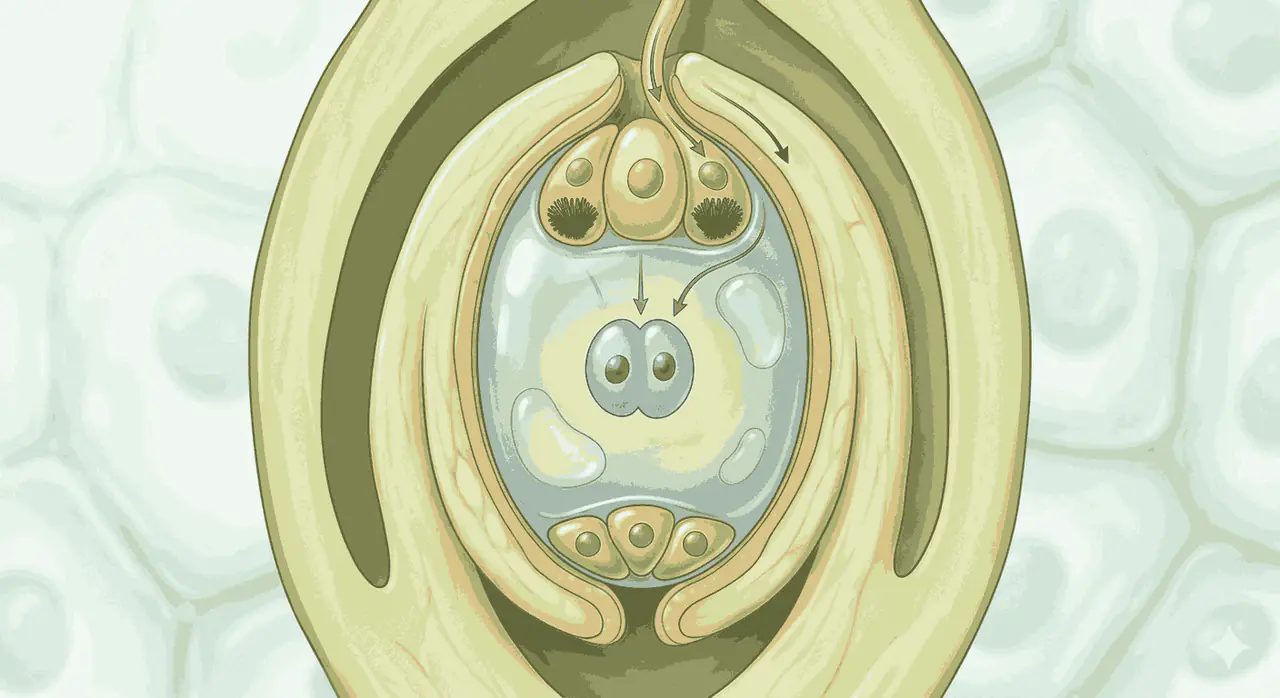
The embryo sac is the female gametophyte in angiosperms, and mastering Embryo Sac Structure And Function MCQ Class 12 Biology With Answers helps aspirants understand its structure and biological significance. Typically, the embryo sac is a seven-celled and eight-nucleate structure. Learning through Embryo Sac Structure And Function MCQ Class 12 Biology With Answers allows aspirants to visualize the arrangement of egg cells, synergids, antipodals, and the central cell effectively.
One of the key advantages of studying Embryo Sac Structure And Function MCQ Class 12 Biology With Answers is that it simplifies complex biological processes. Instead of memorizing theoretical descriptions, aspirants can apply concepts practically. Through repeated practice of Embryo Sac Structure And Function MCQ Class 12 Biology With Answers, aspirants develop confidence in identifying structures and understanding their roles.
The structure of the embryo sac consists of the egg apparatus, central cell, and antipodal cells. The egg apparatus includes one egg cell and two synergids. By practicing Embryo Sac Structure And Function MCQ Class 12 Biology With Answers, aspirants become familiar with the positioning and function of each component. This not only helps in exams but also builds conceptual clarity.
Another important aspect covered in Embryo Sac Structure And Function MCQ Class 12 Biology With Answers is the function of each part. The egg cell participates in syngamy, while the polar nuclei fuse with a male gamete to form the endosperm. When aspirants regularly revise Embryo Sac Structure And Function MCQ Class 12 Biology With Answers, they clearly understand the process of double fertilization.
The role of synergids is also highlighted in Embryo Sac Structure And Function MCQ Class 12 Biology With Answers. These cells contain the filiform apparatus, which guides the pollen tube into the embryo sac. This concept is frequently asked in exams, making Embryo Sac Structure And Function MCQ Class 12 Biology With Answers highly valuable for preparation.
Antipodal cells, although less active, play a nutritional role. By solving Embryo Sac Structure And Function MCQ Class 12 Biology With Answers, aspirants learn the functional importance of even the smallest structures. This holistic understanding is essential for scoring well.
Another benefit of practicing Embryo Sac Structure And Function MCQ Class 12 Biology With Answers is improved accuracy. Aspirants often make mistakes in labeling diagrams or identifying functions. However, consistent practice with Embryo Sac Structure And Function MCQ Class 12 Biology With Answers helps reduce such errors significantly.
Time management is also enhanced through Embryo Sac Structure And Function MCQ Class 12 Biology With Answers. Since MCQs require quick thinking, aspirants learn to recall concepts instantly. This becomes especially helpful during competitive exams where time is limited.
In addition, Embryo Sac Structure And Function MCQ Class 12 Biology With Answers helps aspirants understand variations such as monosporic, bisporic, and tetrasporic embryo sacs. These concepts are often tricky, but practicing Embryo Sac Structure And Function MCQ Class 12 Biology With Answers makes them easier to grasp.
Visual learning is another advantage. Many questions in Embryo Sac Structure And Function MCQ Class 12 Biology With Answers are diagram-based, which improves the ability to interpret biological figures. This skill is extremely useful in exams.
Furthermore, revision becomes more effective with Embryo Sac Structure And Function MCQ Class 12 Biology With Answers. Instead of going through lengthy notes, aspirants can quickly revise important points. This makes Embryo Sac Structure And Function MCQ Class 12 Biology With Answers an excellent tool for last-minute preparation.
Regular practice of Embryo Sac Structure And Function MCQ Class 12 Biology With Answers also boosts confidence. When aspirants repeatedly solve questions correctly, they feel more prepared and less anxious during exams.
Embryo Sac Structure And Function MCQs Class 12 Biology With Answers:
1.
When are megaspores produced from the megaspore mother cells?
A. Meiotic division
B. Mitotic division
C. Formation of a thick wall
D. Differentiation
Answer: A
Explanation: Megaspore mother cell undergoes meiotic division (reduction division) to produce four haploid megaspores. This ensures genetic variation and reduction in chromosome number.
2.
How many cotyledons does the embryo of a sunflower have?
A. Two cotyledons
B. One cotyledon
C. Eight cotyledons
D. Cotyledons absent
Answer: A
Explanation: Sunflower is a dicotyledonous plant, and dicots characteristically possess two cotyledons in their embryo.
3.
Assertion: In Fritillaria, the embryo sac is tetrasporic type.
Reason: Four megaspore mother cells are involved in its formation.
A. Both true and correct explanation
B. Both true but incorrect explanation
C. Assertion is true but Reason is false
D. Assertion is false but Reason is true
Answer: C
Explanation: The embryo sac in Fritillaria is indeed tetrasporic, but it develops from one megaspore mother cell, not four. Hence the reason is incorrect.
4.
Match ovular structure with post-fertilization structure:
A. 2, 3, 4, 1
B. 2, 3, 1, 4
C. 3, 2, 4, 1
D. 3, 2, 1, 4
Answer: C
Explanation:
- Ovule → Seed
- Funiculus → Aril
- Nucellus → Perisperm
- Polar nuclei → Endosperm
This sequence matches option C.
5.
Identify the mismatch.
A. Antipodals – Haploid
B. Zygote – Diploid
C. Synergids – Diploid
D. Primary endosperm nucleus – Triploid
Answer: C
Explanation: Synergids are haploid cells, part of the embryo sac. Hence calling them diploid is incorrect.
6.
In apple, gametes have 17 chromosomes. What is chromosome number in PEN?
A. 34
B. 68
C. 17
D. 51
Answer: D
Explanation: PEN (Primary Endosperm Nucleus) is formed by triple fusion (n + n + n). So 17 × 3 = 51 chromosomes.
7.
Function of filiform apparatus:
A. Opening of pollen tube
B. Guides pollen tube to egg
C. Helps entry of pollen tube into synergid
D. Prevents entry of multiple tubes
Answer: C
Explanation: Filiform apparatus is present in synergids and facilitates entry of pollen tube into the embryo sac.
8.
If root has 24 chromosomes, gamete has:
A. 24
B. 12
C. 4
D. 8
Answer: B
Explanation: Root cells are diploid (2n = 24). Gametes are haploid → n = 12.
9.
The diagram represents:
A. Anatropous ovule
B. Orthotropous ovule
C. Amphitropous ovule
D. Campylotropous ovule
Answer: B
Explanation: Orthotropous ovule is straight and upright, with micropyle, chalaza, and funicle in one line.
10.
Identify parts A–F correctly:
A. Synergids, polar nuclei, central cell, antipodals, filiform apparatus, egg
B. Polar nuclei, egg, antipodals, central cell, filiform apparatus, synergids
C. Egg, synergids, central cell, filiform apparatus, antipodals, polar nuclei
D. Central cell, polar nuclei, filiform apparatus, antipodals, synergids, egg
Answer: A
Explanation: The embryo sac consists of synergids, egg, antipodals, and central cell with polar nuclei arranged in a specific pattern.
11.
Identify haploid cells:
A. 1,2,4,5
B. 2,4,6,7
C. 1,2,3,5
D. 2,4,3,1
Answer: C
Explanation: Egg, synergids, antipodals, and male gametes are haploid cells.
12.
Haploid cells in flowering plants:
A. Antipodal cell, egg cell, synergid cell and male gametes
B. Polar nuclei, male gamete etc
C. MMC etc
D. Nucellus etc
Answer: A
Explanation: All gametophytic cells such as egg, synergids, antipodals, and male gametes are haploid.
13.
Identify the correct sequence of events during the development of embryo sac (megagametogenesis):
A. Nucellus → Megaspore mother cell → Meiosis → Linear tetrad → Functional megaspore → Mitosis → Embryo sac
B. Megaspore mother cell → Nucellus → Meiosis → Functional megaspore → Linear tetrad → Embryo sac
C. Nucellus → Megaspore mother cell → Mitosis → Linear tetrad → Meiosis → Embryo sac
D. Megaspore mother cell → Meiosis → Nucellus → Functional megaspore → Embryo sac
Answer: A
Explanation:
The correct sequence in embryo sac development is:
- Nucellus contains the megaspore mother cell (MMC)
- MMC undergoes meiosis → forms linear tetrad
- One megaspore becomes functional
- It undergoes mitotic divisions → forms embryo sac (female gametophyte)
14.
Which of the following statements are correct?
A. In Loranthus, ovule is not covered by integuments
B. In sunflower, ovary contains a single ovule
C. Pollen grains can be stored at −196°C in pollen banks
D. In rice, pollen grains remain viable for several months
A. A, B, C
B. A, B, D
C. B, C, D
D. A, C, D
Answer: A
Explanation:
- A is correct: Loranthus has non-integumented ovule
- B is correct: Sunflower has single ovule
- C is correct: Pollen is stored in liquid nitrogen at −196°C
- D is incorrect: Rice pollen remains viable only for ~30 minutes, not months
15.
Commelina produces … embryo sac contains…
A. Chasmogamous, 7 cells 8 nuclei
B. Xenogamy
C. Cleistogamous
D. Chasmogamous, 8 nuclei 7 cells
Answer: D
Explanation: Typical angiosperm embryo sac has 8 nuclei and 7 cells.
16.
Chromosomes in endosperm if egg = 8:
A. 24
B. 8
C. 16
D. 12
Answer: A
Explanation: Endosperm is triploid (3n) → 3 × 8 = 24.
17.
Micropyle direction in anatropous ovule:
A. Upward
B. Downward
C. Right
D. Left
Answer: B
Explanation: In anatropous ovule, micropyle bends and faces downward.
18.
Egg apparatus consists of:
A. One egg + two synergids
B. Incorrect
C. Incorrect
D. Incorrect
Answer: A
Explanation: Egg apparatus = 1 egg cell + 2 synergids.
19.
Function of antipodal cells:
A. Provide nutrition
B. Guide pollen tube
C. Form filiform apparatus
D. Undergo mitosis
Answer: A
Explanation: Antipodals mainly function in nutrition of embryo sac.
20.
Ovule fused with funicle at:
A. Micropyle
B. Nucellus
C. Chalaza
D. Hilum
Answer: D
Explanation: Hilum is the point of attachment of ovule/seed to the funicle.
21.
Shield-shaped cotyledon in wheat:
A. Coleoptile
B. Epiblast
C. Coleorrhiza
D. Scutellum
Answer: D
Explanation: In monocots like wheat, the cotyledon is modified into scutellum.
22.
Least cell male gametophyte:
A. Pteris
B. Funaria
C. Lilium
D. Pinus
Answer: C
Explanation: Lilium pollen grain has minimum number of cells (2–3).
23.
Bicarpellary ovary family:
A. Sesbania
B. Brassica
C. Aloe
D. Solanum
Answer: D
Explanation: Solanum has bicarpellary, syncarpous ovary.
24.
Most common embryo sac:
A. Bisporic
B. Tetrasporic
C. Monosporic (3 mitosis)
D. Monosporic (2 mitosis)
Answer: C
Explanation: Most angiosperms have Polygonum type (monosporic, 3 mitotic divisions).
25.
Megasporangium =
A. Ovule
B. Embryo sac
C. Fruit
D. Nucellus
Answer: A
Explanation: Ovule is also called megasporangium.
26.
Perisperm is:
A. Haploid
B. No food
C. Fusion product
D. Diploid
Answer: D
Explanation: Perisperm develops from nucellus and is diploid.
27.
Functional megaspore develops into:
A. Ovule
B. Endosperm
C. Embryo sac
D. Embryo
Answer: C
Explanation: Functional megaspore forms the female gametophyte (embryo sac).
28.
Pollen tube releases gametes into:
A. Central cell
B. Antipodals
C. Egg cell
D. Synergids
Answer: D
Explanation: Pollen tube enters degenerated synergid and releases gametes.
29.
Strasburger studied embryo sac in:
A. i, iv
B. ii, iii
C. i, ii
D. iii, iv
Answer: C
Explanation: Strasburger described Polygonum type embryo sac.
30.
Syngamy produces:
A. Ovum + sperm
B. Polar fusion
C. Zygote (2n)
D. Endosperm
Answer: C
Explanation: Syngamy = fusion of male and female gamete → zygote (diploid)
Finally, the importance of Embryo Sac Structure And Function MCQ Class 12 Biology With Answers cannot be overstated. It combines conceptual understanding, application, and revision in a single format. By consistently practicing Embryo Sac Structure And Function MCQ Class 12 Biology With Answers, aspirants can strengthen their preparation, improve their accuracy, and achieve excellent results in Class 12 Biology exams.
Related reading
Crack Exam Easily: Ovule Structure and Micropyle Function MCQs Class 12 Biology With Answers
Practice Ovule Structure and Micropyle Function MCQs Class 12 Biology With Answers. Strengthen concepts, revise key topic,improve exam performance with targeted
Master Sertoli Cells Location and Function MCQs With Answers for Class 12 Biology
Master Sertoli Cells Location and Function MCQs With Answers for Class 12 Biology with clear explanations, key concepts , and exam-focused preparation to boost,