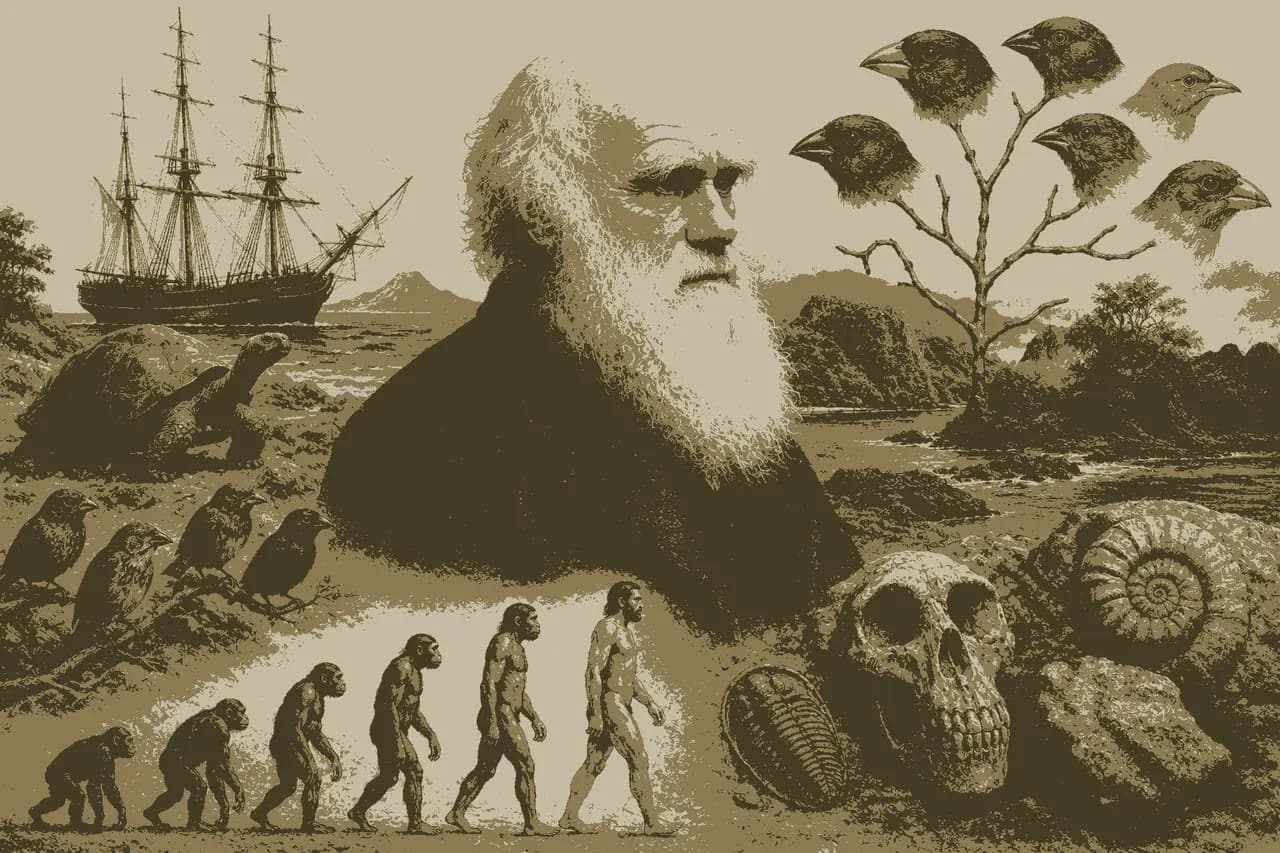
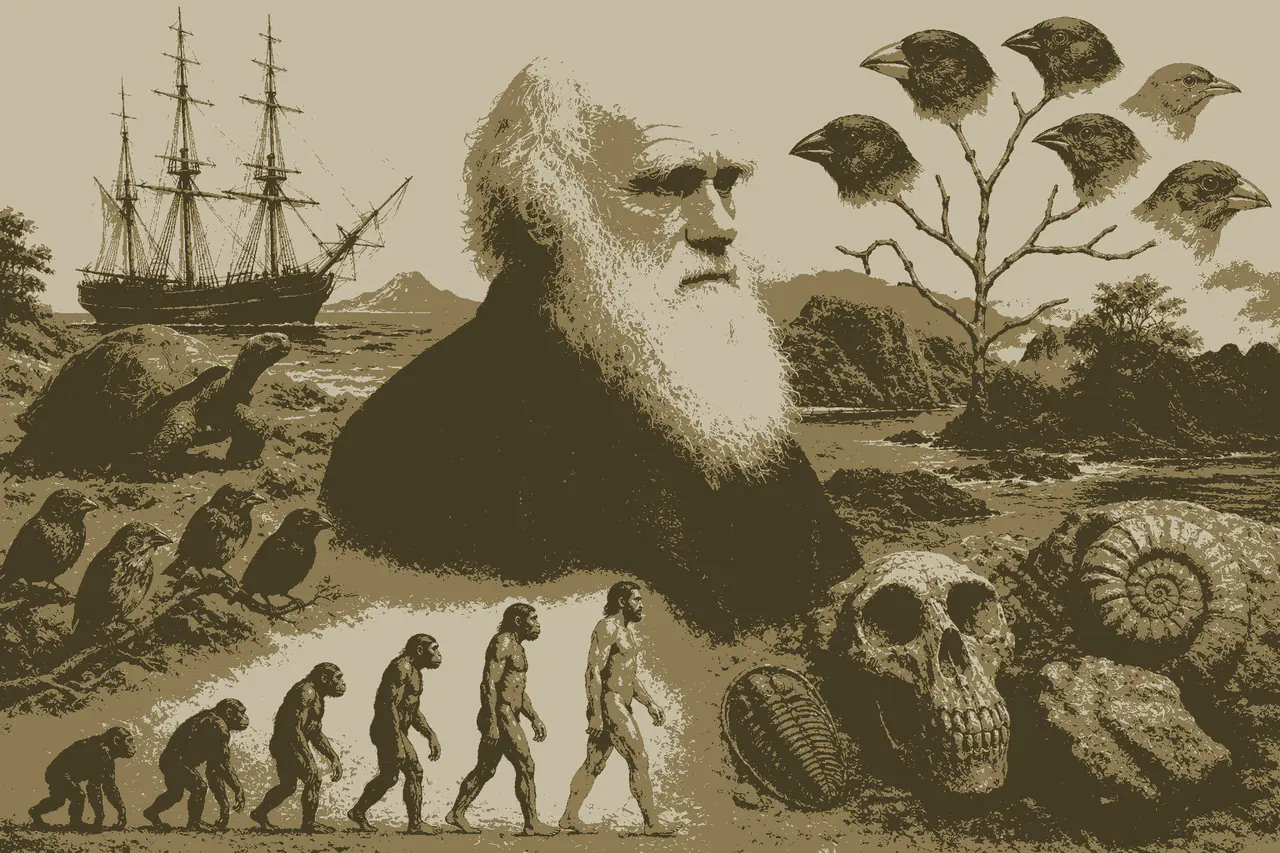
Charles Darwin's theory of evolution remains one of the most important concepts in biology, making Darwin Evolution Theory MCQs Class 12 a highly significant topic for aspirants preparing for board examinations and competitive entrance tests such as NEET. The theory explains how species change over time through the process of natural selection and provides a scientific framework for understanding biodiversity. Because of its importance in evolutionary biology, Darwin Evolution Theory MCQs Class 12 is frequently included in academic curricula and examination patterns.
The foundation of Darwin Evolution Theory MCQs Class 12 lies in Charles Darwin's observations during his voyage aboard the HMS Beagle. During this journey, Darwin studied plants, animals, fossils, and geographical distributions of species across different regions of the world. These observations eventually led him to propose the theory of evolution by natural selection. Understanding these historical developments helps aspirants gain a deeper appreciation of Darwin Evolution Theory MCQs Class 12 and its scientific significance.
One of the central ideas discussed in Darwin Evolution Theory MCQs Class 12 is variation. Darwin observed that individuals within a population are not identical. Every population contains variations in characteristics such as size, color, shape, behavior, and physiological traits. These variations provide the raw material upon which natural selection acts. Therefore, Darwin Evolution Theory MCQs Class 12 emphasizes the role of variation as a key factor in evolutionary change.
Another major principle associated with Darwin Evolution Theory MCQs Class 12 is overproduction. Organisms tend to produce more offspring than can survive in a given environment. For example, plants produce thousands of seeds, and many animals produce large numbers of offspring. However, environmental resources such as food, water, shelter, and space are limited. As a result, only a fraction of these offspring survive to adulthood. This concept is fundamental to understanding Darwin Evolution Theory MCQs Class 12.
The idea of struggle for existence is another critical component of Darwin Evolution Theory MCQs Class 12. Because resources are limited, organisms must compete for survival. This struggle may occur within the same species, between different species, or against environmental challenges. Aspirants studying Darwin Evolution Theory MCQs Class 12 should recognize that competition is a natural consequence of overproduction and limited resources.
Natural selection is the heart of Darwin Evolution Theory MCQs Class 12. According to Darwin, individuals possessing favorable variations are more likely to survive and reproduce successfully. These advantageous traits are passed on to future generations, while less favorable traits gradually become less common. Over many generations, this process results in evolutionary change. Therefore, Darwin Evolution Theory MCQs Class 12 frequently focuses on natural selection as the driving force behind adaptation and speciation.
The phrase "survival of the fittest" is often associated with Darwin Evolution Theory MCQs Class 12. However, fitness does not necessarily mean physical strength. In evolutionary biology, fitness refers to an organism's ability to survive, reproduce, and pass its genes to the next generation. Aspirants reviewing Darwin Evolution Theory MCQs Class 12 should understand that the most adaptable individuals are considered the fittest in a particular environment.
A classic example often linked with Darwin Evolution Theory MCQs Class 12 is Darwin's finches. These birds, found on the Galápagos Islands, evolved different beak shapes depending on their food sources. This diversification from a common ancestor demonstrates adaptive radiation and illustrates how natural selection can lead to the formation of new species. Consequently, Darwin's finches are frequently discussed in Darwin Evolution Theory MCQs Class 12 materials.
Industrial melanism in the peppered moth is another example commonly connected with Darwin Evolution Theory MCQs Class 12. During the Industrial Revolution, darker-colored moths gained a survival advantage in polluted environments because they were better camouflaged against soot-covered tree trunks. This example provides direct evidence of natural selection and is often used to explain evolutionary mechanisms in Darwin Evolution Theory MCQs Class 12.
Aspirants studying Darwin Evolution Theory MCQs Class 12 should also understand speciation, the process by which new species arise. Over long periods, accumulated variations and environmental pressures can lead to reproductive isolation and the formation of distinct species. This concept demonstrates the long-term effects of natural selection and evolutionary change.
Although Darwin Evolution Theory MCQs Class 12 focuses on natural selection, modern evolutionary biology has expanded upon Darwin's ideas by incorporating genetics. Today, scientists understand that genes, mutations, recombination, and genetic drift also contribute to evolution. Nevertheless, Darwin's original principles remain the foundation of evolutionary science, making Darwin Evolution Theory MCQs Class 12 an essential topic for understanding modern biology.
The significance of Darwin Evolution Theory MCQs Class 12 extends beyond examinations. It helps explain the diversity of life, adaptation to different environments, and the relationships among living organisms. Evolutionary principles are applied in fields such as medicine, agriculture, ecology, and conservation biology. As a result, mastering Darwin Evolution Theory MCQs Class 12 provides aspirants with valuable scientific knowledge applicable to many biological disciplines.
From an examination perspective, Darwin Evolution Theory MCQs Class 12 remains one of the most frequently tested topics in evolution. Questions often assess understanding of variation, struggle for existence, natural selection, survival of the fittest, adaptation, and speciation. Therefore, aspirants should thoroughly revise Darwin Evolution Theory MCQs Class 12 to strengthen their conceptual understanding and improve performance in competitive examinations.
Darwin Evolution Theory MCQs Class 12:
1. Beak is toothed in
A. Pelican
B. Kiwi
C. Ostrich
D. Archaeopteryx
Answer: D. Archaeopteryx
Explanation:
Archaeopteryx is considered a connecting link between reptiles and birds. It possessed feathers and wings like birds but also had reptilian features such as teeth in its beak, clawed digits, and a long bony tail.
2. Homologous organs indicate the
A. Convergent evolution
B. Parallel evolution
C. Common descendants
D. Natural selection
Answer: C. Common descendants
Explanation:
Homologous organs have the same basic structural plan and common evolutionary origin but perform different functions. They indicate descent from a common ancestor and provide evidence for divergent evolution.
3. Eusthenopteron connects
A. Fishes and amphibians
B. Amphibians and reptiles
C. Reptiles and birds
D. Birds and mammals
Answer: A. Fishes and amphibians
Explanation:
Eusthenopteron was a lobe-finned fish that possessed characteristics resembling early amphibians and is considered an important transitional form between fishes and amphibians.
4. The type of fossil where hard parts like bone or trunks of trees are preserved are known as
A. Petrifaction
B. Moulds
C. Compression
D. Pseudofossil
Answer: A. Petrifaction
Explanation:
Petrifaction (or petrification) occurs when minerals replace the organic material of bones, wood, or other hard structures while preserving their original form.
5. Hand of man, wing of bat and flipper of seal represent
A. Vestigial organs
B. Analogous organs
C. Evolutionary organs
D. Homologous organs
Answer: D. Homologous organs
Explanation:
The hand of a human, wing of a bat, and flipper of a seal possess the same pentadactyl limb structure and originate from a common ancestor, although they perform different functions.
6. Which one of the following describes correctly the homologous structures?
A. Organs with anatomical similarities, but performing different functions
B. Organs with anatomical dissimilarities, but performing same function
C. Organs that have no function now, but had important function in ancestors
D. Organs appearing only in embryonic stage and disappearing later in the adult
Answer: A. Organs with anatomical similarities, but performing different functions
Explanation:
Homologous organs share a common origin and basic structure but may perform different functions due to adaptation to different environments.
7. Regeneration of a limb is the example of
A. Restoration
B. Morphallaxis
C. Epimorphosis
D. Both (a) and (c)
Answer: C. Epimorphosis
Explanation:
Epimorphosis involves regeneration through active cell division and formation of a blastema. Limb regeneration in salamanders is a classic example.
8. The banding pattern of chromosomes 3 and 6 of human beings and chimpanzee shows that they had
A. Common origin
B. Different origin
C. Same number of chromosomes
D. Similar blood groups
Answer: A. Common origin
Explanation:
The similarity in chromosome banding patterns between humans and chimpanzees indicates a close evolutionary relationship and common ancestry.
9. Which one of the following is categorized under living fossils?
A. Selaginella
B. Metasequoia
C. Pinus
D. Cycas
Answer: D. Cycas
Explanation:
Cycas is often called a living fossil because it has remained relatively unchanged for over 200 million years and resembles ancient fossil forms.
10. Which of the following is a living fossil?
A. Latimeria
B. Amia
C. Hippocampus
D. Exocoetus
Answer: A. Latimeria
Explanation:
Latimeria (Coelacanth) is one of the most famous living fossils. It was once thought extinct and represents an ancient lineage of lobe-finned fishes.
11. Resemblance between widely different groups due to a common adaptation is known as
A. Retrogressive evolution
B. Parallel evolution
C. Convergent evolution
D. Divergent evolution
Answer: C. Convergent evolution
Explanation:
Convergent evolution occurs when unrelated organisms independently develop similar characteristics due to adaptation to similar environmental conditions. For example, wings of birds and bats perform the same function but evolved independently.
12. Sudden appearance of an ancestral character is known as
A. Mutation
B. Heredity
C. Atavism
D. None of these
Answer: C. Atavism
Explanation:
Atavism refers to the reappearance of ancestral traits that had disappeared during evolution. Examples include the occasional appearance of a tail in humans or extra nipples.
13. Plants of the Galapagos Islands resemble most closely to the plants of
A. Asia
B. Australia
C. North America
D. South America
Answer: D. South America
Explanation:
The Galapagos Islands are located off the western coast of South America. Many plants and animals on these islands show close evolutionary relationships with South American species.
14. According to fossils discovered up to the present time, the origin and evolution of man started from which country/continent?
A. France
B. Java
C. Africa
D. China
Answer: C. Africa
Explanation:
Africa is regarded as the cradle of humankind. Fossils of Australopithecus, Homo habilis, Homo erectus, and early Homo sapiens have been discovered in various parts of Africa.
15. Which of the following are homologous organs?
A. Wings of birds and locust
B. Wings of birds (sparrow) and pectoral fins of fish
C. Wings of bat and butterfly
D. Legs of frog and cockroach
Answer: B. Wings of birds (sparrow) and pectoral fins of fish
Explanation:
Both structures originated from the forelimbs of vertebrates and share a common evolutionary origin, although they perform different functions.
16. Age of fossils in the past was generally determined by radio-carbon method and other methods involving radioactive elements found in rocks. More precise methods used recently include
A. Study of the conditions of fossilization
B. Electron Spin Resonance (ESR) and fossil DNA
C. Study of carbohydrates/proteins in rocks
D. Study of carbohydrates/proteins in fossils
Answer: B. Electron Spin Resonance (ESR) and fossil DNA
Explanation:
Electron Spin Resonance and molecular studies involving fossil DNA provide more precise age estimates and evolutionary relationships than traditional methods alone.
17. Select the correct statement.
A. Fossils of primitive forms of organisms occupy lower layers of the earth during fossilization.
B. Fossils of advanced forms of organisms occupy lower layers of the earth during fossilization.
C. Fossils of marine organisms are found only in upper layers.
D. Fossils of terrestrial organisms are found only in lower layers.
Answer: A. Fossils of primitive forms of organisms occupy lower layers of the earth during fossilization.
Explanation:
Older geological strata contain fossils of simpler and more primitive organisms, while newer upper layers contain fossils of more advanced organisms.
18. Which era includes the Cretaceous, Jurassic, and Triassic periods?
A. Palaeozoic
B. Mesozoic
C. Proterozoic
D. Cenozoic
Answer: B. Mesozoic
Explanation:
The Mesozoic Era is known as the "Age of Reptiles" and consists of the Triassic, Jurassic, and Cretaceous periods.
19. Who highlighted industrial melanism?
A. Mimosa pudica
B. Triticum aestivum
C. Biston betularia
D. Rock python
Answer: C. Biston betularia
Explanation:
Biston betularia, the peppered moth, became the classic example of industrial melanism, demonstrating natural selection in response to environmental pollution.
20. Which species had the lowest brain capacity during human evolution?
A. Neanderthal man
B. Homo habilis
C. Homo sapiens
D. Homo erectus
Answer: B. Homo habilis
Explanation:
Homo habilis had a brain capacity of approximately 650–800 cc, lower than Homo erectus, Neanderthals, and modern humans. It is considered one of the earliest members of the genus Homo.
21. What type of evolution do the wings of pigeon, mosquito, and bat show?
A. Atavism
B. Mutation
C. Divergent evolution
D. Convergent evolution
Answer: D. Convergent evolution
Explanation:
The wings of pigeons, mosquitoes, and bats perform the same function (flight) but have evolved independently from different ancestral structures. Therefore, they are analogous organs and represent convergent evolution.
22. Which term represents a pair of contrasting characters?
A. Homozygous
B. Allele
C. Heterozygous
D. Phenotype
Answer: B. Allele
Explanation:
Alleles are alternative forms of the same gene that occupy the same position (locus) on homologous chromosomes and control contrasting traits, such as tallness and dwarfness in pea plants.
23. What are homologous organs?
A. Similar in structure and function
B. Similar in origin and different in functions
C. Dissimilar in origin and similar in functions
D. Dissimilar in origin and functions
Answer: B. Similar in origin and different in functions
Explanation:
Homologous organs have a common evolutionary origin and similar basic structure but perform different functions. Examples include the human arm, bat wing, and whale flipper.
24. Who proposed the concept of Saltation in evolution?
A. Darwin
B. Louis Pasteur
C. de Vries
D. Oparin and Haldane
Answer: C. de Vries
Explanation:
Hugo de Vries proposed the Mutation Theory of Evolution and introduced the concept of saltation, suggesting that new species may arise suddenly through large mutations.
25. Which of the following statements regarding organic evolution is correct?
A. Flippers of whale and wing of bat exhibit analogy
B. Wing of butterfly and wing of bird exhibit homology
C. Organs with dissimilar structure are called analogous organs
D. Organs with similar structure and origin are called homologous organs
Answer: D. Organs with similar structure and origin are called homologous organs
Explanation:
Homologous organs share a common ancestry and structural plan. Examples include the forelimbs of vertebrates. Analogous organs perform similar functions but differ in origin and structure.
26. Select the correct statement regarding mutation theory of evolution.
A. This theory was proposed by Alfred Wallace
B. Variations are small directional changes
C. Single step large mutation is a cause of speciation
D. Large differences due to mutations arise gradually in a population
Answer: C. Single step large mutation is a cause of speciation
Explanation:
According to Hugo de Vries, mutations are sudden heritable changes. Large mutations may produce new species directly, a process known as saltation.
27. Human ancestors who left cave paintings were
A. Neanderthal man
B. Cro-Magnon man
C. Java ape man
D. Peking man
Answer: B. Cro-Magnon man
Explanation:
Cro-Magnon humans were early modern humans who lived during the Upper Paleolithic Age and created famous cave paintings found in places such as Lascaux (France) and Altamira (Spain).
28. Embryological support for evolution was disapproved by
A. Alfred Wallace
B. Charles Darwin
C. Oparin
D. Karl Ernst von Baer
Answer: D. Karl Ernst von Baer
Explanation:
Karl Ernst von Baer criticized Haeckel's biogenetic law. He observed that embryos of different animals do not pass through the adult stages of lower organisms but share only early developmental similarities.
29. Which of the following is the correct sequence of events in the origin of life?
- Formation of protobionts
- Synthesis of organic monomers
- Synthesis of organic polymers
- Formation of DNA-based genetic systems
A. I, II, III, IV
B. I, III, II, IV
C. II, III, I, IV
D. II, III, IV, I
Answer: C. II, III, I, IV
Explanation:
The accepted sequence is:
- Synthesis of organic monomers (amino acids, sugars)
- Synthesis of organic polymers (proteins, nucleic acids)
- Formation of protobionts (primitive cell-like structures)
- Formation of DNA-based genetic systems
This sequence explains the gradual chemical evolution that led to the origin of life.
30. By the statement "Survival of the Fittest", Darwin meant that
A. The strongest of all species survives
B. The most intelligent of the species survives
C. The cleverest of the species survives
D. The most adaptable of the species to change survives
Answer: D. The most adaptable of the species to change survives
Explanation:
"Survival of the Fittest" does not mean the strongest or smartest organism survives. It means organisms best adapted to their environment are more likely to survive, reproduce, and pass their favorable traits to the next generation. This concept forms the foundation of Darwin's theory of natural selection.
Conclusion on Darwin Evolution Theory MCQs Class 12
In conclusion, Darwin Evolution Theory MCQs Class 12 provides a comprehensive understanding of how species evolve through natural selection. By exploring concepts such as variation, overproduction, struggle for existence, adaptation, and survival of the fittest, aspirants gain valuable insights into the mechanisms driving evolution. A strong grasp of Darwin Evolution Theory MCQs Class 12 not only supports examination success but also deepens appreciation for the remarkable diversity of life on Earth.
Related reading
Ultimate Jean Baptiste Lamarck Evolution Theory MCQs with Answers for Smart NEET Prepraration
Master Jean Baptiste Lamarck Evolution Theory MCQs with Answers for NEET , Class 12 Biology. Learn Lamarckism, acquired characters, evolution concepts examples.
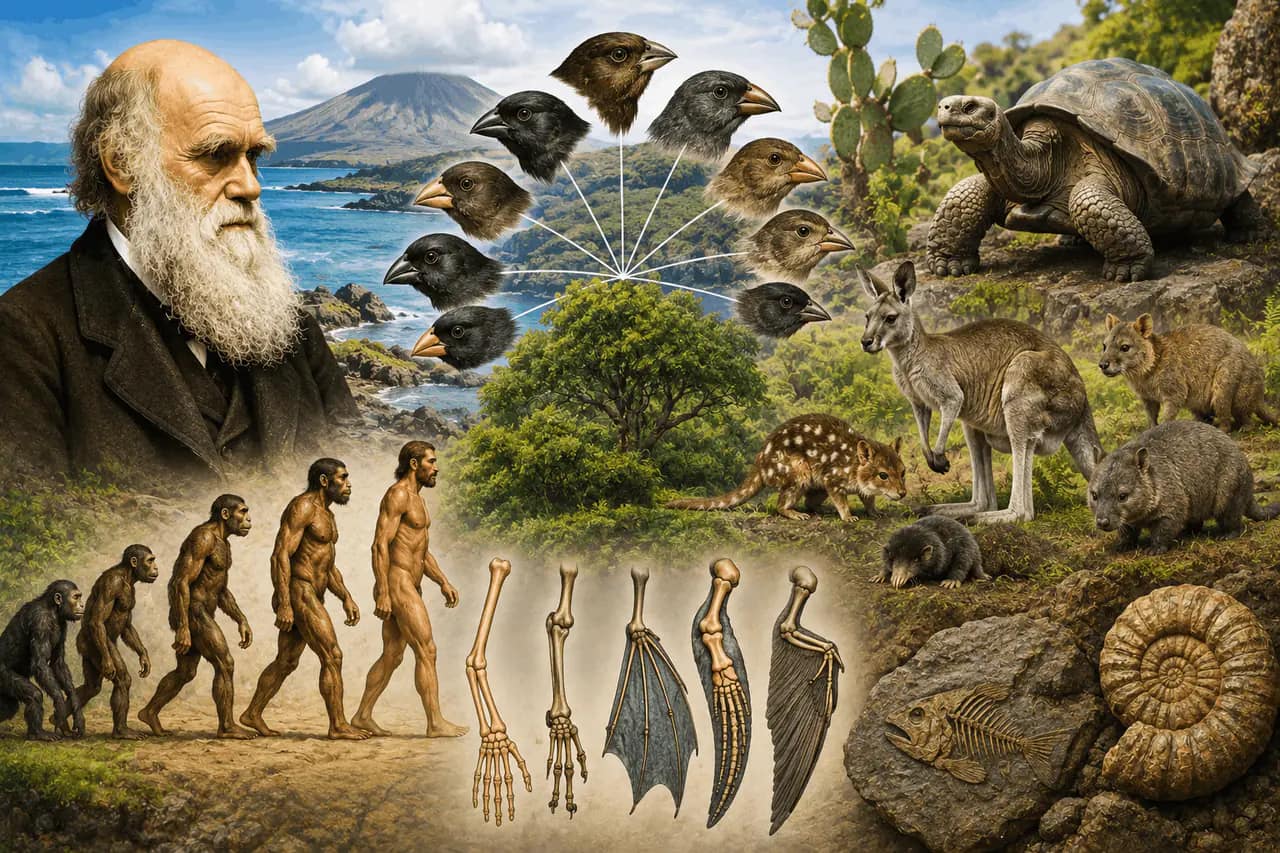
Expert Adaptive Radiation and Evolution MCQs Class 12 with Answers for NEET
Master Adaptive Radiation and Evolution MCQs Class 12 with clear explanations of Darwin’s finches, natural selection, speciation, and biodiversity for aspirants