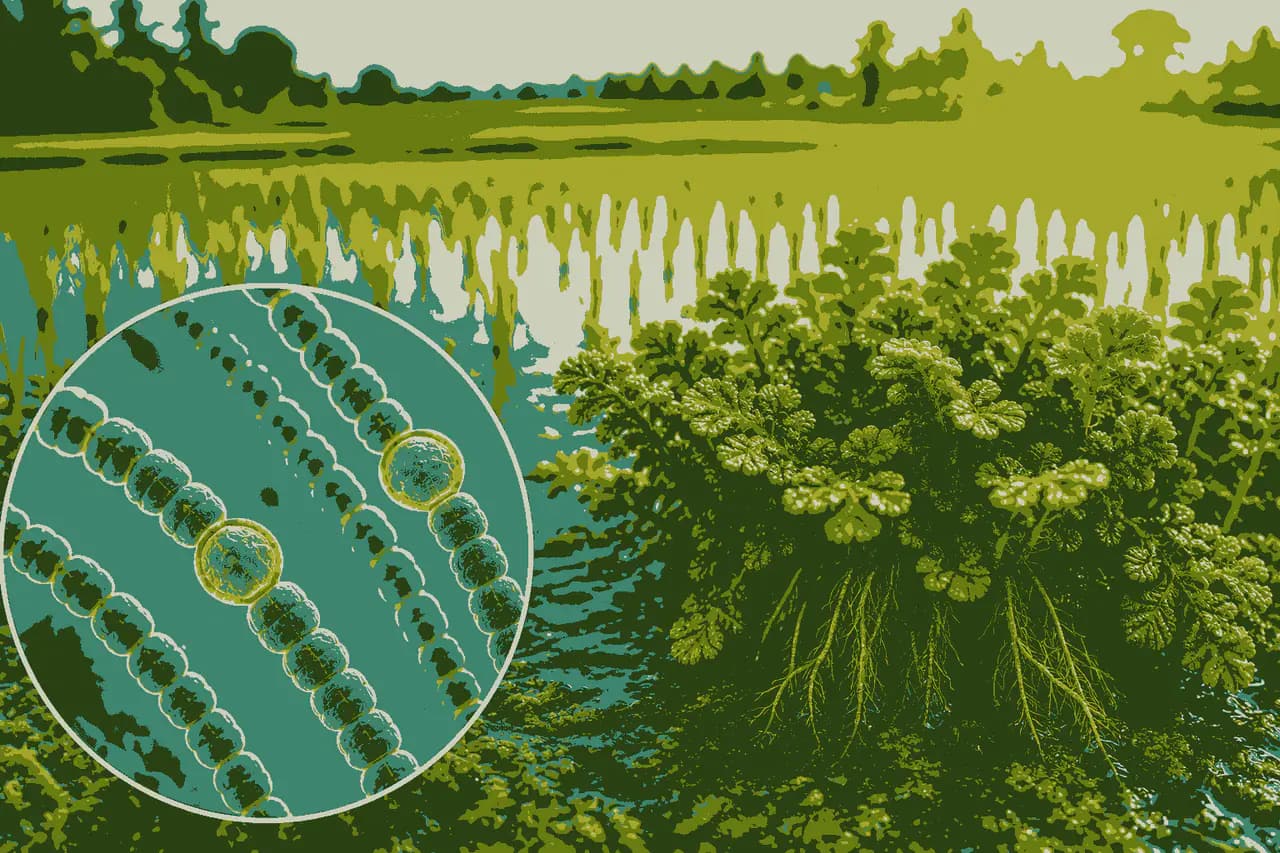
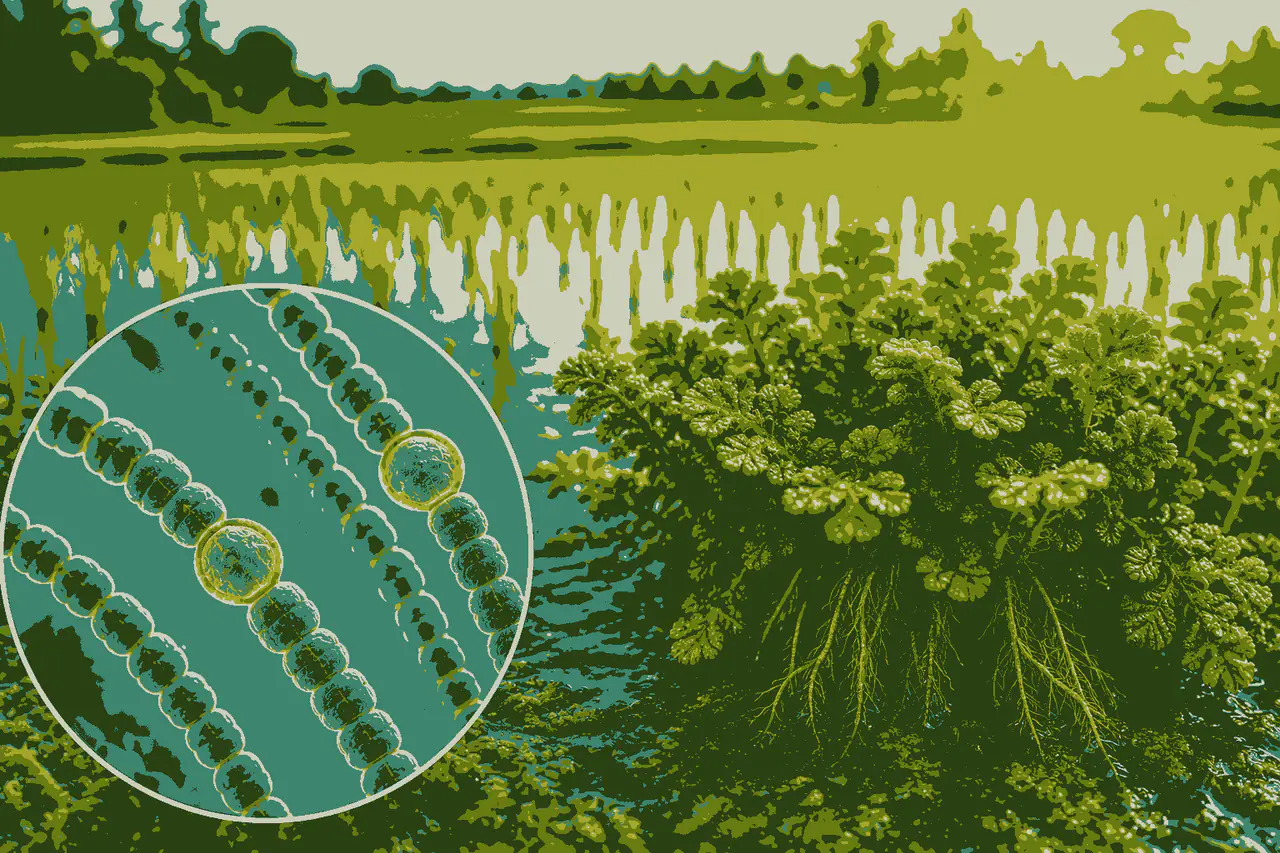
Cyanobacteria Biofertilizer MCQs Class 12 Biology is an important topic for aspirants who want to understand biofertilizers, nitrogen fixation, paddy field fertility, blue-green algae, sustainable agriculture, and microbes in human welfare in a clear and exam-focused way. Cyanobacteria Biofertilizer MCQs Class 12 Biology helps aspirants revise how certain photosynthetic prokaryotes improve soil fertility naturally without depending completely on chemical fertilizers. Cyanobacteria are commonly called blue-green algae, although they are bacteria capable of photosynthesis. Cyanobacteria Biofertilizer MCQs Class 12 Biology is useful for Class 12 board exams, NEET, agriculture exams, nursing entrance exams, and other biology-based competitive tests. Cyanobacteria Biofertilizer MCQs Class 12 Biology becomes easier when aspirants first understand the meaning of biofertilizer. A biofertilizer is a living organism that enriches the nutrient quality of soil and supports plant growth. Cyanobacteria Biofertilizer MCQs Class 12 Biology explains that cyanobacteria such as Anabaena, Nostoc, Aulosira, Tolypothrix, and Oscillatoria can fix atmospheric nitrogen and convert it into forms useful for plants. This natural nitrogen fixation improves soil fertility and reduces the need for synthetic nitrogen fertilizers. Cyanobacteria Biofertilizer MCQs Class 12 Biology teaches that cyanobacteria are especially important in rice fields because flooded paddy conditions support their growth. Cyanobacteria Biofertilizer MCQs Class 12 Biology helps aspirants remember that some cyanobacteria are free-living while others form symbiotic associations. Free-living cyanobacteria grow independently in soil or water and fix nitrogen directly. Symbiotic cyanobacteria live in association with other organisms and help them obtain nitrogen. Cyanobacteria Biofertilizer MCQs Class 12 Biology is linked with examples such as Anabaena in Azolla, Nostoc in Anthoceros, Nostoc in Cycas, and cyanobacterial associations in Gunnera. These examples are important because they are frequently asked in biology exams. Cyanobacteria Biofertilizer MCQs Class 12 Biology explains the role of Azolla in paddy fields. Azolla is a small aquatic fern that forms a symbiotic association with Anabaena. Cyanobacteria Biofertilizer MCQs Class 12 Biology becomes stronger when aspirants understand that Anabaena fixes atmospheric nitrogen, while Azolla provides shelter and nutrients for the cyanobacterium. When Azolla grows in rice fields and decomposes, it releases nitrogen into the soil, supporting rice plant growth. This makes Azolla one of the best biofertilizers for paddy cultivation. Cyanobacteria Biofertilizer MCQs Class 12 Biology should also include the importance of heterocysts. Heterocysts are special thick-walled cells found in some filamentous cyanobacteria. Cyanobacteria Biofertilizer MCQs Class 12 Biology helps aspirants understand that heterocysts provide a suitable oxygen-free environment for nitrogenase enzyme activity. Nitrogenase is sensitive to oxygen, so heterocysts protect the nitrogen-fixing process. This concept is important because cyanobacteria perform photosynthesis and nitrogen fixation, two processes that require careful cellular coordination. Cyanobacteria Biofertilizer MCQs Class 12 Biology is connected with sustainable agriculture. Chemical fertilizers may increase crop yield, but excessive use can cause soil degradation, water pollution, eutrophication, and ecological imbalance. Cyanobacteria Biofertilizer MCQs Class 12 Biology explains that biofertilizers are eco-friendly alternatives that help maintain soil health. They improve nutrient availability, enhance organic matter, support microbial balance, and reduce farming costs. Aspirants should understand that biofertilizers do not always replace chemical fertilizers completely, but they can reduce chemical fertilizer dependence when used properly. Cyanobacteria Biofertilizer MCQs Class 12 Biology explains why paddy fields are strongly associated with cyanobacteria. Rice fields are usually flooded, warm, and exposed to sunlight, creating favorable conditions for photosynthetic cyanobacteria. Cyanobacteria Biofertilizer MCQs Class 12 Biology helps aspirants connect paddy cultivation with nitrogen fixation, Azolla growth, Anabaena association, and methane production in flooded soils. Methane is produced by methanogens in anaerobic paddy soil, but cyanobacteria are mainly important for nitrogen enrichment. Understanding this distinction helps aspirants avoid confusion between cyanobacteria and methanogens. Cyanobacteria Biofertilizer MCQs Class 12 Biology should be revised with comparison tables. Aspirants can compare Rhizobium, Azotobacter, Frankia, mycorrhiza, and cyanobacteria. Rhizobium forms nodules in legumes, Azotobacter is free-living, Frankia forms nodules in some non-leguminous plants, mycorrhiza improves phosphate absorption, and cyanobacteria help in nitrogen fixation. Cyanobacteria Biofertilizer MCQs Class 12 Biology becomes easier when aspirants remember organism, association, nutrient role, and agricultural importance together. Cyanobacteria Biofertilizer MCQs Class 12 Biology supports preparation for biology chapters related to microbes in human welfare, mineral nutrition, ecology, and environmental biology. Aspirants should focus on keywords such as blue-green algae, Anabaena, Nostoc, Azolla, heterocyst, nitrogenase, nitrogen fixation, paddy field, biofertilizer, and sustainable farming. Cyanobacteria Biofertilizer MCQs Class 12 Biology is valuable because it combines microbiology with plant growth and agriculture.
Cyanobacteria Biofertilizer MCQs Class 12 Biology:
- What is VAM useful for?
A. Phosphate nutrition B. Breaking of dormancy C. Decrease in diseases D. Retarding flowering Answer: A. Phosphate nutrition Explanation: Vesicular-arbuscular mycorrhiza, or VAM, is useful for phosphate nutrition. It helps plant roots absorb phosphorus from the soil.
- What is the best biofertilizer for paddy fields?
A. Rhizobium B. Azolla C. Anthoceros D. Bacillus polymyxa Answer: B. Azolla Explanation: Azolla is considered one of the best biofertilizers for paddy fields because it has a symbiotic association with nitrogen-fixing cyanobacteria.
- Which plant's mycorrhizal association enables it to utilize amino acid as a nitrogen source?
A. Strawberry B. Cranberry C. Orchids D. Pinus Answer: D. Pinus Explanation: The mycorrhizal association of Pinus helps it utilize amino acids as a nitrogen source.
- Which of the following correctly matches ecological interaction with its representation?
A. Mutualism (+,+), Predation (+,–), Competition (–,–), Commensalism (+,0) B. Mutualism (+,0), Predation (–,–), Competition (+,+), Commensalism (–,0) C. Mutualism (+,–), Predation (+,+), Competition (+,0), Commensalism (–,–) D. Mutualism (–,0), Predation (+,0), Competition (+,–), Commensalism (+,+) Answer: A. Mutualism (+,+), Predation (+,–), Competition (–,–), Commensalism (+,0) Explanation: Mutualism benefits both partners, predation benefits one and harms the other, competition harms both, and commensalism benefits one while the other is unaffected.
- Match the following ecological interactions with their representations.
i. + + ii. + – iii. – – iv. + 0
- Commensalism
- Competition
- Parasitism
- Mutualism
Options: A. i-1, ii-2, iii-3, iv-4 B. i-2, ii-3, iii-1, iv-4 C. i-4, ii-3, iii-2, iv-1 D. i-3, ii-2, iii-1, iv-4 Answer: C. i-4, ii-3, iii-2, iv-1 Explanation: Mutualism is represented as +,+; parasitism as +,–; competition as –,–; and commensalism as +,0.
- Which of the following is a correct matching pair of organism and kind of association?
A. Shark and sucker fish - Commensalism B. Algae and fungi in lichens - Mutualism C. Orchids growing on trees - Parasitism D. Cuscuta growing on other flowering plants - Epiphytism Answer: B. Algae and fungi in lichens - Mutualism Explanation: In lichens, algae and fungi live in a mutually beneficial association. The alga prepares food, while the fungus provides protection and support.
- A mutually beneficial association necessary for survival of both partners is
A. Mutualism / Symbiosis B. Commensalism C. Amensalism D. Both A and B Answer: A. Mutualism / Symbiosis Explanation: Mutualism or symbiosis is a close association in which both partners are benefited, and in some cases both depend on each other for survival.
- Competition for light, nutrients and space is most severe between
A. Closely related organisms growing in different niches B. Closely related organisms growing in the same area or niche C. Distantly related organisms growing in the same habitat D. Distantly related organisms growing in different niches Answer: B. Closely related organisms growing in the same area or niche Explanation: Competition is most severe between closely related organisms because they often require similar resources.
- Which plant does Nostoc not form a symbiotic association with?
A. Cycas B. Anthoceros C. Pinus D. Gunnera Answer: C. Pinus Explanation: Nostoc forms symbiotic associations with organisms such as Cycas, Anthoceros, and Gunnera, but not with Pinus.
- Which cyanobacterium is the most efficient free nitrogen fixer in rice fields?
A. Nostoc B. Tolypothrix C. Aulosira D. Anabaena Answer: C. Aulosira Explanation: Aulosira is considered one of the most efficient free-living nitrogen-fixing cyanobacteria in rice fields.
- Which free-living nitrogen-fixing blue-green algae forms a symbiotic association with a pteridophyte?
A. Anabaena B. Chlorella C. Nostoc D. Tolypothrix Answer: A. Anabaena Explanation: Anabaena forms a symbiotic association with the water fern Azolla, which is a pteridophyte.
- Which gas produced by paddy fields is involved in global warming?
A. CO₂ B. Chlorine C. Methane D. H₂S Answer: C. Methane Explanation: Methane is produced in flooded paddy fields by methanogenic bacteria and contributes to global warming.
- Where are nodules with nitrogen-fixing bacteria found?
A. Cotton B. Gram C. Mustard D. Wheat Answer: B. Gram Explanation: Root nodules containing nitrogen-fixing bacteria are found in leguminous plants such as gram.
- Which pair of microbes can be used as biofertilizers?
A. Aspergillus and Cyanobacteria B. Aspergillus and Rhizopus C. Rhizobium and Rhizopus D. Cyanobacteria and Rhizobium Answer: D. Cyanobacteria and Rhizobium Explanation: Cyanobacteria and Rhizobium are used as biofertilizers because they fix atmospheric nitrogen and improve soil fertility.
- Why is Azolla used as a biofertilizer?
A. Multiplies very fast to produce massive biomass B. Has association of nitrogen-fixing Rhizobium C. Has association of nitrogen-fixing cyanobacteria D. Has association of mycorrhiza Answer: C. Has association of nitrogen-fixing cyanobacteria Explanation: Azolla is used as a biofertilizer because it has a symbiotic association with nitrogen-fixing cyanobacteria, mainly Anabaena.
- Which statements about organic farming are correct?
A. Utilizes genetically modified crops like Bt cotton B. Uses only naturally produced inputs like compost C. Does not use pesticides and urea D. Produces vegetables rich in vitamins and minerals Options: A. A and B only B. B, C and D C. C and D only D. B and C only Answer: D. B and C only Explanation: Organic farming uses naturally produced inputs such as compost and avoids synthetic pesticides and urea. It does not necessarily involve genetically modified crops.
- Which is a true pair of biofertilizers?
A. Azolla and BGA B. Nostoc and legume C. Rhizobium and grasses D. Salmonella and E. coli Answer: A. Azolla and BGA Explanation: Azolla and blue-green algae are true biofertilizers. Azolla has a symbiotic association with nitrogen-fixing cyanobacteria.
- Which of the following pairs is correctly matched?
A. Parasitism - Intraspecific relationship B. Uricotelism - Aquatic habitat C. Excessive perspiration - Xeric adaptation D. Streamlined body - Aquatic adaptation Answer: D. Streamlined body - Aquatic adaptation Explanation: A streamlined body helps aquatic animals move easily through water by reducing resistance.
- Study the following table and pick up the correct combinations.
- Mutualism: + +
- Predation: + –
- Commensalism: 0 +
- Amensalism: – 0
- Competition: – –
- Parasitism: + –
Options: A. II, IV, III, V B. I, II, III, V C. II, III, IV, VI D. I, III, V, VI Answer: D. I, III, V, VI Explanation: Mutualism is +,+; commensalism may be represented as +,0 or 0,+; competition is –,–; and parasitism is +,–.
- Bacteria and fungi developing on dead and decaying organisms are called
A. Symbionts B. Saprophytes C. Parasites D. Commensals Answer: B. Saprophytes Explanation: Bacteria and fungi that feed on dead and decaying matter are called saprophytes or decomposers.
- The interaction between cuckoo and crow is an example of
A. Competition B. Predation C. Brood parasitism D. Mutualism Answer: C. Brood parasitism Explanation: In brood parasitism, the parasitic bird lays its eggs in the nest of another bird. Cuckoo and crow show brood parasitism.
- A high density of elephant population in an area can result in
A. Predation on one another B. Mutualism C. Intraspecific competition D. Interspecific competition Answer: C. Intraspecific competition Explanation: Intraspecific competition occurs among individuals of the same species when they compete for limited resources.
- Abingdon tortoise in Galapagos Islands became extinct within a decade after goats were introduced. It is an example of
A. Competition among unrelated species B. Competitive exclusion C. Competitive release D. Coexistence better than exclusion Answer: B. Competitive exclusion Explanation: The goats competed more efficiently for food resources, leading to the extinction of Abingdon tortoise. This is an example of competitive exclusion.
- A mutually beneficial close physical relationship is shown by
A. Utricularia, Dionaea B. Cladonia, Mycorrhiza C. Rafflesia and fig D. Akash bel and Zizyphus Answer: B. Cladonia, Mycorrhiza Explanation: Cladonia is a lichen showing mutualism between algae and fungi. Mycorrhiza is also a mutualistic association between fungi and roots of higher plants.
- An interaction favourable to both populations, but not obligatory to either, is
A. Proto-cooperation B. Mutualism C. Commensalism D. Parasitism Answer: A. Proto-cooperation Explanation: Proto-cooperation is a beneficial interaction for both species, but it is not obligatory for survival.
- All the following interactions are mutualism, except
A. Association of algae and fungi in lichens B. Association of fungi and roots of higher plants in mycorrhiza C. Plant and animal relation for pollination D. Association of cattle egret and grazing cattle Answer: D. Association of cattle egret and grazing cattle Explanation: Lichen, mycorrhiza, and pollination are examples of mutualism. Cattle egret and grazing cattle is commonly considered commensalism.
- Connell's field experiment on the rocky sea coast of Scotland, where larger barnacle Balanus dominates the intertidal area and removes the smaller barnacle Chthamalus, happened due to
A. Predation B. Competition C. Parasitism D. Mutualism Answer: B. Competition Explanation: Connell's experiment demonstrated competition, where Balanus outcompeted Chthamalus in the intertidal region.
- Match the following.
A. Mutualism B. Commensalism C. Parasitism D. Amensalism i. One species is benefited and the other is neither benefited nor harmed ii. Both species are benefited iii. One species is harmed and the other is unaffected iv. One species is benefited and the other is harmed Options: A. iii, iv, i, ii B. ii, i, iv, iii C. i, ii, iii, iv D. iv, iii, ii, i Answer: B. ii, i, iv, iii Explanation: Mutualism benefits both species, commensalism benefits one and leaves the other unaffected, parasitism benefits one and harms the other, and amensalism harms one while the other is unaffected.
- From the given options, identify the correct combination of population interactions that correspond to the symbols given here: ++, – –, +0
A. Predation, Competition, Commensalism B. Mutualism, Parasitism, Amensalism C. Parasitism, Competition, Mutualism D. Mutualism, Competition, Commensalism Answer: D. Mutualism, Competition, Commensalism Explanation: Mutualism is represented as +,+; competition as –,–; and commensalism as +,0.
- Which one of the following is not a biofertilizer?
A. Mycorrhiza
B. Agrobacterium
C. Rhizobium
D. Nostoc
Answer: B. Agrobacterium
Explanation: Agrobacterium is not a biofertilizer. It is commonly associated with crown gall disease in plants, while mycorrhiza, Rhizobium, and Nostoc are used as biofertilizers.
Conclusion on Cyanobacteria Biofertilizer MCQs Class 12 Biology
In conclusion, Cyanobacteria Biofertilizer MCQs Class 12 Biology improves understanding of natural nitrogen fixation, useful microbes, soil fertility, paddy cultivation, and eco-friendly farming practices. Cyanobacteria Biofertilizer MCQs Class 12 Biology helps aspirants connect textbook concepts with real agricultural applications. With regular revision, Cyanobacteria Biofertilizer MCQs Class 12 Biology can help aspirants answer biofertilizer-based questions with better accuracy, speed, and conceptual clarity.
Related reading
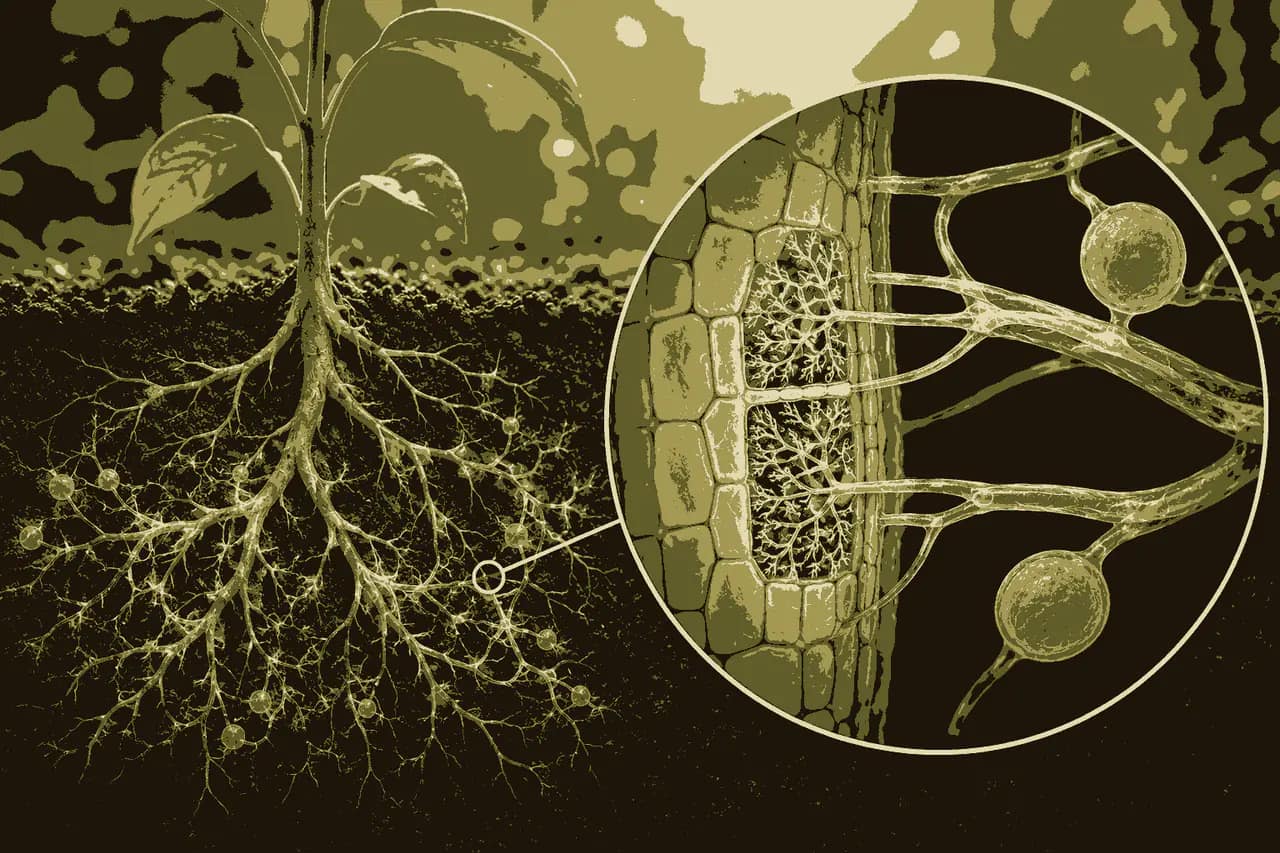
Ultimate Vam Mycorrhiza MCQs with Answers Class 12 Biology - Powerful Practice for Exam Success
Revise Vam Mycorrhiza MCQs with Answers Class 12 Biology covering VAM, endomycorrhiza, phosphate absorption, biofertilizers, plant roots, and exam preparations.
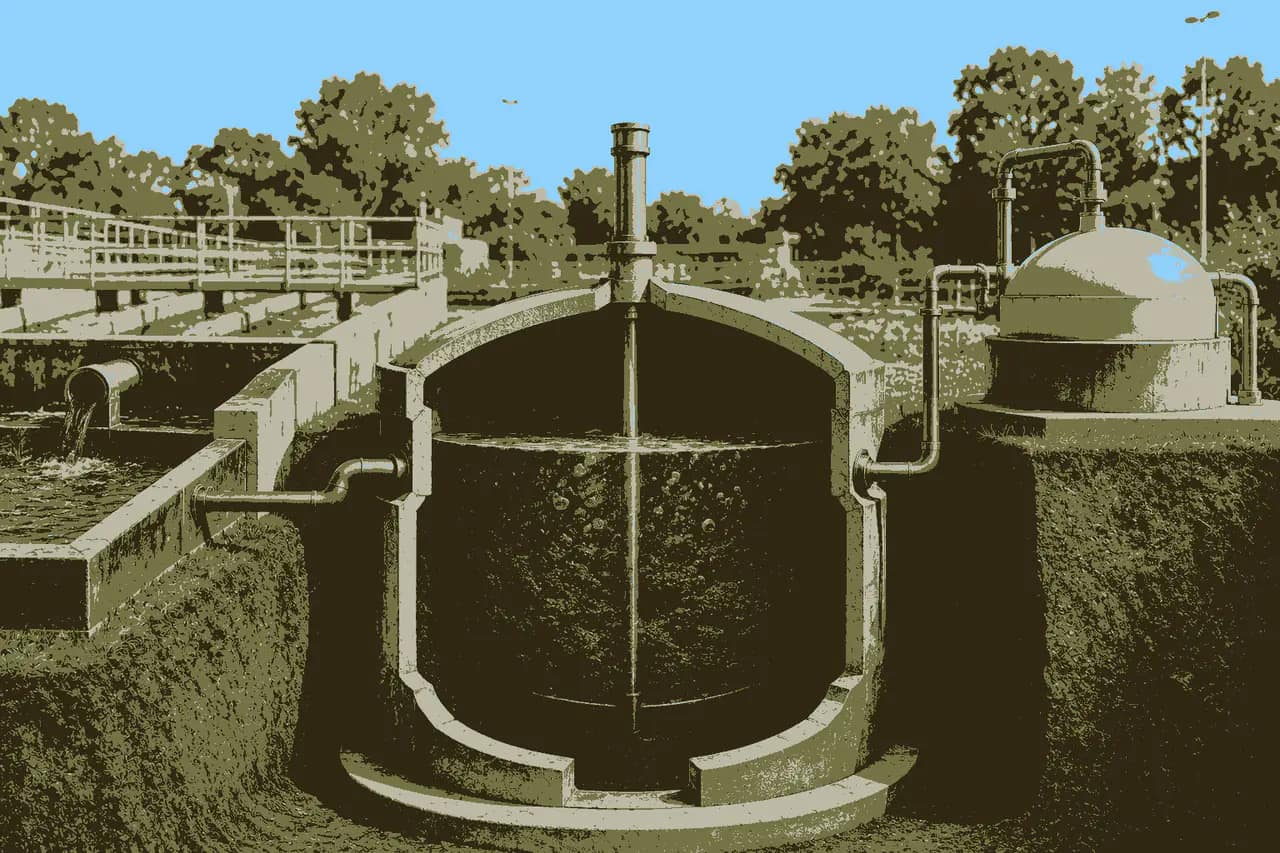
High-Scoring Anaerobic Sludge Digester MCQs Class 12 Biology: Your Winning Practice
Revise Anaerobic Sludge Digester MCQs Class 12 Biology with key facts on sewage treatment, activated sludge , methanogens , biogas , BOD , and exam preparation.