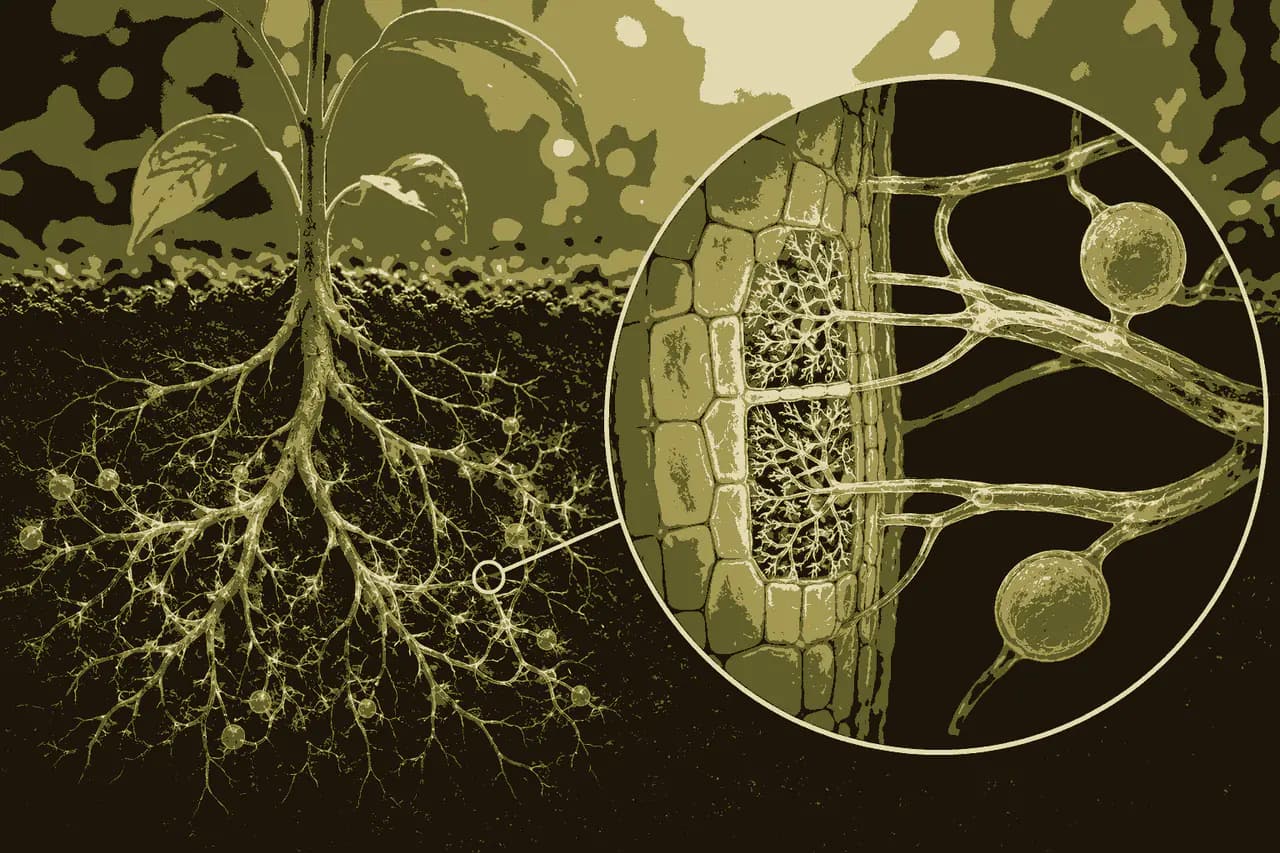
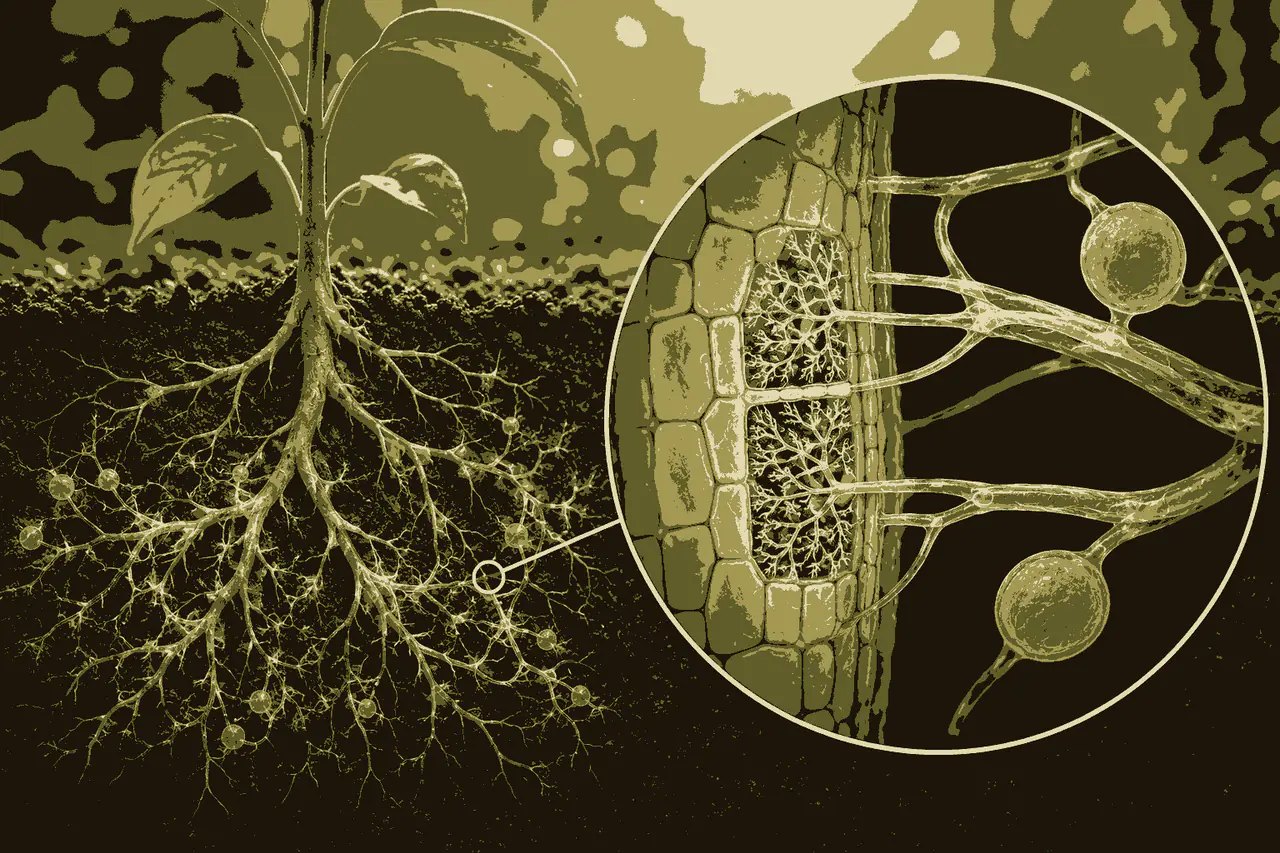
Vam Mycorrhiza MCQs with Answers Class 12 Biology is an important topic for aspirants who want to understand biofertilizers, plant nutrition, root-fungus association, soil fertility, and ecological relationships in a clear and exam-focused way. Vam Mycorrhiza MCQs with Answers Class 12 Biology helps aspirants revise how vesicular-arbuscular mycorrhiza supports plant growth by improving mineral absorption, especially phosphorus uptake from soil. Mycorrhiza is a symbiotic association between fungi and the roots of higher plants. Vam Mycorrhiza MCQs with Answers Class 12 Biology is useful for Class 12 board exams, NEET, agriculture exams, nursing entrance exams, and other biology-based competitive tests. Vam Mycorrhiza MCQs with Answers Class 12 Biology becomes easier when aspirants first understand the meaning of VAM. VAM stands for vesicular-arbuscular mycorrhiza, a type of endomycorrhiza in which fungal hyphae enter the cortical cells of plant roots. Vam Mycorrhiza MCQs with Answers Class 12 Biology explains that the fungus forms special structures called vesicles and arbuscules inside the root. Arbuscules help in nutrient exchange between the fungus and the plant, while vesicles may help in storage. Vam Mycorrhiza MCQs with Answers Class 12 Biology helps aspirants remember that VAM is mainly associated with improved phosphate nutrition in plants. Vam Mycorrhiza MCQs with Answers Class 12 Biology is strongly connected with biofertilizers. Biofertilizers are living organisms that improve the nutrient quality of soil and support plant growth. Vam Mycorrhiza MCQs with Answers Class 12 Biology teaches that mycorrhizal fungi increase the surface area of roots through their hyphae, allowing plants to absorb more water and minerals. This is especially useful in soils where phosphorus is present but not easily available to plants. Vam Mycorrhiza MCQs with Answers Class 12 Biology helps aspirants understand why mycorrhiza is considered beneficial in agriculture and sustainable farming. Vam Mycorrhiza MCQs with Answers Class 12 Biology also helps aspirants compare different biofertilizers. Rhizobium fixes nitrogen symbiotically in legume root nodules, Azotobacter is a free-living nitrogen-fixing bacterium, cyanobacteria such as Anabaena and Nostoc enrich paddy fields, and mycorrhiza improves mineral absorption. Vam Mycorrhiza MCQs with Answers Class 12 Biology becomes clearer when aspirants prepare comparison tables showing organism, association, function, and example. This method helps aspirants avoid confusion between nitrogen fixation and phosphate absorption. Vam Mycorrhiza MCQs with Answers Class 12 Biology is therefore an important bridge between microbiology, plant physiology, and ecology. Vam Mycorrhiza MCQs with Answers Class 12 Biology should also be studied with the difference between ectomycorrhiza and endomycorrhiza. In ectomycorrhiza, the fungal hyphae form a sheath around the root and usually do not enter root cells. In endomycorrhiza, the fungal hyphae enter root tissues. Vam Mycorrhiza MCQs with Answers Class 12 Biology is important because VAM belongs to endomycorrhiza. Aspirants should remember this point because it is often tested directly in biology exams. This topic also helps aspirants revise how fungal associations can improve plant tolerance to drought, disease, and nutrient-poor soil. Vam Mycorrhiza MCQs with Answers Class 12 Biology is linked with ecological mutualism. In this relationship, the plant provides carbohydrates to the fungus through photosynthesis, while the fungus helps the plant absorb minerals and water. Vam Mycorrhiza MCQs with Answers Class 12 Biology helps aspirants classify this relationship as mutualism because both partners are benefited. The fungal partner receives food, and the plant receives better nutrient support. This topic also shows how underground microbial relationships can influence plant health, crop yield, and ecosystem productivity. For effective preparation, Vam Mycorrhiza MCQs with Answers Class 12 Biology should be revised using diagrams of roots, fungal hyphae, vesicles, and arbuscules. Aspirants should focus on keywords such as mycorrhiza, VAM, endomycorrhiza, arbuscules, vesicles, phosphorus absorption, biofertilizer, symbiosis, and root association. Vam Mycorrhiza MCQs with Answers Class 12 Biology becomes easier when aspirants connect each keyword with its function. Instead of memorising isolated definitions, aspirants should understand how mycorrhizal fungi support the plant and improve soil-plant relationships. Aspirants should also remember that VAM improves plant performance without directly replacing all mineral fertilizers. It works best as part of balanced soil management, where organic matter, moisture, root health, and microbial activity are maintained together. This makes the topic practical for agriculture as well as important for theoretical biology revision.
Vam Mycorrhiza MCQs with Answers Class 12 Biology:
- If '+' sign is assigned to beneficial interaction, '-' sign to detrimental interaction, and '0' sign to neutral interaction, then the population interaction represented by '+, –' refers to
A. Mutualism B. Amensalism C. Commensalism D. Parasitism Answer: D. Parasitism Explanation: Parasitism is an interaction in which one organism benefits while the host is harmed. Therefore, it is represented as +, –.
- Amensalism can be represented as:
A. Species A (+); Species B (0) B. Species A (–); Species B (0) C. Species A (+); Species B (+) D. Species A (–); Species B (–) Answer: B. Species A (–); Species B (0) Explanation: In amensalism, one species is harmed while the other species remains unaffected. Therefore, it is represented as –, 0.
- In spite of interspecific competition in nature, which mechanism might competing species have evolved for their survival?
A. Predation B. Resource partitioning C. Competitive release D. Mutualism Answer: B. Resource partitioning Explanation: Competing species can coexist by resource partitioning, where they use resources differently to reduce competition.
- While explaining interspecific interaction of population, (+) sign is assigned for beneficial interaction, (–) sign for detrimental interaction, and (0) for neutral interaction. Which of the following interactions can be assigned (+) for one species and (–) for another species?
A. Competition B. Predation C. Amensalism D. Commensalism Answer: B. Predation Explanation: Predation is represented as +, – because the predator benefits while the prey is harmed.
- Which one of the following statements cannot be connected to predation?
A. It is necessitated by nature to maintain ecological balance B. It helps in maintaining species diversity in a community C. It might lead to extinction of a species D. Both the interacting species are negatively impacted Answer: D. Both the interacting species are negatively impacted Explanation: In predation, the predator benefits and the prey is harmed. Both species are not negatively affected.
- Western Ghats have a large number of plant and animal species that are not found anywhere else. Which term is used to notify such species?
A. Threatened species B. Keystone species C. Endemic species D. Vulnerable species Answer: C. Endemic species Explanation: Endemic species are restricted to a particular geographical region and are not naturally found elsewhere.
- To control stored grain pests, the better and safer method is
A. The use of chemical pesticides in small amounts B. The use of less toxic pesticides C. The biological control of pests D. Fumigation Answer: C. The biological control of pests Explanation: Biological control is a safer method because it controls pests using natural enemies and reduces dependence on chemical pesticides.
- Biopesticides do not control
A. Viruses B. Nematodes C. Both A and B D. Fungi and bacteria Answer: B. Nematodes Explanation: According to the given answer key, biopesticides do not control nematodes. Biopesticides are generally derived from natural sources and are used against many pests and pathogens.
- A gas produced by paddy fields and connected with global warming is
A. CO₂ B. Chlorine C. H₂S D. Methane Answer: D. Methane Explanation: Methane is produced by methanogens in flooded paddy fields. It is an important greenhouse gas connected with global warming.
- Some blue-green algae can be used as biofertilizer because:
A. They are photosynthetic B. They have mucilage C. They grow everywhere D. They can fix nitrogen Answer: D. They can fix nitrogen Explanation: Blue-green algae such as Anabaena, Nostoc, and Oscillatoria can fix atmospheric nitrogen and enrich soil fertility.
- Which one of the following is not a biofertilizer?
A. Bacillus thuringiensis B. Azotobacter C. Azolla D. Clostridium Answer: A. Bacillus thuringiensis Explanation: Bacillus thuringiensis is used as a biopesticide, not as a biofertilizer.
- Which one is an incorrect statement regarding biofertilizers?
A. Green manures are added to the soil B. Fertilizers cause soil and water pollution C. Biofertilizers improve soil fertility D. Berseem is an ideal biofertilizer Answer: D. Berseem is an ideal biofertilizer Explanation: Berseem is a leguminous fodder crop and can be used as green manure, but it is not itself an ideal biofertilizer.
- The main sources of biofertilizers are
A. Bacteria B. Cyanobacteria C. Fungi D. All of these Answer: D. All of these Explanation: Biofertilizers include organisms such as bacteria, cyanobacteria, and fungi that improve soil nutrient quality.
- Which of the following is symbiotic bacteria?
A. Rhizobium B. Azotobacter C. Clostridium D. Streptomyces Answer: A. Rhizobium Explanation: Rhizobium lives symbiotically in the root nodules of leguminous plants and fixes atmospheric nitrogen.
- Root nodules for nitrogen fixation in non-leguminous trees are produced by species of the genus
A. Rhizobium B. Azotobacter C. Frankia D. Thiobacillus Answer: C. Frankia Explanation: Frankia forms nitrogen-fixing root nodules in some non-leguminous plants such as Alnus.
- VAM is
A. Ecto-mycorrhiza B. Endo-mycorrhiza C. Bio-herbicide D. Bio-insecticide Answer: B. Endo-mycorrhiza Explanation: Vesicular-arbuscular mycorrhiza, or VAM, is a type of endomycorrhiza that helps plants absorb phosphorus from soil.
- Two butterfly species are competing for the same nectar of a flower in a garden. To survive and coexist together, they may avoid competition in the same garden by:
A. Feeding at the same time B. Choosing different foraging patterns C. Increasing time spent on attacking each other D. Predating on each other Answer: B. Choosing different foraging patterns Explanation: Species competing for the same resource may coexist by resource partitioning, such as using different foraging patterns.
- In which of the following interactions are both partners adversely affected?
A. Mutualism B. Competition C. Predation D. Parasitism Answer: B. Competition Explanation: In competition, both organisms are negatively affected because they compete for the same limited resources.
- Carnivorous animals, lions and leopards, occupy the same niche, but lions mostly predate larger animals and leopards take smaller ones. This mechanism of competition is referred to as:
A. Competitive exclusion B. Character displacement C. Altruism D. Resource partitioning Answer: D. Resource partitioning Explanation: Resource partitioning occurs when species divide resources to reduce competition and coexist in the same habitat.
- A sedentary sea anemone gets attached to the shell lining of a hermit crab. The association is:
A. Amensalism B. Ectoparasitism C. Symbiosis D. Commensalism Answer: D. Commensalism Explanation: In this association, the sea anemone gets food and transport, while the hermit crab is generally not harmed. It is commonly treated as commensalism.
- In a random mating population in equilibrium, which of the following brings about a change in gene frequency in a non-directional manner?
A. Mutations B. Random drift C. Selection D. Migration Answer: B. Random drift Explanation: Random genetic drift causes chance changes in allele frequencies and acts in a non-directional manner.
- Match Column I with Column II and select the correct option.
Column I: A. Commensalism B. Parasitism C. Mutualism D. Amensalism Column II: i. One inhibited, other unaffected ii. One benefited, other unaffected iii. Both are benefited iv. One benefited, other harmed Options: A. A-iv, B-ii, C-iii, D-i B. A-iii, B-iv, C-ii, D-i C. A-ii, B-iv, C-iii, D-i D. A-ii, B-iv, C-i, D-iii Answer: C. A-ii, B-iv, C-iii, D-i Explanation: Commensalism is +,0; parasitism is +,–; mutualism is +,+; and amensalism is –,0.
- Match the following ecological interactions with their correct signs and descriptions.
Column I: P. Parasitism Q. Amensalism R. Competition S. Mutualism Column II: i. One organism is harmed and the other is unaffected ii. Both organisms are harmed iii. One organism benefits and the other is harmed iv. Both organisms are benefited Column III: A. +, + B. –, 0 C. –, – D. +, – Options: A. P-iii-D, Q-i-B, R-ii-C, S-iv-A B. P-ii-C, Q-i-B, R-iii-D, S-iv-A C. P-iii-D, Q-i-A, R-ii-C, S-iv-B D. P-iii-A, Q-i-B, R-ii-D, S-iv-A Answer: A. P-iii-D, Q-i-B, R-ii-C, S-iv-A Explanation: Parasitism is represented as +, – because one organism benefits and the other is harmed. Amensalism is represented as –, 0 because one organism is harmed while the other is unaffected. Competition is represented as –, – because both organisms are adversely affected. Mutualism is represented as +, + because both organisms are benefited.
- Which organism is chiefly used as a biofertilizer in paddy fields?
A. Wheat B. Gram C. Paddy D. Mustard Answer: C. Paddy Explanation: Blue-green algae are chiefly used as biofertilizers in paddy fields. According to the given option set, paddy is the correct answer key.
- What is a biofertilizer?
A. Funaria B. Fern C. Anabaena D. Fungus Answer: C. Anabaena Explanation: Biofertilizers are organisms that enrich soil nutrients. Cyanobacteria such as Anabaena and Nostoc are used as biofertilizers.
- What is the function of Nostoc?
A. Only photosynthesis B. Photosynthesis and nitrogen fixation simultaneously C. Only nitrogen fixation D. Either photosynthesis or nitrogen fixation at a time Answer: B. Photosynthesis and nitrogen fixation simultaneously Explanation: Nostoc is a cyanobacterium that can perform photosynthesis and nitrogen fixation.
- What is mycorrhiza?
A. Parasitic relation between fungus and algae B. Symbiotic relation between fungus and algae C. Symbiotic relation between fungus and roots D. Parasitic relation between fungus and roots Answer: C. Symbiotic relation between fungus and roots Explanation: Mycorrhiza is a symbiotic association between fungi and roots of higher plants.
- Which organism used as a biofertilizer is free-living and never shows symbiosis?
A. Mycorrhiza B. Azotobacter C. Anabaena D. Rhizobium Answer: B. Azotobacter Explanation: Azotobacter is a free-living nitrogen-fixing bacterium used as a biofertilizer.
- What does Bacillus thuringiensis produce with insecticidal properties?
A. Polysaccharide B. Hormone C. Protein D. Lipid Answer: C. Protein Explanation: Bacillus thuringiensis produces insecticidal proteins that are toxic to specific insect larvae.
- Why is Azolla used as a biofertilizer?
A. Mycorrhiza
B. Cyanobacteria
C. Rhizobium
D. Large quantity of humus
Answer: B. Cyanobacteria
Explanation: Azolla is used as a biofertilizer because it has a symbiotic association with nitrogen-fixing cyanobacteria, mainly Anabaena.
Conclusion on Vam Mycorrhiza MCQs with Answers Class 12 Biology
In conclusion, Vam Mycorrhiza MCQs with Answers Class 12 Biology is a valuable topic for aspirants preparing biofertilizers, microbes in human welfare, plant nutrition, and ecology. Vam Mycorrhiza MCQs with Answers Class 12 Biology improves understanding of mycorrhizal association, phosphate absorption, endomycorrhiza, mutualism, and sustainable agriculture. Vam Mycorrhiza MCQs with Answers Class 12 Biology also helps aspirants connect classroom biology with real agricultural practices. With regular revision, Vam Mycorrhiza MCQs with Answers Class 12 Biology can help aspirants answer plant-microbe interaction questions with better accuracy, speed, and confidence.
Related reading
Master Essential Cyanobacteria Biofertilizer MCQs Class 12 Biology: Proven Questions for Exam Success
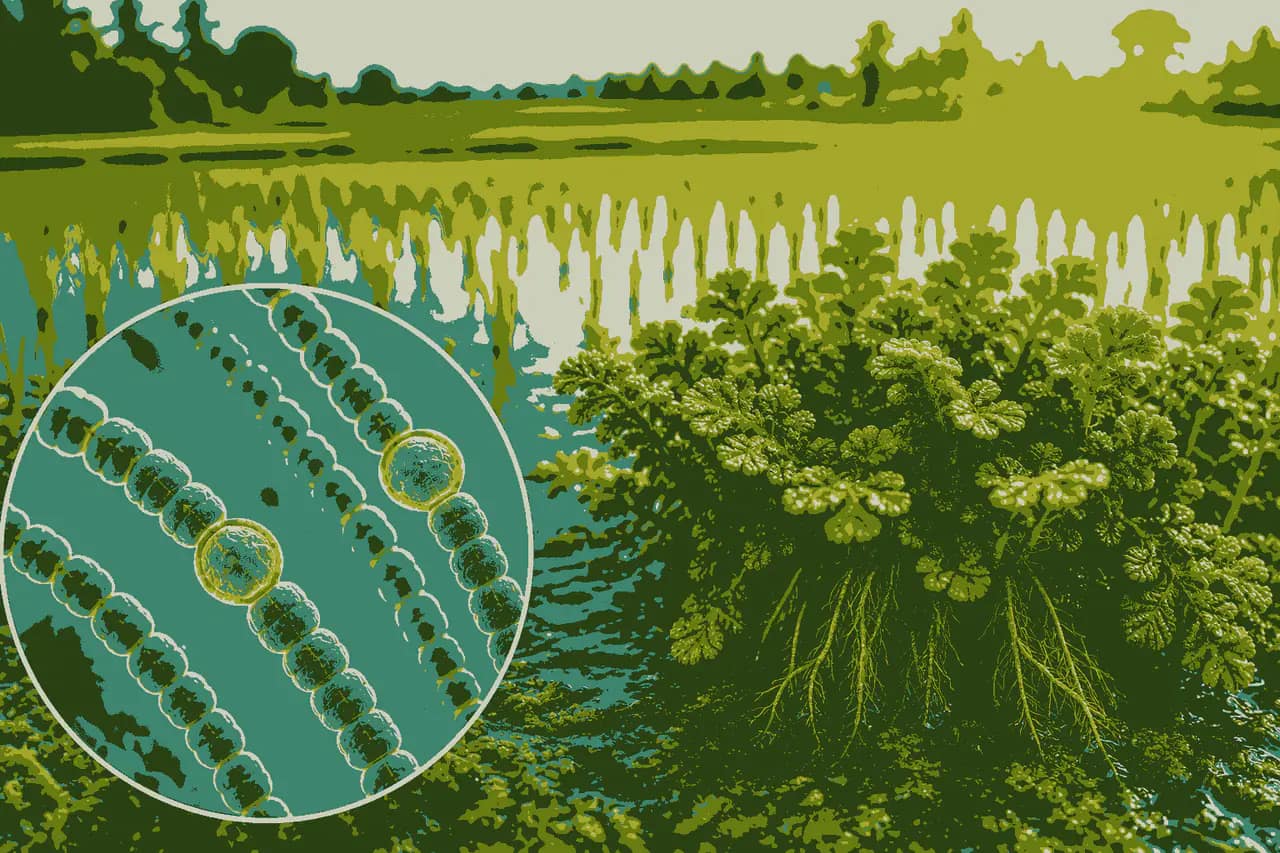
Explore Cyanobacteria Biofertilizer MCQs Class 12 Biology with key facts on blue-green algae, Azolla, Anabaena, nitrogen fixation, paddy fields , and exam prep.
High-Scoring Anaerobic Sludge Digester MCQs Class 12 Biology: Your Winning Practice
Revise Anaerobic Sludge Digester MCQs Class 12 Biology with key facts on sewage treatment, activated sludge , methanogens , biogas , BOD , and exam preparation.