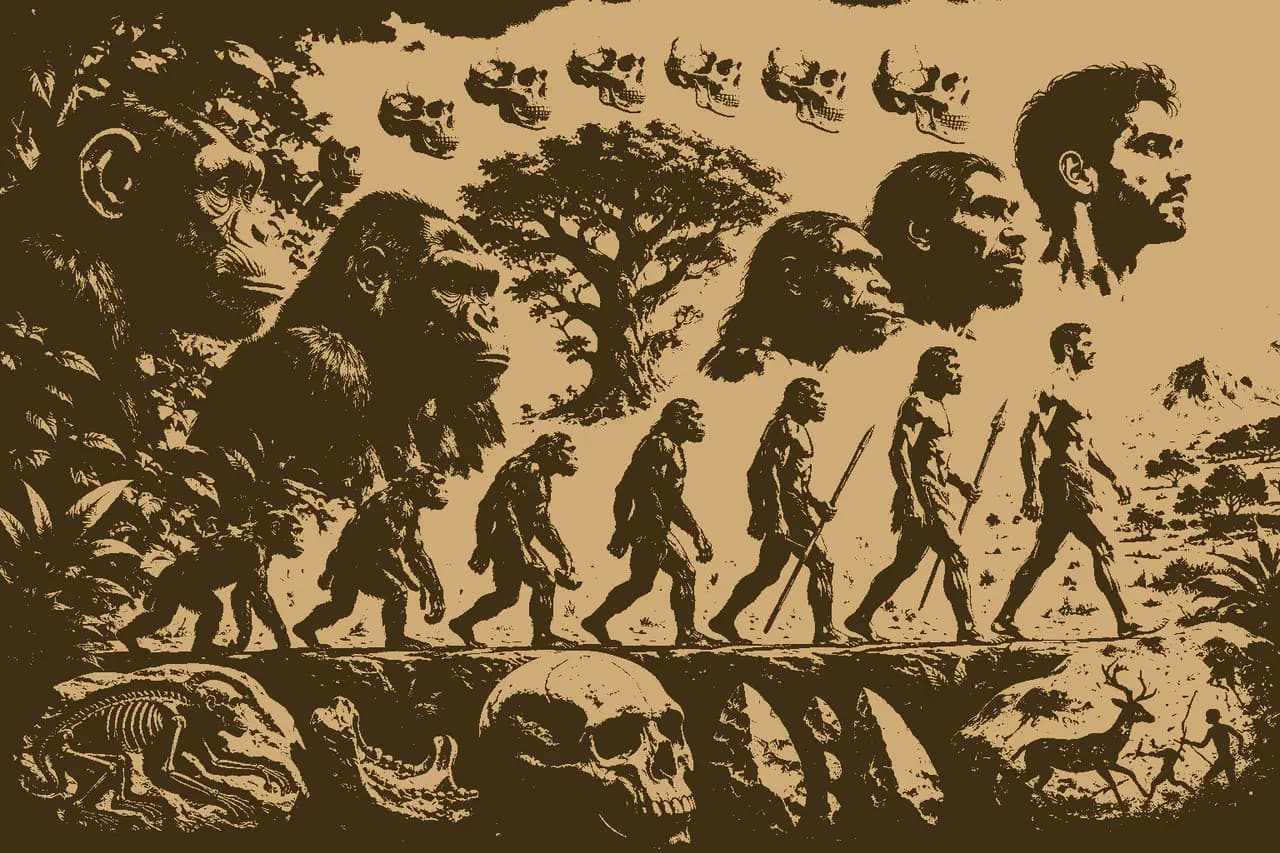
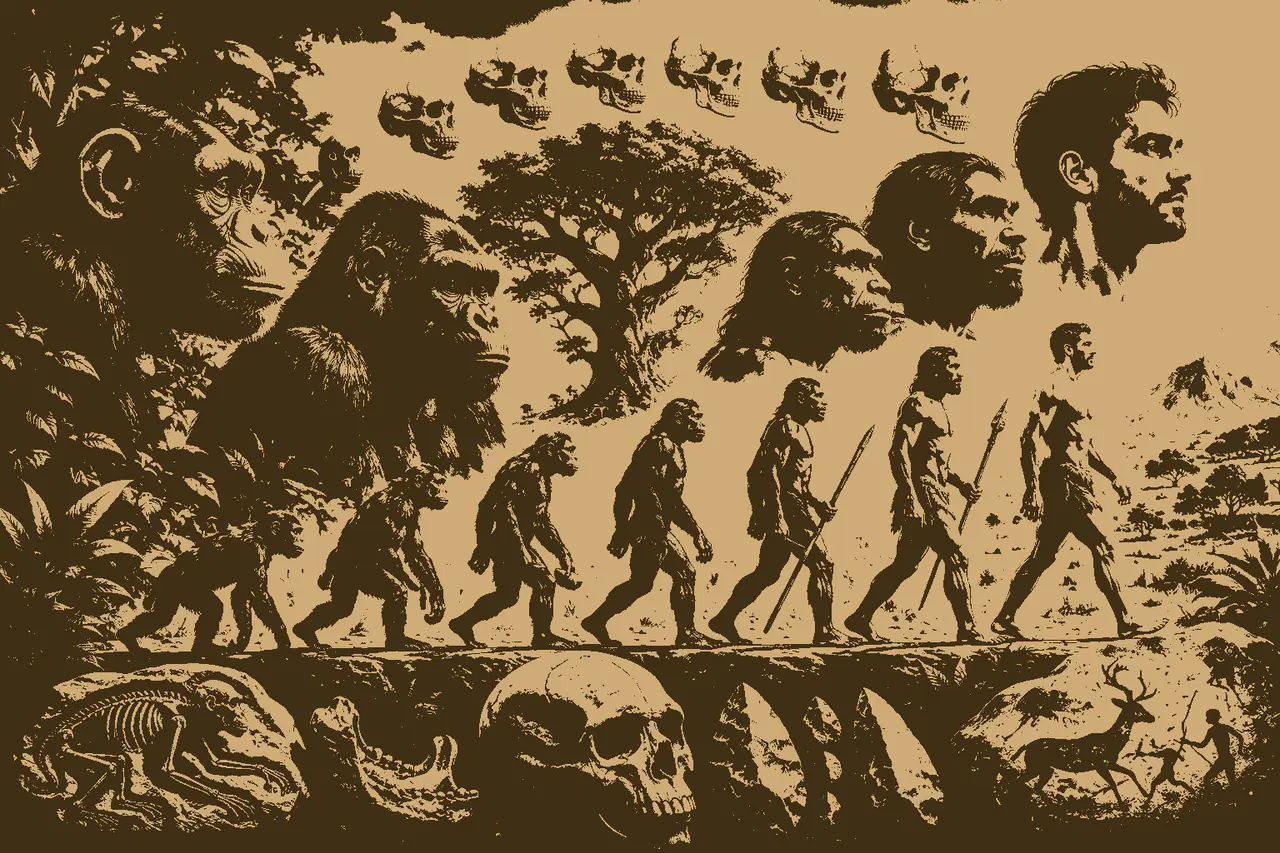
The topic Common Ancestor of Apes and Humans MCQs with Answers is one of the most important sections in the Evolution chapter of Class 12 Biology. It helps aspirants understand the evolutionary relationship between humans and modern apes, a concept that frequently appears in NEET, board examinations, and other competitive tests. Because evolution is a fundamental biological process, mastering Common Ancestor of Apes and Humans MCQs with Answers can significantly improve conceptual understanding and examination performance. When studying Common Ancestor of Apes and Humans MCQs with Answers, aspirants must first understand that humans did not evolve directly from modern apes such as chimpanzees or gorillas. Instead, both humans and modern apes share a common ancestor that lived millions of years ago. Over long periods of evolutionary time, different populations of this ancestral species followed separate evolutionary pathways, eventually giving rise to modern humans and modern apes. A thorough understanding of Common Ancestor of Apes and Humans MCQs with Answers requires knowledge of fossil evidence. Fossils provide direct clues about ancient organisms and help scientists reconstruct evolutionary relationships. The study of fossil records has revealed several transitional forms that connect early primates with modern humans. Therefore, questions based on fossil discoveries are common in Common Ancestor of Apes and Humans MCQs with Answers. One of the key organisms frequently discussed while preparing Common Ancestor of Apes and Humans MCQs with Answers is Dryopithecus. Dryopithecus lived approximately 15 million years ago and exhibited characteristics similar to both modern apes and early human ancestors. Because of these features, Dryopithecus is often regarded as an important link in primate evolution. Another important name associated with Common Ancestor of Apes and Humans MCQs with Answers is Ramapithecus. Ramapithecus possessed several features that appeared more human-like than those of Dryopithecus. Fossils discovered in the Shivalik Hills of India contributed significantly to our understanding of primate evolution and are frequently referenced in Common Ancestor of Apes and Humans MCQs with Answers. As aspirants continue studying Common Ancestor of Apes and Humans MCQs with Answers, they encounter Australopithecus, one of the earliest hominids known to walk upright. Bipedal locomotion represented a major evolutionary advancement because it freed the forelimbs for carrying objects and using tools. This adaptation played a crucial role in human evolution and often appears in Common Ancestor of Apes and Humans MCQs with Answers. The topic Common Ancestor of Apes and Humans MCQs with Answers also covers Homo habilis, known as the "Handy Man." Homo habilis was among the first human ancestors to manufacture and use stone tools. This development marked an important step in the evolution of intelligence and problem-solving abilities. Aspirants preparing Common Ancestor of Apes and Humans MCQs with Answers should also understand the significance of Homo erectus. Homo erectus had a larger brain capacity than earlier ancestors and was capable of using fire. The ability to control fire greatly improved survival and contributed to social and cultural development. Many Common Ancestor of Apes and Humans MCQs with Answers focus on the evolutionary progression from Homo erectus to later human forms such as Neanderthal man and Cro-Magnon man. These groups displayed advanced behaviors, including the use of tools, clothing, and social cooperation. Evidence of burial practices among Neanderthals provides insight into the development of culture and symbolic thinking. The relationship between humans and apes is further supported by genetic evidence, making genetics an important component of Common Ancestor of Apes and Humans MCQs with Answers. Modern molecular studies show that humans share a very high percentage of their DNA with chimpanzees. This genetic similarity strongly supports the concept of a common evolutionary origin. Another reason why Common Ancestor of Apes and Humans MCQs with Answers are important is that they help aspirants understand natural selection. Over millions of years, environmental pressures favored traits that improved survival and reproduction. These advantageous traits gradually accumulated, resulting in evolutionary change. While studying Common Ancestor of Apes and Humans MCQs with Answers, aspirants should also focus on anatomical similarities between humans and apes. Features such as skeletal structure, opposable thumbs, forward-facing eyes, and similar dentition patterns provide evidence of shared ancestry. The chapter containing Common Ancestor of Apes and Humans MCQs with Answers also highlights the role of comparative embryology. Early embryos of vertebrates display remarkable similarities, suggesting that different organisms evolved from common ancestral forms. Another important aspect of Common Ancestor of Apes and Humans MCQs with Answers is understanding evolutionary timelines. Human evolution occurred gradually over millions of years rather than through sudden transformations. This long evolutionary history is supported by fossil discoveries and genetic research. Aspirants often find Common Ancestor of Apes and Humans MCQs with Answers interesting because they combine concepts from paleontology, genetics, anatomy, and evolution into a single topic. Understanding these connections helps build a stronger foundation in biology. Regular revision of Common Ancestor of Apes and Humans MCQs with Answers can improve confidence in solving evolutionary biology questions. Since evolution is a recurring topic in entrance examinations, a strong grasp of this subject is highly beneficial. The study of Common Ancestor of Apes and Humans MCQs with Answers also helps aspirants appreciate how scientific evidence supports evolutionary theory. Fossils, comparative anatomy, molecular biology, and embryology all contribute to our understanding of human origins.
Common Ancestor of Apes and Humans MCQs with Answers
1. The cranial capacity was largest among the
A. Peking man
B. Java ape man
C. African man
D. Neanderthal man
Answer: D. Neanderthal man
Explanation: The Neanderthal man had a brain size of about 1400 cc and lived between 100,000–40,000 years ago. They used hides for protection and buried their dead.
2. Which of the following changes for man in the course of evolution is probably useless?
A. Development of being erect
B. Development of cranial capacity
C. Loss of tail
D. Development of opposable thumb
Answer: C. Loss of tail
Explanation: Loss of tail is considered a relatively less useful evolutionary change compared to increased brain size, upright posture, and opposable thumbs.
3. Which of the following is the direct ancestor of Homo sapiens?
A. Australopithecus
B. H. sapiens neanderthals
C. Homo erectus
D. Homo sapiens fossilis
Answer: C. Homo erectus
Explanation: Homo erectus is considered the direct ancestor of modern humans and had an upright posture with a brain capacity of about 900 cc.
4. The brain capacity of Homo habilis
A. Between 650–800 cc
B. 1400 cc
C. 1800 cc
D. 900 cc
Answer: A. Between 650–800 cc
Explanation: Homo habilis was the earliest human-like being and is known as the "Handy Man" because of its tool-making abilities.
5. According to the passage, where is there greater variation in mitochondrial DNA among human races?
A. Africa
B. Asia
C. Both Africa and Asia
D. None of the above
Answer: B. Asia
Explanation: The passage states that mitochondrial DNA variation is greater in Asia than in Africa.
6. Which animal is directly related to man based on genetic code similarity?
A. Gorilla
B. Rhesus
C. Gibbon
D. Orangutan
Answer: A. Gorilla
Explanation: Gorillas share approximately 98.3% of their genetic code with humans. This close similarity indicates a common evolutionary ancestry among primates.
7. In which geological epoch did Homo sapiens evolve?
A. Paleocene
B. Pleistocene
C. Oligocene
D. Miocene
Answer: B. Pleistocene
Explanation: Homo sapiens evolved during the late Pleistocene epoch and later spread throughout the world.
8. Which extinct human species lived in Europe, Asia, and parts of Africa?
A. Cro-magnon humans
B. Ramapithecus
C. Homo habilis
D. Neanderthal human
Answer: D. Neanderthal human
Explanation: Neanderthals lived between 100,000 and 40,000 years ago and possessed advanced cultural behaviors including burial practices.
9. What was the most significant trend in the evolution of modern man from his ancestors?
A. Increasing cranial capacity
B. Upright posture
C. Shortening of jaws
D. Binocular vision
Answer: A. Increasing cranial capacity
Explanation: The most remarkable evolutionary trend was the increase in brain size, leading to higher intelligence and complex behavior.
10. What do Mediterranean type popular fowls refer to?
A. White Leghorn
B. New Hampshire
C. Plymouth Rock
D. Rhode Island Red
Answer: A. White Leghorn
Explanation: White Leghorn belongs to the Mediterranean group of poultry breeds and is known for excellent egg production.
11. What does the term "atavism" refer to?
A. Retrogressive evolution
B. Mutation
C. Reappearance of ancestral characters
D. Metamorphosis
Answer: C. Reappearance of ancestral characters
Explanation: Atavism refers to the reappearance of ancestral traits that had disappeared in recent generations, such as a human baby born with a tail.
12. What does a cladogram represent?
A. Features and shared characters depicting evolution in diagram form
B. Population
C. Physiological relationship of organisms
D. None of the above
Answer: A. Features and shared characters depicting evolution in diagram form
Explanation: A cladogram is a branching diagram showing evolutionary relationships based on shared characteristics.
13. What was probably the cause of the mass extinction at the end of the Mesozoic era?
A. Continental drift
B. Collision of Earth with large meteorites
C. Massive glaciations
D. Change in Earth's orbit
Answer: B. Collision of Earth with large meteorites
Explanation: Scientific evidence suggests a massive asteroid impact contributed to the extinction of dinosaurs and many other organisms.
14. Which period is known as the age of prokaryotic microbes?
A. Precambrian
B. Phanerozoic
C. Archean
D. Proterozoic
Answer: D. Proterozoic
Explanation: During the Proterozoic era, prokaryotic organisms dominated life on Earth.
15. When did the origin of life occur?
A. Precambrian
B. Cenozoic
C. Paleozoic
D. Mesozoic
Answer: A. Precambrian
Explanation: Life originated during the Precambrian era approximately 3.5–3.9 billion years ago.
16. What is the correct sequence of ancestors in the path of primate evolution?
A. Crossopterygian → Cotylosaur → Therapsid → Labyrinthodont → Insectivores → Primates
B. Labyrinthodont → Cotylosaur → Therapsid → Crossopterygian → Insectivores → Primates
C. Crossopterygian → Labyrinthodont → Cotylosaur → Therapsid → Insectivores → Primates
D. Crossopterygian → Therapsid → Cotylosaur → Labyrinthodont → Insectivores → Primates
Answer: C. Crossopterygian → Labyrinthodont → Cotylosaur → Therapsid → Insectivores → Primates
Explanation: This sequence represents the evolutionary pathway leading ultimately to primates through successive vertebrate ancestors.
17. What was the most significant trend in the evolution of modern man (Homo sapiens) from his ancestors?
A. Increasing brain capacity
B. Upright posture
C. Shortening of jaws
D. Binocular vision
Answer: A. Increasing brain capacity
Explanation: The increase in cranial capacity was the most significant evolutionary trend, contributing to higher intelligence and complex behavior.
18. Common link between apes and man was
A. Ramapithecus
B. Dryopithecus
C. Homo erectus
D. Homo neanderthalensis
Answer: B. Dryopithecus
Explanation: Dryopithecus is considered a common ancestor linking modern apes and humans.
19. The fossils of Java man were obtained from
A. Java
B. Shivalik Hills
C. Peking
D. Germany
Answer: A. Java
Explanation: Java Man fossils were discovered in Java, Indonesia, by Eugene Dubois in 1891.
20. Which one of the following human ancestors is known as the tool maker?
A. Homo erectus
B. Java man
C. Homo habilis
D. Heidelberg man
Answer: C. Homo habilis
Explanation: Homo habilis is called the “Handy Man” because it was among the first human ancestors known to make and use tools.
21. The most recent and direct prehistoric ancestor is
A. Cro-magnon
B. Neanderthal
C. Pre-Neanderthal
D. None of these
Answer: A. Cro-magnon
Explanation: Cro-Magnon man is regarded as the direct ancestor of modern humans and possessed advanced cultural and artistic abilities.
22. Identify the correct sequence of evolution of Homo sapiens from the given options.
1. Ramapithecus
2. Homo habilis
3. Homo erectus
4. Australopithecus
5. Homo neanderthalensis
6. Homo sapiens
Options:
A. (i) → (ii) → (iii) → (iv) → (v) → (vi)
B. (i) → (iv) → (ii) → (iii) → (v) → (vi)
C. (iv) → (i) → (ii) → (iii) → (v) → (vi)
D. (iv) → (i) → (v) → (ii) → (iii) → (vi)
Answer: B
Explanation:
The accepted evolutionary sequence is:
Ramapithecus → Australopithecus → Homo habilis → Homo erectus → Homo neanderthalensis → Homo sapiens
Ramapithecus is considered one of the earliest hominid ancestors, followed by Australopithecus which showed bipedalism. Homo habilis was the first tool-maker, Homo erectus had a larger brain and upright posture, Neanderthals were advanced hominids, and finally modern humans evolved as Homo sapiens.
23. Which true man of major hominid stock had known drawing and painting?
A. Neanderthal man
B. Heidelberg man
C. Cro-magnon man
D. Both (a) and (b)
Answer: C. Cro-magnon man
Explanation: Cro-Magnon humans were skilled artists and created famous cave paintings found in Europe.
24. What is the cranial capacity of modern man?
A. 430–650 cc³
B. 600–1000 cc³
C. 900–1100 cc³
D. 1200–1600 cc³
Answer: D. 1200–1600 cc³
Explanation: Modern humans possess an average cranial capacity of about 1400 cc³.
25. Who introduced the method of representing phylogeny by branching diagram?
A. Lamarck
B. Darwin
C. Ernst Haeckel
D. Mendel
Answer: C. Ernst Haeckel
Explanation: Ernst Haeckel introduced branching diagrams to represent evolutionary relationships among organisms.
26.
Match the following terms with their correct descriptions.
| Term | Description |
|---|---|
| Founder Effect | I |
| Bottle Neck Effect | II |
| Genetic Load | III |
| Directional Selection | IV |
Options:
A. (IV), (II), (V), (III)
B. (II), (I), (III), (IV)
C. (V), (IV), (II), (III)
D. (III), (IV), (II), (I)
Answer: D
Correct Matching:
- Founder Effect → Pitcairn Island human population
- Bottle Neck Effect → Polydactylic dwarf individuals (Amish population)
- Genetic Load → Heterozygous individuals for sickle-cell anemia
- Directional Selection → Long-necked giraffes
Explanation:
- Founder Effect occurs when a small group establishes a new population carrying only a fraction of the original genetic variation.
- Bottle Neck Effect results from a drastic reduction in population size due to disasters or other events.
- Genetic Load refers to the accumulation of deleterious alleles in a population.
- Directional Selection favors one extreme phenotype, such as the evolution of longer necks in giraffes over generations.
27. What is the cornerstone of Darwin's theory?
A. Natural selection
B. Inheritance of acquired characters
C. Omnis cellula e cellula
D. Higher productivity
Answer: A. Natural selection
Explanation: Natural selection is the central concept of Darwin’s theory of evolution.
28. Why can some bacteria grow in streptomycin-containing medium?
A. Natural selection
B. Induced mutation
C. Reproductive isolation
D. Genetic drift
Answer: A. Natural selection
Explanation: Resistant bacteria survive and reproduce in the presence of antibiotics through natural selection.
29. Which combination of substances did S.L. Miller use to produce amino acids?
A. CH₃, H₂, NH₄ and water vapor at 800°C
B. CH₄, H₂, NH₃ and water vapor at 600°C
C. CH₃, H₂, NH₃ and water vapor at 600°C
D. CH₄, H₂, NH₃ and water vapor at 800°C
Answer: D. CH₄, H₂, NH₃ and water vapor at 800°C
Explanation: Miller simulated early Earth conditions using methane, hydrogen, ammonia, and water vapor, producing amino acids.
30. What is the chronological order of human evolution from early to recent?
A. Australopithecus → Ramapithecus → Homo habilis → Homo erectus
B. Ramapithecus → Australopithecus → Homo habilis → Homo erectus
C. Ramapithecus → Homo habilis → Australopithecus → Homo erectus
D. Australopithecus → Homo habilis → Ramapithecus → Homo erectus
Answer: B. Ramapithecus → Australopithecus → Homo habilis → Homo erectus
Explanation: This sequence represents the accepted chronological order of major early human evolutionary stages leading toward modern humans.
Conclusion on Common Ancestor of Apes and Humans MCQs with Answers
In conclusion, Common Ancestor of Apes and Humans MCQs with Answers is an essential topic for biology aspirants. By understanding the evolutionary relationship between humans and apes, fossil evidence, genetic similarities, and major stages of human evolution, aspirants can strengthen their conceptual knowledge and perform better in competitive examinations. A solid understanding of Common Ancestor of Apes and Humans MCQs with Answers not only improves exam preparation but also provides valuable insight into the remarkable story of human evolution.
Related reading
Ultimate Jean Baptiste Lamarck Evolution Theory MCQs with Answers for Smart NEET Prepraration
Master Jean Baptiste Lamarck Evolution Theory MCQs with Answers for NEET , Class 12 Biology. Learn Lamarckism, acquired characters, evolution concepts examples.
Ultimate Paleozoic Mesozoic Cenozoic Era MCQs with Answers For NEET Success
Study Paleozoic Mesozoic Cenozoic Era MCQs with Answers for NEET and Class 12 Biology. Learn geological eras, evolution, fossils, and dominant life forms easily