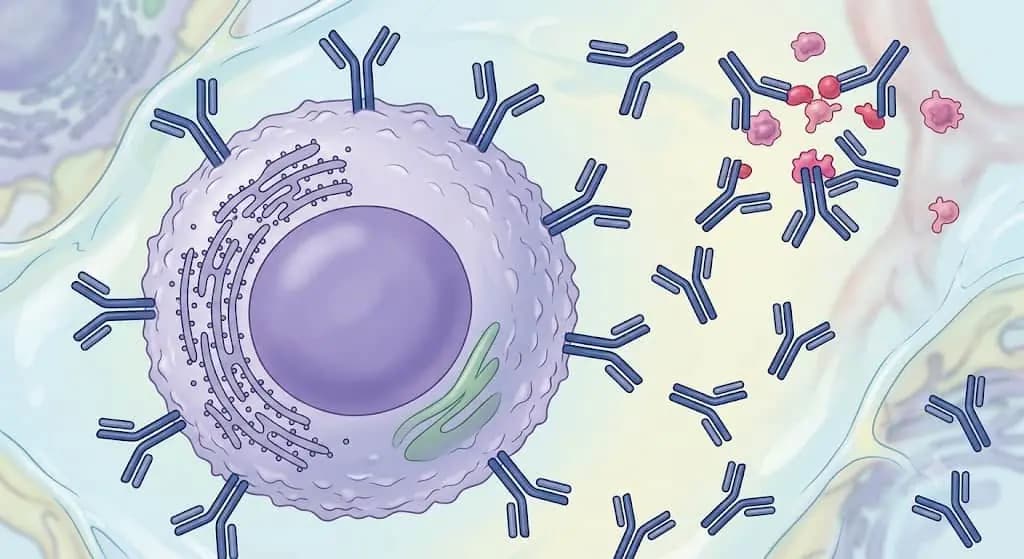
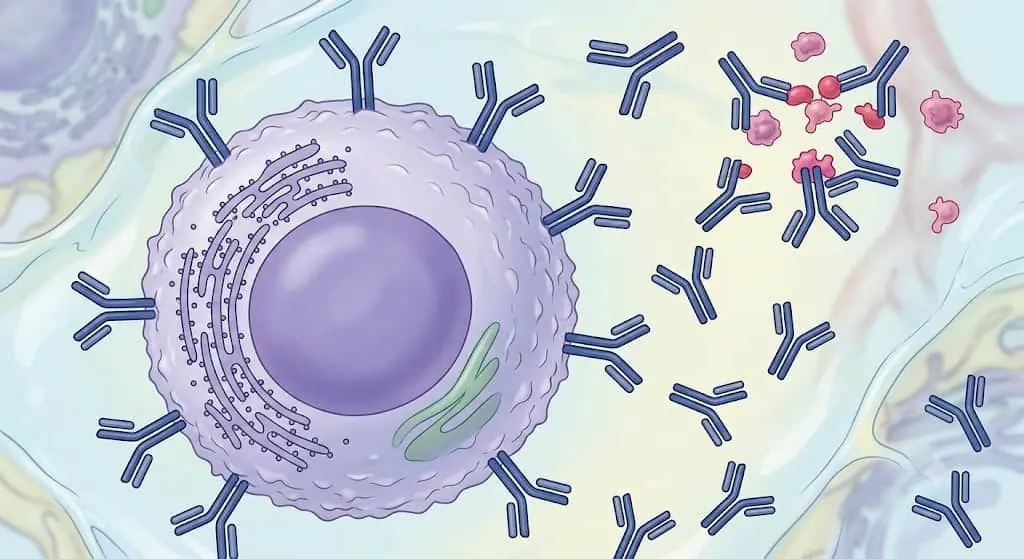
B Lymphocytes and Antibodies MCQs Class 12 Biology is an important study topic for aspirants who want to understand immunity, immune cells, antibody production, and disease defense in a clear and exam-focused manner. B Lymphocytes and Antibodies MCQs Class 12 Biology helps aspirants revise one of the most important parts of the Human Health and Disease chapter, especially the difference between innate immunity and acquired immunity. In acquired immunity, B-lymphocytes play a central role because they recognize antigens and help produce specific antibodies against foreign substances. B Lymphocytes and Antibodies MCQs Class 12 Biology is useful for aspirants preparing for Class 12 board exams, NEET, nursing entrance tests, and other biology-based competitive examinations. B Lymphocytes and Antibodies MCQs Class 12 Biology becomes easier when aspirants first understand what B-lymphocytes are. B-lymphocytes are a type of white blood cell formed and matured in the bone marrow. They are mainly responsible for humoral immunity, which means immunity mediated by antibodies present in body fluids. B Lymphocytes and Antibodies MCQs Class 12 Biology helps aspirants remember that when a B-cell encounters a specific antigen, it can become activated and differentiate into plasma cells and memory B-cells. Plasma cells produce antibodies, while memory B-cells remain in the body and help create a faster response if the same pathogen enters again. This is why B Lymphocytes and Antibodies MCQs Class 12 Biology is important for understanding both infection defense and vaccination. B Lymphocytes and Antibodies MCQs Class 12 Biology also explains the structure and function of antibodies, also known as immunoglobulins. Antibodies are Y-shaped proteins that bind specifically to antigens. Each antibody has antigen-binding sites that recognize a particular foreign molecule. B Lymphocytes and Antibodies MCQs Class 12 Biology helps aspirants revise the five major classes of antibodies: IgG, IgA, IgM, IgE, and IgD. IgG is the most abundant antibody in blood and can cross the placenta to protect the fetus. IgA is found in secretions such as saliva, tears, and mucus. IgM is usually the first antibody produced during a primary immune response. IgE is associated with allergic reactions, while IgD is mainly found on the surface of B-cells. B Lymphocytes and Antibodies MCQs Class 12 Biology makes these antibody classes easier to remember by linking each one with its major function. Aspirants studying B Lymphocytes and Antibodies MCQs Class 12 Biology should also understand antigen-antibody interaction. Antibodies bind antigens through non-covalent interactions such as electrostatic forces, hydrogen bonds, and van der Waals forces. This binding can neutralize toxins, block pathogens, support phagocytosis, activate complement, or cause precipitation and agglutination. B Lymphocytes and Antibodies MCQs Class 12 Biology is useful because many exam questions are based on terms such as antigen, antibody, immunoglobulin, plasma cell, memory cell, complement fixation, allergic reaction, and passive immunity. B Lymphocytes and Antibodies MCQs Class 12 Biology also helps aspirants connect immune concepts with real-life examples such as vaccination, blood transfusion reactions, allergies, and protection of infants through maternal antibodies. B Lymphocytes and Antibodies MCQs Class 12 Biology is especially important for understanding active and passive immunity. Active immunity develops when the body produces its own antibodies after infection or vaccination. Passive immunity occurs when ready-made antibodies are transferred into the body, such as from mother to fetus through the placenta or through breast milk. B Lymphocytes and Antibodies MCQs Class 12 Biology helps aspirants remember that active immunity is usually long-lasting because memory cells are formed, while passive immunity is short-lived but immediate. B Lymphocytes and Antibodies MCQs Class 12 Biology also explains why vaccines are effective: they stimulate B-cells and memory cells without causing severe disease. This makes the immune system prepared for future exposure to the same pathogen. For effective revision, aspirants should study B Lymphocytes and Antibodies MCQs Class 12 Biology through diagrams, tables, flowcharts, and short comparison notes. Aspirants can prepare a chart showing B-cell formation, antigen recognition, plasma cell formation, antibody secretion, and memory cell development. B Lymphocytes and Antibodies MCQs Class 12 Biology becomes more manageable when aspirants compare B-lymphocytes with T-lymphocytes, humoral immunity with cell-mediated immunity, and active immunity with passive immunity. Aspirants should also focus on commonly tested facts, such as B-cells producing antibodies, IgG being the most abundant antibody, IgA being common in secretions, IgM being pentameric, and IgE being linked with allergy. B Lymphocytes and Antibodies MCQs Class 12 Biology supports quick recall because these facts are frequently repeated in exams.
B Lymphocytes and Antibodies MCQs Class 12 Biology:
- Which immune process is most effectively controlled by anti-histamines?
A. Cell-mediated autoimmunity B. IgE-mediated exaggerated immune response C. IgG-mediated humoral immune response D. IgM-mediated humoral immune response Answer: B. IgE-mediated exaggerated immune response Explanation: Anti-histamines are most effective in controlling IgE-mediated exaggerated immune responses, which play a major role in allergic inflammatory reactions.
- What is an antibody?
A. White corpuscle which attacks invading bacteria B. Molecule that specifically inactivates an antigen C. Component of the blood D. Secretion of mammalian erythrocyte Answer: B. Molecule that specifically inactivates an antigen Explanation: An antibody is a molecule that specifically binds to and inactivates an antigen, helping protect the body from harmful substances.
- What is an anti-viral substance that prevents the synthesis of new viruses in the cell known as?
A. Transferon B. Antibody C. Interferon D. Inferons Answer: C. Interferon Explanation: Interferons are proteins released by virus-infected cells. They help prevent the synthesis and spread of new viruses.
- What are magic bullets in the context of medicine?
A. Recombinant vaccines B. Monoclonal antibodies C. Chemotherapy drugs for cancer D. Anabolic steroids Answer: B. Monoclonal antibodies Explanation: Magic bullets refer to monoclonal antibodies that target specific disease-causing agents or cells with high precision.
- What is passive immunity?
A. Inherited from parents B. Acquired through first exposure to the disease C. Achieved directly through ready-made antibodies D. Achieved through vaccination Answer: C. Achieved directly through ready-made antibodies Explanation: Passive immunity is acquired when ready-made antibodies are transferred to a person, such as from mother to foetus through the placenta or through mother’s milk.
- Which type of antibodies are produced during an allergic reaction?
A. IgG B. IgA C. IgM D. IgE Answer: D. IgE Explanation: IgE antibodies are produced during allergic reactions and mediate immediate hypersensitivity responses.
- Which statements are correct regarding IgE antibodies and the spleen?
Statement I: IgE antibodies are mainly involved in allergic reactions. Statement II: The spleen is a secondary lymphoid organ. Statement III: IgE is the most abundant antibody in human serum. Statement IV: The spleen is the primary site of T-lymphocyte maturation. Options: A. Statement I only is correct B. Statements I and II are correct C. Statements II and III are correct D. Statements III and IV are correct Answer: B. Statements I and II are correct Explanation: IgE antibodies are mainly involved in allergic reactions and immediate hypersensitivity responses. The spleen is a secondary lymphoid organ that helps filter blood and supports immune responses. IgG, not IgE, is the most abundant antibody in human serum. T-lymphocytes mature in the thymus, not in the spleen.
- To which type of barriers under innate immunity do saliva in the mouth and tears from the eyes belong?
A. Cytokine barriers B. Cellular barriers C. Physiological barriers D. Physical barriers Answer: C. Physiological barriers Explanation: Saliva and tears belong to physiological barriers because they contain substances that help prevent microbial growth.
- What shape do antibodies resemble?
A. X B. Y C. Z D. O Answer: B. Y Explanation: Antibodies are Y-shaped proteins produced mainly by plasma cells.
- What product of the immune system attaches to bacteria, making them easier to be eaten by white blood cells?
A. Antigen B. Haemoglobin C. Antibody D. MHC I molecule Answer: C. Antibody Explanation: Antibodies bind to bacteria and help white blood cells recognize and destroy them more easily.
- Where are B-lymphocytes formed?
A. In bone marrow B. Pre-processed in bone marrow C. Pre-processed in liver D. Formed in thymus Answer: A. In bone marrow Explanation: B-lymphocytes are formed and mature in the bone marrow. They are responsible for humoral immunity by producing antibodies.
- Which type of antibodies mediate immediate hypersensitivity reactions resulting in the release of histamine and other inflammatory substances?
A. IgA B. IgD C. IgE D. IgG Answer: C. IgE Explanation: IgE antibodies mediate immediate hypersensitivity reactions and stimulate the release of histamine and other inflammatory substances.
- Immunoglobulins are proteins that show what kind of structure?
A. Primary B. Secondary C. Tertiary D. Quaternary Answer: D. Quaternary Explanation: Immunoglobulins consist of four polypeptide chains: two heavy chains and two light chains. Therefore, they show quaternary structure.
- An antigen in the white blood corpuscles of man is known as
A. HIV B. HLA C. AHL D. LAH Answer: B. HLA Explanation: HLA stands for Human Leukocyte Antigen. These antigens help the immune system distinguish self from non-self.
- The antibody dependent cytotoxicity is seen in
A. Generalized anaphylaxis B. Local anaphylaxis C. Non-compatible blood transfusion D. Immune complex reaction Answer: C. Non-compatible blood transfusion Explanation: Antibody-dependent cytotoxicity can occur in non-compatible blood transfusion, where antibodies react against foreign blood cells.
- Antibody is produced by:
A. B-Lymphocyte B. Heparin C. T-Lymphocyte D. Both A and B Answer: A. B-Lymphocyte Explanation: Antibodies are produced by B-lymphocytes, especially plasma cells derived from B-cells.
- Immunoglobulins are made up of
A. Two polypeptide chains B. Four polypeptide chains C. Three amino acids only D. Five nucleotides Answer: B. Four polypeptide chains Explanation: Immunoglobulins are made up of four polypeptide chains: two identical heavy chains and two identical light chains joined by disulfide bonds.
- Which of the following are the most abundant type of antibodies?
A. IgM B. IgG C. IgE D. IgA Answer: B. IgG Explanation: IgG is the most abundant antibody in blood and body fluids. It protects against bacterial and viral infections.
- Stimulating hormone inflammation response in allergy is caused by release of one of the following by mast cells
A. Antigens B. Histamine C. Immunogens D. Immunoglobulin Answer: B. Histamine Explanation: Mast cells release histamine during allergic and inflammatory responses.
- How is antigen bound to antibody?
A. By electrostatic interaction B. By covalent bonds C. By disulphide bridge D. By amide formation Answer: A. By electrostatic interaction Explanation: Antigen-antibody binding occurs through weak non-covalent interactions such as electrostatic forces, hydrogen bonds, and van der Waals forces.
- Which one of the following antibody classes provides some degree of immune protection to the fetus?
A. IgM B. IgE C. IgD D. IgG Answer: D. IgG Explanation: IgG can cross the placenta and provide immune protection to the fetus.
- The number of immunoglobulin classes found in human beings is
A. 10 B. 5 C. 12 D. 6 Answer: B. 5 Explanation: Humans have five main classes of immunoglobulins: IgA, IgD, IgE, IgG, and IgM.
- What is the molecular weight of IgG antibody?
A. 146,000 B. 160,000 C. 190,000 D. 200,000 Answer: A. 146,000 Explanation: IgG has an approximate molecular weight of 146,000 daltons.
- Thymosin stimulates
A. Milk secretion B. Erythrocytes C. T-lymphocytes D. Melanocytes Answer: C. T-lymphocytes Explanation: Thymosin is a hormone secreted by the thymus gland. It stimulates the development and maturation of T-lymphocytes.
- Immunoglobulins are made up of:
A. Two polypeptide chains B. Four polypeptide chains C. Three amino acids only D. Five nucleotides Answer: B. Four polypeptide chains Explanation: Immunoglobulins consist of two heavy chains and two light chains, making a total of four polypeptide chains.
- What is true about T-lymphocytes in mammals?
A. They scavenge damaged cells and cellular debris B. They are produced in thyroid C. There are three main types: cytotoxic T-cells, helper T-cells, and suppressor T-cells D. These originate in lymphoid tissues Answer: C. There are three main types: cytotoxic T-cells, helper T-cells, and suppressor T-cells Explanation: T-lymphocytes are produced in the bone marrow and mature in the thymus. Major types include cytotoxic T-cells, helper T-cells, and suppressor T-cells.
- Which one of the following cell types is a part of innate immunity?
A. Skin epithelial cells B. B cells C. T lymphocytes D. Liver cells Answer: A. Skin epithelial cells Explanation: Skin epithelial cells form a physical barrier and are part of innate immunity.
- Antibodies are
A. Lipids B. Carbohydrates C. Immunoglobulins D. Antiviral particles Answer: C. Immunoglobulins Explanation: Antibodies are immunoglobulins, which are Y-shaped proteins produced by plasma cells to identify and neutralize pathogens.
- Short-lived immunity acquired from mother to foetus across placenta or through mother's milk to the infant is categorized as
A. Cellular immunity B. Innate non-specific immunity C. Active immunity D. Passive immunity Answer: D. Passive immunity Explanation: Immunity acquired from mother to foetus through the placenta or through mother’s milk is passive immunity because ready-made antibodies are transferred.
- The reaction between antibodies and soluble antigens is
A. Agglutination
B. Neutralization
C. Precipitation
D. Lysis
Answer: C. Precipitation
Explanation: The reaction between antibodies and soluble antigens is precipitation. Agglutination occurs when antibodies react with particulate antigens such as cells.
Conclusion on B Lymphocytes and Antibodies MCQs Class 12 Biology
In conclusion, B Lymphocytes and Antibodies MCQs Class 12 Biology is a valuable topic for aspirants who want to master immunity in a simple, organized, and exam-ready way. B Lymphocytes and Antibodies MCQs Class 12 Biology improves understanding of B-cells, plasma cells, memory cells, antibodies, immunoglobulin classes, antigen binding, vaccination, and immune protection. B Lymphocytes and Antibodies MCQs Class 12 Biology also builds conceptual clarity by showing how the body identifies and neutralizes harmful pathogens. With regular revision, B Lymphocytes and Antibodies MCQs Class 12 Biology can help aspirants answer immunity-based biology questions with better speed, accuracy, and confidence.
Related reading

Essential Vaccines and Drug Abuse MCQs Class 12 Biology - Powerful Exam Practice Questions
Revise Vaccines and Drug Abuse MCQs Class 12 Biology with key facts on immunity, vaccines, addiction, drug source, and health risks for aspirants prep for exams
High - Risk Oncogenes and Cancer MCQs for Class 12 Biology - Avoid Costly Mistakes
Explore Oncogenes and Cancer MCQs for Class 12 Biology with insights on tumours, metastasis, causes, diagnosis, treatment for aspirants preparing biology exams.