- Keneitsino Lydia
- May 27, 2026
Amazing Chronological Order of Human Evolution MCQs for Smart NEET Preparation
The study of human evolution is one of the most fascinating chapters in biology, and that is why Chronological Order of Human Evolution MCQs are highly important for NEET and Class 12 aspirants. Understanding how early ape-like ancestors gradually evolved into modern humans helps aspirants build a strong foundation in evolution, paleontology, and anthropology. Because questions from evolution are frequently asked in competitive examinations, Chronological Order of Human Evolution MCQs become an essential topic for thorough preparation.
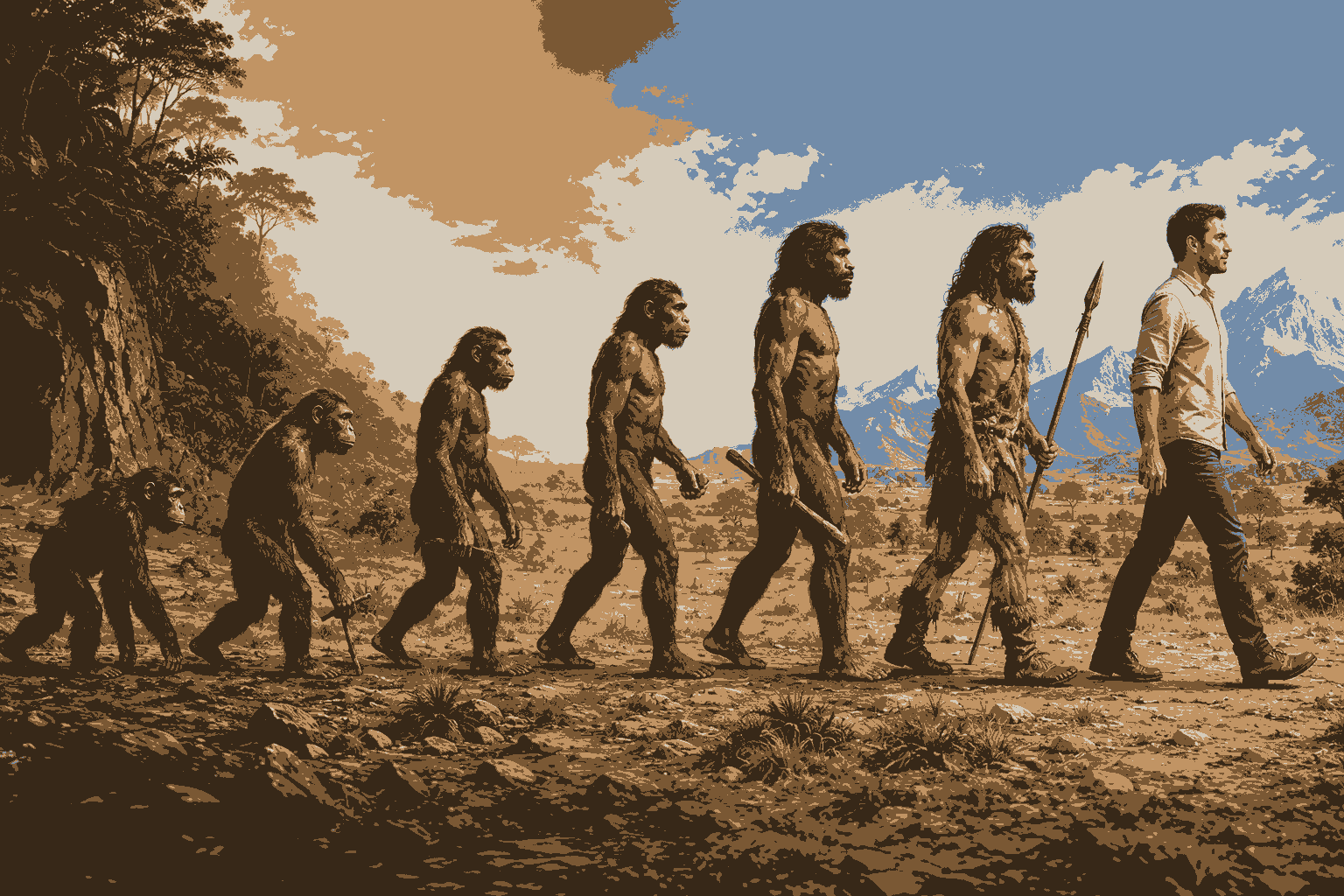
One of the major advantages of studying Chronological Order of Human Evolution MCQs is that aspirants can clearly understand the sequence of evolutionary stages. Human evolution did not occur suddenly. It happened gradually over millions of years through adaptation, mutation, natural selection, and environmental changes. The fossil record provides strong evidence supporting this gradual development.
The earliest ancestors discussed in Chronological Order of Human Evolution MCQs are Dryopithecus and Ramapithecus. These primitive primates existed millions of years ago and displayed ape-like characteristics. Dryopithecus was more similar to modern apes, while Ramapithecus showed certain human-like features and is considered an important stage in human ancestry.
Aspirants preparing Chronological Order of Human Evolution MCQs should carefully remember that Australopithecus was among the first hominids to exhibit bipedal locomotion. Walking upright on two legs was a major evolutionary advancement because it freed the forelimbs for carrying objects, using tools, and improving survival.
Another crucial stage repeatedly asked in Chronological Order of Human Evolution MCQs is Homo habilis. Homo habilis is known as the “Handy man” because it was capable of making and using primitive stone tools. This marked the beginning of tool-making behavior in human evolution.
The topic Chronological Order of Human Evolution MCQs also emphasizes Homo erectus, one of the most successful early human ancestors. Homo erectus had a larger brain capacity and improved intelligence compared to earlier ancestors. They used fire for protection, hunting, and cooking, which significantly improved survival and social development.
Java man and Peking man are important examples frequently included in Chronological Order of Human Evolution MCQs because both belong to Homo erectus. Java man was discovered in Indonesia, while Peking man fossils were discovered in China. These discoveries provided valuable information regarding prehistoric human life and migration.
Aspirants studying Chronological Order of Human Evolution MCQs must also understand the importance of Neanderthal man. Neanderthals had strong bodies, large brains, and advanced cultural practices. They used animal hides for protection and were among the first human ancestors known to bury their dead.
Cro-Magnon man is another highly important topic in Chronological Order of Human Evolution MCQs because Cro-Magnons were physically very similar to modern humans. They were intelligent, artistic, and socially organized. Cave paintings and advanced tools created by Cro-Magnons provide evidence of cultural evolution.
The final stage discussed in Chronological Order of Human Evolution MCQs is Homo sapiens sapiens, or modern humans. Modern humans developed advanced communication, agriculture, social structures, science, and civilization. Their larger brain capacity and highly developed intelligence distinguish them from earlier ancestors.
One reason why Chronological Order of Human Evolution MCQs are highly scoring is because many questions directly ask about cranial capacities, evolutionary order, fossils, and distinguishing characteristics of human ancestors. Aspirants who repeatedly revise these sequences often perform well in biology examinations.
Another important area covered in Chronological Order of Human Evolution MCQs is geological time periods. Different human ancestors evolved during different geological epochs such as Miocene, Pliocene, and Pleistocene. Understanding these timelines helps aspirants answer chronology-based questions correctly.
The concept of fossil evidence is strongly connected with Chronological Order of Human Evolution MCQs because fossils provide direct proof of evolutionary changes. Skull structures, jawbones, teeth patterns, and brain capacities reveal how human ancestors gradually evolved over time.
Aspirants often find Chronological Order of Human Evolution MCQs useful for understanding how natural selection influenced human evolution. Traits such as upright posture, larger brains, improved intelligence, and tool-making abilities helped certain groups survive better than others.
The study of Chronological Order of Human Evolution MCQs also improves understanding of adaptive evolution. Human ancestors adapted to changing climates, food availability, and environmental conditions over millions of years.
Another reason why Chronological Order of Human Evolution MCQs are important is because they connect multiple biology concepts together, including evolution, genetics, fossils, comparative anatomy, and anthropology.
Many NEET aspirants revise Chronological Order of Human Evolution MCQs repeatedly because questions are commonly framed as sequence arrangements, assertion-reason questions, or match-the-following patterns.
The topic Chronological Order of Human Evolution MCQs also explains how cranial capacity gradually increased during evolution. Earlier ancestors had smaller brains, while modern humans developed significantly larger and more complex brains.
Aspirants studying Chronological Order of Human Evolution MCQs should remember that evolution was not linear or sudden. Different human species coexisted during certain periods, and some eventually became extinct while others evolved further.
Another interesting aspect of Chronological Order of Human Evolution MCQs is understanding the cultural development of humans. The use of fire, tools, clothing, agriculture, and burial rituals all represent important stages in human civilization.
The importance of Chronological Order of Human Evolution MCQs extends beyond examinations because it also helps aspirants understand humanity’s biological origins and evolutionary relationships with other primates.
The chapter containing Chronological Order of Human Evolution MCQs is considered highly important in Class 12 Biology because it combines theoretical concepts with factual memory-based learning.
Aspirants preparing from Chronological Order of Human Evolution MCQs often focus on key fossils such as Lucy, Java man, Peking man, and Neanderthal man because these are commonly asked in competitive exams.
The repeated practice of Chronological Order of Human Evolution MCQs strengthens conceptual clarity and helps aspirants quickly identify chronological sequences during examinations.
Chronological Order of Human Evolution MCQs:
1. The early man whose skeleton is almost indistinguishable from that of modern man is:
A. Neanderthal man
B. Peking man
C. Homo erectus
D. Cro-magnon man
Answer: D. Cro-magnon man
Explanation: Cro-Magnon man (Homo sapiens fossils) is almost indistinguishable from modern humans. They emerged about 34,000 years ago and had advanced intelligence, culture, and artistic skills.
2. Homo erectus evolved during
A. Oligocene
B. Pliocene
C. Pleistocene
D. Miocene
Answer: C. Pleistocene
Explanation: Homo erectus appeared around 1.7 million years ago during the Pleistocene epoch and evolved from Homo habilis.
3. Which one of the following ancestors of man first time showed bipedal movement?
A. Australopithecus
B. Cro-magnon
C. Java ape man
D. Peking man
Answer: A. Australopithecus
Explanation: Australopithecus was the earliest hominid to show clear evidence of walking upright on two legs.
4. Correct sequence of stages in the evolution of the modern man (Homo sapiens) is:
A. Neanderthal man → Australopithecus → Cro-magnon man → Homo erectus → Modern man
B. Australopithecus → Homo erectus → Neanderthal man → Cro-magnon man → Modern man
C. Homo erectus → Australopithecus → Neanderthal man → Cro-magnon man → Modern man
D. Australopithecus → Neanderthal man → Cro-magnon man → Homo erectus → Modern man
Answer: B. Australopithecus → Homo erectus → Neanderthal man → Cro-magnon man → Modern man
Explanation: This sequence correctly represents the gradual evolutionary development of modern humans.
5. Haeckel’s biogenetic law or recapitulation theory states that
A. Life history of an animal reflects evolutionary history of the same
B. Progeny resembles parents
C. Mutations are acquired characters
D. All organisms begin their life from zygote
Answer: A. Life history of an animal reflects evolutionary history of the same
Explanation: Haeckel proposed that “Ontogeny recapitulates phylogeny,” meaning embryonic development reflects evolutionary history.
6. Modern man differs from apes in
A. Protruding eyes
B. Thick body hairs
C. Wearing of clothes
D. Arms shorter than legs
Answer: D. Arms shorter than legs
Explanation: Humans have relatively shorter arms compared to legs, unlike apes.
7. Cranial capacity of Java man is _______.
A. 1600 c.c.
B. 1450 c.c.
C. 1200 c.c.
D. 940 c.c.
Answer: D. 940 c.c.
Explanation: Java man had an average cranial capacity of about 940 cc and was among the earliest humans to use fire.
8. Agriculture was originated in Mesolithic age about
A. 1000–5000 years ago
B. 5000–10000 years ago
C. 7000–15000 years ago
D. 15000–20000 years ago
Answer: C. 7000–15000 years ago
Explanation: Agriculture began during the Mesolithic age when humans shifted from hunting to farming.
9. The brain capacity of Homo erectus is
A. 800 cc
B. 900 cc
C. 1200 cc
D. 1400 cc
Answer: B. 900 cc
Explanation: Homo erectus had an average cranial capacity between 900–1000 cc.
10. Name given to fossil hominid of Shivalik hills in India is:
A. Ramapithecus
B. Australopithecus
C. Pithecanthropus
D. Neanderthalensis
Answer: A. Ramapithecus
Explanation: Ramapithecus fossils were discovered in the Shivalik Hills of India and are considered important early hominid fossils.
11. The chronological order of human evolution from early to the recent is
A. Ramapithecus → Australopithecus → Homo habilis → Homo erectus
B. Australopithecus → Ramapithecus → Homo habilis → Homo erectus
C. Pithecanthropus pekinensis → Homo habilis → Homo erectus
D. Australopithecus → Ramapithecus → Pithecanthropus pekinensis → Homo erectus
Answer: A. Ramapithecus → Australopithecus → Homo habilis → Homo erectus
Explanation: This sequence follows the accepted evolutionary order of early human ancestors.
12. The first human-like being is
A. Homo sapiens
B. Homo erectus
C. Homo menthus
D. Homo habilis
Answer: D. Homo habilis
Explanation: Homo habilis was the earliest known human-like species and is called the “Handy man.”
13. Which of the following is the correct order of the evolutionary history of man?
A. Peking man → Homo sapiens → Neanderthal man → Cro-Magnon man
B. Peking man → Neanderthal man → Homo sapiens → Cro-Magnon man
C. Peking man → Heidelberg man → Neanderthal man → Cro-Magnon man
D. Peking man → Neanderthal man → Homo sapiens → Heidelberg man
Answer: C. Peking man → Heidelberg man → Neanderthal man → Cro-Magnon man
Explanation: This is the accepted progression among these human ancestors.
14. Among the human ancestors, the brain size was more than 1000 cc in
A. Homo neanderthalensis
B. Homo erectus
C. Ramapithecus
D. Homo habilis
Answer: A. Homo neanderthalensis
Explanation: Neanderthals had cranial capacities between 1300–1600 cc.
15. The cranial capacity of Peking man was about
A. 900 cc
B. 1660 cc
C. 1075 cc
D. 1450 cc
Answer: C. 1075 cc
Explanation: Peking man had a cranial capacity averaging around 1075 cc.
16. The highest cranial capacity is present in
A. Homo sapiens sapiens (modern man)
B. Cro-magnon man
C. Peking man
D. Neanderthal man
Answer: B. Cro-magnon man
Explanation: Cro-Magnon man possessed a cranial capacity of about 1650 cc.
17. The highest cranial capacity is/was present in
A. Java man
B. Peking man
C. Handy man
D. Modern man
Answer: D. Modern man
Explanation: Modern humans have cranial capacities averaging 1400–1450 cc.
18. The biological name of the Java man is
A. Homo erectus
B. Homo sapiens
C. Homo habilis
D. Pithecanthropus erectus
Answer: A and D
Explanation: Java man is also called Homo erectus or Pithecanthropus erectus.
19. In human evolution, which is the most recent?
A. Middle Paleolithic
B. Upper Paleolithic
C. Neolithic
D. Mesolithic
Answer: C. Neolithic
Explanation: The Neolithic age is the most recent stage and marks the beginning of agriculture.
20. Why is bipedal locomotion advantageous?
A. Reduces body weight
B. Increases weight
C. Releases forelimbs for other purposes
D. Increases speed
Answer: C. Releases forelimbs for other purposes
Explanation: Bipedalism freed the forelimbs for tool use and carrying objects.
21. What was the primary occupation of prehistoric man during the Paleolithic age?
A. Food producer
B. Food gatherer
C. Food exporter
D. Food importer
Answer: B. Food gatherer
Explanation: Paleolithic humans survived mainly by hunting animals and gathering food from nature.
22. Which man’s fossils provide the first evidence for the burial of their dead?
A. Peking man
B. Java man
C. Cro-magnon man
D. Neanderthal man
Answer: D. Neanderthal man
Explanation: Neanderthals were the first known humans to bury their dead ceremonially.
23. Who discovered the fossil of Java ape man in 1891?
A. Homo sapiens
B. Homo rhodesiensis
C. Pithecanthropus erectus
D. Sinanthropus pekinensis
Answer: C. Pithecanthropus erectus
Explanation: Eugene Dubois discovered Java man fossils in Indonesia in 1891.
24. What is the scientific name of the fossil known as ‘Lucy’?
A. Homo erectus
B. Homo sapiens
C. Australopithecus
D. Cro-magnon man
Answer: C. Australopithecus
Explanation: Lucy belongs to Australopithecus afarensis, an early human ancestor.
25. What kind of evidence suggests that man is more closely related to chimpanzees than other hominid apes?
A. Comparison of chromosomes morphology only
B. Evidence from fossil remains and fossil mitochondrial DNA alone
C. Evidence from DNA extracted from sex chromosomes, autosomes & mitochondria
D. Evidence from DNA from sex chromosomes only
Answer: C. Evidence from DNA extracted from sex chromosomes, autosomes & mitochondria
Explanation: DNA studies strongly show close evolutionary relationships between humans and chimpanzees.
26. Which hominid fossil discovered in Java in 1891, now extinct, had a cranial capacity of about 900 cc?
A. Australopithecus
B. Homo erectus
C. Neanderthal man
D. Homo sapiens
Answer: B. Homo erectus
Explanation: Homo erectus fossils from Java showed cranial capacities around 900 cc.
27. Match the hominids with their correct brain size:
(A) Homo habilis
(B) Homo neanderthalensis
(C) Homo erectus
(D) Homo sapiens
(i) 900 cc
(ii) 1350 cc
(iii) 650–800 cc
(iv) 1400 cc
Options:
A. (iii)
B. (iv)
C. (i)
D. (ii)
Answer: B
Explanation:
- Homo habilis → 650–800 cc
- Homo neanderthalensis → 1400 cc
- Homo erectus → 900 cc
- Homo sapiens → 1350 cc
28. Which of the following statements is correct about the origin and evolution of man?
A. Neanderthal men lived in Asia between 1,00,000 and 40,000 years back.
B. Agriculture came around 50,000 years back.
C. The Dryopithecus and Ramapithecus primates existing 15 million years ago walked like man.
D. Homo habilis probably ate meat.
Answer: A
Explanation: Neanderthals lived in Asia and Europe and had advanced cultural practices.
29. “Homo sapiens” implies
A. Human race
B. Human beings
C. Modern man
D. None of these
Answer: C. Modern man
Explanation: Homo sapiens sapiens refers to modern human beings.
30. The extinct human ancestor, who ate only fruits and hunted with stone weapons was
A. Ramapithecus
B. Australopithecus
C. Dryopithecus
D. Homo erectus
Answer: B. Australopithecus
Explanation: Australopithecus lived in African grasslands, used stone tools, and mainly consumed fruits.