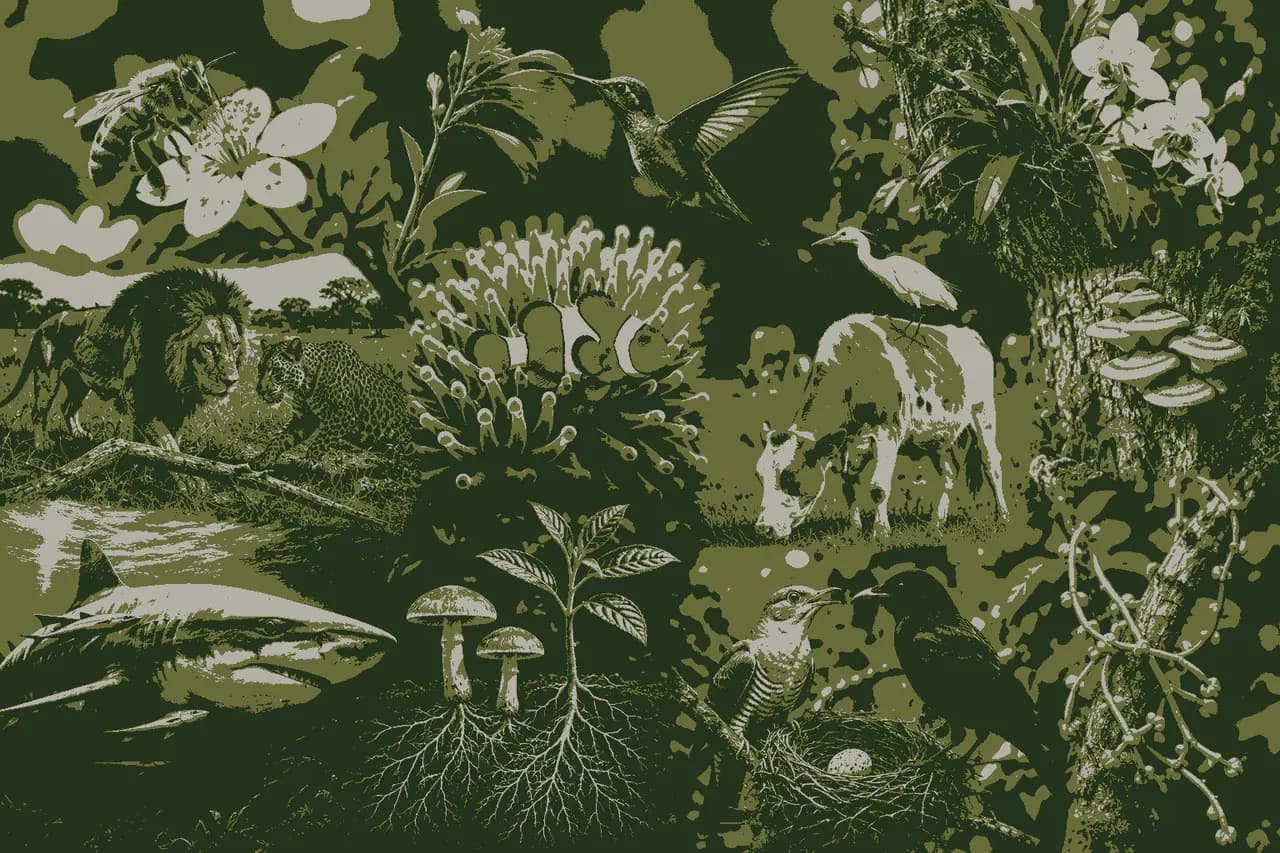
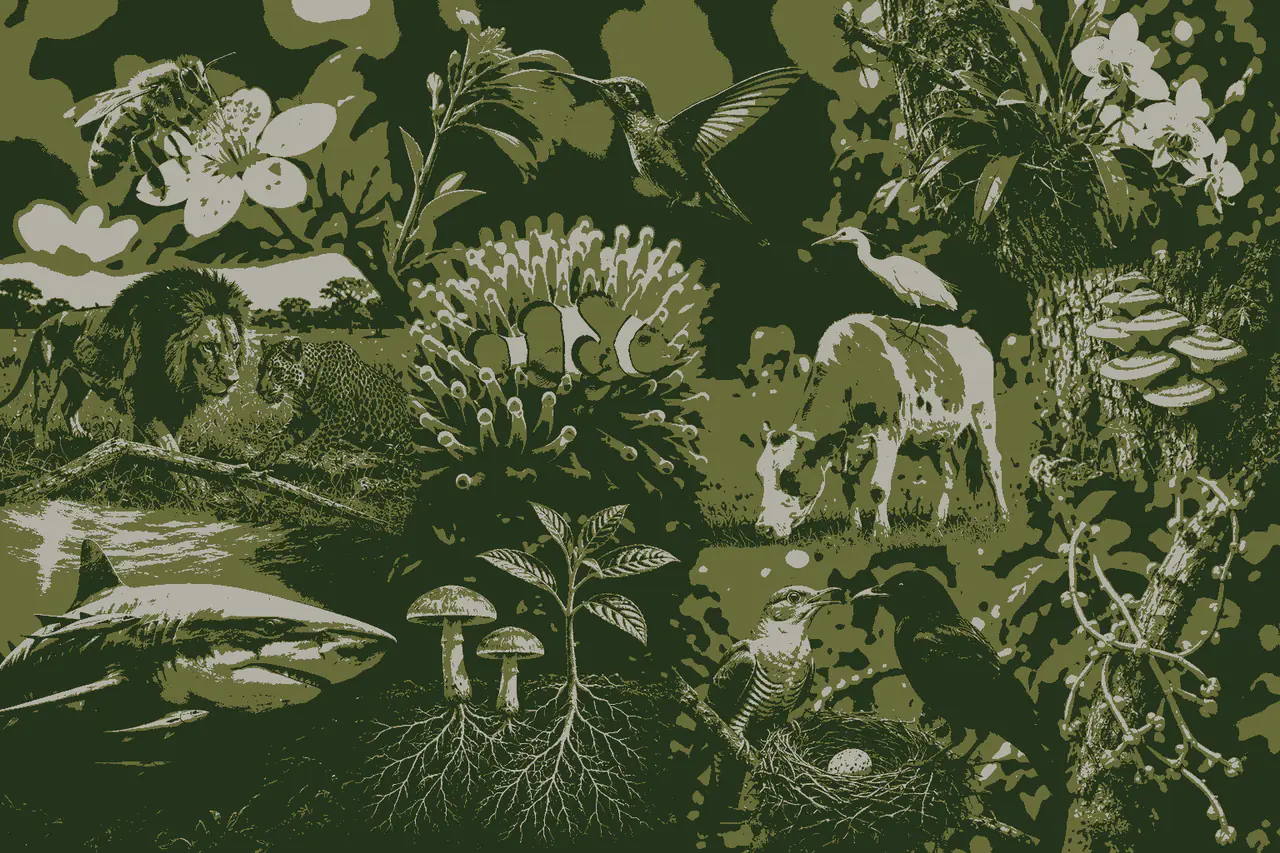
Organisms Interactions MCQs Solved Answers is an important ecology topic for aspirants who want to understand how living organisms influence one another in natural communities. Organisms Interactions MCQs Solved Answers helps aspirants revise the major types of population interactions, including mutualism, commensalism, predation, parasitism, competition, amensalism, and proto-cooperation. These interactions explain how species survive, compete, depend on one another, and maintain ecological balance within ecosystems. Organisms Interactions MCQs Solved Answers becomes easier when aspirants first understand that no organism lives alone in nature. Organisms Interactions MCQs Solved Answers explains that every species is connected with other species through food, shelter, reproduction, protection, space, nutrients, or survival needs. These connections form the foundation of community ecology and help explain why changes in one species can affect many others within the same habitat. Organisms Interactions MCQs Solved Answers is especially useful for understanding the symbols used in ecology. Organisms Interactions MCQs Solved Answers teaches aspirants that “+” means benefit, “–” means harm, and “0” means no effect. Mutualism is represented as +/+, commensalism as +/0, parasitism and predation as +/–, competition as –/–, and amensalism as –/0. Remembering these symbols helps aspirants identify interactions quickly. Organisms Interactions MCQs Solved Answers also explains mutualism, where both organisms benefit from the relationship. Organisms Interactions MCQs Solved Answers includes examples such as lichens, mycorrhizae, pollination by insects, and fig-wasp association. In lichens, algae prepare food while fungi provide protection and absorb water. In mycorrhizae, fungi help roots absorb minerals, while plants provide carbohydrates to fungi. Such relationships are important for survival and ecosystem stability. Organisms Interactions MCQs Solved Answers also covers commensalism, where one organism benefits while the other remains unaffected. Organisms Interactions MCQs Solved Answers helps aspirants understand examples such as cattle egret with grazing cattle, orchids growing on trees, barnacles on whales, and sucker fish with sharks. In these interactions, one partner gains food, support, transport, or shelter, while the other partner is neither harmed nor significantly benefited. Organisms Interactions MCQs Solved Answers is important for understanding predation and parasitism. Organisms Interactions MCQs Solved Answers teaches that predation occurs when one organism kills and eats another, while parasitism occurs when one organism lives on or inside another and harms it. Herbivores feeding on plants may also be considered a type of predation. Predators help maintain species diversity and ecological balance by controlling prey populations. Organisms Interactions MCQs Solved Answers also helps aspirants understand competition. Organisms Interactions MCQs Solved Answers explains that competition occurs when organisms require the same limited resource, such as food, space, light, nutrients, or mates. Competition may be intraspecific, between members of the same species, or interspecific, between different species. Since both organisms are negatively affected, competition is represented as –/– in ecological interaction symbols. Organisms Interactions MCQs Solved Answers becomes stronger when aspirants revise the competitive exclusion principle. Organisms Interactions MCQs Solved Answers explains that Gause proposed that two species with very similar niche requirements cannot coexist indefinitely in the same area. However, species may survive together through resource partitioning, where they use resources differently. Lions and leopards feeding on different prey sizes can be understood through this concept. Organisms Interactions MCQs Solved Answers also includes amensalism, where one organism is harmed while the other remains unaffected. Organisms Interactions MCQs Solved Answers helps aspirants remember that amensalism is represented as –/0. A common example is antibiosis, where one organism releases chemicals that inhibit another organism. Such interactions show that ecological relationships are not always based on direct feeding or physical contact. Organisms Interactions MCQs Solved Answers is useful for connecting interaction concepts with biodiversity and conservation. Organisms Interactions MCQs Solved Answers helps aspirants understand that mutualists, pollinators, decomposers, predators, parasites, and competitors all influence ecosystem structure. If one species disappears, dependent species may decline, food webs may change, and ecological balance may be disturbed. This is why species interactions are central to conservation biology and environmental science.
Organisms Interactions MCQs Solved Answers:
- According to the passage, which of the following interactions involves herbivores and plants in a relationship of predation?
A. Herbivores - Plants B. Mycorrhiza - Plants C. Sheep - Cattle D. Orchid - Tree Answer: A. Herbivores - Plants Explanation: Herbivores feeding on plants is considered a form of predation because one organism benefits by consuming another living organism.
- Who stated the principle of competitive exclusion, which states that two or more species with closely similar niche requirements cannot exist indefinitely in the same area?
A. C. Darwin B. G. F. Gause C. MacArthur D. Verhulst and Pearl Answer: B. G. F. Gause Explanation: G. F. Gause proposed the principle of competitive exclusion, which states that two species with very similar niche requirements cannot coexist indefinitely in the same habitat.
- According to the passage, which of the following characteristics is correct for r-selected species?
A. Large number of progeny with small size B. Large number of progeny with large size C. Small number of progeny with small size D. Small number of progeny with large size Answer: A. Large number of progeny with small size Explanation: r-selected species usually produce a large number of small offspring, show little parental care, and have a high reproductive rate.
- If “+” sign is assigned to beneficial interaction, “–” sign to detrimental interaction, and “0” sign to neutral interaction, then the population interaction represented by “+ –” refers to
A. Mutualism B. Amensalism C. Commensalism D. Parasitism Answer: D. Parasitism Explanation: In parasitism, one organism benefits while the host is harmed. Therefore, it is represented as +/–.
- Amensalism can be represented as
A. Species A (+); Species B (0) B. Species A (–); Species B (0) C. Species A (+); Species B (+) D. Species A (–); Species B (–) Answer: B. Species A (–); Species B (0) Explanation: Amensalism is an interaction where one species is harmed while the other remains unaffected. It is represented as –/0.
- In spite of interspecific competition in nature, which mechanism might competing species have evolved for their survival?
A. Predation B. Resource partitioning C. Competitive release D. Mutualism Answer: B. Resource partitioning Explanation: Resource partitioning allows competing species to divide resources or use them differently, helping them coexist in the same habitat.
- While explaining interspecific interaction of population, “+” sign is assigned for beneficial interaction, “–” sign for detrimental interaction, and “0” for neutral interaction. Which of the following interactions can be assigned “+” for one species and “–” for another species?
A. Competition B. Predation C. Amensalism D. Commensalism Answer: B. Predation Explanation: In predation, the predator benefits while the prey is harmed. Therefore, predation is represented as +/–.
- Which one of the following statements cannot be connected to predation?
A. It is necessitated by nature to maintain ecological balance B. It helps in maintaining species diversity in a community C. It might lead to extinction of a species D. Both the interacting species are negatively impacted Answer: D. Both the interacting species are negatively impacted Explanation: In predation, the predator benefits and the prey is harmed. Both interacting species are not negatively affected.
- Western Ghats have a large number of plant and animal species that are not found anywhere else. Which term is used to describe such species?
A. Threatened species B. Keystone species C. Endemic species D. Vulnerable species Answer: C. Endemic species Explanation: Endemic species are restricted to a particular geographical region and are not naturally found elsewhere.
- Two butterfly species are competing for the same nectar of a flower in a garden. To survive and coexist together, they may avoid competition in the same garden by
A. Feeding at the same time B. Choosing different foraging patterns C. Increasing time spent on attacking each other D. Predating on each other Answer: B. Choosing different foraging patterns Explanation: Species competing for the same resource can reduce competition by using different foraging patterns, timings, or microhabitats.
- In which of the following interactions are both partners adversely affected?
A. Mutualism B. Competition C. Predation D. Parasitism Answer: B. Competition Explanation: In competition, both organisms are negatively affected because they compete for the same limited resources.
- Carnivorous animals such as lions and leopards occupy the same niche, but lions prey mostly on larger animals and leopards take smaller ones. This mechanism of competition is referred to as
A. Competitive exclusion B. Character displacement C. Altruism D. Resource partitioning Answer: D. Resource partitioning Explanation: Resource partitioning occurs when species divide resources in different ways to reduce competition and coexist in the same habitat.
- A sedentary sea anemone gets attached to the shell lining of a hermit crab. The association is
A. Amensalism B. Ectoparasitism C. Symbiosis D. Commensalism Answer: D. Commensalism Explanation: The association between sea anemone and hermit crab is commonly treated as commensalism, where one organism benefits while the other is not harmed.
- In a random mating population in equilibrium, which of the following brings about a change in gene frequency in a non-directional manner?
A. Mutations B. Random drift C. Selection D. Migration Answer: B. Random drift Explanation: Random genetic drift causes chance fluctuations in allele frequencies and changes gene frequency in a non-directional manner.
- Match the following ecological interactions correctly.
List I: P. Parasitism Q. Amensalism R. Competition S. Commensalism List II: i. – / 0 ii. – / – iii. + / – iv. + / 0 List III: A. One species benefits, while the other remains unaffected B. One species is harmed, while the other remains unaffected C. Both species are adversely affected D. One species benefits, while the other is harmed Options: A. P - iii - D, Q - i - B, R - ii - C, S - iv - A B. P - ii - C, Q - i - B, R - iii - D, S - iv - A C. P - iii - D, Q - i - A, R - ii - C, S - iv - B D. P - iii - A, Q - i - B, R - ii - D, S - iv - A Answer: A. P - iii - D, Q - i - B, R - ii - C, S - iv - A Explanation: In parasitism, one species benefits while the other is harmed, so it is represented as +/–. In amensalism, one species is harmed while the other remains unaffected, so it is represented as –/0. In competition, both species are adversely affected, so it is represented as –/–. In commensalism, one species benefits while the other remains unaffected, so it is represented as +/0.
- Which of the following correctly matches the type of ecological interaction with its representation?
A. +/–, –/–, –/0, +/0 matched correctly with the given interaction set B. Incorrect matching of commensalism, amensalism, competition, and predation C. Incorrect matching of commensalism, amensalism, competition, and predation D. Incorrect matching of amensalism, commensalism, competition, and predation Answer: A. +/–, –/–, –/0, +/0 matched correctly with the given interaction set Explanation: Ecological interactions are represented using symbols such as + for benefit, – for harm, and 0 for no effect. The given answer key marks option A as correct.
- Match the following ecological interactions with their representations.
(i) + + (ii) + – (iii) – – (iv) + 0 Options: A. i-1, ii-2, iii-3, iv-4 B. i-2, ii-3, iii-1, iv-4 C. i-4, ii-3, iii-2, iv-1 D. i-3, ii-2, iii-1, iv-4 Answer: C. i-4, ii-3, iii-2, iv-1 Explanation: The given matching key marks option C as correct. In ecological interaction symbols, +/+ commonly represents mutualism, +/– represents predation or parasitism, –/– represents competition, and +/0 represents commensalism.
- Which of the following is a matching pair of certain organisms and the kind of association?
A. Shark and sucker fish - Commensalism B. Algae and fungi in lichens - Mutualism C. Orchids growing on trees - Parasitism D. Cuscuta growing on other flowering plants - Epiphytism Answer: B. Algae and fungi in lichens - Mutualism Explanation: Lichens show mutualism between algae and fungi. The algae prepare food, while the fungi provide shelter and absorb water and minerals.
- A mutually beneficial association necessary for survival of both partners is
A. Mutualism or symbiosis B. Commensalism C. Amensalism D. Both A and B Answer: A. Mutualism or symbiosis Explanation: Mutualism or symbiosis is a close association in which both organisms benefit, and in some cases, both partners depend on each other for survival.
- Competition for light, nutrients, and space is most severe between
A. Closely related organisms growing in different niches B. Closely related organisms growing in the same area or niche C. Distantly related organisms growing in the same habitat D. Distantly related organisms growing in different niches Answer: B. Closely related organisms growing in the same area or niche Explanation: Competition is most severe between closely related organisms occupying the same niche because they require similar resources.
- Which of the following pairs is correctly matched?
A. Parasitism - Intraspecific relationship B. Uricotelism - Aquatic habitat C. Excessive perspiration - Xeric adaptation D. Streamlined body - Aquatic adaptation Answer: D. Streamlined body - Aquatic adaptation Explanation: A streamlined body reduces water resistance and helps aquatic animals move efficiently through water.
- Study the following table and pick up the correct combinations of interactions between species A and species B.
A. II, IV, III, V B. I, II, III, V C. II, III, IV, VI D. I, III, V, VI Answer: D. I, III, V, VI Explanation: The table refers to interaction symbols such as mutualism +/+, predation +/–, commensalism +/0, amensalism –/0, competition –/–, and parasitism +/–. According to the given key, the correct combination is option D.
- Bacteria and fungi developing on dead and decaying organisms are known as
A. Symbionts B. Saprophytes C. Parasites D. Commensals Answer: B. Saprophytes Explanation: Saprophytes feed on dead and decaying organic matter. Bacteria and fungi are common saprophytes and act as decomposers.
- The interaction between a cuckoo and a crow is an example of
A. Competition B. Predation C. Brood parasitism D. Mutualism Answer: C. Brood parasitism Explanation: In brood parasitism, one bird lays its eggs in the nest of another bird and allows the host to incubate and raise the young.
- A high density of elephant population in an area can result in
A. Predation on one another B. Mutualism C. Intraspecific competition D. Interspecific competition Answer: C. Intraspecific competition Explanation: A high density of individuals of the same species leads to intraspecific competition for food, space, water, and other resources.
- Abingdon tortoise in the Galapagos Islands became extinct within a decade after goats were introduced. This is an example of
A. Competition among unrelated species B. Competitive exclusion C. Competitive release D. Coexistence better than exclusion Answer: B. Competitive exclusion Explanation: The introduced goats competed with the tortoise for resources. The tortoise could not survive the competition, showing competitive exclusion.
- A mutually beneficial close physical relationship is shown by
A. Utricularia, Dionaea B. Cladonia, Mycorrhiza C. Rafflesia and fig D. Akash bel and Zizyphus Answer: B. Cladonia, Mycorrhiza Explanation: Cladonia is a lichen showing mutualism between algae and fungi. Mycorrhiza is a mutualistic association between fungi and plant roots.
- An interaction favourable to both populations, but not obligatory to either, is
A. Proto-cooperation B. Mutualism C. Commensalism D. Parasitism Answer: A. Proto-cooperation Explanation: Proto-cooperation is an interaction in which both species benefit, but the association is not essential for their survival.
- All the following interactions are mutualism, except
A. Association of algae and fungi in lichens B. Association of fungi and roots of higher plants in mycorrhiza C. Plant and animal relation for pollination D. Association of cattle egret and grazing cattle Answer: D. Association of cattle egret and grazing cattle Explanation: Cattle egret and grazing cattle show commensalism. The egret benefits by feeding on insects disturbed by cattle, while the cattle are unaffected.
- Connell's field experiment on the rocky sea coast of Scotland, where the larger barnacle Balanus dominates the intertidal area and removes the smaller barnacle Chthamalus, happened due to
A. Predation B. Competition C. Parasitism D. Mutualism Answer: B. Competition Explanation: Connell’s barnacle experiment demonstrated interspecific competition, where Balanus outcompeted Chthamalus in the intertidal zone.
- Match the following.
A. Mutualism - ii, Commensalism - i, Parasitism - iv, Amensalism - iii B. Mutualism - i, Commensalism - ii, Parasitism - iii, Amensalism - iv C. Mutualism - iv, Commensalism - iii, Parasitism - ii, Amensalism - i D. Mutualism - iii, Commensalism - iv, Parasitism - i, Amensalism - ii Answer: B. Mutualism - i, Commensalism - ii, Parasitism - iii, Amensalism - iv Explanation: According to the given matching set, mutualism, commensalism, parasitism, and amensalism are correctly matched in option B.
- From the given options, identify the correct combination of population interactions that correspond to the symbols given here: ++, – –, +0
A. Predation, Competition, Commensalism
B. Mutualism, Parasitism, Amensalism
C. Parasitism, Competition, Mutualism
D. Mutualism, Competition, Commensalism
Answer: D. Mutualism, Competition, Commensalism
Explanation: Mutualism is represented by +/+, competition by –/–, and commensalism by +/0.
Conclusion on Organisms Interactions MCQs Solved Answers
Organisms Interactions MCQs Solved Answers should be revised with examples such as fig and wasp, algae and fungi, cattle egret and cattle, cuckoo and crow, shark and sucker fish, Balanus and Chthamalus, and herbivores and plants. In conclusion, Organisms Interactions MCQs Solved Answers gives aspirants a clear understanding of community ecology, population relationships, survival strategies, co-evolution, niche sharing, and ecosystem balance, helping aspirants prepare biology topics with accuracy and confidence.
Related reading
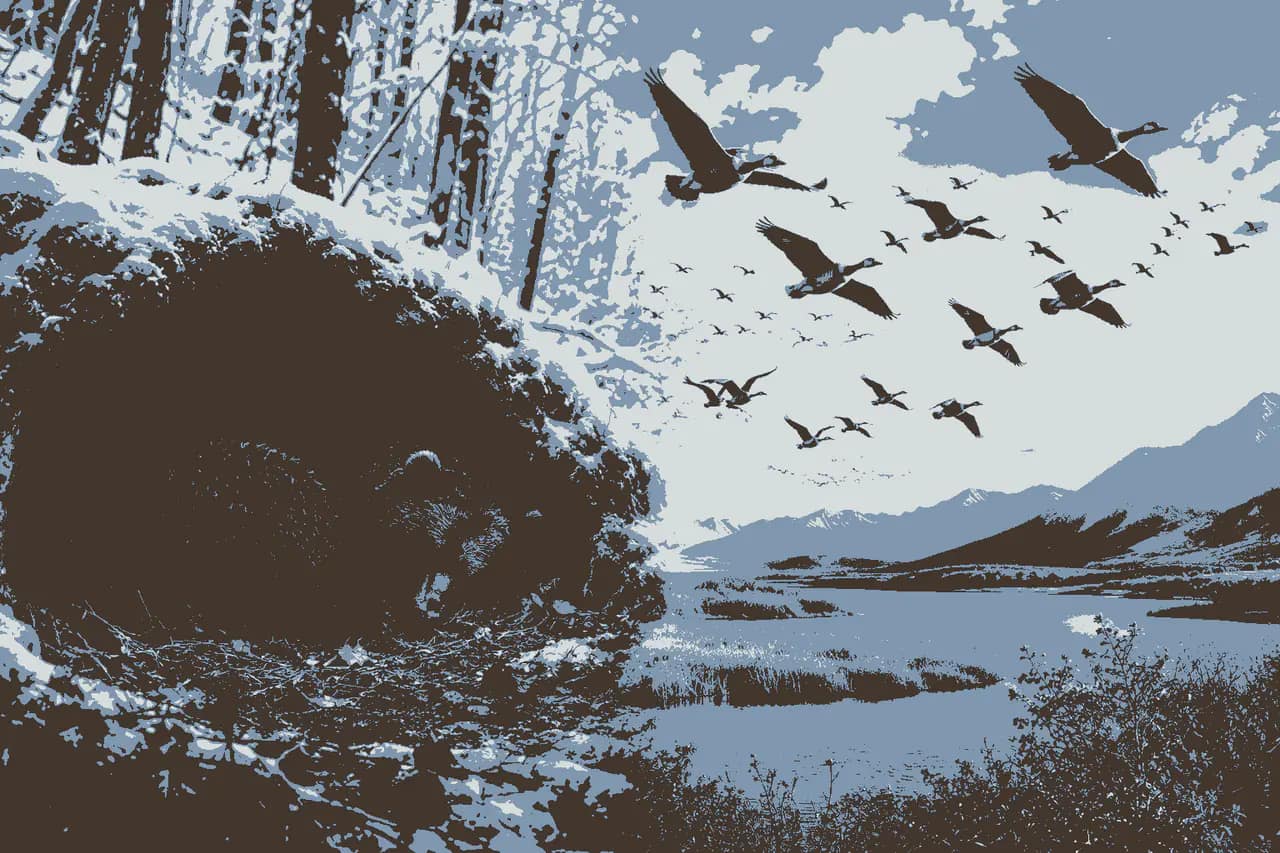
Master Hibernation and Migration MCQs Solved Answers Effortlessly
Revise Hibernation and Migration MCQs Solved Answers covering dormancy, animal migration, winter sleep, homeostasis, biological clocks , and ecology adaptation.

Remarkable Taiga Forest and Temperature Region MCQs Solved Answers for Better Scores
Explore Taiga Forest and Temperature Region MCQs Solved Answers covering boreal forests, temperate zones, coniferous trees , rainfall, biomes, ecology revision.