Understanding drug classification is one of the most important parts of Class 12 Chemistry, especially when preparing for competitive exams. The topic becomes easier when approached through Mixed Drug Classification MCQs Antibiotics Analgesics Class 12 Chemistry, as it helps aspirants connect concepts with practical applications. In fact, Mixed Drug Classification MCQs Antibiotics Analgesics Class 12 Chemistry plays a crucial role in strengthening conceptual clarity.
When aspirants begin studying medicines and their classifications, they often come across various categories such as antibiotics, analgesics, antiseptics, and tranquilizers. Practicing Mixed Drug Classification MCQs Antibiotics Analgesics Class 12 Chemistry allows learners to understand how these categories differ in their functions and uses. For instance, antibiotics are used to kill or inhibit the growth of microorganisms, while analgesics are primarily used to relieve pain.
A key benefit of focusing on Mixed Drug Classification MCQs Antibiotics Analgesics Class 12 Chemistry is that it improves retention. Instead of memorizing definitions, aspirants actively apply their knowledge. This method helps in distinguishing between bactericidal and bacteriostatic antibiotics, which is a commonly tested concept in Mixed Drug Classification MCQs Antibiotics Analgesics Class 12 Chemistry.
Another important area covered in Mixed Drug Classification MCQs Antibiotics Analgesics Class 12 Chemistry is the difference between narcotic and non-narcotic analgesics. Narcotic analgesics like morphine affect the central nervous system, whereas non-narcotic analgesics such as aspirin and paracetamol are widely used for common pain relief. By solving Mixed Drug Classification MCQs Antibiotics Analgesics Class 12 Chemistry, aspirants gain a clearer understanding of these distinctions.
The classification of drugs based on their chemical structure and mechanism of action is another essential topic. Mixed Drug Classification MCQs Antibiotics Analgesics Class 12 Chemistry helps aspirants identify functional groups and relate them to drug activity. This is especially useful when studying compounds like aspirin, which contains both ester and carboxylic acid functional groups.
Moreover, Mixed Drug Classification MCQs Antibiotics Analgesics Class 12 Chemistry also covers real-life applications, making learning more relatable. Aspirants can understand why certain drugs are prescribed for specific conditions. For example, antibiotics are ineffective against viral infections, a concept frequently tested in Mixed Drug Classification MCQs Antibiotics Analgesics Class 12 Chemistry.
Time management is another advantage of practicing Mixed Drug Classification MCQs Antibiotics Analgesics Class 12 Chemistry. Since exams often include multiple-choice questions, regular practice helps aspirants answer quickly and accurately. This is particularly beneficial in competitive exams where speed and accuracy are crucial.
Additionally, Mixed Drug Classification MCQs Antibiotics Analgesics Class 12 Chemistry enhances analytical thinking. aspirants learn to eliminate incorrect options and select the most appropriate answer based on their understanding. This skill is essential not only for exams but also for higher studies in chemistry and related fields.
Another important aspect is revision. Instead of reading lengthy notes repeatedly, aspirants can revise effectively through Mixed Drug Classification MCQs Antibiotics Analgesics Class 12 Chemistry. This method reinforces key concepts and highlights weak areas that need improvement.
Consistency is the key to mastering this topic. By regularly solving Mixed Drug Classification MCQs Antibiotics Analgesics Class 12 Chemistry,aspirants can track their progress and build confidence. Over time, they develop a strong foundation in drug classification, which is essential for scoring well in exams.
Furthermore, Mixed Drug Classification MCQs Antibiotics Analgesics Class 12 Chemistry prepares aspirants for higher-level questions that require deeper understanding. It bridges the gap between basic theory and application-based learning, making it an indispensable study tool.
Mixed Drug Classification MCQs Antibiotics Analgesics Class 12 Chemistry:
1. Tranquilizers are also known as:
A. Psychomotor drugs
B. Psychotherapeutic drugs
C. Psychosystolic drugs
D. None of these
Answer: b
2. Aspirin is an acetylation product of:
A. o-hydroxybenzoic acid
B. p-hydroxybenzoic acid
C. m-hydroxybenzoic acid
D. d-hydroxybenzoic acid
Answer: a
3. Calamine is:
A. CaCO₃
B. MgCO₃
C. ZnCO₃
D. CaCO₃ + CaO
Answer: c
4. Chloramine-T is a:
A. Disinfectant
B. Antiseptic
C. Analgesic
D. Antipyretic
Answer: b
5. Which complex is used as an anticancer agent?
A. Mer-[Co(NH₂)₃Cl]Cl₂
B. cis-[PtCl₂(NH₃)₂]
C. cis-K₂[PtCl₄Br₂]
D. Na₂CO₃
Answer: b
6. Chloramphenicol is:
A. Antipyretic
B. Analgesic
C. Antibiotic and disinfectant
D. Broad spectrum antibiotic
Answer: d
7. Which one is an antihistamine?
A. Chloramphenicol
B. Diphenylhydramine
C. Norethindrone
D. Omeprazole
Answer: b
8. Which one is a tranquilizer drug?
A. Promethazine
B. Valium
C. Naproxen
D. Mifepristone
Answer: b
9. Which one is a tranquilizer?
A. Naproxen
B. Tetracycline
C. Naproxen
D. Equanil
Answer: d
10.
Assertion (A): Aspirin and Paracetamol are non-narcotic analgesics.
Reason (R): They do not act on the central nervous system to produce sleep or unconsciousness.
A. Both Assertion and Reason are correct and Reason is the correct explanation of Assertion
B. Both Assertion and Reason are correct but Reason is not the correct explanation
C. Assertion is correct but Reason is incorrect
D. Both Assertion and Reason are incorrect
Answer: a
11. Narrow spectrum antibiotic is:
A. Chloramphenicol
B. Penicillin G
C. Ampicillin
D. Amoxicillin
Answer: b
12. Mixture of chloroxylenol and terpineol acts as:
A. Antiseptic
B. Antipyretic
C. Antibiotic
D. Analgesic
Answer: a
13. Which is an analgesic?
A. Streptomycin
B. Chloromycetin
C. Novalgin
D. Penicillin
Answer: c
14. Which of the following represents the correct structure-related feature of paracetamol?
A. Contains ester and amine group
B. Contains amide and hydroxyl group
C. Contains aldehyde and hydroxyl group
D. Contains ketone and amine group
Answer: b
15. Antibiotic used for pneumonia, bronchitis etc.:
A. Penicillin
B. Bacitracin
C. Chloromycetin
D. Tetracycline
Answer: c
16. Chemical name of aspirin:
A. Methyl benzoate
B. Hydroxy benzoic acid
C. Acetyl salicylic acid
D. Ethyl salicylate
Answer: c
17. Deficiency of iodine causes:
A. Rickets
B. Night blindness
C. Goitre
D. Beri-beri
Answer: c
18. Bacteriostatic antibiotic is:
A. Penicillin
B. Erythromycin
C. Aminoglycoside
D. Ofloxacin
Answer: b
19. Reagent used in aspirin preparation:
A. SOCl₂
B. CH₃COOH/HCl
C. (CH₃CO)₂O, H⁺
D. CH₃Cl/AlCl₃
Answer: c
20. Incorrect statement about antibiotics:
A. Tetracycline is broad spectrum
B. Streptomycin treats TB
C. Penicillin is narrow spectrum
D. Penicillin can be used without testing
Answer: d
21. Drugs used to reduce fever:
A. Analgesic
B. Antibiotic
C. Antipyretic
D. Sulpha drugs
Answer: c
22. Aspirin is:
A. Acetyl salicylic acid
B. Benzoyl salicylic acid
C. Chlorobenzoic acid
D. Anthranilic acid
Answer: a
23. Paracetamol is:
A. Methyl salicylate
B. Phenyl salicylate
C. N-acetyl-p-aminophenol
D. Acetyl salicylic acid
Answer: c
24. Reagent for given reaction:
A. H₃PO₂
B. H₃PO₃
C. H₄P₂O₆
D. NaHSO₃
Answer: a
25. Paracetamol belongs to which class of compounds?
A. Ester
B. Amide
C. Carboxylic acid
D. Ether
Answer: b
26. Stearic acid + polyethylene glycol forms:
A. Cationic detergent
B. Soap
C. Anionic detergent
D. Non-ionic detergent
Answer: d
27. Carbonate ion present in:
A. Washing soda only
B. Washing soda and caustic soda
C. Washing soda and baking soda
D. All three
Answer: a
28. Example of anionic detergent:
A. Sodium stearate
B. Sodium rosinate
C. CTAB
D. Sodium dodecylbenzene sulphonate
Answer: d
29. Example of cationic detergent:
A. Sodium lauryl sulphate
B. Sodium dodecyl benzene sulphonate
C. Polyethylene glycol stearate
D. Cetyltrimethyl ammonium bromide
Answer: d
30. p-toluidine and benzylamine can be distinguished by:
A. Sandmeyer reaction
B. Dye test
C. Melting test
D. Gattermann reaction
Answer: b

Conclusion on Mixed Drug Classification MCQs Antibiotics Analgesics Class 12 Chemistry
In conclusion, Mixed Drug Classification MCQs Antibiotics Analgesics Class 12 Chemistry is an effective and efficient way to master the topic of drug classification. It not only improves conceptual clarity but also boosts confidence and exam performance. By incorporating Mixed Drug Classification MCQs Antibiotics Analgesics Class 12 Chemistry into their daily study routine, aspirants can achieve better results and develop a deeper understanding of chemistry.
Related reading
Guaranteed Success Guide: Phenols Disinfectants Antibiotics MCQs Class 12 Chemistry Exam Preparation
Get Phenols Disinfectants Antibiotics MCQs Class 12 Chemistry Exam Preparation with answers. Practice important questions, strengthen concepts, revise for exams
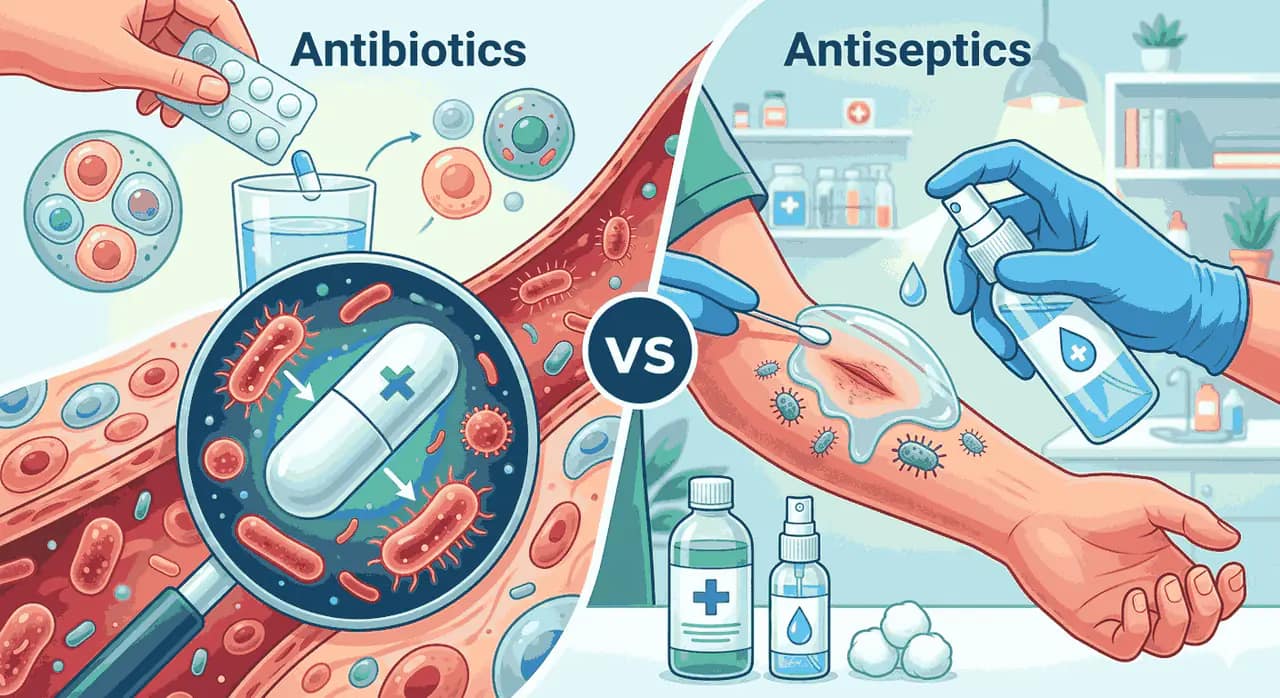
Ultimate Exam Guide: Antibiotics and Antiseptics MCQs Class 12 Chemistry Solved Questions
Revise faster with Antibiotics and Antiseptics MCQs Class 12 Chemistry Solved Questions.Get accurate answers, improve concepts, and score higher in boards,NEET.