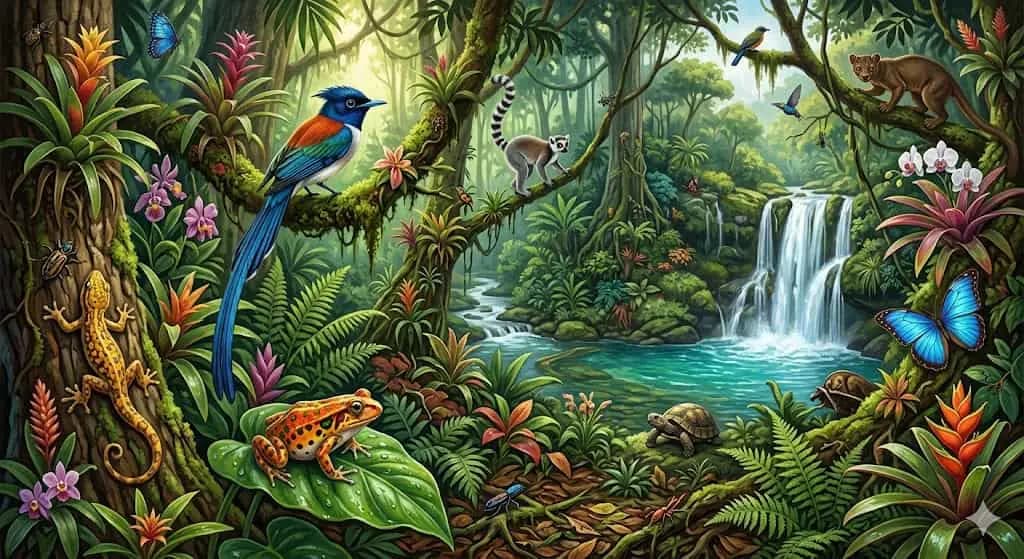
Endemic Species and Biodiversity MCQs PDF Class 12 is an important ecology topic for aspirants who want to understand species richness, conservation, genetic variation, and the value of living diversity. Endemic Species and Biodiversity MCQs PDF Class 12 helps aspirants revise how certain organisms are restricted to specific geographical regions and why their protection is essential for ecological balance. Biodiversity is not only the total number of species in an area; it also includes genetic diversity within species, species diversity in communities, and ecosystem diversity across habitats. Endemic Species and Biodiversity MCQs PDF Class 12 becomes easier when aspirants first understand the meaning of endemic species. Endemic species are organisms naturally found in a particular region and nowhere else in the world. Endemic Species and Biodiversity MCQs PDF Class 12 explains that endemism usually develops because of geographical isolation, continental separation, climate conditions, unique habitats, and long evolutionary history. Islands, mountain ranges, rainforests, and isolated valleys often support many endemic plants and animals. Endemic Species and Biodiversity MCQs PDF Class 12 is highly useful for understanding why some regions have more unique species than others. Endemic Species and Biodiversity MCQs PDF Class 12 teaches aspirants that places such as the Western Ghats, Himalayas, Madagascar, Amazon forests, and Australia are known for rich biodiversity and high endemism. When species remain isolated for a long time, they evolve special features that help them survive in their local environment. This makes them biologically valuable but also vulnerable. Endemic Species and Biodiversity MCQs PDF Class 12 also helps aspirants understand biodiversity at different levels. Genetic diversity refers to variation within the same species, such as different varieties of rice, mango, or wheat. Endemic Species and Biodiversity MCQs PDF Class 12 explains that species diversity refers to the variety of species present in an area, while ecosystem diversity refers to the variety of ecosystems such as forests, grasslands, wetlands, deserts, and marine habitats. All three levels are important for conservation. Endemic Species and Biodiversity MCQs PDF Class 12 is closely connected with biodiversity hotspots. A biodiversity hotspot is a region with very high species richness and high endemism, but also serious threat from habitat loss. Endemic Species and Biodiversity MCQs PDF Class 12 helps aspirants remember that hotspots are priority areas for conservation because they contain many species that cannot be found anywhere else. Protecting these areas helps preserve rare organisms, ecological services, and evolutionary history. Endemic Species and Biodiversity MCQs PDF Class 12 explains that tropical rainforests show maximum species diversity. Warm temperature, high rainfall, stable climate, and abundant resources allow many species to coexist. Endemic Species and Biodiversity MCQs PDF Class 12 helps aspirants connect this concept with regions like the Amazon rainforest, which supports millions of species and complex food webs. Tropical forests also contain many endemic organisms because their habitats are old, stable, and highly specialized. Endemic Species and Biodiversity MCQs PDF Class 12 is important for understanding threats to biodiversity. Major causes of biodiversity loss include habitat destruction, overexploitation, alien species invasion, pollution, climate change, and co-extinction. Endemic Species and Biodiversity MCQs PDF Class 12 teaches aspirants that endemic species are especially at risk because they have limited distribution. If their habitat is destroyed, they may not survive elsewhere. This is why conservation of local habitats is extremely important. Endemic Species and Biodiversity MCQs PDF Class 12 also covers alien species invasion. When non-native species are introduced into a new habitat, they may compete with native organisms, prey upon them, or disturb the ecosystem. Endemic Species and Biodiversity MCQs PDF Class 12 helps aspirants understand examples such as the decline of native fishes due to invasive species. Alien species can reduce biodiversity, alter food chains, and threaten endemic organisms that are not adapted to defend against them. Endemic Species and Biodiversity MCQs PDF Class 12 gives aspirants a clear understanding of conservation methods. Conservation may be in situ or ex situ. In situ conservation protects species in their natural habitats through national parks, wildlife sanctuaries, biosphere reserves, sacred groves, and protected forests. Endemic Species and Biodiversity MCQs PDF Class 12 explains that ex situ conservation protects species outside their natural habitats through botanical gardens, zoological parks, seed banks, gene banks, and tissue culture facilities. Endemic Species and Biodiversity MCQs PDF Class 12 is also linked with ecosystem services. Biodiversity supports soil formation, nutrient cycling, climate regulation, pollination, water purification, oxygen production, and food supply. Endemic Species and Biodiversity MCQs PDF Class 12 helps aspirants understand that every species has ecological value, even if its direct benefit is not immediately visible. Loss of biodiversity can weaken ecosystem stability, reduce resilience, and disturb natural processes that support life.
Endemic Species and Biodiversity MCQs PDF Class 12:
- In the phosphorus cycle, weathering makes phosphate available first to:
A. Decomposers B. Consumers C. Producers D. All the above Answer: C. Producers Explanation: The natural reservoir of phosphorus is rocks, which contain phosphorus in the form of phosphates. When rocks are weathered, small amounts of phosphate dissolve in soil water and are absorbed first by plant roots or producers.
- The main role of bacteria in the carbon cycle involves
A. Photosynthesis B. Assimilation of nitrogenous compounds C. Chemosynthesis D. Digestion or breakdown of organic compounds Answer: D. Digestion or breakdown of organic compounds Explanation: Bacteria play an important role in the carbon cycle by decomposing dead plants and animals. This breakdown releases carbon dioxide back into the environment.
- Identify the incorrect statement from the following:
A. The reservoir pool for the phosphorus cycle is Earth’s crust, whereas the atmosphere is the reservoir pool for the carbon cycle. B. During the carbon cycle and phosphorus cycle, there is very little respiratory release of carbon and phosphorus, respectively. C. Atmospheric inputs of phosphorus through rainfall are much smaller than carbon inputs. D. Gaseous exchange of phosphorus between organisms and the environment is negligible. Answer: B. During the carbon cycle and phosphorus cycle, there is very little respiratory release of carbon and phosphorus, respectively. Explanation: Respiratory release of carbon is significant in the carbon cycle, while phosphorus has no appreciable respiratory release into the atmosphere. Therefore, statement B is incorrect. Gaseous exchange of phosphorus is generally negligible.
- About 70% of total global carbon is found in:
A. Oceans B. Forest C. Grassland D. Agroecosystems Answer: A. Oceans Explanation: Oceans act as a major reservoir of carbon. A large proportion of global carbon is stored in ocean water in dissolved forms.
- A nitrogen-fixing microbe associated with Azolla in rice-field is:
A. Frankia B. Tolypothrix C. Spirulina D. Anabaena Answer: D. Anabaena Explanation: Anabaena is a nitrogen-fixing cyanobacterium associated with Azolla in rice fields.
- Which one of the following microbes forms a symbiotic association with plants and helps them in their nutrition?
A. Glomus B. Trichoderma C. Azotobacter D. Aspergillus Answer: A. Glomus Explanation: Glomus forms mycorrhizal association with plant roots and helps in the absorption of nutrients, especially phosphorus.
- Which one of the following is not a gaseous biogeochemical cycle in the ecosystem?
A. Nitrogen cycle B. Carbon cycle C. Sulphur cycle D. Phosphorus cycle Answer: D. Phosphorus cycle Explanation: The phosphorus cycle is mainly a sedimentary cycle because its major reservoir is rocks and soil, not the atmosphere.
- Which two distinct microbial processes are responsible for the release of fixed nitrogen as dinitrogen gas (N₂) to the atmosphere?
A. Anaerobic ammonium oxidation and denitrification B. Aerobic nitrate oxidation and nitrite reduction C. Decomposition of organic nitrogen and conversion of dinitrogen to ammonium compounds D. Enteric fermentation in cattle and nitrogen fixation by Rhizobium in root nodules of legumes Answer: A. Anaerobic ammonium oxidation and denitrification Explanation: Denitrification and anaerobic ammonium oxidation release fixed nitrogen back into the atmosphere as nitrogen gas.
- Nitrogen-fixing bacteria convert
A. N₂ → NH₃ B. NH₄⁺ → Nitrates C. NO₂ → NO₃ D. NO₃ → N₂ Answer: A. N₂ → NH₃ Explanation: Nitrogen-fixing bacteria convert atmospheric nitrogen gas into ammonia, which can later be used by plants.
- An ecosystem which can be easily damaged but can recover after some time if the damaging effect stops will be having
A. High stability and low resilience B. Low stability and low resilience C. High stability and high resilience D. Low stability and high resilience Answer: D. Low stability and high resilience Explanation: An ecosystem that is easily disturbed has low stability. If it can recover quickly after disturbance stops, it has high resilience.
- Match the following ecosystem services with their examples:
A. Supporting services B. Provisioning services C. Regulating services D. Cultural services Examples: i. Food and water ii. Spiritual, recreational, and cultural benefits iii. Nutrient cycling iv. Flood and disease control Options: A. A-i, B-iv, C-iii, D-ii B. A-iii, B-i, C-iv, D-ii C. A-iv, B-ii, C-i, D-iii D. A-ii, B-iii, C-i, D-iv Answer: B. A-iii, B-i, C-iv, D-ii Explanation: Supporting services include nutrient cycling. Provisioning services include food and water. Regulating services include flood and disease control. Cultural services include spiritual, recreational, and cultural benefits.
- According to Robert Costanza, 50% of the total cost for ecosystem services goes to
A. Recreation B. Climate regulation C. Nutrient cycling D. Soil formation Answer: D. Soil formation Explanation: According to Robert Costanza’s ecosystem service valuation, a major share of ecosystem service value is linked with soil formation.
- How many matured trees are required to support the supply of oxygen to 42,000 people in a year?
A. 42,000 B. 24,000 C. 15,000 D. 21,000 Answer: D. 21,000 Explanation: If one mature tree provides enough oxygen for two people, then 21,000 trees are required to support 42,000 people.
- Assertion and Reason:
Assertion (A): The stability of the coupled system formed by climate and natural ecosystems is an important ecosystem service. Reason (R): Natural ecosystems prevent overheating of the earth by removing more greenhouse gases from the atmosphere. A. A and R are true and R is the correct explanation of A B. A and R are true but R is not the correct explanation of A C. A is true, but R is false D. A is false, but R is true Answer: A. A and R are true and R is the correct explanation of A Explanation: Natural ecosystems help regulate climate by absorbing greenhouse gases. This climate regulation contributes to ecosystem stability and is an important ecosystem service.
- The presence of diversity at the junction of territories of two different habitats is known as
A. Bottleneck effect B. Edge effect C. Junction effect D. Pasteur effect Answer: B. Edge effect Explanation: Edge effect refers to increased diversity or changes in species composition at the boundary between two different habitats.
- Regional diversity is also called
A. Gamma diversity B. Alpha diversity C. Beta diversity D. Ecosystem diversity Answer: C. Beta diversity Explanation: Beta diversity refers to the difference in species composition between habitats or regions. Alpha diversity refers to diversity within a site, while gamma diversity refers to diversity across a larger landscape.
- Which of the following has maximum genetic diversity in India?
A. Rice B. Mango C. Wheat D. Groundnut Answer: A. Rice Explanation: Rice has very high genetic diversity in India, with thousands of varieties and strains adapted to different regions.
- Acacia, Prosopis, and Capparis belong to
A. Deciduous forest B. Tropical forest C. Thorn forest D. Evergreen forest Answer: C. Thorn forest Explanation: Acacia, Prosopis, and Capparis are common plants of thorn forests, which occur in dry and arid regions.
- Species separated by geographical barriers are called
A. Allopatric B. Sympatric C. Sibling D. Endemic Answer: A. Allopatric Explanation: Allopatric species are separated by geographical barriers. Allopatric speciation occurs when populations become geographically isolated.
- Which pair is of insectivorous plants?
A. Drosera and Vallisneria B. Utricularia and Hydrilla C. Aldrovanda and Utricularia D. Rafflesia and Dionaea Answer: C. Aldrovanda and Utricularia Explanation: Aldrovanda and Utricularia are insectivorous plants. They trap small organisms and obtain nutrients from them.
- Species diversity is maximum in
A. Tropical rainforest B. Temperate forest C. Deserts D. Hill slopes Answer: A. Tropical rainforest Explanation: Tropical rainforests have warm, humid conditions and high productivity, supporting maximum species diversity.
- Occurrence of endemic species in South America and Australia is due to
A. These species have been extinct from other regions B. Continental separation C. There is no terrestrial route to these places D. Retrogressive evolution Answer: B. Continental separation Explanation: Continental separation caused long-term geographical isolation, leading to the evolution and survival of endemic species in regions such as South America and Australia.
- During regeneration, modification of an organ to another organ is known as
A. Morphallogenesis B. Epimorphosis C. Morphallaxis D. Accretionary growth Answer: B. Epimorphosis Explanation: Epimorphosis is regeneration involving the formation or modification of an organ through cell proliferation and differentiation.
- Extranuclear inheritance occurs in
A. Killer Paramecium B. Killer Amoeba C. Euglena D. Hydra Answer: A. Killer Paramecium Explanation: In Killer Paramecium, cytoplasmic kappa particles are responsible for killer traits. This is an example of extranuclear or cytoplasmic inheritance.
- Which of the following regions of the globe exhibits highest species diversity?
A. Madagascar B. Himalayas C. Amazon forests D. Western Ghats of India Answer: C. Amazon forests Explanation: Amazon forests show extremely high species diversity because of their tropical climate, high rainfall, and dense vegetation.
- According to Robert May, the global species diversity is about
A. 20 million B. 50 million C. 7 million D. 1.5 million Answer: C. 7 million Explanation: According to Robert May’s estimate, the global species diversity is about 7 million species.
- How many hotspots of biodiversity in the world have been identified till date by Norman Myers?
A. 17 B. 25 C. 34 D. 43 Answer: C. 34 Explanation: Norman Myers identified biodiversity hotspots based on high species richness and endemism. According to the given answer key, the number is 34.
- The amount of nutrients such as carbon, nitrogen, phosphorus, and calcium present in the soil at any given time is referred to as
A. Standing crop B. Climax C. Climax community D. Standing state Answer: D. Standing state Explanation: Standing state refers to the amount of nutrients present in the soil at any given time.
- Large woody vines are more commonly found in
A. Alpine forests B. Temperate forests C. Mangroves D. Tropical rainforests Answer: D. Tropical rainforests Explanation: Large woody vines, called lianas, are commonly found in tropical rainforests where they climb trees and compete for sunlight.
- Decline in the population of Indian native fishes due to introduction of Clarias gariepinus in river Yamuna can be categorised as
A. Alien species invasion
B. Co-extinction
C. Habitat fragmentation
D. Overexploitation
Answer: A. Alien species invasion
Explanation: Clarias gariepinus is an alien species. Its introduction can negatively affect native fish populations through competition and predation.
Conclusion on Endemic Species and Biodiversity MCQs PDF Class 12
Endemic Species and Biodiversity MCQs PDF Class 12 should be revised with terms such as endemic species, biodiversity hotspot, genetic diversity, species diversity, ecosystem diversity, alpha diversity, beta diversity, gamma diversity, alien species invasion, conservation, extinction, and habitat fragmentation. In conclusion, Endemic Species and Biodiversity MCQs PDF Class 12 gives aspirants a strong foundation in ecology and conservation biology. By understanding endemic species and biodiversity, aspirants can appreciate why protecting natural habitats is essential for environmental balance, sustainable development, and the survival of unique life forms.
Related reading
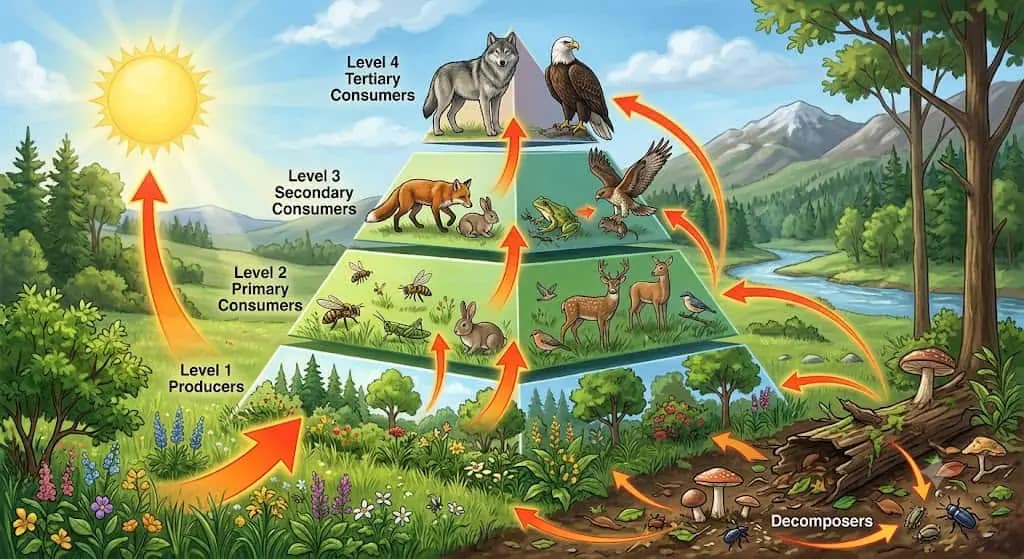
Avoid Common Mistakes in Energy Flow and Trophic Levels MCQs PDF Class 12 Biology
Revise Energy Flow and Trophic Levels MCQs PDF Class 12 Biology covering ecological pyramids, 10% law, NPP, food chains, succession and trophic levels for exams
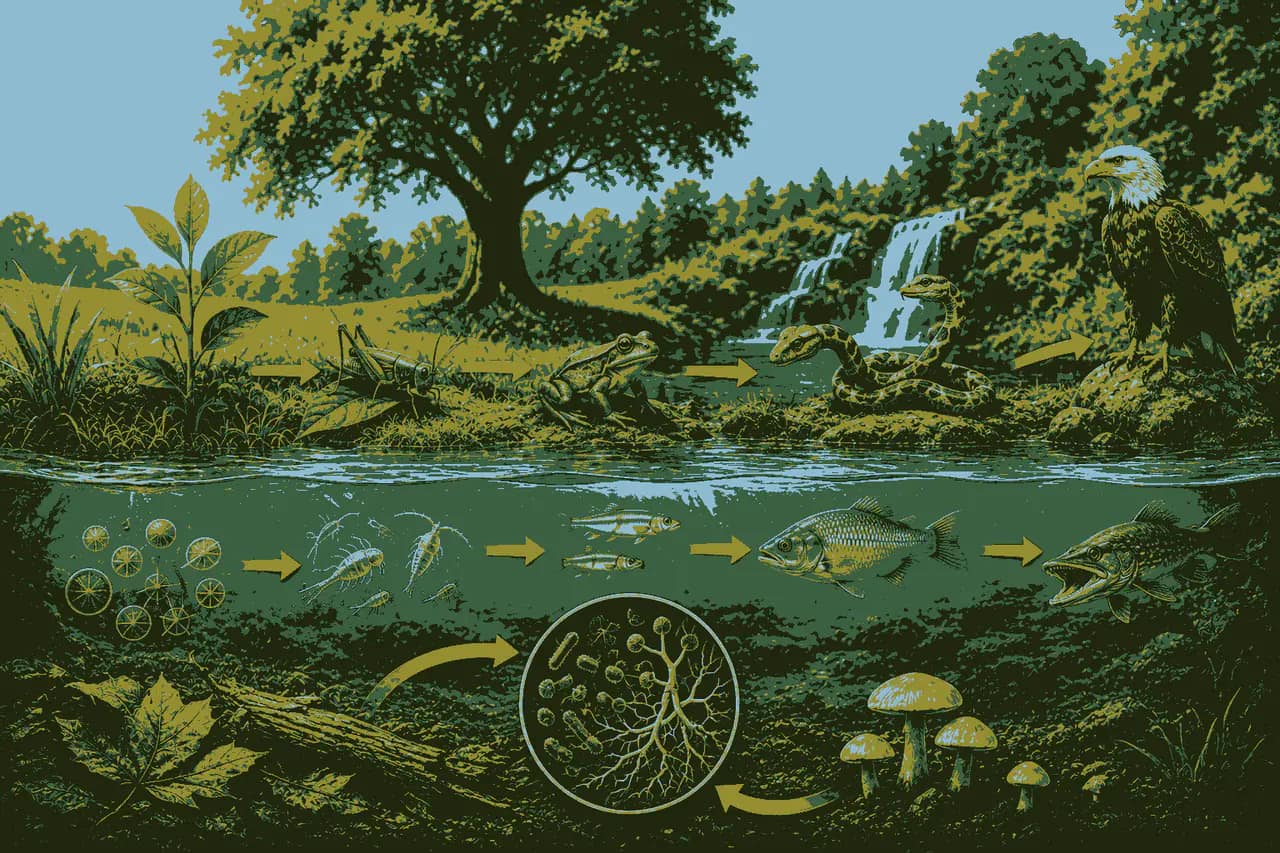
Power-Packed Energy Flow in Ecosystem MCQs PDF Class 12 for Quick Revision
Practice Energy Flow in Ecosystem MCQs PDF Class 12 with solved answers on food chains , trophic levels , 10% energy transfer , productivity , and decomposers.