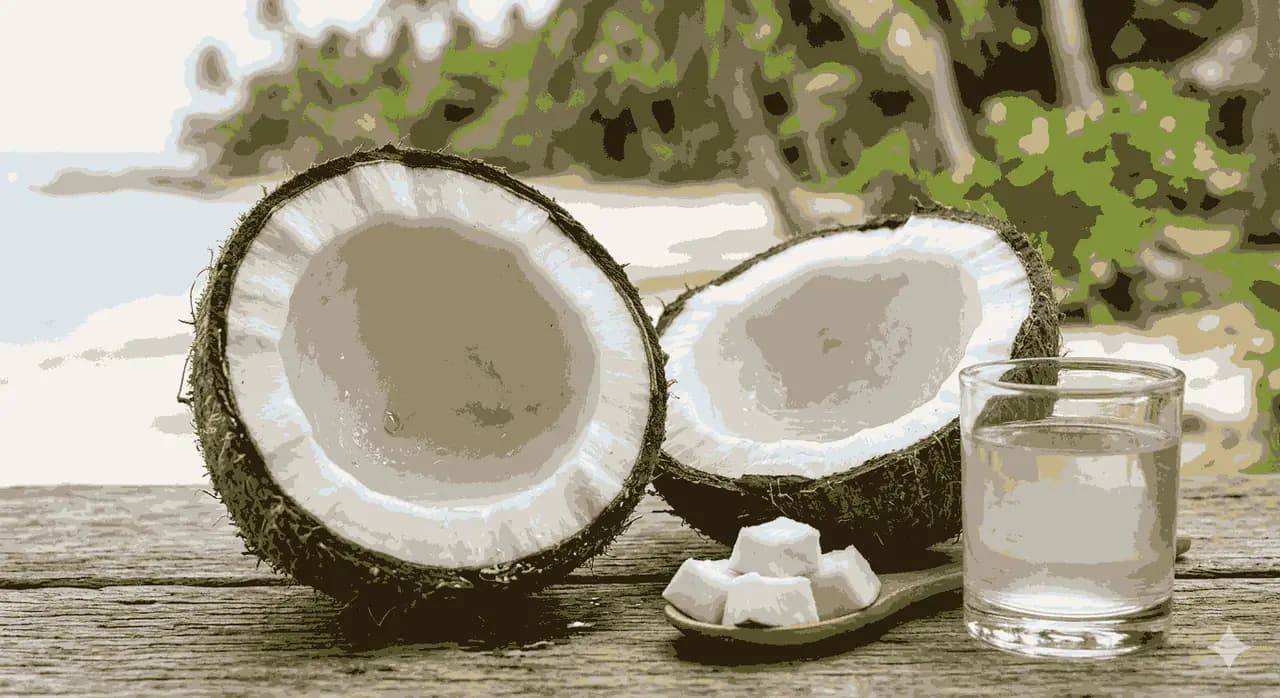
Coconut is one of the most fascinating examples used in Class 12 Biology to explain endosperm development. Aspirants often find it easier to understand complex reproductive concepts through real-life examples like coconut. One of the best ways to master this topic is by practicing Coconut Endosperm Liquid and Solid MCQs Biology Class 12, which helps in strengthening both conceptual clarity and exam readiness.
In flowering plants, endosperm is formed as a result of double fertilization. The triploid primary endosperm nucleus develops into endosperm tissue, which provides nourishment to the developing embryo. In coconut, this process becomes especially interesting because both liquid and solid forms of endosperm are present. By studying Coconut Endosperm Liquid and Solid MCQs Biology Class 12, aspirants can clearly understand how these two forms originate and function.
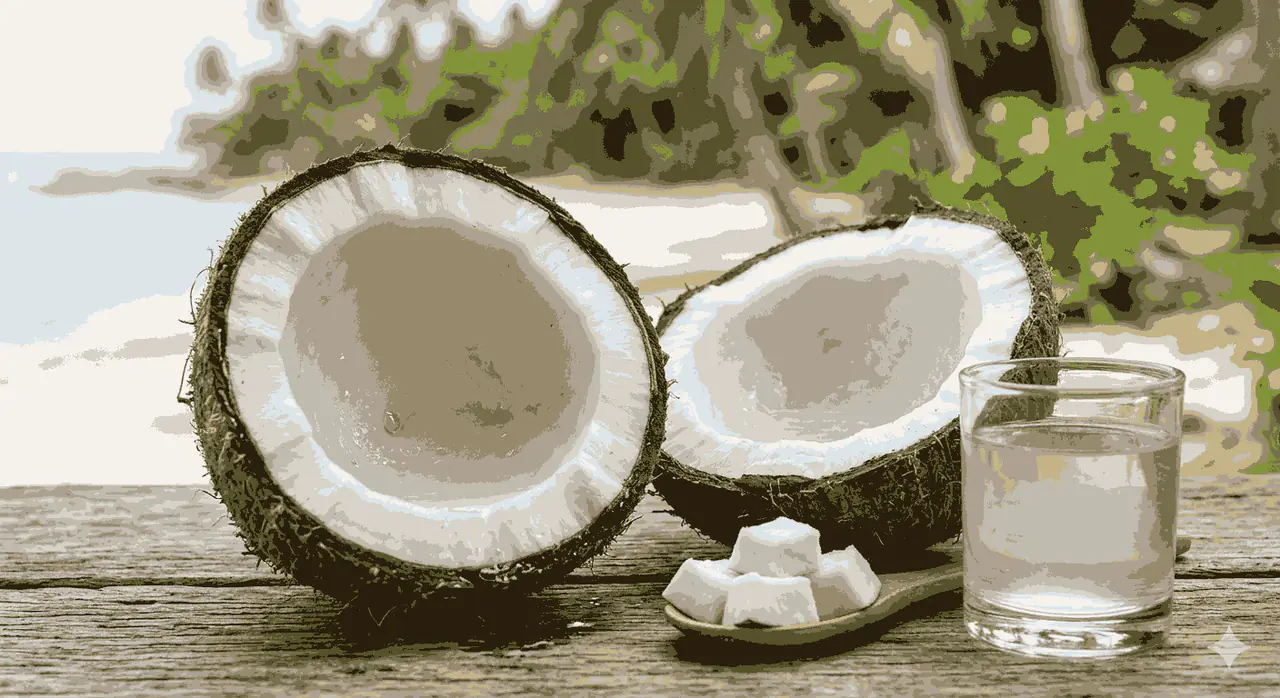
Initially, the coconut endosperm develops as a free nuclear type, where nuclear divisions occur without cytokinesis. This results in a liquid endosperm, commonly known as coconut water. As development progresses, cellularization occurs in the peripheral regions, forming the white kernel, which is the solid endosperm. Practicing Coconut Endosperm Liquid and Solid MCQs Biology Class 12 allows aspirants to easily differentiate between these two stages of endosperm development.
A key concept tested in exams is the classification of endosperm types. Coconut is a classic example of nuclear endosperm, and this concept frequently appears in Coconut Endosperm Liquid and Solid MCQs Biology Class 12. Aspirants who repeatedly solve Coconut Endosperm Liquid and Solid MCQs Biology Class 12 become familiar with such important classifications and can quickly recall them during exams.
Another important aspect is the functional significance of endosperm. The liquid endosperm provides nutrients in dissolved form, while the solid endosperm stores food for later stages. This dual role is often highlighted in Coconut Endosperm Liquid and Solid MCQs Biology Class 12, helping aspirants understand the biological importance of endosperm beyond theoretical definitions.
In addition to conceptual understanding, Coconut Endosperm Liquid and Solid MCQs Biology Class 12 help aspirants improve their problem-solving skills. Many questions are designed to test analytical thinking, such as identifying the type of endosperm or explaining the developmental stages. Regular practice with Coconut Endosperm Liquid and Solid MCQs Biology Class 12 ensures that aspirants are well-prepared for such questions.
Time management is crucial during exams, and practicing Coconut Endosperm Liquid and Solid MCQs Biology Class 12 helps aspirants solve questions quickly and accurately. As aspirants become familiar with common question patterns through Coconut Endosperm Liquid and Solid MCQs Biology Class 12, they gain confidence and reduce the chances of making mistakes.
Furthermore, Coconut Endosperm Liquid and Solid MCQs Biology Class 12 serve as an excellent revision tool. Before exams, aspirants can quickly go through these MCQs to reinforce key concepts. This makes Coconut Endosperm Liquid and Solid MCQs Biology Class 12 highly useful for last-minute preparation.
Another advantage of using Coconut Endosperm Liquid and Solid MCQs Biology Class 12 is that it connects theoretical knowledge with practical examples. Coconut is a commonly observed fruit, and understanding its biology through Coconut Endosperm Liquid and Solid MCQs Biology Class 12 makes learning more relatable and interesting for aspirants.
Consistency in practice plays a vital role in achieving success. Aspirants who regularly solve Coconut Endosperm Liquid and Solid MCQs Biology Class 12 develop a strong command over the topic. These MCQs not only improve retention but also enhance conceptual clarity, making Coconut Endosperm Liquid and Solid MCQs Biology Class 12 an essential part of exam preparation.
In competitive exams like NEET, questions are often concept-based and require a deep understanding of topics. Practicing Coconut Endosperm Liquid and Solid MCQs Biology Class 12 ensures that aspirants are prepared for such challenges. The structured format of Coconut Endosperm Liquid and Solid MCQs Biology Class 12 also helps in systematic learning and revision.
Coconut Endosperm Liquid and Solid MCQs Biology Class 12:
1. What is the term for the transfer of pollen grains from the anther to the stigma of another flower of the same plant?
a) Geitonogamy
b) Autogamy
c) Karyogamy
d) Xenogamy
Answer: a
Explanation: Geitonogamy is pollination between different flowers of the same plant. It is functionally cross-pollination but genetically similar to self-pollination.
2. Why do insects visit flowers?
a) To gather honey and prevent damage
b) To gather nectar and prevent damage
c) To gather honey and damage plant parts
d) To gather nectar and damage plant parts
Answer: b
Explanation: Insects visit flowers mainly to collect nectar. During this process, pollen sticks to their bodies and helps in pollination.
3. External water is not required for fertilization of which group?
a) Bryophytes
b) Pteridophytes
c) Thallophytes
d) Spermatophytes
Answer: d
Explanation: Spermatophytes (seed plants) do not require external water as fertilization occurs through pollen tube formation.
4. What type of pollination is observed in eel grass?
a) Hydrophilous
b) Zoophilous
c) Entomophilous
d) Anemophilous
Answer: a
Explanation: Eel grass shows hydrophily where pollen is transferred through water.
5. Which floral part forms pericarp after fertilization?
a) Nucellus
b) Outer integument
c) Ovary wall
d) Inner integument
Answer: c
Explanation: After fertilization, the ovary wall develops into the pericarp (fruit wall).
6. Entry of pollen tube through micropyle is called:
a) Porogamy
b) Chalazogamy
c) Mesogamy
d) Apogamy
Answer: a
Explanation: Porogamy is the most common mode where pollen tube enters via micropyle.
7. Liquid endosperm in coconut forms because:
a) No cytokinesis
b) Cytokinesis occurs
c) Independent of division
d) None
Answer: c
Explanation: Coconut endosperm initially remains free nuclear and liquid.
8. Coconut water and edible part correspond to:
a) Mesocarp
b) Embryo
c) Endosperm
d) Endocarp
Answer: c
Explanation: Coconut water is liquid endosperm, kernel is cellular endosperm.
9. Pistil recognizes pollen due to:
a) Pollen–pistil interaction
b) Pollen–stigma only
c) Pollen–ovule
d) Pollen–style
Answer: a
Explanation: Recognition occurs through biochemical interaction between pollen and pistil.
10. Xerophyte flowers show:
a) Sessile + centripetal
b) Centripetal + bisexual
c) Sessile + unisexual
d) Unisexual + sessile
Answer: d
Explanation: Xerophytes often have reduced, unisexual, sessile flowers.
11. Endosperm ploidy in diploid × tetraploid cross:
a) Pentaploid
b) Diploid
c) Triploid
d) Tetraploid
Answer: d
Explanation: Endosperm = male gamete (2n) + polar nuclei (n+n) = 4n.
12. Substance preserving pollen fossils:
a) Pollenkitt
b) Intine
c) Sporopollenin
d) Oil
Answer: c
Explanation: Sporopollenin is highly resistant to decay.
13. Double fertilization involves:
a) Two eggs
b) One gamete + polar nuclei
c) Syngamy + triple fusion
d) Two gametes + egg
Answer: c
Explanation: One sperm fuses with egg (syngamy), other with polar nuclei (triple fusion).
14. Advantage of cleistogamy:
a) Vivipary
b) Genetic variability
c) Vigorous offspring
d) No pollinator needed
Answer: d
Explanation: Cleistogamy ensures self-pollination without pollinators.
15. Double fertilization occurs in:
a) Gymnosperms
b) Algae
c) Fungi
d) Angiosperms
Answer: d
Explanation: Unique feature of angiosperms.
16. Embryo sac nuclei arrangement:
a) 2+4+2
b) 3+2+3
c) 2+3+3
d) 3+3+2
Answer: b
Explanation: 3 antipodals, 2 polar nuclei, 3 egg apparatus.
17. Cytoplasmic male sterility genes are in:
a) Nucleus
b) Chloroplast
c) Cytosol
d) Mitochondria
Answer: d
Explanation: CMS traits are maternally inherited via mitochondria.
18. Incorrect statement:
a) Pollen viable for months
b) Intine = cellulose
c) Two-celled pollen no fertilization
d) Vegetative cell larger
Answer: c
Explanation: Two-celled pollen can still undergo fertilization.
19. Growth of pollen tube is:
a) Geotropism
b) Thigmotaxis
c) Chemotaxis
d) All
Answer: c
Explanation: Chemical signals guide pollen tube.
20. Syngamy means:
a) Fusion of gametes
b) Cytoplasm fusion
c) Spore fusion
d) Dissimilar fusion
Answer: a
Explanation: Male + female gamete fusion.
21. Meiotic divisions for 100 zygotes:
a) 100
b) 75
c) 125
d) 50
Answer: c
Explanation: Includes both male and female meiosis.
22. Purpose of double fertilization:
a) Cotyledon
b) Endocarp
c) Endosperm
d) Integuments
Answer: c
Explanation: Produces nutritive tissue.
23. Pericarp develops from:
a) Testa
b) Tegmen
c) Ovary wall
d) Perisperm
Answer: c
Explanation: Ovary wall forms fruit.
24. Chromosomes in gamete (2n=24):
a) 24
b) 12
c) 4
d) 8
Answer: b
Explanation: Gametes are haploid.
25. Chalazogamy occurs in:
a) Petunia
b) Cucurbita
c) Pistacia
d) Casuarina
Answer: d
Explanation: Entry via chalaza.
26. Entry through funiculus is:
a) Porogamy
b) Chalazogamy
c) Mesogamy
d) Heterogamy
Answer: c
Explanation: Mesogamy occurs via integuments/funiculus.
27. Movement of pollen tube:
a) Chemotropism
b) Thermotaxis
c) Thermonasty
d) Hydrotropism
Answer: a
Explanation: Growth toward chemical signals.
28. Food in germinating cereals:
a) Soil
b) Starch
c) Embryo
d) Aleurone
Answer: d
Explanation: Aleurone releases enzymes.
29. Perisperm is:
a) Persistent nucellus
b) Endosperm part
c) Remnant
d) Degenerated nucleus
Answer: a
Explanation: Derived from nucellus.
30. Correct order of endosperm types:
a) Free nuclear, cellular, helobial
b) Cellular, free nuclear, helobial
c) Cellular, helobial, free nuclear
d) Helobial, free nuclear, cellular
Answer: c
Explanation: Development sequence classification.
Conclusion on Coconut Endosperm Liquid and Solid MCQs Biology Class 12
In conclusion, mastering the concept of coconut endosperm becomes much easier with the help of Coconut Endosperm Liquid and Solid MCQs Biology Class 12. These MCQs provide a comprehensive understanding of endosperm development, improve problem-solving skills, and boost confidence. By consistently practicing Coconut Endosperm Liquid and Solid MCQs Biology Class 12, aspirants can strengthen their preparation and achieve excellent results in their Class 12 Biology exams.
Related reading
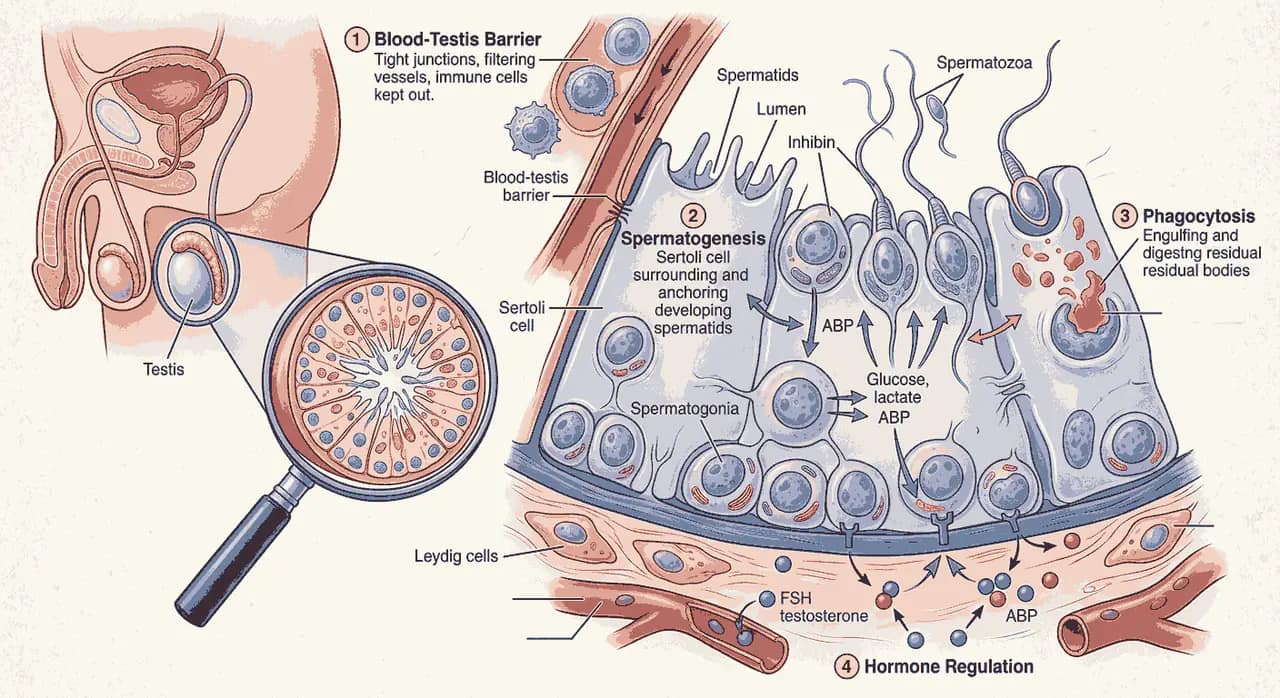
Master Sertoli Cells Location and Function MCQs With Answers for Class 12 Biology
Master Sertoli Cells Location and Function MCQs With Answers for Class 12 Biology with clear explanations, key concepts , and exam-focused preparation to boost,
Boost Your Score Fast: Haploid Plant Production Methods MCQs Class 12 Biology for NEET, JEE & CUET Exams
Master Haploid Plant Production Methods MCQs Class 12 Biology with clear concepts, easy explanations, exam-focused preparation to boost accuracy & score higher.