
For aspirants preparing for Class 12 Biology, understanding biodiversity conservation and biopiracy is essential because these topics form an important part of environmental biology and conservation studies. Biopiracy and Biodiversity Conservation MCQs PDF is a highly searched resource among aspirants who want to strengthen their conceptual knowledge and prepare effectively for board examinations and competitive tests. The topic of Biopiracy and Biodiversity Conservation MCQs PDF covers the protection of biological resources, sustainable utilization of biodiversity, intellectual property rights, and the ethical use of traditional knowledge. By studying Biopiracy and Biodiversity Conservation MCQs PDF , aspirants can gain a deeper understanding of how nations safeguard their biological wealth against unauthorized exploitation.
The concept highlighted in Biopiracy and Biodiversity Conservation MCQs PDF revolves around the commercial use of biological resources and indigenous knowledge without proper authorization or compensation. Many developing countries possess rich biodiversity but often face challenges when multinational corporations exploit these resources for economic gain. Through Biopiracy and Biodiversity Conservation MCQs PDF , aspirants learn how valuable medicinal plants, microorganisms, and genetic materials have been utilized commercially without equitable benefit sharing. This makes Biopiracy and Biodiversity Conservation MCQs PDF an important study area for understanding global biodiversity policies.
One of the significant aspects discussed in Biopiracy and Biodiversity Conservation MCQs PDF is the Convention on Biological Diversity (CBD), which aims to promote conservation, sustainable use, and fair sharing of benefits arising from biological resources. Aspirants using Biopiracy and Biodiversity Conservation MCQs PDF can better appreciate international efforts designed to prevent exploitation of biodiversity-rich nations. The provisions and objectives covered in Biopiracy and Biodiversity Conservation MCQs PDF also help aspirants understand why biodiversity laws are necessary in modern society.
India's Biological Diversity Act of 2002 is another major topic frequently associated with Biopiracy and Biodiversity Conservation MCQs PDF . This legislation was introduced to regulate access to biological resources and ensure fair benefit sharing. Through Biopiracy and Biodiversity Conservation MCQs PDF , aspirants become familiar with the legal mechanisms established to protect India's vast biological heritage. Understanding these laws helps aspirants connect theoretical concepts with practical conservation efforts.
The importance of biodiversity conservation is a recurring theme in Biopiracy and Biodiversity Conservation MCQs PDF . Biodiversity provides ecological stability, food security, medicinal resources, and economic benefits. By studying Biopiracy and Biodiversity Conservation MCQs PDF , aspirants recognize the need to preserve ecosystems and species diversity for future generations. Biodiversity conservation is not only about protecting rare species but also about maintaining ecological processes that support life on Earth.
Another important topic emphasized in Biopiracy and Biodiversity Conservation MCQs PDF is the role of biodiversity hotspots. These regions possess exceptionally high species richness and endemism while facing significant threats. Knowledge gained from Biopiracy and Biodiversity Conservation MCQs PDF helps aspirants understand why biodiversity hotspots receive special conservation attention. Such regions are critical for preserving global biodiversity and preventing species extinction.
The study material contained in Biopiracy and Biodiversity Conservation MCQs PDF also introduces aspirants to concepts such as endemic species, endangered species, vulnerable species, and critically endangered species. These classifications help determine conservation priorities and management strategies. Through Biopiracy and Biodiversity Conservation MCQs PDF , aspirants can develop a comprehensive understanding of species conservation and environmental protection.
Aspirants often rely on Biopiracy and Biodiversity Conservation MCQs PDF because it simplifies complex ecological concepts into an easy-to-understand format. The topic encourages learners to explore how conservation initiatives, wildlife sanctuaries, national parks, biosphere reserves, and community participation contribute to biodiversity protection. Studying Biopiracy and Biodiversity Conservation MCQs PDF helps build awareness about environmental challenges and the importance of sustainable development.
Furthermore, Biopiracy and Biodiversity Conservation MCQs PDF highlights the relationship between biodiversity conservation and human welfare. Healthy ecosystems provide clean air, water purification, climate regulation, and pollination services. Aspirants reviewing Biopiracy and Biodiversity Conservation MCQs PDF learn that conserving biodiversity is essential for maintaining ecological balance and supporting economic growth. These ecosystem services directly contribute to human survival and quality of life.
The relevance of Biopiracy and Biodiversity Conservation MCQs PDF extends beyond academic examinations. It helps aspirants develop a broader perspective on environmental ethics, sustainable resource management, and global conservation efforts. Understanding these concepts enables future generations to make informed decisions regarding biodiversity protection and responsible use of natural resources.
Biopiracy and Biodiversity Conservation MCQs PDF :
1. Which of the following is the most important cause of animals and plants being driven to extinction?
A. Co-extinctions
B. Over-exploitation
C. Alien species invasion
D. Habitat loss and fragmentation
Answer: D. Habitat loss and fragmentation
Explanation: Habitat loss and fragmentation is the leading cause of biodiversity loss and species extinction worldwide.
2. According to IUCN Red List, what is the status of Red Panda (Ailurus fulgens)?
A. Vulnerable species
B. Critically endangered species
C. Extinct species
D. Endangered species
Answer: D. Endangered species
Explanation: The Red Panda is listed as Endangered due to declining populations and habitat loss.
3. Recently extinct animal from India is
A. Acinonyx (Cheetah)
B. Rhinoceros unicornis
C. Panthera leo
D. Panthera tigris
Answer: A. Acinonyx
Explanation: The Asiatic Cheetah became extinct in India during the 20th century.
4. Which of the following is the first National Park in India?
A. Jim Corbett National Park
B. Kasu Brahmananda Reddy National Park
C. Kaziranga National Park
D. Keoladeo Ghana National Park
Answer: A. Jim Corbett National Park
Explanation: Established in 1936, Jim Corbett National Park was India's first national park.
5. Assertion: Biopiracy is use of bioresources by multinational companies with proper authorization.
Reason: Industrialized nations are poor in biodiversity but rich financially.
A. Both correct and reason explains assertion
B. Both correct but reason does not explain assertion
C. Assertion correct but reason incorrect
D. Assertion incorrect but reason correct
Answer: D
Explanation: Biopiracy involves unauthorized use of biological resources. The reason statement is correct.
6. What type of information does the Red List contain?
A. Economically important plants
B. Plants in international trade
C. Threatened species
D. Marine vertebrates only
Answer: C. Threatened species
Explanation: The IUCN Red List provides conservation status and extinction risk assessments.
7. Which National Park is famous for Hangul deer?
A. Keibul Lamjao National Park
B. Bandhavgarh National Park
C. Eaglenest Wildlife Sanctuary
D. Dachigam National Park
Answer: D. Dachigam National Park
Explanation: Dachigam National Park in Jammu & Kashmir is known for Hangul conservation.
8. What was pledged at the World Summit on Sustainable Development (2002)?
A. Significant reduction in biodiversity loss
B. More biodiversity hotspots
C. Increased agricultural production
D. Seed preservation only
Answer: A
Explanation: The summit focused on reducing biodiversity loss globally.
9. What must a terrestrial animal be able to do?
A. Conserve water
B. Pump out salt through skin
C. Excrete large amounts of salts
D. Excrete large amounts of water
Answer: A. Conserve water
Explanation: Water conservation is essential for terrestrial survival.
10. Most effective way to conserve plant diversity?
A. Creating biosphere reserves
B. Botanical gardens
C. Seed banks
D. Tissue culture
Answer: A
Explanation: Biosphere reserves protect species in their natural habitats.
11. The Earth Summit (Rio de Janeiro, 1992) was called for:
A. Conservation of biodiversity and sustainable utilization
B. Threat assessment of invasive weeds
C. Stopping CFC use
D. Reducing CO₂ emissions only
Answer: A
Explanation: The summit focused on biodiversity conservation and sustainable development.
12. COP Climate Change Conference 2011 was held in:
A. South Africa
B. Peru
C. Qatar
D. Poland
Answer: A. South Africa
Explanation: COP17 was held in Durban, South Africa.
13. COP Climate Change Conference 2012 was held at:
A. Warsaw
B. Durban
C. Doha
D. Lima
Answer: C. Doha
Explanation: COP18 took place in Doha, Qatar.
14. Which organization publishes the Red List?
A. ICFRE
B. IUCN
C. UNEP
D. WWF
Answer: B. IUCN
Explanation: The International Union for Conservation of Nature maintains the Red List.
15. A species facing extremely high risk of extinction is called:
A. Vulnerable
B. Endemic
C. Critically Endangered
D. Extinct
Answer: C
Explanation: Critically Endangered is the highest threat category before extinction in the wild.
16. Species found only in the Western Ghats are called:
A. Keystone
B. Endemic
C. Vulnerable
D. Threatened
Answer: B. Endemic
Explanation: Endemic species are restricted to a particular geographical area.
17. Biodiversity Act of India was passed in:
A. 2002
B. 1992
C. 1996
D. 2000
Answer: A. 2002
Explanation: The Biological Diversity Act was enacted in 2002.
18. Select the correct statement about biodiversity:
A. Western Ghats have high species richness and endemism
B. Biodiversity conservation is just a fad
Answer: A
Explanation: Western Ghats are a biodiversity hotspot.
19. Ecological hotspots are mainly determined by:
A. Number of species
B. Soil minerals
C. Population density
D. Migration
Answer: A
Explanation: Species richness is a key criterion for hotspots.
20. Why do keystone species deserve protection?
A. Survive harsh environments
B. Indicate minerals
C. Rare due to overexploitation
D. Support other species
Answer: D
Explanation: Keystone species play a disproportionately large ecological role.
21. Most important step for better survival of India's population?
A. Afforestation
B. Population reduction
C. Wildlife conservation
D. Both A and C
Answer: D
Explanation: Both afforestation and conservation support ecological balance.
22. Which is a pair of endangered species?
A. Garden lizard and Mexican poppy
B. Rhesus monkey and Sal tree
C. Peacock and carrot grass
D. Hornbill and Indian aconite
Answer: D
Explanation: Both are endangered in India.
23. Correct match of tiger reserve and state:
A. Manas – Assam
B. Corbett – Madhya Pradesh
C. Bandipur – Tamil Nadu
D. Palamu – Odisha
Answer: A
Explanation: Manas Tiger Reserve is in Assam.
24. What does MAB stand for?
A. Mammals and Biosphere
B. Mammals and Biology Programme
C. Man and Biology Programme
D. Man and Biosphere Programme
Answer: D
Explanation: UNESCO launched the Man and Biosphere Programme in 1971.
25. Flamingo breeding place in India:
A. Rann of Kutch
B. Ghana Vihar
C. Sambhar Lake
D. Chilika Lake
Answer: A
Explanation: The Rann of Kutch is famous for flamingo breeding.
26. What is soil conservation?
A. Soil aeration
B. Protection from erosion
C. Allowing erosion
D. Enhancing fertility only
Answer: B
Explanation: Soil conservation prevents loss through wind and water erosion.
27. Wildlife conservation aims at:
A. Maintaining ecological processes
B. Introducing exotic species
C. Preventing migration
D. Maintaining diversity of life
Answer: A and D
Explanation: Wildlife conservation preserves biodiversity and ecosystem functioning.
28. Which is NOT a wildlife conservation project?
A. Project Dodo
B. Project Indian Bustard
C. Project Tiger
D. Project Hangul
Answer: A. Project Dodo
Explanation: Project Dodo does not exist as a conservation project.
29. Which of the following is NOT a sacred grove?
A. Khasi and Jaintia Hills
B. Aravalli Hills
C. Western Ghats Region
D. Eastern Ghats Region
Answer: D
Explanation: Eastern Ghats are not traditionally recognized as sacred grove regions.
30. The historic convention related to biodiversity conservation is known as:
A. Kyoto Protocol
B. Montreal Protocol
C. Earth Summit
D. World Summit
Answer: C. Earth Summit
Explanation: The 1992 Rio Earth Summit led to the Convention on Biological Diversity (CBD).

Conclusion on Biopiracy and Biodiversity Conservation MCQs PDF
In conclusion, Biopiracy and Biodiversity Conservation MCQs PDF serves as an important educational resource for aspirants preparing for board exams and competitive examinations. The subject combines biological diversity, environmental conservation, legal frameworks, and sustainable development into a comprehensive learning experience. By thoroughly studying Biopiracy and Biodiversity Conservation MCQs PDF , aspirants can strengthen their conceptual foundation, improve examination performance, and gain valuable insights into one of the most significant environmental issues of our time.
Related reading
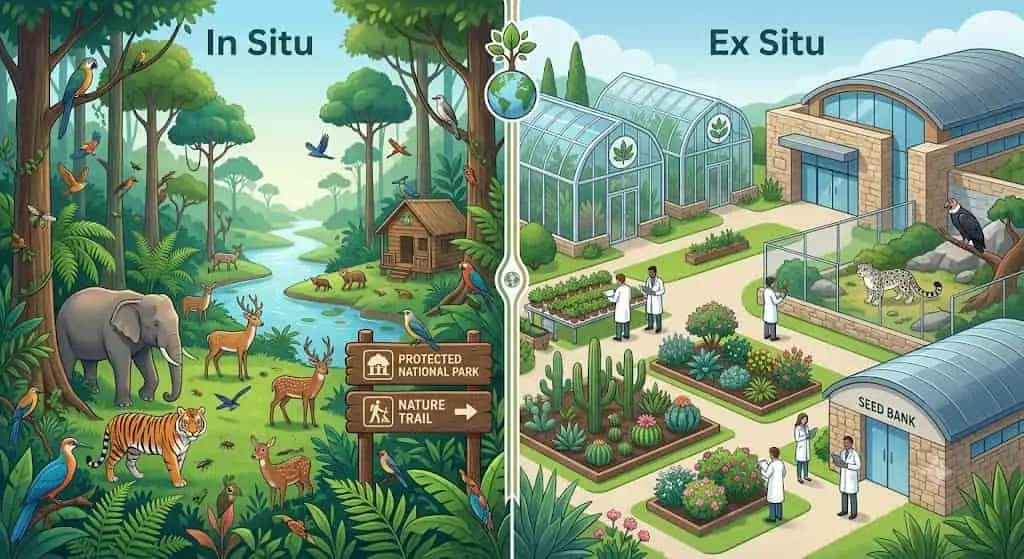
Master In Situ and Ex Situ Conservation MCQs with Answers PDF for Class 12
Download In Situ and Ex Situ Conservation MCQs with Answers PDF Class 12 Biology. Learn biosphere reserves, wildlife sanctuaries, national parks , biodiversity .
Essential Endangered Species and Biodiversity Hotspots MCQs PDF with Answers for Class 12 Biology
Master Endangered Species and Biodiversity Hotspots MCQs PDF with detailed explanations, biodiversity concepts, endangered species facts, conservation strategies.