
- Keneitsino Lydia
- June 17, 2026
Powerful Mutualism and Commensalism Class 12 MCQs for Exam
Mutualism and Commensalism Class 12 MCQs is an important ecology topic for aspirants who want to understand organism interactions, population relationships, community structure, and the role of species in maintaining ecological balance. mutualism and Commensalism Class 12 MCQs helps aspirants revise two positive biological interactions that are frequently discussed in Class 12 Biology. In mutualism, both interacting organisms receive benefits, while in commensalism, one organism benefits and the other remains unaffected. mutualism and Commensalism Class 12 MCQs is useful for building clarity because these two interactions may look similar at first, but their ecological meaning is different.
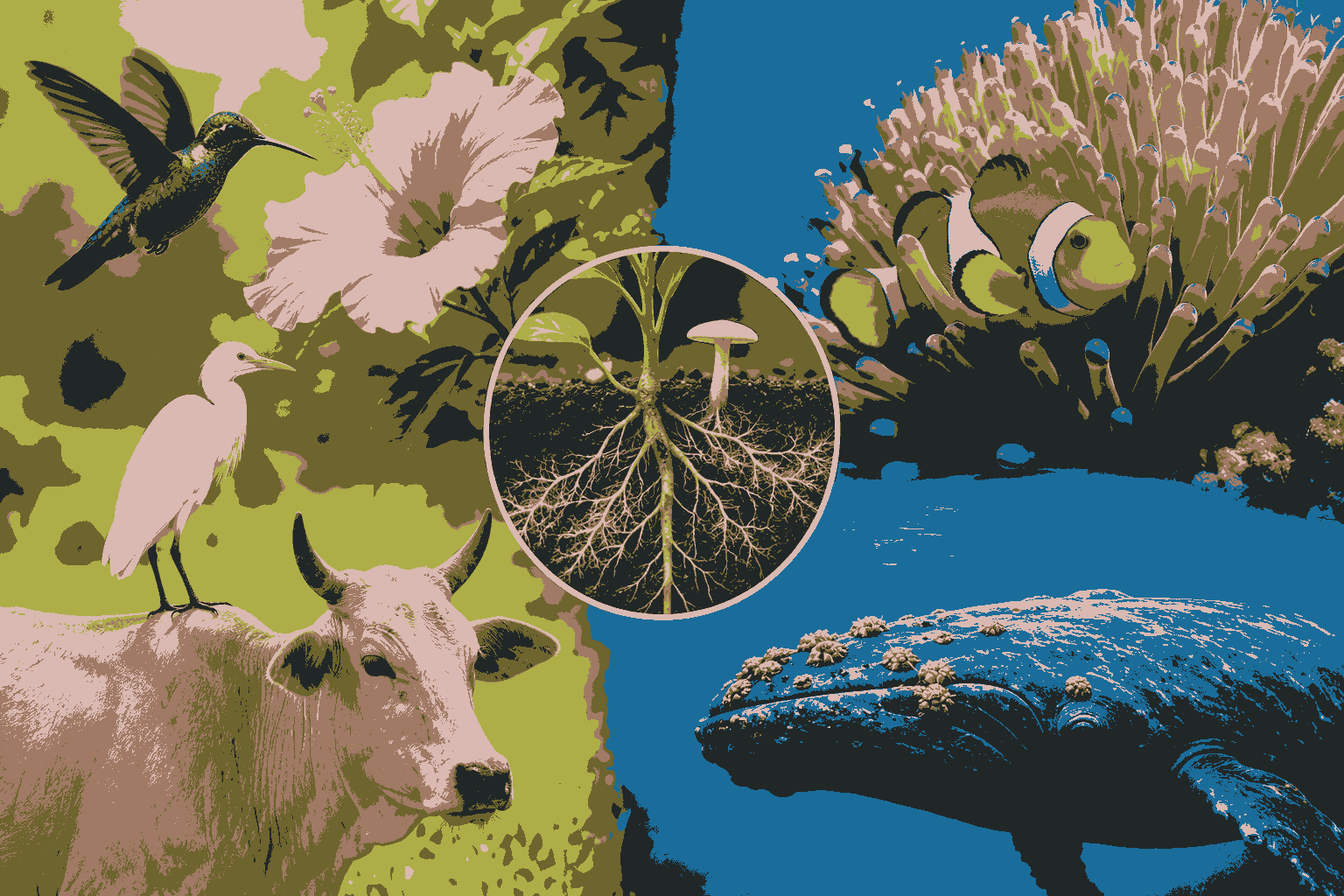
Mutualism and Commensalism Class 12 MCQs becomes easier when aspirants first understand mutualism. Mutualism is an interaction between two different species where both partners are benefited. mutualism and Commensalism Class 12 MCQs explains that mutualistic relationships can be temporary, long-term, or highly dependent. A common example is the relationship between flowering plants and pollinators. Plants provide nectar or pollen as a reward, while insects, birds, or other animals help transfer pollen from one flower to another. mutualism and Commensalism Class 12 MCQs also includes examples such as mycorrhizae, where fungi help plant roots absorb minerals and water, while plants provide food to fungi.
Mutualism and Commensalism Class 12 MCQs is also important for understanding co-evolution. In many mutualistic relationships, two species evolve together because each species influences the survival and reproduction of the other. mutualism and Commensalism Class 12 MCQs helps aspirants remember examples like fig trees and wasps, where the plant depends on the wasp for pollination, and the wasp depends on the fig for reproduction. Such interactions show how close ecological partnerships can shape biodiversity over time.
Mutualism and Commensalism Class 12 MCQs also explains commensalism, an interaction in which one organism benefits while the other is neither benefited nor harmed. mutualism and Commensalism Class 12 MCQs teaches aspirants that commensalism is represented by the symbol +/0, while mutualism is represented by +/+. A classic example is the cattle egret and cattle. As cattle move through grass, insects are disturbed, and the cattle egret feeds on them. The bird benefits, while the cattle are generally unaffected. mutualism and Commensalism Class 12 MCQs also includes examples such as barnacles on whales, where barnacles get transport and access to food, while the whale is usually not affected.
Mutualism and Commensalism Class 12 MCQs helps aspirants distinguish commensalism from parasitism and predation. In parasitism, one organism benefits while the other is harmed. In predation, one organism kills and eats another. In commensalism, there is no clear harm to the host organism. mutualism and Commensalism Class 12 MCQs becomes more meaningful when aspirants compare all interaction symbols: mutualism is +/+, commensalism is +/0, parasitism is +/−, predation is +/−, competition is −/−, and amensalism is −/0.
Mutualism and Commensalism Class 12 MCQs is highly relevant for ecology chapters dealing with populations, communities, adaptations, and species interactions. mutualism and Commensalism Class 12 MCQs helps aspirants understand that organisms do not live independently in nature. They constantly interact with other organisms for food, shelter, reproduction, protection, transport, or survival. These relationships influence population size, community stability, ecological succession, and biodiversity.
Mutualism and Commensalism Class 12 MCQs should also be revised with examples from plants, animals, fungi, and microbes. Lichens represent a mutual association between algae and fungi. Mycorrhizae represent mutualism between fungi and roots of higher plants. Clownfish and sea anemone are often discussed as a protective association, where clownfish receive shelter among stinging tentacles. mutualism and Commensalism Class 12 MCQs helps aspirants identify whether both partners benefit or only one partner benefits.
Mutualism and Commensalism Class 12 MCQs is important because many exam questions test fine differences between similar interactions. Aspirants should focus on the benefit pattern, not only the example. mutualism and Commensalism Class 12 MCQs becomes simple when aspirants ask one question: are both organisms benefited, or only one? If both are benefited, the interaction is mutualism. If one is benefited and the other is unaffected, the interaction is commensalism.
Mutualism and Commensalism Class 12 MCQs also connects with conservation biology. When one species disappears, its dependent partner may also suffer. mutualism and Commensalism Class 12 MCQs shows why protecting pollinators, forests, fungi, coral reef organisms, and animal communities is necessary for ecological balance. The loss of one interaction can disturb food webs, reproduction cycles, and habitat stability.
Mutualism and Commensalism Class 12 MCQs:
- In an area with a population of large-sized individuals having long lifespan, more parental care, and slow development, what type of population growth curve will be observed?
A. S-shaped
B. J-shaped
C. Z-shaped
D. All of these
Answer: A. S-shaped
Explanation: Such organisms usually show logistic or sigmoid growth. The S-shaped curve includes lag phase, acceleration phase, exponential phase, deceleration phase, and stationary phase.
- Which of the following statements is true regarding age pyramids?
A. A – Expanding, B – Stable, C – Declining
B. A – Stable, B – Expanding, C – Declining
C. A – Stable, B – Declining, C – Expanding
D. A – Declining, B – Stable, C – Expanding
Answer: A. A – Expanding, B – Stable, C – Declining
Explanation: An expanding age pyramid has a large pre-reproductive population. A stable age pyramid shows almost equal proportions of age groups. A declining age pyramid has fewer young individuals and more older individuals.
- What is observed on July 11th?
A. World Population Day
B. Tobacco Day
C. World Environment Day
D. World Health Day
Answer: A. World Population Day
Explanation: World Population Day is observed on July 11th every year. It was established by the United Nations Development Programme in 1989.
- Match the following correctly.
i. Logistic growth
ii. Exponential growth
iii. Age pyramid
iv. Pacific salmon fish
A. Intrinsic rate of natural increase
B. Breed only once in their lifetime
C. Carrying capacity
D. Declining population
Options:
A. i-D, ii-A, iii-C, iv-B
B. i-C, ii-A, iii-D, iv-B
C. i-C, ii-B, iii-D, iv-A
D. i-D, ii-A, iii-C, iv-B
Answer: B. i-C, ii-A, iii-D, iv-B
Explanation: Logistic growth is associated with carrying capacity. Exponential growth is associated with intrinsic rate of natural increase. Age pyramids may show expanding, stable, or declining populations. Pacific salmon breed only once in their lifetime.
- In a forest where 900 deer are found and 100 more deer can be accommodated, what does the number 1000 represent?
A. Population carrying capacity of deer
B. Mortality of deer
C. Maximum natality
D. Realised natality
Answer: A. Population carrying capacity of deer
Explanation: Carrying capacity is the maximum number of individuals that an environment can support. Since the forest can support 900 + 100 deer, the carrying capacity is 1000.
- If India is considered a country of youngsters, what type of age pyramid would be expected?
A. Triangular shape
B. Bell shape
C. Urn shape
D. Spindle shape
Answer: A. Triangular shape
Explanation: A triangular age pyramid indicates a growing population with a large proportion of young individuals.
- In the Verhulst-Pearl logistic growth equation, the letter r denotes what?
A. Extrinsic rate of natural increase
B. Intrinsic rate of natural increase
C. Carrying capacity
D. Population density
Answer: B. Intrinsic rate of natural increase
Explanation: In the logistic growth equation, r represents the intrinsic rate of natural increase.
- In which type of population do pre-reproductive animals occur in large numbers?
A. Declining
B. Fluctuating
C. Stable
D. Growing
Answer: D. Growing
Explanation: A growing population has a large number of pre-reproductive individuals, which indicates future population increase.
- What does a J-shaped population growth curve indicate for an insect species showing an explosive increase in numbers during the rainy season followed by disappearance at the end of the season?
A. The population of its predators increases enormously
B. S-shaped or sigmoid growth of this insect
C. The food plants mature and die at the end of the rainy season
D. Its population growth curve is of J-type
Answer: D. Its population growth curve is of J-type
Explanation: A J-shaped curve shows rapid exponential increase followed by sudden decline or disappearance when environmental resistance becomes effective.
- Which of the following is a characteristic of a population?
A. Ecosystem
B. Biotic community
C. Population
D. Landscape
Answer: C. Population
Explanation: Population characteristics include population size, density, natality, mortality, age structure, and age pyramid.
- What does biotic potential or potential natality mean?
A. Natural increase of population under ideal or optimum conditions
B. Potential of organism in a biome
C. Number of organisms in a biome
D. Species of maximum number in a population
Answer: A. Natural increase of population under ideal or optimum conditions
Explanation: Biotic potential is the maximum reproductive capacity of a population under ideal environmental conditions.
- What does zero growth mean in terms of population dynamics?
A. Natality balances mortality
B. Natality is more than mortality
C. Natality is less than mortality
D. Natality is zero
Answer: A. Natality balances mortality
Explanation: Zero population growth occurs when the birth rate balances the death rate, so the population size remains constant.
- What is it called when a population grows without limit at its maximal rate and rates of immigration and emigration are equal?
A. Carrying capacity
B. Biotic potential
C. Positive growth
D. Negative growth
Answer: B. Biotic potential
Explanation: Biotic potential is the inherent ability of a population to increase under ideal conditions without environmental limitations.
- What is a community defined as?
A. A group of independent and interacting populations of different species
B. A group of independent and interacting populations of the same species
C. A group of independent and interacting populations of the same species in a specific area
D. A group of independent and interacting populations of different species in a specific area
Answer: D. A group of independent and interacting populations of different species in a specific area
Explanation: A community consists of populations of different species living and interacting in a specific area.
- In the logistic model, when does the growth rate of population equal zero? The logistic model is given as dN/dt = rN(1 – N/K).
A. When death rate is greater than birth rate
B. When N/K is exactly one
C. When N nears the carrying capacity of the habitat
D. When N/K equals zero
Answer: B. When N/K is exactly one
Explanation: In the logistic equation, when N/K = 1, the term 1 – N/K becomes zero. Therefore, population growth rate becomes zero.
- In the context of age-sex pyramids of populations A and B, what does the comparison indicate?
A. A is the earlier pyramid and no change has occurred in the growth rate
B. A is more recent and shows slight reduction in the growth rate
C. B is earlier pyramid and shows stabilized growth rate
D. B is more recent showing that population is very young
Answer: B. A is more recent and shows slight reduction in the growth rate
Explanation: The comparison of the age-sex pyramids indicates that A is more recent and shows a slight reduction in the growth rate.
- What is the term for the number of new individuals produced in a unit time, per unit population?
A. Immigration
B. Natality
C. Emigration
D. Mortality
Answer: B. Natality
Explanation: Natality refers to the birth rate, or the number of new individuals produced per unit time per unit population.
- Which statements are correct regarding logistic growth of population?
- Logistic growth of population shows initially a lag phase, followed by phases of acceleration and deceleration.
- Finally, it shows an asymptote or stability.
- Logistic growth in population occurs when resources are unlimited.
- A plot of N in relation to time t results in a sigmoid curve.
A. Except IV, all are correct
B. Except II, all are correct
C. Only I and II are correct
D. Except III, all are correct
Answer: D. Except III, all are correct
Explanation: Logistic growth occurs when resources are limited, not unlimited. It shows a lag phase, acceleration, deceleration, and finally stability, forming a sigmoid curve.
- How is the population density of terrestrial organisms measured?
A. Meter
B. Meter²
C. Meter³
D. Meter⁴
Answer: B. Meter²
Explanation: Population density of terrestrial organisms is usually expressed as individuals per unit area, such as per square meter.
- In a population of 278, if the observed number of MM, MN, and NN blood groups is 78, 138, and 62 respectively, what would be the frequency of M?
A. 0.532
B. 0.499
C. 0.468
D. 0.283
Answer: A. 0.532
Explanation: Frequency of M = [2(MM) + MN] / 2N = [2(78) + 138] / 2(278) = 294 / 556 = 0.529, approximately 0.532 according to the given answer key.
- What is the proportion of MN blood group in the population according to the given passage?
A. 138/278
B. 62/278
C. 0.280
D. 0.223
Answer: A. 138/278
Explanation: The proportion of MN blood group is calculated as the number of MN individuals divided by the total population, which is 138/278.
- Match the following Set I with Set II.
Set I:
A. T. R. Malthus
B. Sir Charles Lyell
C. Weismann
D. Lamarck
E. Alfred Russel Wallace
Set II:
- On the Tendency of Varieties to Depart from Original Types
- Philosophic Zoologique
- On the Principles of Population
- Principles of Geology
- Germinal selection
Options:
A. A-3, B-2, C-5, D-4, E-1
B. A-3, B-4, C-2, D-5, E-1
C. A-3, B-4, C-5, D-2, E-1
D. A-3, B-5, C-4, D-1, E-2
Answer: C. A-3, B-4, C-5, D-2, E-1
Explanation: T. R. Malthus is associated with On the Principles of Population. Charles Lyell wrote Principles of Geology. Weismann is associated with germinal selection. Lamarck wrote Philosophic Zoologique. Alfred Russel Wallace wrote On the Tendency of Varieties to Depart from Original Types.
- In which type of interactions do organisms co-evolve?
A. Mutualism
B. Commensalism
C. Predation
D. Competition
Answer: A. Mutualism
Explanation: Co-evolution is commonly seen in mutualistic interactions where both species influence each other’s evolution.
- Plants offering rewards to animals in the form of pollen and nectar for facilitating pollination is an example of what type of interaction?
A. Commensalism
B. Mutualism
C. Amensalism
D. Competition
Answer: B. Mutualism
Explanation: Plants provide pollen or nectar to animals, and animals help in pollination. Since both partners benefit, it is mutualism.
- Match the following List I with List II.
List I:
A. A leopard and a lion in a forest or grassland
B. A cuckoo laying egg in a crow’s nest
C. Fungi and root of a higher plant in mycorrhizae
D. A cattle egret and cattle in a field
List II:
I. Competition
II. Brood parasitism
III. Mutualism
IV. Commensalism
Options:
A. A-II, B-III, C-I, D-IV
B. A-I, B-II, C-III, D-IV
C. A-I, B-II, C-IV, D-III
D. A-III, B-IV, C-I, D-II
Answer: B. A-I, B-II, C-III, D-IV
Explanation: Leopard and lion may compete for food. Cuckoo laying eggs in a crow’s nest is brood parasitism. Fungi and roots in mycorrhizae show mutualism. Cattle egret and cattle show commensalism.
- According to the passage, which interaction is described as having a relationship where one species is destroyed or inhibited while the other remains unaffected?
A. Mutualism
B. Commensalism
C. Amensalism
D. Parasitism
Answer: C. Amensalism
Explanation: Amensalism is an interaction in which one organism is harmed or inhibited while the other remains unaffected.
- What is the term used to describe an interaction where one species is benefited and the other is neither benefited nor harmed?
A. Amensalism
B. Commensalism
C. Mutualism
D. Predation
Answer: B. Commensalism
Explanation: Commensalism is an interaction in which one species benefits while the other is unaffected.
- In the context of the passage, what is the term for an association where one species benefits from another without harming it, such as a small fish deriving nutrition from a shark?
A. Antibiosis
B. Commensalism
C. Predation
D. Parasitism
Answer: B. Commensalism
Explanation: This is an example of commensalism because one organism benefits while the other is not harmed.
- What is the term used to describe an association of animals belonging to different species where both partners benefit from the relationship?
A. Commensalism
B. Mutualism
C. Colony
D. Sympathy
Answer: B. Mutualism
Explanation: Mutualism is an association between two different species in which both partners benefit.
- In the passage, which interaction is described as a type of association where both partners are benefited, involving a physiological interdependence?
A. Commensalism
B. Mutualism
C. Colony
D. Sympathy
Answer: B. Mutualism
Explanation: Mutualism is an interaction in which both organisms benefit, and in some cases, the relationship involves close physiological interdependence.
Conclusion on Mutualism and Commensalism Class 12 MCQs
In conclusion, mutualism and Commensalism Class 12 MCQs is a high-value topic for aspirants preparing Class 12 Biology, NEET, and ecology-based exams. mutualism and Commensalism Class 12 MCQs helps aspirants understand positive interactions, species dependence, survival strategies, co-evolution, and ecosystem stability. With regular revision, mutualism and Commensalism Class 12 MCQs can help aspirants answer ecology-based questions with accuracy, confidence, and conceptual clarity.