
- Keneitsino Lydia
- June 13, 2026
Expert DNA Transformation Methods MCQs with Answers: Crack Class 12 Biology Easily
DNA Transformation Methods MCQs with Answers is an important biotechnology topic for aspirants who want to understand how foreign DNA is introduced into host cells during recombinant DNA technology. DNA Transformation Methods MCQs with Answers helps aspirants revise the physical, chemical, and biological methods used to make cells take up recombinant DNA. Transformation is a key step after the gene of interest has been inserted into a vector, because recombinant DNA must enter a suitable host cell before cloning, expression, or product formation can occur. DNA Transformation Methods MCQs with Answers is useful for Class 12 Biology, NEET, biotechnology entrance exams, agriculture exams, nursing exams, and life science revision.
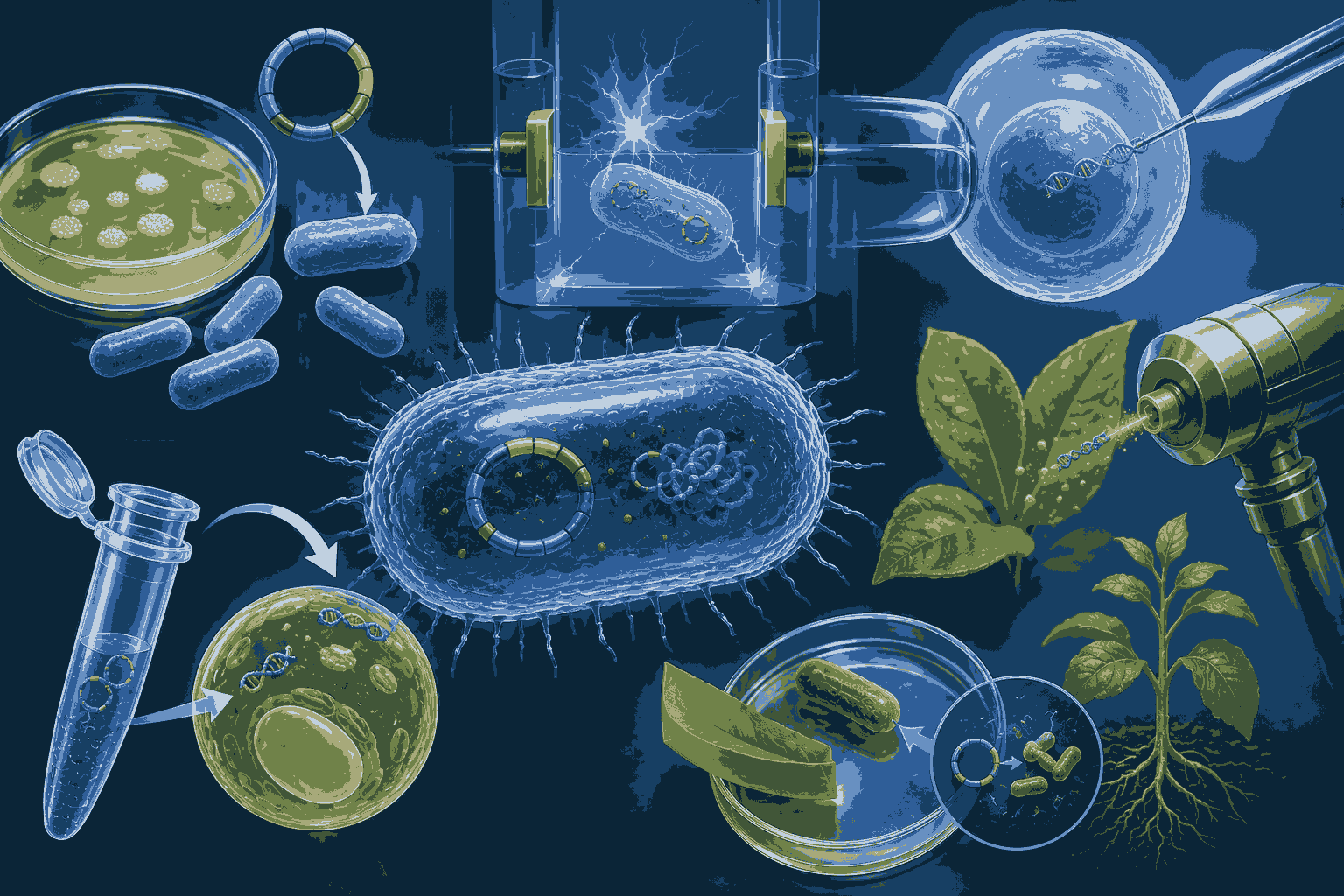
DNA Transformation Methods MCQs with Answers becomes easier when aspirants first understand competent cells. Competent cells are host cells able to take up foreign DNA from the surrounding medium. DNA Transformation Methods MCQs with Answers explains that bacterial cells do not naturally take up plasmid DNA efficiently, so they are treated to increase permeability. Calcium chloride treatment is one common method used to make bacterial cells competent. In this method, calcium ions help DNA bind to the cell surface, and a brief heat shock allows DNA to enter the cells. DNA Transformation Methods MCQs with Answers helps aspirants connect calcium chloride, heat shock, plasmid uptake, and transformed bacterial cells.
DNA Transformation Methods MCQs with Answers also covers electroporation, a widely used physical method. Electroporation uses a short electric pulse to create temporary pores in the cell membrane. DNA Transformation Methods MCQs with Answers teaches aspirants that these transient pores allow recombinant DNA or gene constructs to enter the cell. After the pulse, the membrane reseals and the cell may survive with introduced DNA. Electroporation can be used in bacteria, plant cells, and animal cells, making it important in genetic engineering.
DNA Transformation Methods MCQs with Answers is strongly connected with microinjection. Microinjection is a direct method in which DNA is injected into the nucleus or cytoplasm using a fine glass needle. DNA Transformation Methods MCQs with Answers helps aspirants remember that microinjection is often used in animal cells, embryos, and transgenic animal production. Although precise, it requires skill, special equipment, and careful handling.
DNA Transformation Methods MCQs with Answers also includes biolistics, commonly called the gene gun method. Tiny gold or tungsten particles are coated with DNA and shot into target cells at high speed. DNA Transformation Methods MCQs with Answers explains that biolistics is especially useful for plant cells because plant cell walls can make DNA entry difficult. The DNA-coated particles penetrate the cell wall and membrane, delivering foreign DNA into plant tissues. This method is widely associated with plant genetic engineering.
DNA Transformation Methods MCQs with Answers is also linked with Agrobacterium-mediated transformation. Agrobacterium tumefaciens naturally transfers T-DNA from its Ti plasmid into plant cells. DNA Transformation Methods MCQs with Answers helps aspirants understand that scientists modify or disarm the Ti plasmid by removing disease-causing genes and inserting a gene of interest. This makes Agrobacterium a natural biological vector for plant transformation and transgenic plant production.
DNA Transformation Methods MCQs with Answers should also cover direct chemical methods such as polyethylene glycol, or PEG-mediated transformation. PEG is commonly used for gene transfer into plant protoplasts. DNA Transformation Methods MCQs with Answers explains that protoplasts are plant cells without cell walls, making DNA entry easier. PEG helps DNA come close to the membrane and enter the protoplast. This method is useful in plant biotechnology, although regeneration of complete plants from protoplasts can be challenging.
DNA Transformation Methods MCQs with Answers becomes more exam-friendly when aspirants compare different transformation methods. Calcium chloride and heat shock are common for bacterial transformation. Electroporation uses electric pulses. Microinjection uses a fine needle. Biolistics uses DNA-coated gold or tungsten particles. Agrobacterium uses a biological vector system. PEG helps direct DNA entry into protoplasts. DNA Transformation Methods MCQs with Answers helps aspirants remember each method by linking it with its key feature, target cell type, and application.
DNA Transformation Methods MCQs with Answers is also important for understanding selection after transformation. Not every cell takes up recombinant DNA successfully, so selectable markers are needed. DNA Transformation Methods MCQs with Answers explains that antibiotic resistance genes, reporter genes, and insertional inactivation help identify transformed cells. For example, bacterial cells carrying a plasmid with an antibiotic resistance gene can survive on antibiotic medium, while non-transformed cells die. This confirms successful DNA uptake.
DNA Transformation Methods MCQs with Answers:
- From the given combinations of steps in PCR, identify the enzyme-dependent step.
A. Annealing and extension
B. Annealing and denaturation
C. Denaturation and extension
D. Extension only
Answer: D. Extension only
Explanation: PCR involves denaturation, annealing, and extension. The extension step is enzyme-dependent because Taq DNA polymerase adds nucleotides to synthesize the new DNA strand.
- dsRNA is used to develop pest-resistant tobacco plant by a technique called
A. Polymerase Chain Reaction, PCR
B. RNA interference, RNAi
C. Electrophoresis
D. Insertional activation
Answer: B. RNA interference, RNAi
Explanation: Double-stranded RNA is used in RNA interference to silence specific genes and develop pest-resistant tobacco plants.
- Palaeontologists unearthed a human skull with a small fragment of scalp tissue attached. To analyze the genes of the ancient man, the best way to get sufficient DNA is by
A. Subjecting the DNA to polymerase chain reaction
B. Subjecting the DNA to gel electrophoresis
C. Treating the DNA with restriction endonucleases
D. Hybridizing the DNA with a DNA probe
Answer: A. Subjecting the DNA to polymerase chain reaction
Explanation: PCR is used to amplify small amounts of DNA. It is the best method to obtain sufficient DNA from ancient or limited biological samples.
- Genetically transformed host cells can be selected by all, except
A. Antibiotic resistant genes
B. Radioactive double-stranded DNA having complementarity to the whole length of desired DNA
C. Coding sequence of β-galactosidase
D. Radioactive single-stranded DNA having complementarity to at least one part of desired DNA
Answer: B. Radioactive double-stranded DNA having complementarity to the whole length of desired DNA
Explanation: Transformed host cells can be selected using antibiotic resistance genes, β-galactosidase coding sequence, or radioactive single-stranded DNA probes. Radioactive double-stranded DNA complementary to the whole desired DNA is not generally used for this selection.
- Which equipment is used to introduce DNA into cells?
A. Laser
B. DNA probe
C. Gene gun
D. Needle
Answer: C. Gene gun
Explanation: A gene gun, also called a biolistic device, is used to introduce DNA into cells by bombarding them with DNA-coated particles.
- What is the purpose of the polyethylene glycol method?
A. Energy production from sewage
B. Gene transfer without a vector
C. Biodiesel production
D. Seedless fruit production
Answer: B. Gene transfer without a vector
Explanation: Polyethylene glycol, or PEG, is used for direct gene transfer without a vector, especially in plant protoplasts.
- Which of the following is a case of wrong matching?
A. Micropropagation – In vitro production of plants in large numbers
B. Callus – Unorganised mass of cells produced in tissue culture
C. Somatic hybridization – Fusion of two diverse cells
D. Vector DNA – Site for tRNA synthesis
Answer: D. Vector DNA – Site for tRNA synthesis
Explanation: Vector DNA is used to carry foreign DNA in recombinant DNA technology. It is not a site for tRNA synthesis.
- What is a true statement regarding DNA polymerase used in PCR?
A. It is isolated from a virus
B. It remains active at high temperature
C. It is used to ligate introduced DNA in recipient cells
D. It serves as a selectable marker
Answer: B. It remains active at high temperature
Explanation: Taq DNA polymerase used in PCR remains active at high temperature and is obtained from Thermus aquaticus.
- Identify the correct combination related to recombinant DNA technology.
A. Ti plasmid – Artificially synthesized plasmid
B. DNA probe – Radioactively labelled double-stranded DNA
C. Sticky ends of DNA – Facilitate the action of DNA ligase
D. Colony hybridization – Identification of antibiotic resistant gene
Answer: C. Sticky ends of DNA – Facilitate the action of DNA ligase
Explanation: Sticky ends are complementary overhangs produced by restriction enzymes. They help DNA ligase join DNA fragments more efficiently.
- Which crop is Pusa Komal resistant to bacterial blight?
A. Wheat
B. Cauliflower
C. Brassica
D. Cowpea
Answer: D. Cowpea
Explanation: Pusa Komal is a variety of cowpea that is resistant to bacterial blight.
- Match the items in List I with their corresponding descriptions in List II and List III.
List I:
A. SCP
B. Atlas 66
C. IARI
D. Golden rice
List II:
I. β-carotene
II. Vitamin C
III. Spirulina
IV. Wheat
List III:
i. High protein
ii. Algae
iii. Rice
iv. Bitter gourd
Options:
A. A-II-ii, B-IV-i, C-III-iv, D-I-iii
B. A-III-ii, B-IV-i, C-II-iv, D-I-iii
C. A-IV-i, B-III-ii, C-I-iv, D-II-iii
D. A-I-iv, B-III-ii, C-IV-iii, D-II-i
Answer: B. A-III-ii, B-IV-i, C-II-iv, D-I-iii
Explanation: SCP is associated with Spirulina and algae. Atlas 66 is a high-protein wheat variety. IARI developed vitamin C-rich varieties such as bitter gourd. Golden rice is associated with β-carotene and rice.
- Insect-resistant transgenic cotton has been produced by inserting a piece of DNA from which source?
A. An insect
B. A bacterium
C. A wild relative of cotton
D. A virus
Answer: B. A bacterium
Explanation: Insect-resistant Bt cotton is produced by inserting a gene from the bacterium Bacillus thuringiensis.
- What two plants are involved in creating the intergeneric hybrid Triticale?
A. Wheat and maize
B. Maize and rye
C. Wheat and rye
D. Bajra and wheat
Answer: C. Wheat and rye
Explanation: Triticale is an intergeneric hybrid produced by crossing wheat, Triticum, and rye, Secale.
- What trait has genetically modified Bt brinjal in India been developed for?
A. Drought resistance
B. Insect resistance
C. Long shelf life
D. Enhanced mineral content
Answer: B. Insect resistance
Explanation: Bt brinjal has been developed for resistance against insect pests.
- Which part of the insect larva is affected by the toxic substances released from Bacillus thuringiensis?
A. Brain
B. Gut
C. Malpighian tubules
D. Trachea
Answer: B. Gut
Explanation: Bt toxin affects the gut of insect larvae, causing damage that eventually kills the insect.
- What is the primary use of rotenone in agriculture and pest control?
A. Bioherbicide
B. Commonly used biofertilizer
C. Bioinsecticide
D. Juvenile hormone
Answer: C. Bioinsecticide
Explanation: Rotenone is used as a bioinsecticide in agriculture and pest control.
- Which product is obtained from genetic engineering?
A. Haemoglobin
B. Glucose
C. Golden rice
D. None of these
Answer: C. Golden rice
Explanation: Golden rice is produced by genetic engineering and contains β-carotene, a precursor of vitamin A.
- Which pesticide is currently banned due to its environmental impact?
A. DDT
B. Eldrin
C. Aldrin
D. Toxaphene
Answer: A. DDT
Explanation: DDT is banned in many places due to its harmful environmental effects and biomagnification in food chains.
- What strategy is used to prevent nematode infection in the roots of tobacco plants?
A. Use of agrochemicals
B. Bt toxin gene
C. Gene mutation
D. RNA interference
Answer: D. RNA interference
Explanation: RNA interference is used to silence specific genes of nematodes, preventing infection in tobacco roots.
- What is the primary purpose of using Bacillus thuringiensis, Bt, strains in agriculture?
A. Biofertilisers
B. Bioinsecticidal plants
C. Biomineralisation process
D. Biometallurgical techniques
Answer: B. Bioinsecticidal plants
Explanation: Bacillus thuringiensis strains are used to develop bioinsecticidal plants that can resist insect pests.
- What does Cry1Ac effectively control in agriculture?
A. Root nematode
B. Cotton bollworms
C. Ringworm
D. Corn borer
Answer: B. Cotton bollworms
Explanation: Cry1Ac is a Bt toxin protein commonly used to control cotton bollworms.
- Which statement is incorrect?
A. Human insulin is commercially produced from a transgenic species of Escherichia coli
B. Genetically modified Bacillus thuringiensis is used as biopesticide on a commercial scale
C. Human protein alpha-1-antitrypsin is used to treat emphysema
D. Bt toxin gene Cry1Ac controls the corn borer
Answer: D. Bt toxin gene Cry1Ac controls the corn borer
Explanation: Cry1Ac is mainly associated with control of cotton bollworms. Corn borer is generally controlled by other Bt toxin genes.
- What is the main objective of the production or use of herbicide-resistant GM crops?
A. Eliminate weeds from the field without the use of manual labour
B. Eliminate weeds from the field without the use of herbicides
C. Encourage eco-friendly herbicides
D. Reduce herbicide accumulation in food particles for health safety
Answer: D. Reduce herbicide accumulation in food particles for health safety
Explanation: Herbicide-resistant GM crops are developed to improve weed control and reduce harmful herbicide accumulation in food products.
- Which of the following can be controlled by using biopesticides?
A. Insects
B. Diseases
C. Weeds
D. All of these
Answer: D. All of these
Explanation: Biopesticides can be used to control insects, plant diseases, and weeds.
- What is the DNA of Ti-plasmid obtained from Agrobacterium tumefaciens used in genetic engineering called?
A. A-DNA
B. B-DNA
C. Z-DNA
D. T-DNA
Answer: D. T-DNA
Explanation: The transferred DNA region of the Ti plasmid is called T-DNA and is used in plant genetic engineering.
- Why is the bacterium Pseudomonas useful?
A. Transfer genes from one plant to another
B. Decompose a variety of organic compounds
C. Fix atmospheric nitrogen in the soil
D. Produce a wide variety of antibiotics
Answer: B. Decompose a variety of organic compounds
Explanation: Pseudomonas species are useful because they can degrade a variety of organic compounds, including pollutants.
- What do biopesticides not control?
A. Viruses
B. Nematodes
C. Both A and B
D. Fungi and bacteria
Answer: C. Both A and B
Explanation: According to the given answer key, biopesticides do not control viruses and nematodes.
- Which of the following is a transgenic plant developed for natural resistance to insect pests?
A. Tobacco and cotton
B. Tomato and rice
C. Maize and sugarcane
D. Tomato and wheat
Answer: A. Tobacco and cotton
Explanation: Transgenic tobacco and cotton have been developed for resistance against insect pests.
- What name has been assigned to the genus produced by a cross between cabbage and radish?
A. Secale
B. Bursapastoris
C. Lysogenicophyll
D. Raphanobrassica
Answer: D. Raphanobrassica
Explanation: Raphanobrassica is the hybrid genus produced by crossing radish, Raphanus, and cabbage, Brassica.
- GM brinjal in India has been developed for resistance against
A. Virus
B. Bacteria
C. Fungi
D. Insects
Answer: D. Insects
Explanation: GM brinjal, also called Bt brinjal, has been developed for resistance against insect pests.
Conclusion on DNA Transformation Methods MCQs with Answers
DNA Transformation Methods MCQs with Answers supports the study of recombinant DNA technology from DNA isolation to downstream processing. After transformation, host cells are multiplied, the gene may be expressed, and the desired product may be purified. DNA Transformation Methods MCQs with Answers helps aspirants connect transformation with cloning vectors, restriction enzymes, DNA ligase, PCR, selectable markers, and foreign gene expression. In conclusion, this topic builds strong conceptual clarity in biotechnology. With regular revision, this topic can help aspirants understand gene transfer methods, transformation efficiency, host cell selection, and practical applications in genetic engineering.