
- Keneitsino Lydia
- June 12, 2026
Master Agrobacterium Tumefaciens MCQs Biology – Powerful Questions for Outstanding Exam Success
Agrobacterium Tumefaciens MCQs Biology is an important topic for aspirants who want to understand plant genetic engineering, Ti plasmid, gene transfer, crown gall disease, recombinant DNA technology, and biotechnology applications in a clear and exam-focused way. Agrobacterium Tumefaciens MCQs Biology helps aspirants revise how a soil bacterium became one of the most powerful natural tools for transferring genes into plants. Agrobacterium tumefaciens is well known because it causes crown gall disease in many dicot plants, but the same disease-causing mechanism has been modified by scientists for useful genetic engineering. Agrobacterium Tumefaciens MCQs Biology is especially useful for Class 12 Biology, NEET, biotechnology entrance exams, agriculture exams, and general life science preparation.
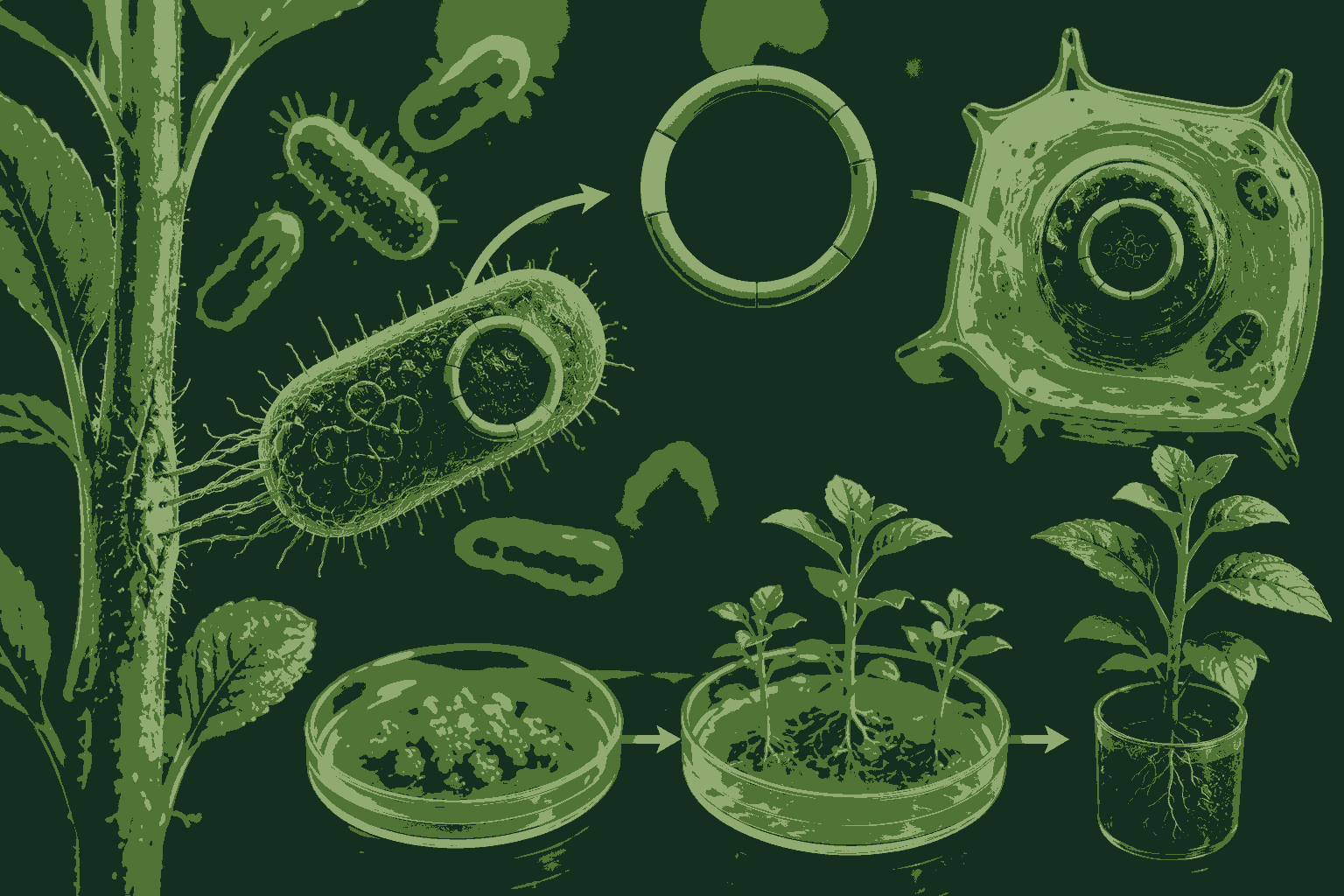
Agrobacterium Tumefaciens MCQs Biology becomes easier when aspirants first understand the role of the Ti plasmid. Ti stands for tumour-inducing plasmid, and it is a large circular DNA molecule found in Agrobacterium tumefaciens. Agrobacterium Tumefaciens MCQs Biology explains that the Ti plasmid carries a special region called T-DNA, which can be transferred into plant cells. In nature, this T-DNA integrates into the plant genome and causes uncontrolled cell division, leading to gall formation. This natural ability to transfer DNA makes Agrobacterium tumefaciens a biological vector for plant transformation.
Agrobacterium Tumefaciens MCQs Biology is strongly connected with recombinant DNA technology because scientists remove the disease-causing genes from the Ti plasmid and replace them with desirable genes. Agrobacterium Tumefaciens MCQs Biology helps aspirants understand that the modified or disarmed Ti plasmid can transfer useful genes without causing disease. These useful genes may provide traits such as insect resistance, herbicide tolerance, improved nutrition, disease resistance, or stress tolerance. This is why Agrobacterium tumefaciens is often called nature’s genetic engineer.
Agrobacterium Tumefaciens MCQs Biology also explains the infection process in plants. When a plant is wounded, it releases chemical signals that attract Agrobacterium tumefaciens. Agrobacterium Tumefaciens MCQs Biology helps aspirants remember that virulence genes, commonly called vir genes, are activated during this process. These genes help process and transfer T-DNA from the bacterium into the plant cell. Once inside the plant cell, the T-DNA enters the nucleus and becomes part of the plant chromosome. This feature is very important for understanding plant genetic transformation.
Agrobacterium Tumefaciens MCQs Biology is useful for comparing natural infection and laboratory transformation. In natural infection, the bacterium transfers genes that cause tumour formation and production of opines. In laboratory biotechnology, the harmful genes are removed and replaced with a gene of interest. Agrobacterium Tumefaciens MCQs Biology teaches aspirants that selectable marker genes are also added so transformed plant cells can be identified. Common selectable markers may give resistance to antibiotics or herbicides, allowing only successfully transformed cells to grow under selective conditions.
Agrobacterium Tumefaciens MCQs Biology should also be revised with examples of genetically modified crops. Bt cotton, although associated with the Bacillus thuringiensis gene, may involve plant transformation methods linked with genetic engineering concepts. Agrobacterium Tumefaciens MCQs Biology helps aspirants connect Ti plasmid, gene transfer, vectors, restriction enzymes, DNA ligase, selectable markers, and tissue culture. After transformation, plant cells are regenerated into complete plants using tissue culture techniques. This shows how molecular biology and plant biotechnology work together.
Agrobacterium Tumefaciens MCQs Biology is also important because Agrobacterium-mediated transformation is considered more precise and efficient for many plants than some physical methods. Agrobacterium Tumefaciens MCQs Biology helps aspirants compare it with biolistics or gene gun technique. In biolistics, DNA-coated particles are shot into plant cells, while Agrobacterium uses a natural transfer system. However, not all plants are equally easy to transform using Agrobacterium, and some monocots were historically more difficult than dicots. Modern methods have improved transformation efficiency in many crops.
Agrobacterium Tumefaciens MCQs Biology should include biosafety and ethical understanding. Genetically modified plants must be tested carefully before public use because introduced genes may affect food safety, biodiversity, non-target organisms, or ecological balance. Agrobacterium Tumefaciens MCQs Biology helps aspirants understand why regulatory authorities examine genetically modified organisms before approval. In India, GEAC plays an important role in assessing the safety of genetically engineered organisms. Aspirants should connect this with biotechnology, biopiracy, patents, environmental safety, and public health.
Agrobacterium Tumefaciens MCQs Biology becomes easier when aspirants focus on keywords such as Ti plasmid, T-DNA, vir genes, crown gall disease, plant vector, transformation, selectable marker, disarmed plasmid, gene of interest, and tissue culture. Agrobacterium Tumefaciens MCQs Biology also helps aspirants understand why bacteria are not only disease-causing organisms but also valuable tools in biotechnology. The same bacterium that naturally causes crown gall disease has been modified to produce improved plants.
Agrobacterium Tumefaciens MCQs Biology:
- From which bacterium is the Ti plasmid obtained for genetic engineering of plants?
A. Agrobacterium
B. Azotobacter
C. Clostridium
D. E. coli
Answer: A. Agrobacterium
Explanation: The Ti plasmid used in plant genetic engineering is obtained from Agrobacterium tumefaciens.
- What is the technique to alter the chemistry of genetic material DNA and RNA called?
A. Biochemistry
B. Genetic engineering
C. Bio science
D. Microbiology
Answer: B. Genetic engineering
Explanation: Genetic engineering is the technique used to alter or manipulate the chemistry of genetic material such as DNA and RNA.
- Which of the following statements is incorrect regarding the tools of Recombinant DNA Technology?
A. Selectable marker eliminates non-transformants
B. Cloning vector should have low molecular weight
C. Retrovirus cannot be used to deliver genes into animal cells
D. Agarose gel separates DNA fragments at random
Answer: C and D
Explanation: Retroviruses can be used as vectors to deliver genes into animal cells after they are disarmed. Agarose gel electrophoresis does not separate DNA fragments randomly; it separates DNA fragments mainly according to size.
- In EcoRI, what do the letters R and I denote?
A. Remove nucleotides and cut within DNA
B. Name of strain and order of enzyme isolated from the strain of bacteria
C. Restriction endonuclease and number of strain
D. Name of the scientist and number of bacteria
Answer: B. Name of strain and order of enzyme isolated from the strain of bacteria
Explanation: In EcoRI, E refers to Escherichia, co refers to coli, R refers to the bacterial strain, and I indicates that it was the first enzyme isolated from that strain.
- Which technique is used to detect the antibodies synthesized by the host against the pathogen?
A. Polymerase Chain Reaction
B. ELISA
C. DNA fingerprinting
D. RNA interference
Answer: B. ELISA
Explanation: ELISA is used to detect antibodies produced by the host against a pathogen through antigen-antibody interaction.
- What is the primary function of restriction endonucleases mentioned in the passage?
A. Used for in vitro DNA synthesis
B. Synthesized by bacteria as part of their defense mechanism
C. Present in mammalian cells for degradation of DNA when the cells die
D. Used in genetic engineering for ligating two DNA molecules
Answer: B. Synthesized by bacteria as part of their defense mechanism
Explanation: Restriction endonucleases are produced by bacteria as a defense mechanism. They cut foreign DNA at specific recognition sequences.
- Which of the following pairs is correctly matched?
A. Central dogma – Codon
B. Okazaki fragments – Splicing
C. RNA polymerase – RNA primer
D. Restriction enzymes – Genetic engineering
Answer: D. Restriction enzymes – Genetic engineering
Explanation: Restriction enzymes are important tools in genetic engineering because they cut DNA at specific sites.
- Which animal is mostly used in genetics experiments?
A. Butterfly
B. Fruit fly
C. Housefly
D. Dragonfly
Answer: B. Fruit fly
Explanation: Fruit fly, or Drosophila melanogaster, is widely used in genetics experiments because it is easy to maintain, breeds quickly, and shows clear genetic traits.
- What is the recognition site for the restriction endonuclease EcoRI?
A. BamHI
B. HaeIII
C. EcoRI
D. HindIII
Answer: C. EcoRI
Explanation: EcoRI recognizes the DNA sequence GAATTC. Among the given options, EcoRI is the related restriction enzyme.
- What does the construction of recombinant DNA involve?
A. Cleaving and rejoining DNA segments with endonuclease alone
B. Cleaving DNA segments with endonuclease and rejoining them with ligase
C. Cleaving DNA segments with ligase and rejoining them with endonuclease
D. Cleaving and rejoining DNA segments with ligase alone
Answer: B. Cleaving DNA segments with endonuclease and rejoining them with ligase
Explanation: Recombinant DNA construction involves cutting DNA with restriction endonucleases and joining DNA fragments using DNA ligase.
- Which organism is used in the production of insulin by genetic engineering?
A. Escherichia coli
B. Mycobacterium
C. Both A and B
D. None of these
Answer: A. Escherichia coli
Explanation: Escherichia coli is commonly used in the production of human insulin through genetic engineering.
- What made the linking of antibiotic resistance gene with the plasmid vector possible?
A. DNA ligase
B. Endonucleases
C. DNA polymerase
D. Exonucleases
Answer: A. DNA ligase
Explanation: DNA ligase joins DNA fragments together, making it possible to link an antibiotic resistance gene with a plasmid vector.
- How can the separation of proteins on the basis of their being polyelectrolytes be brought about?
A. Centrifugation
B. Electrophoresis
C. Chromatography
D. Crystallography
Answer: B. Electrophoresis
Explanation: Electrophoresis separates charged molecules such as proteins and DNA based on their movement in an electric field.
- Who discovered the restriction enzyme?
A. Waksman
B. Fleming
C. Berger
D. Smith and Nathans
Answer: D. Smith and Nathans
Explanation: Restriction enzymes were discovered through the work of scientists including Hamilton Smith and Daniel Nathans.
- Which of the following is not a restriction endonuclease?
A. EcoRI
B. HindIII
C. PstI
D. DNase I
Answer: D. DNase I
Explanation: DNase I is not a restriction endonuclease. Restriction endonucleases cut DNA at specific recognition sequences.
- What does the prefix Bt in Bt cotton stand for?
A. Barium-treated cotton seeds
B. Bigger thread variety of cotton with better tensile strength
C. Produced by biotechnology using restriction enzymes and ligases
D. Carrying an endotoxin gene from Bacillus thuringiensis
Answer: D. Carrying an endotoxin gene from Bacillus thuringiensis
Explanation: Bt cotton carries a gene from Bacillus thuringiensis that produces an insecticidal protein.
- What is the first step in the Southern blot technique?
A. Denaturation of DNA on the gel for hybridization with specific probe
B. Production of a group of genetically identical cells
C. Digestion of DNA by restriction enzyme
D. Denaturation of DNA from a nucleated cell such as one from the scene of crime
Answer: C. Digestion of DNA by restriction enzyme
Explanation: The first step in Southern blotting is digestion of DNA with restriction enzymes to produce DNA fragments.
- Various enzymes and hormones can be produced on a large scale by employing which recombinant technique?
A. DNA technique
B. RNA technique
C. Viral technique
D. Bacterial technique
Answer: A. DNA technique
Explanation: Recombinant DNA technique is used to produce useful enzymes, hormones, and proteins on a large scale.
- What is biolistics, or gene gun, suitable for?
A. DNA fingerprinting
B. Disarming pathogen vectors
C. Constructing recombinant DNA molecules
D. Transformation of plant cells
Answer: D. Transformation of plant cells
Explanation: Biolistics, or the gene gun method, is used to introduce foreign DNA into plant cells.
- What is the plasmid pBR322 used as in biotechnology?
A. Yeast
B. M13 phage
C. Parasite
D. Cloning vehicle
Answer: D. Cloning vehicle
Explanation: pBR322 is a plasmid vector commonly used as a cloning vehicle in biotechnology.
- Which of the following tools of recombinant DNA technology is wrongly paired with its use?
A. Restriction endonuclease – Production of DNA fragments for gene cloning
B. DNA ligase – Enzyme that cuts DNA producing sticky ends
C. DNA polymerase – Copies DNA sequences in PCR
D. Reverse transcriptase – Production of cDNA from mRNA
Answer: B. DNA ligase – Enzyme that cuts DNA producing sticky ends
Explanation: DNA ligase does not cut DNA. It joins DNA fragments together. Restriction endonucleases cut DNA and may produce sticky ends.
- Penicillin is produced commercially from which organism?
A. Penicillium notatum
B. Penicillium chrysogenum
C. Penicillium citrinum
D. Penicillium rubrum
Answer: B. Penicillium chrysogenum
Explanation: Penicillin is produced commercially from Penicillium chrysogenum.
- Which antibiotic inhibits cell wall synthesis in bacteria?
A. Chloramphenicol
B. Erythromycin
C. Penicillin
D. Tetracycline
Answer: C. Penicillin
Explanation: Penicillin inhibits bacterial cell wall synthesis by interfering with penicillin-binding proteins, leading to bacterial lysis.
- The enzyme employed for amplification of DNA during PCR is commercially obtained from which organism?
A. Streptococcus pyogenes
B. Bacillus licheniformis
C. Trichoderma reesei
D. Thermus aquaticus
Answer: D. Thermus aquaticus
Explanation: Taq polymerase, used in PCR, is obtained from the thermophilic bacterium Thermus aquaticus.
- What is the specific palindromic sequence recognized by EcoRI?
A. 5′ – GGAACC – 3′ / 3′ – CCTTGG – 5′
B. 5′ – CTTAAG – 3′ / 3′ – GAATTC – 5′
C. 5′ – GGATCC – 3′ / 3′ – CCTAGG – 5′
D. 5′ – GAATTC – 3′ / 3′ – CTTAAG – 5′
Answer: D. 5′ – GAATTC – 3′ / 3′ – CTTAAG – 5′
Explanation: EcoRI recognizes the palindromic sequence 5′ – GAATTC – 3′ and cuts between G and A.
- Which statement is correct among the following?
A. PCR is used for isolation and separation of gene of interest
B. Gel electrophoresis is used for amplification of a DNA segment
C. The polymerase enzyme joins the gene of interest and the vector DNA
D. Restriction enzyme digestions are performed by incubating purified DNA molecules with restriction enzymes under optimum conditions
Answer: D. Restriction enzyme digestions are performed by incubating purified DNA molecules with restriction enzymes under optimum conditions
Explanation: Restriction digestion is carried out by incubating purified DNA with restriction enzymes under suitable conditions.
- The first discovered restriction endonuclease that always cuts DNA molecule at a particular point by recognizing a specific sequence of six base pairs is
A. HindII
B. EcoRI
C. Adenosine deaminase
D. Thermostable DNA polymerase
Answer: A. HindII
Explanation: HindII was the first restriction endonuclease discovered that cut DNA at a specific recognition sequence.
- Which restriction enzyme produces blunt ends?
A. SalI
B. EcoRV
C. XhoI
D. HindIII
Answer: B. EcoRV
Explanation: EcoRV is a type II restriction endonuclease that cuts DNA to produce blunt ends.
- Which of the following is the most thoroughly studied bacteria-plant interaction according to the provided passage?
A. Gall formation on certain angiosperms by Agrobacterium
B. Nodulation of Sesbania stems by nitrogen-fixing bacteria
C. Plant growth stimulation by phosphate-solubilising bacteria
D. Cyanobacterial symbiosis with some aquatic ferns
Answer: A. Gall formation on certain angiosperms by Agrobacterium
Explanation: Agrobacterium tumefaciens causes crown gall disease and is one of the most thoroughly studied bacteria-plant interactions. It is widely used in plant genetic engineering.
- What are the commonly used vectors for human genome sequencing as mentioned in the passage?
A. T-DNA
B. BAC and YAC
C. Expression vectors
D. T/A cloning vectors
Answer: B. BAC and YAC
Explanation: Bacterial Artificial Chromosome, or BAC, and Yeast Artificial Chromosome, or YAC, vectors are used to clone large DNA fragments and have been useful in genome sequencing projects.
Conclusion on Agrobacterium Tumefaciens MCQs Biology
In conclusion, Agrobacterium Tumefaciens MCQs Biology is a high-value topic for aspirants preparing genetics and biotechnology chapters. It improves understanding of Ti plasmid, T-DNA transfer, plant transformation, recombinant DNA technology, selectable markers, and genetically modified crops. Agrobacterium Tumefaciens MCQs Biology helps aspirants connect textbook facts with real applications in agriculture and research. With regular revision, Agrobacterium Tumefaciens MCQs Biology can help aspirants answer biotechnology-based questions with better confidence, accuracy, and conceptual clarity.