- Keneitsino Lydia
- May 23, 2026
Expert Adaptive Radiation and Evolution MCQs Class 12 with Answers for NEET
Evolution is one of the most fascinating topics in biology because it explains how the incredible diversity of life on Earth has developed over millions of years. Among the many concepts discussed in evolutionary biology, adaptive radiation holds a special place because it demonstrates how a single ancestral species can give rise to multiple species adapted to different ecological niches. For aspirants preparing for board examinations and competitive exams, Adaptive Radiation and Evolution MCQs Class 12 are an important resource for understanding these concepts in depth.
When studying evolution, many aspirants rely on Adaptive Radiation and Evolution MCQs Class 12 to strengthen their conceptual understanding. Adaptive radiation refers to the rapid diversification of an ancestral species into several new species, each adapted to a distinct environment or way of life. This process helps explain the remarkable variety observed among living organisms today.
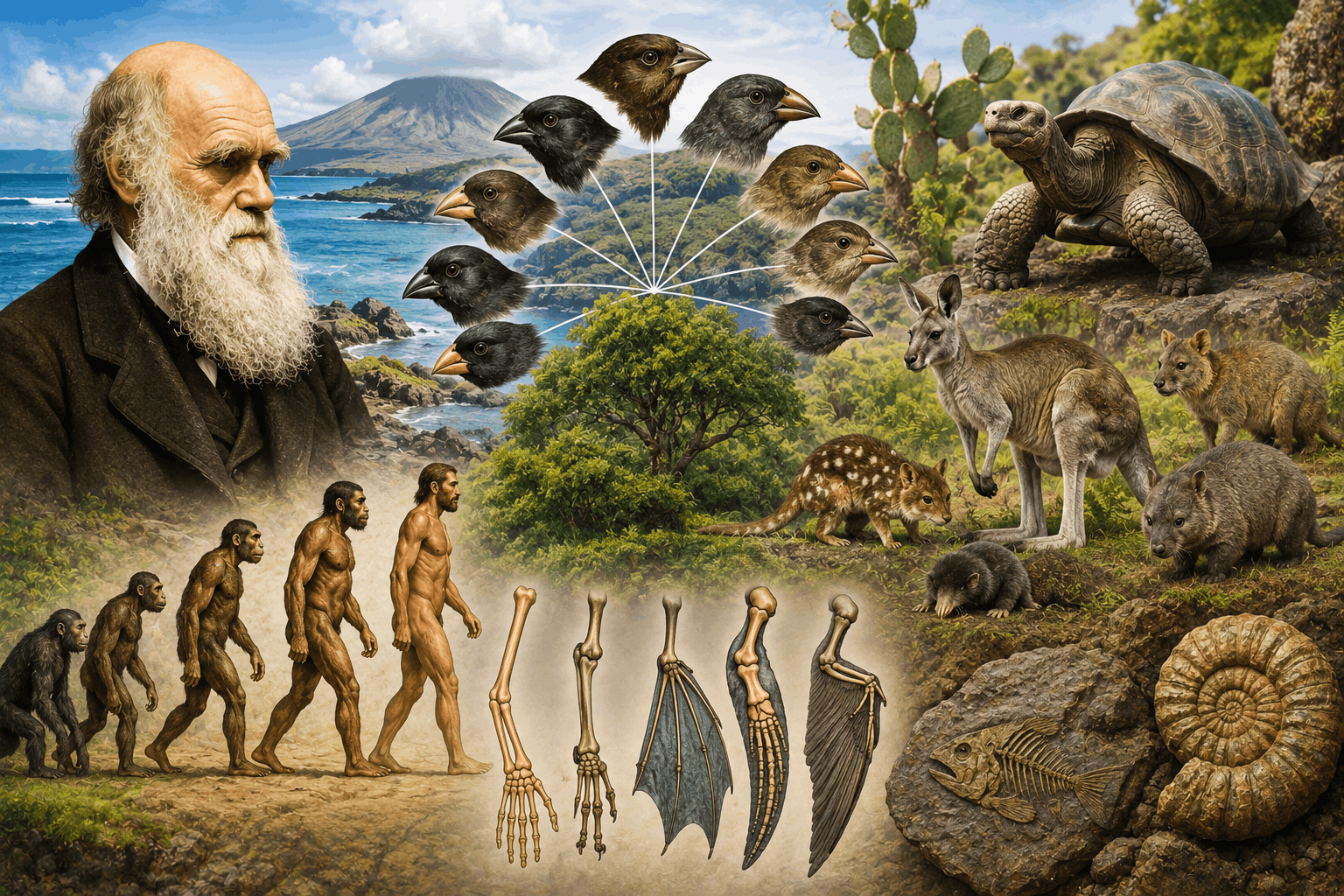
One of the most famous examples discussed in Adaptive Radiation and Evolution MCQs Class 12 is Darwin’s finches. During his voyage to the Galápagos Islands, Charles Darwin observed several species of finches that differed mainly in their beak shapes and feeding habits. Although these birds originated from a common ancestor, they evolved different adaptations to utilize different food sources available on the islands.
The concept highlighted through Adaptive Radiation and Evolution MCQs Class 12 demonstrates how environmental conditions influence evolutionary pathways. When organisms encounter new habitats with limited competition, natural selection favors different traits in different populations. Over time, these populations become distinct species capable of exploiting unique ecological opportunities.
Aspirants often encounter examples beyond Darwin’s finches while practicing Adaptive Radiation and Evolution MCQs Class 12. Australian marsupials provide another excellent illustration. Despite sharing a common ancestral marsupial, species evolved into forms resembling wolves, moles, squirrels, and other mammals because they adapted to different ecological roles. This showcases the power of natural selection in shaping biodiversity.
The study of Adaptive Radiation and Evolution MCQs Class 12 also helps aspirants understand the relationship between adaptive radiation and divergent evolution. Divergent evolution occurs when related organisms accumulate differences over time as they adapt to varying environmental conditions. Adaptive radiation is considered a special case of divergent evolution where diversification occurs rapidly and results in numerous species.
Another key concept frequently addressed in Adaptive Radiation and Evolution MCQs Class 12 is the role of geographic isolation. Physical barriers such as mountains, rivers, or islands can separate populations of a species. Once isolated, each population experiences different environmental pressures, leading to independent evolutionary changes and eventually the formation of new species.
By solving Adaptive Radiation and Evolution MCQs Class 12, aspirants become familiar with the importance of variation in evolution. Variations arise through mutations and genetic recombination. These variations provide the raw material upon which natural selection acts. Beneficial traits become more common over generations because they improve survival and reproductive success.
The significance of natural selection is repeatedly emphasized in Adaptive Radiation and Evolution MCQs Class 12. Darwin proposed that organisms produce more offspring than can survive, resulting in competition for resources. Individuals possessing favorable traits have a greater chance of survival and reproduction, gradually altering the genetic makeup of populations.
Understanding fossil evidence is another benefit of practicing Adaptive Radiation and Evolution MCQs Class 12. Fossils provide direct evidence of evolutionary changes through time. They reveal transitional forms and demonstrate how species have gradually diversified and adapted to changing environments.
Many aspirants find that Adaptive Radiation and Evolution MCQs Class 12 help clarify the distinction between adaptive radiation and convergent evolution. While adaptive radiation involves diversification from a common ancestor, convergent evolution occurs when unrelated organisms independently evolve similar features due to similar environmental pressures.
The topic of homologous organs frequently appears alongside Adaptive Radiation and Evolution MCQs Class 12. Homologous structures such as the forelimbs of whales, bats, humans, and horses indicate common ancestry despite serving different functions. These structures provide strong evidence for divergent evolution and adaptive radiation.
Regular practice of Adaptive Radiation and Evolution MCQs Class 12 enables aspirants to connect evolutionary theory with real-world biological diversity. The tremendous variety of plants, animals, and microorganisms observed today reflects millions of years of adaptation, selection, and speciation.
The educational value of Adaptive Radiation and Evolution MCQs Class 12 extends beyond examination preparation. These questions encourage critical thinking about how species interact with their environments and how biodiversity arises through natural processes.
For competitive examinations, Adaptive Radiation and Evolution MCQs Class 12 serve as an effective revision tool. They reinforce essential concepts such as natural selection, adaptive radiation, speciation, variation, homologous organs, fossil evidence, and evolutionary relationships.
Aspirants preparing with Adaptive Radiation and Evolution MCQs Class 12 often develop a deeper appreciation for the dynamic nature of life on Earth. Evolution is not merely a historical process; it continues today as populations adapt to changing environments.
Consistent practice of Adaptive Radiation and Evolution MCQs Class 12 improves accuracy, strengthens conceptual understanding, and builds confidence for board exams and entrance tests. Since evolution forms a major portion of Class 12 Biology, mastering these concepts is essential for achieving strong academic performance.
Adaptive Radiation and Evolution MCQs Class 12:
1. What is meant by the term fitness according to Darwinism?
Options:
A. Ability to survive and reproduce
B. Healthy appearance
C. Physical strength
D. Aggressiveness
Answer: A. Ability to survive and reproduce
Explanation:
According to Darwinism, fitness refers to an organism’s ability to survive in its environment and successfully reproduce. Organisms that leave more offspring contribute more genes to the next generation and are considered more fit.
2. Phenetic classification is based on:
Options:
A. The ancestral lineage of existing organisms
B. Observable characteristics of existing organisms
C. Dendrograms based on DNA characteristics
D. Sexual characteristics
Answer: B. Observable characteristics of existing organisms
Explanation:
Phenetic classification groups organisms based on observable features such as morphology, physiology, behavior, and overall similarity rather than evolutionary relationships.
3. Which one of the following sequences was proposed by Darwin and Wallace for organic evolution?
Options:
A. Overproduction, variations, constancy of population size, natural selection
B. Variations, constancy of population size, overproduction, natural selection
C. Overproduction, constancy of population size, variations, natural selection
D. Variations, natural selection, overproduction, constancy of population size
Answer: C. Overproduction, constancy of population size, variations, natural selection
Explanation:
Darwin and Wallace proposed that organisms produce more offspring than can survive. Since population size remains relatively constant, competition occurs. Variations provide advantages, and natural selection favors beneficial traits.
4. In turnip, 2/3 part of swollen area is derived from:
Options:
A. Hypophysis
B. Hypocotyl
C. Epicotyl
D. Radicle
Answer: B. Hypocotyl
Explanation:
In turnip, the swollen edible portion develops mainly from the hypocotyl and partly from the root. The hypocotyl stores food and enlarges significantly.
5. Select the CORRECT set of homologous organs.
Options:
A. Forelimbs of frog, lizard, bird, and bat
B. Wings of insect, bird, and bat
C. Caecum, Wings of insect, forelimbs of bird
D. Vermiform appendix, caecum, coccyx
Answer: A. Forelimbs of frog, lizard, bird, and bat
Explanation:
These structures have a common origin and similar basic skeletal pattern but perform different functions. Hence, they are homologous organs.
6. Which of the following is NOT a connecting link?
Options:
A. Archaeopteryx
B. Dryopithecus
C. Ichthyostegia
D. Seymouria
Answer: B. Dryopithecus
Explanation:
Dryopithecus is an ancestral ape but not considered a connecting link. Archaeopteryx connects reptiles and birds, Ichthyostegia connects fishes and amphibians, and Seymouria connects amphibians and reptiles.
7. Seymouria is a connecting link between _____.
Options:
A. Aves and mammals
B. Amphibians and reptiles
C. Pisces and amphibians
D. Reptiles and aves
Answer: B. Amphibians and reptiles
Explanation:
Seymouria possessed characteristics of both amphibians and reptiles, making it an important connecting link in evolution.
8. Select the CORRECT pair.
Options:
A. Adaptive Radiation – Darwin’s Finches
B. Connecting Link – Sewall Wright effect
C. Genetic drift – Peppered moth
D. Industrial melanism – Archaeopteryx
Answer: A. Adaptive Radiation – Darwin’s Finches
Explanation:
Darwin’s finches evolved different beak forms from a common ancestor to exploit different food sources, demonstrating adaptive radiation.
9. Which one among the following is an example for homology?
Options:
A. Eye of octopus and mammals
B. Tuber of sweet potato and potato
C. Wings of butterfly and birds
D. Thorn and tendrils of Bougainvillea and Cucurbita
Answer: D. Thorn and tendrils of Bougainvillea and Cucurbita
Explanation:
Both structures arise from similar plant parts but perform different functions. Therefore, they are homologous structures and indicate divergent evolution.
10. Which is not a connecting link in evolution?
Options:
A. Pheretima
B. Echidna
C. Sphenodon
D. Peripatus
Answer: A. Pheretima
Explanation:
Pheretima is an earthworm and is not considered a connecting link. Peripatus connects annelids and arthropods, while Echidna and Sphenodon possess primitive characteristics linking major groups.
11. Vestigial organs are those organs which are
Options:
A. Characteristic of birds
B. Not of much use today
C. Helpful in locomotion
D. Common
Answer: B. Not of much use today
Explanation:
Vestigial organs are reduced structures that have lost most or all of their original function during evolution. Examples include the vermiform appendix, coccyx, and wisdom teeth in humans.
12. Philosophic Zoologique was written by
Options:
A. Darwin
B. Linnaeus
C. Lamarck
D. Theophrastus
Answer: C. Lamarck
Explanation:
Jean Baptiste Lamarck published Philosophie Zoologique in 1809, presenting his theory of inheritance of acquired characters, later known as Lamarckism.
13. Cornerstone of Darwin’s theory was
Options:
A. Natural selection
B. Inheritance of acquired characters
C. Omnis cellula e cellula
D. Higher productivity
Answer: A. Natural selection
Explanation:
Natural selection is the central concept of Darwin’s theory. According to Darwin, organisms possessing favorable variations survive and reproduce more successfully than others.
14. Balancing selection promotes
Options:
A. Homozygotes
B. Heterozygotes
C. Polyploids
D. Recessive traits
Answer: B. Heterozygotes
Explanation:
Balancing selection maintains genetic diversity within a population. In many cases, heterozygous individuals possess a selective advantage and are favored by natural selection.
15. Tendrils in plants are an example of
Options:
A. Convergent evolution
B. Radiation
C. Divergent evolution
D. Co-evolution
Answer: C. Divergent evolution
Explanation:
Tendrils may arise from different plant parts such as stems or leaves but evolve from common ancestral structures and become modified for climbing, illustrating divergent evolution.
16. Darwin judged the fitness of an individual by
Options:
A. Ability to defend itself
B. Strategy to obtain food
C. Number of offspring
D. Dominance over other individuals
Answer: C. Number of offspring
Explanation:
Darwin considered reproductive success as the measure of fitness. Individuals producing more viable offspring contribute more genes to future generations.
17. The animal group which does not exist in Galapagos Island is
Options:
A. Insects
B. Protozoa
C. Crustacea
D. Amphibia
Answer: D. Amphibia
Explanation:
Amphibians are generally absent from the Galapagos Islands because they cannot tolerate seawater and therefore have difficulty dispersing across ocean barriers.
18. Which of the following postulates is related with Neo-Darwinism?
Options:
A. Mutations are believed to help form new species
B. It incorporates isolation as an essential component of evolution
C. It can explain the occurrence of unchanged forms over millions of years
D. All of the above
Answer: D. All of the above
Explanation:
Neo-Darwinism combines Darwin’s natural selection with modern genetics. It includes mutation, isolation, genetic recombination, and explains both evolutionary change and evolutionary stability.
19. Genetic drift operates only in
Options:
A. Island population
B. Smaller population
C. Larger population
D. Mendelian population
Answer: B. Smaller population
Explanation:
Genetic drift refers to random changes in allele frequencies. Its effects are strongest in small populations where chance events can significantly alter genetic composition.
20. Which of the following explained evolution in the most acceptable form?
Options:
A. Lamarck, Darwin, Hugo de Vries
B. Anaximander, Darwin, Malthus
C. F. Redi, Richter, Cuvier
D. Lamarck, Hardy Weinberg, Darwin
Answer: A. Lamarck, Darwin, Hugo de Vries
Explanation:
These scientists contributed significantly to evolutionary thought. Lamarck proposed inheritance of acquired characters, Darwin proposed natural selection, and Hugo de Vries proposed mutation theory.
21. Which one is not a vestigial organ of man?
Options:
A. Nictitating membrane
B. Epiglottis or ileum
C. Vermiform appendix
D. Muscles of ear pinnae
Answer: B. Epiglottis or ileum
Explanation:
The epiglottis is a fully functional structure that prevents food from entering the windpipe during swallowing. The ileum is also an important part of the digestive system. Therefore, neither is vestigial. In contrast, the nictitating membrane, appendix, and ear muscles are considered vestigial structures in humans.
22. “Descent with modification” is the main theme of
Options:
A. Genetics and interpretation
B. Biogenesis
C. Recapitulation
D. Evolution
Answer: D. Evolution
Explanation:
“Descent with modification” is a phrase coined by Charles Darwin to describe how species change over generations. It emphasizes that all living organisms share common ancestry and gradually evolve through natural selection and genetic variation.
23. Evolutionary change does not come about at the level of an individual but at the level of
Options:
A. Two persons
B. Ten persons
C. Population
D. Small group
Answer: C. Population
Explanation:
Evolution refers to changes in gene frequencies within a population over generations. Individual organisms do not evolve; populations evolve through natural selection, mutation, genetic drift, and gene flow.
24. Which of the following is a pair of homologous organs?
Options:
A. Pectoral fin of rohu and forelimb of horse
B. Wings of grasshopper and wings of crow
C. Lungs of rabbit and gills of rohu
D. Wings of bat and wings of butterfly
Answer: A. Pectoral fin of rohu and forelimb of horse
Explanation:
Homologous organs share a common evolutionary origin and structural plan, though they may perform different functions. The pectoral fin of a fish and the forelimb of a horse evolved from a common ancestral vertebrate limb.
25. Parallelism is
Options:
A. Adaptive divergence
B. Adaptive divergence of widely separated species
C. Adaptive convergence of widely different species
D. Adaptive convergence of closely related groups
Answer: D. Adaptive convergence of closely related groups
Explanation:
Parallel evolution occurs when closely related species independently evolve similar traits while adapting to similar environments. Since the species share a recent common ancestor, the similarities arise in parallel.
26. Which of the following isotopes is most dangerous to Homo sapiens?
Options:
A. Phosphorus-32
B. Strontium-90
C. Caesium-137
D. Iodine-131
Answer: B. Strontium-90
Explanation:
Strontium-90 is known as a “bone seeker” because it chemically resembles calcium and accumulates in bones. Long-term exposure can increase the risk of bone cancer, leukemia, and other serious health problems.
27. The change of the lighter-coloured variety of peppered moth (Biston betularia) to its darker variety (Biston carbonaria) is due to
Options:
A. Mutation
B. Regeneration
C. Genetic isolation
D. Temporal isolation
Answer: A. Mutation
Explanation:
The dark-colored variety originated through a genetic mutation. During the Industrial Revolution, soot-darkened tree trunks favored the survival of dark moths, leading to industrial melanism through natural selection.
28. Evolutionary convergence is characterised by
Options:
A. Development of dissimilar characteristics in closely related groups
B. Development of a common set of characteristics in groups of different ancestry
C. Development of characteristics by random mating
D. Replacement of common characteristics in different groups
Answer: B. Development of a common set of characteristics in groups of different ancestry
Explanation:
Convergent evolution occurs when unrelated organisms independently develop similar adaptations because they occupy similar ecological niches or environments.
29. Forelimbs of whales, bats, humans, and cheetah are examples of which of the following processes?
Options:
A. Divergent evolution
B. Convergent evolution
C. Adaptation
D. Saltation
Answer: A. Divergent evolution
Explanation:
These forelimbs are homologous organs with a common ancestral origin but have evolved to perform different functions such as swimming, flying, grasping, and running. This is a classic example of divergent evolution.
30. Match the following
List I
- (p) Charles Darwin
- (q) John Ray
- (r) Buffon
- (s) Linnaeus
Options:
A. (iv) (ii) (i) (iii)
B. (iv) (iii) (ii) (i)
C. (iv) (i) (ii) (iii)
D. (iv) (ii) (i) (ii)
Answer: B. (iv) (iii) (ii) (i)
Correct Matching:
- Charles Darwin → (iv) The Origin of Species
- John Ray → (iii) Historia Generalis Plantarum
- Buffon → (ii) Natural History
- Linnaeus → (i) Systema Naturae
Explanation:
These scientists made landmark contributions to biology and evolutionary thought. Darwin wrote The Origin of Species, John Ray contributed Historia Generalis Plantarum, Buffon authored Natural History, and Linnaeus developed the classification system presented in Systema Naturae.