
- Keneitsino Lydia
- May 12, 2026
Master Griffith Experiment MCQs with Answers PDF – Powerful Practice for Class 12 & NEET Success
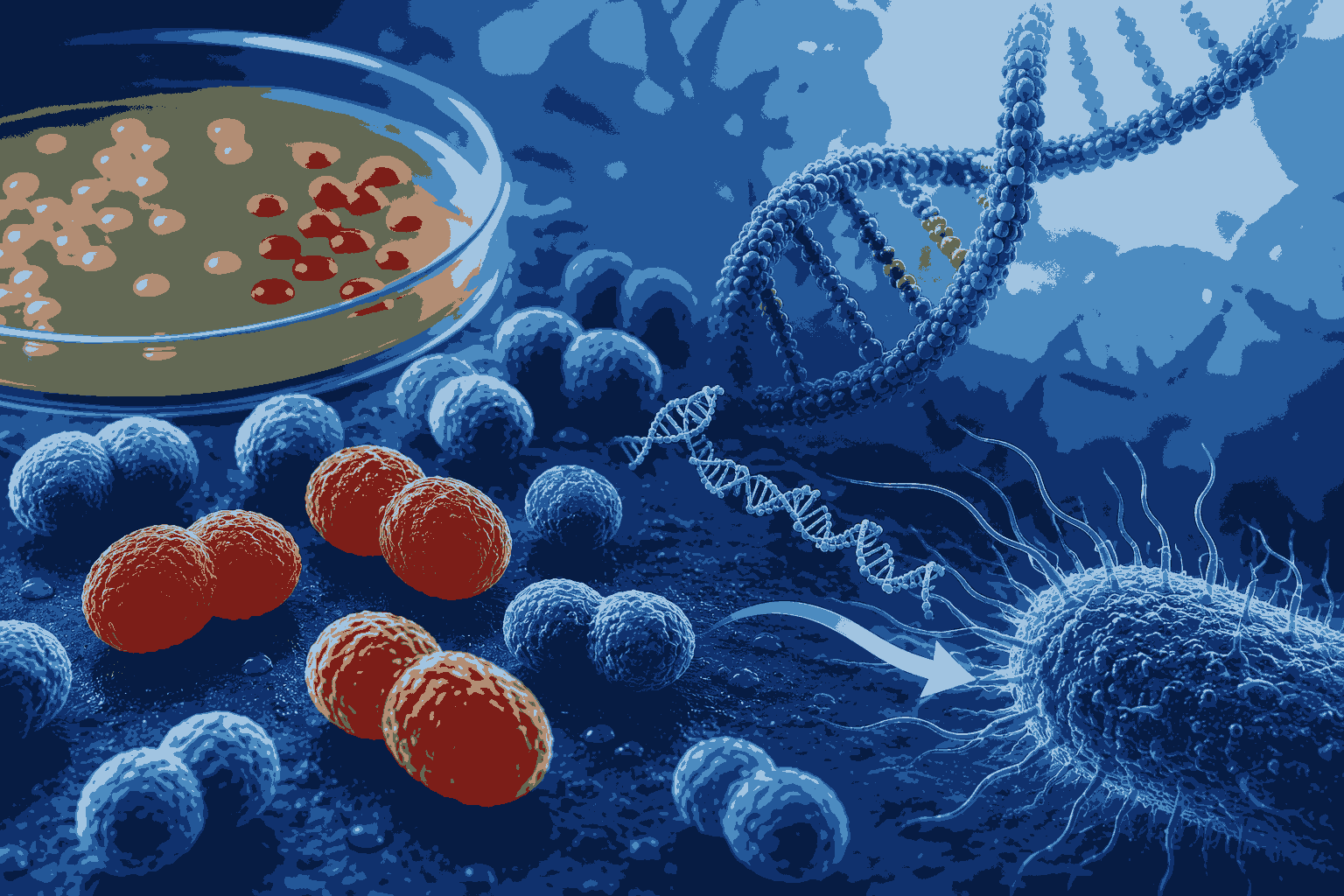
The Griffith experiment was conducted by Frederick Griffith in 1928 using Streptococcus pneumoniae bacteria. Through Griffith Experiment MCQs with Answers PDF, aspirants learn about the two bacterial strains used in the experiment: the smooth virulent strain and the rough non-virulent strain. Understanding these strains becomes much easier when aspirants revise Griffith Experiment MCQs with Answers PDF repeatedly. The smooth strain possessed a polysaccharide capsule and caused disease, whereas the rough strain lacked the capsule and was harmless.
One major advantage of practicing Griffith Experiment MCQs with Answers PDF is that aspirants clearly understand the concept of transformation. Griffith observed that when heat-killed smooth bacteria were mixed with live rough bacteria, the rough bacteria transformed into virulent smooth bacteria. This important observation is frequently tested in examinations, which is why Griffith Experiment MCQs with Answers PDF are highly valuable for exam preparation.
Another reason students should revise Griffith Experiment MCQs with Answers PDF regularly is that they help explain the foundation of molecular genetics. Griffith’s findings later inspired scientists such as Avery, MacLeod, and McCarty to identify DNA as the transforming principle. By solving Griffith Experiment MCQs with Answers PDF, aspirants understand how one scientific discovery led to another major breakthrough in biology.
The topic becomes even more important because many competitive exams include conceptual and application-based questions from bacterial transformation. Practicing Griffith Experiment MCQs with Answers PDF helps aspirants improve analytical thinking and answer such questions confidently. These questions often focus on smooth and rough bacterial strains, transformation, and the role of DNA in heredity.
Aspirants also benefit from Griffith Experiment MCQs with Answers PDF because they improve conceptual clarity regarding genetic material. Before Griffith’s work, scientists were uncertain whether proteins or DNA carried hereditary information. Through regular revision of Griffith Experiment MCQs with Answers PDF, aspirants understand how transformation experiments gradually established DNA as the molecule responsible for inheritance.
Another important benefit of studying Griffith Experiment MCQs with Answers PDF is that they strengthen understanding of experimental biology. Aspirants learn how observations, controls, and experimental design help scientists reach conclusions. This develops scientific reasoning and improves performance in biology examinations. By solving Griffith Experiment MCQs with Answers PDF, aspirants become more familiar with interpreting experimental results logically.
The repeated practice of Griffith Experiment MCQs with Answers PDF also helps aspirants connect multiple biology chapters together. Concepts from molecular genetics, heredity, DNA structure, biotechnology, and microbiology are all linked to the Griffith experiment. Aspirants who revise Griffith Experiment MCQs with Answers PDF consistently gain a broader understanding of biology rather than memorizing isolated facts.
Another advantage of Griffith Experiment MCQs with Answers PDF is that they help improve memory retention. Since the Griffith experiment contains several steps involving live bacteria, heat-killed bacteria, and transformation, aspirants may initially find the topic confusing. However, repeated revision using Griffith Experiment MCQs with Answers PDF helps students remember the sequence of events clearly and accurately.
Aspirants preparing for NEET especially benefit from Griffith Experiment MCQs with Answers PDF because molecular biology questions are frequently asked in entrance examinations. Many questions are directly based on transformation experiments and DNA as genetic material. Practicing Griffith Experiment MCQs with Answers PDF improves both speed and accuracy in solving these questions under exam pressure.
Another important aspect highlighted through Griffith Experiment MCQs with Answers PDF is the importance of bacterial capsules in virulence. The smooth strain survived because of its protective capsule, whereas the rough strain lacked this feature. By revising Griffith Experiment MCQs with Answers PDF, aspirants understand how structural differences in bacteria affect pathogenicity and survival.
30 Griffith Experiment MCQs with Answers PDF:
1. What is the molecular weight of DNA in yeast according to the given passage?
A. 2.56 × 10⁹
B. 0.5 × 10⁹
C. 7 × 10⁷
D. 6 × 10⁶
Answer: A. 2.56 × 10⁹
Explanation: Molecular weight of DNA in yeast is 2.56 × 10⁹.
2. Why are the words ‘gene’ and ‘cistron‘ sometimes used synonymously?
A. One cistron contains many genes
B. One gene contains many cistrons
C. One gene contains one cistron
D. One gene contains no cistron
Answer: C. One gene contains one cistron
Explanation: Gene and cistron are often synonymous because one gene corresponds to one cistron.
3. What structures appear as ‘beads-on-string’ in chromosomes when viewed under an electron microscope?
A. Base pairs
B. Genes
C. Nucleotides
D. Nucleosomes
Answer: D. Nucleosomes
Explanation: DNA wrapped around histone proteins forms nucleosomes, appearing like beads on a string.
4. Who was awarded the Nobel Prize in 1959 for in vitro synthesis of polyribonucleotide?
A. Tatum
B. Darwin
C. Kornberg
D. Khurana
Answer: C. Kornberg
Explanation: Arthur Kornberg received the Nobel Prize in 1959 for his work on nucleic acid synthesis.
5. What is the process known as when separated bands of DNA are cut out from agarose gel and extracted?
A. Elution
B. Spooling
C. Centrifugation
D. Detergent lysis
Answer: A. Elution
Explanation: DNA extraction from gel pieces is called elution.
6. The transformation principles discovered by Griffith was later identified as:
A. Protien
B. Lipid
C. DNA
D. RNA
Answer: C. DNA
Explanation: DNA was the transforming principle.
7. Who was the rediscoverer of Mendel’s work?
A. Muller
B. Morgan
C. Correns
D. Bridge
Answer: C. Correns
Explanation: Carl Correns rediscovered Mendel’s laws along with de Vries and Tschermak.
8. In mutant strains R-IIx and R-IIy of bacteriophage T4, why do mixed strains lyse E. coli?
A. Bacteriophage transforms in wild
B. It is not mutated
C. Both strains have similar cistrons
D. Both strains have different cistrons
Answer: D. Both strains have different cistrons
Explanation: Complementation occurs because mutations are in different cistrons.
9. Taylor (1958) studied chromosome replication using radioactive
A. Uridine
B. Thymidine
C. Histones
D. Phosphate
Answer: B. Thymidine
Explanation: Taylor used radioactive tritiated thymidine to study DNA replication.
10. The unequivocal proof of DNA as genetic material came from studies on a
A. Viroid
B. Bacterial virus
C. Bacterium
D. Fungus
Answer: B. Bacterial virus
Explanation: Hershey and Chase proved DNA is the genetic material using bacteriophages.
11. What was the key finding from Griffith’s experiments?
A. Smooth bacteria could kill mice
B. Rough bacteria are non-lethal
C. DNA is the genetic material
D. Genetic material can transfer from dead to live bacteria
Answer: D. Genetic material can transfer from dead to live bacteria
Explanation: Griffith discovered bacterial transformation.
12. Who developed the cytochemical technique for DNA detection?
A. Johannsen
B. Hammerling
C. McClintock
D. Feulgen and Rossenbeck
Answer: D. Feulgen and Rossenbeck
Explanation: They developed the Feulgen staining method for DNA.
13. Griffith discovered ________ in Diplococcus pneumoniae.
A. r-DNA
B. Transformation
C. Gene expression
D. Reverse transcription
Answer: B. Transformation
Explanation: Griffith demonstrated bacterial transformation.
14. In vitro synthesis of RNA and DNA was first carried out by
A. Ochoa and Nirenberg
B. Ochoa and Kornberg
C. Nirenberg and Khorana
D. Kornberg and Nirenberg
Answer: B. Ochoa and Kornberg
Explanation: Ochoa and Kornberg pioneered nucleic acid synthesis experiments.
15. In polytene chromosomes, dark bands are formed by apposition of
A. Protein particles
B. Chromomeres on chromonemata
C. Nucleosomes
D. None
Answer: B. Chromomeres on chromonemata
Explanation: Dense chromomeres form dark bands in polytene chromosomes.
16. Which of the following options correctly describes the production of callus tissue between the cells of Scion and Stock?
- Production of plasmodesmata in the cells at the interface of scion and stock
- Coordinated differentiation of vascular tissue between the stock and scion
- Regeneration of cortex and epidermis over the union of stock and scion
- Production of callus tissue between the cells of scion and stock
A. I and II
B. II and III
C. II and IV
D. Only IV
Answer: D. Only IV
Explanation: The first stage during grafting is the formation of callus tissue between the scion and stock. This undifferentiated tissue later develops into vascular tissues, cortex, and epidermis.
17. Genes not located within the nucleus are usually found in
A. Cytosol
B. Ribosome
C. Cytoskeleton
D. Cell membrane
Answer: A. Cytosol
Explanation: Cytoplasmic genes occur in mitochondria and chloroplasts.
18. Jumping genes in maize were discovered by
A. Hugo de Vries
B. T.H. Morgan
C. Barbara McClintock
D. Mendel
Answer: C. Barbara McClintock
Explanation: Barbara McClintock discovered transposons in maize.
19. Match the following lists:
List I
(a) Bdellovibrio bacteriovorus
(b) Discovery of DNA as genetic material
(c) Salmonella typhimurium
(d) Pleomorphic bacteria
List II
(I) Changes shape depending on nutrients
(II) Transfer of genetic material through phage
(III) Parasites on bacteria
(IV) Griffith experiment
A. I, III, IV, II
B. II, IV, I, III
C. III, IV, II, I
D. II, III, I, IV
Answer: C. III, IV, II, I
Explanation:
- Bdellovibrio bacteriovorus → Parasites on bacteria
- Discovery of DNA as genetic material → Griffith experiment
- Salmonella typhimurium → Transfer of genetic material through phage
- Pleomorphic bacteria → Changes shape depending on nutrients
20. Identify the incorrect statement given below:
A. Bacterial conjugation is also called bacterial sex
B. DNA transfer during conjugation occurs by direct contact
C. Conjugation is a major mechanism of horizontal gene transfer
D. Conjugation occurs without physical contact between bacteria
A. A, B
B. A, B, C
C. A, B, C, D
D. A, B, D
Answer: D. A, B, D
Explanation: Statements A, B, and D are treated as incorrect in the given context because bacterial conjugation specifically requires direct contact for DNA transfer. Horizontal gene transfer occurs mainly through conjugation, transformation, and transduction.
21. Identify the correctly matched statement pairs from the following:
A. Frederick Griffith – Bacterial transformation
B. Hershey and Chase – Discovery of blood groups
C. Hershey and Chase – DNA as genetic material
D. Mendel – Discovery of transduction
A. A, B
B. A, C
C. B, C
D. B, D
Answer: B. A, C
Explanation:
- Frederick Griffith discovered bacterial transformation in 1928.
- Hershey and Chase proved that DNA is the genetic material using bacteriophages.
22. Heavier and lighter isotopic forms can be separated by
A. Buoyant density centrifugation
B. Density gradient centrifugation
C. Chromatography
D. Electrophoresis
Answer: A. Buoyant density centrifugation
Explanation: This method separates molecules based on density differences.
23. Phosphorus-32 emits
A. α-particles
B. β-particles
C. γ-particles
D. X-rays
Answer: B. β-particles
Explanation: P-32 is a beta-emitting radioactive isotope.
24. Transformation experiment was first performed on which bacteria?
A. E. coli
B. Diplococcus pneumoniae
C. Salmonella
D. Pasteurella pestis
Answer: B. Diplococcus pneumoniae
Explanation: Griffith used Streptococcus pneumoniae in transformation experiments.
25. The term ‘Nuclein’ was used by
A. Mendel
B. Franklin
C. Meischer
D. Chargaff
Answer: C. Meischer
Explanation: Friedrich Meischer coined the term nuclein for DNA.
26. A foreign DNA and plasmid cut by the same restriction enzyme can be joined using
A. Eco RI
B. Taq polymerase
C. Polymerase III
D. Ligase
Answer: D. Ligase
Explanation: DNA ligase joins DNA fragments by phosphodiester bonds.
27. Experimental proof for semiconservative DNA replication was first shown in a
A. Fungus
B. Bacterium
C. Virus
D. Plant
Answer: B. Bacterium
Explanation: Meselson and Stahl demonstrated semiconservative replication in E. coli.
28. mt-DNA and Y chromosomes are useful in human evolution studies because
A. They are small
B. They are uniparental and non-recombining
C. Their structure is detailed
D. They can be studied from fossils
Answer: B. They are uniparental and non-recombining
Explanation: These sequences trace maternal and paternal lineages.
29. Which enzyme discovery made DNA manipulation in genetic engineering possible?
A. DNA ligase
B. Transcriptase
C. Primase
D. Restriction endonuclease
Answer: D. Restriction endonuclease
Explanation: Restriction enzymes cut DNA at specific sites.
30. What is the correct statement for bacterial transduction?
A. Transfer of genes through virus
B. Transfer through conjugation
C. Bacteria obtain DNA directly
D. DNA obtained from external source
Answer: A. Transfer of genes through virus
Explanation: Transduction transfers bacterial genes through bacteriophages.
Conclusion on Griffith Experiment MCQs with Answers PDF
In conclusion, Griffith Experiment MCQs with Answers PDF are highly important for mastering genetics and molecular biology concepts in Class 12 Biology. Regular practice of Griffith Experiment MCQs with Answers PDF improves conceptual clarity, scientific reasoning, analytical thinking, and exam performance. Aspirants preparing for board exams or NEET should consistently revise Griffith Experiment MCQs with Answers PDF to strengthen their understanding of bacterial transformation and the discovery of DNA as genetic material.