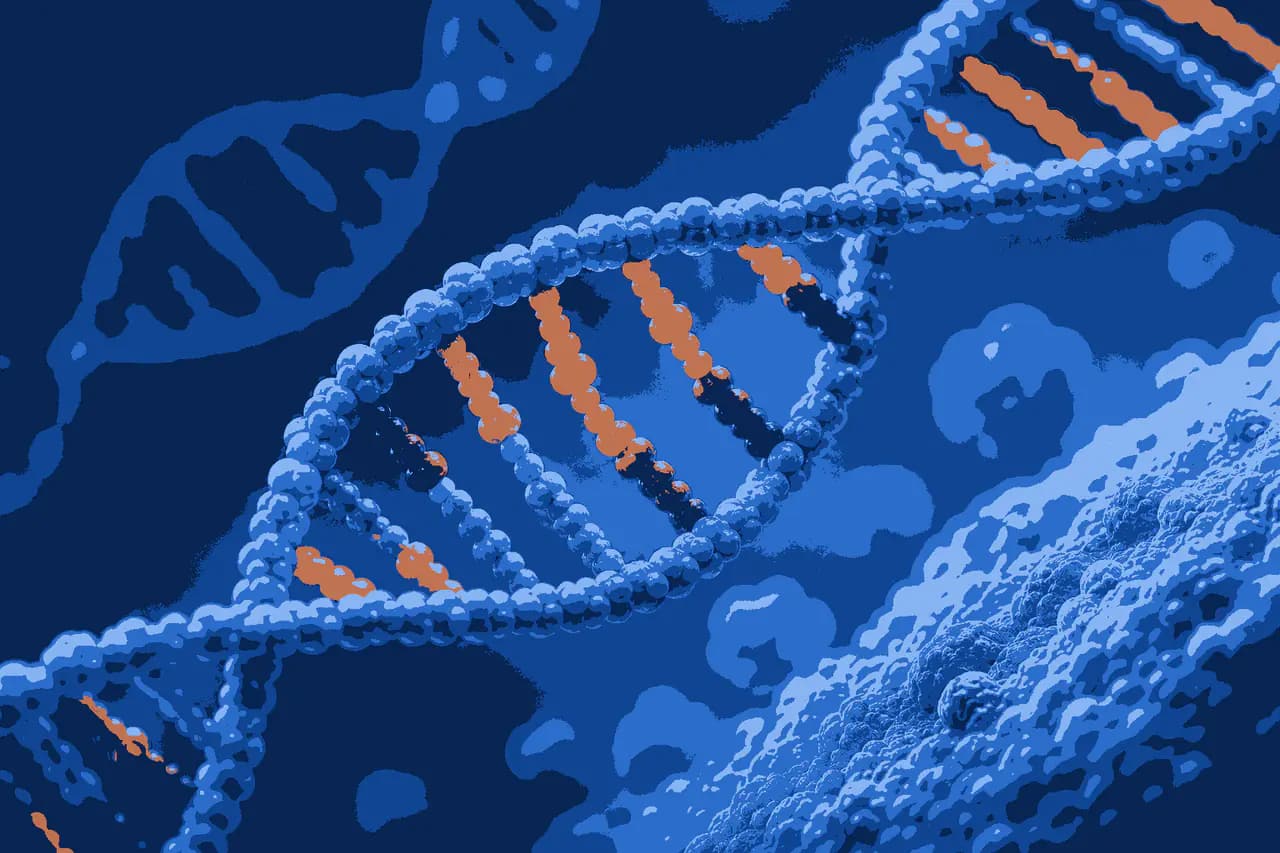
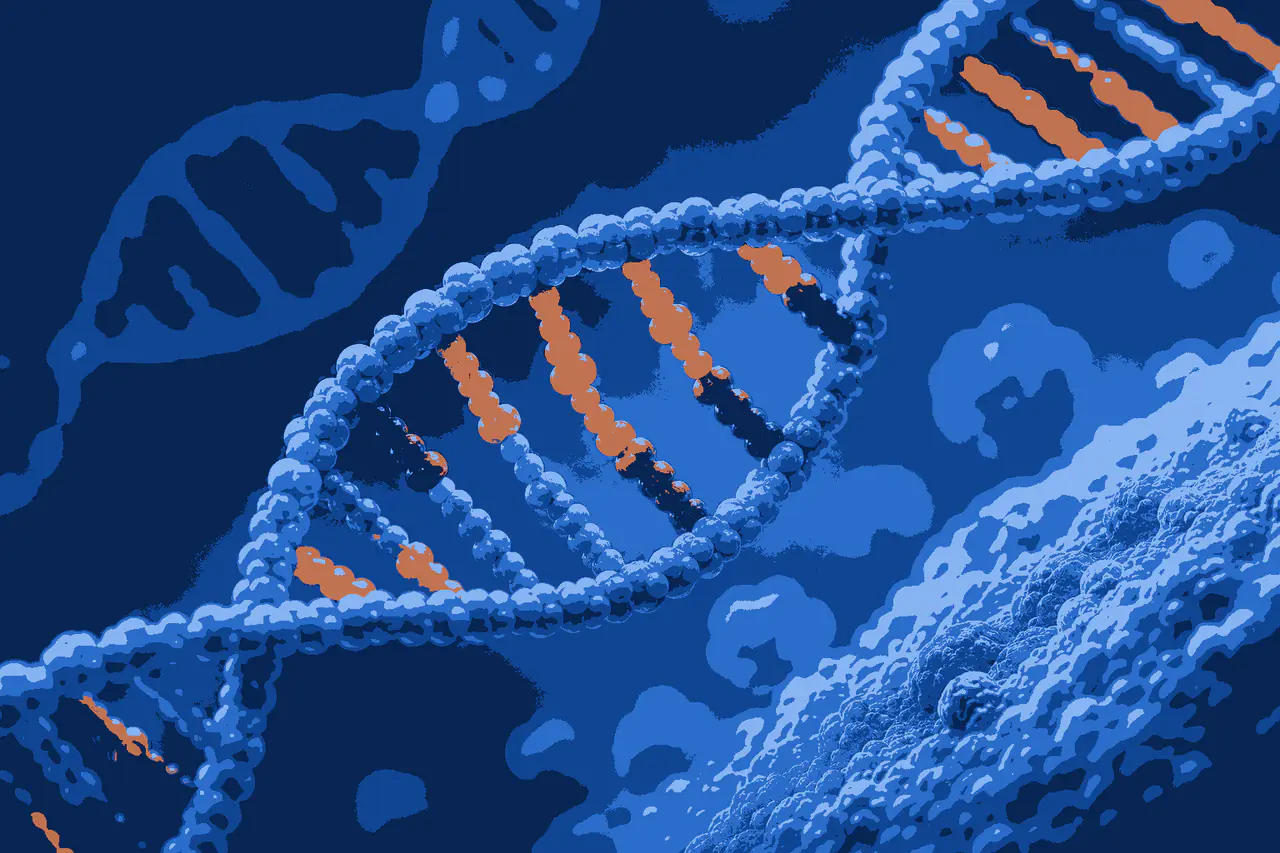
Molecular genetics is one of the most important topics in biology, and Palindromic Sequence MCQs Class 12 Biology play a major role in helping aspirants understand DNA recognition sites and genetic engineering concepts. In Class 12 Biology, aspirants learn about DNA structure, restriction enzymes, recombinant DNA technology, and molecular cloning, making Palindromic Sequence MCQs Class 12 Biology extremely valuable for board examinations and NEET preparation. Regular practice of Palindromic Sequence MCQs Class 12 Biology helps aspirants improve conceptual understanding and strengthens their ability to solve application-based questions.
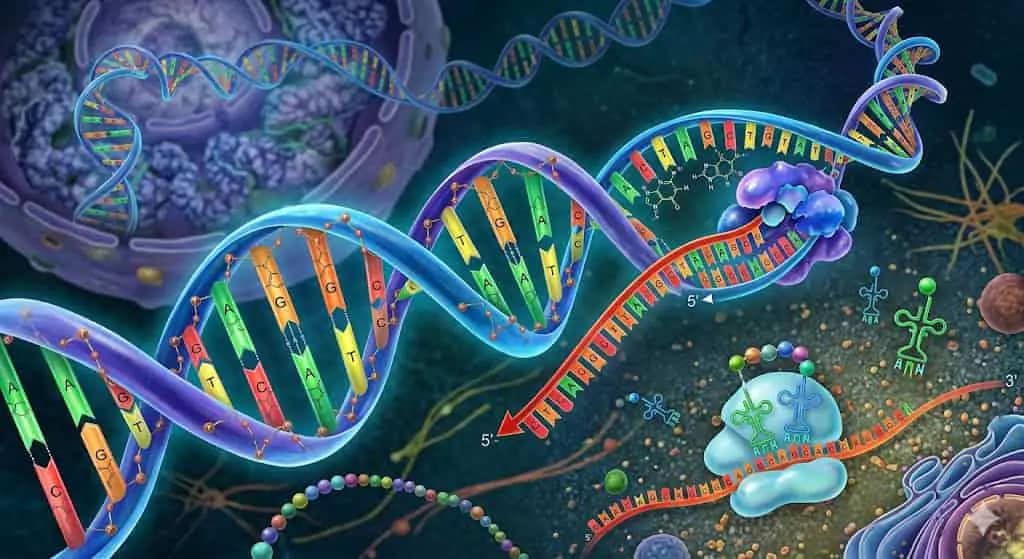
A palindromic sequence in DNA refers to a sequence of nitrogen bases that reads the same in the 5′→3′ direction on one strand and in the opposite direction on the complementary strand. This concept is very important in biotechnology, and Palindromic Sequence MCQs Class 12 Biology help aspirants revise these sequences effectively. Restriction enzymes recognize specific palindromic sequences and cut DNA at those exact points. By solving Palindromic Sequence MCQs Class 12 Biology, aspirants become familiar with the role of restriction endonucleases in recombinant DNA technology.
One major advantage of studying Palindromic Sequence MCQs Class 12 Biology is that aspirants gain clarity regarding genetic engineering techniques. Biotechnology depends heavily on DNA cutting and joining processes, and these processes require recognition of palindromic sequences. Through regular revision of Palindromic Sequence MCQs Class 12 Biology, aspirants understand how enzymes identify precise nucleotide arrangements in DNA molecules.
Another important reason why Palindromic Sequence MCQs Class 12 Biology are useful is that they strengthen understanding of DNA structure and nucleotide pairing. Aspirants learn how adenine pairs with thymine and guanine pairs with cytosine. These complementary pairings are essential for identifying palindromic regions. Practicing Palindromic Sequence MCQs Class 12 Biology repeatedly helps aspirants remember these relationships accurately during examinations.
Aspirants preparing for competitive exams benefit greatly from Palindromic Sequence MCQs Class 12 Biology because questions from molecular genetics and biotechnology are frequently asked in NEET. Many objective questions directly involve restriction enzymes, DNA cleavage sites, and nucleotide arrangements. By revising Palindromic Sequence MCQs Class 12 Biology, aspirants improve both speed and accuracy in solving biology questions.
The study of Palindromic Sequence MCQs Class 12 Biology also helps aspirants understand the functioning of restriction enzymes such as EcoRI and HindIII. These enzymes cut DNA at specific palindromic sites and are widely used in cloning experiments. Through Palindromic Sequence MCQs Class 12 Biology, aspirants become familiar with sticky ends, blunt ends, and DNA ligation techniques. This makes biotechnology concepts easier to understand and remember.
Another major benefit of practicing Palindromic Sequence MCQs Class 12 Biology is that it improves analytical thinking. Aspirants often need to analyze complementary strands and identify matching sequences. By solving Palindromic Sequence MCQs Class 12 Biology, they develop better problem-solving abilities and become more comfortable with sequence-based questions. This skill is extremely important for higher-level biology studies.
Regular revision of Palindromic Sequence MCQs Class 12 Biology also helps aspirants connect multiple chapters together. Concepts from DNA structure, replication, transcription, and biotechnology are closely linked with palindromic sequences. Aspirants who practice Palindromic Sequence MCQs Class 12 Biology consistently develop a stronger understanding of molecular biology as a whole.
One of the most important applications highlighted through Palindromic Sequence MCQs Class 12 Biology is recombinant DNA technology. Scientists use restriction enzymes to cut DNA at palindromic sequences and insert genes into vectors for cloning. By practicing Palindromic Sequence MCQs Class 12 Biology, aspirants understand the practical importance of these sequences in medicine, agriculture, and biotechnology research.
Another advantage of studying Palindromic Sequence MCQs Class 12 Biology is that it strengthens memory retention. Molecular biology contains many technical terms and nucleotide patterns that aspirants may find difficult initially. However, repeated practice of Palindromic Sequence MCQs Class 12 Biology makes these concepts easier to memorize and apply during examinations.
Aspirants who regularly revise Palindromic Sequence MCQs Class 12 Biology also gain confidence in handling assertion-reason and application-based questions. Since many modern biology exams focus on conceptual understanding rather than rote learning, practicing Palindromic Sequence MCQs Class 12 Biology becomes essential for scoring high marks.
30 Palindromic Sequence MCQs Class 12 Biology:
1. An octamer of 4 histones complexed with DNA forms
A. Endosome
B. Nucleosome
C. Mesosome
D. Centromere
Answer: B. Nucleosome
Explanation: An octamer of histone proteins wrapped with DNA forms a nucleosome.
2. Which of the following statements is true regarding the structure of chromatin?
A. Chromatin is constituted by Non Histone chromosomal proteins
B. Chromatin is densely packed DNA with dark stain
C. Chromatin consists of repeated units of DNA with 200 bp length
D. Chromatin consists of repeated units of negatively charged DNA wrapped by positively charged histone protein
Answer: B and D
Explanation: Chromatin contains negatively charged DNA wrapped around positively charged histones and appears densely stained.
3. Which of the following statements is correct about DNA and RNA as genetic material?
A. DNA directly codes for the synthesis of proteins
B. DNA and RNA both can function as genetic material
C. DNA stores genetic information and RNA transfers it
D. RNA indirectly codes for protein synthesis
Answer: B and C
Explanation: Both DNA and RNA can serve as genetic material in different organisms.
4. What is the length of DNA helix in a typical nucleosome?
A. 200 bp
B. 1000 bp
C. 3.2 × 10⁶ bp
D. 6.6 × 10⁹ bp
Answer: A. 200 bp
Explanation: A nucleosome contains approximately 200 base pairs of DNA.
5. Who named DNA present in the nucleus as 'Nuclein'?
A. James Watson and Crick
B. Friedrich Miescher
C. Maurice Wilkins
D. Rosalind Franklin
Answer: B. Friedrich Miescher
Explanation: Friedrich Miescher first isolated DNA and called it nuclein.
6. Which of the following base sequences is a palindromic sequence according to the provided passage?
A. 5' - CGATAG - 3' and 3' - GCTATG - 5'
B. 5' - GGATCC - 3' and 3' - CCTAGG - 5'
C. 5' - CCTGC - 3' and 3' - GGACG - 5'
D. 5' - GAATTG - 3' and 3' - CTTAAC - 5'
Answer: B. 5' - GGATCC - 3' and 3' - CCTAGG - 5'
Explanation: Palindromic sequences read the same in opposite directions on complementary strands.
7. Identify the DNA segment which is not a palindromic sequence based on the passage.
A. 5' - GAATTC - 3' and 3' - CTTAAG - 5'
B. 5' - CCCGGG - 3' and 3' - GGGCCC - 5'
C. 5' - GGATCC - 3' and 3' - GGTACC - 5'
D. 5' - GCGGCCGC - 3' and 3' - CGCCGGCG - 5'
Answer: C. 5' - GGATCC - 3' and 3' - GGTACC - 5'
Explanation: The complementary strand is incorrect, so it is not palindromic.
8. Which statements regarding the structure and nature of DNA are correct?
- DNA has two pyrimidine bases with single ring structure.
- In DNA, composition of bases should be A+T/G+C =1.
- Each base pair of DNA is 3.4 Å apart.
- The nucleosome model DNA packing was proposed by Kornberg and Thomas.
A. I and III
B. I, II and III
C. II, III and IV
D. I, III and IV
Answer: D. I, III and IV
Explanation: Statements I, III, and IV are correct.
9. In the DNA molecule, which statement is true based on the passage?
A. The proportion of adenine in relation to thymine varies with the organism
B. There are two strands which run antiparallel
C. The total amount of purines and pyrimidines is not equal
D. There are two strands which run parallel
Answer: B. There are two strands which run antiparallel
Explanation: DNA strands run in opposite directions.
10. What describes the two polynucleotide chains in DNA?
A. Semiconservative
B. Parallel
C. Discontinuous
D. Antiparallel
Answer: D. Antiparallel
Explanation: DNA strands are antiparallel in orientation.
11. The length of DNA molecule greatly exceeds the dimensions of the nucleus in eukaryotic cells. How is this DNA accommodated?
A. Through elimination of repetitive DNA
B. Deletion of non-essential genes
C. Super-coiling in nucleosomes
D. DNase digestion
Answer: C. Super-coiling in nucleosomes
Explanation: DNA is compacted through nucleosome formation and supercoiling.
12. The sequence of events mentioned below are symbolized by alphabets. Choose the correct answer where the alphabets are matched with the processes.
A. A = Replication, B = Transcription, C = Translation, D = Transduction
B. A = Reverse transcription, B = Translation, C = Transcription, D = Replication
C. A = Replication, B = Transformation, C = Transcription, D = Translation
D. A = Reverse transcription, B = Replication, C = Transcription, D = Translation
Answer: D. A = Reverse transcription, B = Replication, C = Transcription, D = Translation
Explanation: This sequence follows molecular biology processes.
13. A distinct mechanism that usually involves a short segment of DNA with remarkable capacity to move from one location in a chromosome to another is called
A. DNA replication
B. DNA hybridization
C. DNA recombination
D. DNA transposition
Answer: D. DNA transposition
Explanation: DNA transposition involves movement of transposons.
14. In DNA, which is absent?
A. Adenine
B. Thymine
C. Guanine
D. Uracil
Answer: D. Uracil
Explanation: Uracil occurs in RNA instead of thymine.
15. Satellite DNA is a useful tool in
A. organ transplantation
B. sex determination
C. forensic science
D. genetic engineering
Answer: C. forensic science
Explanation: Satellite DNA is used in DNA fingerprinting.
16. DNA is .......... charged and is usually held with some proteins which are ......... charged in a region termed as ........ .
A. B, C, D
B. C, A, E
C. D, E, B
D. B, A, E
Answer: D. B, A, E
Explanation: DNA is negatively charged and binds positively charged proteins in the nucleoid.
17. Histones are positively charged basic proteins due to the abundance of which amino acid residues?
A. Alanine and Glycine
B. Leucine and Valine
C. Lysine and Arginine
D. Aspartic Acid and Glutamic Acid
Answer: C. Lysine and Arginine
Explanation: Histones are rich in lysine and arginine residues.
18. In a DNA molecule with three full helical turns, each turn containing three guanines, how many double bonds are possible between purines and pyrimidines?
A. 9
B. 18
C. 21
D. 30
Answer: C. 21
Explanation: GC pairs form three hydrogen bonds each.
19. Which statement about nucleosomes is correct?
A. H1 histone lies outside the nucleosome
B. Negatively charged DNA and positively charged histones allow DNA packaging
C. Each nucleosome has 6 histone molecules
D. DNA between nucleosomes is linker DNA
Answer: A, B and D
Explanation: H1 seals DNA, linker DNA joins nucleosomes, and histones help packaging.
20. How are two molecules of DNA linked sideways?
A. Glycosidic bond
B. Ester bond
C. Purine-pyrimidine hydrogen bond
D. Both (a) and (b)
Answer: C. Purine-pyrimidine hydrogen bond
Explanation: Complementary bases are linked by hydrogen bonds.
21. What structures are present in the core particle of a nucleosome?
A. Octamer of histone proteins
B. 200 bp of DNA
C. Non-histone proteins
D. Linker DNA
Answer: A. Octamer of histone proteins
Explanation: The nucleosome core contains eight histone proteins.
22. Which statement is INCORRECT about nucleosomes?
A. They contain DNA
B. They contain histones
C. They are membrane-bound organelles
D. They are a part of chromosomes
Answer: C. They are membrane-bound organelles
Explanation: Nucleosomes are not membrane-bound structures.
23. What is a DNA or RNA segment tagged with a radioactive molecule called?
A. Vector
B. Probe
C. Clone
D. Plasmid
Answer: B. Probe
Explanation: Probes help identify complementary nucleic acid sequences.
24. Which one of the following palindromic base sequences in DNA can be easily cut at about the middle by some particular restriction enzyme?
A. 5' CGTTCG 3' / 3' ATGGTA 5'
B. 5' GATATG 3' / 3' CTACTA 5'
C. 5' GAATTC 3' / 3' CTTAAG 5'
D. 5' CACGTA 3' / 3' CTCAGT 5'
Answer: C. 5' GAATTC 3' / 3' CTTAAG 5'
Explanation: Restriction enzymes recognize palindromic DNA sequences.
25. Which of the following Nitrogen bases is found only in DNA?
A. Adenine
B. Guanine
C. Cytosine
D. Thymine
Answer: D. Thymine
Explanation: Thymine occurs only in DNA.
26. Match the following:
A. Chargaff → 5. (A + G) = (C + T)
B. Replicon → 4. Length of DNA
C. Permease → 2. Uptake of lactose
D. Split gene → 3. hn RNA
E. X-ray diffraction → 1. Wilkin and Franklin
Answer: A. 5 4 2 3 1
Explanation: These are correctly matched biological discoveries and concepts.
27. Viable material of endangered species can be preserved by:
A. Gene bank
B. Gene library
C. Herbarium
D. Gene pool
Answer: A. Gene bank
Explanation: Gene banks preserve genetic diversity.
28. Length of one loop of B-DNA:
A. 3.4 nm
B. 0.34 nm
C. 20 nm
D. 10 nm
Answer: A. 3.4 nm
Explanation: One turn of B-DNA measures 3.4 nm.
29. Similarity in DNA and RNA:
A. Both are polymers of nucleotides
B. Both have similar pyrimidine
C. Both have similar sugar
D. Both are genetic material
Answer: A. Both are polymers of nucleotides
Explanation: DNA and RNA are both made of nucleotide monomers.
30. Variations in proteins are due to:
A. Sequence of amino acids
B. Number of amino acids
C. R-group
D. None
Answer: A. Sequence of amino acids
Explanation: Protein variation mainly depends on amino acid sequence.
Conclusion on Palindromic Sequence MCQs Class 12 Biology
In conclusion, Palindromic Sequence MCQs Class 12 Biology are extremely important for mastering molecular genetics and biotechnology concepts. Consistent practice of Palindromic Sequence MCQs Class 12 Biology improves conceptual clarity, analytical thinking, and exam performance. Whether preparing for board examinations or NEET, aspirants should revise Palindromic Sequence MCQs Class 12 Biology regularly to develop a strong understanding of DNA sequences and genetic engineering principles.
Related reading
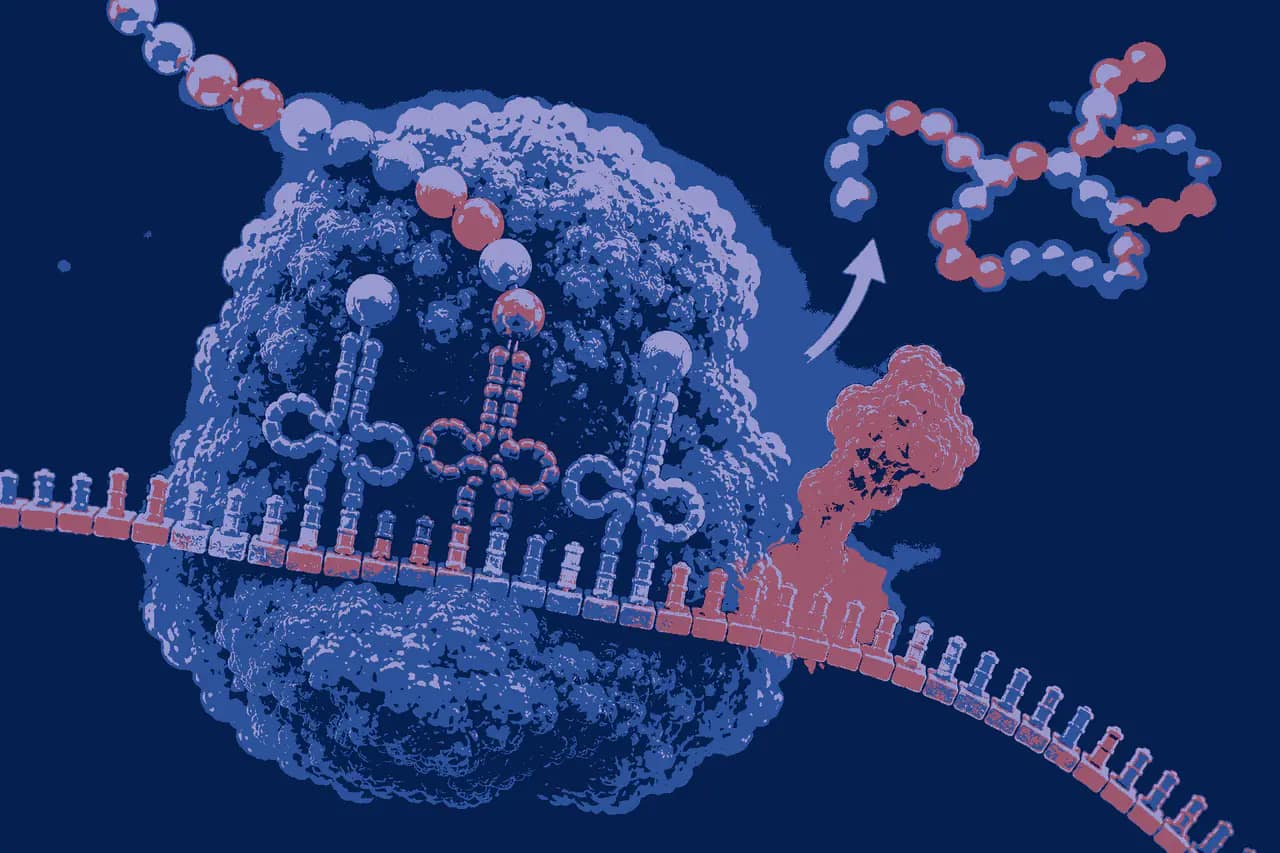
Master Chain Termination Codon MCQs Biology Class 12 - Powerful Questions with Accurate Answers for NEET
Practice Chain Termination Codon MCQs Biology Class 12 for NEET and board exams. Learn stop codons, translation termination , protein synthesis concepts easily.
Essential DNA Structure and Function MCQs for Class 12 Biology - Ultimate Practice Challenge
Master DNA Structure and Function MCQs for Class 12 Biology with clear concepts on DNA replication, genes, nucleotides, heredity and molecular genetics for NEET