
- Keneitsino Lydia
- May 9, 2026
Essential DNA Structure and Function MCQs for Class 12 Biology – Ultimate Practice Challenge
DNA is the fundamental molecule of heredity, and DNA Structure and Function MCQs for Class 12 Biology help aspirants understand this essential topic in a simple and exam-focused way. In Class 12 Biology, molecular genetics forms a major part of the syllabus, making DNA Structure and Function MCQs for Class 12 Biology extremely important for board examinations as well as NEET preparation. Aspirants who regularly practice DNA Structure and Function MCQs for Class 12 Biology gain better conceptual clarity about the organization, replication, and role of DNA in living organisms.
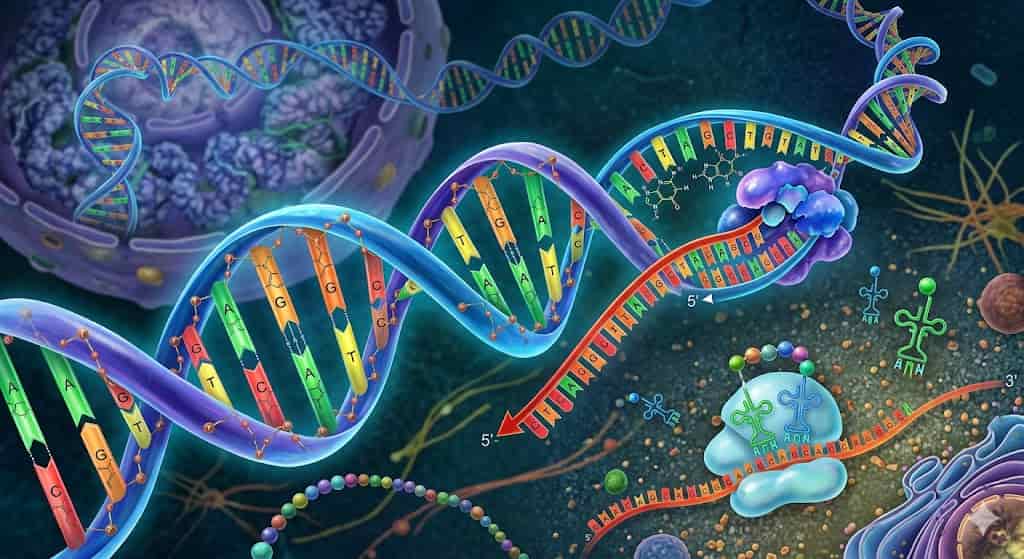
The study of DNA became more advanced after Watson and Crick proposed the double helix model, and today DNA Structure and Function MCQs for Class 12 Biology are among the most commonly asked questions in biology examinations. By solving DNA Structure and Function MCQs for Class 12 Biology, aspirants learn about nucleotide composition, complementary base pairing, antiparallel strands, and hydrogen bonding. These concepts are foundational for understanding heredity and genetic variation.
One major benefit of revising DNA Structure and Function MCQs for Class 12 Biology is that aspirants become comfortable with the terminology associated with molecular biology. Terms such as nucleosome, nucleotide, chromatin, gene expression, replication fork, and semiconservative replication are frequently included in DNA Structure and Function MCQs for Class 12 Biology. Continuous practice helps aspirants remember these terms more effectively and apply them accurately in examinations.
Another important reason why DNA Structure and Function MCQs for Class 12 Biology are useful is that they improve analytical and logical thinking. Many questions involve calculations related to base pairing or understanding the relationship between DNA structure and function. By solving DNA Structure and Function MCQs for Class 12 Biology, aspirants strengthen their ability to analyze biological data and solve conceptual problems quickly.
The concepts covered in DNA Structure and Function MCQs for Class 12 Biology are also essential for understanding advanced genetics and biotechnology. DNA is responsible for storing and transmitting hereditary information from one generation to another. Through regular practice of DNA Structure and Function MCQs for Class 12 Biology, aspirants learn how genetic information is replicated and expressed within cells. This forms the basis for understanding protein synthesis and inheritance.
One of the most important aspects explained through DNA Structure and Function MCQs for Class 12 Biology is the role of complementary base pairing. Adenine pairs with thymine, while guanine pairs with cytosine. These specific pairings maintain the stability of the DNA molecule. Aspirants who revise DNA Structure and Function MCQs for Class 12 Biology frequently develop a strong understanding of how DNA replication occurs accurately during cell division.
Another major advantage of practicing DNA Structure and Function MCQs for Class 12 Biology is that it strengthens NCERT-based preparation. Most biology entrance examinations directly ask conceptual questions related to DNA structure, replication, transcription, and genetic coding. Aspirants who solve DNA Structure and Function MCQs for Class 12 Biology consistently improve their confidence and exam performance significantly.
The importance of DNA Structure and Function MCQs for Class 12 Biology also extends to understanding modern biotechnology techniques such as DNA fingerprinting, PCR, recombinant DNA technology, and gene sequencing. These technologies rely heavily on the structural and functional properties of DNA. Through regular revision of DNA Structure and Function MCQs for Class 12 Biology, aspirants gain a stronger foundation for these advanced concepts.
In addition, DNA Structure and Function MCQs for Class 12 Biology help aspirants understand the relationship between genes and proteins. Genes are segments of DNA that carry instructions for protein synthesis. By practicing DNA Structure and Function MCQs for Class 12 Biology, aspirants learn how mutations in DNA can affect protein production and lead to genetic disorders. This improves both conceptual understanding and scientific reasoning.
Aspirants preparing for NEET especially benefit from DNA Structure and Function MCQs for Class 12 Biology because molecular genetics questions are frequently included in competitive examinations. Continuous practice of DNA Structure and Function MCQs for Class 12 Biology enhances speed, accuracy, and conceptual clarity. It also helps aspirants become more familiar with assertion-reason and application-based questions.
30 DNA Structure and Function MCQs for Class 12 Biology:
1. c-DNA is formed from m-RNA by which enzyme?
A. restriction endonuclease
B. reverse transcriptase
C. DNA polymerase
D. RNA polymerase
Answer: B. reverse transcriptase
Explanation: c-DNA is formed from m-RNA by the enzyme reverse transcriptase.
2. A typical nucleosome contains
A. 100 bp of DNA helix
B. 200 bp of DNA helix
C. 300 bp of DNA helix
D. 400 bp of DNA helix
Answer: B. 200 bp of DNA helix
Explanation: A typical nucleosome contains about 200 bp of DNA helix.
3. The small segment of DNA which helps to detect the presence of a gene or a long DNA sequence in biological system is termed as
A. DNA walker
B. cDNA
C. DNA clone
D. DNA probe
Answer: D. DNA probe
Explanation: A DNA probe helps detect the presence of a specific gene or DNA sequence.
4. In DNA when AGCT occurs, their association is as per which of the following pair?
A. AC – GT
B. AG – CT
C. AT – GC
D. All of these
Answer: C. AT – GC
Explanation: Adenine pairs with thymine and guanine pairs with cytosine.
5. What is a nucleosome?
A. DNA wrapped around histone protein
B. RNA wrapped around histone protein
C. Polymer
D. None of the above
Answer: A. DNA wrapped around histone protein
Explanation: A nucleosome is the basic structural unit of chromatin formed by DNA wrapped around histones.
6. The number of hydrogen bonds between adenine and thymine in a DNA molecule is:
A. two
B. three
C. four
D. eight
Answer: A. two
Explanation: Adenine and thymine are connected by two hydrogen bonds.
7. DNA element with the ability to change position is called:
A. cistron
B. transposon
C. intron
D. recon
Answer: B. transposon
Explanation: Transposons are mobile DNA sequences capable of changing position in the genome.
8. In a DNA molecule, the total quantity of purines is equal to the total quantity of pyrimidines. Adenine pairs with thymine and cytosine pairs with guanine. Mark the appropriate response:
A. If both Assertion and Reason are true and Reason is the correct explanation of Assertion
B. If both Assertion and Reason are true but Reason is not the correct explanation of Assertion
C. Assertion is true but Reason is false
D. Both Assertion and Reason are false
Answer: A. If both Assertion and Reason are true and Reason is the correct explanation of Assertion
Explanation: Purines pair with pyrimidines according to Chargaff’s rule.
9. Nucleotide arrangement in DNA can be seen by:
A. X-ray crystallography
B. electron microscope
C. ultracentrifuge
D. light microscope
Answer: A. X-ray crystallography
Explanation: X-ray crystallography helped determine the DNA structure.
10. An analysis of a DNA (double-stranded) sample yielded 18% cytosine. What would be the percentage of other bases in this sample?
A. T–32
B. G–32
C. T–18
D. A–18
Answer: A. T–32
Explanation: If cytosine is 18%, guanine is also 18%, leaving 64% for adenine and thymine equally.
11. The modern concept of a gene is:
A. a segment of DNA, capable of crossing over
B. functional unit of DNA
C. a segment of RNA
D. a segment of chromosome
Answer: B. functional unit of DNA
Explanation: Genes are functional units of heredity made of DNA.
12. Locations on sites in the human DNA where single base DNA differences occur are called
A. Repetitive DNA
B. VNTR
C. SNP
D. Expressed sequence tags
Answer: C. SNP
Explanation: SNP stands for Single Nucleotide Polymorphism.
13. The bonds that hold the two complementary strands of DNA together are
A. Ionic bonds
B. Peptide bonds
C. Phosphodiester bonds
D. Hydrogen bonds
Answer: D. Hydrogen bonds
Explanation: Hydrogen bonds connect complementary nitrogen bases.
14. The complementary synthetic and random DNA are used as
A. transposons
B. passenger DNA
C. cloning vectors
D. recombinant DNA
Answer: B. passenger DNA
Explanation: Passenger DNA refers to foreign DNA inserted into vectors.
15. DNA can be 1.A-DNA 2.B-DNA 3.Z-DNA 4.Y-DNA
A. 1, 2 and 3 are correct
B. 1 and 2 are correct
C. 2 and 4 are correct
D. 1 and 3 are correct
Answer: A. 1, 2 and 3 are correct
Explanation: A-DNA, B-DNA, and Z-DNA are known forms of DNA.
16. McClintock is related to
A. plasmids
B. retroposons
C. transposons
D. none of these
Answer: C. transposons
Explanation: Barbara McClintock discovered transposons in maize.
17. Crick, one of the discoverers of DNA double helical structure, was a man of
A. Physics
B. Chemistry
C. Zoology
D. Botany
Answer: A. Physics
Explanation: Francis Crick had a background in physics.
18. Nitrogen base + Pentose sugar + Phosphate group is
A. nucleoside
B. nucleotide
C. nucleic acid
D. pyrimidine base
Answer: B. nucleotide
Explanation: A nucleotide consists of base, sugar, and phosphate.
19. DNA is present in
A. nucleus only
B. mitochondrion only
C. chloroplast only
D. All of these
Answer: D. All of these
Explanation: DNA occurs in nucleus, mitochondria, and chloroplasts.
20. In a DNA molecule, at the 5′ end there is a free _____
A. oxygen
B. nitrogen
C. phosphate
D. hydroxyl
Answer: C. phosphate
Explanation: The 5′ end of DNA contains a free phosphate group.
21. When DNA is formed from RNA, it is called
A. D-DNA
B. Z-DNA
C. C-DNA
D. A-DNA
Answer: C. C-DNA
Explanation: DNA synthesized from RNA is referred to as cDNA.
22. The anti-parallel nature of DNA refers to
A. its charged phosphate groups
B. the formation of hydrogen bonds between bases from opposite strands
C. the opposite direction of the two strands
D. the pairing of bases on one strand with bases on the other strand
Answer: C. the opposite direction of the two strands
Explanation: DNA strands run in opposite directions.
23. Beadle and Tatum showed that each kind of mutant bread mould they studied lacked a specific enzyme. Their experiments demonstrated that
A. cells need specific enzymes in order to function
B. genes are made of DNA
C. enzymes are required to repair damage
D. genes carry information for making proteins
Answer: D. genes carry information for making proteins
Explanation: Their work supported the one gene-one enzyme hypothesis.
24. In DNA helix cytosine paired with guanine by :
A. covalent bond
B. phosphate bond
C. two H₂ bonds
D. three H₂ bonds
Answer: D. three H₂ bonds
Explanation: Cytosine and guanine are linked by three hydrogen bonds.
25. DNA is acidic due to
A. sugar
B. phosphoric acid
C. purine
D. pyrimidine
Answer: B. phosphoric acid
Explanation: Phosphate groups make DNA acidic.
26. Stain used by Feulgen to stain DNA is
A. janus green
B. basic fuschin
C. crystal violet
D. methylene blue
Answer: B. basic fuschin
Explanation: Feulgen stain uses basic fuschin for DNA visualization.
27. A, B, and C are the three forms of DNA, in which
A. A and B are right-handed and C is left-handed
B. A is right-handed and B and C are left-handed
C. All three are right-handed, but the number of bases per turn differs
D. All three are left-handed, but the number of base pairs per turn differs
Answer: C. All three are right-handed, but the number of bases per turn differs
Explanation: A-DNA, B-DNA, and C-DNA differ in structural parameters.
28. Which is the unit of DNA?
A. Chromatin
B. Euchromatin
C. Chromosomes
D. Chromatids
Answer: A. Chromatin
Explanation: Chromatin is the DNA-protein complex forming chromosomes.
29. How many nucleosomes are found in helical coil of 30 nm chromatin fibre?
A. 6
B. 10
C. 12
D. 9
Answer: A. 6
Explanation: Approximately 6 nucleosomes form one turn of the 30 nm chromatin fibre.
30. The barr body is observed in
A. 3% male basophils
B. 3% female basophils
C. 3% male neutrophils
D. 3% female neutrophils
Answer: D. 3% female neutrophils
Explanation: Barr bodies are seen in some female neutrophils.
Conclusion on DNA Structure and Function MCQs for Class 12 Biology
In conclusion, DNA Structure and Function MCQs for Class 12 Biology are extremely important for mastering molecular genetics and heredity. Regular practice of DNA Structure and Function MCQs for Class 12 Biology improves conceptual understanding, strengthens problem-solving skills, and increases examination confidence. Whether preparing for school exams or medical entrance tests, aspirants should revise DNA Structure and Function MCQs for Class 12 Biology regularly to build a strong foundation in biology.