
- Keneitsino Lydia
- April 28, 2026
Boost Your Score with Syphills Gonorrhea Bacterial STD MCQs Class 12 Biology for Competitive Exams
When aspirants prepare for reproductive health topics, the concept of Syphills Gonorrhea Bacterial STD MCQs Class 12 Biology becomes extremely important. These topics not only strengthen theoretical understanding but also help aspirants analyze real-life medical conditions through biology concepts. The study of Syphills Gonorrhea Bacterial STD MCQs Class 12 Biology provides a clear idea of how bacterial infections spread and affect the human reproductive system.
In Class 12 Biology, sexually transmitted diseases (STDs) form a crucial part of the syllabus, and Syphills Gonorrhea Bacterial STD MCQs Class 12 Biology plays a vital role in this section. Syphilis and gonorrhea are two major bacterial STDs that are frequently discussed due to their prevalence and impact on public health. By focusing on Syphills Gonorrhea Bacterial STD MCQs Class 12 Biology, aspirants can better understand disease transmission, symptoms, and prevention methods.
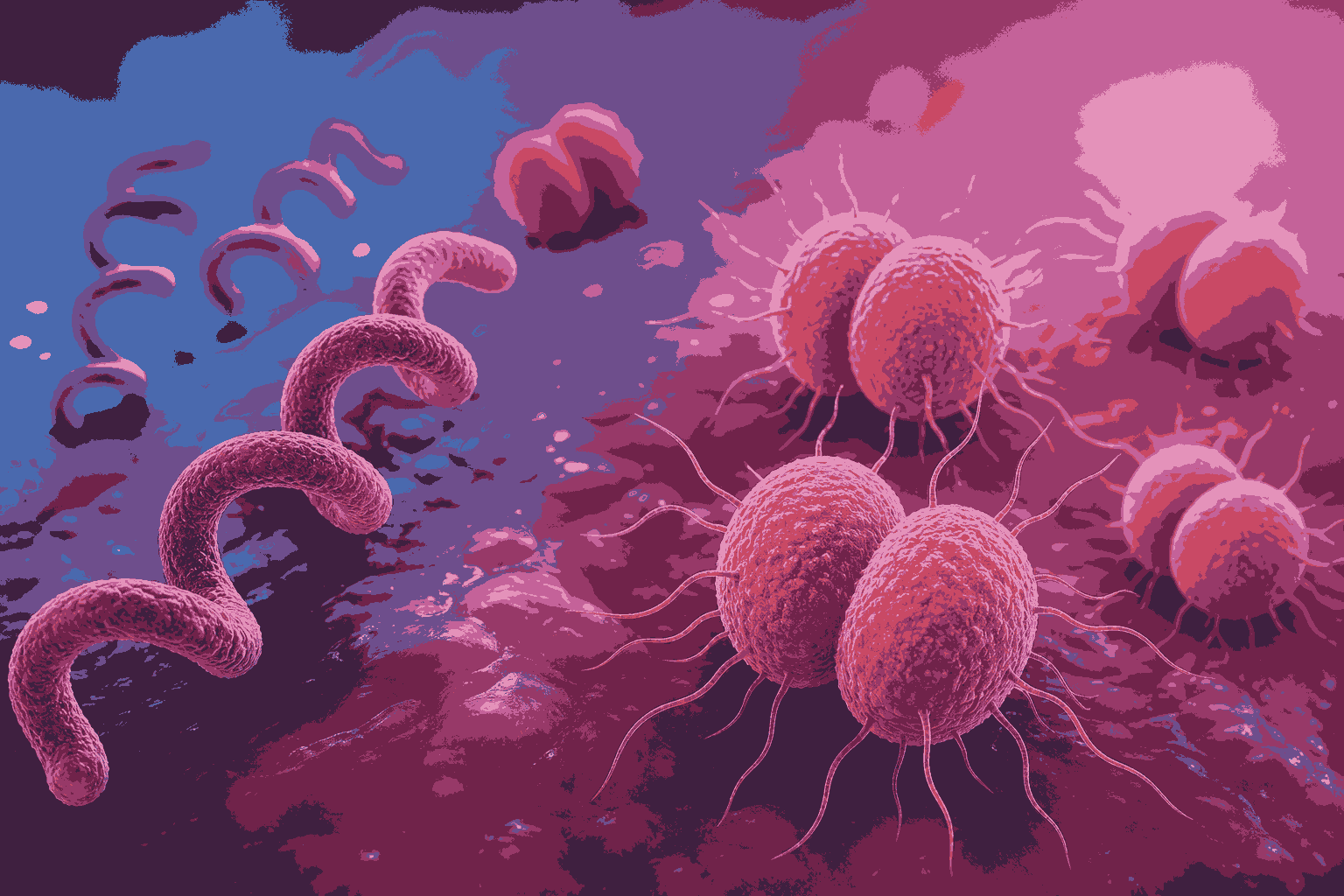
Syphilis is caused by the bacterium Treponema pallidum, while gonorrhea is caused by Neisseria gonorrhoeae. Learning through Syphills Gonorrhea Bacterial STD MCQs Class 12 Biology helps aspirants differentiate between these pathogens and their biological characteristics. These infections primarily spread through sexual contact, making them highly relevant in reproductive health education. Therefore, mastering Syphills Gonorrhea Bacterial STD MCQs Class 12 Biology ensures clarity in both theoretical and application-based questions.
One of the key aspects of studying Syphills Gonorrhea Bacterial STD MCQs Class 12 Biology is understanding the symptoms associated with these infections. Syphilis progresses in stages, starting with painless sores and potentially leading to severe complications if untreated. Gonorrhea, on the other hand, often causes discharge and pain during urination. Through Syphills Gonorrhea Bacterial STD MCQs Class 12 Biology, aspirants learn to identify these symptoms and relate them to biological processes.
Another important focus of Syphills Gonorrhea Bacterial STD MCQs Class 12 Biology is diagnosis and treatment. Both diseases are bacterial in nature, which means they can be treated effectively with antibiotics if detected early. This highlights the importance of awareness and early medical intervention. By studying Syphills Gonorrhea Bacterial STD MCQs Class 12 Biology, aspirants gain insights into how timely treatment can prevent complications like infertility or systemic infections.
Prevention strategies are equally significant in Syphills Gonorrhea Bacterial STD MCQs Class 12 Biology. Safe sexual practices, use of protection, and regular health check-ups play a crucial role in controlling the spread of these infections. The inclusion of Syphills Gonorrhea Bacterial STD MCQs Class 12 Biology in exam preparation ensures that aspirants are aware of both biological concepts and real-world applications of prevention.
From an examination perspective, Syphills Gonorrhea Bacterial STD MCQs Class 12 Biology helps aspirants develop analytical thinking. Questions based on these topics often test understanding of infection mechanisms, immune response, and treatment strategies. Regular revision using Syphills Gonorrhea Bacterial STD MCQs Class 12 Biology improves accuracy and confidence in answering such questions.
Furthermore, Syphills Gonorrhea Bacterial STD MCQs Class 12 Biology is not just limited to exams but also contributes to general awareness about reproductive health. Understanding these diseases helps aspirants make informed decisions and promotes responsible behavior. The repeated practice of Syphills Gonorrhea Bacterial STD MCQs Class 12 Biology reinforces important concepts and ensures long-term retention.
In addition, Syphills Gonorrhea Bacterial STD MCQs Class 12 Biology connects with broader topics such as immunity, microbiology, and public health. This interdisciplinary relevance makes it an essential part of biology learning. Aspirants who focus on Syphills Gonorrhea Bacterial STD MCQs Class 12 Biology gain a deeper understanding of how microorganisms interact with the human body.
Syphills Gonorrhea Bacterial STD MCQs Class 12 Biology:
1. Consider the statements given below regarding contraception and answer as directed thereafter:
(i) Medical Termination of Pregnancy (MTP) during the first trimester is generally safe
(ii) Generally, chances of conception are nil until the mother breast-feeds the infant up to two years
(iii) Intrauterine devices like copper-T are effective contraceptives
(iv) Contraception pills may be taken up to one week after coitus to prevent conception
Options:
A. (i), (iii)
B. (i), (ii)
C. (ii), (iii)
D. (iii), (iv)
Answer: A
Explanation: MTP is safe in the first trimester and Cu-T is effective. Lactational amenorrhea works only up to ~6 months, and pills are not taken one week after coitus.
2. Assertion (A): One of the natural methods of contraception is lactational amenorrhea
Reason (R): Ovulation generally does not occur during active lactation.
Options:
A. Both A and R are true and R explains A
B. Both true but R not explanation
C. A true, R false
D. A false, R true
Answer: A
Explanation: Prolactin suppresses ovulation during lactation.
3. Which category of contraceptive method is Coitus interruptus also known as withdrawal?
A. Sterilization
B. Consuming pills
C. Coitus interruptus
D. Using condoms
Answer: C
Explanation: Withdrawal method prevents sperm deposition.
4. What type of IUD is Multiload 375?
A. Non-medicated
B. Cu releasing
C. Hormone releasing
D. Mg releasing
Answer: B
Explanation: It releases copper ions that reduce sperm motility.
5. What is the function of a Progesterone pill in preventing pregnancy?
A. Ova formation
B. Fertilization
C. Implantation
D. None of these
Answer: A
Explanation: It mainly inhibits ovulation.
6. Which statement about contraceptives is incorrect?
A. They are regular requirements for reproductive health
B. They help in population control
C. They prevent conception
D. Side effects should not be ignored
Answer: A
Explanation: Contraceptives are optional, not a regular requirement.
7. Which is not correct about untreated STDs in women?
A. Cause pelvic inflammation
B. Cause abortion
C. Cause infertility
D. Do not cause ectopic pregnancy
Answer: D
Explanation: Untreated STDs can cause ectopic pregnancy.
8. The birth control pill contains:
A. Progesterone and estrogen
B. LH and estrogen
C. FSH and LH
D. FSH and estrogen
Answer: A
Explanation: Pills contain synthetic estrogen and progesterone.
9. What is the sterilization procedure in human females?
A. Coitus interruptus
B. Rhythm method
C. Tubectomy
D. Vasectomy
Answer: C
Explanation: Fallopian tubes are cut/blocked.
10. Which technique blocks sperm passage in males?
A. Tubectomy
B. Vasectomy
C. Rhythm method
D. Coitus interruptus
Answer: B
Explanation: Vasectomy is a surgical method in males where the vas deferens is cut or tied, preventing sperm from entering semen.
11. Which statements are correct regarding contraceptives?
- Condoms prevent STDs
- IUDs are ideal spacing methods
- DMPA works for 3 years
- Pills inhibit ovulation
A. I & II
B. III & IV
C. I, II & IV
D. I, II, III & IV
Answer: C
Explanation: Statements 1, 2, and 4 are correct. DMPA works for about 3 months, not 3 years.
12. Statement A: Peak fertility is around day 14
Statement B: Vasectomy is for females**
A. A wrong, B right
B. A right, B wrong
C. Both right
D. Both wrong
Answer: B
Explanation: Ovulation occurs around day 14, so A is correct. Vasectomy is a male sterilization method, so B is wrong.
13. Identify the incorrect combinations of contraceptive methods and their functions:
A. Lippes loop – Non-medicated IUD increasing phagocytosis of sperms
B. Copper-T – Releases copper ions that suppress sperm motility
C. Progestasert – Hormone-releasing IUD
D. Saheli – Non-steroidal oral contraceptive
Answer: A
Explanation:
Lippes loop is a non-medicated IUD, but its main function is not primarily increasing phagocytosis of sperms. That function is more characteristic of copper-releasing IUDs. Hence, option A is the incorrect match.
14. What do oral contraceptive pills contain?
A. Estrogen & testosterone
B. Estrogen & relaxin
C. Testosterone & aldosterone
D. Estrogen & progesterone
Answer: D
Explanation: Oral pills contain estrogen and progesterone which inhibit ovulation.
15. Match the contraceptive methods with their correct descriptions:
| Contraceptive Method | Description |
|---|---|
| A. Saheli | I. Oral contraceptive pill |
| B. Vault | II. Barrier method |
| C. Skin patch | III. Hormonal method |
| D. Multiload 375 | IV. Intrauterine device |
Options:
A. A–I, B–II, C–III, D–IV
B. A–III, B–I, C–II, D–IV
C. A–I, B–III, C–II, D–IV
D. A–II, B–III, C–I, D–IV
Answer: A
Explanation:
- Saheli is an oral contraceptive pill (non-steroidal)
- Vault acts as a barrier method preventing sperm entry
- Skin patch releases hormones → hormonal method
- Multiload 375 is a copper-releasing intrauterine device (IUD)
16. Which of the following is a hormonal method of birth control?
A. Pill
B. IUD
C. Vasectomy
D. Femidom
Answer: A
Explanation: Pills contain hormones that prevent ovulation.
17. Identify incorrect statement about contraceptives
A. IUDs widely used
B. Surgery blocks gamete transport
C. Pills inhibit ovulation
D. IUD only before coitus
Answer: D
Explanation: IUDs can be used long-term and are not restricted to pre-coital use.
18. DMPA stands for
A. Contraceptive injection
B. Surgical method
C. MTP
D. ART
Answer: A
Explanation: Depot Medroxy Progesterone Acetate is an injectable contraceptive.
19. Progestasert is an IUD which is
A. Copper releasing
B. Non-medicated
C. Hormone releasing
D. Ideal contraceptive
Answer: C
Explanation: It releases progesterone making uterus unsuitable for implantation.
20. Surgical removal of testes is called
A. Castration
B. IUD
C. Vasectomy
D. Gastrula
Answer: A
Explanation: Castration involves removal of testes.
21. Which is NOT a barrier method?
A. Vaginal ring
B. Cervical cap
C. Diaphragm
D. Vaults
Answer: A
Explanation: Vaginal ring is hormonal, not a barrier method.
22. CuT, LNG-20 and Cu7 are
A. Pills
B. Surgical methods
C. ART
D. IUD
Answer: D
Explanation: These are intrauterine contraceptive devices.
23. HIV reduces number of
A. Tc cells
B. NK cells
C. TH cells
D. B cells
Answer: C
Explanation: HIV targets helper T cells (CD4).
24. Identify bacterial STDs from list
- Gonorrhoea
- Giardiasis
- Trichomoniasis
- Chlamydiasis
- Syphilis
Options:
A. i & ii
B. i, iv & v
C. iii & v
D. ii, iii & iv
Answer: B
Explanation: Gonorrhoea, Chlamydia, and Syphilis are bacterial diseases.
25. Which STDs are completely curable?
A. Hepatitis B & herpes
B. Herpes & warts
C. HIV & trichomoniasis
D. Syphilis & trichomoniasis
Answer: D
Explanation: These can be treated effectively with medication.
26. HIV replicates in
A. Eosinophils
B. TH cells
C. B cells
D. Basophils
Answer: B
Explanation: HIV attacks CD4+ helper T cells.
27. Completely curable STD
A. HIV
B. Herpes
C. Gonorrhoea
D. Hepatitis B
Answer: C
Explanation: Gonorrhoea is treatable with antibiotics.
28. Bacterial STD
A. Syphilis
B. Herpes
C. Cholera
D. Tetanus
Answer: A
Explanation: Syphilis is caused by a bacterium.
29. Organism causing syphilis
A. Neisseria
B. Treponema pallidum
C. Pasteurella
D. Clostridium
Answer: B
Explanation: Treponema pallidum is the causative agent.
30. Bacterium causing syphilis
A. Pasteurella
B. Clostridium
C. Treponema pallidum
D. Chlamydia
Answer: C
Explanation: Same bacterium causes syphilis.
Conclusion on Syphills Gonorrhea Bacterial STD MCQs Class 12 Biology
To summarize, mastering Syphills Gonorrhea Bacterial STD MCQs Class 12 Biology is crucial for both academic success and practical knowledge. It enhances conceptual clarity, improves problem-solving skills, and builds awareness about important health issues. Continuous practice of Syphills Gonorrhea Bacterial STD MCQs Class 12 Biology ensures that aspirants are well-prepared for exams and beyond.