
- Keneitsino Lydia
- April 24, 2026
Stop Getting It Wrong: Menstrual Cycle Phases Order MCQs with ANswers Class 12
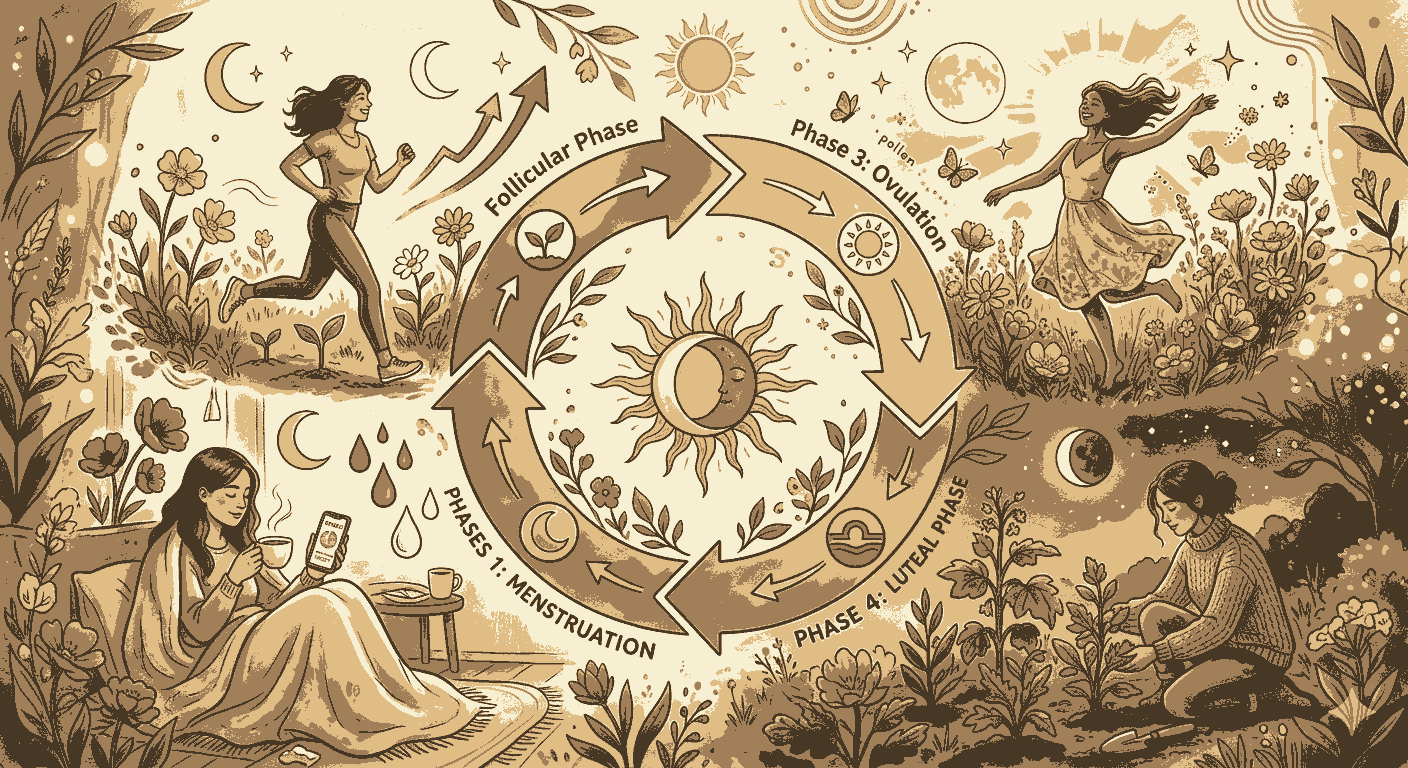
To begin with, Menstrual Cycle Phases Order MCQs with Answers Class 12 focuses on the correct sequence of events that occur in a typical 28-day cycle. The menstrual cycle is divided into four main phases: menstrual phase, proliferative phase, ovulatory phase, and luteal phase. Knowing this sequence is essential when solving Menstrual Cycle Phases Order MCQs with Answers Class 12, as many questions directly test this order.
The first stage explained in Menstrual Cycle Phases Order MCQs with Answers Class 12 is the menstrual phase. This phase lasts for about 3–5 days and involves the shedding of the uterine lining. It occurs due to a drop in estrogen and progesterone levels. When attempting Menstrual Cycle Phases Order MCQs with Answers Class 12, aspirants must remember that this phase marks the beginning of the cycle.
Following this is the proliferative phase, often highlighted in Menstrual Cycle Phases Order MCQs with Answers Class 12. During this stage, the endometrium begins to regenerate under the influence of estrogen. The follicles in the ovary also start developing due to the action of FSH. Understanding this phase clearly helps in solving many Menstrual Cycle Phases Order MCQs with Answers Class 12 that involve hormone functions.
Next comes the ovulatory phase, a key concept in Menstrual Cycle Phases Order MCQs with Answers Class 12. Ovulation usually occurs around the 14th day of the cycle and is triggered by a surge in LH (Luteinizing Hormone). During this phase, a mature ovum is released from the ovary. Many Menstrual Cycle Phases Order MCQs with Answers Class 12 specifically test the timing and hormonal trigger of ovulation.
The final stage discussed in Menstrual Cycle Phases Order MCQs with Answers Class 12 is the luteal phase. In this phase, the ruptured follicle transforms into the corpus luteum, which secretes progesterone. This hormone prepares the uterus for possible implantation. If fertilization does not occur, the corpus luteum degenerates, leading to a drop in progesterone levels. This concept frequently appears in Menstrual Cycle Phases Order MCQs with Answers Class 12.
A major focus area in Menstrual Cycle Phases Order MCQs with Answers Class 12 is hormonal control. The interplay of FSH, LH, estrogen, and progesterone regulates the cycle. FSH initiates follicular development, estrogen rebuilds the endometrium, LH triggers ovulation, and progesterone maintains the uterine lining. Understanding this sequence is essential for solving tricky Menstrual Cycle Phases Order MCQs with Answers Class 12.
Another important aspect covered in Menstrual Cycle Phases Order MCQs with Answers Class 12 is the concept of feedback mechanisms. Estrogen initially exerts negative feedback on FSH but later switches to positive feedback, leading to the LH surge. This subtle concept is often tested in Menstrual Cycle Phases Order MCQs with Answers Class 12, making it important for aspirants to revise thoroughly.
Aspirants should also focus on the timing of each phase when studying Menstrual Cycle Phases Order MCQs with Answers Class 12. The menstrual phase lasts 3–5 days, the proliferative phase extends up to day 14, ovulation occurs around day 14, and the luteal phase lasts until day 28. Questions related to these durations are common in Menstrual Cycle Phases Order MCQs with Answers Class 12.
In addition, understanding clinical terms is helpful when solving Menstrual Cycle Phases Order MCQs with Answers Class 12. For example, menarche refers to the first menstrual cycle, menopause marks the end of reproductive years, and dysmenorrhea refers to painful menstruation. These terms are frequently included in Menstrual Cycle Phases Order MCQs with Answers Class 12.
Another key concept in Menstrual Cycle Phases Order MCQs with Answers Class 12 is the relationship between ovulation and fertility. The fertile window lies around the ovulatory phase, making this stage crucial for reproduction. Many application-based Menstrual Cycle Phases Order MCQs with Answers Class 12 revolve around this idea.
To effectively prepare for Menstrual Cycle Phases Order MCQs with Answers Class 12, aspirants should practice diagrams and flowcharts. Visualizing the sequence of phases and hormonal changes helps in better retention and quick recall during exams. Repeated revision of Menstrual Cycle Phases Order MCQs with Answers Class 12 ensures accuracy and confidence.
Menstrual Cycle Phases Order MCQs with Answers Class 12:
1. Correct sequence of hormone secretion from beginning of menstruation is:
a) FSH, progesterone, estrogen
b) estrogen, FSH, progesterone
c) FSH, estrogen, progesterone
d) estrogen, progesterone, FSH
Answer: c
Explanation: The correct sequence is FSH → estrogen → progesterone.
2. The first menstruation begins at puberty and is known as
a) Menarche
b) Menopause
c) Ovulation
d) Oogenesis
Answer: a
Explanation: Menarche is the first menstrual cycle at puberty.
3. Mark the CORRECT sequence of phase in menstrual cycle
a) Menstrual → Proliferative → Luteal → Ovulatory
b) Menstrual → Proliferative → Ovulatory → Luteal
c) Luteal → Ovulatory → Menstrual → Follicular
d) Ovulation → Luteal → Follicular → Menstrual
Answer: b
Explanation: Correct order: Menstrual → Proliferative → Ovulatory → Luteal.
4. Painful menstruation is known as
a) Oligomenorrhea
b) Menorrhagia
c) Amenorrhea
d) Dysmenorrhea
Answer: d
Explanation: Dysmenorrhea means painful menstruation.
5. Progesterone level falls during
a) Gestation
b) Menopause
c) Lactation
d) Menstruation
Answer: b
Explanation: Progesterone declines significantly during menopause.
6. Endometrium breakdown occurs due to
a) Excess FSH
b) Lack of estrogen
c) Lack of progesterone
d) Excess progesterone
Answer: c
Explanation: Progesterone withdrawal causes menstruation.
7. Cessation of menstrual cycle is called
a) Menopause
b) Lactation
c) Ovulation
d) Parturition
Answer: a
Explanation: Menopause is permanent cessation of menstruation.
8. Ovulation occurs
a) End of secretory phase
b) Beginning of proliferative phase
c) End of proliferative phase
d) Mid secretory phase
Answer: c
Explanation: Ovulation occurs at the end of proliferative phase.
9. Why no new follicles develop in luteal phase?
a) Low FSH & LH
b) No follicles left
c) High FSH
d) High LH
Answer: a
Explanation: Low FSH & LH prevent new follicle development.
10. Cause of menstrual flow
a) Vasopressin
b) Progesterone
c) FSH
d) Oxytocin
Answer: b
Explanation: Progesterone withdrawal causes menstruation.
11. Immediate cause of menstruation
a) Estrogen
b) FSH
c) FSH-RH
d) Progesterone
Answer: d
Explanation: Drop in progesterone triggers menstruation.
12. Secretory phase is also called
a) Luteal phase (~13 days)
b) Follicular phase
c) Short luteal phase
d) Short follicular phase
Answer: a
Explanation: Secretory phase = Luteal phase.
13. LH level is maximum
a) Before ovulation
b) After ovulation
c) At ovulation
d) During menstruation
Answer: c
Explanation: LH surge triggers ovulation.
14. Oocyte is released
a) After full meiosis
b) After meiosis I
c) After meiosis II
d) Before meiosis
Answer: b
Explanation: Secondary oocyte is released after meiosis I.
15. What is the correct hormonal sequence in the case of menstruation?
a) Oestrogen, FSH, progesterone
b) Oestrogen, progesterone, FSH
c) FSH, progesterone, oestrogen
d) FSH, oestrogen, progesterone
Answer: d) FSH, oestrogen, progesterone
Explanation:
At the beginning of the menstrual cycle, FSH (Follicle Stimulating Hormone) is released from the pituitary gland, which stimulates follicle development in the ovary. These developing follicles secrete oestrogen, which helps in rebuilding the endometrium. After ovulation, the corpus luteum forms and secretes progesterone, which prepares the uterus for implantation. Hence, the correct sequence is FSH → oestrogen → progesterone.
16. Which condition is true just after ovulation?
a) High estrogen, low progesterone
b) Low estrogen, low progesterone
c) High estrogen, high progesterone
d) Low estrogen, high progesterone
Answer: a) High estrogen, low progesterone
Explanation:
Immediately after ovulation, estrogen levels are still relatively high, while progesterone just begins to rise as the corpus luteum starts forming. Progesterone reaches its peak later in the luteal phase, not immediately after ovulation.
17. Which phase of the menstrual cycle lasts for 7–8 days?
a) Follicular phase
b) Ovulatory phase
c) Luteal phase
d) Menstruation
Answer: a) Follicular phase
Explanation:
The follicular phase follows menstruation and lasts approximately 7–8 days (though it may vary). During this phase, ovarian follicles grow and develop under the influence of FSH.
18. Both corpus luteum and macula lutea are characterized by what colour?
a) Found in human ovaries
b) A source of hormones
c) Characterized by a yellow colour
d) Contributory in maintaining pregnancy
Answer: c) Characterized by a yellow colour
Explanation:
Both structures are yellowish in appearance. The corpus luteum gets its yellow color due to lutein pigment, while the macula lutea (in the retina) appears yellow due to pigments like xanthophyll.
19. At menopause, there is a rise in urinary excretion of which hormone?
a) FSH
b) STH
c) LH
d) MSH
Answer: a) FSH
Explanation:
At menopause, ovarian function declines, leading to reduced estrogen and progesterone levels. This causes loss of negative feedback on the pituitary gland, resulting in increased secretion of FSH, which is also excreted in urine.
20. Fertilization in humans is feasible only if
a) Sperms reach cervix within 48 hours
b) Sperms enter vagina just after ovulation
c) Ovum and sperms meet at ampullary-isthmic junction
d) Ovum and sperms meet in cervix
Answer: c) Ovum and sperms meet at ampullary-isthmic junction
Explanation:
Fertilization in humans typically occurs in the ampullary-isthmic junction of the fallopian tube, where both sperm and ovum must reach simultaneously for successful fertilization.
21. Grey crescent is the area
a) At the point of sperm entry
b) Opposite to sperm entry
c) At animal pole
d) At vegetal pole
Answer: b) Opposite to sperm entry
Explanation:
The grey crescent forms opposite the point of sperm entry and marks the future dorsal side of the embryo. It plays an important role in early embryonic development.
22. The portion of endometrium covering the embryo is
a) Decidua basalis
b) Decidua umbilicus
c) Decidua capsularis
d) Decidua functionalis
Answer: c) Decidua capsularis
Explanation:
The decidua capsularis is the part of the endometrium that lies between the embryo and the uterine cavity, covering and protecting the developing embryo.
23. What happens during fertilisation after many sperms reach ovum?
a) Two sperms enter
b) One sperm enters using acrosomal enzymes
c) Others lose tails
d) Corona radiata traps all sperms
Answer: b) One sperm enters using acrosomal enzymes
Explanation:
During fertilization, only one sperm penetrates the ovum. The sperm releases enzymes from the acrosome (like hyaluronidase and acrosin) to penetrate the zona pellucida. After entry, mechanisms prevent polyspermy (entry of multiple sperms).
Conclusion on Menstrual Cycle Phases Order MCQs with Answers Class 12
In conclusion, mastering Menstrual Cycle Phases Order MCQs with Answers Class 12 requires a clear understanding of the sequence of phases, hormonal regulation, and key terminologies. By focusing on these concepts and practicing regularly, aspirants can easily tackle even the most challenging questions. With consistent effort, Menstrual Cycle Phases Order MCQs with Answers Class 12 becomes a scoring and conceptually rewarding topic in Class 12 Biology.