
- Keneitsino Lydia
- April 17, 2026
Ultimate Practice Set: Anemophily Entomophily Hydrophily MCQs Class 12 Biology For Top Marks
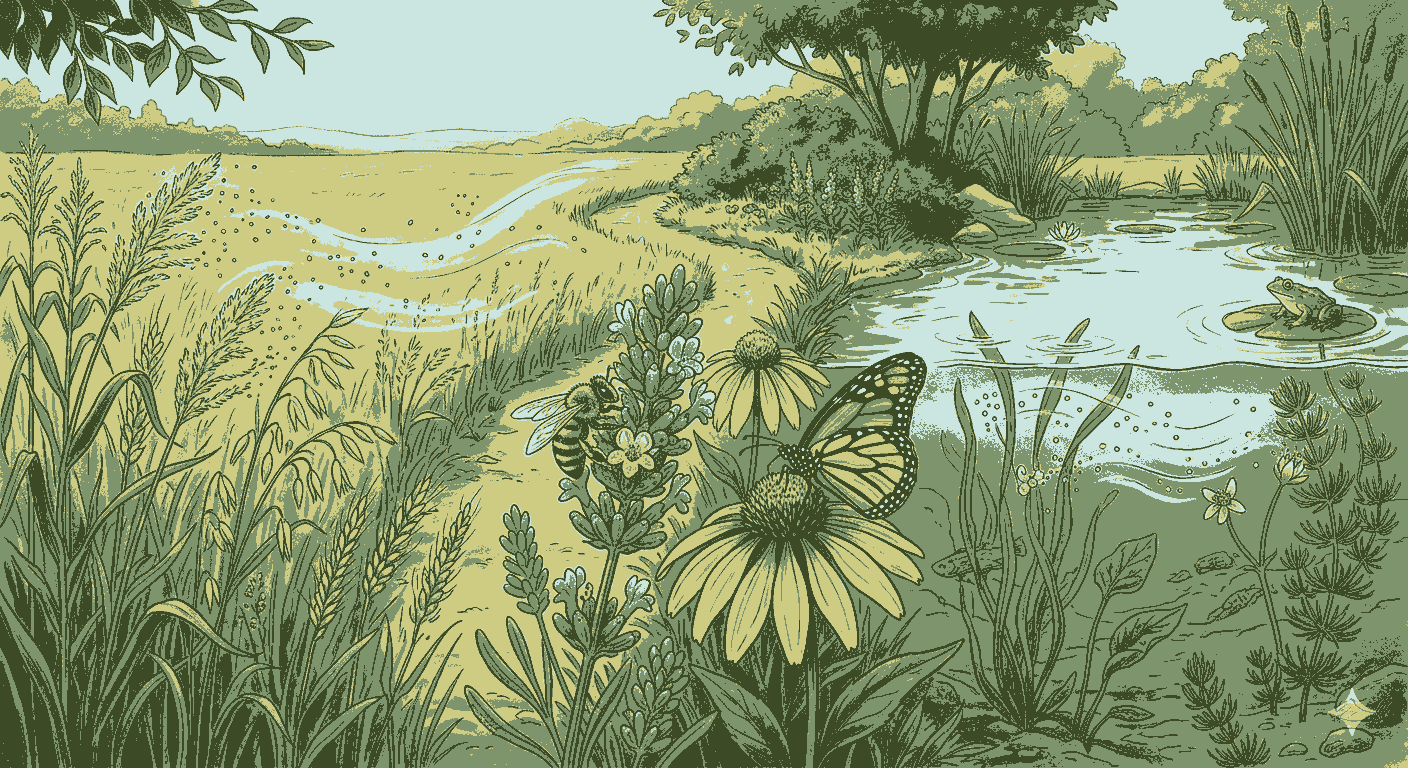
Understanding pollination is a fundamental part of Class 12 Biology, and aspirants must clearly grasp concepts like anemophily, entomophily, and hydrophily. One of the most effective ways to master these topics is by practicing Anemophily Entomophily Hydrophily MCQs Class 12 Biology regularly. These MCQs not only test conceptual clarity but also help aspirants apply their knowledge in exam-oriented situations.
Pollination is the process of transferring pollen grains from the anther to the stigma, and it can occur through various agents such as wind, water, and animals. By solving Anemophily Entomophily Hydrophily MCQs Class 12 Biology, aspirants can better understand how each pollination mechanism works in different plant species. For example, anemophily refers to wind pollination, which is common in grasses and plants with small, inconspicuous flowers. Practicing Anemophily Entomophily Hydrophily MCQs Class 12 Biology helps aspirants identify these characteristics quickly in exams.
Entomophily, or insect pollination, is another crucial concept. Flowers adapted for entomophily are usually bright, fragrant, and rich in nectar. When aspirants engage with Anemophily Entomophily Hydrophily MCQs Class 12 Biology, they learn to associate these features with insect pollination. This repeated exposure through Anemophily Entomophily Hydrophily MCQs Class 12 Biology strengthens memory retention and improves accuracy.
Hydrophily, or water pollination, is relatively rare but equally important. It occurs in aquatic plants like Vallisneria and Zostera. By practicing Anemophily Entomophily Hydrophily MCQs Class 12 Biology, aspirants can easily distinguish hydrophily from other pollination types. These MCQs often include tricky questions, making Anemophily Entomophily Hydrophily MCQs Class 12 Biology a valuable resource for thorough preparation.
One of the biggest advantages of using Anemophily Entomophily Hydrophily MCQs Class 12 Biology is that it improves conceptual clarity. Instead of rote learning, aspirants develop a deeper understanding of pollination mechanisms. This approach ensures that aspirants are well-prepared for both board exams and competitive exams like NEET. Regular practice with Anemophily Entomophily Hydrophily MCQs Class 12 Biology also helps in identifying weak areas and improving them systematically.
Time management is another important factor during exam preparation. Solving Anemophily Entomophily Hydrophily MCQs Class 12 Biology allows aspirants to enhance their speed and efficiency. As aspirants become familiar with question patterns through Anemophily Entomophily Hydrophily MCQs Class 12 Biology, they can solve questions more quickly and accurately during exams.
Moreover, Anemophily Entomophily Hydrophily MCQs Class 12 Biology provide excellent revision material. Before exams, aspirants can quickly go through these MCQs to revise key concepts. This makes Anemophily Entomophily Hydrophily MCQs Class 12 Biology an essential tool for last-minute preparation. The structured format ensures that aspirants can cover a wide range of topics in a short time.
Another benefit of practicing Anemophily Entomophily Hydrophily MCQs Class 12 Biology is that it builds confidence. When aspirants repeatedly solve questions and get them correct, they gain confidence in their preparation. This confidence plays a crucial role in performing well in exams. Therefore, incorporating Anemophily Entomophily Hydrophily MCQs Class 12 Biology into daily study routines is highly recommended.
In addition, Anemophily Entomophily Hydrophily MCQs Class 12 Biology help aspirants understand real-life biological processes. Pollination is not just a theoretical concept but a vital ecological process. By practicing Anemophily Entomophily Hydrophily MCQs Class 12 Biology, aspirants can appreciate the importance of pollination in maintaining biodiversity and food production.
Consistency is the key to success, and aspirants who regularly practice Anemophily Entomophily Hydrophily MCQs Class 12 Biology are more likely to achieve better results. These MCQs encourage analytical thinking and improve problem-solving skills. Over time, Anemophily Entomophily Hydrophily MCQs Class 12 Biology become an indispensable part of exam preparation.
Anemophily Entomophily Hydrophily MCQs Class 12 Biology:
1. What is the term for pollination by insects in flowering plants?
a) Zoophily
b) Chiropterophily
c) Anemophily
d) Entomophily
Answer: d
Explanation: Entomophily refers to pollination by insects. Zoophily is pollination by animals, anemophily by wind, and chiropterophily by bats.
2. Why was a normal pollen tube still formed even after the generative cell was destroyed by laser?
a) Laser beam stimulates growth of pollen tube
b) Region of emergence is not harmed
c) Vegetative cell is not damaged
d) Contents of killed generative cell stimulate pollen
Answer: c
Explanation: The vegetative cell controls pollen tube formation. Since it remains intact, the pollen tube develops normally even if the generative cell is destroyed.
3. What is xenogamy in flowering plants?
a) Same plant different flower
b) Parthenocarpy
c) Same flower
d) Different plants
Answer: d
Explanation: Xenogamy is pollination between flowers of different plants of the same species.
4. What type of pollination does the corolla in passion flower help achieve?
a) Bat
b) Bird
c) Wind
d) Insect
Answer: d
Explanation: Bright and attractive corolla attracts insects, leading to insect pollination.
5. Sage flower is pollinated by:
a) Aphids
b) Butterflies
c) Bees
d) Moths
Answer: c
Explanation: Sage flowers attract bees due to color and fragrance.
6. At the time of pollination, pollen grain of Pinus are:
a) One celled
b) Two celled
c) Three celled
d) Four celled
Answer: d
Explanation: Pinus pollen has two prothallial cells, one generative cell, and one tube cell.
7. Flower pollinated by wind is characterized by:
a) Small, non-scented, colourless flowers
b) Big, scented flowers
c) Big coloured flowers
d) Big non-scented flowers
Answer: a
Explanation: Wind pollinated flowers do not need attraction, so they are small and dull.
8. Type of pollination in Commelina is:
a) Chasmogamy
b) Geitonogamy
c) Xenogamy
d) Cleistogamy
Answer: d
Explanation: Cleistogamous flowers never open and self-pollinate.
9. Pollination within same flower is called:
a) Geitonogamy
b) Xenogamy
c) Autogamy
d) Apogamy
Answer: c
Explanation: Autogamy occurs within the same flower.
10. Anemophily is found in:
a) Salvia
b) Bottle brush
c) Vallisneria
d) Coconut
Answer: d
Explanation: Coconut is wind pollinated.
11. Pollination in Calotropis is:
a) Dicliny
b) Herkogamy
c) Heterostyly
d) Dichogamy
Answer: b
Explanation: Herkogamy prevents self-pollination by spatial separation.
12. Correct sequence:
a) Anthesis → Meiosis → Pollination → Syngamy
b) Pollination → Meiosis → Anthesis
c) Anthesis → Pollination → Meiosis
d) Meiosis → Pollination → Anthesis
Answer: a
Explanation: Meiosis forms gametes, anthesis opens flower, pollination then fertilization.
13. Why is autogamy avoided?
a) Few seeds
b) Poor germination
c) Weak plants
d) All
Answer: d
Explanation: Self-pollination reduces genetic diversity and vigor.
14. Correct statements:
a) A & B
b) A & C
c) A & D
d) C & D
Answer: d
Explanation: Xenogamy = different plant; Geitonogamy = same plant different flower.
15. Barrier preventing pollination is called:
a) Heterostyly
b) Herkogamy
c) Dichogamy
d) Cleistogamy
Answer: b
Explanation: Herkogamy physically separates stigma and anther.
16. Pollination by bats is:
a) Anemophily
b) Hydrophily
c) Ornithophily
d) Chiropterophily
Answer: d
Explanation: Chiropterophily = bat pollination.
17. Gymnosperms show:
a) Anemophily
b) Zoophily
c) Entomophily
d) Hydrophily
Answer: a
Explanation: Wind pollination is common.
18. Jaculators found in:
a) Ruellia
b) Impatiens
c) Ecballium
d) None
Answer: a
Explanation: Ruellia disperses seeds using jaculators.
19. Autogamy example:
a) Viola
b) Cicer
c) Triticum
d) Ricinus
Answer: a
Explanation: Viola shows cleistogamy.
20. Pollination by snails:
a) Entomophily
b) Ornithophily
c) Anemophily
d) Malacophily
Answer: d
Explanation: Snail pollination is malacophily.
21. Incorrect for cross-pollination:
a) Male to female
b) Different plants
c) Same plant flower
d) Same flower
Answer: d
Explanation: Same flower = self-pollination.
22. Placentation in Nymphaea:
a) Parietal
b) Superficial
c) Marginal
d) Basal
Answer: b
Explanation: Ovules develop on inner wall.
23. Allogamy occurs in:
a) Unisexual flowers
b) Neuter
c) Underground
d) None
Answer: a
Explanation: Requires separate male & female flowers.
24. Entry through integuments:
a) Chalazogamy
b) Mesogamy
c) Porogamy
d) Siphonogamy
Answer: b
Explanation: Mesogamy = through integuments.
25. Small dull flowers indicate:
a) Chiropterophily
b) Entomophily
c) Anemophily
d) Ornithophily
Answer: c
Explanation: Wind pollinated plants.
26. Characteristic of anemophily:
a) Small dull flowers
b) Bright flowers
c) Bird pollination
d) Sticky pollen
Answer: a
Explanation: Wind pollination traits.
27. Gloriosa shows:
a) Heterostyly
b) Cleistogamy
c) Self sterility
d) Herkogamy
Answer: d
Explanation: Spatial separation prevents selfing.
28. Same pollinating agent:
a) Triticum group
b) Cannabis group
c) Salvia, Calotropis, Rafflesia
d) Mixed
Answer: c
Explanation: All insect pollinated.
29. Malacophily seen in:
a) Zostera
b) Lemna
c) Ruppia
d) Bignonia
Answer: b
Explanation: Lemna is snail pollinated.
30. Fig trees pollinated by:
a) Air
b) Bats
c) Birds
d) Wasps
Answer: d
Explanation: Fig–wasp mutualism is highly specific.
Conclusion on Anemophily Entomophily Hydrophily MCQs Class 12 Biology
In conclusion, Anemophily Entomophily Hydrophily MCQs Class 12 Biology are an excellent resource for aspirants aiming to excel in Biology exams. They provide a comprehensive understanding of pollination mechanisms, improve retention, and enhance exam performance. By consistently practicing Anemophily Entomophily Hydrophily MCQs Class 12 Biology, aspirants can build a strong foundation, boost confidence, and achieve academic success.