
- Keneitsino Lydia
- March 26, 2026
Carbohydrates Chemistry MCQs with Answers for CUET – Ultimate Proven Score-Boosting Practice Guide
Preparing for competitive exams like CUET requires a strong understanding of fundamental chemistry concepts, and carbohydrates play a crucial role in this preparation. One of the most effective ways to master this topic is through Carbohydrates Chemistry MCQs with Answers for CUET, which help aspirants reinforce their understanding and improve problem-solving skills. By practicing Carbohydrates Chemistry MCQs with Answers for CUET, aspirants can gain confidence in tackling exam-level questions.
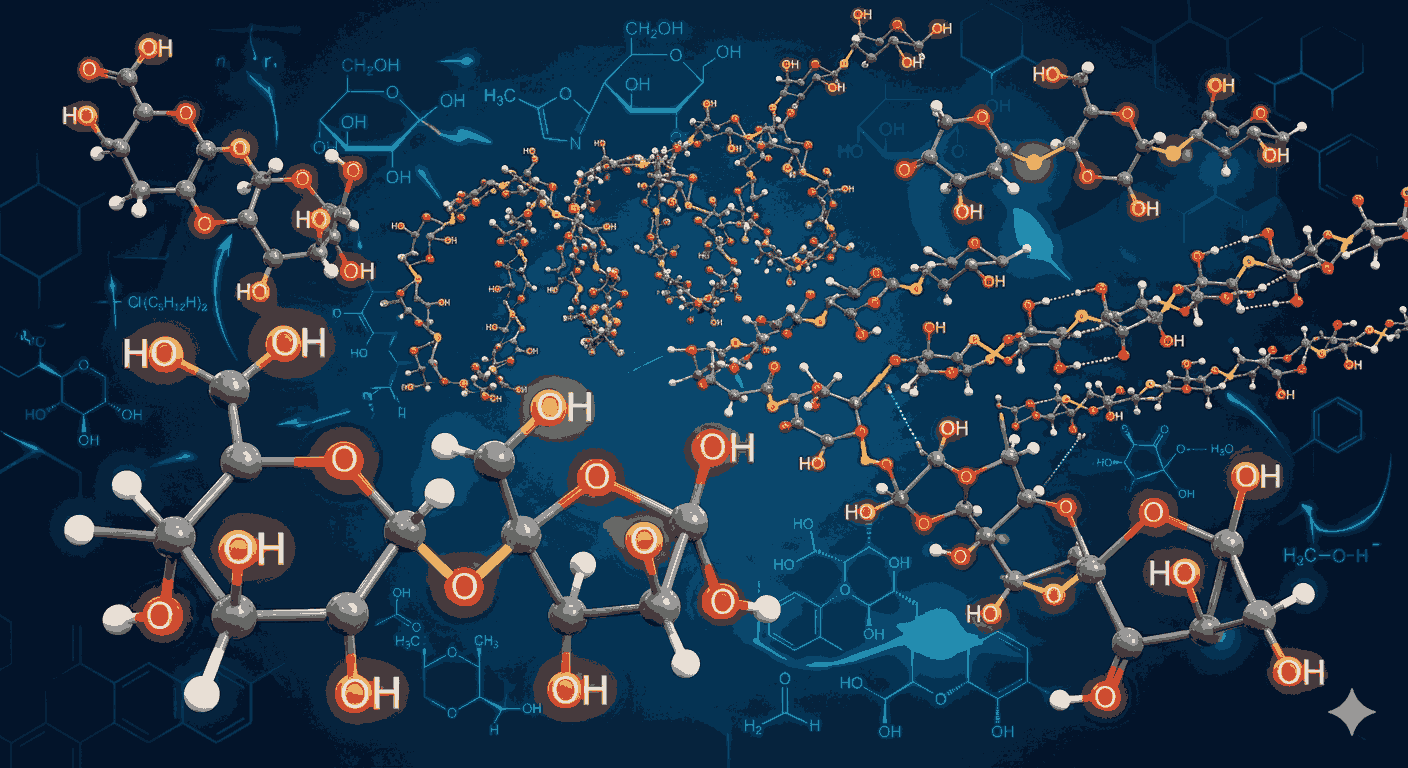
Carbohydrates are organic compounds that include sugars, starch, and cellulose. They are classified into monosaccharides, disaccharides, and polysaccharides. Understanding these classifications becomes easier when aspirants regularly solve Carbohydrates Chemistry MCQs with Answers for CUET, as these questions cover structural differences and chemical properties in depth. Through Carbohydrates Chemistry MCQs with Answers for CUET, learners can clearly differentiate between glucose, fructose, sucrose, and starch.
One important concept frequently tested in Carbohydrates Chemistry MCQs with Answers for CUET is the distinction between reducing and non-reducing sugars. Reducing sugars like glucose and lactose have free aldehyde or ketone groups, while sucrose is non-reducing due to its glycosidic linkage. Practicing Carbohydrates Chemistry MCQs with Answers for CUET helps aspirants quickly identify these differences during exams.
Another key topic covered in Carbohydrates Chemistry MCQs with Answers for CUET is the structure of glucose. Glucose exists in both open-chain and cyclic forms, and concepts like mutarotation and anomerism are important. By solving Carbohydrates Chemistry MCQs with Answers for CUET, students can understand how α and β forms of glucose differ and how they interconvert in solution.
Glycosidic bonds are also a major focus in Carbohydrates Chemistry MCQs with Answers for CUET. These bonds link monosaccharides to form disaccharides and polysaccharides. For example, maltose has an α-1,4 linkage, lactose has a β-1,4 linkage, and sucrose has an α-1,2 linkage. Regular practice of Carbohydrates Chemistry MCQs with Answers for CUET ensures that aspirants remember these linkages clearly.
Chemical reactions of carbohydrates are equally important. Oxidation, reduction, hydrolysis, and osazone formation are commonly asked topics. By practicing Carbohydrates Chemistry MCQs with Answers for CUET, aspirants can understand how glucose reacts with reagents like bromine water or nitric acid. This makes it easier to solve reaction-based questions in exams.
Tests for carbohydrates such as Molisch’s test, Fehling’s test, Benedict’s test, and Tollen’s test are frequently included in Carbohydrates Chemistry MCQs with Answers for CUET. These tests help identify different types of sugars and their properties. Solving Carbohydrates Chemistry MCQs with Answers for CUET improves the ability to apply these tests correctly.
Polysaccharides like starch, glycogen, and cellulose are also an essential part of Carbohydrates Chemistry MCQs with Answers for CUET. Starch and glycogen are energy storage molecules, while cellulose provides structural support in plants. Understanding their structure and function through Carbohydrates Chemistry MCQs with Answers for CUET helps in answering conceptual questions.
Biological importance is another area highlighted in Carbohydrates Chemistry MCQs with Answers for CUET. Carbohydrates are the primary source of energy in living organisms. Glucose plays a central role in metabolism, and glycogen acts as an energy reserve. By practicing Carbohydrates Chemistry MCQs with Answers for CUET, aspirants can connect chemistry concepts with biological functions.
From an exam perspective, Carbohydrates Chemistry MCQs with Answers for CUET are extremely valuable for revision. These questions help identify weak areas and improve accuracy. Regular practice of Carbohydrates Chemistry MCQs with Answers for CUET ensures better time management during exams.
Carbohydrates Chemistry MCQs with Answers for CUET:
1. Number of stereocentres present in linear and cyclic structures of glucose are respectively
a) 4 and 5
b) 4 and 4
c) 5 and 4
d) 5 and 5
Answer: a
2. Which of the given statements is incorrect about glycogen?
a) It is straight chain polymer similar to amylose
b) Only α-linkages are present in the molecule
c) It is present in animal cells
d) It is present in some yeast and fungi
Answer: a
3. Glucose on prolonged heating with HI gives
a) n-hexane
b) l-hexene
c) Hexanoic acid
d) 6-iodohexanal
Answer: a
4. Which of the following compounds can be detected by Molisch’s test?
a) Nitro compounds
b) Sugars
c) Amines
d) Primary alcohols
Answer: b
5. The change in the optical rotation of freshly prepared solution of glucose is known as
a) Tautomerism
b) Racemization
c) Specific rotation
d) Mutarotation
Answer: d
6. α-D(+)-glucose and β-D(+)-glucose are
a) Conformers
b) Epimers
c) Enantiomers
d) Anomers
Answer: d
7. Match List-I with List-II
Correct matching is:
a) A–II, B–I, C–IV, D–III
b) A–II, B–IV, C–I, D–III
c) A–III, B–IV, C–I, D–II
d) A–III, B–IV, C–II, D–I
Answer: a
8. Height of monolayer formed is
a) 10² m
b) 10³ m
c) 10⁻¹ m
d) 10⁻⁶ m
Answer: d
9. Glucose and fructose can be distinguished by
a) Lucas test
b) Ninhydrin test
c) Benedict reagent test
d) All of these
Answer: c
10. Glucose can be converted into ethyl alcohol using
a) Invertase
b) Zymase
c) Diastase
d) Maltase
Answer: b
11. Which of the following is/are non-reducing sugar molecules?
(i) Fructose (ii) Maltose (iii) Sucrose (iv) Lactose
a) (i) and (ii)
b) (ii) and (iv)
c) (iii) only
d) (i) and (iii)
Answer: c
12. What is the hydrolysis product of sucrose?
a) Fructose and glucose
b) Glucose and galactose
c) Galactose and fructose
d) Lactose and glucose
Answer: a
13. Kiliani reaction statement correct is
a) D-ribose → two optically active acids
b) D-arabinose → two optically active acids
c) D-xylose → one active and one inactive
d) D-lyxose → two inactive
Answer: b
14. Correct explanation of non-reducing property of sucrose
a) C₁–C₄ linkage
b) C₂–C₆ linkage
c) C₁–C₂ linkage
d) None
Answer: c
15. Fructose with Na-Hg gives
a) Sorbitol and mannitol
b) Sorbitol and hexane
c) Mannitol and hexane
d) Gluconic acid
Answer: a
16. Relationship between given structures
a) Enantiomers
b) Anomers
c) Diastereomers
d) Metamers
Answer: b
17. Which carbohydrate can be digested by humans?
a) Starch
b) Lignin
c) Cellulose
d) Hemicellulose
Answer: a
18. Which is a reducing disaccharide?
a) Sucrose
b) Lactose
c) Trehalose
d) Cellulose
Answer: b
19. Which is not an aldose?
a) Glucose
b) Ribose
c) Fructose
d) Mannose
Answer: c
20. The anomeric carbon in D(+) glucose is
a) C-1
b) C-2
c) C-5
d) C-6
Answer: a
21. Maximum laevorotatory nature is shown by
a) D-glucose
b) D-fructose
c) Sucrose
d) Invert sugar
Answer: b
22. Example of non-reducing sugar
a) Sucrose
b) Lactose
c) Cellobiose
d) Maltose
Answer: a
23. Which is false?
a) Glucose is a disaccharide
b) Starch is polysaccharide
c) Glucose & fructose are not anomers
d) Invert sugar = glucose + fructose
Answer: a
24. Freezing point of solution is
a) -0.57°C
b) -0.50°C
c) -0.37°C
d) -0.372°C
Answer: d
25. Methyl α-D-glucoside and β-D-glucoside are
a) Epimers
b) Anomers
c) Conformational diastereomers
d) Diastereoisomers
Answer: b
26. Calorific value order
a) Fats > Carbohydrates > Proteins
b) Carbohydrates > Fats > Proteins
c) Proteins > Carbohydrates > Fats
d) Fats > Proteins > Carbohydrates
Answer: a
27. Fraction of sucrose remaining after 8 h is
a) 1.023 M
b) 0.023 M
c) 0.875 M
d) 0.1576 M
Answer: d
28. Reducing sugar is
a) Sucrose
b) Cellulose
c) Maltose
d) Starch
Answer: c
29. Six-membered cyclic structure of glucose is called
a) Furanose
b) Pyranose
c) Galactose
d) Amylose
Answer: b
30. On hydrolysis of starch, we finally get
a) Glucose
b) Fructose
c) None
d) Sucrose
Answer: a
Conclusion on Carbohydrates Chemistry MCQs with Answers for CUET
In conclusion, mastering carbohydrates requires both conceptual understanding and consistent practice. Carbohydrates Chemistry MCQs with Answers for CUET provide a structured way to revise important topics, improve analytical skills, and boost confidence. By focusing on Carbohydrates Chemistry MCQs with Answers for CUET, aspirants can enhance their preparation and achieve better results in CUET and other competitive exams.