
- Keneitsino Lydia
- June 15, 2026
Avoid Costly Mistakes: Monoclonal Antibodies MCQs with Answers Biology
Monoclonal Antibodies MCQs with Answers Biology is an important topic for aspirants who want to understand hybridoma technology, immune response, antibody specificity, diagnostic tools, therapeutic applications, and biotechnology in a clear and exam-focused way. Monoclonal Antibodies MCQs with Answers Biology helps aspirants revise how identical antibodies are produced from a single clone of cells and why they are highly specific for one antigenic determinant. Monoclonal antibodies are widely used in medicine, research, diagnosis, cancer treatment, pregnancy testing, infectious disease detection, and targeted drug delivery. Monoclonal Antibodies MCQs with Answers Biology is useful for Class 12 Biology, NEET, nursing entrance exams, biotechnology courses, pharmacy exams, and life science preparation.
Monoclonal Antibodies MCQs with Answers Biology becomes easier when aspirants first understand antibodies. Antibodies are proteins produced by B-lymphocytes in response to antigens. Monoclonal Antibodies MCQs with Answers Biology explains that normal immune responses usually produce polyclonal antibodies, which come from many B-cell clones and recognize different parts of an antigen. In contrast, monoclonal antibodies are identical antibodies produced from one clone and recognize only one specific epitope. This high specificity makes them extremely valuable in biological testing and treatment.
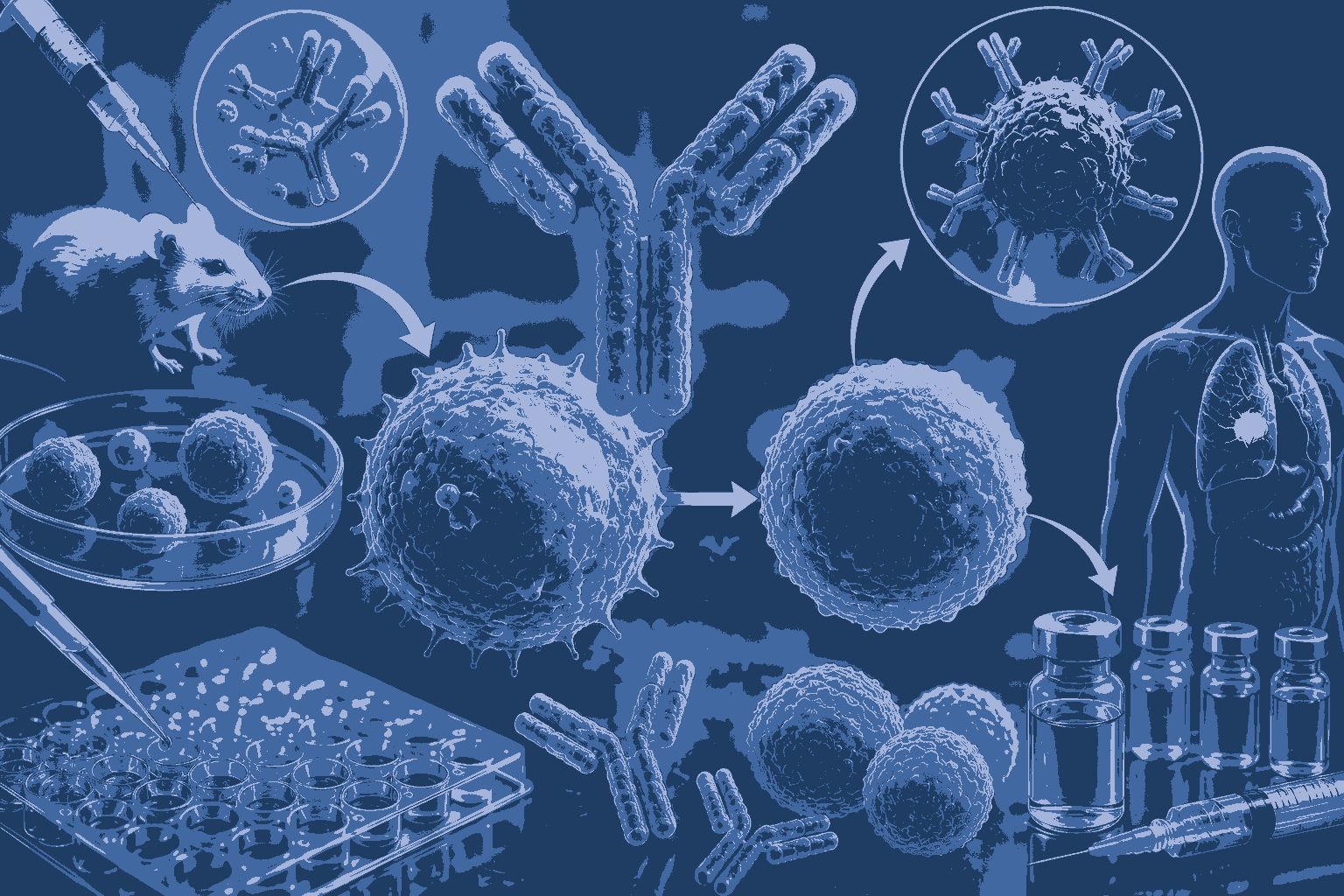
Monoclonal Antibodies MCQs with Answers Biology is closely linked with hybridoma technology. Hybridoma technology was developed by Georges Köhler and César Milstein in 1975, and it made large-scale production of monoclonal antibodies possible. Monoclonal Antibodies MCQs with Answers Biology helps aspirants remember that this method involves fusing an antibody-producing B cell with an immortal myeloma cell. The B cell provides antibody-producing ability, while the myeloma cell provides continuous division. The resulting hybrid cell is called a hybridoma.
Monoclonal Antibodies MCQs with Answers Biology should be revised step by step. First, an animal is immunized with a specific antigen. Then antibody-producing B cells are isolated from the spleen. These B cells are fused with myeloma cells using a fusion agent such as polyethylene glycol. Monoclonal Antibodies MCQs with Answers Biology explains that the fused hybridoma cells are selected and screened to identify the clone producing the desired antibody. Once the correct clone is selected, it can be cultured to produce large quantities of identical antibodies.
Monoclonal Antibodies MCQs with Answers Biology is important because monoclonal antibodies are highly specific. They can bind to a single antigenic site, making them useful for detecting very small amounts of disease markers. Monoclonal Antibodies MCQs with Answers Biology helps aspirants connect this specificity with diagnostic techniques such as ELISA, immunofluorescence, pregnancy tests, blood group testing, and detection of hormones, toxins, viruses, and cancer markers. Because they recognize precise targets, monoclonal antibodies improve accuracy in laboratory diagnosis.
Monoclonal Antibodies MCQs with Answers Biology also covers therapeutic applications. Monoclonal antibodies are used in cancer therapy because they can recognize specific molecules present on cancer cells. Monoclonal Antibodies MCQs with Answers Biology teaches aspirants that these antibodies may block harmful receptors, activate immune responses, deliver drugs, or carry radioactive substances to target cells. They are also used in autoimmune diseases, transplant rejection management, inflammatory disorders, and some viral infections. This makes the topic highly relevant for modern medicine.
Monoclonal Antibodies MCQs with Answers Biology should also include the difference between monoclonal and polyclonal antibodies. Polyclonal antibodies are a mixture of antibodies from different B-cell clones, while monoclonal antibodies are identical and produced from one clone. Monoclonal Antibodies MCQs with Answers Biology becomes stronger when aspirants remember that monoclonal antibodies offer uniformity, reproducibility, and high specificity. However, they may be expensive to produce and may sometimes trigger immune reactions if derived from non-human sources.
Monoclonal Antibodies MCQs with Answers Biology is connected with biotechnology because hybridoma culture, cell fusion, screening, cloning, and large-scale production are all biotechnological processes. Monoclonal Antibodies MCQs with Answers Biology helps aspirants link this topic with cell culture, animal biotechnology, immunology, diagnostics, and pharmaceutical production. Aspirants should remember keywords such as antigen, epitope, B-lymphocyte, myeloma cell, hybridoma, PEG, screening, clone, antibody specificity, ELISA, and targeted therapy.
Monoclonal Antibodies MCQs with Answers Biology:
- In which field does the application of biotechnology occur?
A. Bio-medicine
B. Agriculture
C. Environmental field
D. All of the above
Answer: D. All of the above
Explanation: Biotechnology is an interdisciplinary field that integrates natural sciences and engineering sciences. It has applications in bio-medicine, agriculture, environmental science, and many other fields.
- Which attributes are plant breeders trying to incorporate into crop plants with advancements in genetics, molecular biology, and tissue culture?
A. Increased tolerance to environmental stresses, resistance to pathogens, and increased tolerance to insect pests
B. Increased tolerance to environmental stresses, resistance to edaphic factors, and increased tolerance to insect pests
C. Increased tolerance to environmental stresses, resistance to edaphic factors, and resistance to pathogens
D. Resistance to edaphic factors, resistance to pathogens, and increased tolerance to insect pests
Answer: A. Increased tolerance to environmental stresses, resistance to pathogens, and increased tolerance to insect pests
Explanation: Plant breeders try to develop crop plants with improved tolerance to environmental stresses, resistance to pathogens, and resistance to insect pests.
- In addition to producing high-yielding and disease-resistant varieties, genetic modification has helped with which of the following?
A. Reduced post-harvest losses, decreased nutritional value of food, reduced reliance on chemical pesticides, decreased mineral usage efficiency, and stress-resilient crops
B. Decreased nutritional value of food, reduced reliance on chemical pesticides, decreased mineral usage efficiency, and stress-resilient crops
C. Decreased nutritional value of food, decreased mineral usage efficiency, and stress-resilient crops
D. Reduced post-harvest losses, reduced reliance on chemical pesticides, and stress-resilient crops
Answer: D. Reduced post-harvest losses, reduced reliance on chemical pesticides, and stress-resilient crops
Explanation: Genetic modification has helped reduce post-harvest losses, reduce dependence on chemical pesticides, and produce crops that are resilient to environmental stresses.
- What are some common steps involved in the production of humulin?
A. Synthesis of human insulin gene, culturing recombinant E. coli, and purification of humulin
B. Synthesis of human insulin gene, purification of humulin, and introduction of recombinant plasmid into E. coli
C. Synthesis of human insulin gene, insertion of human insulin gene in plasmid DNA, and introduction of recombinant plasmid into E. coli
D. Purification of humulin, introduction of recombinant plasmid into E. coli, and extraction of recombinant gene product from E. coli
Answer: C. Synthesis of human insulin gene, insertion of human insulin gene in plasmid DNA, and introduction of recombinant plasmid into E. coli
Explanation: Humulin production involves artificial synthesis of the human insulin gene, insertion of the gene into plasmid DNA, and introduction of the recombinant plasmid into E. coli.
- When was the genetically engineered human insulin, humulin, first launched by an American drug company?
A. 5th July 1998
B. 5th July 1993
C. 5th July 1973
D. 5th July 1983
Answer: D. 5th July 1983
Explanation: The first genetically engineered human insulin, called humulin, was launched by Eli Lilly on 5th July 1983.
- Match the items in Column I with Column II.
Column I:
A. Kary Mullis
B. Banting and Best
C. Eli Lilly
D. Restriction enzymes
Column II:
- Pure insulin from pancreatic islets
- Chemical scalpel used to cut DNA
- Humulin production
- DNA polymerase
- Polymerase Chain Reaction
Options:
A. A-4, B-5, C-3, D-2
B. A-1, B-3, C-2, D-4
C. A-5, B-1, C-3, D-2
D. A-1, B-4, C-3, D-5
Answer: C. A-5, B-1, C-3, D-2
Explanation: Kary Mullis invented PCR. Banting and Best prepared pure insulin from pancreatic islets. Eli Lilly produced humulin. Restriction enzymes are called chemical scalpels because they cut DNA molecules.
- What did Kohler and Milstein develop biotechnology for?
A. Monoclonal antibodies
B. Steroid synthesis
C. Immobilization of enzymes
D. Myeloma
Answer: A. Monoclonal antibodies
Explanation: George Kohler and Cesar Milstein developed hybridoma technology for the production of monoclonal antibodies.
- What is hybridoma technology used for?
A. Killing cancer cells
B. Formation of monoclonal antibodies
C. Formation of somatic hybrids
D. Formation of antibiotics
Answer: B. Formation of monoclonal antibodies
Explanation: Hybridoma technology is used to produce monoclonal antibodies, which are highly specific antibodies produced by cloned hybridoma cells.
- Which of the following statements about insulin are correct?
A. C-peptide is not present in mature insulin
B. Insulin produced by rDNA technology has C-peptide
C. Pro-insulin has C-peptide
D. A-peptide and B-peptide of insulin are interconnected by disulphide bridges
Options:
A. A and D only
B. B and D only
C. B and C only
D. A, C and D only
Answer: D. A, C and D only
Explanation: Insulin is first synthesized as pro-insulin, which contains A-chain, B-chain, and C-peptide. Mature insulin does not contain C-peptide. A and B chains are connected by disulphide bridges.
- Why is it possible to detect the mutated gene causing cancer by using a radioactive probe followed by autoradiography?
A. Mutated gene does not appear on photographic film as the probe has complementarity with it
B. Mutated gene partially appears on photographic film
C. Mutated gene completely and clearly appears on photographic film
D. Mutated gene does not appear on photographic film as the probe has no complementarity with it
Answer: D. Mutated gene does not appear on photographic film as the probe has no complementarity with it
Explanation: A radioactive probe hybridizes only with its complementary DNA sequence. If the gene is mutated and lacks complementarity with the probe, it will not appear on the photographic film during autoradiography.
- If plasmid pBR322 has a PstI restriction enzyme site within the ampR gene and this site is used for inserting a gene for β-galactoside production, what will happen when the recombinant plasmid is inserted into E. coli?
A. It will produce a novel protein with dual ability
B. It will not be able to confer ampicillin resistance to the host cell
C. The transformed cells will resist ampicillin and produce β-galactoside
D. It will lead to lysis of the host cell
Answer: B. It will not be able to confer ampicillin resistance to the host cell
Explanation: Inserting a gene into the PstI site within the ampR gene inactivates the ampicillin resistance gene. This is called insertional inactivation.
- Why is the production of a human protein in bacteria by genetic engineering possible?
A. Bacterial cells can carry out RNA splicing reactions
B. The mechanism of gene regulation is identical in humans and bacteria
C. The human chromosome can replicate in bacterial cells
D. The genetic code is universal
Answer: D. The genetic code is universal
Explanation: Human proteins can be produced in bacteria because the genetic code is nearly universal among living organisms.
- What are vaccines prepared through recombinant DNA technology called?
A. First generation vaccines
B. Second generation vaccines
C. Third generation vaccines
D. None of the above
Answer: C. Third generation vaccines
Explanation: Vaccines prepared through recombinant DNA technology are called third generation vaccines or DNA vaccines.
- Which of the following are generated from genetically engineered microbes?
- Insulin
- Human growth hormone
- Interferons
- HIV surface antigens
Options:
A. 1, 2 and 3 only
B. 1, 2 and 4 only
C. 1, 3 and 4 only
D. All of the above
Answer: A. 1, 2 and 3 only
Explanation: Insulin, human growth hormone, and interferons are produced using genetically engineered microbes.
- Which of the following cannot be detected in a developing foetus by amniocentesis?
A. Jaundice
B. Klinefelter syndrome
C. Sex determination of the foetus
D. Down syndrome
Answer: A. Jaundice
Explanation: Amniocentesis can detect chromosomal abnormalities such as Down syndrome and Klinefelter syndrome, but it cannot detect jaundice.
- The number of amino acids in the B-chain of insulin is
A. 21
B. 30
C. 51
D. 15
Answer: B. 30
Explanation: Human insulin consists of two chains. The A-chain has 21 amino acids and the B-chain has 30 amino acids.
- A drug obtained through genetic engineering and useful for treating infertility is
A. Calcitonin
B. Chorionic gonadotropin
C. Interleukin
D. Tissue plasminogen activator
Answer: B. Chorionic gonadotropin
Explanation: Human chorionic gonadotropin, or HCG, is used in infertility treatment and can be obtained through genetic engineering techniques.
- Which of the following statements about therapeutic drugs are correct?
- Recombinant DNA technology is used for production of therapeutic drugs that are safe and effective
- It avoids unwanted immunological responses commonly observed with similar products isolated from non-human sources
- About thirty recombinant therapeutics have been approved for human use in the world, including India
Options:
A. I and II only
B. I and III only
C. II and III only
D. I, II and III only
Answer: D. I, II and III only
Explanation: Recombinant therapeutics are safer and more effective. They avoid unwanted immune reactions and several recombinant therapeutics have been approved for human use.
- Identify the wrong statement with reference to the structure of human insulin.
A. Human insulin is made up of 51 amino acids arranged in two polypeptide chains
B. Chain A is made up of 30 amino acids and chain B is made up of 21 amino acids
C. Insulin is synthesized as a pro-hormone which contains an extra stretch called C-peptide
D. A and B chains are combined by disulphide bonds to form humulin
Answer: B. Chain A is made up of 30 amino acids and chain B is made up of 21 amino acids
Explanation: Chain A has 21 amino acids and chain B has 30 amino acids. Therefore, option B is incorrect.
- Rat poison is obtained from
A. Urginea
B. Lilium
C. Asparagus
D. Aloe vera
Answer: A. Urginea
Explanation: Red squill, obtained from Urginea maritima, is used as a rodenticide or rat poison.
- Insulin receptors are
A. Extrinsic protein
B. Intrinsic protein
C. G-protein
D. Trimeric protein
Answer: A. Extrinsic protein
Explanation: According to the given answer key, insulin receptors are considered extrinsic proteins because insulin binds to the extracellular face of receptor subunits.
- Choose the correct sequence of steps involved in the production of humulin.
- Synthesis of gene DNA for human insulin artificially
- Culturing recombinant E. coli in bioreactors
- Purification of humulin
- Insertion of human insulin gene into plasmid
- Introduction of recombinant plasmid into E. coli
- Extraction of recombinant gene product from E. coli
Options:
A. I, III, V, VI, II, IV
B. II, I, IV, III, V, VI
C. III, V, II, I, VI, IV
D. I, IV, V, II, VI, III
Answer: D. I, IV, V, II, VI, III
Explanation: Humulin production begins with artificial synthesis of the insulin gene, followed by insertion into plasmid, introduction into E. coli, culturing in bioreactors, extraction of the product, and purification.
- Which two of the following statements about biomedical technologies are correct?
- During open heart surgery, blood is circulated in the heart-lung machine
- Blockage in coronary arteries is removed by angiography
- Computerised Axial Tomography, CAT, shows detailed internal structure as seen in a section of the body
- X-ray provides clear and detailed images of organs like prostate glands and lungs
Options:
A. I and III
B. I and II
C. II and IV
D. III and IV
Answer: A. I and III
Explanation: During open heart surgery, blood is circulated through a heart-lung machine. CAT scan shows detailed internal structures as sectional images.
- The two polypeptides of human insulin are linked together by
A. Disulphide bridges
B. Hydrogen bonds
C. Phosphodiester bond
D. Covalent bond
Answer: A. Disulphide bridges
Explanation: The A-chain and B-chain of human insulin are linked together by disulphide bridges.
- Genetic engineering has been successfully used for producing
A. Transgenic mice for testing safety of polio vaccine before use in humans
B. Transgenic models for studying new treatments for certain cardiac disease
C. Transgenic cow Rosie which produces high-fat milk for making ghee
D. Animals like bulls for farm work as they have super power
Answer: A. Transgenic mice for testing safety of polio vaccine before use in humans
Explanation: Transgenic animals have been used for testing the safety of vaccines before they are used in humans.
- Which one of the following is now being commercially produced by biotechnological procedures?
A. Insulin
B. Nicotine
C. Morphine
D. Quinine
Answer: A. Insulin
Explanation: Insulin is commercially produced through recombinant DNA technology using genetically engineered organisms.
- What is the function of protein GLUT-4?
A. Enables glucose transport into cells
B. Functions as intercellular ground substance
C. Acts as an enzyme
D. Fights infectious agents
Answer: A. Enables glucose transport into cells
Explanation: GLUT-4 is a glucose transporter that helps transport glucose into cells, especially in insulin-responsive tissues.
- C-peptide is mainly present in
A. Proinsulin
B. Insulin
C. Chain A of insulin
D. Chain B of insulin
Answer: A. Proinsulin
Explanation: C-peptide is present in proinsulin and is removed during the formation of mature insulin.
- Which of the following statements is not correct?
A. Proinsulin has an extra peptide called C-peptide
B. Functional insulin has A and B chains linked together by hydrogen bonds
C. Genetically engineered insulin is produced in E. coli
D. In humans, insulin is synthesized as proinsulin
Answer: B. Functional insulin has A and B chains linked together by hydrogen bonds
Explanation: Functional insulin has A and B chains linked by disulphide bonds, not hydrogen bonds.
- Gene therapy is a treatment that can be done with
A. Adults only
B. Child or embryo only
C. Pregnant mother only
D. Persons of any age and any condition
Answer: D. Persons of any age and any condition
Explanation: Gene therapy aims to replace or correct faulty genes with normal functional genes and may be applied in different age groups depending on the disease and treatment approach.
Conclusion on Monoclonal Antibodies MCQs with Answers Biology
Monoclonal Antibodies MCQs with Answers Biology is also useful for understanding why biotechnology improves healthcare. Instead of using broad and less specific treatments, monoclonal antibodies allow targeted detection and targeted action. Monoclonal Antibodies MCQs with Answers Biology helps aspirants understand the shift from general treatment to precision medicine. In conclusion, Monoclonal Antibodies MCQs with Answers Biology is a high-value topic for aspirants preparing biotechnology and immunology chapters. With regular revision, Monoclonal Antibodies MCQs with Answers Biology can help aspirants understand antibody prouction, hybridoma technology, disease diagnosis, cancer treatment, and modern biomedical applications with better confidence, clarity, and accuracy.