
- Keneitsino Lydia
- April 29, 2026
Master Your Exams: Art and Infertility MCQs Class 12 Biology IVF ICSI Zift Questions with Answers
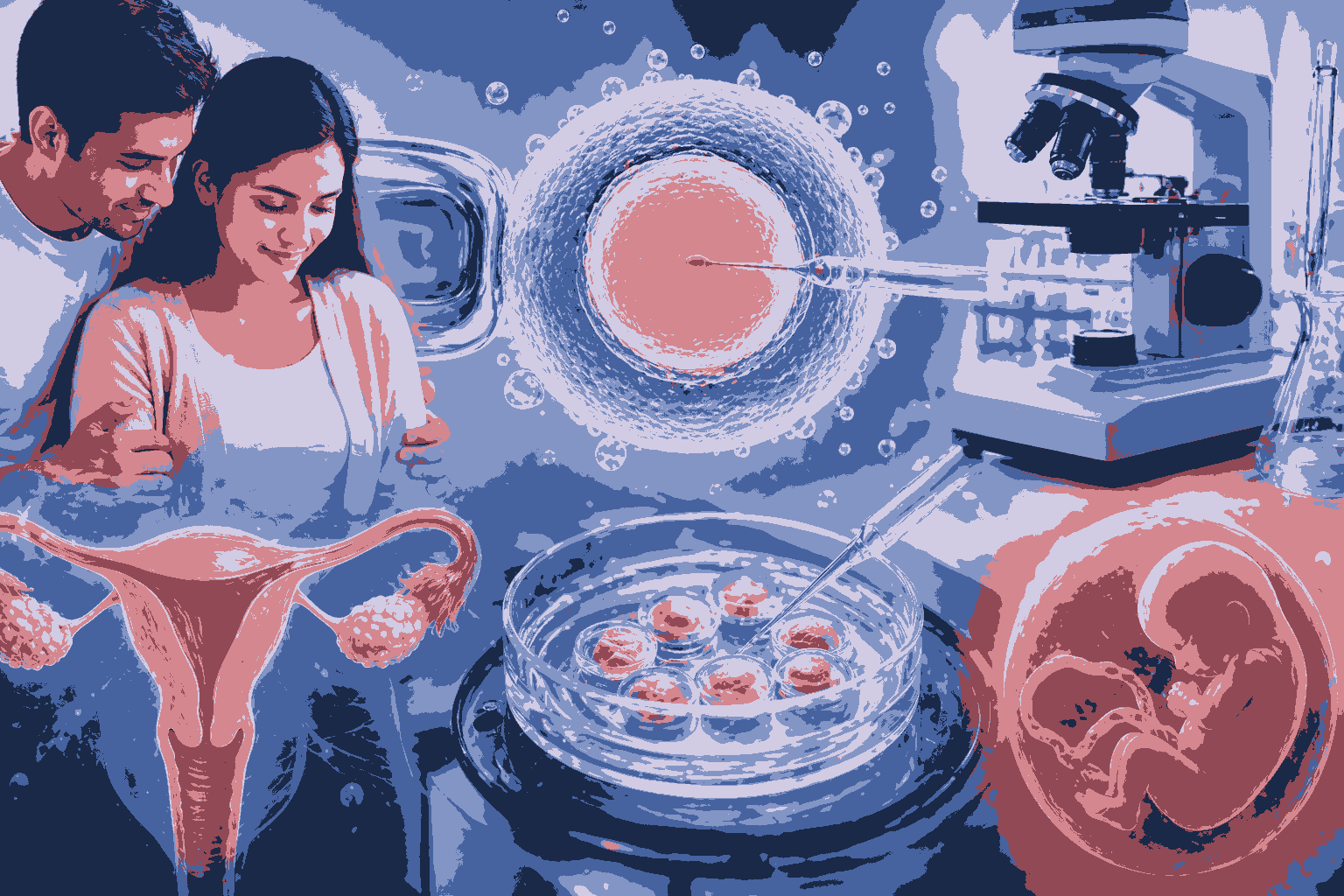
Understanding assisted reproductive technologies (ART) is essential for aspirants preparing for Class 12 Biology exams. One of the most effective ways to strengthen this topic is by practicing Art and Infertility MCQs Class 12 Biology IVF ICSI Zift Questions with Answers, as these questions help connect theory with real-life applications.
Reproductive health is not limited to natural processes; it also includes advanced techniques developed to overcome infertility. Through Art and Infertility MCQs Class 12 Biology IVF ICSI Zift Questions with Answers, aspirants gain a deeper understanding of methods like IVF, ICSI, and ZIFT, which are commonly asked in board and competitive exams.
Infertility is defined as the inability to conceive even after regular unprotected intercourse. By solving Art and Infertility MCQs Class 12 Biology IVF ICSI Zift Questions with Answers, aspirants can clearly understand the causes of infertility, including hormonal imbalance, low sperm count, and structural abnormalities in reproductive organs.
One of the most important ART techniques is In Vitro Fertilization (IVF). Practicing Art and Infertility MCQs Class 12 Biology IVF ICSI Zift Questions with Answers helps aspirants learn that IVF involves fertilization outside the body followed by implantation into the uterus. This concept is frequently tested, making Art and Infertility MCQs Class 12 Biology IVF ICSI Zift Questions with Answers highly valuable for exam preparation.
Another advanced technique is Intracytoplasmic Sperm Injection (ICSI). Through Art and Infertility MCQs Class 12 Biology IVF ICSI Zift Questions with Answers, aspirants can understand that ICSI involves directly injecting a sperm into an ovum, especially useful in cases of male infertility. This technique highlights how modern science has made reproduction possible even in challenging conditions.
Zygote Intra Fallopian Transfer (ZIFT) is also a key concept covered in Art and Infertility MCQs Class 12 Biology IVF ICSI Zift Questions with Answers. It involves transferring the zygote into the fallopian tube after fertilization. By practicing Art and Infertility MCQs Class 12 Biology IVF ICSI Zift Questions with Answers, aspirants can differentiate between ZIFT and other techniques like GIFT and IUT.
One major advantage of solving Art and Infertility MCQs Class 12 Biology IVF ICSI Zift Questions with Answers is improved conceptual clarity. Aspirants learn not just definitions but also applications, differences between techniques, and their relevance in medical science.
Additionally, Art and Infertility MCQs Class 12 Biology IVF ICSI Zift Questions with Answers help aspirants identify common mistakes. For example, confusion between IVF and ZIFT or misunderstanding where fertilization occurs can lead to incorrect answers. Regular practice ensures these errors are minimized.
Time management is another benefit of practicing Art and Infertility MCQs Class 12 Biology IVF ICSI Zift Questions with Answers. In competitive exams like NEET, quick decision-making is crucial. Familiarity with such questions allows aspirants to solve them accurately within limited time.
Furthermore, Art and Infertility MCQs Class 12 Biology IVF ICSI Zift Questions with Answers enhance analytical thinking. Many questions are application-based, requiring aspirants to apply concepts rather than recall facts. This builds confidence and improves performance.
Another important reason to focus on Art and Infertility MCQs Class 12 Biology IVF ICSI Zift Questions with Answers is their high exam weightage. Questions related to ART are frequently asked in board exams and entrance tests, making consistent practice essential.
Moreover, Art and Infertility MCQs Class 12 Biology IVF ICSI Zift Questions with Answers improve retention. Repetition through MCQs helps reinforce key concepts, making it easier to recall them during exams.
Aspirants should also note that Art and Infertility MCQs Class 12 Biology IVF ICSI Zift Questions with Answers build confidence. When concepts become familiar, exam stress reduces and accuracy improves significantly.
Art and Infertility MCQs Class 12 Biology IVF ICSI Zift Questions with Answers:
1. Which test is misused for the identification of an unborn baby?
A. Clotting test
B. Amniocentesis
C. Erythroblastosis
D. Angiogram
Answer: B
Explanation: Amniocentesis is a prenatal diagnostic test used to detect genetic disorders, but it has been misused for sex determination, which is illegal.
2. What does capacitation refer to?
A. Ovum after fertilization
B. Ovum before fertilization
C. Sperm after fertilization
D. Sperm before fertilization
Answer: D
Explanation: Capacitation refers to physiological changes in sperm inside the female reproductive tract that enable it to fertilize the ovum.
3. In the context of amniocentesis, which statement is incorrect?
A. It can detect cleft palate
B. It is done at 14–16 weeks
C. It is used for prenatal sex determination
D. It can detect Down syndrome
Answer: A
Explanation: Amniocentesis cannot reliably detect structural defects like cleft palate but is useful for chromosomal abnormalities.
4. What is the permissible use of amniocentesis?
A. Artificial insemination
B. Embryo transfer
C. Detect sex of foetus
D. Detect genetic abnormality
Answer: D
Explanation: Amniocentesis is legally permitted only for detecting genetic and chromosomal abnormalities.
5. Medical Termination of Pregnancy (MTP) is safe up to:
A. 6 weeks
B. 8 weeks
C. 12 weeks
D. 18 weeks
Answer: C
Explanation: MTP is considered relatively safe during the first trimester (up to 12 weeks).
6. What is the purpose of amniocentesis in detecting chromosomal defects in the developing foetus?
Assertion (A): Amniocentesis is used to detect chromosomal defects in the developing foetus.
Reason (R): Amniocentesis is a cytological study of foetal cells to identify abnormal chromosomes.
Options:
A. Both A and R are correct and R is the correct explanation of A
B. Both A and R are correct but R is not the correct explanation of A
C. A is correct but R is wrong
D. A is wrong but R is correct
Answer: A
Explanation: Amniocentesis involves examining foetal cells present in the amniotic fluid. These cells are analyzed cytologically to detect chromosomal abnormalities like Down syndrome, which directly explains the assertion.
7. In amniocentesis, what is used for biochemical assay?
A. Amniotic fluid
B. Chorionic fluid
C. Foetal cells
D. Both A and C
Answer: D
Explanation: Both amniotic fluid and fetal cells are used for detecting abnormalities.
8. Why are oral contraceptives prescribed?
A. Prevent fertilization
B. Prevent implantation
C. Stimulate ovulation
D. Block sperm entry
Answer: B
Explanation: Oral contraceptives prevent implantation and also inhibit ovulation.
9. MOET embryos are transferred at stage:
A. 6–8 cells
B. 8–16 cells
C. Zygote
D. 8–32 cells
Answer: D
Explanation: Embryos at 8–32 cell stage are transferred in MOET.
10. Which is an intrauterine device?
A. LNG-20
B. Saheli
C. Vaginal ring
D. DMPA
Answer: A
Explanation: LNG-20 is a hormone-releasing IUD.
11. Foetal sex determination is done by detecting:
A. Chiasmata
B. Barr bodies
C. Autosomes
D. Kinetochore
Answer: B
Explanation: Presence of Barr body indicates female sex.
12. Assertion–Reason (Amniocentesis misuse and ban):
Assertion (A): Amniocentesis is used to detect abnormalities in the foetus.
Reason (R): The government banned the use of amniocentesis for sex determination of the foetus.
Options:
A. Both A and R are correct and R is the correct explanation of A
B. Both A and R are correct but R is not the correct explanation of A
C. A is correct but R is wrong
D. A is wrong but R is correct
Answer: B
Explanation: The assertion is correct because amniocentesis is used for detecting genetic and chromosomal abnormalities. The reason is also correct, as the government banned its misuse for sex determination. However, the reason does not explain the assertion — it only states a legal restriction.
13. Ultrasonography uses:
A. Antigen-antibody reaction
B. High frequency sound waves
C. Magnetic waves
D. None
Answer: B
Explanation: Ultrasound uses high-frequency sound waves to create images.
14. True statement about MTP:
A. Legalised in 1970
B. Safe up to 12 weeks
C. Mostly for healthy child abortion
D. Related to amniocentesis
Answer: B
Explanation: MTP is safest in the first trimester.
15. Non-invasive genetic technique:
A. Amniocentesis
B. Chorionic biopsy
C. Foetal blood sampling
D. Ultrasonography
Answer: D
Explanation: Ultrasonography is non-invasive.
16. Which of the following statements is true regarding the development of a test tube baby?
Statement I: A test tube baby develops completely inside a test tube.
Statement II: In IVF-ET (In Vitro Fertilization and Embryo Transfer), fertilization occurs inside the female body.
Options:
A. Both Statement I and Statement II are correct
B. Statement I is correct and Statement II is incorrect
C. Statement I is incorrect and Statement II is correct
D. Both Statement I and Statement II are incorrect
Answer: D
Explanation:
Both statements are incorrect. A test tube baby does not develop entirely inside a test tube; only fertilization occurs outside the body in a laboratory. After fertilization, the embryo is transferred into the uterus where normal development occurs. In IVF-ET, fertilization happens outside the female body, not inside.
17. Which of the following statements is true regarding Intra Cytoplasmic Sperm Injection (ICSI) and Artificial Insemination (AI) in correcting infertility?
Statement I: ICSI involves injecting a single sperm directly into the cytoplasm of an ovum in a laboratory.
Statement II: Artificial insemination involves introducing semen from a healthy donor or husband into the female reproductive tract to facilitate fertilization.
Options:
A. Both Statement I and Statement II are true
B. Both Statement I and Statement II are false
C. Statement I is correct but Statement II is false
D. Statement I is incorrect but Statement II is true
Answer: A
Explanation: Both statements are correct. ICSI is a highly specialized form of IVF where a sperm is directly injected into an egg. Artificial insemination helps in cases where natural fertilization is difficult by placing sperm directly into the female reproductive tract.
18. Test tube baby means:
A. Fertilization + development outside
B. Fertilization outside, development inside
C. Fertilization inside, development outside
D. Both inside
Answer: B
Explanation: IVF involves external fertilization but internal development.
19. Blastula implanted at stage:
A. 16 cell
B. 64 cell
C. 128 cell
D. 32 cell
Answer: D
Explanation: Blastocyst stage (~32 cells) is implanted.
20. IVF involves:
A. External fertilization + internal development
B. Internal fertilization
C. External development
D. Both internal
Answer: A
Explanation: IVF fertilization occurs outside body.
21. Technique to overcome infertility:
A. RCH
B. MTP
C. RTI
D. ART
Answer: D
Explanation: ART includes IVF, ICSI etc.
22. Not related to wildlife conservation:
A. IVF
B. IUCN
C. WWF
D. IBWL
Answer: A
Explanation: IVF is reproductive technology.
23. First IVF success reported by:
A. Louis Brown
B. Steptoe & Edwards
C. Gilbert Brown
D. Bayliss
Answer: B
Explanation: First test tube baby Louise Brown.
24. IOF means:
A. External fertilization
B. Fertilization outside embryo sac
C. Pollens introduced into ovary
D. Gamete fusion
Answer: C
Explanation: IOF involves direct pollen introduction.
25. Incorrect ZIFT statement:
A. Zygote transfer
B. IVF involved
C. Embryos <8 cells transferred
D. Embryos >8 cells transferred
Answer: D
Explanation: Larger embryos are transferred to uterus, not tube.
26. Embryo transfer technique:
A. GIFT
B. ICSI
C. ZIFT
D. IUT
Answer: D
Explanation: Embryos transferred into uterus.
27. Full form of GIFT:
A. Germ internal transfer
B. Gamete insemination
C. Gamete intra fallopian transfer
D. Gamete fertilization transfer
Answer: C
Explanation: Gametes placed in fallopian tube.
28. IVF transfers:
A. Ovum
B. Zygote
C. Embryo
D. Blastomere
Answer: B
Explanation: Zygote transferred into fallopian tube.
29. Artificial insemination refers to:
A. Sperm into ovary
B. Sperm + ovum in lab
C. Husband sperm in lab
D. Sperm into vagina
Answer: D
Explanation: Sperm is artificially introduced into vagina.
30. Signals for parturition come from:
A. Placenta only
B. Placenta + foetus
C. Oxytocin only
D. Foetus only
Answer: B
Explanation: Both placenta and fully developed foetus initiate labour.
Conclusion on Art and Infertility MCQs Class 12 Biology IVF ICSI Zift Questions with Answers
In conclusion, Art and Infertility MCQs Class 12 Biology IVF ICSI Zift Questions with Answers are an essential tool for mastering assisted reproductive technologies. They provide clarity, improve speed, and enhance conceptual understanding. By consistently practicing Art and Infertility MCQs Class 12 Biology IVF ICSI Zift Questions with Answers, aspirants can achieve better results and develop a strong foundation in reproductive biology.