
- Keneitsino Lydia
- April 20, 2026
Avoid Costly Mistakes: Epididymis Structure and Function MCQs Class 12 for NEET, JEE & CUET
When aspirants begin preparing for reproductive biology, one topic that consistently appears in exams is Epididymis Structure and Function MCQs Class 12. This concept is not only fundamental but also highly scoring when understood clearly. The topic of Epididymis Structure and Function MCQs Class 12 helps aspirants strengthen their conceptual clarity and improve accuracy in board and competitive exams.
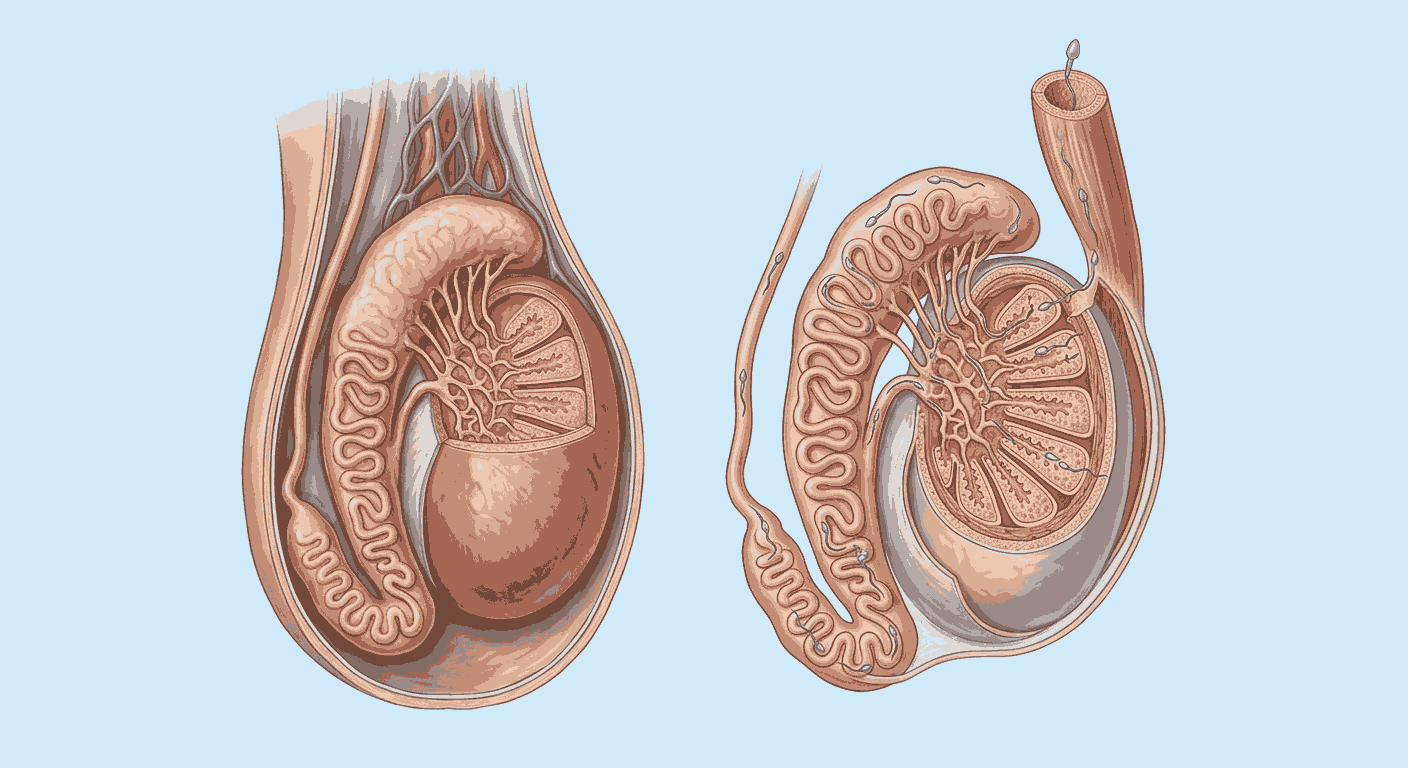
To start with, the epididymis is a long, highly coiled tubular structure attached to the posterior side of each testis. Understanding this structure is crucial when solving Epididymis Structure and Function MCQs Class 12, as many questions test anatomical positioning and function. The epididymis is divided into three main regions: caput (head), corpus (body), and cauda (tail). These divisions are frequently asked in Epididymis Structure and Function MCQs Class 12, making it essential for aspirants to remember them clearly.
In the context of Epididymis Structure and Function MCQs Class 12, the caput epididymis receives sperm from the vasa efferentia. The corpus epididymis serves as the middle segment where sperm begin to mature. The cauda epididymis stores the mature sperm until ejaculation. This stepwise function is a common concept tested in Epididymis Structure and Function MCQs Class 12, especially in sequence-based questions.
Another important concept for Epididymis Structure and Function MCQs Class 12 is the role of epididymis in sperm maturation. When sperm leave the testis, they are immature and non-motile. As they pass through the epididymis, they gain motility and fertilizing capacity. This transformation is critical and often highlighted in Epididymis Structure and Function MCQs Class 12 to test aspirants’ understanding of physiological changes.
The lining of the epididymis also plays a significant role in Epididymis Structure and Function MCQs Class 12. It consists of pseudostratified columnar epithelium with stereocilia. These stereocilia help in absorption of excess fluid and facilitate sperm maturation. Questions related to histology are common in Epididymis Structure and Function MCQs Class 12, so aspirants must pay attention to these microscopic details.
While preparing for Epididymis Structure and Function MCQs Class 12, aspirants should also focus on the function of storage. The cauda epididymis acts as a reservoir for sperm. This ensures that sperm are readily available during ejaculation. This storage function is frequently tested in Epididymis Structure and Function MCQs Class 12, especially in conceptual questions.
Another key aspect of Epididymis Structure and Function MCQs Class 12 is the role of epididymis in sperm transport. The smooth muscle layers surrounding the epididymis contract rhythmically to push sperm forward. This movement is essential for proper functioning of the male reproductive system and is often included in Epididymis Structure and Function MCQs Class 12.
Hormonal regulation is another area covered in Epididymis Structure and Function MCQs Class 12. Testosterone, produced by Leydig cells, plays a crucial role in maintaining epididymal function. Without proper hormonal support, sperm maturation cannot occur efficiently. This concept is important for solving higher-order Epididymis Structure and Function MCQs Class 12.
Aspirants should also understand the clinical relevance while studying Epididymis Structure and Function MCQs Class 12. Conditions like epididymitis (inflammation of epididymis) can affect fertility. Such application-based questions are increasingly common in Epididymis Structure and Function MCQs Class 12, especially in competitive exams.
Additionally, the connection between epididymis and vas deferens is a frequently tested topic in Epididymis Structure and Function MCQs Class 12. The cauda epididymis continues as the vas deferens, which carries sperm further into the reproductive tract. This anatomical continuity is a key concept in Epididymis Structure and Function MCQs Class 12.
When aspirants revise Epididymis Structure and Function MCQs Class 12, they should focus on diagrams as well. Labeling questions are common, and understanding the structure visually helps in solving Epididymis Structure and Function MCQs Class 12 more efficiently.
Epididymis Structure and Function MCQs Class 12:
1. Leydig cells are found in
a) Heart lungs
b) Lungs
c) Spleen
d) Testis
Answer: d
Explanation: Leydig cells are located in the interstitial spaces of the testes and secrete testosterone.
2. How many secondary spermatocytes are required to form 400 million spermatozoa?
a) 50 million
b) 100 million
c) 200 million
d) 400 million
Answer: c
Explanation: Each secondary spermatocyte forms 2 spermatids → 2 sperm. So 200 million secondary spermatocytes produce 400 million sperm.
3. Which of the following depicts the correct pathway of transport of sperms?
a) Rete testis → Efferent ductules → Epididymis → Vas deferens
b) Rete testis → Epididymis → Efferent ductules → Vas deferens
c) Rete testis → Vas ductules → Efferent ductules → Epididymis
d) Efferent ductules → Rete testis → Vas deferens → Epididymis
Answer: a
Explanation: This is the correct anatomical pathway for sperm transport.
4. Which of the following is incorrect regarding vasectomy?
a) No sperm occurs in seminal fluid
b) No sperm occurs in epididymis
c) Vasa deferentia is cut and tied
d) Irreversible sterility
Answer: b
Explanation: Sperms are still produced and stored in epididymis; only their transport is blocked.
5. Select the correct sequence for transport of sperm cells in male reproductive system.
a) Seminiferous tubules → Rete testis → Vasa efferentia → Epididymis → Vas deferens → Ejaculatory duct → Urethra → Urethral meatus
b) Seminiferous tubules → Vasa efferentia → Epididymis → Inguinal canal → Urethra
c) Testis → Epididymis → Vasa efferentia → Vas deferens → Ejaculatory duct → Urethra
d) Testis → Epididymis → Rete testis → Urethra
Answer: a
Explanation: This is the correct physiological pathway of sperm transport.
6. What is the difference between spermiogenesis and spermiation?
a) Spermiogenesis forms spermatids
b) Spermiation forms spermatids
c) Spermiogenesis forms spermatozoa; spermiation releases them
d) Spermiation forms spermatozoa
Answer: c
Explanation: Spermiogenesis = maturation; spermiation = release from Sertoli cells.
7. Select the correct route for sperms in male frog.
a) Testes → Bidder’s canal → Kidney → Vasa efferentia → Cloaca
b) Testes → Kidney → Vasa efferentia → Cloaca
c) Testes → Vasa efferentia → Ureter → Cloaca
d) Testes → Vasa efferentia → Kidney → Bidder’s canal → Urogenital duct → Cloaca
Answer: d
Explanation: This is the correct pathway in frogs.
8. Correct sequence of epididymis regions
a) Caput → Corpus → Cauda
b) Corpus → Caput → Cauda
c) Corpus → Cauda → Caput
d) Caput → Cauda → Corpus
Answer: a
Explanation: Standard anatomical order.
9. Accessory glands secretion order
a) Prostate > Seminal vesicle > Bulbourethral
b) Bulbourethral > Prostate > Seminal vesicle
c) Prostate > Bulbourethral > Seminal vesicle
d) Seminal vesicle > Prostate > Bulbourethral
Answer: d
Explanation: Seminal vesicles contribute the most fluid.
10. From where do spermatozoa receive nutrition?
a) Nurse glands
b) Interstitial cells
c) Epididymis
d) Germ cells
Answer: a
Explanation: Sertoli (nurse) cells nourish sperm.
11. Correct sequence of organs in male reproductive system
a) Vasa efferentia → Vas deferens → Epididymis → Seminiferous tubules
b) Seminiferous tubules → Vasa efferentia → Epididymis → Vas deferens
c) Epididymis → Vas deferens → Seminiferous tubules
d) Vasa efferentia → Epididymis → Seminiferous tubules
Answer: b
Explanation: Correct anatomical sequence.
12. Accessory gland NOT present in male
a) Seminal vesicle
b) Cowper’s gland
c) Prostate gland
d) Bartholin’s gland
Answer: d
Explanation: Bartholin’s gland is female.
13. Testis is connected to scrotum by
a) Tunica vaginalis
b) Tunica albuginea
c) Gubernaculum
d) Tunica vascularis
Answer: c
Explanation: Gubernaculum anchors testis.
14. Number of seminiferous tubules per lobule
a) 1–4
b) 5–7
c) 8–10
d) 11–14
Answer: a
Explanation: Each lobule contains 1–4 tubules.
15. Coagulation of semen is due to
a) Fibrin
b) Fibrinogen
c) Fructose
d) Prostaglandins
Answer: b
Explanation: Fibrinogen helps semen coagulation.
16. Odd homologous pair
a) Bartholin’s gland – Cowper’s gland
b) Clitoris – Penis
c) Mons pubis – Glans penis
d) Labia majora – Scrotum
Answer: c
Explanation: These are not homologous.
17. Hormone secreting cells
a) Leydig cells
b) Sertoli cells
c) Primary spermatocyte
d) Secondary spermatocyte
Answer: a
Explanation: Leydig cells produce testosterone.
18. Cauda epididymis leads to
a) Vas efferens
b) Vas deferens
c) Ejaculatory duct
d) Rete testis
Answer: b
Explanation: It continues as vas deferens.
19. Testis outside abdomen because
a) Narrow pelvis
b) Protection
c) Less space
d) Lower temperature needed
Answer: d
Explanation: Sperm need lower temperature.
20. Match the following (given set)
a) Correct combination
b) Incorrect
c) Incorrect
d) Incorrect
Answer: a
Explanation: Based on function mapping.
21. Human sperm discovered by
a) Pander
b) Graaf
c) Leeuwenhoek
d) Aristotle
Answer: c
Explanation: Leeuwenhoek discovered sperm.
22. Correct sperm pathway
a) Incorrect
b) Correct sequence
c) Incorrect
d) Incorrect
Answer: b
Explanation: Standard pathway.
23.
Match the following correctly:
Column I
A. Testis
B. Epididymis
C. Seminiferous tubules
D. Semen
Column II
- Site of sperm maturation and storage
- Male reproductive organ
- Structural unit where spermatogenesis occurs
- Fluid containing sperm and secretions
Options:
a) A-2, B-1, C-3, D-4
b) A-3, B-2, C-1, D-4
c) A-1, B-3, C-2, D-4
d) A-2, B-3, C-1, D-4
Answer: a
Explanation:
- Testis (A) is the primary male reproductive organ → (2)
- Epididymis (B) is where sperm mature and are stored → (1)
- Seminiferous tubules (C) are the site of spermatogenesis → (3)
- Semen (D) is the fluid containing sperm and secretions → (4)
24. Gland producing prostaglandins
a) Prostate
b) Cowper’s
c) Seminal vesicles
d) Testis
Answer: c
Explanation: Seminal vesicles secrete prostaglandins.
25. Male breast enlargement
a) Eunuchoidism
b) Hypogonadism
c) Gynaecomastia
d) Female hypogonadism
Answer: c
Explanation: Excess breast tissue in males.
26. Testes in scrotum because
a) Space
b) Storage
c) Hormone regulation
d) Cooler environment
Answer: d
Explanation: Needed for spermatogenesis.
27. Purpose of testes in scrotum
a) Ejaculation
b) Faster maturation
c) Lower temperature
d) Fertilization
Answer: c
Explanation: Temperature regulation.
28. Fertilizin source
a) Polar bodies
b) Sperm tail
c) Acrosome
d) Mature eggs
Answer: d
Explanation: Eggs release fertilizin.
29. Acrosome secretes
a) Hyaluronic acid
b) Hyaluronidase
c) TSH
d) Fertilizin
Answer: b
Explanation: Helps sperm penetrate egg.
30. Acrosome contains
a) Mitochondria
b) DNA
c) Hydrolytic enzymes
d) Fructose
Answer: c
Explanation: Enzymes help fertilization.
Conclusion on Epididymis Structure and Function MCQs Class 12
In conclusion, mastering Epididymis Structure and Function MCQs Class 12 requires a clear understanding of structure, function, histology, and physiological processes. By revising concepts regularly and practicing consistently, aspirants can easily score high in Epididymis Structure and Function MCQs Class 12. A strong grasp of this topic not only boosts confidence but also improves overall performance in biology exams.