
- Keneitsino Lydia
- April 10, 2026
Avoid Common Mistakes: Radioisotopes in Medicines Cobalt 60 MCQs With Answers Class 12
The study of radioisotopes plays a significant role in modern medicine, especially in the treatment and diagnosis of various diseases. Among the commonly used radioisotopes, Cobalt-60 holds a special place due to its effectiveness in cancer treatment. For aspirants preparing for board exams and competitive tests, practicing Radioisotopes in Medicines Cobalt 60 MCQs With Answers Class 12 is an essential strategy to master this topic thoroughly.
To begin with, radioisotopes are unstable isotopes that emit radiation as they decay to a stable form. These radiations are highly useful in medical applications such as imaging and therapy. Understanding these concepts becomes easier when aspirants regularly solve Radioisotopes in Medicines Cobalt 60 MCQs With Answers Class 12, as it reinforces both theoretical and application-based knowledge.
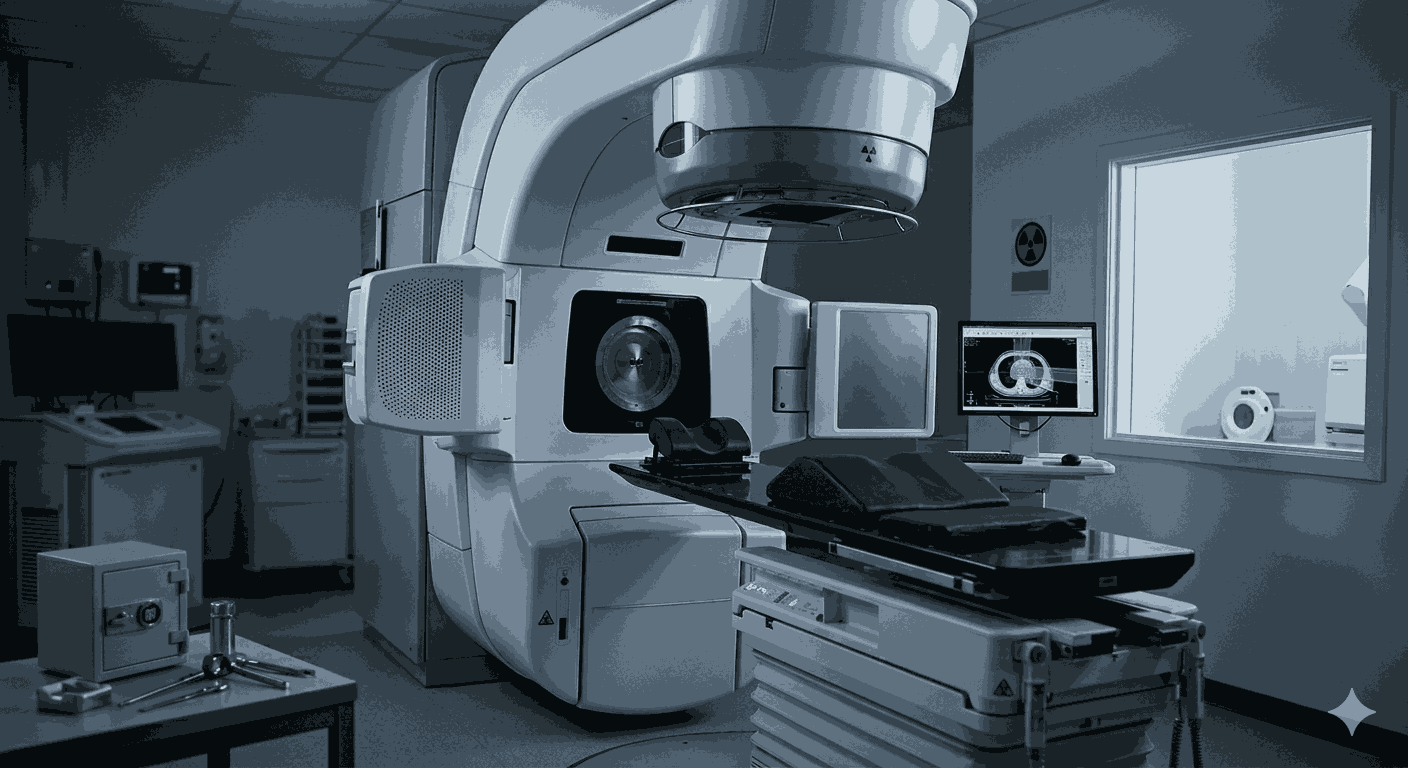
Cobalt-60 is widely used in radiotherapy to treat cancer. It emits gamma rays that can destroy cancerous cells without significantly affecting the surrounding healthy tissues when used carefully. By practicing Radioisotopes in Medicines Cobalt 60 MCQs With Answers Class 12, aspirants can better understand how controlled radiation is utilized in medical treatments and why Cobalt-60 is preferred in many cases.
Moreover, Radioisotopes in Medicines Cobalt 60 MCQs With Answers Class 12 help aspirants grasp the importance of half-life in determining the usefulness of a radioisotope. Cobalt-60 has an appropriate half-life that makes it suitable for therapeutic purposes. This concept is frequently tested in exams, making Radioisotopes in Medicines Cobalt 60 MCQs With Answers Class 12 highly relevant for preparation.
In addition, radioisotopes are also used in diagnostic techniques. Although Cobalt-60 is primarily used for treatment, understanding its properties helps in comparing it with other isotopes used in imaging. Practicing Radioisotopes in Medicines Cobalt 60 MCQs With Answers Class 12 allows aspirants to differentiate between isotopes used for diagnosis and those used for therapy.
Another important aspect covered in Radioisotopes in Medicines Cobalt 60 MCQs With Answers Class 12 is the safety measures associated with radioactive substances. Since radiation can be harmful if not handled properly, strict guidelines are followed in medical applications. Questions related to safety precautions are common, and Radioisotopes in Medicines Cobalt 60 MCQs With Answers Class 12 help aspirants prepare for such scenarios.
Furthermore, Radioisotopes in Medicines Cobalt 60 MCQs With Answers Class 12 enhance conceptual clarity regarding nuclear reactions and decay processes. Aspirants learn about gamma emission, nuclear stability, and energy release, all of which are important topics in Class 12 Chemistry.
From an examination perspective, Radioisotopes in Medicines Cobalt 60 MCQs With Answers Class 12 are extremely useful for quick revision. They cover important points such as uses of Cobalt-60, properties of radioisotopes, and their applications in medicine. This makes Radioisotopes in Medicines Cobalt 60 MCQs With Answers Class 12 a valuable resource for last-minute preparation.
Additionally, solving Radioisotopes in Medicines Cobalt 60 MCQs With Answers Class 12 improves analytical thinking. Instead of memorizing facts, aspirants learn to apply concepts in different contexts. This approach is beneficial not only for exams but also for understanding real-world applications of chemistry.
Radioisotopes in Medicines Cobalt 60 MCQs With Answers Class 12:
1.
Which of the following is not an antibiotic?
a) Penicillin
b) Oxytocin
c) Ofloxacin
d) Tetracycline
Answer: b
2.
Cobalt (60) isotope is used in the treatment of
a) Heart diseases
b) Skin diseases
c) Diabetes
d) Cancer
Answer: d
3.
Select the incorrect statement.
a) Equanil is used to control depression and hypertension
b) Mifepristone is a synthetic steroid used as ‘morning after pill’
c) 0.2% phenol acts as antiseptic while 1% acts as disinfectant
d) A drug which kills organisms is called bacteriostatic
Answer: d
4.
Arsenic containing medicine used for treatment of syphilis is
a) Erythromycin
b) Ofloxacin
c) Tetracycline
d) Salvarsan
Answer: d
5.
Which coordination compound inhibits tumor growth?
a) Trans-platin
b) EDTA complex
c) None
d) Cis-platin
Answer: d
6.
Functional groups in aspirin are
a) OH, NHCOCH₃
b) OCH₃, COOH
c) COOH, OCOCH₃
d) OH, OCOCH₃
Answer: c
7.
Which is a narcotic analgesic?
a) Paracetamol
b) Aspirin
c) Morphine
d) None
Answer: c
8.
Drugs are chemicals with
a) Low molecular masses
b) High molecular masses
c) Both
d) High atomic masses
Answer: a
9.
CTAB is used as
a) Antioxidant
b) Antibiotic
c) Surfactant
d) Tranquilizer
Answer: c
10.
Phenacetin is an example of
a) Antibiotic
b) Antimalarial
c) Antipyretic
d) Antiseptic
Answer: c
11.
Incorrect statement about vitamin B₁₂
a) Contains cobalt
b) Occurs in plants
c) Present in rainwater
d) Needed in small amount
Answer: b
12.
Element in red blood cells
a) Fe
b) Ra
c) Co
d) None
Answer: a
13.
Drug used for acidity
a) Ranitidine
b) Meprobamate
c) Salvarsan
d) Codeine
Answer: a
14.
Antihistamine used to prevent acidity
a) Cimetidine
b) Phenelzine
c) Morphine
d) Equanil
Answer: a
15.
Veronal is a
a) Antihistamine
b) Antifertility
c) Tranquilizer
d) Antimicrobial
Answer: c
16.
Correct sequence: extinguisher, antiseptic, insecticide, anesthetic
a) CHCl₃, CCl₄, DDT, CHCl₃
b) DDT, CHCl₃, CCl₄, CHCl₃
c) CCl₄, CHI₃, DDT, CHCl₃
d) CCl₄, CHI₃, CHCl₃, DDT
Answer: c
17.
Drug for anxiety and stress
a) Ofloxacin
b) Aspirin
c) Luminal
d) Mestranol
Answer: c
18.
Which of the following represents the correct structure of Aspirin (acetylsalicylic acid)?
a) Benzene ring with –OH and –COOH groups
b) Benzene ring with –COOH and –OCOCH₃ groups
c) Benzene ring with –CHO and –COOH groups
d) Benzene ring with –OH and –NH₂ groups
Answer: b
19.
Match List-I and List-II
A Valium
B Morphine
C Norethindrone
D Vitamin B₁₂
I Antifertility
II Pernicious anaemia
III Analgesic
IV Tranquiliser
a) A–IV, B–III, C–I, D–II
b) A–IV, B–III, C–II, D–I
c) A–I, B–III, C–II, D–IV
d) A–I, B–II, C–III, D–IV
Answer: a
20.
A chemist has four artificial sweeteners A, B, C, and D. Based on experimental observations, identify the correct combination:
(i) A and D give violet colour with ninhydrin (indicates presence of amino acid group)
(ii) C gives positive AgNO₃ test but negative Prussian blue test
(iii) B and D give positive sodium nitroprusside test
Which option is correct?
a) A–Alitame, B–Saccharin, C–Aspartame, D–Sucralose
b) A–Saccharin, B–Alitame, C–Sucralose, D–Aspartame
c) A–Aspartame, B–Alitame, C–Saccharin, D–Sucralose
d) A–Aspartame, B–Saccharin, C–Sucralose, D–Alitame
Answer: d
21.
Drug reducing fever
a) Tranquilizer
b) Antibiotic
c) Antipyretic
d) Analgesic
Answer: c
22.
Noradrenaline is a
a) Antidepressant
b) Antihistamine
c) Neurotransmitter
d) Antacid
Answer: c
23.
Correct match
A Norethindrone
B Ofloxacin
C Equanil
a) II, III, I
b) I, III, II
c) I, II, III
d) II, I, III
Answer: a
24.
Match List-I and II
A Antacid
B Sweetener
C Antifertility
D Tranquilizer
a) II, IV, I, III
b) II, I, IV, III
c) III, I, IV, II
d) III, IV, I, II
Answer: a
25.
Wrong statement about drug-enzyme interaction
a) Non-competitive binds allosteric
b) Allosteric changes active site
c) Allosteric competes with active site
d) Competitive binds active site
Answer: c
26.
The antifertility drug “Novestrol” reacts with certain reagents due to the presence of phenolic and alcoholic groups. Which set of reagents confirms this behavior?
a) ZnCl₂/HCl, FeCl₃, alcoholic KCN
b) Br₂ water, ZnCl₂/HCl, FeCl₃
c) Alcoholic KCN, NaOCl, ZnCl₂/HCl
d) Br₂ water, ZnCl₂/HCl, NaOCl
Answer: b
27.
Match drugs and actions
A Ranitidine
B Nardil
C Chloramphenicol
D Dimetane
a) I, IV, II, III
b) I, IV, III, II
c) I, II, III, IV
d) IV, II, III, I
Answer: a
28.
Mechanism of Terfenadine
a) Inhibits secretion
b) Blocks histamine receptor
c) Helps secretion
d) Activates receptor
Answer: b
29.
Deficiency of nor-adrenaline treated by
a) Antihistamine
b) Analgesic
c) Antidepressant
d) Anti-inflammatory
Answer: c
30.
Given molecule acts as
a) Antiseptic
b) Anti-bacterial
c) Anti-depressant
d) Anti-histamine
Answer: d

Conclusion on Radioisotopes in Medicines Cobalt 60 MCQs With Answers Class 12
In conclusion, Radioisotopes in Medicines Cobalt 60 MCQs With Answers Class 12 provide a comprehensive way to understand the role of radioisotopes in medicine. They help in building strong conceptual knowledge, improving accuracy, and boosting confidence. By consistently practicing Radioisotopes in Medicines Cobalt 60 MCQs With Answers Class 12, aspirants can achieve better results in both board exams and competitive exams.