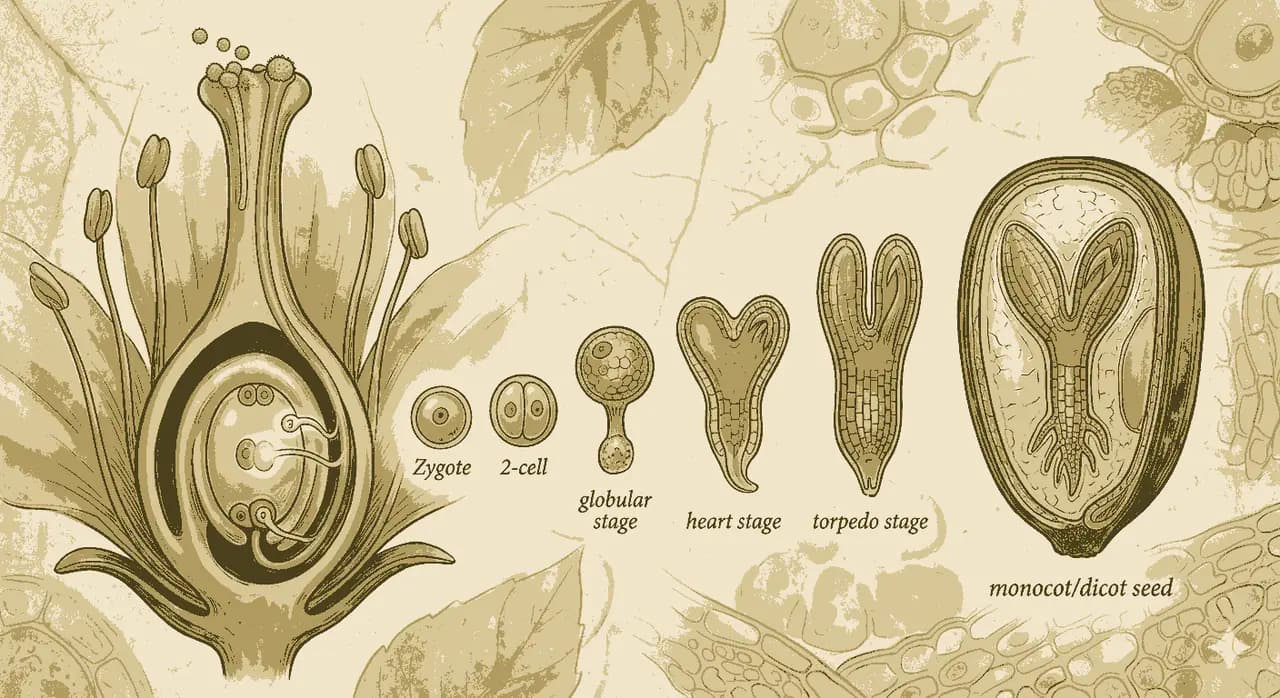
Understanding plant reproduction is a key part of biology, and Seed Development and Embryology MCQs Class 12 Biology with Answers play a crucial role in helping aspirants master this topic. These concepts are not only important for board exams but also form the foundation for competitive exams like NEET. By regularly practicing Seed Development and Embryology MCQs Class 12 Biology with Answers, aspirants can strengthen their conceptual clarity and improve accuracy.
At the core of this topic lies fertilization, which leads to the formation of a zygote and subsequent seed development. The process of double fertilization is unique to angiosperms and is frequently tested through Seed Development and Embryology MCQs Class 12 Biology with Answers. It involves syngamy and triple fusion, resulting in the formation of both embryo and endosperm. Practicing Seed Development and Embryology MCQs Class 12 Biology with Answers helps aspirants understand this process in a structured way.
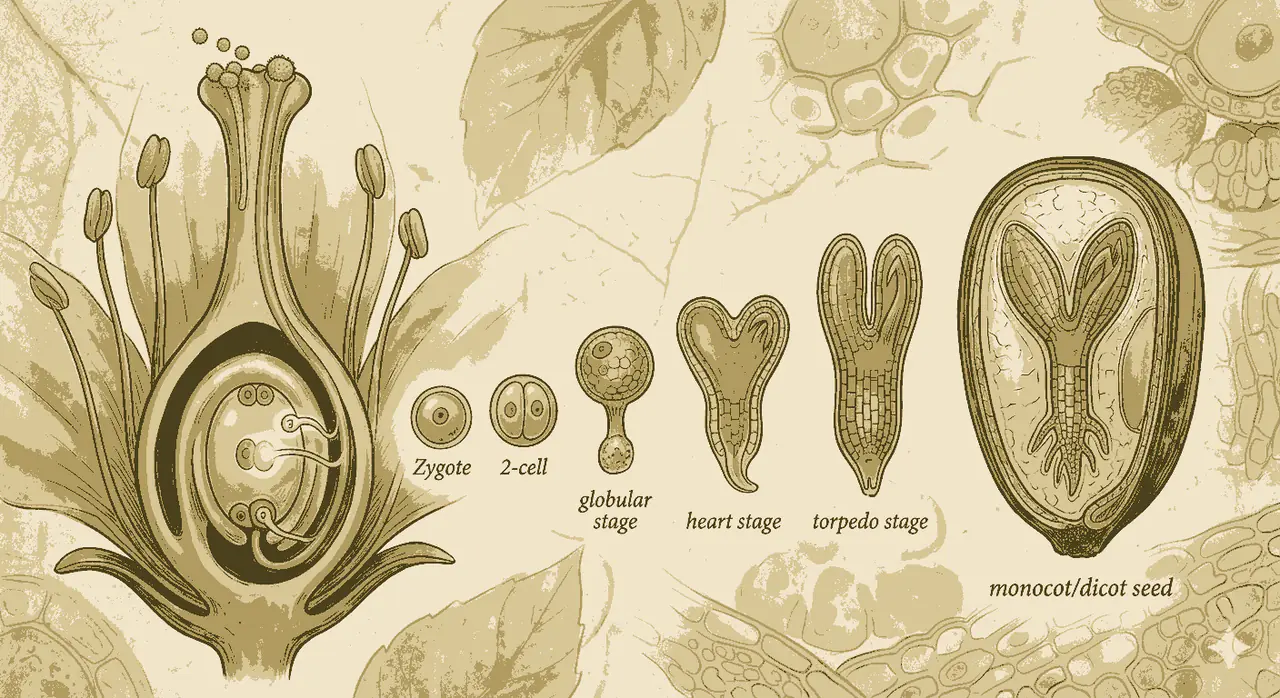
Another important concept is the development of the embryo from the zygote. The zygote undergoes divisions to form the proembryo and eventually the mature embryo. Questions based on embryogeny types such as dicot and monocot development are commonly included in Seed Development and Embryology MCQs Class 12 Biology with Answers . By solving these, aspirants become familiar with patterns and variations in embryo formation.
The role of endosperm is equally significant, as it provides nourishment to the developing embryo. The different types of endosperm—nuclear, cellular, and helobial—are frequently covered in Seed Development and Embryology MCQs Class 12 Biology with Answers . Understanding these variations helps aspirants answer application-based questions more effectively.
Seed structure is another critical area. A typical seed consists of seed coat, embryo, and endosperm. The transformation of ovule into seed and ovary into fruit is a fundamental concept often tested through Seed Development and Embryology MCQs Class 12 Biology with Answers . Practicing such questions ensures that aspirants do not confuse related terms like pericarp, testa, and tegmen.
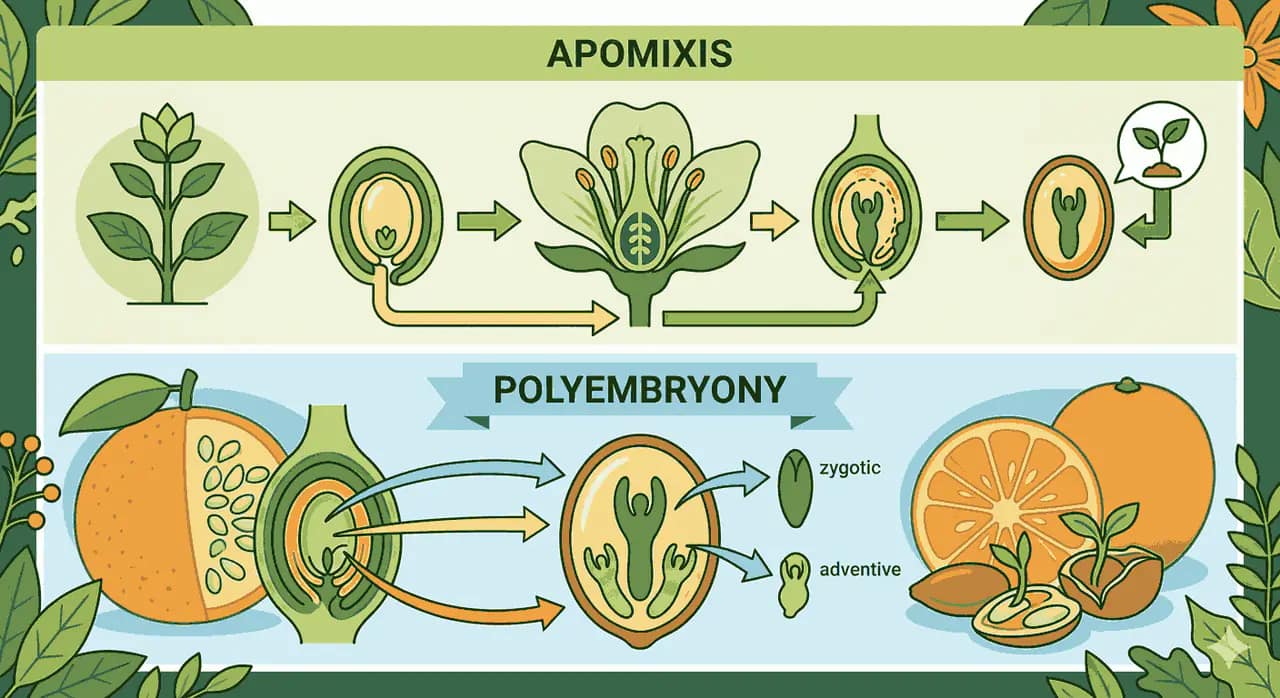
In addition, concepts like apomixis, polyembryony, and parthenocarpy are frequently asked in exams. These special modes of reproduction are important topics included in Seed Development and Embryology MCQs Class 12 Biology with Answers . By repeatedly solving such questions, aspirants can easily differentiate between these processes.
The development of the female gametophyte or embryo sac is also a vital topic. The Polygonum type embryo sac, which is most common, is often asked in Seed Development and Embryology MCQs Class 12 Biology with Answers. Understanding the arrangement of cells and nuclei within the embryo sac helps aspirants tackle complex diagram-based questions.
Another area of focus is the process of pollination and fertilization leading to seed formation. The entry of pollen tube, fertilization events, and subsequent development stages are frequently assessed through Seed Development and Embryology MCQs Class 12 Biology with Answers . Practicing these ensures a strong grasp of sequential biological processes.
Furthermore, the role of different seed parts such as cotyledons, radicle, and plumule is essential. These are basic yet important concepts often included in Seed Development and Embryology MCQs Class 12 Biology with Answers . Aspirants who revise these topics regularly perform better in exams.
It is also important to understand the differences between monocot and dicot seeds. These distinctions are commonly tested in Seed Development and Embryology MCQs Class 12 Biology with Answers , making it essential for aspirants to clearly identify structural differences.
Regular practice of Seed Development and Embryology MCQs Class 12 Biology with Answers enhances problem-solving skills and boosts confidence. It allows aspirants to identify weak areas and focus on improving them. Moreover, solving Seed Development and Embryology MCQs Class 12 Biology with Answers helps in time management during exams.
Consistency is the key to mastering biology topics. By integrating Seed Development and Embryology MCQs Class 12 Biology with Answers into daily study routines, aspirants can significantly improve their performance. These questions not only test knowledge but also encourage analytical thinking.
Seed Development and Embryology MCQs Class 12 Biology with Answers :
1.
Choose the correct set of labellings in the given diagram.
a) x-generative cell, y-pollen tube, z-tube nucleus
b) x-generative cell, y-tube nucleus, z-pollen tube
c) x-pollen tube, y-tube nucleus, z-generative cell
d) x-tube nucleus, y-generative cell, z-pollen tube
Answer: b
Explanation: In a germinated pollen grain, the generative cell divides to form male gametes, the tube nucleus leads the pollen tube, and the pollen tube grows towards the ovule.
2.
In some organisms, karyokinesis is not followed by cytokinesis leading to syncytium formation. Example:
a) Appearance of furrow
b) Liquid endosperm in coconut
c) Sexual reproduction
d) Fertilization
Answer: b
Explanation: Coconut liquid endosperm shows free nuclear divisions without cytokinesis, forming a multinucleate structure.
3.
Cytokinin functions include:
(1) Cell enlargement
(2) Counteracts apical dominance
(3) Helps germination
(4) Initiates flowering
a) 1,2,3
b) 1,2
c) 2,4
d) 1,3
Answer: b
Explanation: Cytokinins promote cell division and reduce apical dominance but are not directly involved in germination or flowering initiation.
4.
Nuclear type endosperm is found in:
(1) Adoxa (2) Penman (3) Peperomia (4) Mangifera
a) 1,2,3
b) 1,2
c) 2,4
d) 1,3
Answer: c
Explanation: Nuclear endosperm is seen in Penman and Mangifera, while others show different types.
5.
The ovary after fertilization is converted into:
a) Embryo
b) Endosperm
c) Fruit
d) Seed
Answer: c
Explanation: The ovary develops into fruit after fertilization.
6.
Perisperm in coffee seeds is persistent:
a) Funicle
b) Raphe
c) Nucellus
d) Chalaza
Answer: c
Explanation: Perisperm is the persistent nucellus that stores food.
7.
Pericarp is formed from:
a) Nucellus
b) Outer integument
c) Ovary wall
d) Inner integument
Answer: c
Explanation: Ovary wall becomes the fruit wall (pericarp).
8.
Entry through micropyle is called:
a) Porogamy
b) Chalazogamy
c) Mesogamy
d) Apogamy
Answer: a
Explanation: Most pollen tubes enter via micropyle (porogamy).
9.
Persistent nucellus is called:
a) Perisperm
b) Endosperm
c) Pericarp
d) Scutellum
Answer: a
Explanation: Perisperm is leftover nucellus.
10.
Pollen tube usually enters via:
a) Micropyle
b) Chalaza
c) Hilum
d) Funicle
Answer: a
Explanation: Micropyle is the common entry point.
11.
Aleurone layer is found in:
a) Embryo
b) Nucellus
c) Endosperm
d) Endodermis
Answer: c
Explanation: It is the protein-rich outer layer of endosperm.
12.
Dicot embryo consists of:
a) Radicle only
b) Embryonal axis
c) Cotyledons
d) All of these
Answer: d
Explanation: Dicot embryo includes radicle, axis, and cotyledons.
13.
Embryogeny where both cells contribute:
a) Onagrad
b) Asterad
c) Solanad
d) Both
Answer: b
Explanation: In Asterad type, both apical and basal cells contribute.
14.
If Ca of 2-celled proembryo divides transversely, the embryogeny would be:
a) Solanad and Asterad type
b) Chenopodial and Onagrad type
c) Caryophyllad and Onagrad type
d) Solanad and Chenopodial type
Answer: d
Explanation: When the apical cell (Ca) divides transversely, embryogeny follows Solanad or Chenopodial type depending on the contribution of basal cell.
15.
What would be the chromosome number of endosperm if developed from Oenothera type embryo sac (n = 16)?
a) 32
b) 48
c) 16
d) None of these
Answer: a
Explanation: In Oenothera type, only one polar nucleus is present. Fusion with one male gamete results in diploid (2n = 32) endosperm.
16.
Embryogeny where basal cell does not divide and suspensor arises from apical cell is:
a) Onagrad type
b) Asterad type
c) Caryophyllad type
d) Chenopodiad type
Answer: c
Explanation: In Caryophyllad type embryogeny, the basal cell remains inactive and apical cell forms both embryo and suspensor.
17.
Special mechanism for seed formation without fertilization in grasses is:
a) Apomixis
b) Polyembryony
c) Parthenocarpy
d) Parthenogenesis
Answer: a
Explanation: Apomixis allows seed formation without fertilization, producing genetically identical offspring.
18.
Which plant seed has perisperm?
a) Beet
b) Bean
c) Castor
d) Wheat
Answer: a
Explanation: Perisperm is persistent nucellus found in seeds like beet and black pepper.
19.
Testa and tegmen represent:
a) Dried sepals
b) Dried petals
c) Dried integuments
d) Dried tepals
Answer: c
Explanation: Testa (outer) and tegmen (inner) are derived from integuments of ovule.
20.
Development of embryo without fertilization is called:
a) Apomixis
b) Polyembryony
c) Parthenocarpy
d) Parthenogenesis
Answer: d
Explanation: Parthenogenesis refers specifically to embryo development without fertilization.
21.
Endosperm is consumed by embryo in:
a) Pea
b) Maize
c) Coconut
d) Castor
Answer: a
Explanation: In pea (dicot), endosperm is absorbed during embryo development.
22.
Correct ploidy sequence (parthenogenetic embryo, parthenocarpic fruit, apomictic seed):
a) n, 2n, 2n
b) 2n, n, 2n
c) n, 2n, n
d) 2n, n, n
Answer: b
Explanation: Parthenogenetic embryo is diploid, parthenocarpic fruit is haploid tissue, apomictic seed remains diploid.
23.
Incorrect statement regarding post-fertilization:
a) Zygote forms embryo
b) Central cell forms endosperm
c) Ovule forms embryo sac
d) Ovary forms fruit
Answer: c
Explanation: Ovule develops into seed, not embryo sac (which forms earlier).
24.
Hilum is a scar on:
a) Fruit pedicel
b) Fruit style
c) Seed micropyle
d) Seed where funicle was attached
Answer: d
Explanation: Hilum marks the point of attachment of seed to funicle.
25.
Parthenocarpic fruit example:
a) Banana
b) Brinjal
c) Apple
d) Jackfruit
Answer: a
Explanation: Banana develops without fertilization, hence seedless.
26.
Coconut water is:
a) Degenerated nucellus
b) Immature embryo
c) Free nuclear endosperm
d) Seed coat layer
Answer: c
Explanation: Coconut water is liquid endosperm formed by free nuclear divisions.
27.
Winged pollen grains are found in:
a) Mustard
b) Cycas
c) Pinus
d) Mango
Answer: c
Explanation: Pinus pollen has wing-like structures for wind dispersal.
28.
Parthenocarpic tomatoes are produced by:
a) Removing androecium
b) Applying auxins and gibberellins
c) Vernalization
d) Chemical treatment
Answer: b
Explanation: Growth hormones induce fruit formation without fertilization.
29.
Incorrect labelling:
a) D – Inner integument
b) B – Embryo sac
c) C – Outer integument
d) A – Nucellus
Answer: a
Explanation: Correct labeling is:
A – Inner integument
B – Embryo sac
C – Outer integument
D – Nucellus
30.
Incorrect statement:
a) Mango and coconut are drupes
b) Petrol sulphur limit is 50 ppm
c) CO₂ causes pollution
d) Apple is true fruit
Answer: d
Explanation: Apple is a false (accessory) fruit as it develops from thalamus, not just ovary.
Seed Development and Embryology MCQs Class 12 Biology with Answers
In conclusion, Seed Development and Embryology MCQs Class 12 Biology with Answers are an essential tool for exam preparation. They provide a comprehensive way to revise concepts, practice application-based questions, and strengthen understanding. Aspirants who dedicate time to solving Seed Development and Embryology MCQs Class 12 Biology with Answers consistently are more likely to achieve excellent results in their exams.
Related reading
Master Sertoli Cells Location and Function MCQs With Answers for Class 12 Biology
Master Sertoli Cells Location and Function MCQs With Answers for Class 12 Biology with clear explanations, key concepts , and exam-focused preparation to boost,
Stop Losing Marks: Apomixis and polyembryony MCQs class 12 biology with answers pdf
Master concepts with Apomixis and polyembryony MCQs class 12 biology with answers pdf, boost exam preparation, improve accuracy, and score higher in board ,NEET