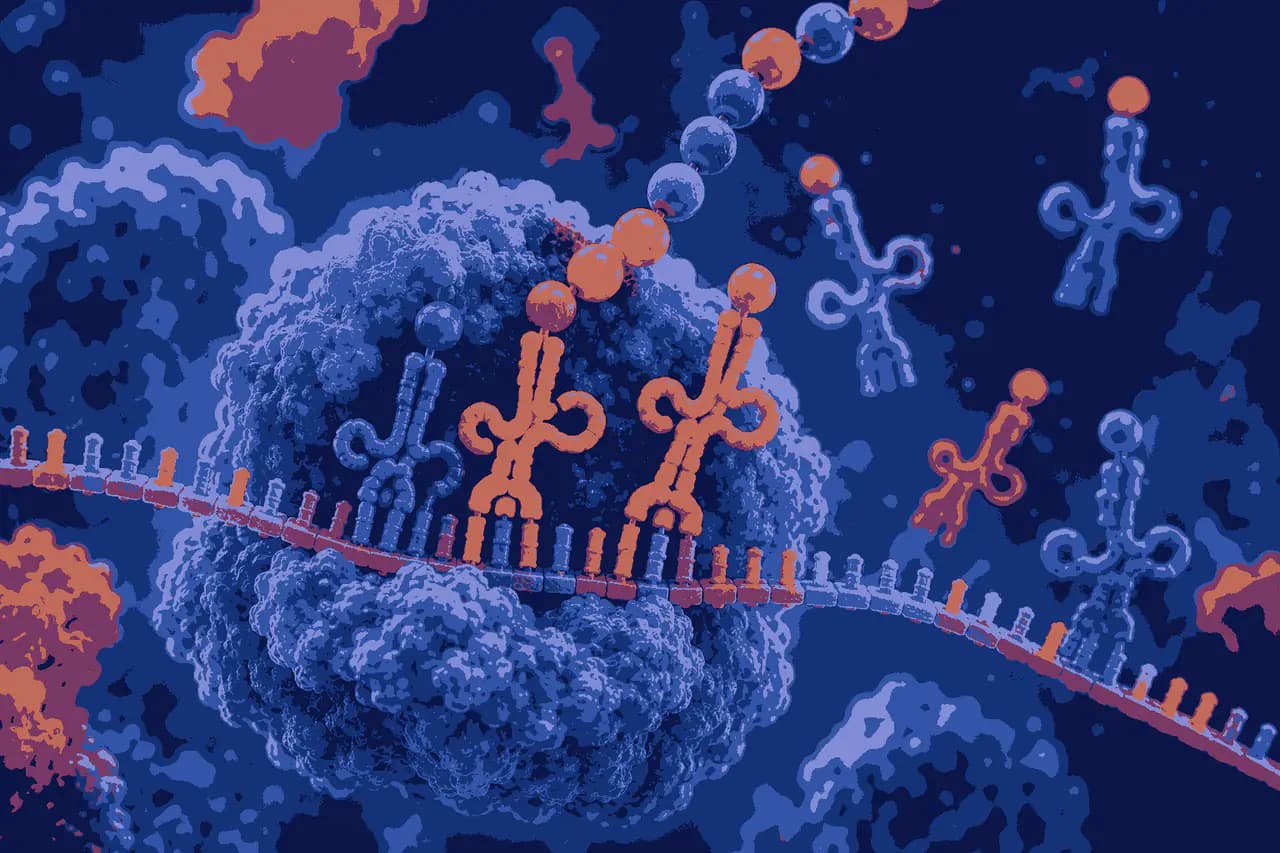
Polypeptide Synthesis MCQs with Answers is an essential topic for aspirants preparing for Class 12 Biology board examinations and competitive entrance exams like NEET. The process of polypeptide synthesis explains how genetic instructions stored in DNA are converted into proteins that perform vital functions in the body. Polypeptide Synthesis MCQs with Answers help aspirants understand the detailed steps involved in transcription and translation while improving conceptual clarity and problem-solving skills. Since molecular biology questions are frequently asked in examinations, practicing Polypeptide Synthesis MCQs with Answers regularly becomes highly important for scoring well.
Polypeptide synthesis mainly occurs during the process of translation. In this process, messenger RNA or mRNA carries genetic information from DNA to ribosomes, where proteins are formed. Polypeptide Synthesis MCQs with Answers often explain how codons present on mRNA determine the sequence of amino acids in a protein chain. Aspirants who study Polypeptide Synthesis MCQs with Answers gain a strong understanding of the relationship between codons, anticodons, and amino acids. This topic also improves knowledge of the genetic code and its universal nature.
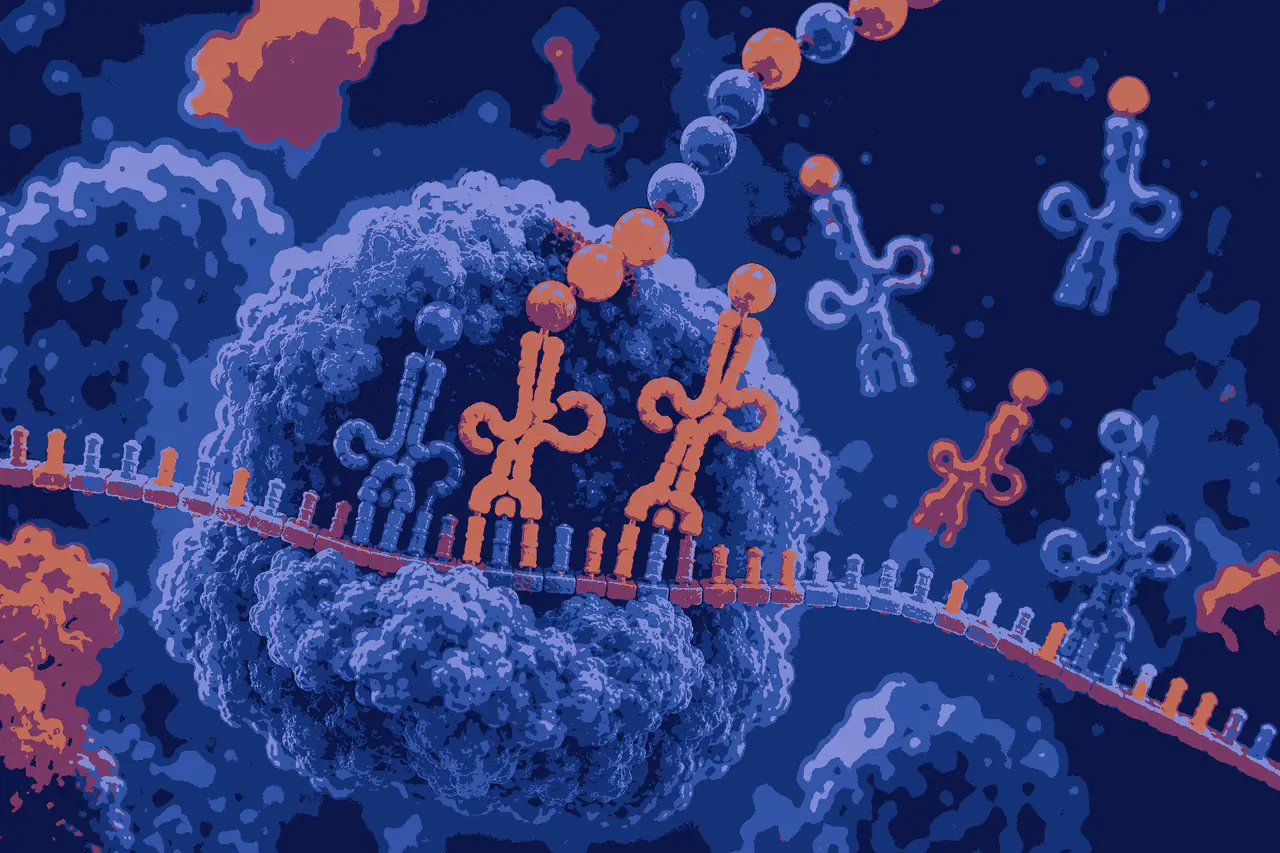
Ribosomes are the primary sites of protein synthesis inside cells. Polypeptide Synthesis MCQs with Answers commonly discuss the structure and function of ribosomes in both prokaryotic and eukaryotic cells. Ribosomes contain ribosomal RNA and proteins and consist of large and small subunits. During translation, mRNA binds to the ribosome, and transfer RNA molecules bring amino acids according to the codon sequence. Polypeptide Synthesis MCQs with Answers help aspirants understand how peptide bonds form between amino acids to create a growing polypeptide chain.
Transfer RNA or tRNA plays a critical role during translation. Polypeptide Synthesis MCQs with Answers frequently explain that tRNA acts as an adaptor molecule because it carries amino acids and matches anticodons with codons on mRNA. Each tRNA carries a specific amino acid corresponding to its anticodon sequence. Polypeptide Synthesis MCQs with Answers therefore provide aspirants with a clear understanding of the accuracy and specificity of protein synthesis. This concept is especially important in NEET examinations where sequence-based questions are common.
Another major area included in Polypeptide Synthesis MCQs with Answers is the initiation, elongation, and termination stages of translation. During initiation, the small ribosomal subunit attaches to mRNA near the AUG start codon. Methionine is usually the first amino acid added during protein synthesis. Polypeptide Synthesis MCQs with Answers also explain that elongation involves continuous addition of amino acids, while termination occurs when stop codons like UAA, UAG, or UGA are reached. Practicing Polypeptide Synthesis MCQs with Answers helps aspirants memorize these stages effectively.
Enzymes involved in protein synthesis are equally important. Polypeptide Synthesis MCQs with Answers often include aminoacyl tRNA synthetase, peptidyl transferase, and RNA polymerase. These enzymes ensure proper attachment of amino acids and smooth progression of translation. Aspirants who revise enzymatic functions through Polypeptide Synthesis MCQs with Answers generally develop stronger conceptual understanding and better retention of molecular biology topics.
Polypeptide synthesis is directly connected to the central dogma of molecular biology. Polypeptide Synthesis MCQs with Answers explain the flow of genetic information from DNA to RNA to protein. Understanding this concept helps aspirants connect transcription, translation, replication, and gene expression in a systematic manner. Polypeptide Synthesis MCQs with Answers are therefore useful not only for board examinations but also for medical entrance tests that focus heavily on genetics and biotechnology.
Mutations and errors in protein synthesis are also important topics discussed in Polypeptide Synthesis MCQs with Answers. Changes in nucleotide sequences can alter codons and lead to defective proteins. Such mutations may result in genetic disorders or metabolic abnormalities. By solving Polypeptide Synthesis MCQs with Answers, aspirants learn how even minor changes in the genetic code can affect protein formation and cellular functions.
Practicing molecular biology questions daily strengthens analytical thinking and improves examination performance. Polypeptide Synthesis MCQs with Answers help aspirants become familiar with application-based and conceptual questions commonly asked in NEET and other competitive examinations. Repeated revision also increases speed and accuracy during problem-solving sessions.
Polypeptide Synthesis MCQs with Answers:
- What would be the sequence of nitrogen bases in the mRNA synthesized from the non-coding strand of a DNA molecule with the sequence CAT GTT TAT CGC?
A. GUA CAA AUA GCC
B. GTA CAA ATA GCC
C. CAU GUU UAU CGG
D. CAA GAA TAU GCC
Answer: A. GUA CAA AUA GCC
Explanation: The sequence of nitrogen bases in the mRNA synthesized from the non-coding strand of the DNA molecule CAT GTT TAT CGC is GUA CAA AUA GCC.
- After E. coli bacteria grown in 15NH4Cl medium for several generations are allowed to grow in 14NH4Cl medium and DNA of bacteria is isolated and centrifuged in CsCl, the result of the density gradient of DNA is?
A. only hybrid DNA
B. both hybrid and heavy DNA
C. both heavy and light DNA
D. both hybrid and light DNA
Answer: D. both hybrid and light DNA
Explanation: After transfer to 14N medium, semiconservative replication produces hybrid DNA initially and later both hybrid and light DNA.
- In eukaryotic cell transcription, where do RNA splicing and RNA capping take place?
A. ER
B. Ribosomes
C. Nucleus
D. Dictyosomes
Answer: C. Nucleus
Explanation: In eukaryotic cells, RNA splicing and RNA capping occur inside the nucleus before mRNA moves to the cytoplasm.
- Semiconservative replication of DNA was first demonstrated in which organism?
A. Salmonella typhimurium
B. Drosophila melanogaster
C. Escherichia coli
D. Streptococcus pneumonia
Answer: C. Escherichia coli
Explanation: Meselson and Stahl demonstrated semiconservative DNA replication in E. coli in 1958.
- What is the process called when introns are removed and exons are joined in a defined order in a transcription unit?
A. Capping
B. Splicing
C. Tailing
D. Transformation
Answer: B. Splicing
Explanation: Splicing removes introns and joins exons to produce mature mRNA.
- In Prokaryotes, the transcription of DNA is initiated with the help of which factor?
A. Elongation factor
B. Termination factor
C. Rho factor
D. Sigma factor
Answer: D. Sigma factor
Explanation: Sigma factor helps RNA polymerase recognize the promoter and initiate transcription.
- Which enzyme is required for the synthesis of DNA from DNA?
A. DNA from RNA
B. RNA from DNA
C. DNA from DNA
D. RNA from RNA
Answer: C. DNA from DNA
Explanation: DNA polymerase catalyzes the synthesis of DNA using a DNA template.
- During transcription, when the holoenzyme RNA polymerase binds to a DNA sequence and the DNA assumes a saddle-like structure at that point, what is that sequence called?
A. CAAT box
B. GGTT box
C. AAAT box
D. TATA box
Answer: D. TATA box
Explanation: The TATA box is a promoter sequence recognized during transcription initiation.
- Which of the following makes use of RNA as a template to synthesize DNA?
A. Reverse transcriptase
B. DNA-dependent RNA polymerase
C. DNA polymerase
D. RNA polymerase
Answer: A. Reverse transcriptase
Explanation: Reverse transcriptase synthesizes DNA using RNA as the template.
- What is the enzyme that transcribes single-stranded RNA to DNA, synthesizing a double helix DNA after reverse transcription?
A. Polysomes
B. Cdk complex
C. Spliceosomes
D. Reverse transcriptase
Answer: D. Reverse transcriptase
Explanation: Reverse transcriptase converts RNA into complementary DNA.
- What complexes are responsible for removing intron transcripts and joining exon transcripts in heterogenous nuclear RNA?
A. Polysomes
B. Cdk complex
C. Spliceosomes
D. Endopeptidases
Answer: C. Spliceosomes
Explanation: Spliceosomes perform RNA splicing by removing introns and joining exons.
- Which method of DNA replication involves the separation of two DNA strands and the synthesis of new strands?
A. Dispersive
B. Conservative
C. Semiconservative
D. Non-conservative
Answer: C. Semiconservative
Explanation: Semiconservative replication produces daughter DNA molecules with one parental and one newly synthesized strand.
- Which of the following is the initiation codon for translation?
A. UAG
B. AUC
C. AUG
D. CCU
Answer: C. AUG
Explanation: AUG is the start codon and codes for methionine.
- Which ribosomes are engaged in protein synthesis in animal cells?
A. Ribosomes which occur on nuclear membrane and E.R.
B. Ribosomes of only cytosol
C. Ribosomes of only nucleolus and cytosol
D. Ribosomes of only mitochondria and cytosol
Answer: A. Ribosomes which occur on nuclear membrane and E.R.
Explanation: Ribosomes attached to rough ER and nuclear membrane actively synthesize proteins.
- Which of the following is not a part of a transcription unit in DNA?
A. A promoter
B. The structural gene
C. The inducer
D. A terminator
Answer: C. The inducer
Explanation: The inducer is not a structural component of a transcription unit.
- Removal of RNA polymerase III from nucleoplasm will affect the synthesis of:
A. m-RNA
B. r-RNA
C. t-RNA
D. hn-RNA
Answer: C. t-RNA
Explanation: RNA polymerase III transcribes tRNA and some small RNAs.
- Which of the following exercise control over transcription?
A. Operator
B. Regulator
C. Promoter
D. Recon
Answer: B. Regulator
Explanation: Regulator genes control transcription by influencing operator activity.
- Due to the discovery of which of the following in 1980, the evolution was termed as RNA world?
A. m-RNA, t-RNA, r-RNA synthesize proteins
B. In some virus RNA is genetic material
C. RNA have enzymatic property
D. RNA is not found in all cells
Answer: C. RNA have enzymatic property
Explanation: Discovery of catalytic RNA molecules supported the RNA world hypothesis.
- Given below is a sample of a portion of DNA strand giving the base sequence on the opposite strands. What is so special shown in it?
5' ……….. GAATTC ……….. 3'
3' ……….. CTTAAG …............ 5'
A. Palindromic sequence of base pairs
B. Replication completed
C. Deletion mutation
D. Start codon at the 5' end
Answer: A. Palindromic sequence of base pairs
Explanation: The sequence reads the same in opposite directions and is therefore palindromic.
- According to the passage, which of the following statements about the genetic code and translation is true?
A. All codons identify more than one type of amino acid
B. Eukaryotes transcription unit is monocistronic
C. The genetic codon AUG is a stop codon
D. Polymerization of amino acids is called transcription
Answer: B. Eukaryotes transcription unit is monocistronic
Explanation: In eukaryotes, each transcription unit generally codes for a single protein.
- What is the process called when amino acids are polymerized to form a polypeptide?
A. Transcription
B. Translation
C. Translocation
D. Keto acylation
Answer: B. Translation
Explanation: Translation is the process of protein synthesis using mRNA information.
- At the end of translation, which codon does the release factor bind to complete the polypeptide from the ribosome?
A. UAA
B. UUA
C. UAC
D. UCA
Answer: A. UAA
Explanation: UAA is one of the stop codons recognized by release factors.
- Which nucleotide sequence in mRNA corresponds to the sequence of amino acids: Met – Phe – Arg – Gly – Phe?
A. AUG – UUU – CGC – GGC – UUC
B. AUG – UUC – CUU – GGC – UUC
C. AUG – UUU – CUA – CCA – UUA
D. AUG – UUA – CUA – CCG – UUG
Answer: A. AUG – UUU – CGC – GGC – UUC
Explanation: These codons correctly code for Methionine, Phenylalanine, Arginine, Glycine, and Phenylalanine.
- Which of the following statements are correct?
A. Asexual reproduction preserves genetic information
B. Hybridization leads to multiple desirable genes
C. Restriction enzyme adds a methyl group to DNA
D. Genetic engineering changes the phenotype of the organism
Answer: A and D
Explanation: Asexual reproduction preserves genetic material, and genetic engineering can alter phenotype.
- Which statement is incorrect related to the genetic code?
A. The codon is triplet
B. Some amino acids are coded by more than one codon
C. One codon codes one amino acid
D. The code is nearly universal
Answer: B. Some amino acids are coded by more than one codon
Explanation: The statement is treated as incorrect here because the question intends one codon–one amino acid specificity.
- A codon is made up of:
A. single nucleotide
B. two nucleotides
C. three nucleotides
D. four nucleotides
Answer: C. three nucleotides
Explanation: A codon is a triplet sequence of nucleotides.
- A eukaryotic gene contains two kinds of base sequences. Which of these plays an important role in protein synthesis?
A. Introns
B. Exons
C. Both (a) and (b)
D. None of these
Answer: B. Exons
Explanation: Exons contain coding sequences involved in protein synthesis.
- The scientist who was awarded Nobel prize in 1959 for in vitro synthesis of polyribonucleotide:
A. Kornberg
B. Calvin
C. Khorana
D. Ochoa
Answer: D. Ochoa
Explanation: Severo Ochoa was awarded the Nobel Prize for studies related to nucleic acid synthesis.
- One gene-one enzyme relationship was established for the first time in:
A. Neurospora crassa
B. Salmonella typhimurium
C. Escherichia coli
D. Diplococcus pneumonia
Answer: A. Neurospora crassa
Explanation: Beadle and Tatum established the one gene–one enzyme hypothesis using Neurospora crassa.
- Out of 64 codons, 61 codons code for 20 types of amino acid. What is this phenomenon called?
A. Degeneracy of genetic code
B. Overlapping of gene
C. Wobbling of codon
D. Universality of codons
Answer: A. Degeneracy of genetic code
Explanation: Degeneracy means multiple codons can code for the same amino acid.
Conclusion on Polypeptide Synthesis MCQs with Answers
Ultimately, Polypeptide Synthesis MCQs with Answers serve as an effective learning resource for mastering one of the most important chapters in Biology. The topic explains the connection between genes and proteins and highlights the complexity of cellular activities. With continuous revision and conceptual practice through Polypeptide Synthesis MCQs with Answers, aspirants can build confidence, improve accuracy, and achieve excellent results in board and competitive examinations.
Related reading
Master 31 Protein Synthesis and Anticodon MCQs with Answers for Guaranteed Exam Success
Master Protein Synthesis and Anticodon MCQs with Answers for NEET and Class 12 Biology with clear concepts on codons, translation, tRNA, and ribosomes for exams
Ultimate 30 Transcription in Eukaryotes MCQs NEET with Answers - Powerful Practice to Crack Biology Fast
Master Transcription in Eukaryotes MCQs NEET with Answers through detailed concepts on RNA synthesis, splicing, RNA polymerases , gene expression for aspirants.