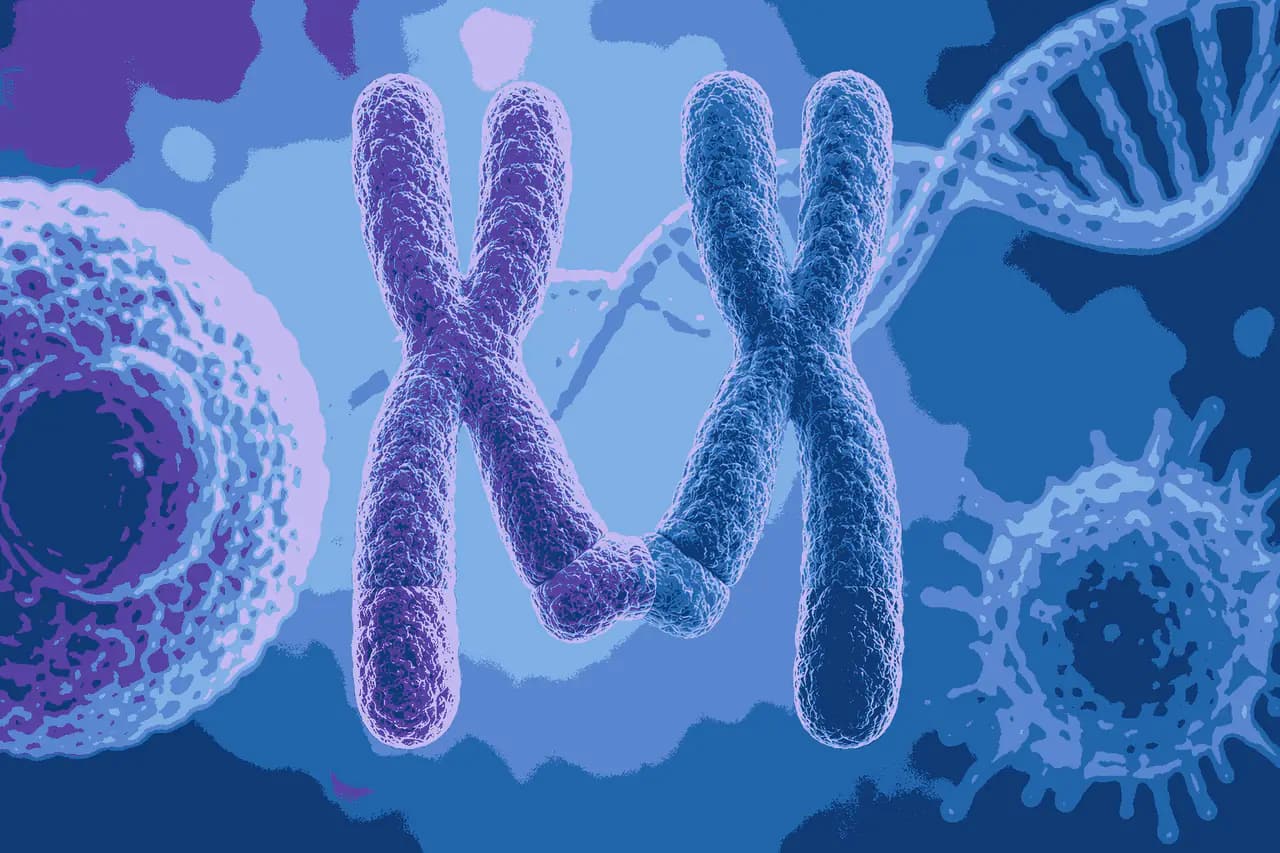
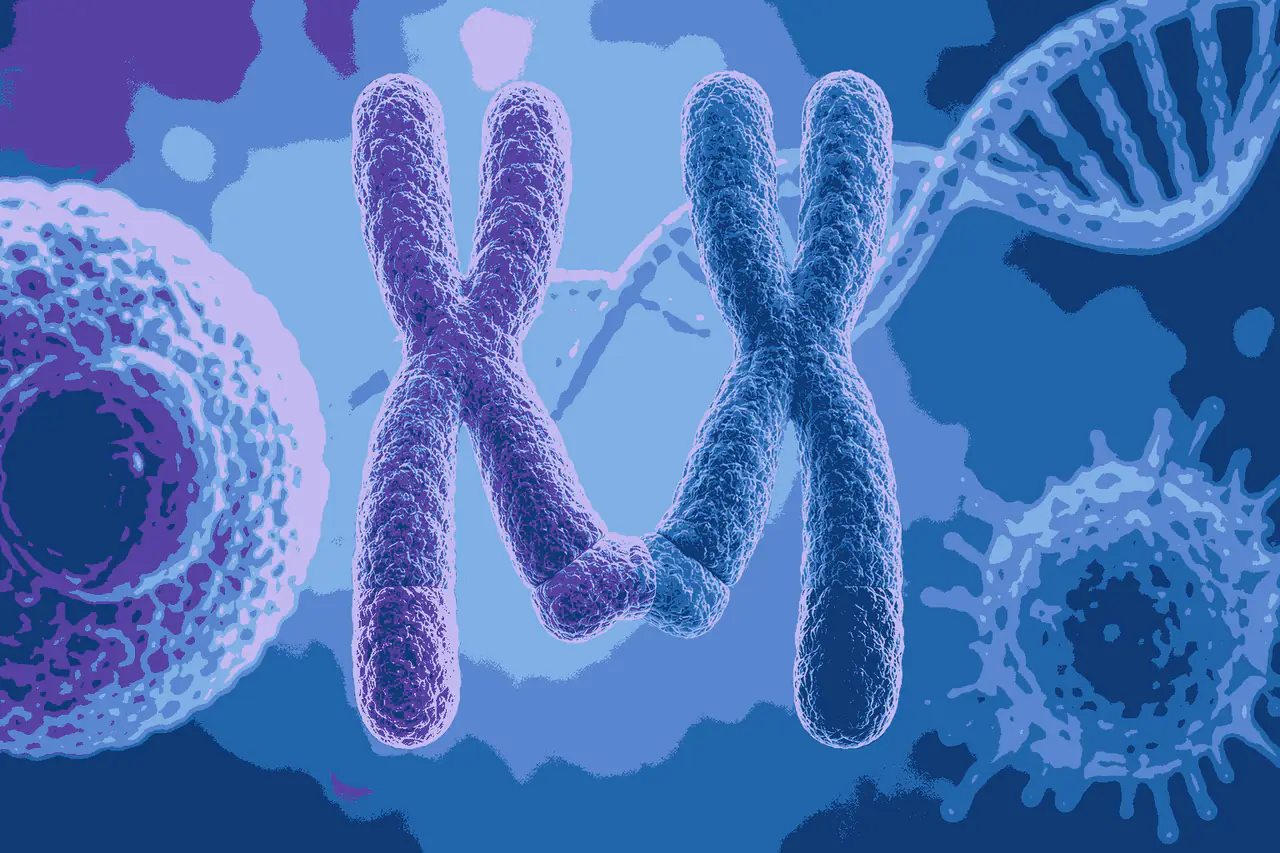
Understanding chromosomal abnormalities is an important part of genetics, and Philadelphia Chromosome MCQs for Class 12 Biology help aspirants master this concept effectively. The Philadelphia chromosome is one of the most commonly discussed chromosomal mutations in Class 12 Biology because it is directly associated with chronic myeloid leukemia (CML). By practicing Philadelphia Chromosome MCQs for Class 12 Biology, aspirants can clearly understand how chromosomal translocation affects human health and genetic functioning.
The topic of Philadelphia Chromosome MCQs for Class 12 Biology mainly focuses on mutation, chromosomal rearrangement, cancer genetics, and gene expression. Aspirants preparing for board exams and NEET often encounter questions related to translocation and abnormal chromosomes. Continuous revision through Philadelphia Chromosome MCQs for Class 12 Biology helps improve conceptual clarity and problem-solving skills.
One of the key concepts included in Philadelphia Chromosome MCQs for Class 12 Biology is chromosomal translocation. The Philadelphia chromosome forms due to reciprocal translocation between chromosome 9 and chromosome 22. Practicing Philadelphia Chromosome MCQs for Class 12 Biology enables aspirants to remember this important genetic event accurately for examinations.
Another important aspect of Philadelphia Chromosome MCQs for Class 12 Biology is understanding oncogenes and cancer-causing mutations. The abnormal fusion gene formed during translocation produces uncontrolled cell division, leading to leukemia. By solving Philadelphia Chromosome MCQs for Class 12 Biology, aspirants learn how genetic mutations can directly contribute to disease development.
The study of Philadelphia Chromosome MCQs for Class 12 Biology also improves understanding of chromosomal abnormalities in humans. Aspirants become familiar with concepts such as deletion, duplication, inversion, and translocation. Since these topics are interconnected, practicing Philadelphia Chromosome MCQs for Class 12 Biology strengthens the overall genetics foundation.
Another benefit of studying Philadelphia Chromosome MCQs for Class 12 Biology is that it connects molecular biology with medical science. Aspirants learn how discoveries in genetics help doctors diagnose and treat diseases. Through Philadelphia Chromosome MCQs for Class 12 Biology, aspirants understand the practical importance of chromosome analysis in modern medicine.
In NEET examinations, chromosomal disorders and mutations are frequently tested. Therefore, regular practice of Philadelphia Chromosome MCQs for Class 12 Biology helps aspirants improve speed and accuracy in answering conceptual genetics questions. Many aspirants initially confuse different chromosomal abnormalities, but repeated revision using Philadelphia Chromosome MCQs for Class 12 Biology makes these concepts easier to remember.
The topic of Philadelphia Chromosome MCQs for Class 12 Biology also explains why cancer can be considered a genetic disease. Mutations in chromosomes or genes may alter normal cellular regulation and lead to uncontrolled growth. Practicing Philadelphia Chromosome MCQs for Class 12 Biology helps aspirants understand this connection between genetics and cancer biology in a simplified way.
Another major advantage of Philadelphia Chromosome MCQs for Class 12 Biology is improved analytical thinking. Questions related to chromosomal translocation often require interpretation of diagrams, chromosome numbers, and mutation patterns. Continuous practice of Philadelphia Chromosome MCQs for Class 12 Biology enhances logical reasoning and exam confidence.
Aspirants preparing for competitive exams should revise theory alongside Philadelphia Chromosome MCQs for Class 12 Biology regularly. Reading NCERT concepts carefully and then attempting application-based questions is one of the best strategies for mastering this topic. Consistent practice of Philadelphia Chromosome MCQs for Class 12 Biology also helps reduce mistakes during examinations.
Another important concept covered in Philadelphia Chromosome MCQs for Class 12 Biology is the role of mutations in evolution and disease. While some mutations are harmful, others contribute to genetic diversity. Practicing Philadelphia Chromosome MCQs for Class 12 Biology gives aspirants a broader understanding of mutation biology and inheritance.
Furthermore, Philadelphia Chromosome MCQs for Class 12 Biology improve retention of scientific terminology such as translocation, oncogene, chromosome fusion, and leukemia. Since many aspirants struggle with genetics vocabulary, repeated exposure through Philadelphia Chromosome MCQs for Class 12 Biology helps build familiarity and confidence.
30 Philadelphia Chromosome MCQs for Class 12 Biology:
- In the inheritance of skin color in humans, it is an example of:
a) Chromosomal aberration
b) Co-dominance
c) Point mutation
d) Polygenic inheritance
Answer: d) Polygenic inheritance
Explanation: The inheritance of skin color in humans is an example of polygenic inheritance. Multiple genes together control skin colour, producing continuous variation in humans.
- Why are genetic disorders such as haemophilia and Duchenne muscular dystrophy more prevalent in males than females?
a) Because they can only be passed on from father to son
b) Because they are dominant genetic disorders
c) Because they occur due to spontaneous mutation in the Y-chromosome
d) Because they are X-linked recessive disorders
Answer: d) Because they are X-linked recessive disorders
Explanation: These disorders are X-linked recessive disorders. Males possess only one X chromosome, so a single defective gene causes the disease.
- The gene for haemophilia is located on 'X' chromosome. Hence it is normally impossible for a:
a) haemophilic father to pass the gene to his daughter
b) carrier mother to pass the gene to her daughter
c) carrier mother to pass the gene to her son
d) haemophilic father to pass the gene to his son
Answer: d) haemophilic father to pass the gene to his son
Explanation: Fathers pass the Y chromosome to sons, not the X chromosome. Therefore, a haemophilic father cannot pass haemophilia directly to his son.
- From the following pedigree chart of a family, one can make an analysis that:
a) It is an autosomal dominant trait
b) It is an autosomal recessive trait
c) It is an allosomal dominant trait
d) It is an allosomal recessive trait
Answer: b) It is an autosomal recessive trait
Explanation: Autosomal recessive traits often appear in children of unaffected parents and may skip generations.
5. In the following symbols, used in human Pedigree Analysis, identify the symbol that denotes consanguineous mating.
a) Double horizontal line between male and female
b) Single horizontal line
c) Shaded circle
d) Shaded square
Answer: a) Double horizontal line between male and female
Explanation: In pedigree analysis, consanguineous mating is represented by a double horizontal line connecting related individuals.
- A woman with normal vision, but whose father was colourblind, marries a colourblind man. Suppose that the fourth child of this couple was a boy. This boy:
a) must have normal colour vision
b) will be partially colourblind since he is heterozygous
c) must be colourblind
d) may be colourblind or may be of normal vision
Answer: d) may be colourblind or may be of normal vision
Explanation: The woman is a carrier because her father was colourblind. Sons receive the X chromosome from the mother, giving a 50% chance of colour blindness.
- A bald headed (Bb) man marries a non-bald woman (Bb), their progeny if all are females, the probable bald to non-bald ratio in their progeny would be:
a) 1 : 1
b) 3 : 1
c) 1 : 3
d) 2 : 1
Answer: c) 1 : 3
Explanation: Pattern baldness is a sex-influenced trait. Heterozygous females generally remain non-bald, resulting in a 1:3 bald to non-bald ratio among daughters.
- What ratio is expected in offspring if the father is color blind and the mother’s father was color blind?
a) 50% daughter - color blind
b) All the sons are color blind
c) All the daughters color blind
d) All the sons are normal
Answer: a) 50% daughter - color blind
Explanation: If the mother’s father was colourblind, the mother is likely a carrier. Crossing with a colourblind father gives a chance of colourblind daughters.
- Select the correct match:
a) Alec Jeffreys - Streptococcus pneumoniae
b) Alfred Hershey and Martha Chase - TMV
c) Francois Jacob and Jacques Monod - Lac operon
d) Matthew Meselson and F. Stahl - Pisum sativum
Answer: c) Francois Jacob and Jacques Monod - Lac operon
Explanation: Jacob and Monod proposed the lac operon model explaining gene regulation in bacteria.
- Which of the following is not an autosomal recessive trait?
a) Phenylketonuria
b) Cystic fibrosis
c) Albinism
d) Polydactyly
Answer: d) Polydactyly
Explanation: Polydactyly is an autosomal dominant trait, whereas the others are autosomal recessive disorders.
- Which of the following diseases occurs only in males?
a) Fabry's disease
b) Gaucher's disease
c) Lesch-Nyhan disease
d) Hunter's disease
Answer: c) Lesch-Nyhan disease
Explanation: Lesch-Nyhan disease is an X-linked recessive disorder and is mostly observed in males.
- A woman with albinic father marries an albinic man. The proportion of her progeny is:
a) 2 normal : 1 albinic
b) All normal
c) All albinic
d) 1 normal : 1 albinic
Answer: d) 1 normal : 1 albinic
Explanation: The woman is heterozygous for albinism because her father was albino. Crossing with an albino man gives a 1:1 ratio.
- Absence of teeth, bifid tongue, and mental retardation are observed in:
a) Down's syndrome
b) Albinism
c) Klinefelter's syndrome
d) Oral-facial-digital syndrome
Answer: d) Oral-facial-digital syndrome
Explanation: Oral-facial-digital syndrome affects facial structures, oral cavity, fingers, and toes.
- Which of the following occurs due to the presence of autosome linked dominant trait?
a) Thalassemia
b) Sickle cell anaemia
c) Myotonic dystrophy
d) Haemophilia
Answer: c) Myotonic dystrophy
Explanation: Myotonic dystrophy is an autosomal dominant disorder affecting muscles and multiple body systems.
- Match the human genetic disorder with the causative abnormal chromosome:
a) A - 3, B – 5, C – 1, D – 2, E - 4
b) A – 5 B – 1, C – 2, D – 3, E - 4
c) A – 4, B – 1, C – 5, D – 2, E - 3
d) A – 3, B – 1, C – 5, D – 2, E - 4
Answer: d) A – 3, B – 1, C – 5, D – 2, E - 4
Explanation:
- Sickle cell anaemia – Chromosome 11
- Colour blindness – X chromosome
- Phenylketonuria – Chromosome 12
- Cystic fibrosis – Chromosome 7
- Huntington’s disease – Chromosome 4
-
Choose the correct option for the pedigree analysis given below:
a) Autosomal dominant pedigree
b) ‘X’-linked dominant pedigree
c) Autosomal recessive pedigree
d) ‘X’-linked recessive pedigree
Answer: a) Autosomal dominant pedigree
Explanation: Autosomal dominant traits generally appear in every generation and affect both males and females equally.
- Assertion: A father may be haemophilic only if his mother is a carrier.
Reason: The father cannot pass on a sex-linked gene to his son.
a) If both Assertion and Reason are true and the Reason is the correct explanation of the Assertion
b) If both Assertion and Reason are true but Reason is not the correct explanation of the Assertion
c) If Assertion is true but the Reason is false
d) If both Assertion and Reason are false
Answer: a) If both Assertion and Reason are true and the Reason is the correct explanation of the Assertion
Explanation: Haemophilia is an X-linked recessive disorder. Males receive their X chromosome from the mother, so a haemophilic male must inherit the defective allele from his mother.
- Philadelphia chromosome is found in the patient suffering from:
a) Albinism
b) Insomnia
c) Myelocytic leukaemia
d) Hepatitis
Answer: c) Myelocytic leukaemia
Explanation: The Philadelphia chromosome results from chromosomal translocation and is associated with chronic myelocytic leukaemia (CML).
- Match Column I with Column II and find the correct answer:
a) A - v, B - i, C - iv, D - ii, E - iii
b) A - v, B - ii, C - iv, D - i, E - iii
c) A - vi, B - v, C - iii, D - iv, E - ii
d) A - ii, B - i, C - iii, D - vi, E - v
Answer: a) A - v, B - i, C - iv, D - ii, E - iii
Explanation:
- Monoploidy – n
- Monosomy – 2n–1
- Nullisomy – 2n–2
- Trisomy – 2n+1
- Tetrasomy – 2n+2
- Which syndrome is characterized by 47, XX, +21 chromosomes?
a) Down syndrome
b) Edward syndrome
c) Klinefelter's syndrome
d) Patau syndrome
Answer: a) Down syndrome
Explanation: Down syndrome is caused by trisomy of chromosome 21 and is represented as 47, XX, +21 or 47, XY, +21.
- What is the correct match for autosomal trisomy in the context of genetic disorders?
a) Turner's Syndrome
b) Klinefelter's Syndrome
c) Mendelian disorder
d) Down's Syndrome
Answer: d) Down's Syndrome
Explanation: Down syndrome is an example of autosomal trisomy involving chromosome 21.
- In genetics, what does monoploidy refer to?
a) Increase in whole set of chromosomes
b) Loss or gain of a chromosome
c) A single set of chromosomes
d) Two sets of chromosomes
Answer: c) A single set of chromosomes
Explanation: Monoploidy refers to the presence of only one set of chromosomes in an organism.
- In a scenario where a normal girl, whose mother is haemophilic, marries a male with no ancestral history of haemophilia, what are the possible phenotypes of the offspring?
a) Haemophilic son and haemophilic daughter
b) Haemophilic son and carrier daughter
c) Normal daughter and normal son
d) Normal son and haemophilic daughter
Answer: b) Haemophilic son and carrier daughter
Explanation: The woman is a carrier for haemophilia. Sons may inherit the defective X chromosome and become haemophilic, while daughters may become carriers.
- Statement 1: Sickle cell anaemia and Haemophilia are autosomal dominant traits.
Statement 2: Sickle cell and Haemophilia are disorders of blood.
a) Both Statement I and Statement II are correct
b) Both Statement I and Statement II are incorrect
c) Statement I is correct but Statement II is incorrect
d) Statement I is incorrect but Statement II is correct
Answer: d) Statement I is incorrect but Statement II is correct
Explanation: Sickle cell anaemia is autosomal recessive and haemophilia is X-linked recessive, but both are blood disorders.
- A man of blood group-A marries a woman of blood group-AB, which type of progeny would indicate that man is heterozygous?
a) O
b) B
c) A
d) AB
Answer: b) B
Explanation: If the father is heterozygous (IAi), crossing with AB blood group can produce B group offspring.
- In man, four phenotypes of blood groups are due to the presence of antigen-A and antigen-B on the RBC. The chromosome that has the gene to control these antigens is:
a) X-chromosome
b) 21st chromosome
c) 9th chromosome
d) 7th chromosome
Answer: c) 9th chromosome
Explanation: The ABO blood group gene is located on chromosome 9.
- Select the correct match:
a) Phenylketonuria – Autosomal dominant trait
b) Sickle cell anaemia – Autosomal recessive trait, chromosome-11
c) Thalassemia – X linked
d) Haemophilia – Y linked
Answer: b) Sickle cell anaemia – Autosomal recessive trait, chromosome-11
Explanation: Sickle cell anaemia is an autosomal recessive disorder caused by mutation in the beta-globin gene on chromosome 11.
- In a cross between a male and female, both heterozygous for sickle cell anaemia gene, what percentage of the progeny will be diseased?
a) 100%
b) 50%
c) 75%
d) 25%
Answer: d) 25%
Explanation: A heterozygous × heterozygous cross gives a 1:2:1 genotypic ratio, so 25% offspring are homozygous recessive and diseased.
- A colour blind man marries a woman with normal sight who has no history of colour blindness in her family. What is the probability of their grandson being colour blind?
a) 0.25
b) 0.5
c) 1
d) Nil
Answer: b) 0.5
Explanation: Colour blindness is X-linked recessive. The daughter becomes a carrier and may pass the defective allele to her son with 50% probability.
- In a marriage between male with blood group A and female with blood group B, the progeny had either blood group AB or B. What could be the possible genotype of parents?
a) IAi (Male) ; IBi (Female)
b) IAi (Male) ; IBIB (Female)
c) IAIA (Male) ; IBIB (Female)
d) IAIA (Male) ; IBi (Female)
Answer: b) IAi (Male) ; IBIB (Female)
Explanation: Crossing IAi with IBIB produces offspring with either AB or B blood groups only.
Conclusion on Philadelphia Chromosome MCQs for Class 12 Biology
In conclusion, Philadelphia Chromosome MCQs for Class 12 Biology are extremely useful for mastering genetics, chromosomal mutations, and cancer-related concepts. They improve conceptual understanding, analytical ability, and exam preparation for both board exams and NEET. Regular practice of Philadelphia Chromosome MCQs for Class 12 Biology enables aspirants to understand chromosomal abnormalities clearly and perform better in biology examinations.
Related reading
Ultimate Mastery: Y Chromosome Genes MCQs Class 12 Biology for Competitve Exams
Master Y Chromosome Genes MCQs Class 12 Biology with clear concepts on holandric inheritance, sex determination exam-focused explanations for NEET, CUET success
Master Nondisjunction and Aneuploidy MCQs Class 12 Biology with Confidence for NEET, JEE & CUET
Master Nondisjunction and Aneuploidy MCQs Class 12 Biology with clear explanations on chromosomal disorders, trisomy, monosomy, meiosis, and genetic inheritance