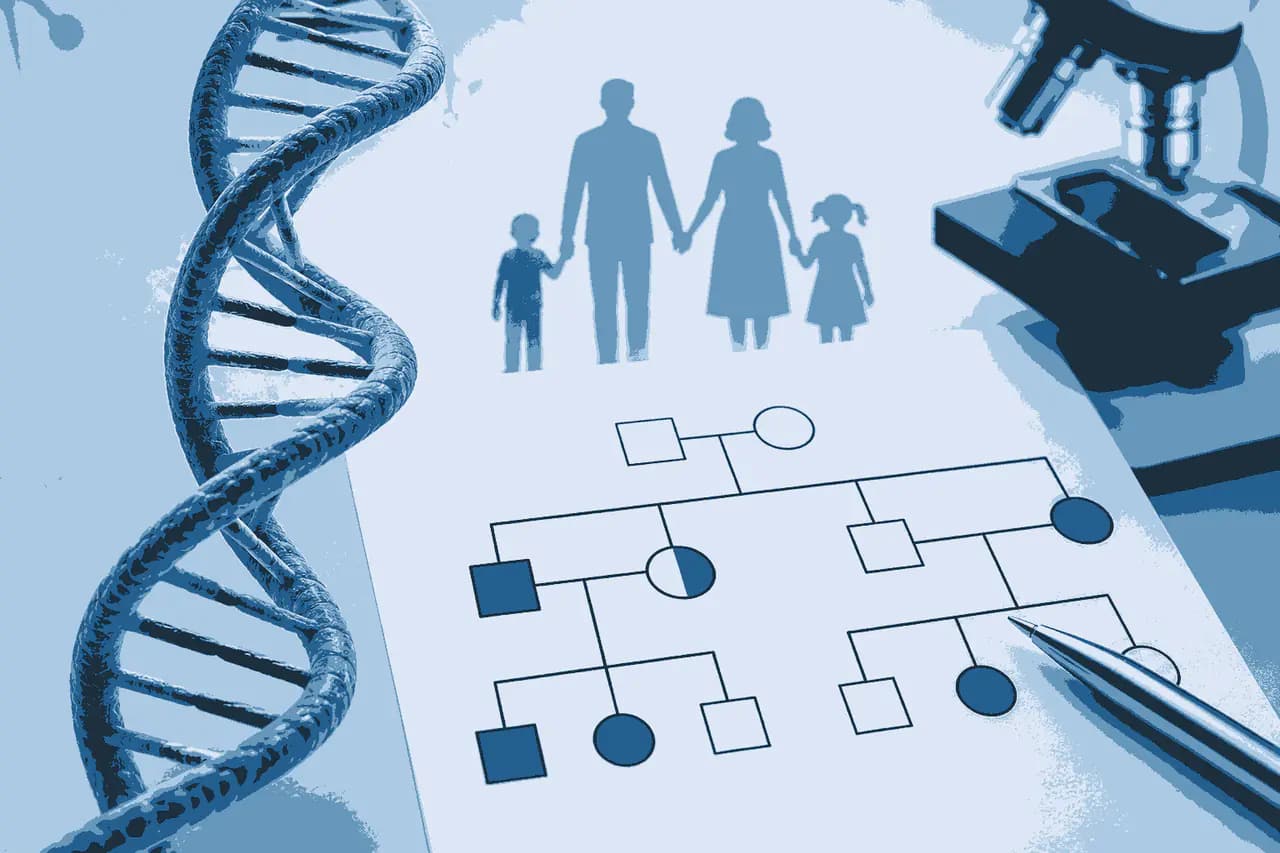
Understanding inheritance patterns becomes much easier when aspirants practice Pedigree Analysis MCQs for Class 12 Biology regularly. Genetics is one of the most important chapters in Class 12 Biology, and pedigree charts play a major role in competitive exams as well as board examinations. By solving Pedigree Analysis MCQs for Class 12 Biology, aspirants learn how traits are transferred from one generation to another and how genetic disorders can be traced through families.
The topic of Pedigree Analysis MCQs for Class 12 Biology mainly focuses on reading pedigree charts, identifying dominant and recessive traits, understanding sex-linked inheritance, and analyzing family histories. Since pedigree analysis is diagram-based, many aspirants initially find it confusing. However, continuous practice of Pedigree Analysis MCQs for Class 12 Biology helps improve interpretation skills and boosts confidence in solving genetics problems quickly.
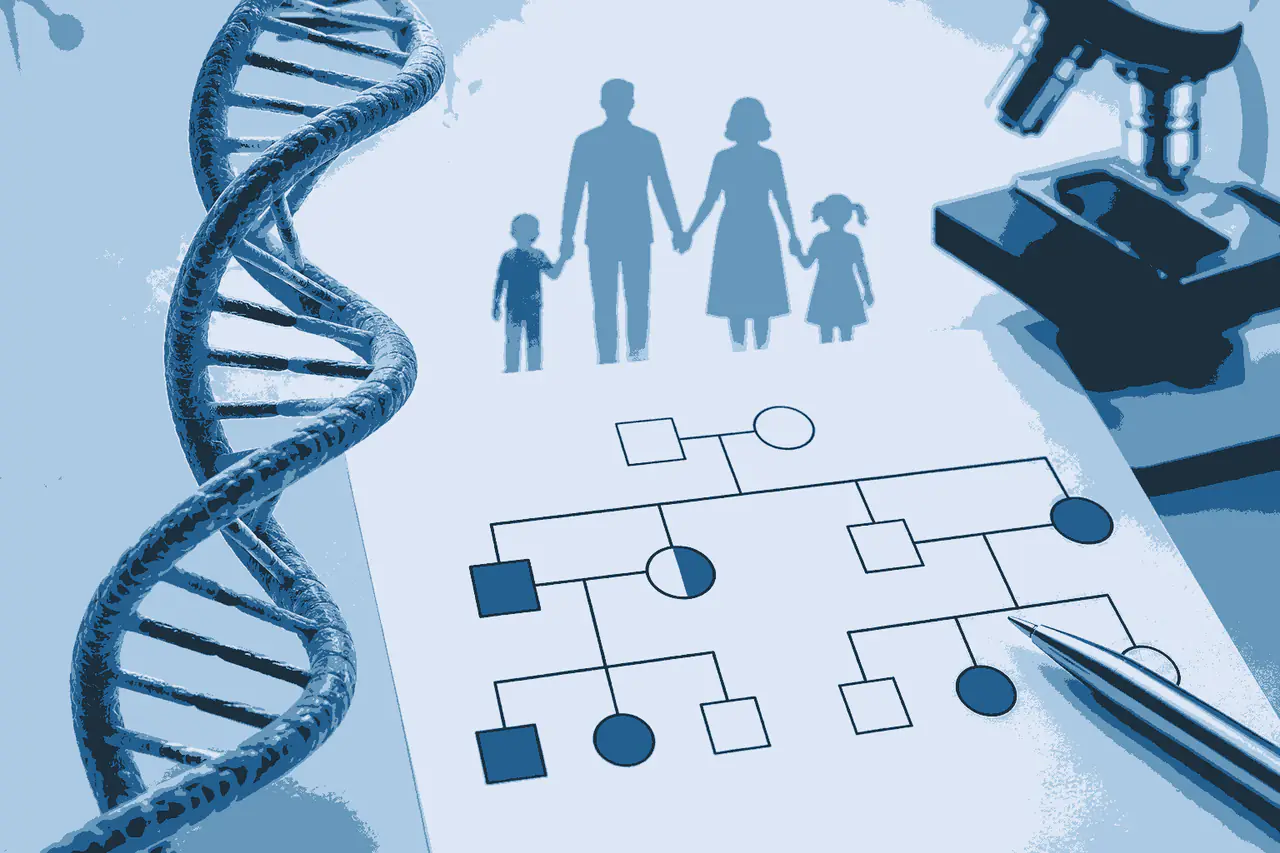
One of the major advantages of studying Pedigree Analysis MCQs for Class 12 Biology is that it strengthens conceptual understanding of Mendelian inheritance. Aspirants learn the significance of symbols used in pedigree charts, such as squares for males, circles for females, shaded symbols for affected individuals, and horizontal lines representing mating. Through Pedigree Analysis MCQs for Class 12 Biology, aspirants become familiar with identifying carriers, affected individuals, and inheritance probabilities.
Another important concept covered in Pedigree Analysis MCQs for Class 12 Biology is autosomal dominant inheritance. In this pattern, the trait generally appears in every generation, and affected individuals usually have at least one affected parent. Practicing Pedigree Analysis MCQs for Class 12 Biology enables aspirants to differentiate autosomal dominant disorders from autosomal recessive disorders effectively.
Similarly, Pedigree Analysis MCQs for Class 12 Biology also explain autosomal recessive inheritance. These traits may skip generations and often appear when both parents are carriers. Aspirants preparing for NEET and board exams frequently encounter questions related to carrier parents and affected offspring. Regular practice of Pedigree Analysis MCQs for Class 12 Biology improves accuracy in solving such numerical and analytical questions.
Sex-linked inheritance is another critical area included in Pedigree Analysis MCQs for Class 12 Biology. Disorders like haemophilia and colour blindness are classic examples of X-linked recessive inheritance. By solving Pedigree Analysis MCQs for Class 12 Biology, aspirants understand why males are more commonly affected by these disorders and how females can act as carriers.
A major benefit of Pedigree Analysis MCQs for Class 12 Biology is their ability to improve logical reasoning skills. Unlike simple theoretical questions, pedigree-based questions require careful observation and step-by-step interpretation. This makes Pedigree Analysis MCQs for Class 12 Biology extremely valuable for developing analytical thinking in genetics.
Aspirants also learn about pedigree symbols and standard conventions while practicing Pedigree Analysis MCQs for Class 12 Biology. For example, double horizontal lines represent consanguineous marriages, shaded symbols represent affected individuals, and half-shaded symbols may indicate carriers in some charts. Familiarity with these conventions through Pedigree Analysis MCQs for Class 12 Biology helps aspirants solve exam questions much faster.
Another reason why Pedigree Analysis MCQs for Class 12 Biology are important is that they frequently appear in NEET examinations. Questions are often designed to test whether aspirants can identify inheritance patterns correctly from family trees. Continuous revision through Pedigree Analysis MCQs for Class 12 Biology improves speed, reduces confusion, and increases confidence during competitive exams.
In addition, Pedigree Analysis MCQs for Class 12 Biology help aspirants connect genetics with real-life medical applications. Doctors and genetic counsellors use pedigree charts to predict the probability of inherited disorders in families. Through Pedigree Analysis MCQs for Class 12 Biology, aspirants understand the practical importance of genetics in medical science and human health.
Another interesting aspect of Pedigree Analysis MCQs for Class 12 Biology is the study of dominant and recessive alleles in generations. Aspirants learn how a recessive disorder can suddenly appear in offspring even when parents appear normal. Practicing Pedigree Analysis MCQs for Class 12 Biology regularly makes these inheritance patterns easier to understand and remember.
Many board examination questions are directly based on pedigree diagrams. Therefore, mastering Pedigree Analysis MCQs for Class 12 Biology can significantly improve exam performance. Aspirants who repeatedly solve Pedigree Analysis MCQs for Class 12 Biology become more comfortable identifying traits such as haemophilia, colour blindness, Huntington’s disease, and other inherited conditions.
Time management is another important advantage of practicing Pedigree Analysis MCQs for Class 12 Biology. Competitive exams require aspirants to solve questions quickly and accurately. By continuously working on Pedigree Analysis MCQs for Class 12 Biology, aspirants develop faster interpretation skills and reduce mistakes under pressure.
Furthermore, Pedigree Analysis MCQs for Class 12 Biology strengthen understanding of family inheritance patterns over multiple generations. Aspirants become skilled at identifying whether a trait is autosomal dominant, autosomal recessive, X-linked dominant, or X-linked recessive. This classification becomes much easier with repeated exposure to Pedigree Analysis MCQs for Class 12 Biology.
For effective preparation, students should revise theory first and then practice multiple Pedigree Analysis MCQs for Class 12 Biology daily. Drawing family trees manually can also help improve visualization and memory retention. Combining theoretical understanding with practice makes Pedigree Analysis MCQs for Class 12 Biology far easier to solve.
Pedigree Analysis MCQs for Class 12 Biology:
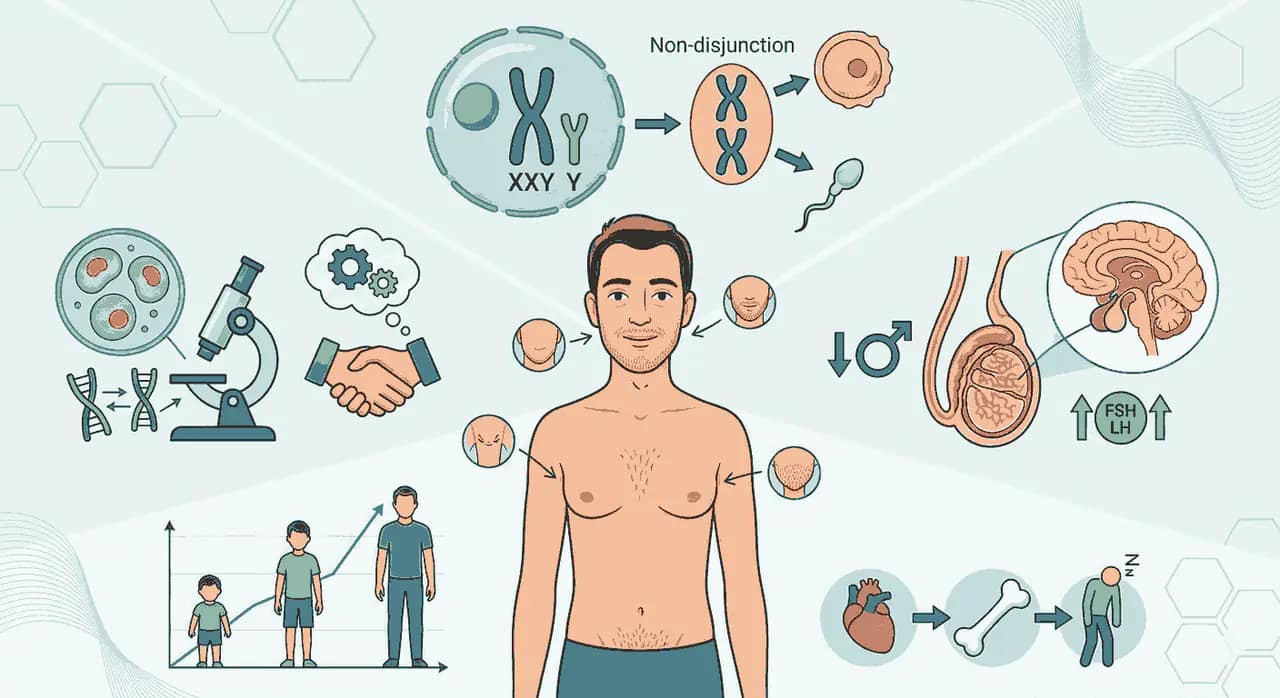
1. Gynecomastia is a symptom of
- (a) Turner’s syndrome
- (b) Down’s syndrome
- (c) Cri-du-chat syndrome
- (d) Klinefelter’s syndrome
Answer: (d) Klinefelter’s syndrome
Explanation:
Gynecomastia is enlargement of male breast tissue and is commonly seen in Klinefelter’s syndrome (XXY condition). The extra X chromosome causes feminine characteristics in males.
2. The affected male in the pedigree chart is symbolized by
- (a) Shaded square
- (b) Unshaded square
- (c) Shaded circle
- (d) Unshaded circle
Answer: (a) Shaded square
Explanation:
In pedigree analysis, a square represents a male and shading indicates the affected individual. Therefore, a shaded square represents an affected male.
3. A haemophilic man marries a normal homozygous woman. What is the probability that their son will be haemophilic?
- (a) 100%
- (b) 75%
- (c) 50%
- (d) 0%
Answer: (d) 0%
Explanation:
Haemophilia is an X-linked recessive disorder. Sons inherit the Y chromosome from the father and the X chromosome from the mother. Since the mother is homozygous normal, all sons will be normal.
4. Both sickle cell anaemia and Huntington's chorea are
- (a) bacteria related diseases
- (b) congenital disorders
- (c) pollutant induced disorders
- (d) virus related diseases
Answer: (b) congenital disorders
Explanation:
Both disorders are inherited genetic disorders present from birth due to abnormalities in genes.
5. Absorption of toxic amounts of iron due to a genetically defective control mechanism is known as
- (a) Haematochromatosis
- (b) Haemosiderosis
- (c) Haemoptysis
- (d) Haematoma
Answer: (a) Haematochromatosis
Explanation:
Haematochromatosis is a hereditary disorder in which excessive iron absorption causes iron accumulation in body tissues.
6. X-chromosomes of a female in a sex-linked inheritance case can be passed on to
- (a) Only female progeny
- (b) Only male progeny
- (c) Only in granddaughter
- (d) Male and female progeny
Answer: (d) Male and female progeny
Explanation:
Females possess two X chromosomes and can pass one X chromosome to both sons and daughters.
7. In a marriage between a haemophilic man and a carrier woman, what is the percentage of daughters becoming haemophilic?
- (a) 25%
- (b) 50%
- (c) 75%
- (d) 100%
Answer: (b) 50%
Explanation:
Half of the daughters may inherit the haemophilic allele from both parents and become haemophilic.
8. A marriage between a normal visioned man and a colorblind woman will produce which type of offspring?
- (a) Normal sons and carrier daughters
- (b) Colorblind sons and carrier daughters
- (c) Colorblind sons and 50% carrier daughters
- (d) 50% colorblind sons and 50% carrier daughters
Answer: (b) Colorblind sons and carrier daughters
Explanation:
The mother passes the colorblind allele to all sons, while daughters become carriers due to inheritance of one normal allele from the father.
9. The Christmas disease patient lacks which of the following?
- (a) Homogentisic acid oxidase
- (b) Factor VIII
- (c) Factor XI
- (d) Factor IX
Answer: (d) Factor IX
Explanation:
Christmas disease is Hemophilia B caused by deficiency of clotting Factor IX.
10. Which of these statements about Huntington's disease is true?
- (a) Genetic tests do not exist
- (b) Disease begins at birth
- (c) There is currently no effective treatment
- (d) It is caused by a recessive allele
Answer: (c) There is currently no effective treatment
Explanation:
Huntington’s disease is a dominant inherited disorder with no permanent cure currently available.
11. Queen Victoria of England was
- (a) Haemophilic carrier
- (b) Color blind
- (c) AIDS patient
- (d) Deaf
Answer: (a) Haemophilic carrier
Explanation:
Queen Victoria is historically known as a carrier of haemophilia who passed the disorder through royal families.
12. What is the possibility of a daughter having hypertrichosis condition if a normal woman is married to a man with hypertrichosis condition?
- (a) 100%
- (b) 75%
- (c) 50%
- (d) 0%
Answer: (d) 0%
Explanation:
Hypertrichosis is a Y-linked trait. Since daughters do not inherit the Y chromosome, they cannot inherit the condition.
13. When a haemophilic man marries a carrier woman, what are their daughter progenies?
- (a) All haemophilic
- (b) Half haemophilic
- (c) Half haemophilic and half carrier
- (d) All normal
Answer: (c) Half haemophilic and half carrier
Explanation:
Daughters receive one X chromosome from each parent. Half receive the defective allele from both parents and become haemophilic, while the remaining half become carriers.
14. If the haemoglobin of a normal individual and a sickle-cell patient are run in an electrophoretic field, what will they show?
- (a) Same mobilities
- (b) Different mobilities
- (c) Hb of patient will not move at all
- (d) Hbs are immobile
Answer: (b) Different mobilities
Explanation:
Sickle-cell haemoglobin differs structurally from normal haemoglobin and therefore moves differently during electrophoresis.
15. What is the occurrence of an extra chromosome in a diploid set of chromosomes called?
- (a) Monosomy
- (b) Polysomy
- (c) Trisomy
- (d) Polyploidy
Answer: (c) Trisomy
Explanation:
Trisomy refers to the presence of one extra chromosome in a diploid organism, such as trisomy 21 in Down syndrome.
16. How can genetic counsellors identify heterozygous individuals?
- (a) Height of individuals
- (b) Colour of individuals
- (c) Screening procedures
- (d) All of the above
Answer: (c) Screening procedures
Explanation:
Genetic screening and pedigree analysis help identify heterozygous carriers of genetic disorders.
17. Carrier organisms refers to an individual which carries a
- (a) Dominant gene that is not expressed
- (b) Recessive gene that is not expressed
- (c) Recessive gene that is expressed
- (d) Dominant gene that is expressed
Answer: (b) Recessive gene that is not expressed
Explanation:
A carrier possesses a recessive disease allele without showing symptoms because the dominant allele masks its effect.
18. A male child is colorblind and his blood group is AB. Identify the parents from the following pairs:
- (a) Father-normal vision, blood group A; mother-colourblind, blood group O
- (b) Father-colourblind, blood group O; mother-colourblind, blood group AB
- (c) Father-normal vision, blood group A; mother-colourblind, blood group B
- (d) Father-colourblind, blood group O; mother-normal vision, blood group B
Answer: (c) Father-normal vision, blood group A; mother-colourblind, blood group B
Explanation:
For a child with AB blood group, one parent must contribute A allele and the other B allele. The colorblind son inherits the defective X chromosome from the mother.
19. The genetic basis of haemophilia was revealed by studies of
- (a) DNA sequences
- (b) Chromosome in gametes
- (c) Family pedigree
- (d) Prenatal gene products
Answer: (c) Family pedigree
Explanation:
Pedigree analysis helped scientists understand the inheritance pattern of haemophilia as an X-linked recessive disorder.
20. If a man who is colour blind marries a woman who is pure normal for colour vision, the chances of their sons having colour blindness is
- (a) 100%
- (b) 50 : 50
- (c) 0%
- (d) 75 : 25
Answer: (c) 0%
Explanation:
Sons inherit the Y chromosome from the father and a normal X chromosome from the mother, so none will be colourblind.
21. The main cause of Edward syndrome, Patau syndrome and Down syndrome is
- (a) Mutation of gene
- (b) Change in both autosomes and heterosomes
- (c) Change in autosomes
- (d) Change in heterosomes
Answer: (c) Change in autosomes
Explanation:
These syndromes result from autosomal trisomies involving chromosomes 18, 13, and 21 respectively.
22. An example for holandric inheritance is
- (a) Epidermolysis
- (b) Turner’s syndrome
- (c) Haemophilia
- (d) Webbed toes
Answer: (d) Webbed toes
Explanation:
Holandric inheritance refers to Y-linked inheritance. Traits controlled by genes on the Y chromosome, such as webbed toes and hypertrichosis, are passed from father to son.
23. A normal son of a haemophilic father marries a daughter of a haemophilic father. State the possibility of the first born daughter child being haemophilic.
- (a) 100%
- (b) 25%
- (c) 0%
- (d) 50%
Answer: (c) 0%
Explanation:
A daughter becomes haemophilic only if she receives defective X chromosomes from both parents. Since the man is normal, he provides a normal X chromosome.
24. Blood stained clothing of Abraham Lincoln has been analysed for evidence of which genetic disorder?
- (a) Marfan’s syndrome
- (b) Diabetes
- (c) Alzheimer’s disease
- (d) Cardiovascular disease
Answer: (a) Marfan’s syndrome
Explanation:
Abraham Lincoln was suspected to have Marfan’s syndrome because of his unusually tall stature and long limbs.
25. Alkaptonuria (aa) is which type of error?
- (a) Lethal mutation
- (b) Metabolism error
- (c) Error in number of chromosome
- (d) Induced error
Answer: (b) Metabolism error
Explanation:
Alkaptonuria is an inherited metabolic disorder caused by inability to properly metabolize certain amino acids.
26. If father shows normal genotype and mother shows a carrier trait for haemophilia
- (a) All female offspring will be normal
- (b) All female offspring will be carriers
- (c) A male offspring has 50% chances of active disease
- (d) Female offspring has 50% probability to have active disease
Answer: (c) A male offspring has 50% chances of active disease
Explanation:
Carrier mothers can pass the defective X chromosome to sons, giving each son a 50% chance of haemophilia.
27. How many Barr bodies will be found in the case of Turner’s syndrome?
- (a) 1
- (b) 2
- (c) 0
- (d) Can’t be determined
Answer: (c) 0
Explanation:
Turner’s syndrome individuals have only one X chromosome (XO), so no Barr body is formed.
28. What is the phenotype of the offspring born to a woman with normal vision (homozygous) and a colorblind man?
- (a) All sons normal and daughters colorblind
- (b) All sons and daughters with normal vision
- (c) All sons and daughters colorblind
- (d) All sons colorblind and daughters normal
Answer: (b) All sons and daughters with normal vision
Explanation:
The mother provides normal X chromosomes to all children. Daughters become carriers while sons remain normal.
29. Assertion (A): Pedigree analysis helps to work out the possible genotypes from the knowledge of the respective phenotypes.
Reason (R): Pedigree is a chart showing the record of inheritance of certain traits over two or more ancestral generations of a person.
- (a) Both A and R are correct and R is the correct explanation of A
- (b) Both A and R are correct but R is not the correct explanation of A
- (c) A is correct but R is wrong
- (d) A is wrong but R is correct
Answer: (a) Both A and R are correct and R is the correct explanation of A
Explanation:
Pedigree analysis traces inheritance patterns across generations and helps predict possible genotypes from observed phenotypes.
30. Male children born to a colorblind mother and a normal father are
- (a) 100% Normal only
- (b) 100% Colorblind only
- (c) 100% Carrier only
- (d) 50% normal or 50% colorblind
Answer: (b) 100% Colorblind only
Explanation:
A colorblind mother has two recessive alleles for colorblindness. Sons inherit the X chromosome from the mother and therefore all sons become colorblind.
Pedigree Analysis MCQs for Class 12 Biology
In conclusion, Pedigree Analysis MCQs for Class 12 Biology are essential for mastering genetics concepts in Class 12 Biology. They improve conceptual clarity, analytical ability, and problem-solving speed while preparing aspirants for board exams and competitive examinations like NEET. Consistent practice of Pedigree Analysis MCQs for Class 12 Biology helps aspirants understand inheritance patterns confidently and score higher in genetics-based questions.
Related reading
Master Nondisjunction and Aneuploidy MCQs Class 12 Biology with Confidence for NEET, JEE & CUET
Master Nondisjunction and Aneuploidy MCQs Class 12 Biology with clear explanations on chromosomal disorders, trisomy, monosomy, meiosis, and genetic inheritance
Most Important Klinefelter Syndrome MCQs Class 12 Biology for NEET Success
Master Klinefelter Syndrome MCQs Class 12 Biology with detailed explanations on XXY chromosomes, Barr bodies, chromosomal disorders, genetics , and inheritance.