Genetics is one of the most important and fascinating chapters in Class 12 Biology, especially when aspirants prepare for board examinations and competitive entrance tests. Among the frequently discussed genetic disorders, chromosomal abnormalities such as Down syndrome, Klinefelter syndrome, and Turner syndrome play a major role in understanding human inheritance and mutations. Because of their importance in examinations, Down Syndrome Klinefelter Turner Syndrome MCQs Class 12 have become an essential part of Biology preparation for aspirants aiming to score high marks.
The study of chromosomal disorders helps aspirants understand how variations in chromosome numbers can influence physical and mental development. For this reason, Down Syndrome Klinefelter Turner Syndrome MCQs Class 12 are widely included in NCERT-based practice materials, mock tests, and question banks. These disorders are directly connected with topics such as mutation, aneuploidy, sex determination, and chromosomal inheritance, making them highly significant in Biology.
While preparing genetics chapters, aspirants often rely on Down Syndrome Klinefelter Turner Syndrome MCQs Class 12 to improve conceptual clarity. These Down Syndrome Klinefelter Turner Syndrome MCQs Class 12 questions allow learners to identify the causes, symptoms, and chromosomal patterns associated with each syndrome. Repeated practice also helps students differentiate between trisomy and monosomy conditions, which are commonly tested in examinations.
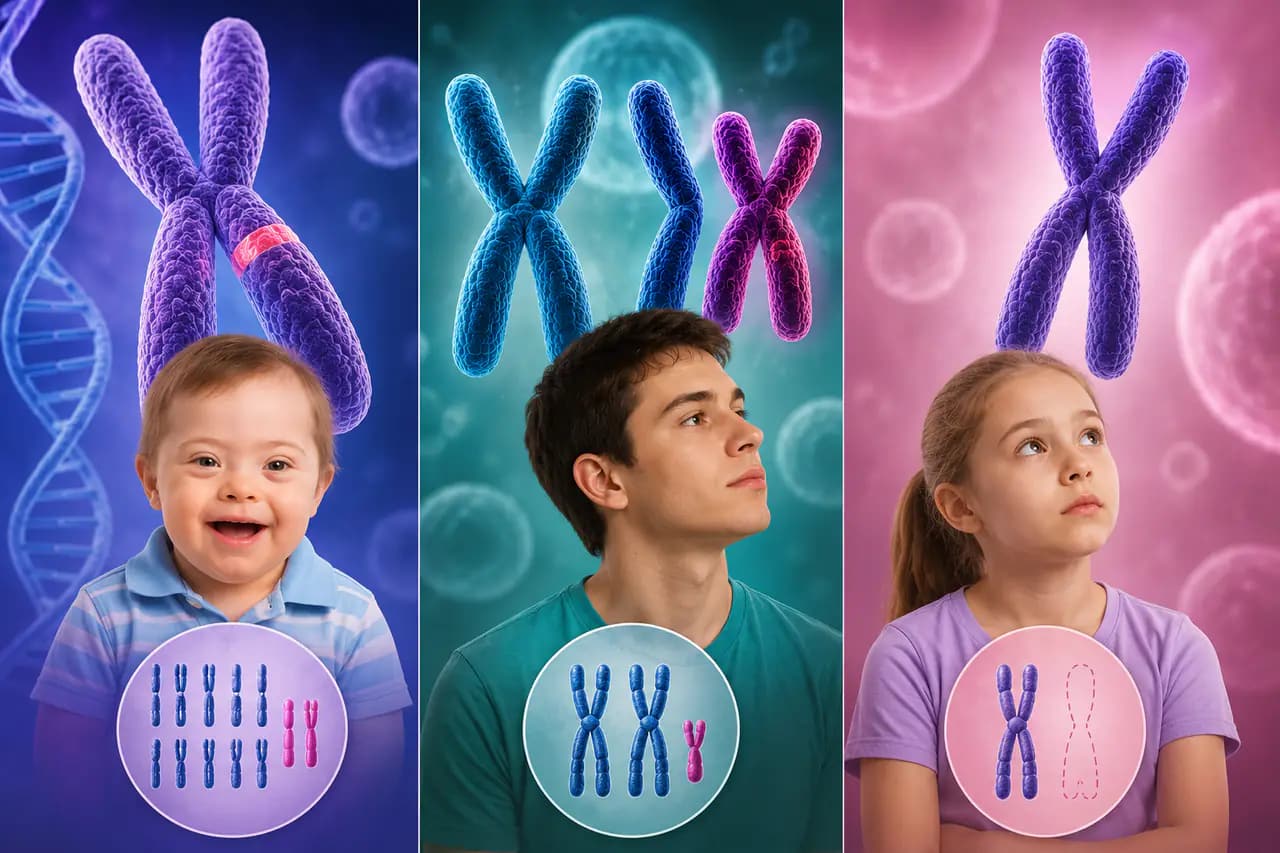
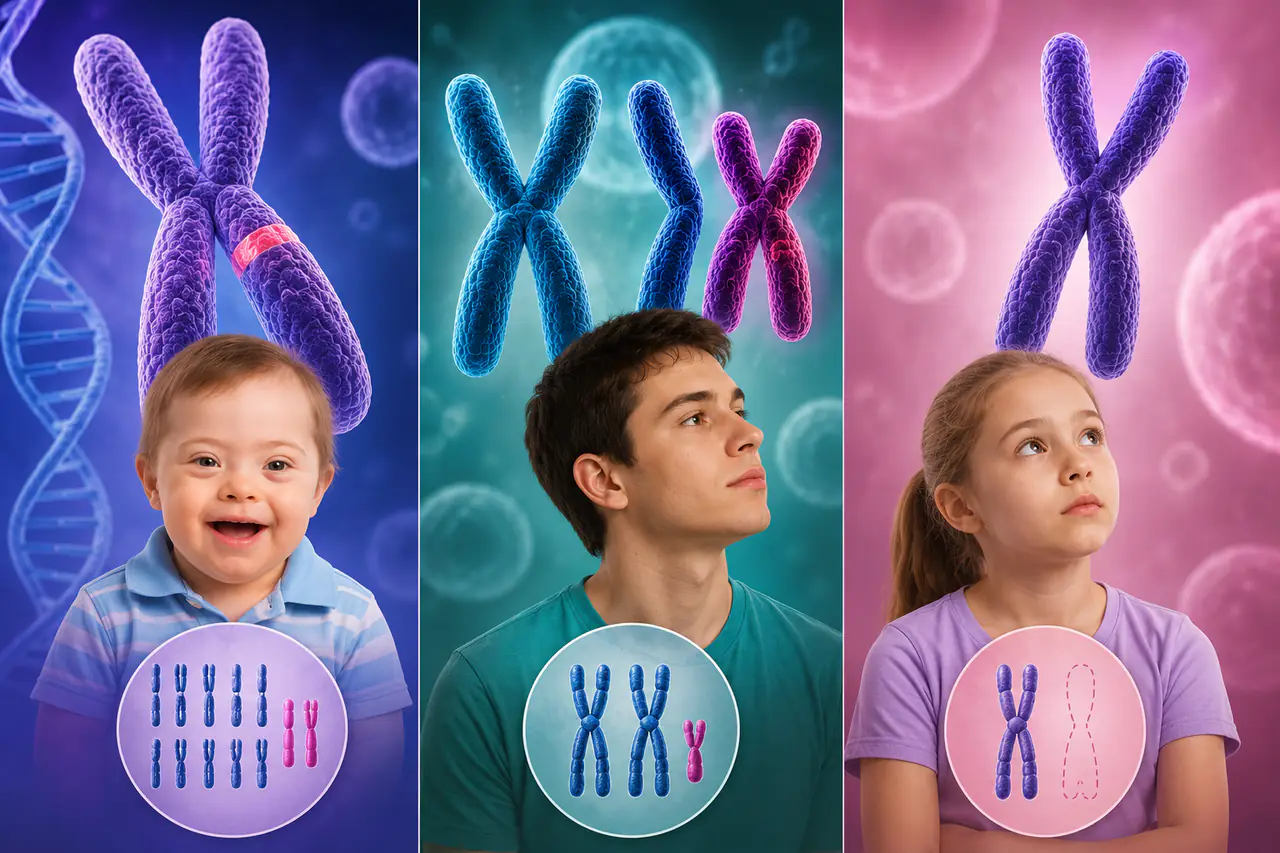
Down syndrome is one of the most recognized chromosomal disorders discussed in Biology. It occurs due to trisomy of chromosome 21, where an individual possesses an extra chromosome. Because of its importance in genetics, Down Syndrome Klinefelter Turner Syndrome MCQs Class 12 frequently contain questions related to chromosome numbers, symptoms, and inheritance patterns. Aspirants are expected to remember that affected individuals have 47 chromosomes instead of the normal 46.
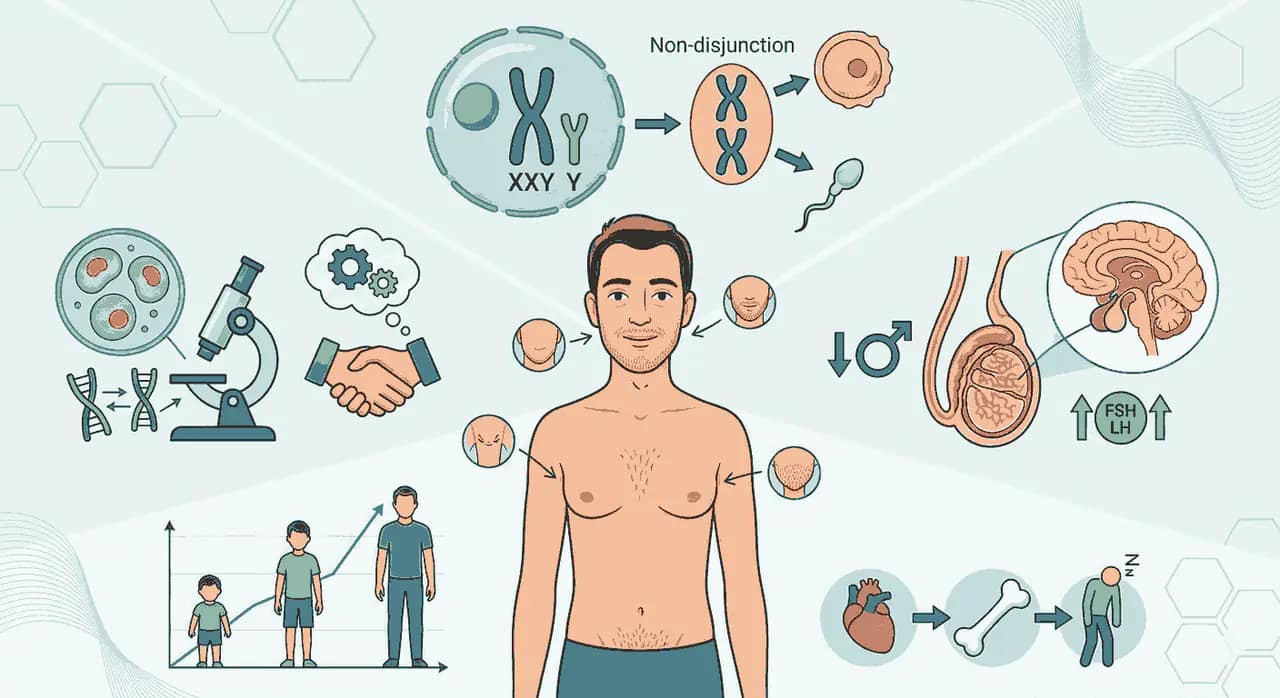
Klinefelter syndrome is another major topic included in human genetics. This syndrome occurs in males who possess an additional X chromosome, resulting in an XXY chromosomal arrangement. Since the disorder demonstrates sex chromosome aneuploidy, Down Syndrome Klinefelter Turner Syndrome MCQs Class 12 often include conceptual and application-based questions about its genetic basis. Understanding the role of sex chromosomes becomes easier when learners practice such questions regularly.
Turner syndrome differs from Klinefelter syndrome because it involves monosomy rather than trisomy. Individuals with Turner syndrome possess only one X chromosome, represented as XO. Due to its unique chromosomal arrangement, Down Syndrome Klinefelter Turner Syndrome MCQs Class 12 commonly focus on identifying symptoms, chromosome counts, and sex-linked abnormalities associated with this condition.
Another reason why Down Syndrome Klinefelter Turner Syndrome MCQs Class 12 are highly valuable is that they strengthen analytical thinking. Instead of memorizing facts blindly, aspirants learn how chromosome abnormalities arise during meiosis. This deeper understanding helps learners solve difficult questions in board examinations and medical entrance tests.
Teachers often recommend practicing Down Syndrome Klinefelter Turner Syndrome MCQs Class 12 because these Down Syndrome Klinefelter Turner Syndrome MCQs Class 12 questions improve speed and accuracy. Genetics problems can sometimes appear confusing due to scientific terminology and chromosome notation. However, repeated exposure to objective Down Syndrome Klinefelter Turner Syndrome MCQs Class 12 questions helps aspirants become familiar with important patterns and concepts.
Many competitive examinations also include assertion-reason and case-based questions from chromosomal disorders. Therefore, solving Down Syndrome Klinefelter Turner Syndrome MCQs Class 12 can help aspirants prepare beyond textbook theory. It allows them to apply their understanding in practical and exam-oriented situations.
One major advantage of using Down Syndrome Klinefelter Turner Syndrome MCQs Class 12 is revision efficiency. Aspirants can quickly review important concepts such as nondisjunction, chromosomal mutations, and sex chromosome abnormalities through objective questions. This method saves time while strengthening memory retention.
In addition, Down Syndrome Klinefelter Turner Syndrome MCQs Class 12 help aspirants identify weak areas in genetics. Some aspirants may confuse Turner syndrome with Klinefelter syndrome or fail to remember chromosome numbers correctly. Practicing targeted questions improves confidence and reduces conceptual mistakes.
Modern Biology education increasingly emphasizes conceptual learning rather than rote memorization. As a result, Down Syndrome Klinefelter Turner Syndrome MCQs Class 12 are now designed to test reasoning ability and interpretation skills. Aspirants must understand the mechanisms behind chromosomal disorders instead of merely recalling definitions.
Educational platforms, online quizzes, and digital learning apps frequently provide Down Syndrome Klinefelter Turner Syndrome MCQs Class 12 to support interactive learning. These resources help aspirants practice anytime and improve performance through regular self-assessment.
The significance of Down Syndrome Klinefelter Turner Syndrome MCQs Class 12 also extends to medical awareness. By studying these disorders, aspirants gain insight into real-life genetic conditions that affect human health and development. This creates scientific awareness while enhancing academic understanding.
Another important aspect of Down Syndrome Klinefelter Turner Syndrome MCQs Class 12 is their role in NEET preparation. Questions related to trisomy, monosomy, and chromosomal abnormalities frequently appear in entrance examinations. Aspirants who practice such MCQs regularly often perform better in competitive exams.
Furthermore, Down Syndrome Klinefelter Turner Syndrome MCQs Class 12 encourage aspirants to connect theoretical genetics with practical biological examples. This connection makes learning more meaningful and engaging. It also improves long-term retention of scientific concepts.
The repeated use of Down Syndrome Klinefelter Turner Syndrome MCQs Class 12 during revision sessions can significantly improve exam confidence. Objective questions help aspirants recall information quickly and accurately under time pressure.
Aspirants preparing for board exams should therefore include Down Syndrome Klinefelter Turner Syndrome MCQs Class 12 as part of their daily study routine. Consistent practice can strengthen conceptual clarity, improve analytical skills, and increase overall Biology scores.
Down Syndrome Klinefelter Turner Syndrome MCQs Class 12:
- In genetics, what is a mutation and how many alleles can some genes have according to the provided text?
Options:
A. A heritable change in the nucleotide sequence of a chromosome; more than two alleles
B. A sudden change in gene expression; only two alleles
C. A change in chromosome structure; one allele
D. A change in gene location; multiple alleles
Answer: A
Explanation: Mutation is a heritable change in the nucleotide sequence of a chromosome. Some genes mutate more than once and may possess multiple alleles.
- Match the following genetic terms with their descriptions:
(A) Change in single base pair of DNA
(B) Deletions of base pairs of DNA
(C) Generation of non-parental gene combination
(D) The frequency of recombination between gene pairs on the same chromosome
Options:
A. III, I, II, IV
B. I, III, IV, II
C. III, IV, I, II
D. II, III, IV, I
Answer: C
Explanation:
A → Point mutation
B → Frame-shift mutation
C → Recombination
D → Genetic map
- What type of mutation and amino acid substitution are involved in causing sickle cell anemia disease?
Options:
A. Point mutation, Valine
B. Point mutation, Lysine
C. Frame shift mutation, Glutamate
D. Frame shift mutation, Valine
Answer: A
Explanation: Sickle cell anemia is caused by a point mutation where valine replaces glutamic acid in the beta-globin chain.
- According to the text, what does traditional breeding lead to in terms of gene multiplication and variation?
Assertion: Traditional breeding leads to multiplication of undesirable genes along with desirable genes.
Reason: Sexual reproduction permits variation.- (a) Assertion is true. Reason is true and Reason is the correct explanation for Assertion
- (b) Assertion is true. Reason is true but Reason is not the correct explanation for Assertion
- (c) Assertion is true but Reason is false
- (d) Assertion is false but Reason is true
Answer: (a) Assertion is true. Reason is true and Reason is the correct explanation for Assertion
Explanation:
Traditional breeding can transfer both desirable and undesirable genes together because genes are inherited in combinations during sexual reproduction. Sexual reproduction creates variation through recombination and assortment of genes, which explains why unwanted traits may also be inherited along with useful traits.
-
H.J. Muller had received Nobel Prize for:
Options:
A. Discovering the linkage of genes
B. Discovering induced mutations by X-rays
C. His studies on Drosophila for genetic study
D. Proving that DNA is genetic material
Answer: B
Explanation: H.J. Muller received the Nobel Prize in 1946 for discovering that X-rays can induce mutations.
- The effect of today's radioactive fallout will probably be more harmful to children of future generations than to children now living because:
Options:
A. Infants are more susceptible to radiations
B. Susceptibility to radiation increases with age
C. Mutated genes are frequently recessive
D. Contamination of milk supply is not cumulative
Answer: C
Explanation: Radiation-induced mutations are often recessive and can remain hidden in heterozygous carriers for generations.
- Haploid (n) plants are preferred over diploid plants for the study of mutation because:
Options:
A. In haploids culturing is easy
B. In haploids only dominant mutation expresses
C. In haploids only recessive mutation expresses
D. All the mutations express
Answer: D
Explanation: In haploid plants all mutations are directly expressed because there is only one allele present.
- A mutagen pollutant is:
Options:
A. Organophosphates
B. Resins
C. Chlorinated hydrocarbons
D. Nitrogen oxides
Answer: C
Explanation: Chlorinated hydrocarbons are mutagenic pollutants capable of causing genetic alterations.
- Down’s syndrome is due to:
Options:
A. Trisomy of 21st chromosome
B. Tetrasomy of 22nd chromosome
C. Polysomy of 9th chromosome
D. Monosomy of 21st chromosome
Answer: A
Explanation: Down syndrome occurs due to an extra copy of chromosome 21, also called trisomy 21.
- Sickle cell anemia is an example of:
Options:
A. Chromosome mutation
B. Point mutation
C. Genetic recombination
D. Environmental effect
Answer: B
Explanation: Sickle cell anemia is caused by a point mutation in the beta-globin gene.
- Trisomy of 18th chromosome causes:
Options:
A. Turner’s syndrome
B. Down syndrome
C. Klinefelter’s syndrome
D. Edwards syndrome
Answer: D
Explanation: Trisomy 18 results in Edwards syndrome, a severe chromosomal disorder.
- Which one of the following symbols represents mating between relatives in human pedigree analysis?
Options:
A. Single horizontal line
B. Dotted line
C. Double horizontal line
D. Zigzag line
Answer: C
Explanation: A double horizontal line in pedigree analysis represents consanguineous mating.
- Which of the following statements are correct about Klinefelter's Syndrome?
Options:
A. This disorder was first described by Langdon Down (1866)
B. Such an individual has overall masculine development, but feminine development is also expressed
C. Both A and B
D. Only B
Answer: D
Explanation: Klinefelter syndrome individuals are genetically male but may show some feminine traits due to an extra X chromosome.
- Which of the following represents Klinefelter's syndrome?
Options:
A. XX
B. XO
C. XY
D. XXY
Answer: D
Explanation: XXY chromosomal composition is characteristic of Klinefelter syndrome.
- XO chromosomal abnormality in humans causes:
Options:
A. Turner’s syndrome
B. Down’s syndrome
C. Darwin’s syndrome
D. Klinefelter’s syndrome
Answer: A
Explanation: Turner syndrome occurs due to monosomy XO.
- The most common type of hemophilia results from congenital absence of:
Options:
A. Factor-II
B. Factor-V
C. Factor-VIII
D. Factor-XI
Answer: C
Explanation: Hemophilia A is caused by deficiency of clotting factor VIII.
- Defect in amino acid metabolism may result in:
Options:
A. Albinism
B. Porphyria
C. Wilson’s disease
D. Phenylketonuria
Answer: D
Explanation: Phenylketonuria results from defective phenylalanine metabolism.
- In man, which of the following genotypes and phenotypes may be the correct result of aneuploidy in sex chromosomes?
Options:
A. 22 pairs + XXY males
B. 22 pairs + XX females
C. 22 pairs + XXXY females
D. 22 pairs + X females
Answer: A
Explanation: XXY males are examples of sex chromosome aneuploidy.
- Which of the following condition is called monosomic?
Options:
A. 2n + 1
B. 2n + 2
C. n + 1
D. 2n – 1
Answer: D
Explanation: Monosomy refers to the loss of one chromosome from the diploid set.
- A man known to be a victim of hemophilia marries a normal woman whose father was known to be a bleeder. What is expected regarding their children?
Options:
A. All children will be bleeders
B. One-fourth children will be bleeders
C. Half children will be bleeders
D. One-tenth children will be bleeders
Answer: C
Explanation: Half of the children may inherit hemophilia due to X-linked inheritance.
- If a boy's father has haemophilia and his mother has one gene for haemophilia, what is the chance that the boy will inherit the disease?
Options:
A. 100%
B. 75%
C. 50%
D. 0%
Answer: C
Explanation: The probability of inheritance is 50%.
- Genes for haemophilia disease are located on:
Options:
A. Autosomes
B. Mitochondria
C. Chloroplasts
D. Sex chromosomes
Answer: D
Explanation: Hemophilia genes are located on the X chromosome.
- Number of chromosomes in Down syndrome is:
Options:
A. 46
B. 47
C. 48
D. 49
Answer: B
Explanation: Individuals with Down syndrome possess 47 chromosomes.
- In the given pedigree, the shaded individuals are homozygous recessive for colour blindness. What is the genotype of individual B?
Options:
A. Heterozygous
B. Homozygous recessive
C. Homozygous dominant
D. None of the above
Answer: B
Explanation: Homozygous recessive genotype expresses colour blindness.
- Which one is a sex-linked disease?
Options:
A. Colour blindness
B. Haemophilia
C. Syphilis
D. Both (a) and (b)
Answer: D
Explanation: Both colour blindness and haemophilia are sex-linked recessive disorders.
- The loss of one single chromosome creates a condition called:
Options:
A. Haploid
B. Nullisomy
C. Monosomy
D. Trisomy
Answer: C
Explanation: Monosomy refers to loss of one chromosome.
- Which of the following is not a hereditary disease?
Options:
A. Cretinism
B. Cystic fibrosis
C. Haemophilia
D. Thalassemia
Answer: A
Explanation: Cretinism is caused by thyroid hormone deficiency and is not inherited genetically.
- If a haemophilic carrier female marries a normal man, what are the chances that 50% of the sons will have haemophilia?
Options:
A. All daughters will have haemophilia
B. 50% daughters will have haemophilia
C. 50% sons will have haemophilia
D. All sons will have haemophilia
Answer: C
Explanation: Half of the sons may inherit the defective X chromosome from the carrier mother.
- Balbiani rings are the structural features of:
Options:
A. Allosomes
B. Autosomes
C. Lampbrush chromosomes
D. Polytene chromosomes
Answer: D
Explanation: Balbiani rings are chromosome puffs found in polytene chromosomes.
- The gene for haemophilia is known to be located on:
Options:
A. Y chromosome
B. X chromosome
C. Autosome no. 21
D. Autosome no. 18
Answer: B
Explanation: Hemophilia is an X-linked recessive disorder caused by mutation on the X chromosome.
Down Syndrome Klinefelter Turner Syndrome MCQs Class 12
In conclusion, chromosomal disorders remain one of the most essential topics in Class 12 Genetics. Topics such as Down syndrome Klinefelter syndrome Turner syndrome MCQs class 12 provide valuable insight into human inheritance and chromosomal abnormalities. Practicing Down Syndrome Klinefelter Turner Syndrome MCQs Class 12 regularly helps aspirants master these concepts efficiently while preparing for school examinations and competitive entrance tests.
Related reading
Most Important Klinefelter Syndrome MCQs Class 12 Biology for NEET Success
Master Klinefelter Syndrome MCQs Class 12 Biology with detailed explanations on XXY chromosomes, Barr bodies, chromosomal disorders, genetics , and inheritance.
Master Nondisjunction and Aneuploidy MCQs Class 12 Biology with Confidence for NEET, JEE & CUET
Master Nondisjunction and Aneuploidy MCQs Class 12 Biology with clear explanations on chromosomal disorders, trisomy, monosomy, meiosis, and genetic inheritance