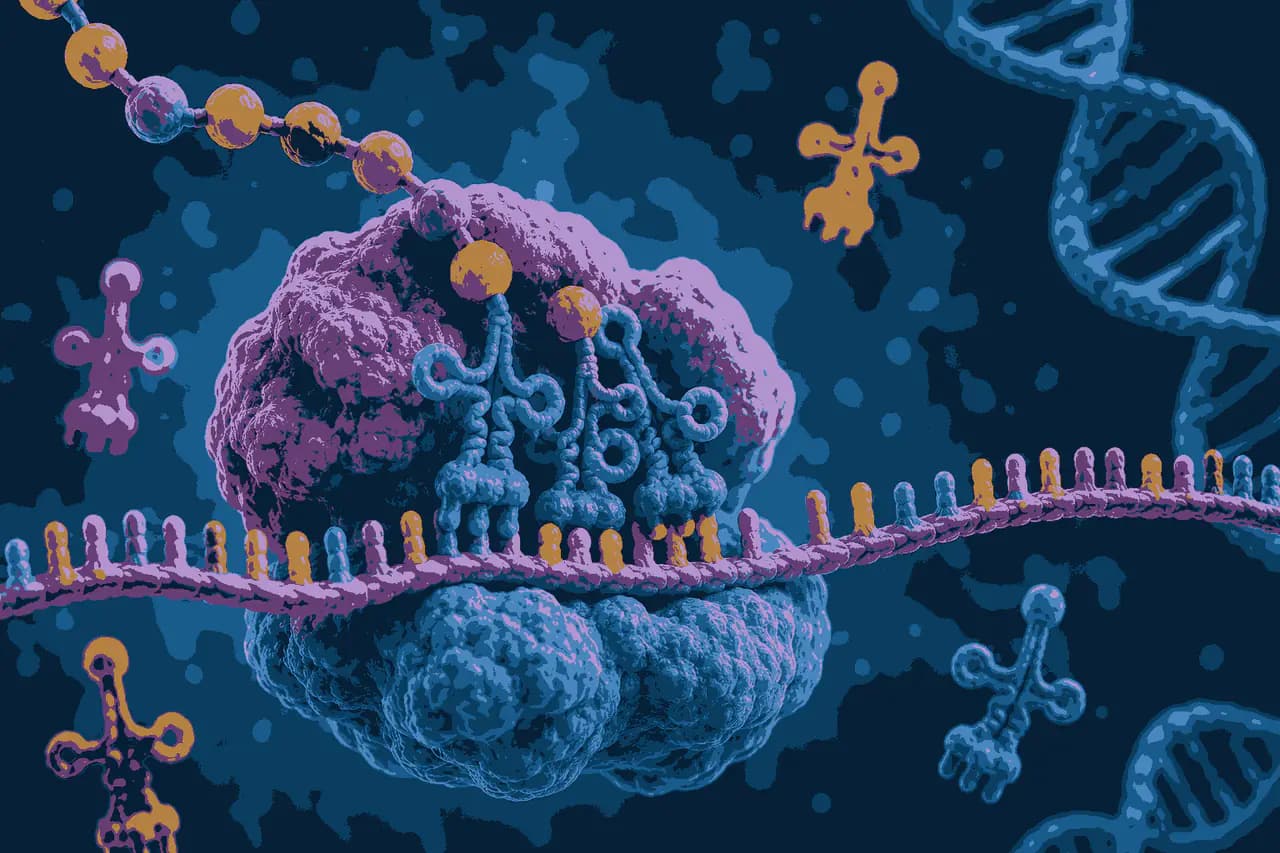
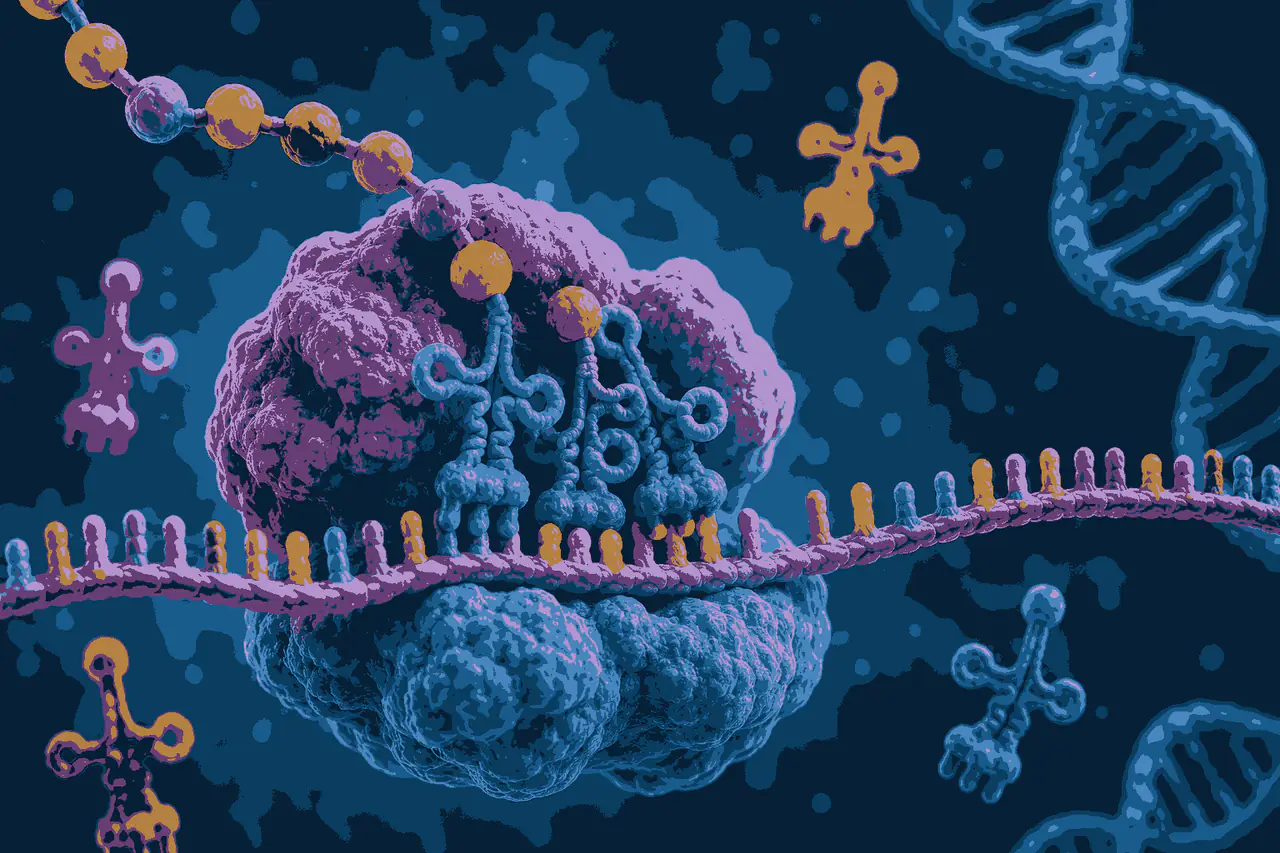
Understanding molecular biology becomes much easier when aspirants regularly practice Nirenberg Polyribonucleotide MCQs Class 12 during their board and competitive exam preparation. The discovery of the genetic code is one of the greatest milestones in biology, and Nirenberg Polyribonucleotide MCQs Class 12 help aspirants understand this important topic in a clear and structured way. Marshall Nirenberg’s pioneering experiments using synthetic polyribonucleotides transformed the field of genetics and protein synthesis. Because of this historical importance, Nirenberg Polyribonucleotide MCQs Class 12 are commonly included in Class 12 Biology examinations and NEET entrance tests.
The main objective of studying Nirenberg Polyribonucleotide MCQs Class 12 is to understand how nucleotide sequences in RNA determine amino acid formation during translation. Nirenberg used artificial RNA molecules made of repeated nucleotides to identify which codons code for specific amino acids. By solving Nirenberg Polyribonucleotide MCQs Class 12, aspirants become familiar with experiments involving synthetic RNA sequences such as poly-U, poly-A, and poly-C. These experiments helped establish the relationship between codons and amino acids.
One major advantage of revising Nirenberg Polyribonucleotide MCQs Class 12 is that aspirants develop a deeper understanding of the genetic code. The genetic code explains how sequences of nitrogen bases in mRNA are translated into proteins. Through regular practice of Nirenberg Polyribonucleotide MCQs Class 12, aspirants learn concepts such as codons, anticodons, triplet coding, degeneracy of the genetic code, and start and stop codons. These topics form the foundation of molecular genetics.
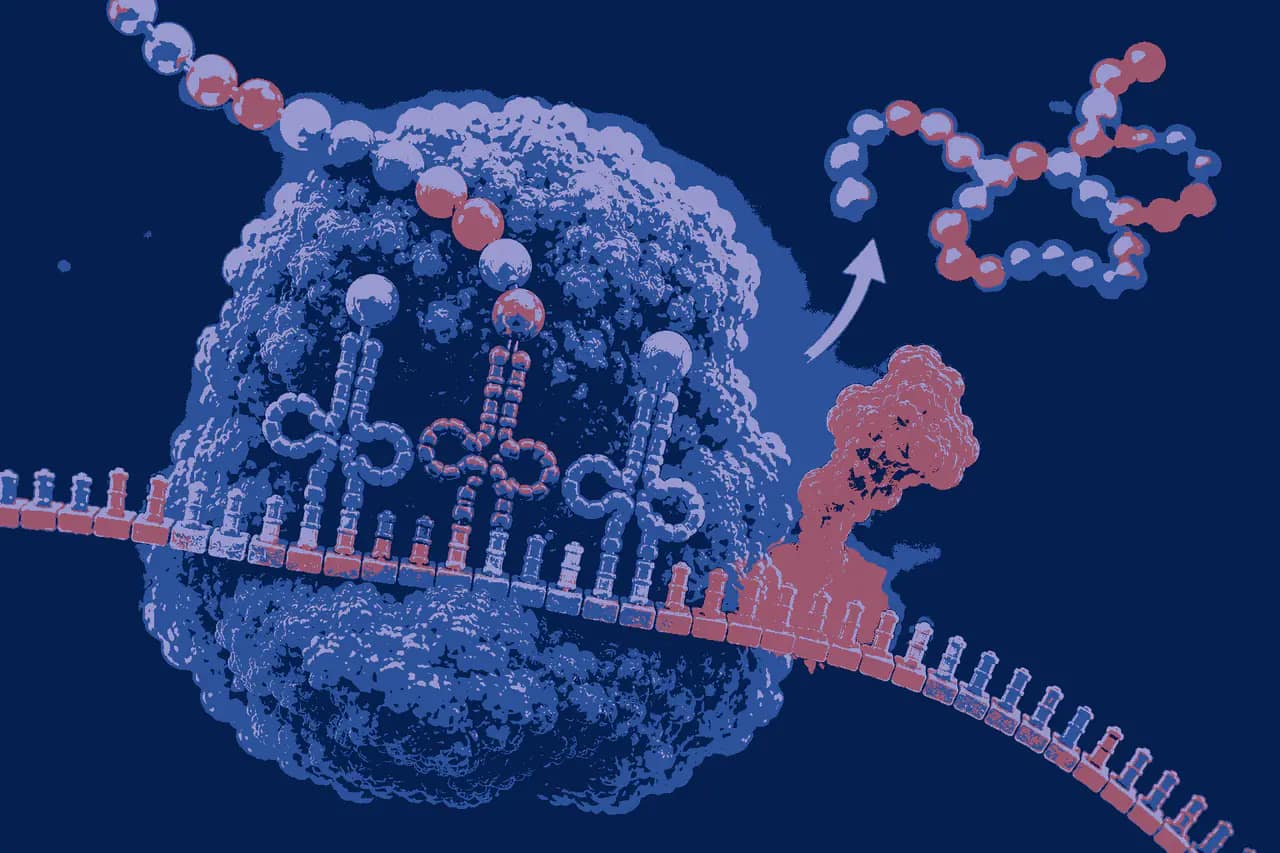
Another important benefit of practicing Nirenberg Polyribonucleotide MCQs Class 12 is that it strengthens conceptual clarity regarding protein synthesis. Translation is one of the most important biological processes, and aspirants often find it difficult to remember the sequence of events involved. By solving Nirenberg Polyribonucleotide MCQs Class 12, aspirants repeatedly revise the role of ribosomes, tRNA, mRNA, and amino acids during translation. This repeated exposure improves memory retention and conceptual understanding.
Aspirants preparing for NEET especially benefit from Nirenberg Polyribonucleotide MCQs Class 12 because questions from molecular genetics are frequently asked in entrance examinations. Many exam questions are directly based on Nirenberg’s experiments and the deciphering of the genetic code. Practicing Nirenberg Polyribonucleotide MCQs Class 12 regularly helps aspirants answer such questions quickly and accurately during exams.
Another reason why Nirenberg Polyribonucleotide MCQs Class 12 are highly valuable is that they improve scientific reasoning and analytical thinking. Aspirants learn how scientists used experimental evidence to decode genetic information. Through Nirenberg Polyribonucleotide MCQs Class 12, aspirants understand how repeated nucleotide sequences led to the identification of amino acid coding patterns. This not only improves biology knowledge but also teaches aspirants how scientific discoveries are made through experimentation.
The study of Nirenberg Polyribonucleotide MCQs Class 12 also helps aspirants connect different chapters of biology together. Molecular genetics is closely linked with heredity, evolution, biotechnology, and gene expression. By revising Nirenberg Polyribonucleotide MCQs Class 12, aspirants build a stronger conceptual bridge between DNA replication, transcription, and translation. This integrated understanding is extremely useful for board exams and competitive tests.
One of the most important discoveries explained through Nirenberg Polyribonucleotide MCQs Class 12 is that the codon UUU codes for the amino acid phenylalanine. Nirenberg’s use of poly-U RNA was a landmark experiment in molecular biology. Aspirants frequently encounter questions related to this discovery in examinations, making Nirenberg Polyribonucleotide MCQs Class 12 highly relevant for scoring marks.
Regular practice of Nirenberg Polyribonucleotide MCQs Class 12 also improves speed and confidence during examinations. Since many questions are concept-based, aspirants who revise these topics thoroughly can answer quickly without confusion. Practicing Nirenberg Polyribonucleotide MCQs Class 12 repeatedly helps aspirants avoid mistakes related to codon interpretation and translation mechanisms.
Another advantage of studying Nirenberg Polyribonucleotide MCQs Class 12 is that it enhances understanding of biotechnology applications. Modern genetic engineering, recombinant DNA technology, and gene expression studies all rely on knowledge of the genetic code. Through Nirenberg Polyribonucleotide MCQs Class 12, aspirants appreciate the scientific significance of decoding RNA sequences and understanding protein synthesis.
Nirenberg Polyribonucleotide MCQs Class 12:
1. Model of DNA structure was proposed by:
A. Beadle and Tatum
B. M.C. Chung
C. Purkinje
D. Watson and Crick
Answer: D. Watson and Crick
Explanation: Watson and Crick proposed the double helix model of DNA structure.
2. Antiparallel strands of a DNA molecule means that
A. one strand turns anti-clockwise
B. the phosphate groups of two DNA strands at their ends share the same position
C. the phosphate groups at the start of two DNA strands are in opposite position (pole)
D. one strand turns clockwise
Answer: C. the phosphate groups at the start of two DNA strands are in opposite position (pole)
Explanation: DNA strands run in opposite directions, making them antiparallel.
3. A nucleoside is
A. Purine/pyrimidine + phosphate
B. Purine/pyrimidine + sugar
C. Pyrimidine + purine + phosphate
D. Purine + sugar + phosphate
Answer: B. Purine/pyrimidine + sugar
Explanation: A nucleoside contains a nitrogenous base attached to a sugar molecule.
4. Unwinding of DNA is done by
A. topoisomerase
B. exonuclease
C. helicase
D. ligase
Answer: C. helicase
Explanation: Helicase separates DNA strands during replication.
5. Kappa particles are
A. protozoan parasites whose multiplication is controlled by host metabolites
B. viral particles capable of self perpetuation in host cytoplasm
C. endosymbiont representing Gram negative bacterial species
D. submicroscopic granules formed by the folding of naked DNA
Answer: D. submicroscopic granules formed by the folding of naked DNA
Explanation: Kappa particles are associated with folded DNA structures in Paramecium.
6. Plasmids are the molecules of
A. DNA
B. RNA
C. Protein
D. DNA bound by histones
Answer: A. DNA
Explanation: Plasmids are small circular DNA molecules found mainly in bacteria.
7. The following ratio is generally constant for a given species
A. A + G / C + T
B. T + C / G + A
C. G + C / A + T
D. A + C / T + G
Answer: C. G + C / A + T
Explanation: The GC/AT ratio remains constant within a species.
8. Which of the following is commonly known as Jumping genes?
A. Transgenic genes
B. Recon
C. Plasmid
D. Transposon
Answer: D. Transposon
Explanation: Transposons can move from one location to another in the genome.
9. Which of the following processes/technique was used by Watson and Crick for giving double helical DNA model?
A. Differential staining
B. X-ray diffraction
C. Autoradiography
D. All of the above
Answer: B. X-ray diffraction
Explanation: X-ray diffraction studies provided evidence for the DNA double helix.
10. Which is related to feminism?
A. DNA → RNA → Protein
B. RNA → DNA → RNA → Protein
C. DNA → RNA → Protein → DNA
D. None of above
Answer: B. RNA → DNA → RNA → Protein
Explanation: This pathway is associated with reverse transcription.
11. Who was awarded Nobel Prize in 1959 for in vitro synthesis of polyribonucleotide?
A. Tatum
B. Darwin
C. Kornberg
D. Khurana
Answer: C. Kornberg
Explanation: Kornberg contributed significantly to nucleic acid synthesis research.
12. Which is the wrong combination?
A. Landsteiner - Blood group
B. Chargaff and Davidson - A = T, C = G
C. Watson and Crick - DNA structure
D. None of the above
Answer: D. None of the above
Explanation: All combinations listed are correct.
13. Select the correct match
A. Ribozyme - Nucleic acid
B. F₂ × Recessive parent - Dihybrid cross
C. G. Mendel - Transformation
D. T.H. Morgan - Transduction
Answer: A. Ribozyme - Nucleic acid
Explanation: Ribozymes are RNA molecules with catalytic activity.
14. Which of the following enzymes are used to join bits of DNA?
A. Ligase
B. Primase
C. DNA polymerase
D. Endonuclease
Answer: A. Ligase
Explanation: DNA ligase joins DNA fragments together.
15. If the length of a DNA molecule is 1.1 metres, what will be the approximate number of base pairs?
A. 6.6 × 10⁶ bp
B. 3.3 × 10⁹ bp
C. 6.6 × 10⁹ bp
D. 3.3 × 10⁶ bp
Answer: B. 3.3 × 10⁹ bp
Explanation: DNA base pair calculations use 0.34 nm distance between adjacent base pairs.
16. If A and C make 30% and 20% of DNA, respectively, what will be the percentage composition of T and G?
A. T : 20%, G : 30%
B. T : 30%, G : 20%
C. T : 30%, G : 30%
D. T : 20%, G : 20%
Answer: B. T : 30%, G : 20%
Explanation: Adenine pairs with thymine and cytosine pairs with guanine.
17. In the polynucleotide chain of DNA, a nitrogenous base is linked to the –OH of
A. 1′ C pentose sugar
B. 2′ C pentose sugar
C. 3′ C pentose sugar
D. 5′ C pentose sugar
Answer: A. 1′ C pentose sugar
Explanation: Nitrogen bases attach to the 1′ carbon of pentose sugar.
18. If Adenine makes 30% of the DNA molecule, what will be the percentage of Thymine, Guanine and Cytosine in it?
A. T : 20 ; G : 25 ; C : 25
B. T : 20 ; G : 30 ; C : 20
C. T : 20 ; G : 20 ; C : 30
D. T : 30 ; G : 20 ; C : 20
Answer: D. T : 30 ; G : 20 ; C : 20
Explanation: According to Chargaff’s rule, A = T and G = C.
19. When the centromere is situated in the middle of two equal arms of chromosomes, the chromosome is referred as:
A. Acrocentric
B. Metacentric
C. Telocentric
D. Sub-metacentric
Answer: B. Metacentric
Explanation: Metacentric chromosomes have equal chromosome arms.
20. Satellite DNA is important because it
A. Codes for enzymes needed for DNA replication
B. Codes for proteins needed in cell cycle
C. Shows high degree of polymorphism in population and is heritable
D. Does not code for proteins and is same in all members
Answer: C. Shows high degree of polymorphism in population and is heritable
Explanation: Satellite DNA is useful in DNA fingerprinting.
21. The diagram shows an important concept in the genetic implication of DNA. Fill in the blanks A to C:
A. A–translation B–extension C–Rosalind Franklin
B. A–Transcription B–replication C–James Watson
C. A–translation B–transcription C–Erwin Chargaff
D. A–transcription B–translation C–Francis Crick
Answer: D. A–transcription B–translation C–Francis Crick
Explanation: Francis Crick proposed the central dogma.
22. DNA fragments are
A. Positively charged
B. Negatively charged
C. Neutral
D. Either positively or negatively charged depending on size
Answer: B. Negatively charged
Explanation: DNA carries negative charges because of phosphate groups.
23. One turn of the helix in a B-form DNA is approximately
A. 20 nm
B. 0.34 nm
C. 3.4 nm
D. 2 nm
Answer: C. 3.4 nm
Explanation: One complete turn of B-DNA measures 3.4 nm.
24. Nucleotides are building blocks of nucleic acids. Each nucleotide is a composite molecule formed by –
A. Base-sugar-OH
B. Base-sugar-phosphate
C. Sugar-phosphate
D. Base-sugar-phosphate
Answer: B. Base-sugar-phosphate
Explanation: A nucleotide contains a base, sugar, and phosphate group.
25. In a DNA segment having six coils, there are 22 nitrogen base pairs linked by two hydrogen bonds. How many cytosine bases are found in that segment?
A. 22
B. 38
C. 44
D. 76
Answer: B. 38
Explanation: DNA with six turns contains 60 base pairs. Remaining GC pairs equal 38.
26. X-rays are used in
A. ECG
B. EEG
C. CT-scan
D. Endoscopy
Answer: C. CT-scan
Explanation: CT scans use X-rays to create body images.
27. A genophore is made up of
A. a single double-stranded DNA
B. a single-stranded DNA
C. RNA and histones
D. histones and non-histones
Answer: A. a single double-stranded DNA
Explanation: Genophores are circular double-stranded DNA molecules in prokaryotes.
28. In DNA, 20% of bases are adenine. What percentage of bases are pyrimidines?
A. 30%
B. 60%
C. 50%
D. 20%
Answer: C. 50%
Explanation: Pyrimidines include thymine and cytosine together.
29. Nucleosome core is made of
A. H0, H2A, H2B, and H3
B. H1, H2A, H2B, H4
C. H1, H3A, H2B, H3, and H4
D. H2A, H2B, H3, and H4
Answer: D. H2A, H2B, H3, and H4
Explanation: The nucleosome core contains histone octamers.
30. A DNA with unequal nitrogen bases would most probably be
A. Single-stranded
B. Double-stranded
C. Triple-stranded
D. Four-stranded
Answer: A. Single-stranded
ExplanationCon: Double-stranded DNA follows Chargaff’s rule with equal complementary bases.
Conclusion on Nirenberg Polyribonucleotide MCQs Class 12
In conclusion, Nirenberg Polyribonucleotide MCQs Class 12 are extremely important for mastering molecular biology and genetics. Regular revision of Nirenberg Polyribonucleotide MCQs Class 12 improves conceptual clarity, analytical skills, and exam performance. Aspirants preparing for Class 12 board exams or NEET should practice Nirenberg Polyribonucleotide MCQs Class 12 consistently to build a strong understanding of the genetic code and protein synthesis.
Related reading
Ultimate Ribosome and tRNA MCQs PDF Class 12 - Powerful Questions with Answers for Exams
Master ribosome structure , tRNA function, anticodon recognition , and translation with Ribosome and tRNA MCQs PDF Class 12 for NEET and board exam preparation.
Master Chain Termination Codon MCQs Biology Class 12 - Powerful Questions with Accurate Answers for NEET
Practice Chain Termination Codon MCQs Biology Class 12 for NEET and board exams. Learn stop codons, translation termination , protein synthesis concepts easily.