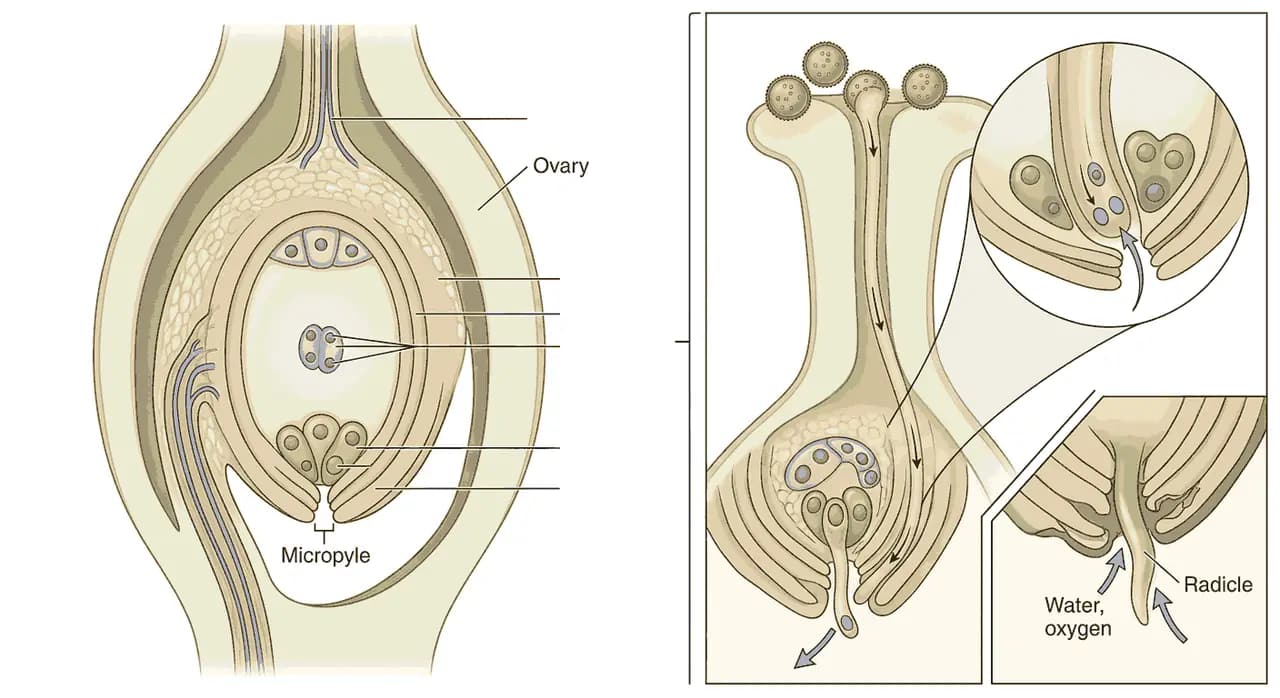
Understanding plant reproduction is essential for aspirants preparing for board exams and competitive tests. One of the most important topics in this chapter is the structure of the ovule and the role of the micropyle. To strengthen conceptual clarity and exam readiness, many aspirants turn to Ovule structure and micropyle function mcqs class 12 Biology with answers as a reliable resource. The phrase Ovule structure and micropyle function mcqs class 12 Biology with answers is widely searched because it helps bridge the gap between theory and application.
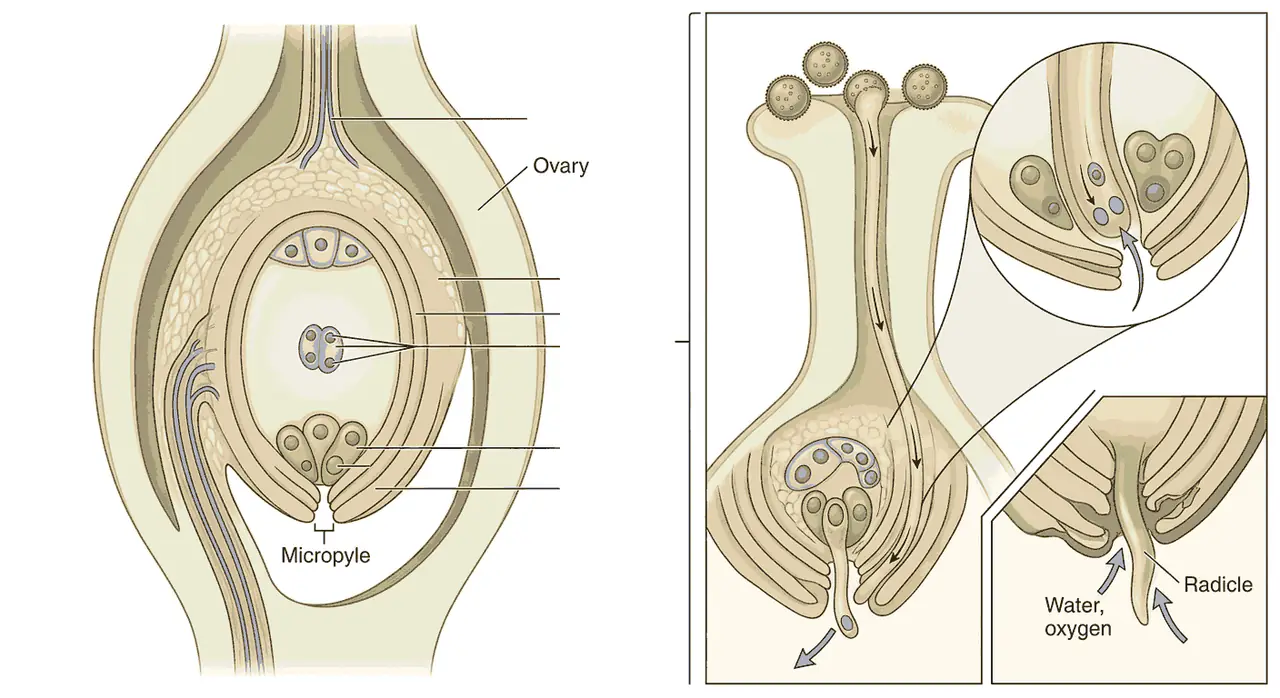
The ovule is a crucial part of the female reproductive system in flowering plants. It is technically known as the megasporangium and is located inside the ovary. A typical ovule consists of several parts, including the nucellus, integuments, micropyle, chalaza, and funicle. Learning these structures becomes much easier when aspirants regularly practice Ovule structure and micropyle function mcqs class 12 Biology with answers.
The nucellus forms the central mass of the ovule and contains the megaspore mother cell. Surrounding the nucellus are one or two integuments that protect the developing embryo sac. At the tip of the ovule, a small opening known as the micropyle is present. This tiny structure plays a vital role in fertilization. By solving Ovule structure and micropyle function mcqs class 12 Biology with answers, aspirants can better understand how each part contributes to reproduction.
The micropyle is particularly important because it serves as the entry point for the pollen tube during fertilization. Without the micropyle, the pollen tube would not be able to reach the embryo sac. This makes it a key concept in exams, and that is why Ovule structure and micropyle function mcqs class 12 Biology with answers are highly beneficial for revision.
Another important feature is the hilum, which is the point where the ovule is attached to the funicle. The chalaza is located opposite the micropyle and represents the basal region of the ovule. These structural details are frequently tested in exams, and practicing Ovule structure and micropyle function mcqs class 12 Biology with answers helps aspirants remember them more effectively.
There are different types of ovules such as anatropous, orthotropous, and campylotropous. Among these, the anatropous ovule is the most common in angiosperms. In this type, the micropyle and hilum lie close to each other. Understanding these variations is crucial, and consistent practice with Ovule structure and micropyle function mcqs class 12 Biology with answers ensures that aspirants can easily identify them in exams.
The function of the micropyle extends beyond just fertilization. It also allows the entry of water during seed germination. This dual role makes it an important structure to remember. Aspirants who regularly solve Ovule structure and micropyle function mcqs class 12 Biology with answers are more likely to recall such details quickly during exams.
In addition, the orientation of the ovule affects the position of the micropyle. For example, in anatropous ovules, the micropyle faces the placenta, while in orthotropous ovules, it lies in a straight line with the chalaza. These subtle differences are often asked in multiple-choice questions, making Ovule structure and micropyle function mcqs class 12 Biology with answers an essential practice tool.
Time management and accuracy are key factors in exam success. By practicing Ovule structure and micropyle function mcqs class 12 Biology with answers, aspirants can improve both speed and precision. This not only boosts confidence but also helps in identifying weak areas that require more revision.
Furthermore, repeated exposure to Ovule structure and micropyle function mcqs class 12 Biology with answers enhances memory retention. Instead of memorizing concepts passively, aspirants actively engage with the material, which leads to better understanding and long-term recall.
Another advantage of using Ovule structure and micropyle function mcqs class 12 Biology with answers is that it prepares aspirants for different types of questions, including conceptual, application-based, and assertion-reason questions. This comprehensive preparation is essential for scoring high marks.
Ovule structure and micropyle function mcqs class 12 Biology with answers:
1.
The ovule of angiosperm is technically known as:
A. Megaspore mother cell
B. Megasporangium
C. Megaspore
D. Megasporophyll
Answer: B
Explanation: Ovule is technically called megasporangium as it produces megaspores.
2.
Consider the following statements:
(A) Ovule is attached by filament
(B) Ovule fuses at hilum
(C) Protective layers are integuments
(D) Opening is germ pore
Options:
A. A and D
B. A and C
C. B and D
D. B and C
E. C and D
Answer: D
Explanation: Ovule attaches via funicle, opening is micropyle, not germ pore.
3.
Most common embryo sac type:
A. Allium
B. Oenothera
C. Polygonum
D. Adoxa
Answer: C
Explanation: Polygonum type is 8-nucleate, 7-celled and most common.
4.
Oenothera embryo sac type is:
A. 8n, 7 cells
B. 16n
C. 8n, 8 cells
D. 4n, 4 cells
Answer: D
Explanation: Oenothera type is 4-nucleate and 4-celled.
5.
Female gametophyte development (given condition) is:
A. Adoxa
B. Allium
C. Endymion
D. Oenothera
Answer: B
Explanation: Two megaspores participate → Allium type.
6.
Archesporium of ovule is:
A. Lateral
B. Hypodermal
C. Central
D. Terminal
Answer: B
Explanation: It is single-celled hypodermal.
7.
Tissue attaching ovule to ovary:
A. Placenta
B. Chalaza
C. Funicle
D. Hilum
Answer: A
Explanation: Placenta holds ovule.
8.
Hilum and micropyle close in:
A. Anatropous
B. Campylotropous
C. Amphitropous
D. Circinotropous
Answer: A
Explanation: Characteristic of anatropous ovule.
9.
Micropyle occurs in:
A. Seeds, ovule
B. Ovule only
C. Ovule & stigma
D. Ovary
Answer: A
Explanation: Present in ovule and later seed.
10.
Female gametophyte develops by:
A. 1 meiosis + 3 mitosis
B. 3 meiosis
C. 1 meiosis + 2 mitosis
D. 1 meiosis
Answer: A
Explanation: Produces 8-nucleate embryo sac.
11.
Mesogamy is:
A. Through nucellus
B. Through integuments
C. Through micropyle
D. Through chalaza
Answer: B
Explanation: Entry via integuments.
12.
Synergid function studied in:
A. Physiology
B. Ecology
C. Embryology
D. Bryology
Answer: C
Explanation: Part of reproductive study.
13.
Polar nuclei located in:
A. Embryo sac
B. Thalamus
C. Pollen tube
D. Ovary
Answer: A
Explanation: Found in central cell.
14.
Micropyle function:
A. Germination
B. Growth
C. Exit of tube
D. Entry of pollen tube
Answer: D
Explanation: Entry point for pollen tube.
15.
Right-angle ovule type:
A. Hemianatropous
B. Amphitropous
C. Campylotropous
D. Anatropous
Answer: A
Explanation: Ovule bends at right angle.
16.
Embryo nutrition source:
A. Endosperm
B. Ovule
C. Embryo sac
D. Haustoria
Answer: A
Explanation: Endosperm provides nutrients.
17.
Haustorial behavior seen in:
A. Santalum
B. Maize
C. Argemone
D. Datura
Answer: A
Explanation: In Santalum, the embryo sac shows haustorial behavior where it grows beyond the ovule tissue to absorb nutrients efficiently.
18.
Nucellar embryo development common in:
A. Citrus
B. Sunflower
C. Oat
D. Marigold
Answer: A
Explanation: In Citrus, nucellar cells develop into embryos (nucellar polyembryony), producing multiple embryos in one seed.
19.
Ascending chromosome order:
A. Oryza-Allium-Saccharum-Nicotiana
B. Allium-Oryza-Nicotiana-Saccharum
C. Nicotiana-Saccharum-Oryza-Allium
D. Saccharum-Oryza-Nicotiana-Allium
Answer: B
Explanation: Based on ploidy relationships, the correct increasing order of chromosome number in endosperm is Allium → Oryza → Nicotiana → Saccharum.
20.
Polygonum nuclei ratio:
A. 3:1:3
B. 6:0:1
C. 6:1:0
D. 3:2:3
Answer: C
Explanation: In a Polygonum-type embryo sac, there are 6 haploid nuclei and 1 diploid nucleus, giving ratio 6:1:0.
21.
Division in functional megaspore:
A. Mitotic without cytokinesis
B. Reductional
C. Somatic
D. Meiotic
Answer: A
Explanation: The functional megaspore undergoes mitotic divisions without cytokinesis, forming a multinucleate embryo sac.
22.
Scutellum equals:
A. Endosperm
B. Cotyledon
C. Plumule
D. Aleurone
Answer: B
Explanation: In monocots like wheat/maize, the scutellum is the modified cotyledon that helps in nutrient absorption.
23.
Transfer to same plant flower:
A. Autogamy
B. Cleistogamy
C. Geitonogamy
D. Xenogamy
Answer: C
Explanation: Geitonogamy is transfer of pollen between flowers of the same plant, functionally cross but genetically self.
24.
Large fragrant flowers:
A. Wind
B. Insect
C. Bird
D. Bat
Answer: B
Explanation: Insect-pollinated flowers are large, colorful, and fragrant to attract pollinators.
25.
Wind pollinated flowers:
A. Bright
B. Dry pollen
C. Large
D. Nectar
Answer: B
Explanation: Wind-pollinated flowers produce light, dry pollen in large quantities for easy dispersal.
26.
Not pollen-pistil interaction:
A. Tube formation
B. Germination
C. Zygote formation
D. Growth
Answer: C
Explanation: Zygote formation occurs after fertilization, not during pollen-pistil interaction.
27.
Different maturity prevents:
A. Self
B. Cross
C. Pollinators
D. Growth
Answer: B
Explanation: Different timing of anther and stigma maturity (dichogamy) prevents self-pollination and promotes cross-pollination.
28.
Advantage of cleistogamy:
A. Diversity
B. Dispersal
C. No pollinator needed
D. More pollen
Answer: C
Explanation: Cleistogamous flowers remain closed and ensure seed formation without pollinators.
29.
Autogamy & geitonogamy prevented in:
A. Castor
B. Maize
C. Papaya
D. Cucumber
Answer: C
Explanation: Papaya is dioecious, so male and female flowers occur on different plants, preventing self-pollination.
30.
Correct statement:
A. Geitonogamy = different plants
B. Cleistogamous always autogamous
C. Xenogamy only wind
D. Chasmogamous closed
Answer: B
Explanation: Cleistogamous flowers never open and always undergo self-pollination (autogamy).
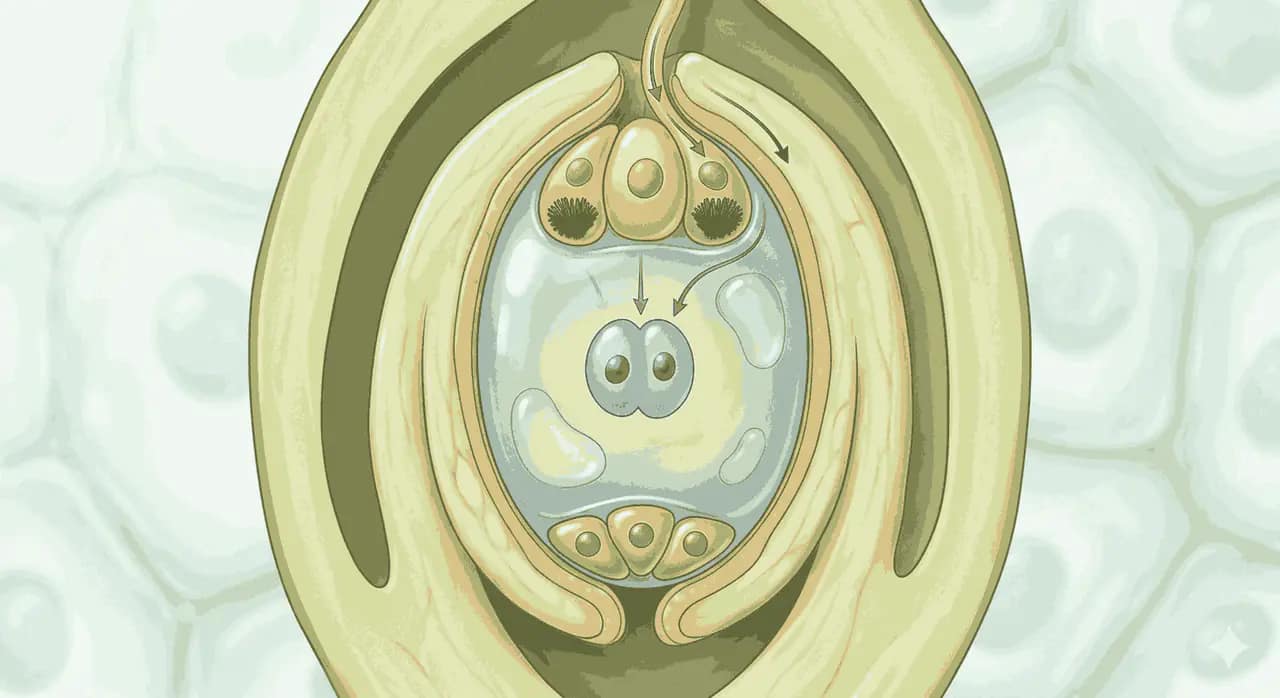
Ovule structure and micropyle function mcqs class 12 Biology with answers
In conclusion, mastering the structure of the ovule and the function of the micropyle is crucial for Class 12 Biology exams. Incorporating Ovule structure and micropyle function mcqs class 12 Biology with answers into daily study routines helps aspirants strengthen their concepts, improve accuracy, and build confidence. With consistent practice using Ovule structure and micropyle function mcqs class 12 Biology with answers, aspirants can achieve excellent results and perform well in both board and competitive examinations.
Related reading
Master Fast: Embryo Sac Structure And Function MCQ Class 12 Biology With Answers
Practice Embryo Sac Structure And Function MCQ Class 12 Biology With Answers.Boost concepts on ovule, egg apparatus, fertilisation with easy exam-ready question
Master Sertoli Cells Location and Function MCQs With Answers for Class 12 Biology
Master Sertoli Cells Location and Function MCQs With Answers for Class 12 Biology with clear explanations, key concepts , and exam-focused preparation to boost,