Megaspore development is one of the most important concepts in plant reproduction, especially for aspirants preparing for board exams and competitive tests. A clear understanding of this topic helps in mastering plant reproduction chapters effectively. While studying, many aspirants rely on Megaspore Development and Megasporogenesis MCQs Class 12 for quick revision and concept clarity. The phrase Megaspore Development and Megasporogenesis MCQs Class 12 is commonly searched because it directly connects theoretical knowledge with exam-oriented practice.
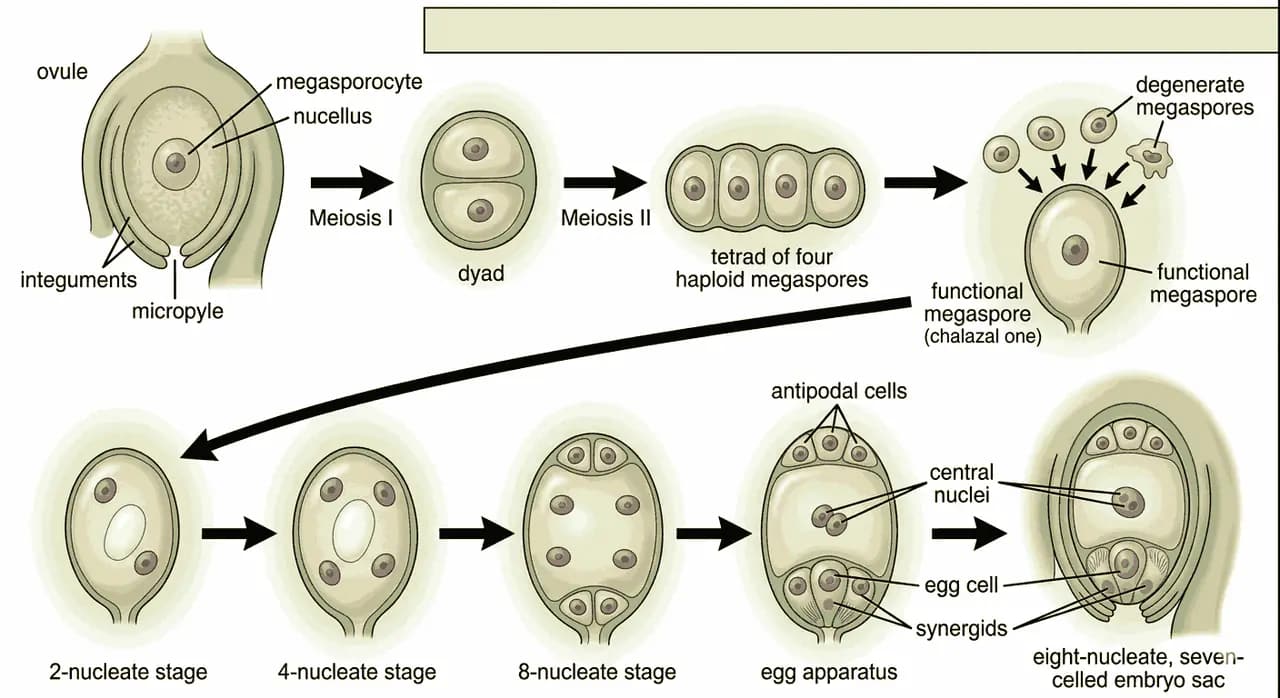
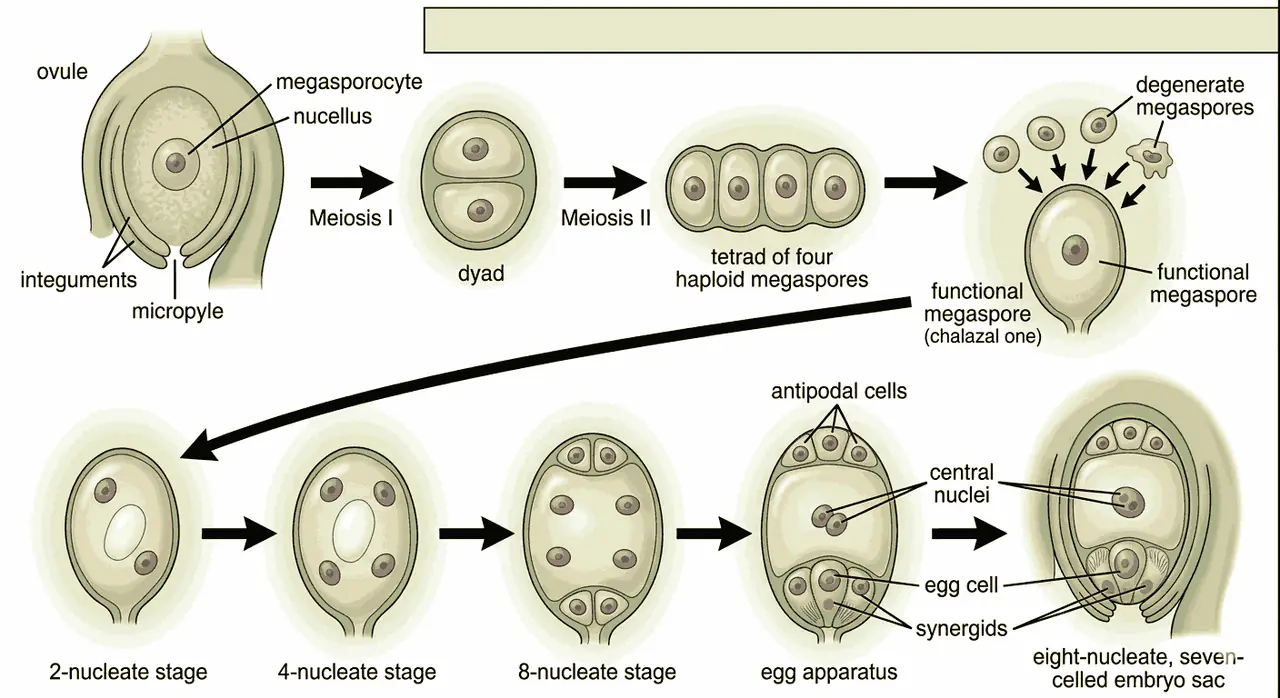
To begin with, megasporogenesis is the process by which megaspores are formed from a diploid megaspore mother cell (MMC) through meiosis. This process takes place inside the ovule, which is present in the ovary of a flower. Understanding this concept is crucial, and that is why Megaspore Development and Megasporogenesis MCQs Class 12 play a significant role in helping aspirants test their knowledge.
In megasporogenesis, the megaspore mother cell undergoes meiotic division to produce four haploid megaspores. Usually, only one megaspore remains functional while the other three degenerate. This functional megaspore later develops into the female gametophyte or embryo sac. When aspirants practice Megaspore Development and Megasporogenesis MCQs Class 12, they become familiar with such important details and common exam patterns.
The development of the embryo sac from the functional megaspore is known as megagametogenesis. It involves three successive mitotic divisions, resulting in an eight-nucleate and seven-celled structure. This is the most common type, known as the Polygonum type. Revising these concepts through Megaspore Development and Megasporogenesis MCQs Class 12 helps aspirants remember the sequence and structure more effectively.
Another important aspect is the structure of the ovule. It consists of parts like nucellus, integuments, micropyle, and chalaza. The megaspore mother cell is located within the nucellus. Questions related to these structures frequently appear in exams, which is why Megaspore Development and Megasporogenesis MCQs Class 12 are extremely useful for thorough preparation.
There are different types of embryo sac development such as monosporic, bisporic, and tetrasporic. The most common type is monosporic development, where only one megaspore contributes to the embryo sac formation. Aspirants often find these classifications confusing, but consistent practice of Megaspore Development and Megasporogenesis MCQs Class 12 makes it easier to differentiate between them.
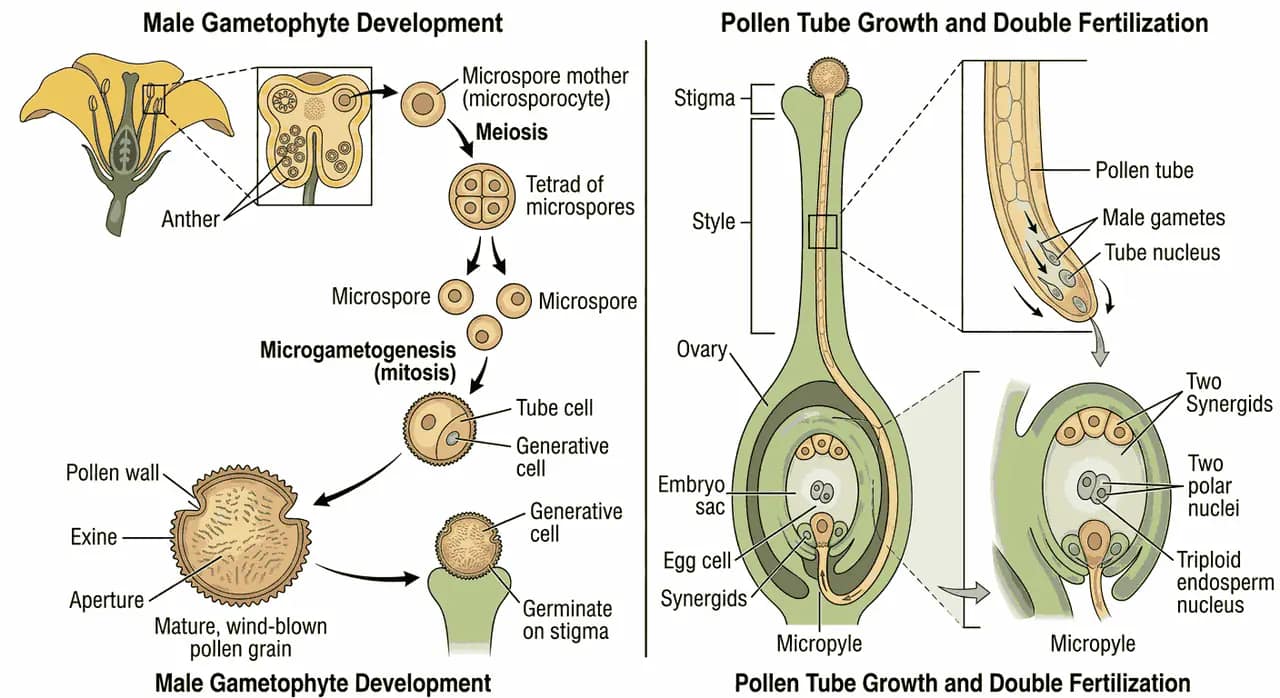
The role of polar nuclei, synergids, antipodals, and egg cell in the embryo sac is another key topic. Each component has a specific function during fertilization. For example, synergids help in guiding the pollen tube, while polar nuclei participate in triple fusion. These details are frequently tested, making Megaspore Development and Megasporogenesis MCQs Class 12 an essential study tool.
In addition, understanding the ploidy levels during different stages is very important. The megaspore mother cell is diploid, while megaspores and the embryo sac are haploid. Many exam questions are based on ploidy concepts, and practicing Megaspore Development and Megasporogenesis MCQs Class 12 helps aspirants avoid common mistakes.
Environmental and genetic factors also influence megaspore development. Although these are less frequently asked, having a conceptual understanding gives an edge in competitive exams. This is another reason why Megaspore Development and Megasporogenesis MCQs Class 12 should be included in every aspirant’s revision strategy.
Time management is crucial during exams, and MCQ practice improves speed and accuracy. By solving Megaspore Development and Megasporogenesis MCQs Class 12, aspirants can identify weak areas and improve their performance. Regular practice ensures better retention and confidence during the actual exam.
Moreover, repeated exposure to Megaspore Development and Megasporogenesis MCQs Class 12 helps in recognizing important patterns and frequently asked questions. This not only boosts confidence but also enhances problem-solving skills. Aspirants who consistently practice Megaspore Development and Megasporogenesis MCQs Class 12 often perform better compared to those who rely only on theory.
Another benefit of using Megaspore Development and Megasporogenesis MCQs Class 12 is that it encourages active learning. Instead of passively reading, aspirants engage with the content, making learning more effective. This approach is particularly useful for long-term retention of concepts.
Megaspore Development and Megasporogenesis MCQs Class 12:
1.
Which of the following is the odd one out?
A. Nucellus
B. Embryo sac
C. Micropyle
D. Pollen grain
Answer: D
Explanation: Nucellus, embryo sac, and micropyle are parts of the ovule (female structure), whereas pollen grain is the male gametophyte, making it the odd one out.
2.
What is the embryo sac in flowering plants?
A. Megaspore
B. Microgametophyte
C. Female gametophyte
D. Megasporangium
Answer: C
Explanation: The embryo sac is the female gametophyte of angiosperms and contains egg, synergids, and other cells required for fertilization.
3.
What is the normal type of embryo sac in angiosperms?
A. 8-celled
B. 7-celled
C. 6-celled
D. 5-celled
Answer: B
Explanation: The typical embryo sac is 7-celled and 8-nucleate, so the correct option is 7-celled.
4.
What does double fertilization involve?
A. Egg fertilized by two sperms
B. Two eggs fertilized
C. Egg and central cell fertilized by different pollen tubes
D. Egg and central cell fertilized by same pollen tube
Answer: D
Explanation: Double fertilization involves one sperm fusing with egg (syngamy) and another with polar nuclei (triple fusion), both from the same pollen tube.
5.
Which of the following correctly represents the stages in the formation of an 8-nucleate embryo sac in flowering plants?
A. Functional megaspore → 2-nucleate stage → 4-nucleate stage → 8-nucleate stage
B. Functional megaspore → 4-nucleate stage → 2-nucleate stage → 8-nucleate stage
C. Functional megaspore → 3-nucleate stage → 6-nucleate stage → 8-nucleate stage
D. Functional megaspore → 2-nucleate stage → 6-nucleate stage → 8-nucleate stage
Answer: A
Explanation:
The functional megaspore undergoes three successive mitotic divisions.
- First division → 2 nuclei
- Second division → 4 nuclei
- Third division → 8 nuclei
Thus, the correct sequence is:
Functional megaspore → 2 → 4 → 8 nucleate embryo sac
6.
After double fertilization, what does a mature ovule have?
A. 1 diploid and 1 haploid
B. 1 diploid and 1 triploid
C. 2 haploid and 1 triploid
D. 1 haploid and 1 triploid
Answer: B
Explanation: Zygote = diploid (2n) and PEN (endosperm) = triploid (3n).
7.
The ploidy level of plant nucleus is:
A. 2n
B. 3n
C. n
D. 2n
Answer: A
Explanation: Most plant body cells are diploid (2n).
8.
Plant part having two generations in one:
A. Germinated pollen grain
B. Embryo
C. Unfertilized ovule
D. Seed
Answer: B
Explanation: Embryo represents new sporophyte inside parent plant.
9.
Triple fusion forms:
A. Zygote
B. Polar nucleus
C. Secondary nucleus
D. Primary endosperm nucleus
Answer: D
Explanation: Triple fusion produces triploid endosperm nucleus (PEN).
10.
Nucellar polyembryony occurs in:
A. Corchorus
B. Citrus
C. Carthamus
D. Zea mays
Answer: B
Explanation: Citrus shows nucellar polyembryony.
11.
Male gametophyte is reduced to:
A. One cell
B. Two cells
C. Three cells
D. Four cells
Answer: C
Explanation: Mature pollen grain has 2 male gametes + 1 vegetative cell = 3 cells.
12.
Functional megaspore undergoes:
A. Two mitotic
B. Two meiotic
C. Three meiotic
D. Three mitotic
Answer: D
Explanation: It undergoes 3 mitotic divisions → 8 nuclei.
13.
Embryo sac is also called:
A. Microsporangium
B. Microgametophyte
C. Megagametophyte
D. None
Answer: C
Explanation: Embryo sac = female gametophyte (megagametophyte).
14.
Result of double fertilization:
A. Cotyledon
B. Nucellus
C. Endosperm
D. None
Answer: C
Explanation: Double fertilization results in endosperm formation.
15.
Incorrect statement about double fertilization:
A. Discovered by Nawaschin
B. Male gamete + secondary nucleus
C. Endosperm is diploid
D. Endosperm nourishes embryo
Answer: C
Explanation: Endosperm is triploid (3n), not diploid.
16.
Tetrasporic embryo sac requires:
A. 1 MMC
B. 2 MMC
C. 3 MMC
D. 4 MMC
Answer: A
Explanation: Only one MMC, but all four nuclei participate.
17.
Inverted ovule type:
A. Hemitropous
B. Orthotropous
C. Anatropous
D. Campylotropous
Answer: C
Explanation: Anatropous ovule is inverted.
18.
Placentation in sweet pea:
A. Basal
B. Axile
C. Free central
D. Marginal
Answer: D
Explanation: Sweet pea shows marginal placentation.
19.
Orthotropous ovule found in:
A. Urtica
B. Polygonum
C. Peperomia
D. All
Answer: D
Explanation: All listed plants show orthotropous ovule.
20.
Embryo sac contains:
A. 4 cells
B. 6 cells
C. 8 cells
D. None
Answer: D
Explanation: It contains 7 cells and 8 nuclei, not listed.
21.
Polygonum embryo sac cells:
A. Haploid only
B. Haploid + diploid
C. Diploid + polyploid
D. Haploid + triploid
Answer: B
Explanation: Cells are mainly haploid; central cell may be diploid.
22.
Correct statement:
A. Seed not formed after fertilization
B. Seed formed after one fertilization
C. Seed formed after fertilization
D. Fruit before fertilization
Answer: C
Explanation: Seed forms after fertilization.
23.
Select the correct match between List I and List II:
List I
- Chalaza
- Bitegmic ovule
- Pollen grain
- Berry
List II
A. Basal part of ovule
B. Have two integuments
C. Has exine and intine
D. Fleshy fruit
Options:
A. 1-A, 2-B, 3-C, 4-D
B. 1-B, 2-A, 3-D, 4-C
C. 1-A, 2-C, 3-B, 4-D
D. 1-D, 2-B, 3-A, 4-C
Answer: A
Explanation:
- Chalaza → Basal part of ovule (A)
- Bitegmic ovule → Two integuments (B)
- Pollen grain → Exine + Intine (C)
- Berry → Fleshy fruit (D)
So the correct matching is:
1-A, 2-B, 3-C, 4-D
24.
Amphitropous ovules found in:
A. 1,2,3
B. 1,2
C. 2,4
D. 1,3
Answer: A
Explanation: Found in Lemna, Poppy, Ranunculus.
25.
Chromosome number set:
A. 42,42,42
B. 42,21,21
C. 21,21,21
D. 21,21,42
Answer: A
Explanation: All somatic cells are diploid (2n = 42).
26.
Egg apparatus consists of:
A. Egg + antipodals
B. Egg + synergids
C. Egg + polar nuclei
D. Egg + central cell
Answer: B
Explanation: Egg apparatus = 1 egg + 2 synergids.
27.
Apogamy is:
A. Virus reproduction
B. No fusion of gametes
C. Bacterial growth
D. Loss of reproduction
Answer: B
Explanation: Apogamy = development without fertilization.
28.
Fertilized secondary nucleus forms:
A. Seed coat
B. Embryo
C. Endosperm
D. Pericarp
Answer: C
Explanation: Forms endosperm (nutrition tissue).
29.
Embryo sac becomes:
A. 8 nucleate
B. 6 nucleate
C. 4 nucleate
D. 2 nucleate
Answer: A
Explanation: After mitosis → 8 nuclei.
30.
Embryo sac contains:
A. Egg apparatus + antipodals + polar nuclei
B. Other incorrect combos
C. Incorrect
D. Incorrect
Answer: A
Explanation: Standard structure:
- Egg apparatus (3 cells)
- 3 antipodals
- 2 polar nuclei
Conclusion on Megaspore Development and Megasporogenesis MCQs Class 12
In conclusion, mastering megaspore development and megasporogenesis is essential for scoring well in Class 12 Biology. Incorporating Megaspore Development and Megasporogenesis MCQs Class 12 into daily study routines helps aspirants strengthen their understanding, improve accuracy, and gain confidence. With consistent practice and proper revision using Megaspore Development and Megasporogenesis MCQs Class 12, aspirants can achieve excellent results in their exams.
Related reading
Score Higher Now: Powerful Seed Development and Embryology MCQs Class 12 Biology with Answers
Practice Seed Development and Embryology MCQs Class 12 Biology with Answers. Boost exam preparation with important questions on embryos, seeds and fertilization
Proven Exam Booster: Male Gametophyte Development And Fertilization MCQs Class 12
Practice male gametophyte development and fertilization mcqs class 12 biology with answers. Strengthen concepts , improve accuracy , and boost your exam scores.