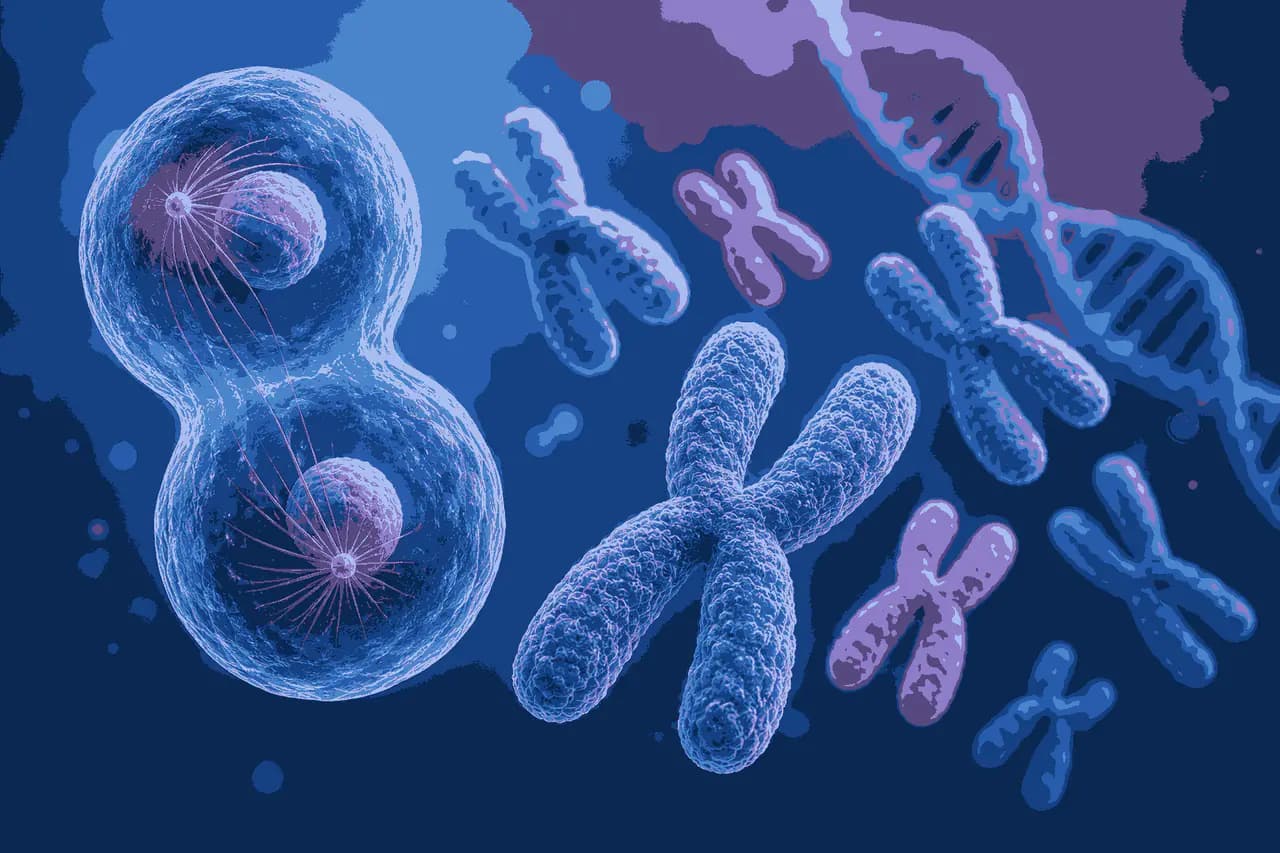
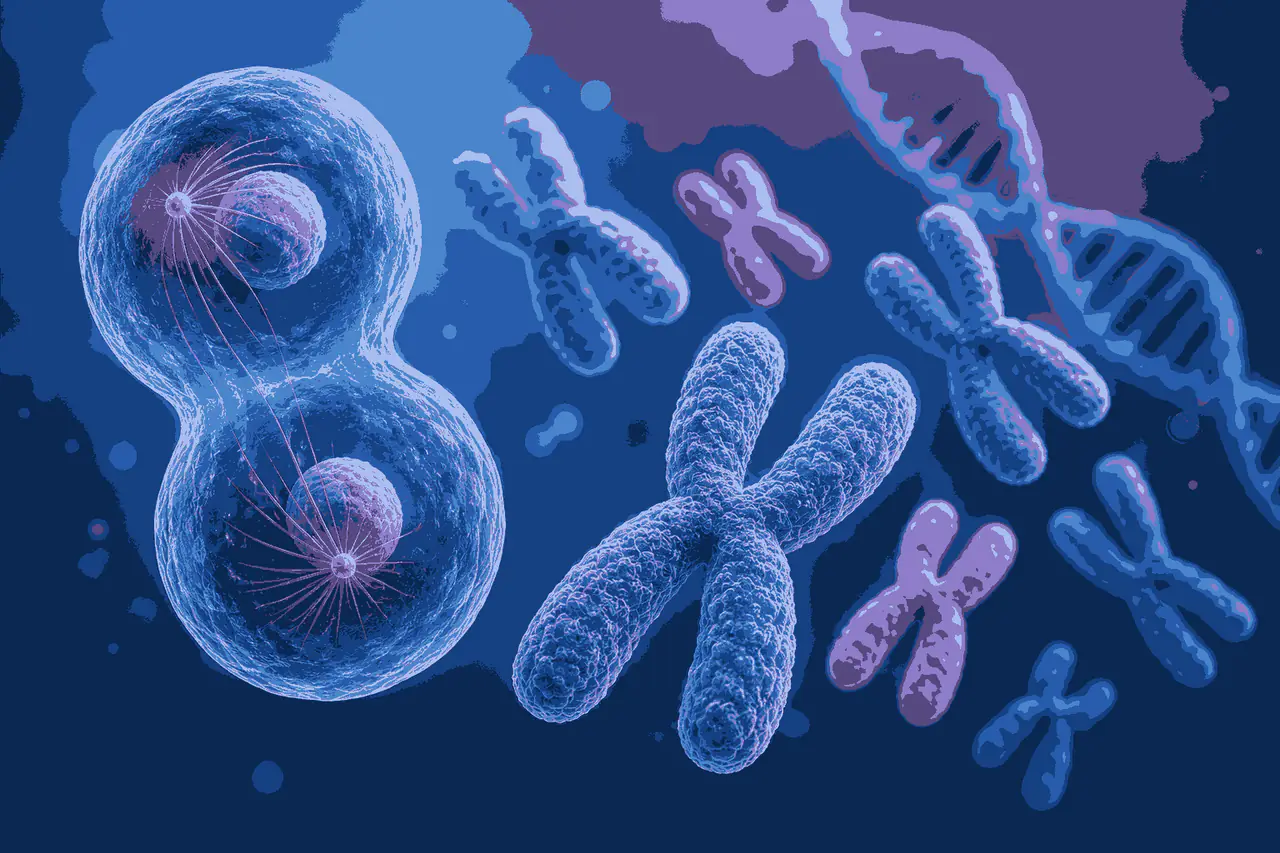
Nondisjunction is one of the most important concepts in genetics, and Nondisjunction and Aneuploidy MCQs Class 12 Biology help aspirants understand this topic in a clear and exam-focused manner. In Class 12 Biology, chromosomal disorders are closely connected with meiosis and chromosome segregation, making Nondisjunction and Aneuploidy MCQs Class 12 Biology highly valuable for board exam and NEET preparation. Aspirants often find chromosome abnormalities confusing, but regular practice of Nondisjunction and Aneuploidy MCQs Class 12 Biology makes these concepts easier to remember and apply in examinations.
The concept explained through Nondisjunction and Aneuploidy MCQs Class 12 Biology mainly involves the failure of chromosomes or chromatids to separate properly during cell division. This abnormal separation results in cells having an unequal number of chromosomes. By studying Nondisjunction and Aneuploidy MCQs Class 12 Biology, aspirants learn how chromosomal imbalance can lead to disorders such as Down syndrome, Turner syndrome, and Klinefelter syndrome. These disorders are frequently discussed in competitive examinations, which increases the importance of Nondisjunction and Aneuploidy MCQs Class 12 Biology.
One of the biggest advantages of revising Nondisjunction and Aneuploidy MCQs Class 12 Biology is that aspirants become more confident with terms like monosomy, trisomy, aneuploidy, and chromosomal mutation. Human genetics often includes several complicated terminologies, but practicing Nondisjunction and Aneuploidy MCQs Class 12 Biology repeatedly helps simplify these ideas. Aspirants can better understand how nondisjunction during meiosis I or meiosis II changes chromosome number and affects offspring development.
Another reason why Nondisjunction and Aneuploidy MCQs Class 12 Biology are important is their direct relevance in medical genetics. Many genetic disorders arise because of chromosomal abnormalities caused by nondisjunction. Through continuous practice of Nondisjunction and Aneuploidy MCQs Class 12 Biology, learners understand the biological basis of these conditions and how chromosome number influences normal body development. This strengthens conceptual learning and improves scientific understanding.
Aspirants preparing for competitive exams benefit greatly from solving Nondisjunction and Aneuploidy MCQs Class 12 Biology because these questions improve analytical thinking. Instead of memorizing facts alone, aspirants learn to interpret chromosome combinations and identify genetic disorders correctly. Practicing Nondisjunction and Aneuploidy MCQs Class 12 Biology also improves speed and accuracy while answering objective questions under exam pressure.
The study of Nondisjunction and Aneuploidy MCQs Class 12 Biology also helps aspirants connect meiosis with inheritance patterns. During meiosis, homologous chromosomes and chromatids separate systematically, but nondisjunction disrupts this process. By regularly revising Nondisjunction and Aneuploidy MCQs Class 12 Biology, aspirants can clearly visualize how chromosomal errors occur and why they produce abnormal chromosome numbers in gametes and zygotes.
Another major benefit of Nondisjunction and Aneuploidy MCQs Class 12 Biology is that these questions strengthen NCERT-based learning. Most board examinations directly ask conceptual questions from chromosomal disorders and sex chromosome abnormalities. Aspirants who consistently practice Nondisjunction and Aneuploidy MCQs Class 12 Biology are better prepared to answer assertion-reason questions, case-based questions, and multiple-choice questions accurately.
Furthermore, Nondisjunction and Aneuploidy MCQs Class 12 Biology help aspirants understand real-life medical conditions in a scientific way. Disorders like Down syndrome occur because of trisomy of chromosome 21, while Turner syndrome results from monosomy of the X chromosome. Continuous revision through Nondisjunction and Aneuploidy MCQs Class 12 Biology helps aspirants remember these chromosomal combinations more effectively for exams.
The importance of Nondisjunction and Aneuploidy MCQs Class 12 Biology also extends to understanding evolutionary genetics and mutation studies. Chromosomal abnormalities play an important role in genetic variation and biological diversity. Aspirants who revise Nondisjunction and Aneuploidy MCQs Class 12 Biology regularly gain a deeper understanding of chromosome behavior and genetic inheritance mechanisms.
30 Nondisjunction and Aneuploidy MCQs Class 12 Biology:
1. Which one of the following is an autosomal recessive genetic disorder?
A. Incontinentia pigmenti
B. Hypertrichosis
C. Hemophilia
D. Cystic fibrosis
Answer: D. Cystic fibrosis
Explanation: Cystic fibrosis is the most common lethal genetic disorder due to a recessive mutation on chromosome 7. The body produces abnormal glycoprotein which interferes with salt metabolism.
2. Given below is a highly simplified representation of the human sex chromosomes from a karyotype. The gene a and b could be of
A. Colour blindness and body height
B. Attached ear lobe and Rhesus blood group
C. Hemophilia and red-green color blindness
D. Phenylketonuria and hemophilia
Answer: C. Hemophilia and red-green color blindness
Explanation: Both disorders are due to recessive sex-linked genes inherited through sex chromosomes.
3. Which of the following is true for a recessive disease in family A and B?
A. In family A, both the parents are homozygous recessive
B. In family B, both the parents are homozygous dominant
C. In family B, both the parents are heterozygous recessive
D. In family A, both the parents are heterozygous recessive
Answer: D. In family A, both the parents are heterozygous recessive
Explanation: Unaffected parents producing affected offspring indicate heterozygous carriers.
4. A man whose father was colorblind marries a woman, who had a colorblind mother and normal father. What percentage of male children of this couple will be colorblind?
A. 25%
B. 0%
C. 50%
D. 75%
Answer: C. 50%
Explanation: Color blindness is a recessive X-linked trait showing crisscross inheritance.
5. Which of the following statements is not true in relation to the genetic disorder hemophilia?
A. It is an autosomal disease
B. It is an X-linked disease
C. Any of the factor VIII or IX may be absent
D. It is a lethal disease
Answer: A. It is an autosomal disease
Explanation: Haemophilia is an X-linked recessive disease caused by deficiency of clotting factors VIII or IX.
6. A man, whose father is colorblind, marries a lady who is the daughter of a colorblind man. What will be their offspring like?
A. all normal
B. all colorblind
C. all sons colorblind
D. some sons colorblind and some normal
Answer: C. all sons colorblind
Explanation: All sons inherit the defective X chromosome from the carrier mother.
7. How many barr bodies would be present in a female with XXXX chromosomes?
A. 4
B. 3
C. 2
D. 1
Answer: B. 3
Explanation: Barr bodies = Number of X chromosomes – 1.
8. Which of the following is not related to mental retardation?
A. trisomy 21
B. phenylalanine hydroxylase
C. myelinization of neuron
D. Y chromosome
Answer: D. Y chromosome
Explanation: Mental retardation is not directly associated with the Y chromosome.
9. Male XX and female XY sometimes occur due to
A. Deletion
B. Transfer of segments in X and Y chromosomes
C. Aneuploidy
D. Hormonal imbalance
Answer: B. Transfer of segments in X and Y chromosomes
Explanation: Exchange of chromosomal segments can alter sex determination.
10. In Klinefelter's syndrome, males have which type of chromosomes?
A. XY
B. XX
C. XXY
D. YY
Answer: C. XXY
Explanation: Klinefelter syndrome males possess an extra X chromosome.
11. Match the items in column I with those in column II correctly.
Column I
A. Klinefelter syndrome
B. Thalassaemia
C. Down syndrome
D. Colour blindness
Column II
- Mutation in autosomal gene
- Mutation in sex chromosome-linked gene
- Trisomy of autosome
- Trisomy of sex chromosome
A. A-1 B-2 C-3 D-4
B. A-2 B-3 C-4 D-1
C. A-3 B-4 C-1 D-2
D. A-4 B-1 C-3 D-2
Answer: D. A-4 B-1 C-3 D-2
Explanation: Klinefelter syndrome involves trisomy of sex chromosomes, while Down syndrome is trisomy of an autosome.
12. Which of the following statements are correct?
I. In phenylketonuria, the affected person does not secrete the enzyme to convert phenylalanine to tyrosine.
II. The possibility of a male becoming haemophilic is extremely rare.
III. Sickle cell anemia is caused by substitution of glutamic acid by valine at the fifth position.
IV. Myotonic dystrophy is an autosomal dominant trait.
A. I and II alone are wrong
B. II and III alone are wrong
C. II alone is wrong
D. III alone is wrong
Answer: B. II and III alone are wrong
Explanation: Sickle cell mutation occurs at the sixth position, and haemophilia is commoner in males.
13. Which of the following statements are correct?
I. Failure of segregation of chromatids results in aneuploidy.
II. Chromosomal disorders are mainly due to single gene mutations.
III. Thalassemia and cystic fibrosis are Mendelian disorders.
IV. Sickle cell anemia is X-linked.
V. Haemophilia is autosomal recessive.
A. I and III alone are correct
B. I, III and IV alone are correct
C. III and IV alone are correct
D. II and III alone are correct
Answer: A. I and III alone are correct
Explanation: Sickle cell anemia is autosomal recessive and haemophilia is sex-linked recessive.
14. Histone proteins are positively charged because they are rich in which amino acid residues?
A. Arginine and Proline
B. Arginine and Alanine
C. Arginine and Lysine
D. Arginine and Phenylalanine
Answer: C. Arginine and Lysine
Explanation: Lysine and arginine are basic amino acids carrying positive charges.
15. In chromosomal DNA with 40% Adenine and 60% Guanine, what is the ratio of Thymine to Cytosine after replication?
A. 1 : 1
B. 3 : 2
C. 2 : 3
D. 2 : 4
Answer: C. 2 : 3
Explanation: Chargaff’s rule helps determine the complementary base ratio.
16. Arrange the three steps of PCR in sequence for each cycle:
I. Denaturation
II. Extension of primers
III. Primer annealing
A. I, III and II
B. II, III and IV
C. I, II and III
D. IV, III and I
Answer: A. I, III and II
Explanation: PCR involves denaturation, annealing, and extension in sequence.
17. Match the scientist with the corresponding event:
I. Miescher - Named nuclein
II. Fisher - Isolated nucleic acids
III. Altman - Discovered purines
IV. Franklin - DNA X-ray diffraction
A. I & II
B. II & IV
C. III & IV
D. I & IV
Answer: D. I & IV
Explanation: Miescher named nuclein and Franklin contributed to X-ray diffraction studies.
18. What is the process called when genetically modified DNA is introduced into a eukaryotic cell?
A. Transduction
B. Electroporation
C. Polyplexes
D. Transfection
Answer: D. Transfection
Explanation: Introduction of foreign DNA into eukaryotic cells is called transfection.
19. Which scientist is associated with DNA sequencing?
A. T.H. Morgan
B. Karl Landsteiner
C. Mary Lyon
D. Frederick Sanger
Answer: D. Frederick Sanger
Explanation: Frederick Sanger developed DNA sequencing methods.
20. What is the number of base pairs in a full turn of the helical strand and the distance between base pairs in B-DNA?
A. 11, 20Å
B. 10, 3.4Å
C. 10, 34Å
D. 11, 34Å
Answer: B. 10, 3.4Å
Explanation: B-DNA contains 10 base pairs per turn with 3.4Å spacing.
21. What is the diameter of a DNA molecule?
A. 15 Å
B. 20 Å
C. 25 Å
D. 34 Å
Answer: B. 20 Å
Explanation: DNA double helix has a diameter of 20Å.
22. Which of the following is stained by using carmine?
A. Chromosomes
B. Bacteria
C. Viruses
D. Diatoms
Answer: A. Chromosomes
Explanation: Carmine stain is commonly used for chromosomes and nuclei.
23. What is the total hereditary material outside the chromosome called?
A. Plasmogene
B. Plasmon
C. Muton
D. Recon
Answer: B. Plasmon
Explanation: Plasmon includes all hereditary material outside the nucleus.
24. What happens to an isolated strain of DNA when kept at 82-90°C?
A. It changes into RNA
B. It breaks into two fragments
C. It breaks into many fragments
D. It uncoils and the two strands separate
Answer: D. It uncoils and the two strands separate
Explanation: Heating causes DNA denaturation by separating strands.
25. What is the primary reason for the melting of DNA at elevated temperature?
A. Phosphodiester bonds
B. Glycosidic bonds
C. Disulphide bonds
D. Hydrogen bonds
Answer: D. Hydrogen bonds
Explanation: Heat breaks hydrogen bonds between complementary bases.
26. What is the length of DNA having 23 base pairs?
A. 78 Å
B. 78.4 Å
C. 74.8 Å
D. 78.2 Å
Answer: D. 78.2 Å
Explanation: Length = 23 × 3.4Å = 78.2Å.
27. What is the double helix model of Watson and Crick known as?
A. C-DNA
B. B-DNA
C. Z-DNA
D. D-DNA
Answer: B. B-DNA
Explanation: Watson and Crick proposed the B-DNA model.
28. Which of the following is a structural subunit of DNA?
A. Protein
B. Carbohydrate
C. RNA
D. Nucleotide
Answer: D. Nucleotide
Explanation: DNA is made up of nucleotide subunits.
29. What is a chromosome made up of?
A. DNA and pectin
B. RNA and DNA
C. DNA and histone
D. only histone
Answer: C. DNA and histone
Explanation: Chromosomes consist of DNA associated with histone proteins.
30. For what achievement was Har Govind Khorana awarded the Nobel Prize?
A. gene synthesis
B. discovery of bacteria
C. genetic code
D. protein synthesis
Answer: A. gene synthesis
Explanation: Har Govind Khorana received the Nobel Prize for gene synthesis and genetic code research.
Conclusion on Nondisjunction and Aneuploidy MCQs Class 12 Biology
In conclusion, Nondisjunction and Aneuploidy MCQs Class 12 Biology are highly useful for mastering genetics, chromosomal disorders, meiosis, and inheritance. Regular practice of Nondisjunction and Aneuploidy MCQs Class 12 Biology improves conceptual clarity, boosts exam confidence, and strengthens problem-solving ability. Whether preparing for school examinations or medical entrance tests, aspirants should consistently revise Nondisjunction and Aneuploidy MCQs Class 12 Biology to achieve better performance in biology.
Related reading
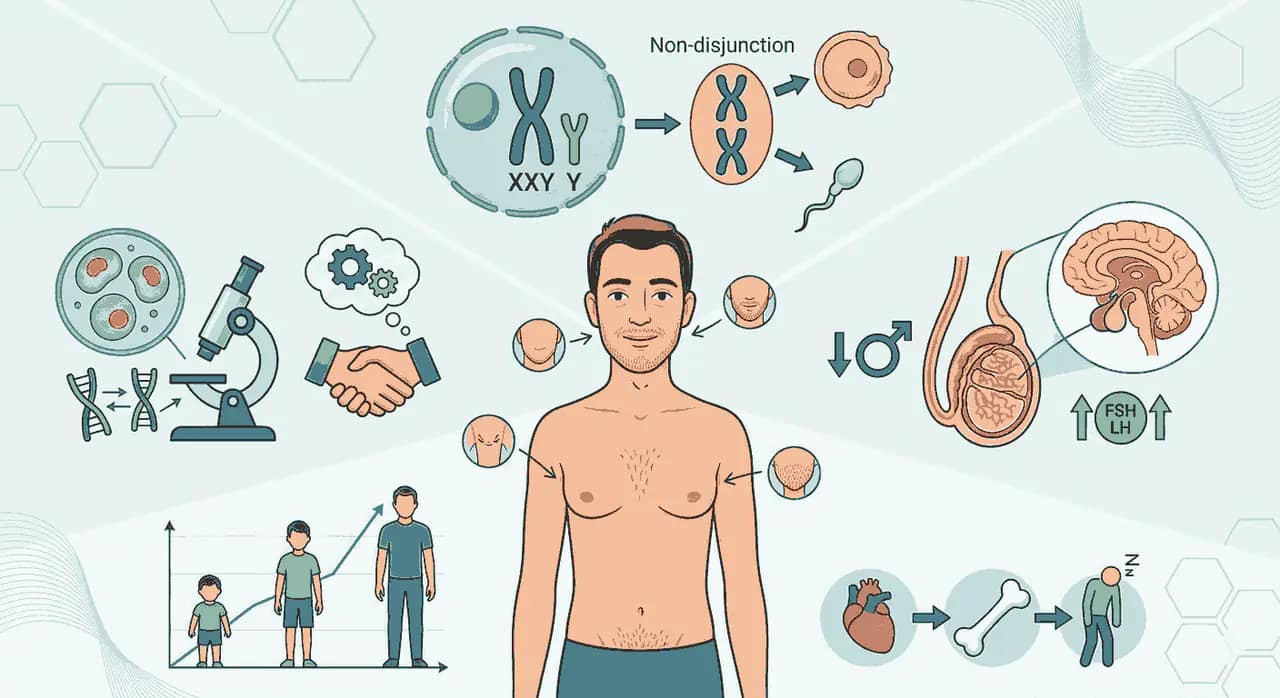
Most Important Klinefelter Syndrome MCQs Class 12 Biology for NEET Success
Master Klinefelter Syndrome MCQs Class 12 Biology with detailed explanations on XXY chromosomes, Barr bodies, chromosomal disorders, genetics , and inheritance.
Crack Competitive Exams: Powerful Philadelphia Chromosome MCQs for Class 12 Biology
Practice Philadelphia Chromosome MCQs for Class 12 Biology with answers to master chromosomal translocation, leukemia, mutations, genetics, NEET concepts easily