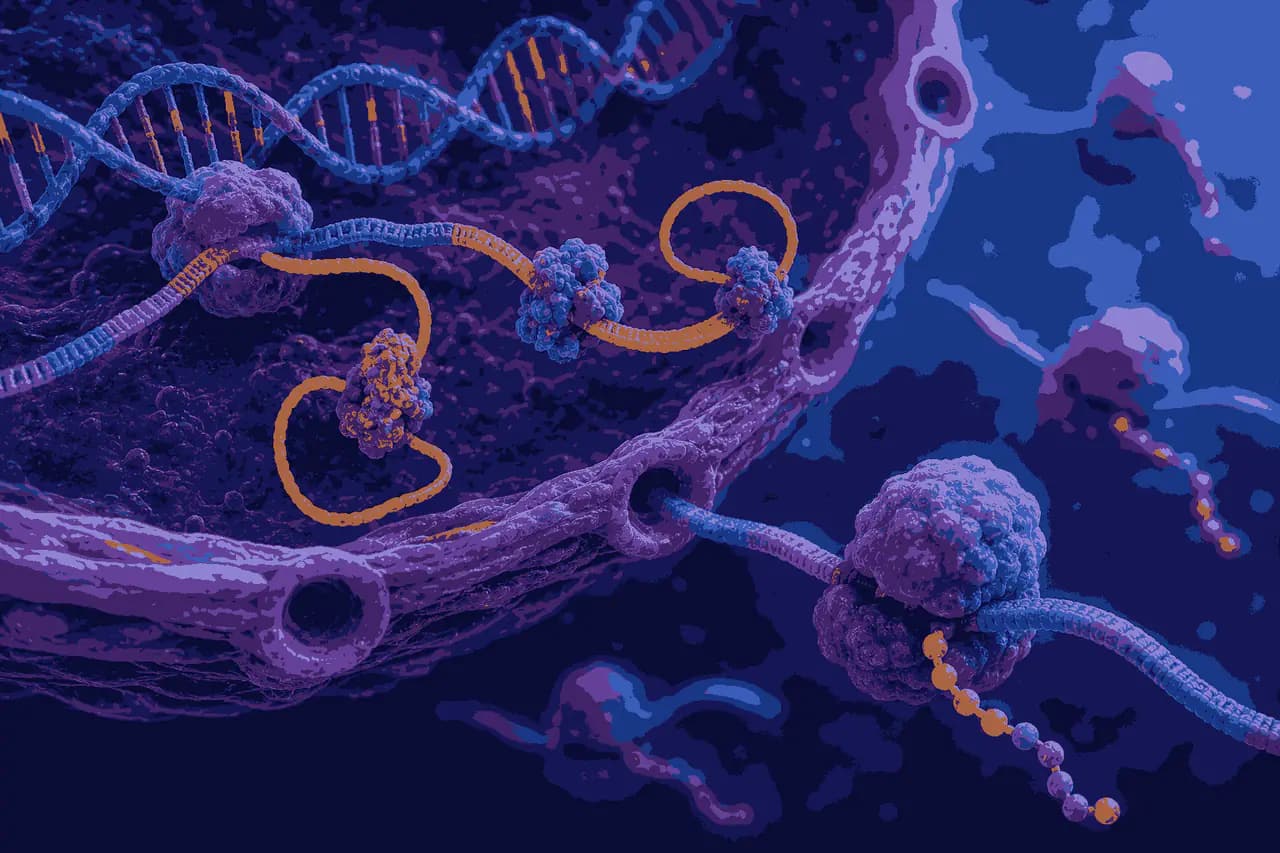
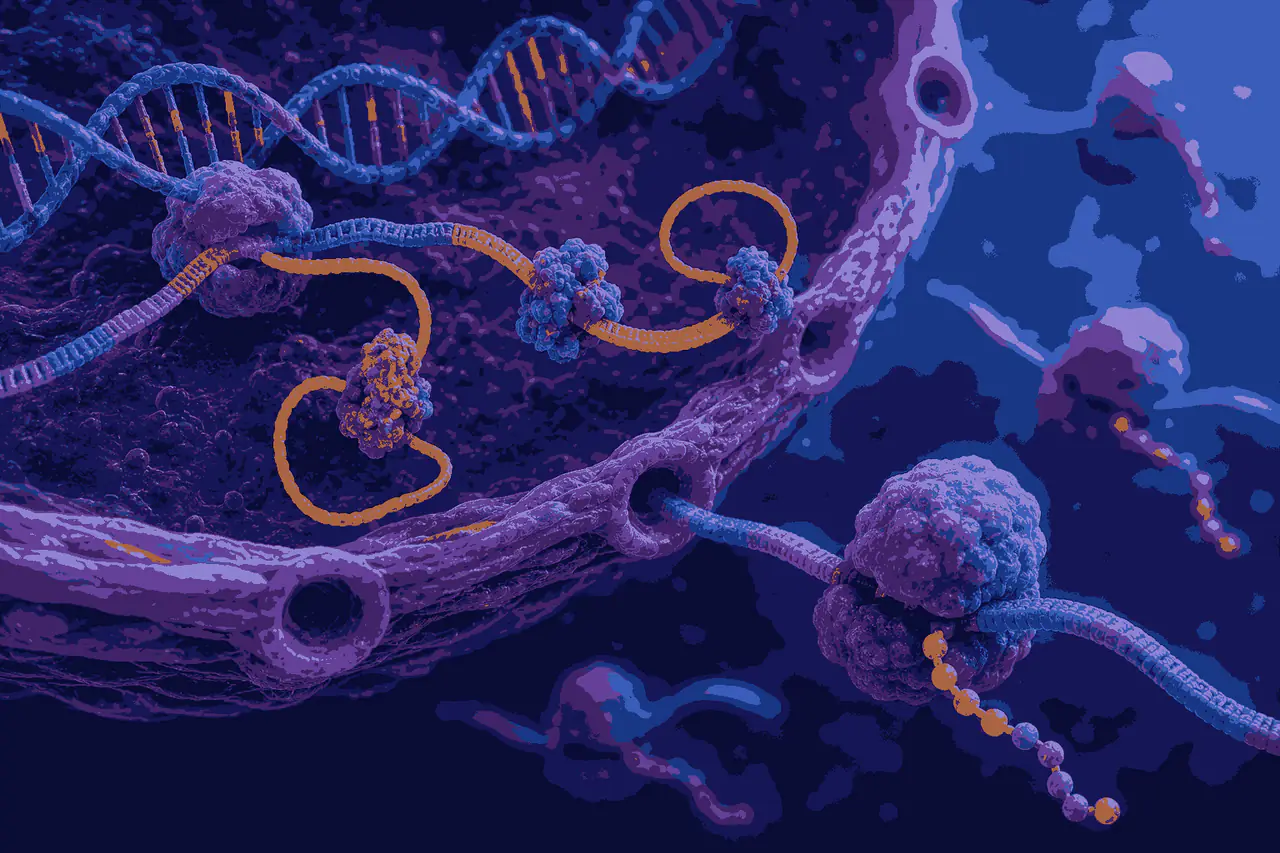
The topic mRNA Exon and Intron MCQs Class 12 is extremely important for aspirants preparing for competitive examinations such as NEET and various board-level biology assessments. A strong understanding of gene expression, RNA processing, and transcription mechanisms becomes much easier when aspirants regularly practice mRNA Exon and Intron MCQs Class 12. These concepts form the backbone of molecular genetics and biotechnology, making mRNA Exon and Intron MCQs Class 12 highly valuable for conceptual clarity as well as revision. In modern biology, the distinction between exons and introns is one of the most frequently tested concepts, which is why mRNA Exon and Intron MCQs Class 12 are essential for mastering the chapter completely.
When aspirants begin studying gene structure and RNA processing, they often encounter confusion regarding coding and non-coding regions. This is where mRNA Exon and Intron MCQs Class 12 become particularly helpful because they simplify difficult molecular biology concepts into application-based learning. Exons are the coding sequences that remain in mature messenger RNA, whereas introns are the non-coding sequences removed during RNA splicing. By solving mRNA Exon and Intron MCQs Class 12, aspirants can clearly understand how pre-mRNA transforms into mature mRNA inside eukaryotic cells.
Another major benefit of practicing mRNA Exon and Intron MCQs Class 12 is improved understanding of RNA splicing. During transcription, the initial RNA transcript contains both exons and introns. Before translation occurs, introns are removed and exons are joined together. Many competitive examinations frame tricky questions around this process, and therefore regular practice with mRNA Exon and Intron MCQs Class 12 helps aspirants avoid conceptual mistakes. These questions also strengthen understanding of split genes, heterogeneous nuclear RNA (hnRNA), spliceosomes, and post-transcriptional modifications.
For aspirants aiming for top scores in biology, mRNA Exon and Intron MCQs Class 12 provide excellent practice for assertion-reason questions, statement-based questions, and diagram interpretation. Since exons directly code for proteins while introns do not, examiners frequently create confusing options based on these concepts. Continuous revision through mRNA Exon and Intron MCQs Class 12 allows aspirants to identify such traps quickly and answer confidently during examinations.
One reason why mRNA Exon and Intron MCQs Class 12 are considered highly scoring is because the topic is directly connected with transcription in eukaryotes. Understanding promoter regions, coding strands, template strands, RNA polymerases, and RNA processing becomes easier when aspirants solve multiple mRNA Exon and Intron MCQs Class 12 regularly. These MCQs also improve analytical thinking because many questions involve identifying correct sequences of transcription, splicing, capping, and tailing.
In Class 12 Biology, molecular basis of inheritance is one of the most significant chapters, and mRNA Exon and Intron MCQs Class 12 form an important part of it. Many aspirants memorize definitions without understanding the functional significance of exons and introns. However, practicing mRNA Exon and Intron MCQs Class 12 encourages conceptual learning instead of rote memorization. This helps aspirants perform better not only in board exams but also in highly competitive entrance examinations.
Another important advantage of solving mRNA Exon and Intron MCQs Class 12 is improved retention. Repeated exposure to questions related to mRNA processing reinforces important terms such as spliceosome, hnRNA, mature mRNA, coding sequence, and non-coding sequence. As aspirants continue practicing mRNA Exon and Intron MCQs Class 12, they become more comfortable with complex biological terminology and mechanisms.
Many NEET questions are now concept-oriented rather than directly theory-based. Therefore, mRNA Exon and Intron MCQs Class 12 help aspirants develop deeper understanding and application skills. These questions often connect transcription, translation, and gene regulation together, making mRNA Exon and Intron MCQs Class 12 useful for integrated learning. Aspirants preparing through regular MCQ practice generally develop better speed and accuracy in exams.
Additionally, mRNA Exon and Intron MCQs Class 12 are highly useful for quick revision before examinations. Since molecular biology contains many interconnected concepts, solving MCQs provides an efficient method to revise the entire topic within a short period. Aspirants who regularly practice mRNA Exon and Intron MCQs Class 12 are usually more confident while answering genetics and biotechnology questions.
30 mRNA Exon and Intron MCQs Class 12:
- Which of the following constitute about 10-20% of total cellular RNA?
A. m-RNA
B. r-RNA
C. t-RNA
D. hn-RNA
Answer: C. t-RNA
Explanation: Transfer RNA (t-RNA) constitutes about 10–20% of total cellular RNA and is also known as soluble RNA.
- Ribozymes are
A. Catalytic RNA
B. Non-Protein enzymes
C. Nucleic acids
D. Group of ribosomes
Answer: A, B
Explanation: Ribozymes are catalytically active RNA molecules and are considered non-protein enzymes.
- A nicked RNA molecule can be ligated by
A. T4 RNA ligase
B. DNA polymerase III
C. T4 DNA ligase
D. DNA polymerase I
Answer: A. T4 RNA ligase
Explanation: T4 RNA ligase catalyzes the joining of RNA molecules by forming phosphodiester bonds.
- What is the common point of similarity between DNA and RNA?
A. Both are double stranded
B. Both have identical sugar molecules
C. Both have identical pyrimidine bases
D. Both are polymers of nucleotides
Answer: D. Both are polymers of nucleotides
Explanation: DNA and RNA are both composed of repeating nucleotide units.
- Specific radioactive identification of ribosomal RNA can be achieved by using C14 labelled
A. guanine
B. uracil
C. thymine
D. cytosine
Answer: B. uracil
Explanation: Uracil is found specifically in RNA and not DNA, making it suitable for identifying RNA molecules.
- Ribosomal RNA is actively synthesized in:
A. Nucleoplasm
B. Ribosomes
C. Lysosomes
D. Nucleolus
Answer: D. Nucleolus
Explanation: The nucleolus is the site of ribosomal RNA synthesis and ribosome assembly.
- Types of RNA polymerase required in nucleus for RNA synthesis:
A. 1
B. 2
C. 3
D. 4
Answer: C. 3
Explanation: Eukaryotic cells contain three RNA polymerases: RNA polymerase I, II, and III.
- Which one of the following also acts as a catalyst in a bacterial cell?
A. 23 S RNA
B. 5 S RNA
C. Sn RNA
D. hn RNA
Answer: B. 5 S RNA
Explanation: 5S rRNA acts as a catalytic component in bacterial ribosomes.
- Which biological molecule is associated with the function of protein synthesis?
A. Starch
B. Haemoglobin
C. RNA
D. Steroid
Answer: C. RNA
Explanation: RNA molecules such as mRNA, tRNA, and rRNA are directly involved in protein synthesis.
- Match the following biological molecules with their respective functions:
A. Starch
B. Haemoglobin
C. RNA
D. Steroid
Functions:
p. Protein synthesis
q. Sex hormone
r. Storage product
s. Transport of gases
A. A = r; B = s; C = p; D = q
B. A = r; B = s; C = q; D = p
C. A = s; B = r; C = p; D = q
D. A = r; B = p; C = s; D = q
Answer: A. A = r; B = s; C = p; D = q
Explanation:
- Starch → Storage product
- Haemoglobin → Transport of gases
- RNA → Protein synthesis
- Steroid → Sex hormone
- Match the following biological molecules with their functions:
A. tRNA
B. mRNA
C. rRNA
D. Peptidyl transferase
Functions:
- Linking of amino acids
- Transfer of genetic information
- Nucleolar organizing region
- Transfer of amino acid from cytoplasm to ribosome
A. 4 2 3 1
B. 1 4 3 2
C. 1 2 3 4
D. 1 3 2 4
Answer: A. 4 2 3 1
Explanation:
- tRNA → Transfer of amino acid from cytoplasm to ribosome
- mRNA → Transfer of genetic information
- rRNA → Nucleolar organizing region
- Peptidyl transferase → Linking of amino acids
- During transcription, why does the DNA strand with 3' → 5' polarity act as a template?
A. Nucleotides of DNA strand with 5'→3' are transferred to mRNA.
B. RNA polymerase catalyzes polymerization in 5'→3' direction.
C. RNA polymerase catalyzes polymerization in 3'→5' direction.
D. RNA polymerase catalyzes polymerization in both directions.
Answer: B. RNA polymerase catalyzes polymerization in 5'→3' direction.
Explanation: RNA polymerase synthesizes RNA only in the 5'→3' direction, so the template strand must run 3'→5'.
- Which of the following statements are correct?
(I) RNA also functions as adapter molecule
(II) Base pairing confers unique property to the polynucleotide chains
(III) DNA replication occurs after chromosomal division
(IV) DNA replication occurs frequently in a cell
A. II & IV
B. I & II
C. II & III
D. I & III
Answer: B. I & II
Explanation:
RNA acts as an adapter molecule during protein synthesis in the form of tRNA. Base pairing provides stability and specificity to polynucleotide chains. DNA replication occurs before chromosomal division, not after it.
- Fill in the blanks for the genetic implications of DNA:
A. A) Transcription → B) translation → C) Crick
B. A) Translation → B) Extension → C) Franklin
C. A) Transcription → B) Replication → C) Watson
D. A) Translation → B) Transcription → C) Chargaff
Answer: A. A) Transcription → B) translation → C) Crick
Explanation: Francis Crick proposed the central dogma involving transcription and translation.
- Which of the following can replicate independently within the host cell?
A. Plasmids and virus
B. Plasmids and bacteria
C. Plasmids and bacteriophage
D. Nucleus and plasmids
Answer: C. Plasmids and bacteriophage
Explanation: Plasmids and bacteriophages can replicate independently and participate in gene transfer.
- In a transcription unit, which strand is found in DNA, codes for hnRNA, and does not code directly?
A. AC
B. AB
C. AD
D. BD
Answer: C. AD
Explanation: The coding strand has the same sequence as RNA except thymine is replaced by uracil.
- Which enzyme makes use of RNA as a template to synthesize DNA?
A. DNA-dependent RNA polymerase
B. DNA polymerase
C. Reverse transcriptase
D. RNA polymerase
Answer: C. Reverse transcriptase
Explanation: Reverse transcriptase synthesizes DNA using RNA as the template.
- Which DNA polymerase of prokaryotes has both 3-5 and 5-3 exonuclease activity?
A. DNA polymerase-II
B. DNA polymerase-I
C. DNA polymerase-IV
D. DNA polymerase-III
Answer: B. DNA polymerase-I
Explanation: DNA polymerase I possesses both 3'→5' and 5'→3' exonuclease activities.
- Which enzyme is used by certain RNA viruses to synthesize DNA using viral RNA as a template?
A. Viral nuclease
B. RNA replicase
C. RNA polymerase
D. Reverse transcriptase
Answer: D. Reverse transcriptase
Explanation: Retroviruses use reverse transcriptase to form DNA from RNA templates.
- Which of the following statements are correct?
A. Four
B. One
C. Two
D. Three
Answer: C. Two
Explanation: Only statements A and D are correct among the given statements.
- Which scientist is correctly matched with their respective contribution?
A. Restriction endonucleases - Arber
B. Polymerase chain reaction - Karry Mullis
C. DNA fingerprinting - Alec Jeffreys
D. Monoclonal Antibodies - Kohler Milstein
Answer: A. Restriction endonucleases - Arber
Explanation: Werner Arber is associated with the discovery of restriction endonucleases.
- Which statement is correct among the following?
A. Franklin Stahl coined the term linkage
B. Punnett square was developed by a British scientist
C. Transduction was discovered by S. Altman
D. Spliceosomes take part in translation
Answer: B. Punnett square was developed by a British scientist
Explanation: Reginald Punnett, a British geneticist, developed the Punnett square.
- What does the exon part of m-RNAs code for?
A. Protein
B. Lipid
C. Carbohydrate
D. Phospholipid
Answer: A. Protein
Explanation: Exons are coding regions of genes that direct protein synthesis.
- In an E. Coli strain where the i gene gets mutated, what happens in presence of lactose?
A. RNA polymerase will bind promoter
B. Only z gene transcribed
C. z, y, a genes transcribed
D. z, y, a genes will not be translated
Answer: D. z, y, a genes will not be translated
Explanation: The mutated repressor remains attached to the operator and blocks transcription.
- In the context of DNA replication, which is true?
A. DNA replication is semiconservative
B. DNA replication is conservative
C. DNA replication is dispersive
D. None of the above
Answer: A. DNA replication is semiconservative
Explanation: Each daughter DNA molecule contains one parental and one newly synthesized strand.
- From a DNA template with sequence CTGATAGC, the mRNA formed would be
A. GAUTATUG
B. UACTATCU
C. GACUAUCG
D. GUCTUTCG
Answer: C. GACUAUCG
Explanation: mRNA is synthesized complementary to the DNA template strand using uracil instead of thymine.
- With regard to mature mRNA in eukaryotes, which statement is correct?
A. Exons and introns absent
B. Exons present but introns absent
C. Introns present but exons absent
D. Both exons and introns present
Answer: B. Exons present but introns absent
Explanation: Introns are removed during RNA processing and only exons remain in mature mRNA.
- Sigma factor is related to:
A. RNA polymerase
B. DNA polymerase
C. Both a and b
D. None of these
Answer: A. RNA polymerase
Explanation: Sigma factor helps RNA polymerase recognize promoter sequences.
- DNA multiplication is called:
A. translation
B. transduction
C. transcription
D. replication
Answer: D. replication
Explanation: DNA replication is the process of producing identical copies of DNA.
- The enzyme used to join the DNA fragments is
A. Topoisomerase
B. Adenosine deaminase
C. DNA ligase
D. DNA polymerase
Answer: C. DNA ligase
Explanation: DNA ligase joins DNA fragments by forming phosphodiester bonds.
Conclusion on mRNA Exon and Intron MCQs Class 12
In conclusion, mRNA Exon and Intron MCQs Class 12 play a major role in strengthening conceptual understanding of transcription and RNA processing. They help aspirants master important topics such as split genes, splicing, mature mRNA formation, and coding sequences. Consistent practice of mRNA Exon and Intron MCQs Class 12 improves accuracy, logical thinking, and exam confidence. Since this topic remains highly important in both board examinations and NEET preparation, every aspirant should dedicate proper time to practicing mRNA Exon and Intron MCQs Class 12 regularly for better performance and stronger understanding of molecular biology.
Related reading
Ultimate Ribosome and tRNA MCQs PDF Class 12 - Powerful Questions with Answers for Exams
Master ribosome structure , tRNA function, anticodon recognition , and translation with Ribosome and tRNA MCQs PDF Class 12 for NEET and board exam preparation.
Master Chain Termination Codon MCQs Biology Class 12 - Powerful Questions with Accurate Answers for NEET
Practice Chain Termination Codon MCQs Biology Class 12 for NEET and board exams. Learn stop codons, translation termination , protein synthesis concepts easily.