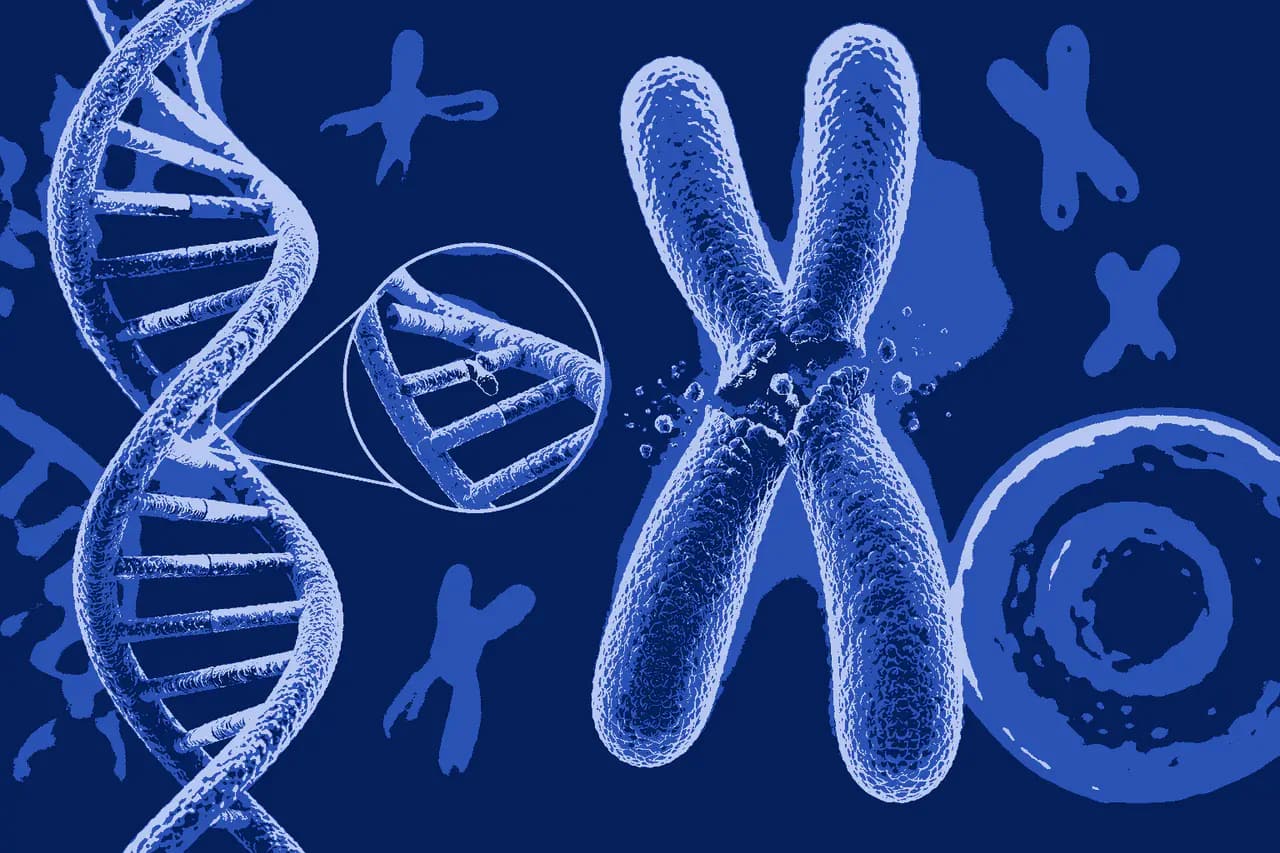
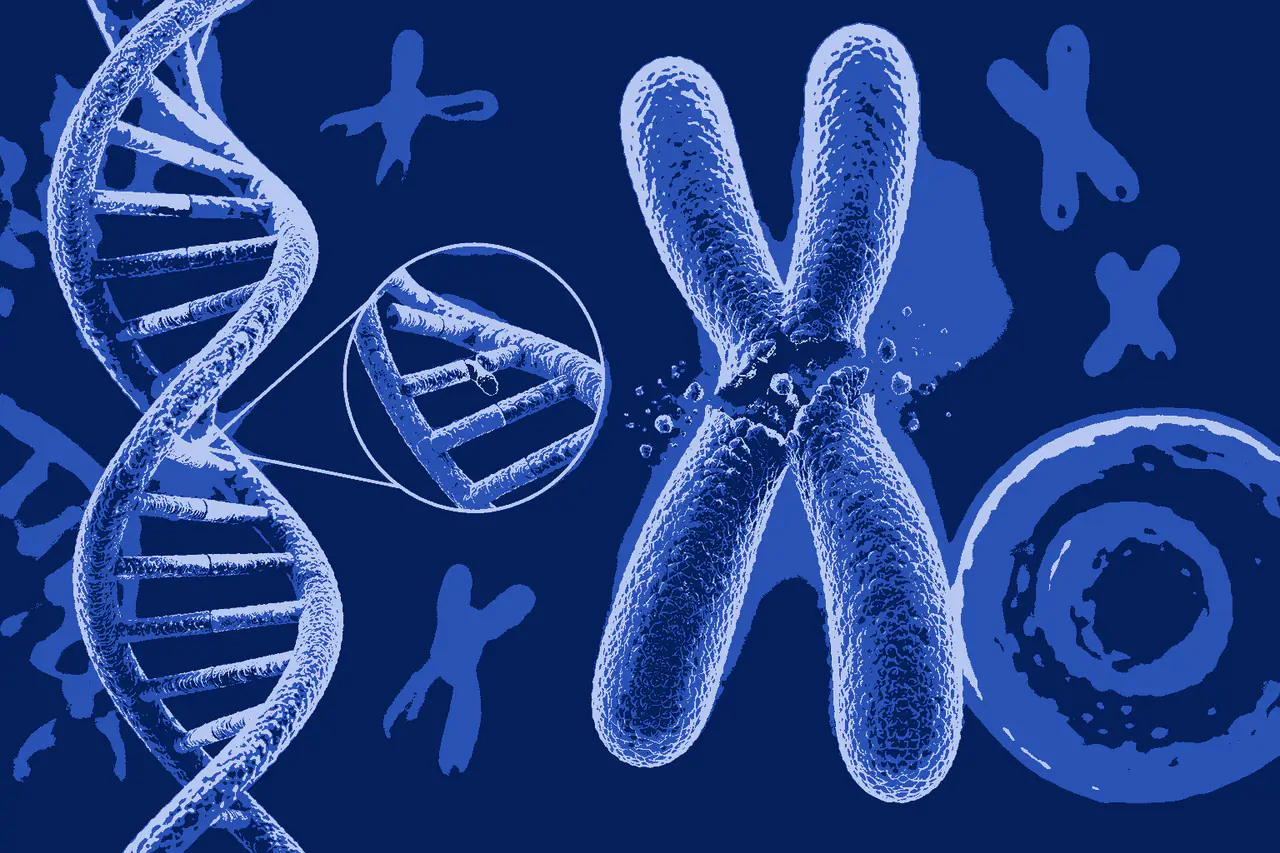
Gene Mutation and Chromosomal Mutation MCQs Class 12 Biology helps aspirants understand how sudden changes in DNA sequences can influence inherited traits, cellular functioning, genetic disorders, and evolutionary variations observed in living organisms.
Gene Mutation and Chromosomal Mutation MCQs Class 12 Biology explains that gene mutations usually involve alterations in one or a few nucleotide bases, while chromosomal mutations affect larger chromosome segments or entire chromosome numbers.
Gene Mutation and Chromosomal Mutation MCQs Class 12 Biology introduces learners to substitution mutations, insertion mutations, deletion mutations, and frameshift mutations, which significantly change protein synthesis and gene expression in organisms.
Gene Mutation and Chromosomal Mutation MCQs Class 12 Biology also highlights how chromosomal abnormalities such as duplication, inversion, deletion, and translocation can alter the arrangement of genes during cell division and inheritance.
Gene Mutation and Chromosomal Mutation MCQs Class 12 Biology strengthens conceptual clarity regarding spontaneous mutations that occur naturally and induced mutations caused by radiation, chemicals, ultraviolet rays, and environmental stress factors.
Gene Mutation and Chromosomal Mutation MCQs Class 12 Biology emphasizes that point mutations are often responsible for changes in codons, sometimes leading to silent mutations while at other times causing severe phenotypic abnormalities.
Gene Mutation and Chromosomal Mutation MCQs Class 12 Biology teaches aspirants that mutations may be beneficial, harmful, or neutral depending upon their impact on protein structure, enzyme activity, and survival of organisms.
Gene Mutation and Chromosomal Mutation MCQs Class 12 Biology further discusses how mutagens like X-rays, gamma rays, colchicine, and chemical agents are commonly used in experimental genetics and crop improvement studies.
Gene Mutation and Chromosomal Mutation MCQs Class 12 Biology explains that chromosomal mutations may arise during meiosis because of unequal crossing over, faulty segregation, or improper synapsis between homologous chromosomes.
Gene Mutation and Chromosomal Mutation MCQs Class 12 Biology provides valuable understanding about aneuploidy and euploidy, which are caused by abnormalities in chromosome number and are linked with several genetic disorders.
Gene Mutation and Chromosomal Mutation MCQs Class 12 Biology helps learners identify disorders like Down syndrome, Turner syndrome, and Klinefelter syndrome that result from numerical chromosomal abnormalities in human beings.
Gene Mutation and Chromosomal Mutation MCQs Class 12 Biology improves analytical thinking by explaining how mutations contribute to genetic diversity, adaptation, and long-term evolutionary changes within populations over successive generations.
Gene Mutation and Chromosomal Mutation MCQs Class 12 Biology describes the role of DNA repair mechanisms that correct errors during replication and reduce the harmful effects of mutational changes in cells.
Gene Mutation and Chromosomal Mutation MCQs Class 12 Biology clarifies that frameshift mutations caused by insertion or deletion may completely alter amino acid sequences, producing nonfunctional or abnormal proteins in organisms.
Gene Mutation and Chromosomal Mutation MCQs Class 12 Biology also explains how silent mutations may not change amino acids because of the degeneracy of the genetic code despite alterations in nucleotide sequences.
Gene Mutation and Chromosomal Mutation MCQs Class 12 Biology highlights the significance of chromosomal mapping and linkage studies in understanding the physical arrangement of genes on chromosomes during inheritance patterns.
Gene Mutation and Chromosomal Mutation MCQs Class 12 Biology enables aspirants to compare structural mutations with numerical mutations, improving their preparation for competitive examinations such as NEET and CUET.
Gene Mutation and Chromosomal Mutation MCQs Class 12 Biology demonstrates how reciprocal translocation and inversion can interfere with meiosis and fertility because homologous chromosomes fail to pair normally during gamete formation.
Gene Mutation and Chromosomal Mutation MCQs Class 12 Biology encourages conceptual learning by connecting mutation theories proposed by scientists like Hugo de Vries with modern discoveries in molecular genetics and biotechnology.
Gene Mutation and Chromosomal Mutation MCQs Class 12 Biology gives importance to recombination and crossing over because these processes create new gene combinations and contribute significantly to variation among offspring.
Gene Mutation and Chromosomal Mutation MCQs Class 12 Biology also focuses on the practical application of mutation breeding, where desirable mutations are selected to improve agricultural productivity and disease resistance in crops.
Gene Mutation and Chromosomal Mutation MCQs Class 12 Biology:
- Choose the wrong statement regarding sex determination in different organisms.
Options:
A. In Grasshoppers, besides autosomes males have only one X-chromosome, whereas females have a pair of X-chromosomes
B. In XY type of sex determination, both males and females have the same number of chromosomes
C. In Drosophila, males have one X and one Y chromosome, whereas females have a pair of X-chromosome besides autosomes
D. In birds, females have one Z and one W chromosomes, whereas males have a pair of Z chromosome besides autosomes
Answer: E
Explanation: In insects with XO type of sex determination, not all sperms bear X-chromosomes. Half of the sperms contain an X chromosome while the other half lack it. -
Match the items in Column I with their corresponding descriptions in Column II.
Options:
A. i-c, ii-a, iii-b, iv-e, v-d
B. i-b, ii-a, iii-f, iv-c, v-d
C. i-c, ii-d, iii-a, iv-e, v-b
D. i-c, ii-a, iii-f, iv-e, v-d
Answer: D
Explanation: The correct matching is: i. Consanguineous mating - c, ii. Normal female - a, iii. Mating - f, iv. Affected female - e, v. Parents with male child affected with disease - d. -
Who first identified mutations in Oenothera lamarckiana plants?
Options:
A. Hugo de Vries
B. Morgan
C. Sutton
D. Boveri
Answer: A
Explanation: Hugo de Vries identified mutations in Oenothera lamarckiana and proposed the mutation theory of evolution. -
What type of mutations refer to changes in both the genotype and phenotype of organisms?
Options:
A. Changes in phenotype of organisms only
B. Changes in genotype of organisms only
C. Changes in phenotype and genotype of organisms
D. No change in chromosome number
Answer: C
Explanation: Mutations are heritable changes in DNA that can alter both genotype and phenotype. -
What is the major cause of evolution of genes and proteins?
Options:
A. Point mutation
B. Chromosomal aberration
C. Sexual reproduction
D. Gene duplication and divergence
Answer: A
Explanation: Point mutations introduce small genetic variations that contribute significantly to evolution. - Which of the following mutations are transitions and which are transversions: A to G, C to T, C to G, T to A in DNA?
Options:
A. Transition, transition, transversion, transversion respectively
B. Transition, transversion, transition, transversion respectively
C. Transversion, transversion, transition, transversion respectively
D. All four are transition
Answer: A
Explanation:
A → G and C → T are transitions because purine changes to purine or pyrimidine changes to pyrimidine. C → G and T → A are transversions because pyrimidine changes to purine.
-
What are XO type of sex determination and XY type of sex determination examples of?
Options:
A. Male Homogamety
B. Male Heterogamety
C. Female Homogamety
D. Female Heterogamety
Answer: B
Explanation: XO and XY systems are examples of male heterogamety because males produce two different types of gametes. -
Why are forthcoming generations less adapting than their parental generation?
Options:
A. Natural selection
B. Mutation
C. Genetic drift
D. Adaptation
Answer: B
Explanation: Mutations may introduce harmful genetic variations, making offspring less adapted than parents. -
Why are haploids more suitable for mutation studies than diploids?
Options:
A. Haploids are reproductively more stable than diploids
B. Mutagens penetrate in haploids more effectively than in diploids
C. Haploids are more abundant in nature than diploids
D. All mutations, whether dominant or recessive, are expressed in haploids
Answer: D
Explanation: In haploids, every mutation is directly expressed because there is only one allele present. -
Mutation is more common when it is present in
Options:
A. Transition mutation
B. Transversion mutation
C. Point mutation
D. Suppressive mutation
Answer: B
Explanation: Transversion mutations involve substitution between purine and pyrimidine bases and are comparatively more disruptive. -
Which of the following is a mutagenic agent according to the provided passage?
Options:
A. Ethyl methane
B. Ethylene
C. 2, 4-D
D. IAA
Answer: C
Explanation: 2,4-D acts as a mutagenic and cytotoxic agent causing chromosomal abnormalities. -
de Vries gave his mutation theory on organic evolution while working on which plant?
Options:
A. Althea rosea
B. Drosophila melanogaster
C. Oenothera lamarckiana
D. Pisum sativum
Answer: C
Explanation: Hugo de Vries proposed mutation theory based on studies of Oenothera lamarckiana. -
What is the rearrangement called when the bases in a DNA molecule can exist in alternative valency status?
Options:
A. Point mutation
B. Analog substitution
C. Frame shift mutation
D. Tautomerisational mutation
Answer: D
Explanation: Tautomeric shifts alter hydrogen bonding properties of bases and may cause mutations. -
What do mutations generally produce?
Options:
A. Recessive genes
B. Lethal genes
C. Polygenes
D. Dominant genes
Answer: A
Explanation: Most mutations are recessive because dominant mutations are usually selected against. -
How did Mendel arrange his selected seven characters on four chromosomes?
Options:
A. One is chromosome number 1, four in chromosome number 4, one in chromosome number 5 and one in chromosome number 7
B. Two in chromosome number 1, Three in chromosome number 4, one in chromosome number 5 and one in chromosome number 6
C. Three in chromosome number 1, one in chromosome number 4, two in chromosome number 5 and one in chromosome number 7
D. Two in chromosome number 1, Three in chromosome number 4, one in chromosome number 5 and one in chromosome number 7
Answer: D
Explanation: Mendel’s seven pea plant traits were located on four chromosomes in this arrangement. -
What is allelic sequence variation with more than one variant allele at a locus in a human population referred to as?
Options:
A. DNA polymorphism
B. Multiple allelism
C. SNP
D. EST
Answer: A
Explanation: DNA polymorphism refers to sequence variation occurring with significant frequency in a population. -
Which of the following is generally used for induced mutagenesis in crop plants?
Options:
A. X-rays
B. UV (260 nm)
C. Gamma rays (from cobalt 60)
D. Alpha particles
Answer: C
Explanation: Gamma rays from Cobalt-60 are widely used for mutation breeding in crop plants. -
What base is responsible for hot spots for spontaneous point mutations?
Options:
A. Adenine
B. Guanine
C. 5-bromouracil
D. 5-methyl cytosine
Answer: C
Explanation: 5-bromouracil is a base analogue that can pair incorrectly and induce mutations. -
What change occurs by changing one base in DNA?
Options:
A. Always a change of one amino acid in protein
B. Change in complex sequence of amino acid
C. Always a change in property of protein
D. Does not necessarily change the phenotype
Answer: D
Explanation: Some base substitutions are silent and may not alter protein function or phenotype. -
If a diploid cell is treated with colchicines, what does it become?
Options:
A. Triploid
B. Tetraploid
C. Diploid
D. Monoploid
Answer: B
Explanation: Colchicine prevents spindle formation during mitosis, doubling chromosome number and producing tetraploids. -
How is euploidy best explained?
Options:
A. Exact multiple of a haploid set of chromosomes
B. One chromosome less than the haploid set of chromosomes
C. One chromosome more than the haploid set of chromosomes
D. One chromosome more than the diploid set of chromosomes
Answer: A
Explanation: Euploidy refers to organisms possessing complete sets of chromosomes in multiples. -
Why will selection not eliminate a lethal recessive gene from a large population?
Options:
A. There are always some heterozygote carriers of the alleles
B. Gene fixation occurs in populations
C. Heterozygotes are at a selective advantage
D. Rate of mutation to the lethal allele is high
Answer: A
Explanation: Heterozygous carriers survive and continue transmitting the lethal recessive allele. -
What is a rarely observed phenotype in a population called?
Options:
A. Wild type
B. Mutant type
C. Variant type
D. All of these
Answer: B
Explanation: A mutant phenotype appears rarely due to genetic mutation. -
Which theory of aging suggests that genes in somatic cells undergo mutation with time, leading to senescence?
Options:
A. Hormonal theory
B. Programmed senescence theory
C. Error and damage theories
D. Immunological theories
Answer: C
Explanation: Error and damage theories explain aging as accumulation of cellular and genetic damage over time. -
What causes the formation of multivalent during meiosis in diploid organisms?
Options:
A. Monosomy
B. Deletion
C. Inversion
D. Reciprocal translocation
Answer: D
Explanation: Reciprocal translocations may produce multivalent chromosome structures during meiosis. -
What type of mutation occurs when a codon changes without affecting the functioning and overall structure of the protein?
Options:
A. Silent
B. Mis-sense
C. Transition
D. Frame shift
Answer: A
Explanation: Silent mutations do not alter the amino acid sequence due to degeneracy of the genetic code. -
Who proposed the theory of 'saltations'?
Options:
A. G. Mendel
B. Hugo de Vries
C. J.B.S. Haldane
D. H.J. Muller
Answer: B
Explanation: Hugo de Vries proposed the theory of saltation, suggesting sudden evolutionary changes through mutations. -
Which pairs of chromosomal mutations are most likely to occur during synapsis of homologous chromosomes?
Options:
A. Deletion and inversion
B. Duplication and translocation
C. Point mutation and inversion
D. Substitution and deletion
Answer: B
Explanation: Duplication and translocation commonly arise due to abnormal crossing over during synapsis. -
What term is used to describe the pairing of homologous chromosomes, which results in the exchange of segments between non-sister chromatids?
Options:
A. Synapsis
B. Deletion
C. Inversion
D. Translocation
Answer: A
Explanation: Synapsis is the pairing of homologous chromosomes during meiosis that facilitates crossing over. -
In a cross where one of the parents has a mutation in its mitochondria and is considered male, during the segregation of F2 progenies, where is the mutation found?
Options:
A. One third of progenies
B. None of the progenies
C. All of the progenies
D. Half of the progenies
Answer: B
Explanation: Mitochondrial inheritance is maternal, so mutations in the male parent’s mitochondria are not transmitted to offspring.
Conclusion on Gene Mutation and Chromosomal Mutation MCQs Class 12 Biology
Gene Mutation and Chromosomal Mutation MCQs Class 12 Biology remains an essential study resource because it combines theoretical understanding, genetic terminology, mutation mechanisms, chromosomal behavior, and evolutionary concepts into a single comprehensive topic.
Related reading
Master Nondisjunction and Aneuploidy MCQs Class 12 Biology with Confidence for NEET, JEE & CUET
Master Nondisjunction and Aneuploidy MCQs Class 12 Biology with clear explanations on chromosomal disorders, trisomy, monosomy, meiosis, and genetic inheritance
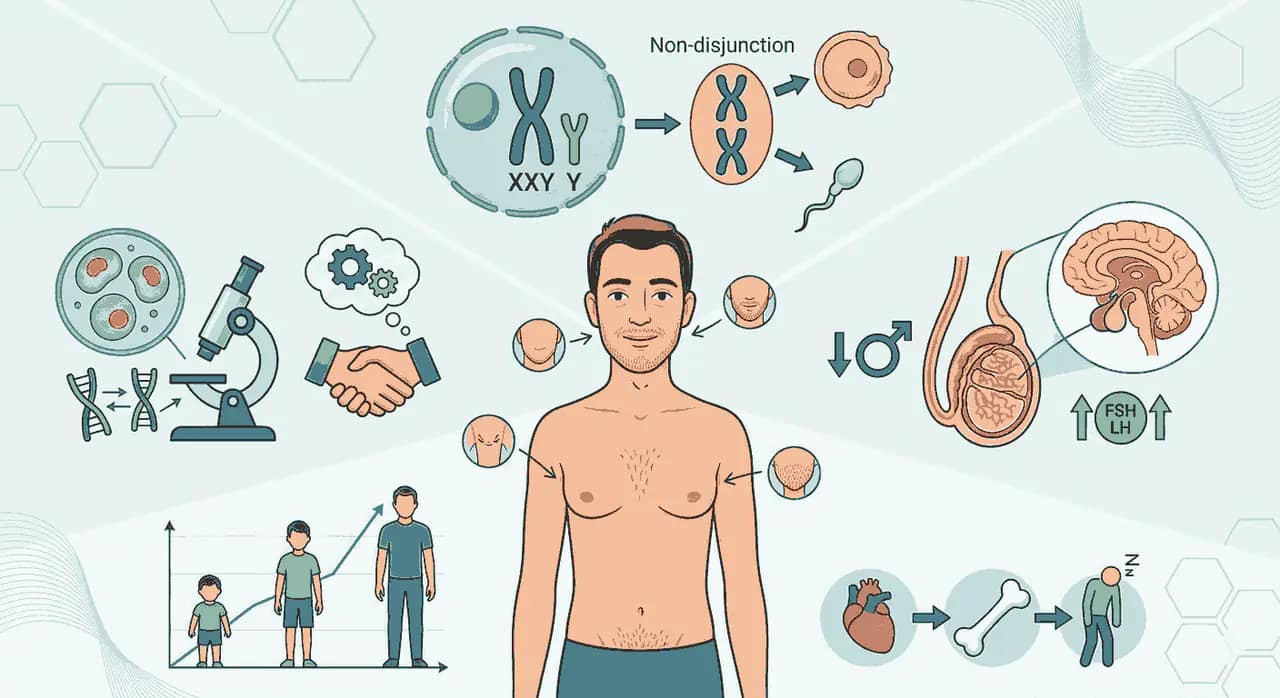
Most Important Klinefelter Syndrome MCQs Class 12 Biology for NEET Success
Master Klinefelter Syndrome MCQs Class 12 Biology with detailed explanations on XXY chromosomes, Barr bodies, chromosomal disorders, genetics , and inheritance.