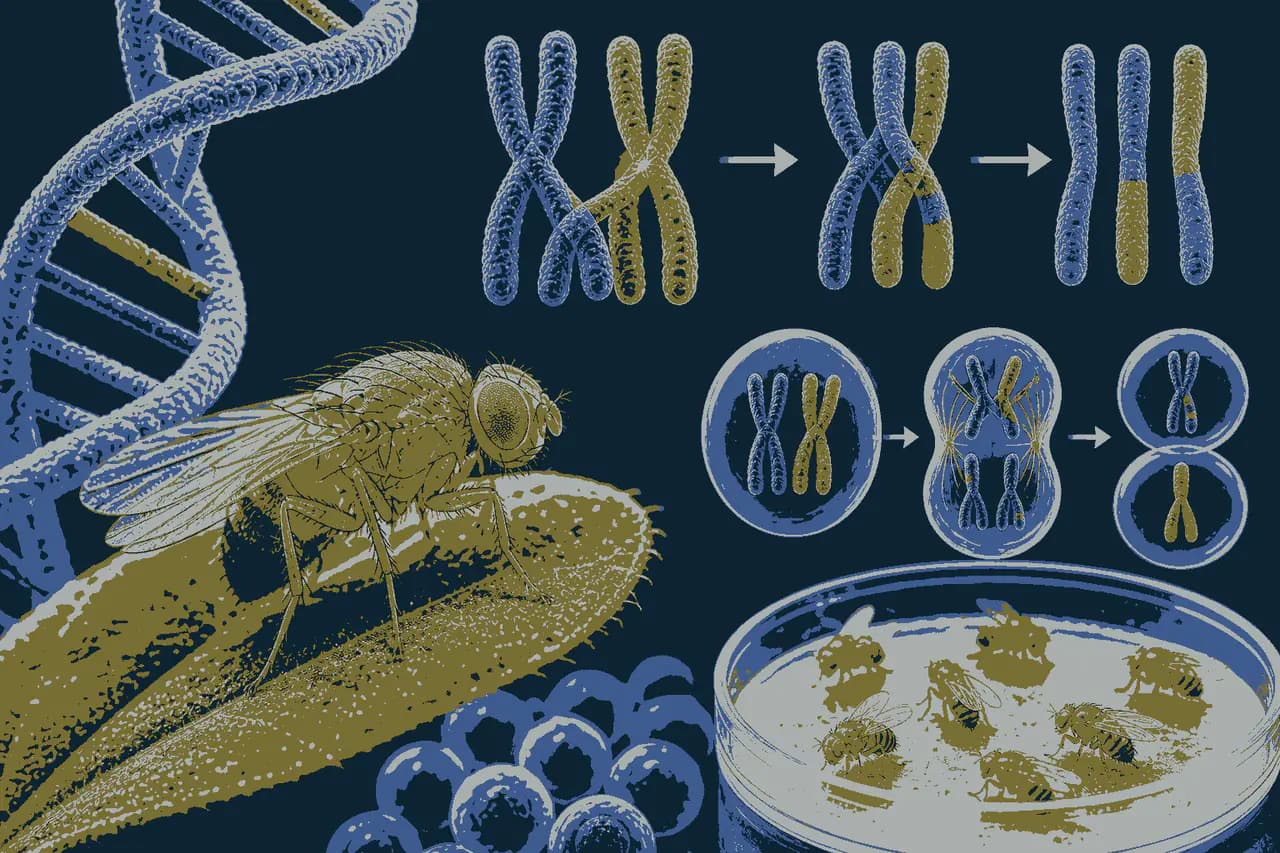
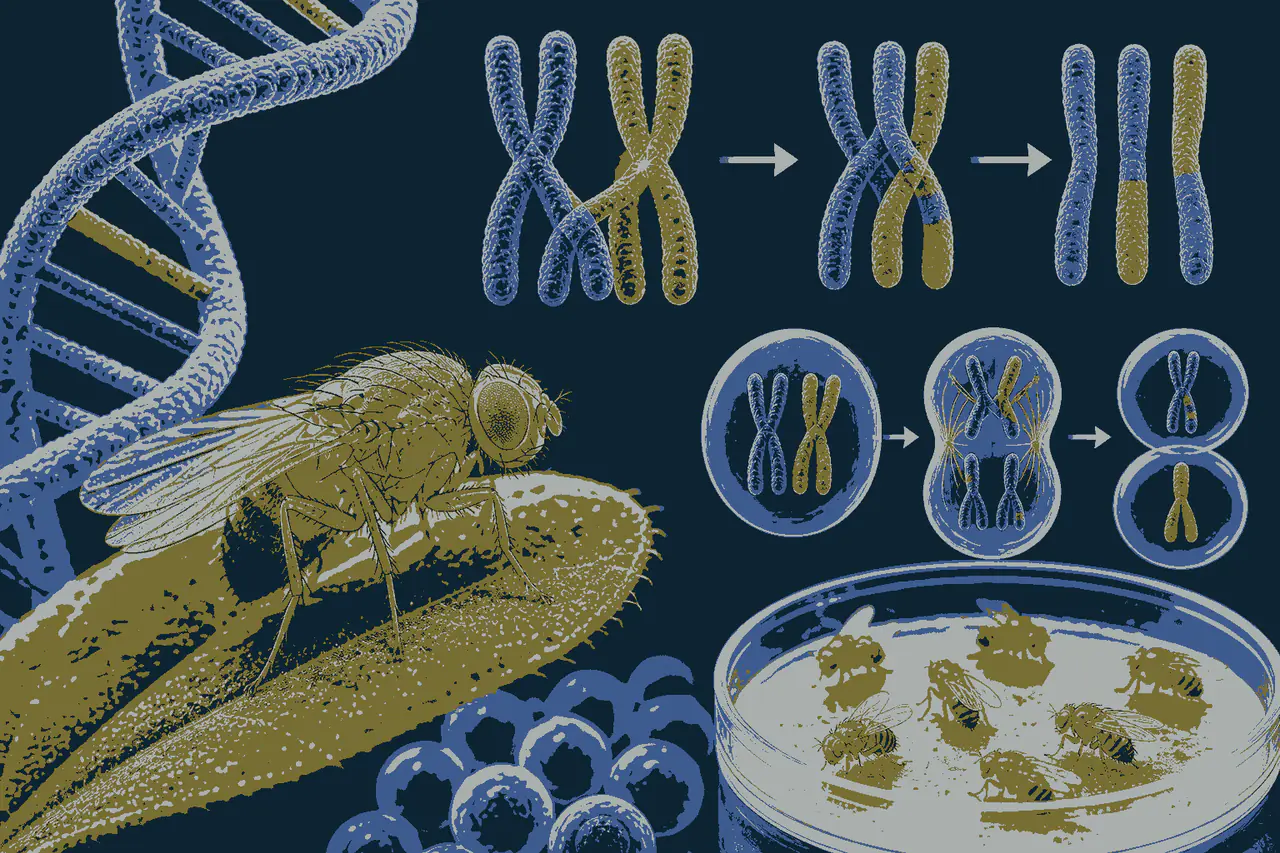
Understanding genetics becomes much easier when aspirants practice with Class 12 Biology Linkage Crossing Over Recombination Frequency MCQs with Answers PDF. These resources are essential for building conceptual clarity, especially for competitive exams like NEET and CUET. The topic of linkage, crossing over, and recombination frequency often appears complex at first, but with consistent exposure through Class 12 Biology Linkage Crossing Over Recombination Frequency MCQs with Answers PDF, learners can gradually master these concepts.
Linkage refers to the tendency of genes located close together on a chromosome to be inherited together, and this principle directly challenges Mendel’s law of independent assortment. By solving Class 12 Biology Linkage Crossing Over Recombination Frequency MCQs with Answers PDF, aspirants can better understand how linked genes behave differently compared to independently assorting genes.
Crossing over, which occurs during prophase I of meiosis, is another critical concept explained effectively through Class 12 Biology Linkage Crossing Over Recombination Frequency MCQs with Answers PDF. It involves the exchange of genetic material between non-sister chromatids, leading to recombination. This process is vital for genetic diversity, and practicing questions from Class 12 Biology Linkage Crossing Over Recombination Frequency MCQs with Answers PDF helps aspirants visualize and apply this mechanism in problem-solving scenarios.
Recombination frequency, measured in percentage, indicates the distance between genes on a chromosome. Through Class 12 Biology Linkage Crossing Over Recombination Frequency MCQs with Answers PDF, aspirants learn how to calculate gene distances and interpret genetic maps with confidence.One of the major advantages of using Class 12 Biology Linkage Crossing Over Recombination Frequency MCQs with Answers PDF is that it strengthens analytical thinking.
Instead of memorizing definitions, learners begin to apply concepts in different contexts. For instance, questions based on recombination percentages and gene mapping are frequently asked in exams, and consistent practice using Class 12 Biology Linkage Crossing Over Recombination Frequency MCQs with Answers PDF ensures accuracy and speed. Moreover, these MCQs expose aspirants to various question patterns, making them exam-ready.
Another key benefit of Class 12 Biology Linkage Crossing Over Recombination Frequency MCQs with Answers PDF is revision efficiency. When preparing for exams, students often struggle to revise lengthy theory, but MCQs provide a quick and effective way to recall important concepts. Regular practice with Class 12 Biology Linkage Crossing Over Recombination Frequency MCQs with Answers PDF helps reinforce memory and reduces last-minute stress. It also allows aspirants to identify weak areas and focus on improving them.
In addition, Class 12 Biology Linkage Crossing Over Recombination Frequency MCQs with Answers PDF supports self-assessment. Aspirants can track their progress by solving questions and checking answers instantly. This immediate feedback system is crucial for improvement. Over time, repeated exposure to Class 12 Biology Linkage Crossing Over Recombination Frequency MCQs with Answers PDF enhances confidence and boosts performance. The structured format of these PDFs also makes them easy to access and revise anytime, anywhere.
Furthermore, teachers and educators often recommend Class 12 Biology Linkage Crossing Over Recombination Frequency MCQs with Answers PDF as a reliable study tool. These Class 12 Biology Linkage Crossing Over Recombination Frequency MCQs with Answers PDF are curated to cover all important subtopics, including gene linkage, recombination frequency, genetic mapping, and crossing over. By practicing with Class 12 Biology Linkage Crossing Over Recombination Frequency MCQs with Answers PDF, aspirants can ensure comprehensive preparation without missing any key concept.
Class 12 Biology Linkage Crossing Over Recombination Frequency MCQs with Answers PDF:
1. Assertion–Reason:
Assertion: The proportion of parental gene combinations are much higher compared to non-parental types.
Reason: Gene combination is due to linkage of the two genes.
A. A is correct but R is wrong
B. A is wrong but R is correct
C. Both A and R are correct but R is not correct explanation
D. Both A and R are correct and R is correct explanation
Answer: D
Explanation: Linked genes remain together, so parental combinations are more frequent.
2. Recombinant percentage in Morgan’s experiment:
A. 98.7%
B. 37.2%
C. 62.8%
D. 1.3%
Answer: B
Explanation: Morgan observed ~37.2% recombination in fruit flies.
3. Gene responsible for organ identity change in Drosophila:
A. Double dominant gene
B. Homeotic gene
C. Complementary gene
D. Plastid
Answer: B
Explanation: Homeotic (Hox) genes control body structure formation.
4. Cross AB/ab × ab/ab gives:
A. AAbb and aabb
B. AaBb and aabb
C. AABB and aabb
D. None
Answer: B
Explanation: Produces heterozygous and recessive offspring.
5. Ratio of complementary genes:
A. 9:3:4
B. 12:3:1
C. 9:3:3:1
D. 9:7
Answer: D
Explanation: Complementary gene interaction gives 9:7 ratio.
6. Genetic recombination occurs due to:
A. Fertilization and meiosis
B. Mitosis and meiosis
C. Fertilization and mitosis
D. None
Answer: A
Explanation: Recombination occurs during meiosis and fertilization.
7. Gene sequence problem:
A. a, c, b, d
B. a, d, b, c
C. d, b, a, c
D. a, b, c, d
Answer: A
Explanation: Based on recombination frequency, closest genes grouped.
8. Linkage contradicts Mendel’s law of:
A. Independent assortment
B. Segregation
C. Dominance
D. None
Answer: A
Explanation: Linked genes do not assort independently.
9. HBA1 and HBA2 are located on which chromosome?
A. 11
B. 14
C. 22
D. 16
Answer: D
Explanation: HBA1 and HBA2 genes (alpha-globin genes) are located on chromosome 16 and are closely linked, showing typical linkage inheritance.
10. Number of linkage groups in maize (10 chromosome pairs):
A. 20
B. 5
C. 40
D. 10
Answer: D
Explanation: The number of linkage groups is equal to the haploid chromosome number. Maize has 10 pairs → 10 linkage groups.
11. Crossing over occurs between:
A. Non-sister chromatids
B. Daughter nuclei
C. Different bivalents
D. Sister chromatids
Answer: A
Explanation: Crossing over occurs between non-sister chromatids of homologous chromosomes during prophase I of meiosis, leading to recombination.
12. X-linked recessive genes are always expressed in:
A. Females
B. Males
C. Both
D. None
Answer: B
Explanation: Males have only one X chromosome, so recessive alleles on it are always expressed.
13. Recombination frequency concept explained by:
A. Mendel
B. Sturtevant
C. Sutton
D. Morgan
Answer: B
Explanation: Alfred Sturtevant used recombination frequency to map gene positions on chromosomes.
14. 1 centimorgan represents:
A. 100% crossing over
B. 1% crossing over
C. 50% crossing over
D. 10% crossing over
Answer: B
Explanation: 1 centimorgan (cM) equals 1% recombination frequency between two genes.
15. Movement of gene from one chromosome to another is:
A. Duplication
B. Translocation
C. Crossing over
D. Inversion
Answer: B
Explanation: Translocation involves transfer of a chromosomal segment to a non-homologous chromosome.
16. Codominance shows:
A. Both alleles expressed
B. One dominant
C. Linked genes
D. Recessive alleles
Answer: A
Explanation: In codominance, both alleles express equally (e.g., ABO blood group).
17. Which pair is wrongly matched?
A. Starch synthesis – Multiple alleles
B. ABO blood group – Codominance
C. Morgan – Linkage
D. XO type – Grasshopper
Answer: A
Explanation: Starch synthesis in pea is controlled by a single gene (pleiotropy), not multiple alleles.
18. Coupling and repulsion arrangement:
A. AABB, aabb / AABB, aabb
B. AAbb, aaBB / AaBb, aabb
C. aaBB, aabb / AABB, aabb
D. AABB, aabb / AAbb, aaBB
Answer: D
Explanation: Coupling = dominant alleles together (AABB); repulsion = dominant alleles separated (AAbb).
19. Primary source of allelic variation:
A. Independent assortment
B. Recombination
C. Mutation
D. Polyploidy
Answer: B
Explanation: Recombination shuffles genes during meiosis, producing new allele combinations.
20. Type of sex-linked trait in pedigree:
A. Dominant X-linked
B. Recessive X-linked
C. Dominant Y-linked
D. Recessive Y-linked
Answer: A
Explanation: Dominant X-linked traits appear in both sexes but more often in females.
21. Genes on the same chromosome are called:
A. Linked
B. Homologous
C. Autosomal
D. Identical
Answer: A
Explanation: Linked genes are inherited together due to their physical proximity.
22. Distance between genes is measured by:
A. Ratio of crossing over
B. Percentage recombination
C. Number of crossovers
D. None
Answer: B
Explanation: Genetic distance is measured as recombination frequency (%).
23. Best cross to study linkage:
A. aaBB × aaBB
B. AABB × aabb
C. AaBb × AaBb
D. AAbb × AaBb
Answer: B
Explanation: Crossing homozygous dominant with recessive allows clear linkage observation.
24. Crossing over is exchange between:
A. Non-sister chromatids
B. Sister chromatids
C. Non-homologous chromosomes
D. Completely linked genes
Answer: A
Explanation: Exchange occurs between homologous chromosomes.
25. Genes producing identical phenotype in cis and trans:
A. Pseudoalleles
B. Multiple alleles
C. Same gene
D. Different genes
Answer: A
Explanation: Pseudoalleles behave like alleles but are located at different loci.
26. Genetic map distance depends on:
A. Chromosome length
B. Gene number
C. Nucleotide count
D. Recombination frequency
Answer: D
Explanation: Higher recombination = greater distance between genes.
27. Match Column I with Column II and choose the correct answer:
Column I
i. Thomas Hunt Morgan
ii. Alfred Sturtevant
iii. Hermann Henking
iv. Friedrich Miescher
v. George Gamow
Column II
(a) Mapped position of genes
(b) X-body
(c) Nuclein
(d) Genetic code
(e) Linkage
Options:
A. i–e, ii–a, iii–b, iv–c, v–d
B. i–b, ii–a, iii–c, iv–d, v–e
C. i–d, ii–e, iii–a, iv–b, v–c
D. i–c, ii–d, iii–e, iv–a, v–b
Answer: A
Explanation:
- Morgan → Linkage
- Sturtevant → Gene mapping
- Henking → X-body (discovered X chromosome)
- Miescher → Nuclein (DNA)
- Gamow → Genetic code
28. Consider the following statements with reference to the female reproductive system:
Statement 1: The presence or absence of hymen is not a reliable indicator of virginity or sexual experience.
Statement 2: The sex of the foetus is determined by the father and not by the mother.
Options:
A. Both Statement 1 and Statement 2 are wrong
B. Statement 1 is correct and Statement 2 is wrong
C. Both Statement 1 and Statement 2 are correct
D. Statement 1 is wrong and Statement 2 is correct
Answer: C
Explanation:
The hymen can rupture due to several non-sexual activities, so it is not a reliable indicator of virginity. Also, in humans, the father determines the sex of the child because sperm carries either X or Y chromosome, while the mother always contributes X chromosome.
29. Study the following statements and identify the incorrect ones:
I. Y-chromosome of Drosophila lacks male-determining factor
II. Inactivation of one of the two X-chromosomes in females is known as lyonization
III. Hemophilia-B is an autosomal genetic disorder
IV. Turner’s syndrome is an example of trisomy
Options:
A. I, II
B. III, IV
C. I, III
D. II, IV
Answer: B
Explanation:
- Statement I is correct — in Drosophila, sex is determined by X:A ratio, not Y chromosome.
- Statement II is correct — lyonization refers to X-chromosome inactivation.
- Statement III is incorrect — Hemophilia-B is X-linked recessive, not autosomal.
- Statement IV is incorrect — Turner’s syndrome is monosomy (XO), not trisomy.
30. Sex determination occurs at:
A. Gametogenesis
B. Fertilization
C. Cleavage
D. Implantation
Answer: B
Explanation: Sex is determined when sperm (X or Y) fertilizes the egg.
Conclusion on Class 12 Biology Linkage Crossing Over Recombination Frequency MCQs with Answers PDF
In conclusion, mastering genetics topics like linkage and recombination requires consistent practice, and Class 12 Biology Linkage Crossing Over Recombination Frequency MCQs with Answers PDF serves as an ideal resource for this purpose. It simplifies complex topics, improves problem-solving skills, and enhances exam readiness. By regularly engaging with Class 12 Biology Linkage Crossing Over Recombination Frequency MCQs with Answers PDF, aspirants can build a strong foundation in genetics and achieve better academic results.
Related reading
Master These Must-Know Drosophila Linkage Recombination MCQs Class 12 Biology with Answers for Exam Success
Master Drosophila Linkage Recombination MCQs Class 12 Biology with Answers to understand linkage, recombination frequency, and gene mapping for NEET, JEE exams.
Don't Ignore These Important Tricky Epistasis Inheritance Ratio MCQs Class 12 Biology with Answers Before Your Exams
Master Epistasis Inheritance Ratio MCQs Class 12 Biology with Answers to understand gene interactions , improve accurac , and score higher in competitive exams.