
- Keneitsino Lydia
- May 9, 2026
Master Chargaff Rule MCQs Class 12 Biology – Ultimate Practice for NEET Success
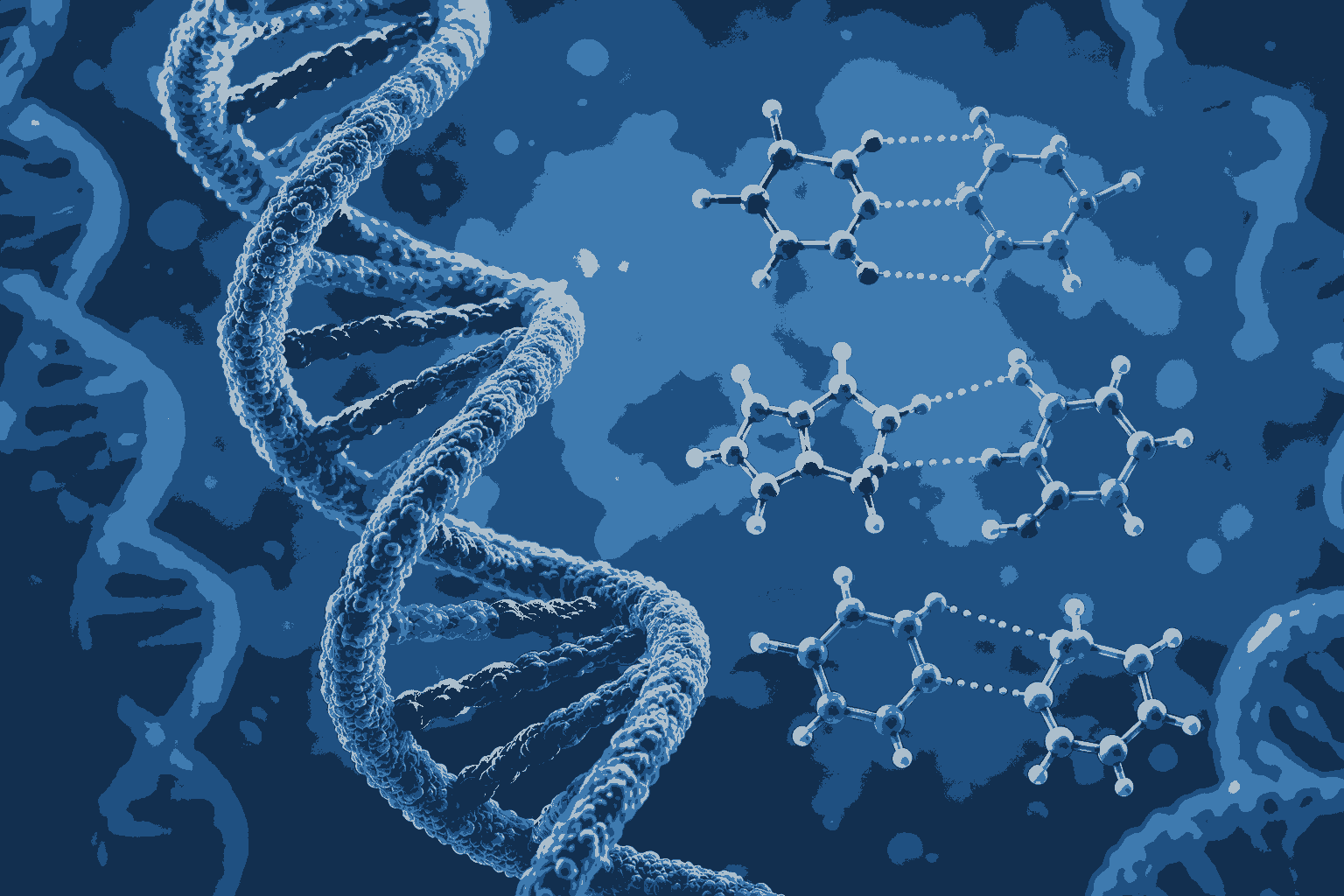
The concept discussed through Chargaff Rule MCQs Class 12 Biology was proposed by Erwin Chargaff, who discovered that the amount of adenine is always equal to thymine and the amount of guanine is always equal to cytosine in double-stranded DNA. This principle became one of the strongest pieces of evidence supporting the Watson and Crick model of DNA. By solving Chargaff Rule MCQs Class 12 Biology, aspirants learn how nitrogenous bases pair specifically inside the DNA molecule. Continuous practice of Chargaff Rule MCQs Class 12 Biology also improves calculation-based problem-solving skills.
One major advantage of studying Chargaff Rule MCQs Class 12 Biology is that aspirants become comfortable with percentage-based numerical questions related to DNA composition. Many examination questions ask aspirants to calculate the percentage of guanine, cytosine, adenine, or thymine in a DNA sample. Practicing Chargaff Rule MCQs Class 12 Biology repeatedly helps learners solve these questions quickly and accurately. This not only improves speed but also builds confidence during competitive exams.
Another important aspect of Chargaff Rule MCQs Class 12 Biology is their role in strengthening the understanding of complementary base pairing. The concept that adenine pairs with thymine and guanine pairs with cytosine is essential for understanding DNA replication and genetic inheritance. Through regular revision of Chargaff Rule MCQs Class 12 Biology, aspirants understand how the double-helical structure of DNA remains stable due to these specific base pair interactions.
The topic covered in Chargaff Rule MCQs Class 12 Biology also helps aspirants connect molecular biology with genetics. Since DNA carries hereditary information, understanding nucleotide composition is extremely important for interpreting genetic mechanisms. Practicing Chargaff Rule MCQs Class 12 Biology enables aspirants to better understand DNA replication, mutation, transcription, and inheritance patterns. These concepts frequently appear in both school-level and entrance examinations.
Aspirants preparing for NEET particularly benefit from Chargaff Rule MCQs Class 12 Biology because these questions often test conceptual understanding rather than direct memorization. Numerical questions involving percentages of nitrogenous bases are common in medical entrance examinations. By revising Chargaff Rule MCQs Class 12 Biology consistently, aspirants become more efficient at applying formulas and biological reasoning under time pressure.
Another advantage of practicing Chargaff Rule MCQs Class 12 Biology is that it improves clarity regarding differences between DNA and RNA. Since RNA contains uracil instead of thymine, aspirants must clearly understand where Chargaff’s rule applies. Continuous revision of Chargaff Rule MCQs Class 12 Biology helps learners avoid confusion while solving assertion-reason and multiple-choice questions.
The importance of Chargaff Rule MCQs Class 12 Biology also extends to biotechnology and genetic engineering topics. DNA sequencing, replication studies, and molecular diagnostics all depend on the principle of complementary base pairing. By solving Chargaff Rule MCQs Class 12 Biology, aspirants gain a stronger foundation for advanced topics in genetics and biotechnology.
Furthermore, Chargaff Rule MCQs Class 12 Biology improve analytical thinking by encouraging aspirants to interpret data logically. Instead of simply memorizing percentages, learners understand why the ratio of purines and pyrimidines remains balanced in double-stranded DNA. This deeper conceptual understanding makes Chargaff Rule MCQs Class 12 Biology highly effective for long-term learning and retention.
Regular revision of Chargaff Rule MCQs Class 12 Biology also strengthens NCERT preparation because molecular genetics is heavily emphasized in the syllabus. Aspirants who practice Chargaff Rule MCQs Class 12 Biology develop better command over DNA structure, nucleotide composition, and chromosome organization. This ultimately improves exam accuracy and conceptual confidence.
30 Chargaff Rule MCQs Class 12 Biology:
1. What is the unit of nucleic acid?
A. nucleotide
B. nucleoside
C. nucleic acid
D. all of these
Answer: A. nucleotide
Explanation: Unit of nucleic acid is nucleotide. Nucleotides consist of a sugar group, a phosphate group, and a nitrogen base.
2. What components make up a nucleosome that gives a beaded appearance to chromosomes?
A. about two turns of DNA
B. 8 histone molecules (2 molecules each of H2A, H2B, H3 and H4)
C. 166 nitrogen base pairs
D. All of the above
Answer: D. All of the above
Explanation: A nucleosome consists of about two turns of DNA, 8 histone molecules, and 166 nitrogen base pairs.
3. What does the banding pattern of chromosome three and six of human beings and chimpanzee indicate?
A. different origin
B. common origin
C. same number of chromosomes
D. similar blood groups
Answer: B. common origin
Explanation: Similar chromosome banding patterns indicate a common evolutionary origin.
4. What does a genome contain?
A. Haploid chromosomal set
B. Diploid chromosomal set
C. Tetraploid chromosomal set
D. All of the above
Answer: A. Haploid chromosomal set
Explanation: A genome represents the complete haploid set of chromosomes.
5. Which enzyme is used in DNA multiplication?
A. RNA polymerase
B. DNA endonuclease
C. Exonuclease
D. DNA polymerase
Answer: D. DNA polymerase
Explanation: DNA polymerase synthesizes new DNA strands during replication.
6. Which process leads to DNA ladder formation?
A. Necrosis
B. Plasmolysis
C. Apoptosis
D. Mitosis
Answer: C. Apoptosis
Explanation: DNA laddering is a characteristic feature of apoptosis.
7. Which of the following DNA will have the highest melting temperature?
A. DNA with 15% guanine
B. DNA with 30% cytosine
C. DNA with 40% thymine
D. DNA with 50% adenine
Answer: B. DNA with 30% cytosine
Explanation: Higher GC content increases melting temperature due to stronger hydrogen bonding.
8. Given the fact that histone binds DNA, it should be rich in
A. arginine, lysine
B. cysteine, methionine
C. glutamate, aspartate
D. isoleucine, leucine
Answer: A. arginine, lysine
Explanation: Histones are rich in positively charged amino acids lysine and arginine.
9. In which of the following, determination of order of bases in a DNA molecule takes place?
A. Gene probing
B. Gene splicing
C. Gene mapping
D. Gene sequencing
Answer: D. Gene sequencing
Explanation: Gene sequencing determines the order of nucleotides in DNA.
10. Which of the following statements regarding a double helical molecule of DNA is true?
A. Each strand is identical
B. Each strand replicates itself
C. Bases are perpendicular to the axis
D. All hydroxyl groups of pentose are involved in linkage
Answer: C. Bases are perpendicular to the axis
Explanation: Nitrogenous bases are arranged perpendicular to the DNA axis.
11. The central dogma is not applicable in the case of
A. retroviruses
B. all prokaryotes
C. all animal viruses
D. all plant viruses
Answer: A. retroviruses
Explanation: Retroviruses use reverse transcription from RNA to DNA.
12. How many of the nitrogen containing bases are common among both DNA and RNA?
A. Four
B. Two
C. Three
D. One
Answer: C. Three
Explanation: Adenine, guanine, and cytosine are common to both DNA and RNA.
13. Total number of complete spirals occurring in a segment of DNA having 100 nucleotides will be ________.
A. 5
B. 6
C. 3
D. 4
Answer: A. 5
Explanation: One spiral contains 20 nucleotides, so 100 nucleotides form 5 spirals.
14. cDNA library is mostly constructed for organisms like _________.
A. yeast
B. cyanobacteria
C. virus
D. bacteria
Answer: A. yeast
Explanation: cDNA libraries are commonly constructed from eukaryotes like yeast.
15. Which one of the following is NOT needed to construct solenoid fibre?
A. Nucleosome
B. DNA molecule
C. RNA molecule
D. Basic proteins histones
Answer: C. RNA molecule
Explanation: Solenoid fibre formation requires DNA and histones, not RNA.
16. Coliphage φ × 174 contains:
A. ssRNA
B. dsRNA
C. ssDNA
D. dsDNA
Answer: C. ssDNA
Explanation: Coliphage φX174 contains single-stranded DNA.
17. If the total amount of adenine and thymine in a double-stranded DNA is 45%, the amount of guanine in this DNA will be
A. 22.5%
B. 27.5%
C. 45%
D. 55%
Answer: B. 27.5%
Explanation: Remaining 55% is shared equally between guanine and cytosine.
18. DNA can be formed by
A. transaminase
B. lyases
C. RNA dependent DNA polymerase
D. All of the above
Answer: C. RNA dependent DNA polymerase
Explanation: Reverse transcriptase synthesizes DNA from RNA.
19. Which is not correct according to Chargaff’s rule?
A. A + T = C + G
B. A + G = C + T
C. AGCT = AGCT
D. None of these
Answer: A. A + T = C + G
Explanation: Chargaff’s rule states A = T and G = C, not A + T = C + G.
20. In a DNA molecule, if adenine is 15%, what will be the percentage of guanine in this DNA?
A. 15%
B. 35%
C. 70%
D. 30%
Answer: B. 35%
Explanation: If adenine is 15%, thymine is also 15%, leaving 70% for G and C equally.
21. Genes are made up of
A. Histones
B. Hydrocarbons
C. Polynucleotides
D. Lipoproteins
Answer: C. Polynucleotides
Explanation: Genes are segments of polynucleotide chains.
22. Nucleotides are formed by
A. Purine, sugar and phosphate
B. Purine, pyrimidine and phosphate
C. Purine, pyrimidine, sugar and phosphate
D. Pyrimidine, sugar and phosphate
Answer: C. Purine, pyrimidine, sugar and phosphate
Explanation: Nucleotides contain a nitrogen base, sugar, and phosphate group.
23. The given diagram represents:
A. Nucleosome
B. Chromosome
C. Mesosome
D. Ribosome
Answer: A. Nucleosome
Explanation: Nucleosome is the basic structural unit of chromatin.
24. The moiety present at the 5′ end of ribose sugar in a polynucleotide is
A. OH
B. CH2
C. Phosphate
D. Adenine
Answer: C. Phosphate
Explanation: The phosphate group is attached at the 5′ carbon.
25. What is a nucleosome?
A. A vesicle containing positively charged histones within nucleolus
B. They are similar to endosomes
C. A structure formed by wrapping negatively charged DNA around positively charged histone octamer
D. They are the transforming principles discovered by Griffith
Answer: C. A structure formed by wrapping negatively charged DNA around positively charged histone octamer
Explanation: DNA wraps around histone octamers forming nucleosomes.
26. In the double-helical structure of DNA, the pitch of the helix is
A. 3.4 nm
B. 0.34 nm
C. 6.6 nm
D. 34 nm
Answer: A. 3.4 nm
Explanation: The pitch of B-DNA is 3.4 nm.
27. Which of the following is used to select genes of interest from a genomic library?
A. Restriction enzymes
B. Cloning vectors
C. Gene targets
D. DNA probes
Answer: D. DNA probes
Explanation: DNA probes identify complementary DNA sequences.
28. If a dsDNA has 20% adenine, what would be its cytosine content?
A. 20%
B. 30%
C. 40%
D. 80%
Answer: B. 30%
Explanation: Adenine equals thymine, leaving 60% equally divided between guanine and cytosine.
29. What is the length of human DNA containing 6.6×10⁹ bp?
A. 22 nm
B. 0.22 mm
C. 2.2 m
D. 22 m
Answer: C. 2.2 m
Explanation: Human DNA stretched fully measures about 2.2 meters.
30. In DNA molecule
A. the total amount of purine and pyrimidine nucleotides is not always equal
B. there are two strands which run parallel in 5’→3′ direction
C. the proportion of adenine in relation to thymine varies with organism
D. there are two strands which run antiparallel one in 5’→3′ and other in 3’→5′ direction
Answer: D. there are two strands which run antiparallel one in 5’→3′ and other in 3’→5′ direction
Explanation: DNA strands are antiparallel in orientation.
Conclusion on Chargaff Rule MCQs Class 12 Biology
In conclusion, Chargaff Rule MCQs Class 12 Biology are extremely important for mastering DNA structure, nucleotide pairing, and molecular genetics. Continuous practice of Chargaff Rule MCQs Class 12 Biology helps aspirants improve conceptual clarity, calculation ability, and examination performance. Whether preparing for board exams or competitive entrance tests, aspirants should revise Chargaff Rule MCQs Class 12 Biology regularly to build a strong foundation in molecular biology and genetics.